 Cáo Studio
Home › Blog › Makeup & Hair at Your Hotel
Airbrush vs Traditional Makeup in Humid Climate: Cáo Studio Guide
By the Cáo Studio team · Hanoi & Saigon · 2026-11-02
Airbrush and traditional makeup perform very differently in Southeast Asia's 80–90% humidity. Airbrush uses a compressor to spray liquid foundation as a fine mist, drying in seconds and sitting on skin without blending brushes—it typically lasts 6–8 hours in heat before fading at oil-prone zones. Traditional makeup (cream, powder, liquid applied by hand) builds fuller coverage but relies on setting sprays and powders to combat sweat; it often needs touch-ups after 3–4 hours outdoors in Hanoi or Saigon. For Cáo Studio shoots—whether ao dai sessions in Old Quarter or pre-wedding in Hoi An—we choose airbrush for outdoor events in peak heat and traditional for climate-controlled hotel rooms or early-morning shoots. Both methods work; the choice depends on location, duration, skin type, and your comfort during application.
Does airbrush actually survive Vietnam's humidity better?
Yes, but with caveats. Airbrush foundation sits as a thin, sealed layer that resists moisture longer than hand-applied cream makeup, which absorbs sweat and oil. We've shot couples in District 1, Saigon gardens in midday heat—airbrush stayed intact for 5–6 hours before shine appeared at the T-zone. Traditional makeup faded around the jawline and temples after 3 hours, requiring our stylists to re-powder and reset. The key: airbrush's lack of brushwork means no tugging or blending that oils the skin during application. For guests booking our ao dai photoshoot package in June or July, airbrush is the safer choice if your session runs past 10 a.m.
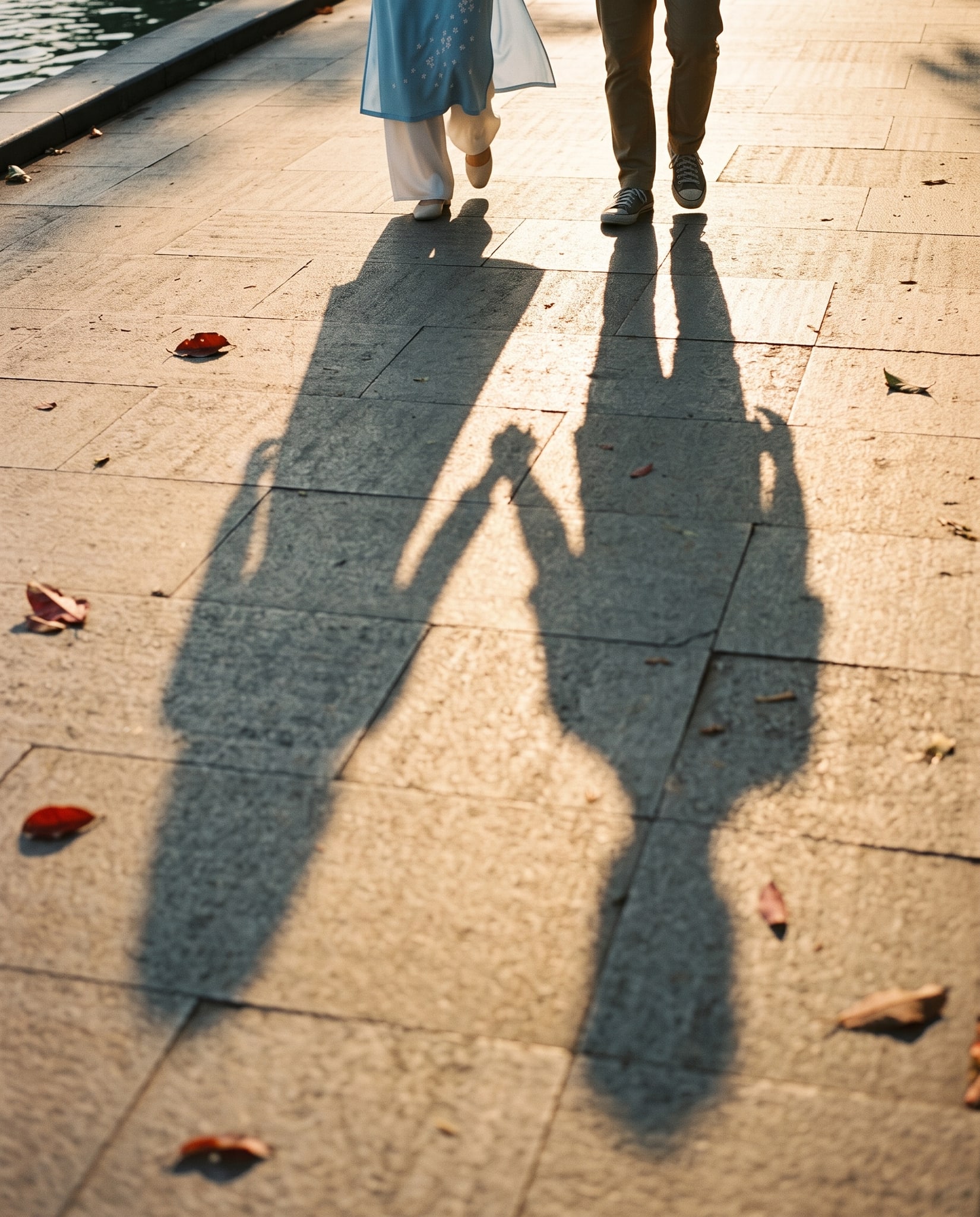
What's the real difference in how each method feels on skin?
Airbrush feels weightless—clients often ask if we applied anything. The spray is cool, dries fast, and never feels sticky or heavy, even in heat. Traditional makeup feels like a full layer you're aware of; some guests find it comforting, others feel suffocated in humidity. We notice this especially during longer sessions: airbrush clients stay relaxed; traditional makeup wearers sometimes report itching or stickiness by hour four. In our Hanoi studio dressing room (air-conditioned, but we work fast), both methods apply smoothly. Outdoors on a rooftop in Ba Dinh District, airbrush wins on comfort. For pre-wedding photoshoots where you're posing for 4+ hours, comfort matters—airbrush means you forget your face and focus on the moment.
Which method costs less and how much does it impact your package?
Both methods are included in our standard makeup service; we choose based on your shoot type, not an upsell. We budget airbrush time slightly differently (equipment setup, compressor check) but the client cost is identical. Where costs differ: traditional makeup requires more touch-ups outdoors, which can add 15–20 minutes to a session. If your vacation photoshoot includes outdoor and indoor phases, we might switch methods mid-day, or apply traditional as a base and set it like airbrush would. Some guests ask about airbrush specifically because they've used it abroad; we're happy to deliver it, and it's not a premium add-on. Your session fee covers the method best for your location and weather forecast.
See packages and prices on vietnamphotoshoot.com
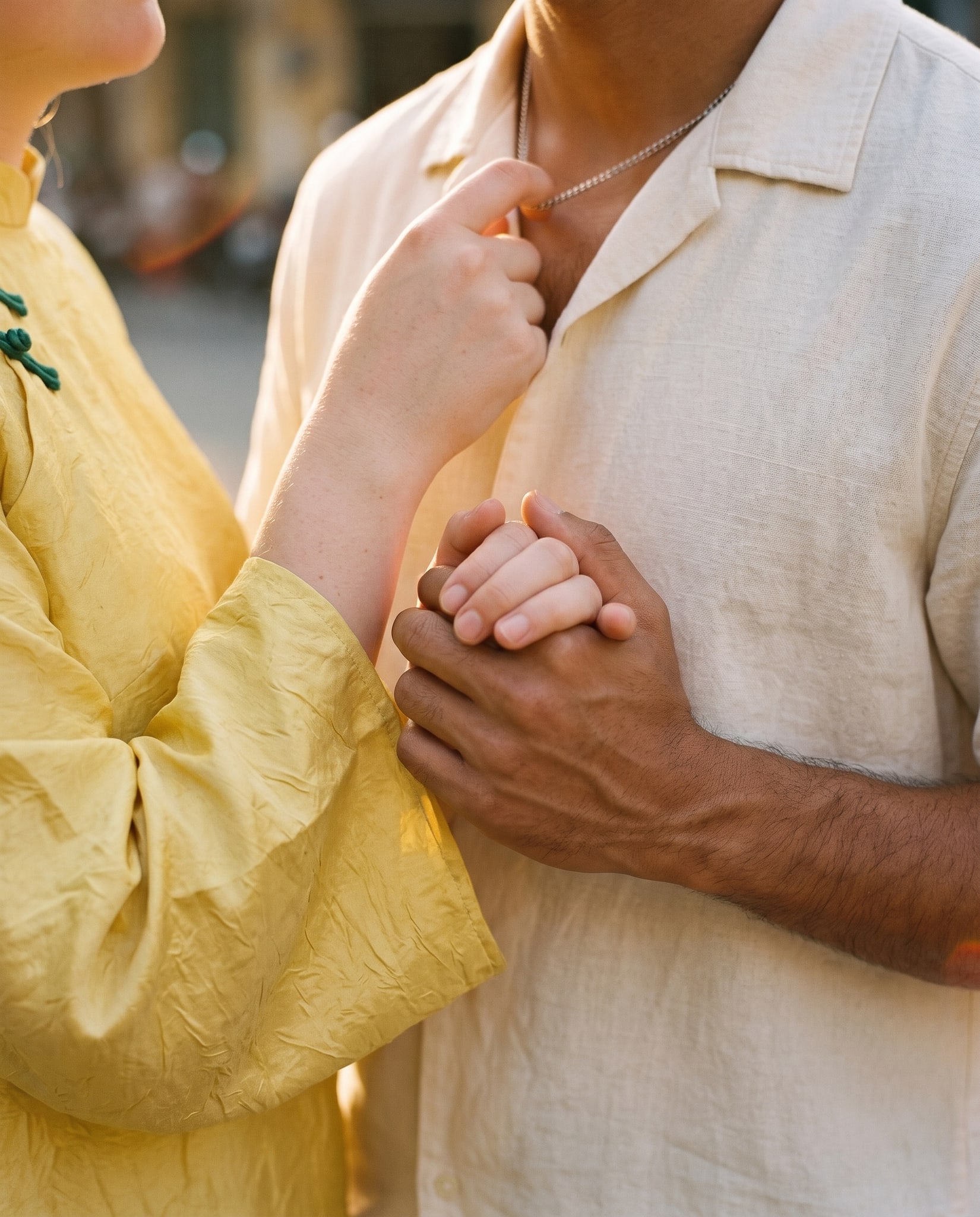
When should you choose airbrush, and when is traditional makeup smarter?
| Scenario | Best Method | Why | Typical Duration |
|---|---|---|---|
| Outdoor shoots 9 a.m.–3 p.m., full sun | Airbrush | Moisture resistance, no sweat blend-back | 5–6 hours before touch-up |
| Hotel room, indoor venue, climate-controlled | Traditional | Easier tweaks, richer finish, no compressor noise | 6–8 hours stable |
| Ao dai shoot, Old Quarter, morning light | Either; lean airbrush | Lightweight under traditional fabric, heat-proof | 4–5 hours airbrush; 3–4 traditional |
| Couple shoot with wardrobe changes, 3+ venues | Traditional | Faster re-touch between outfits, no equipment setup | 4–6 hours per outfit |
| Beach or boat shoot, water element | Airbrush | Spray-applied finish resists salt and splash better | 4–5 hours; reapply post-water |
| Extended pre-wedding event (ceremony + party) | Hybrid: airbrush base, traditional touch-ups | Start waterproof, add coverage for party phase | 8+ hours total |
Our stylists decide during your pre-shoot call. If you're booking a couple photoshoot package in Saigon in August, we'll ask: venue, timing, water, movement level. Then we'll suggest the method that keeps both of you camera-ready without stress.
What goes wrong and how do we fix it in real shoots?
Airbrush failures we've faced: compressor humidity (moisture inside the tank fogging the spray), requiring us to drain it before dawn shoots; guests with very oily skin where even airbrush breaks up around the nose by hour five (solution: we add a final light powder layer). Traditional makeup failures: sweat pooling under the jaw, foundation streaking when guests wipe their face (we hand out blotting papers and warn against touching). In a family photoshoot last May at Tao Đàn Park, our traditional makeup on the mother faded badly by 3 p.m. because she was anxious and kept touching her face. We switched to airbrush for the afternoon outdoor phase, reapplied in 20 minutes, and the second half of the gallery looks flawless. The lesson: airbrush is faster to repair if anything goes wrong mid-shoot. For high-humidity sessions, we now start airbrush by default and only shift to traditional if the client specifically requests it or the venue is fully indoors.
What should you check before you book and commit to one method?
Before confirming your shoot with us, answer these questions honestly:
- Venue and time: Indoors, air-conditioned room = either method works; outdoors, midday heat = airbrush preferred.
- Duration: Under 3 hours = traditional is fine; over 4 hours in heat = airbrush essential.
- Skin type: Oily skin = airbrush's lightweight, sealed finish is safer; dry or sensitive = traditional lets us adjust texture and moisture during application.
- Water or sweat risk: Beach, hiking, heavy movement = airbrush's spray application dries instantly and resists moisture; stationary hotel shoot = traditional's richness is an asset.
- Wardrobe changes: Multiple outfit swaps = traditional is faster to touch up; single outfit, long shoot = airbrush stays stable longer.
- Personal experience: Have you worn airbrush before? Loved it or hated the feel? Tell us—we can adapt.
When you contact us via WhatsApp to book a makeup and hair at your hotel session or a full special concept shoot, share your venue, date, time, and any skin concerns. Our stylists will recommend the method, show you photos from similar shoots, and confirm before the day arrives. If you change your mind the morning of, we can pivot—but planning ahead means we arrive with the right equipment and no delays.

FAQ
Does airbrush look less natural than traditional makeup?
No, when applied by a trained artist. Airbrush creates a smooth, camera-friendly finish that reads beautifully in photographs and looks dewy on video. Traditional makeup can look heavier on camera if overapplied. Both look natural in person when the artist knows your skin.
Can you do both airbrush and traditional makeup on the same day for a long event?
Yes. Many of our proposal and anniversary shoots start with airbrush for the day session, then we add a traditional cream blush and lip tint for the evening phase. It takes 10–15 minutes to refresh.
Will airbrush cover my acne scars and blemishes as well as traditional makeup?
Airbrush is thinner overall, so very deep scars may show more than with traditional full-coverage foundation. However, airbrush layers beautifully—we can apply multiple thin coats to build coverage. For scars or active skin, we discuss coverage needs during your pre-shoot consultation.
Is airbrush makeup safe for sensitive skin?
Yes, if you're not sensitive to the specific product. We use hypoallergenic, fragrance-free airbrush formulas. Traditional makeup also comes in sensitive-skin versions. Let us know about allergies when you book, and we'll prepare safe options for both methods.
How much maintenance will I need to do during our shoot session?
Airbrush requires almost none—clients can touch their face and move freely. Traditional makeup needs blotting or powder touch-ups every 2–3 hours outdoors. We carry touch-up supplies for both and take care of it during breaks.
Can I choose airbrush or traditional when I book, or does the studio decide?
You can request a preference, and we'll honor it if it suits your shoot. We recommend based on your venue, timing, and skin type—but your comfort is first. Discuss it during your booking call on WhatsApp.
What if I've never worn airbrush makeup before and I'm nervous?
We'll show you a demo on your hand or a small patch before the full face. Most clients are surprised by how fast and weightless it feels. We've worked with clients of all experience levels; nervousness is normal and we're patient. --- See packages and prices on vietnamphotoshoot.com | Chat with us on WhatsApp
Makeup & Hair at Your Hotel
Inclusions, prices and booking are on our booking site.
FAQ
Does airbrush look less natural than traditional makeup?
No, when applied by a trained artist. Airbrush creates a smooth, camera-friendly finish that reads beautifully in photographs and looks dewy on video. Traditional makeup can look heavier on camera if overapplied. Both look natural in person when the artist knows your skin.
Can you do both airbrush and traditional makeup on the same day for a long event?
Yes. Many of our [proposal and anniversary shoots](/go/proposal-and-anniversary) start with airbrush for the day session, then we add a traditional cream blush and lip tint for the evening phase. It takes 10–15 minutes to refresh.
Will airbrush cover my acne scars and blemishes as well as traditional makeup?
Airbrush is thinner overall, so very deep scars may show more than with traditional full-coverage foundation. However, airbrush layers beautifully—we can apply multiple thin coats to build coverage. For scars or active skin, we discuss coverage needs during your pre-shoot consultation.
Is airbrush makeup safe for sensitive skin?
Yes, if you're not sensitive to the specific product. We use hypoallergenic, fragrance-free airbrush formulas. Traditional makeup also comes in sensitive-skin versions. Let us know about allergies when you book, and we'll prepare safe options for both methods.
How much maintenance will I need to do during our shoot session?
Airbrush requires almost none—clients can touch their face and move freely. Traditional makeup needs blotting or powder touch-ups every 2–3 hours outdoors. We carry touch-up supplies for both and take care of it during breaks.
Can I choose airbrush or traditional when I book, or does the studio decide?
You can request a preference, and we'll honor it if it suits your shoot. We recommend based on your venue, timing, and skin type—but your comfort is first. Discuss it during your booking call on WhatsApp.
What if I've never worn airbrush makeup before and I'm nervous?
We'll show you a demo on your hand or a small patch before the full face. Most clients are surprised by how fast and weightless it feels. We've worked with clients of all experience levels; nervousness is normal and we're patient. --- [✨ See packages and prices on vietnamphotoshoot.com](/go/makeup-and-hair) | [📸 Chat with us on WhatsApp](https://wa.me/84338762340)
More from the team
Bridal hair and makeup for Ninh Binh photoshoots: heat, humidity, timing
Ninh Binh's tropical climate demands a different approach to bridal beauty than studio work. We walk through the timing, products and real decisions our team makes during shoots in the limestone hills.
Bridal Hair and Makeup for Mu Cang Chai Photoshoots: Heat and Timing
Mu Cang Chai's terraced rice fields and high altitude demand different bridal prep than studio work. We share how we protect makeup and hair through 8+ hours of humidity and sun.
Hair Accessories for Áo Dài: Choose the Right Style
Áo dài photoshoots require hair accessories that stay secure during movement, match the gown's color and era, and look polished on camera. We help you choose.