 Cáo Studio
Home › Blog › Proposal & Anniversary
Anniversary Photoshoot at Hon Chong Promontory: Our Shoot Day Decisions
By the Cáo Studio team · Hanoi & Saigon · 2026-11-02
Hon Chong promontory sits 20 km south of Nha Trang city on the Khánh Hòa coast; the limestone formation and shallow turquoise water attract anniversary couples seeking dramatic natural frames. Cáo Studio runs these shoots as 2–3 hour sessions, usually starting at 05:00–06:00 to catch the low-angle east light that makes the rocks glow amber. The package includes our photographer, a stylist to manage ao dai or dress fabric in wind and salt spray, transportation from your hotel, and digital files within one week. Cost sits in our couple and anniversary range; what varies is whether you bring one outfit or two, add a hair-and-makeup artist from our hotel team, or extend into a pre-wedding multi-location day. Avoid mid-day 10:00–16:00 when the sun flattens shadow and tourists flood the rocks; light is flat, your images look bleached, and positioning becomes cramped. We've learned this the hard way—our first 11:00 shoot there taught us to warn guests by WhatsApp the night before: "We'll arrive very early. Bring a shawl. The tide guides where we can stand." Chat with us on WhatsApp
Why Hon Chong Works for Anniversary Shots (And When It Doesn't)
Hon Chong's drama comes from the jagged rock towers and the narrow causeway that floods at high tide. The water is calmest in early morning, wind lower, and the angle of light catches the lichen and weathered stone surfaces—that's what makes it feel timeless in images. By 09:00, the rocks are swarming with tourists and the sun is too high; by 15:00 the light turns harsh and your ao dai looks washed out. We've noticed that anniversary couples often want that romantic "alone at the edge of the sea" feeling, but Hon Chong's fame means solitude is a morning-only privilege. The trade-off is clear: you either shoot at dawn with our full focus, or you come at midday and share the frame with dozens of phone cameras. We counsel couples on WhatsApp: if your vision is intimate, commit to the 05:30 start. If you prefer a slower pace, we steer you toward quieter couple sessions in Ninh Binh, where the river light lasts longer and there are fewer crowds.
What We Pack and How We Manage the Salt Spray
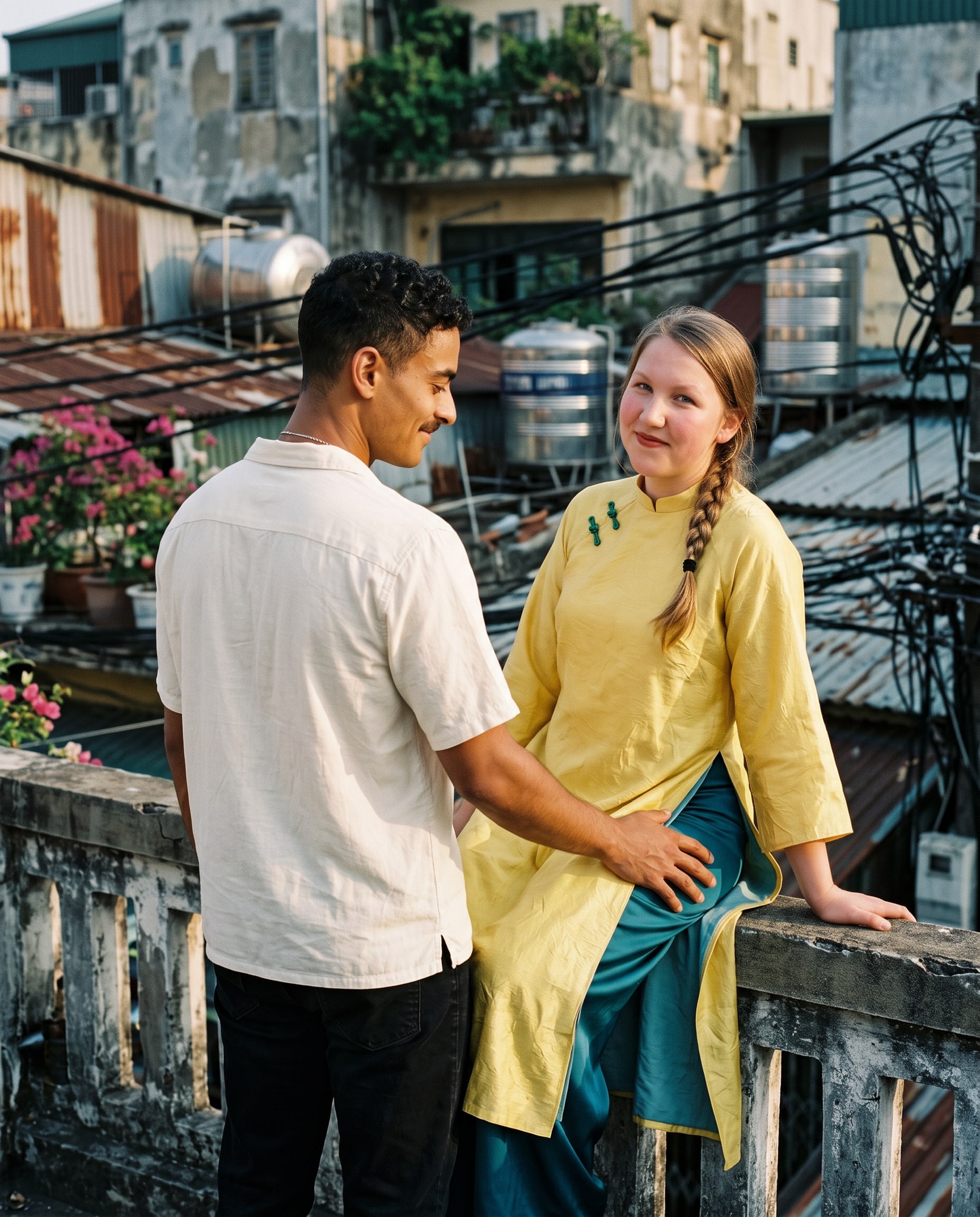
Our team arrives with two camera bags, a weatherproof roll case for ao dai, a reflector, and a ring light because the rocks' shadow side needs fill. The stylist brings clips, hair oil, and fabric weights—the wind off the sea tangles ao dai sleeves and pushes cotton dresses inland. One decision we make at 06:00 on-site: if the tide is high and the causeway is submerged, we pivot to the upper rocks where couples can stand safely, but the light angle shifts and we lose the water reflection. We've learned to check the tide chart the night before and text the couple if the timing has changed. Salt spray is the real challenge—it coats your skin, dulls fabric, and fogs the camera lens every few minutes. Our photographer carries a microfiber cloth and wipes the front element after every 5–6 shots. The stylist reapplies lip balm and uses a damp cloth to keep your ao dai smooth; if you're wearing makeup, we use a setting spray and powder. The session never feels rushed, but we work faster than usual because the light window is narrow: if we're there 05:45–07:45, we have roughly 90 minutes before the sun climbs and the causeway fills with day-trippers.
| Outfit Choice | Best Hour | Wind Impact | Fabric Issue | Our Tip |
|---|---|---|---|---|
| Silk ao dai | 05:30–07:00 | High wind tangles sleeves | Salt dulls sheen; reapply oil | Bring underslip clips |
| Cotton dress | 06:00–07:30 | Pushes fabric into rocks | Wrinkles show in close-ups | Bring travel steamer or wear linen |
| Áo dài + jeans | 05:45–08:00 | Moderate; denim stable | Salt residue on legs visible | Rinse feet before car ride |
| Formal western suit | 06:00–07:00 | Jacket lapels flip open | Jacket seams collect salt | Consider ao dai instead for authenticity |
The table reflects what we see every week: silk ao dai is the most photogenic, but it demands the stylist's full attention. Cotton and denim are forgiving, but salt spray shows more in the fabric. A formal western suit photographs well in the frame but feels formal against the wild landscape—anniversary couples who want intimacy often find the ao dai conveys that feeling more naturally.
Timing, Light, and When to Add a Hair-and-Makeup Artist
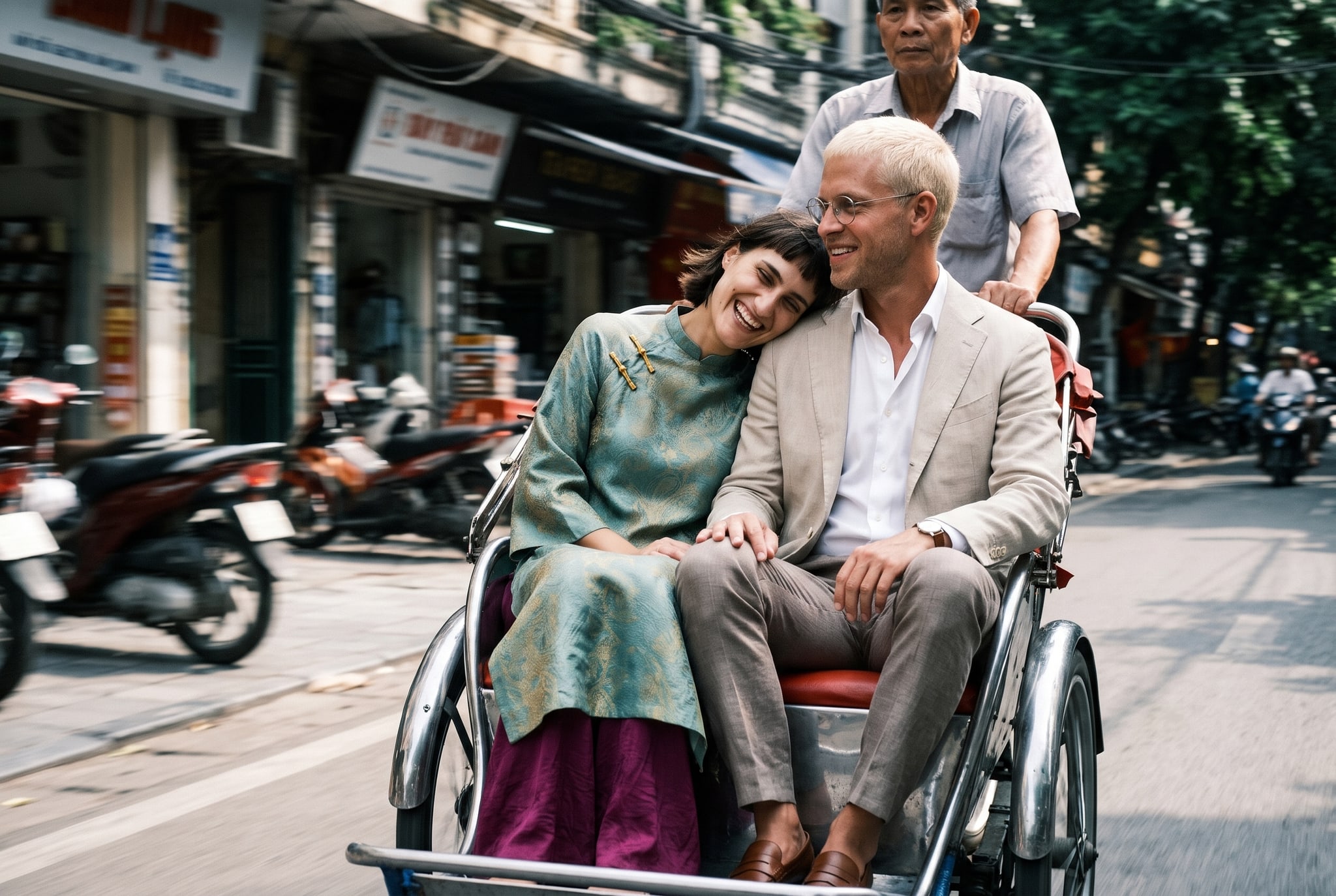
We offer two timing options for Hon Chong: 05:30–07:30 (early, best light, fewer crowds) or 08:00–10:00 (a compromise if your hotel checkout is late or you're not a morning person). We'll be honest: the 08:00 slot has softer light, not the golden-hour intensity of the dawn shoot, and you're sharing the rocks with early tourists. The session still looks beautiful—we've seen it hundreds of times—but the intimacy factor drops. If you add a makeup and hair artist from our hotel team, they'll meet you at your hotel and have you camera-ready by the time our driver arrives. This works well for couples who want polished makeup that won't run in salt spray; a makeup artist uses waterproof products and sets everything with powder. Without this add-on, the stylist does touch-ups on-site, but it's limited. We charge for the makeup artist separately, and many anniversary couples tell us afterward it was the right choice—they felt confident and the makeup outlasted the salt exposure.
What to Check Before You Book
Before you commit to Hon Chong, verify three things with us on WhatsApp. One: confirm the tide. High tide submerges the lower causeway; if that matters to your image, we need low tide at your shoot time. Two: clarify your outfit. If you're wearing an ao dai, let us know the color and fabric weight; we'll advise on styling for dawn wind. If it's a western dress, tell us the length and whether it has delicate details that salt spray might damage. Three: communicate your shot list. Do you want standing poses on the rocks, sitting by the water, walking the causeway, or all three? This helps us plan our hour and know which lenses to bring. Also, let us know if you're celebrating a specific milestone—a 10th or 25th anniversary—because we sometimes design a small ritual moment into the shoot (a kiss at sunrise, exchanging vows on the rock) that becomes the emotional anchor of your images. None of this adds cost; it's how we work. If you want additional locations in Nha Trang after Hon Chong, we can structure a half-day that flows into the beach or the old town. That requires a longer package; check our options on vietnamphotoshoot.com for what suits your timeline.
See packages and prices on vietnamphotoshoot.com
How We Deliver Files and What You Receive
Within one week, our photographer edits your images (color correction, light touch on skin, no heavy retouching—we preserve the raw feeling of the moment) and uploads them to a private gallery. You get the full resolution digital files and can download them all at once. We don't sell prints or albums; the files are yours to print, frame, or share as you wish. Some couples ask if we'll create a photo album or a coffee-table book; we partner with vendors for that work but don't produce it in-house. The deliverable is the edited digital files, shot in RAW and processed by our photographer to match our signature style—warm, saturated, with the landscape as much a subject as you. If you want the files faster or want to request specific edits, that's a conversation for the booking call. We've found that anniversary couples usually take a week or two to process the shoot experience before they're ready to order prints, so the one-week turnaround fits the natural rhythm.
FAQ
What's the best month to shoot at Hon Chong?
November to January offers calm seas, low humidity, and cool early-morning air—ideal for ao dai and physical comfort. May to September brings warm water but higher wind and occasional rain; we still shoot but plan extra time for stylist adjustments and possible delays.
Do we need to hire a professional stylist, or can we manage our own outfits?
You can manage your own, but our stylist prevents wind tangles, fixes fabric wrinkles between poses, reapplies makeup after salt spray, and knows how to position heavy fabrics for the camera. Most anniversary couples add a stylist; it removes stress and guarantees your ao dai or dress looks polished in every frame.
Can we do an afternoon session to avoid the early start?
Yes, but light is flat and crowds are dense. We offer 08:00–10:00 or 14:00–16:00 slots; the 14:00 slot has warm late-day light if you're willing to share the rocks with tourists. We usually steer couples toward the morning unless they have a specific reason to avoid it.
What happens if the weather is bad on our shoot day?
If rain is heavy, we reschedule at no cost; light rain is usually workable. We decide the morning of the shoot based on wind and cloud coverage. We stay in touch by WhatsApp the night before and confirm final timing by 20:00 the previous day.
Do you shoot with western formal dress as well as ao dai?
Yes. Western dresses, suits, and casual wear all photograph beautifully at Hon Chong. The ao dai feels most natural to the landscape and local culture, but the choice is entirely yours. Let us know your vision and we'll advise on fabric and color for this specific location.
How many images do we receive, and how long are they editable?
You receive all edited images from your shoot (typically 80–150, depending on length and how we work). Digital files are yours permanently; there's no time limit or licensing restriction. Print them whenever you want.
Proposal & Anniversary
Inclusions, prices and booking are on our booking site.
FAQ
What's the best month to shoot at Hon Chong?
November to January offers calm seas, low humidity, and cool early-morning air—ideal for ao dai and physical comfort. May to September brings warm water but higher wind and occasional rain; we still shoot but plan extra time for stylist adjustments and possible delays.
Do we need to hire a professional stylist, or can we manage our own outfits?
You can manage your own, but our stylist prevents wind tangles, fixes fabric wrinkles between poses, reapplies makeup after salt spray, and knows how to position heavy fabrics for the camera. Most anniversary couples add a stylist; it removes stress and guarantees your ao dai or dress looks polished in every frame.
Can we do an afternoon session to avoid the early start?
Yes, but light is flat and crowds are dense. We offer 08:00–10:00 or 14:00–16:00 slots; the 14:00 slot has warm late-day light if you're willing to share the rocks with tourists. We usually steer couples toward the morning unless they have a specific reason to avoid it.
What happens if the weather is bad on our shoot day?
If rain is heavy, we reschedule at no cost; light rain is usually workable. We decide the morning of the shoot based on wind and cloud coverage. We stay in touch by WhatsApp the night before and confirm final timing by 20:00 the previous day.
Do you shoot with western formal dress as well as ao dai?
Yes. Western dresses, suits, and casual wear all photograph beautifully at Hon Chong. The ao dai feels most natural to the landscape and local culture, but the choice is entirely yours. Let us know your vision and we'll advise on fabric and color for this specific location.
How many images do we receive, and how long are they editable?
You receive all edited images from your shoot (typically 80–150, depending on length and how we work). Digital files are yours permanently; there's no time limit or licensing restriction. Print them whenever you want.
More from the team
Anniversary photoshoot at Da Lat wild sunflower roads
Da Lat's wild sunflower roads bloom August through October. We've shot dozens of couples here—timing, transport and golden hour are everything.
Anniversary photoshoot at Langbiang Mountain: what we plan on the day
Langbiang Mountain draws couples for its pine forest, cool air and misty valleys. We've shot 40+ anniversaries there; here's how we make it work.
Proposal at Vung Tau Lighthouse: Photographer Checklist
Proposing at Vung Tau lighthouse demands precise timing, weather awareness, and a photographer who knows the location's light and crowds. We walk you through what actually happens on the day—and what we've learned goes wrong.