 Cáo Studio
Home › Blog › Proposal & Anniversary
Anniversary photoshoot at Kim Bong carpentry village: what to book
By the Cáo Studio team · Hanoi & Saigon · 2026-11-01
Kim Bong carpentry village is a working woodcraft community 4 km south of Hoi An town center where you and your partner can photograph against authentic timber interiors, sawing scenes, and weathered textures—it's especially photogenic in morning light (6:00–9:30 a.m.) before tour buses arrive. An anniversary shoot here typically runs 2–3 hours, often paired with Hoi An's old town or riverside walks for variety. Cáo Studio books Kim Bong as part of a couple photoshoot package, custom elopement, or proposal and anniversary session; we handle permissions with workshop owners, guide you through poses that work in tight spaces, and manage the logistics—what to wear, where to stand when light changes, which workshops are closed. The village costs nothing to enter, but you need clear communication about workshop access, the right outfit for sawdust and narrow alleys, and honest talk about tourist foot traffic. Avoid midday (11:00–2:00 p.m.) when shadows are harsh and crowds peak; early morning and late afternoon (after 4:00 p.m.) yield softer light and fewer backpackers.
When does light at Kim Bong actually work best for couples?
We arrive before 7:00 a.m. when the sun is low and golden and workshops are just opening their front shutters. Shadows are long and create depth in timber stacks; the light wraps around your faces without harsh contrast. By 9:30 a.m. the angle climbs and that magic window closes. Midday is nearly impossible—noon sun bleaches color and carves unflattering shadows under eyes and chins. Late afternoon (after 4:00 p.m.) works well again as the sun swings west; we've had success around 5:00–6:00 p.m., especially in cooler months when the light stays golden longer. Our couples who shoot early morning end up with warmer, more romantic frames. Those who insist on midday often regret it—we have to rescue images with careful posing and reflectors, and the energy on-set is always flatter. Plan your session between 6:30–9:00 a.m. or 4:30–6:30 p.m. for the light you actually want to see in the final images.
See packages and prices on vietnamphotoshoot.com
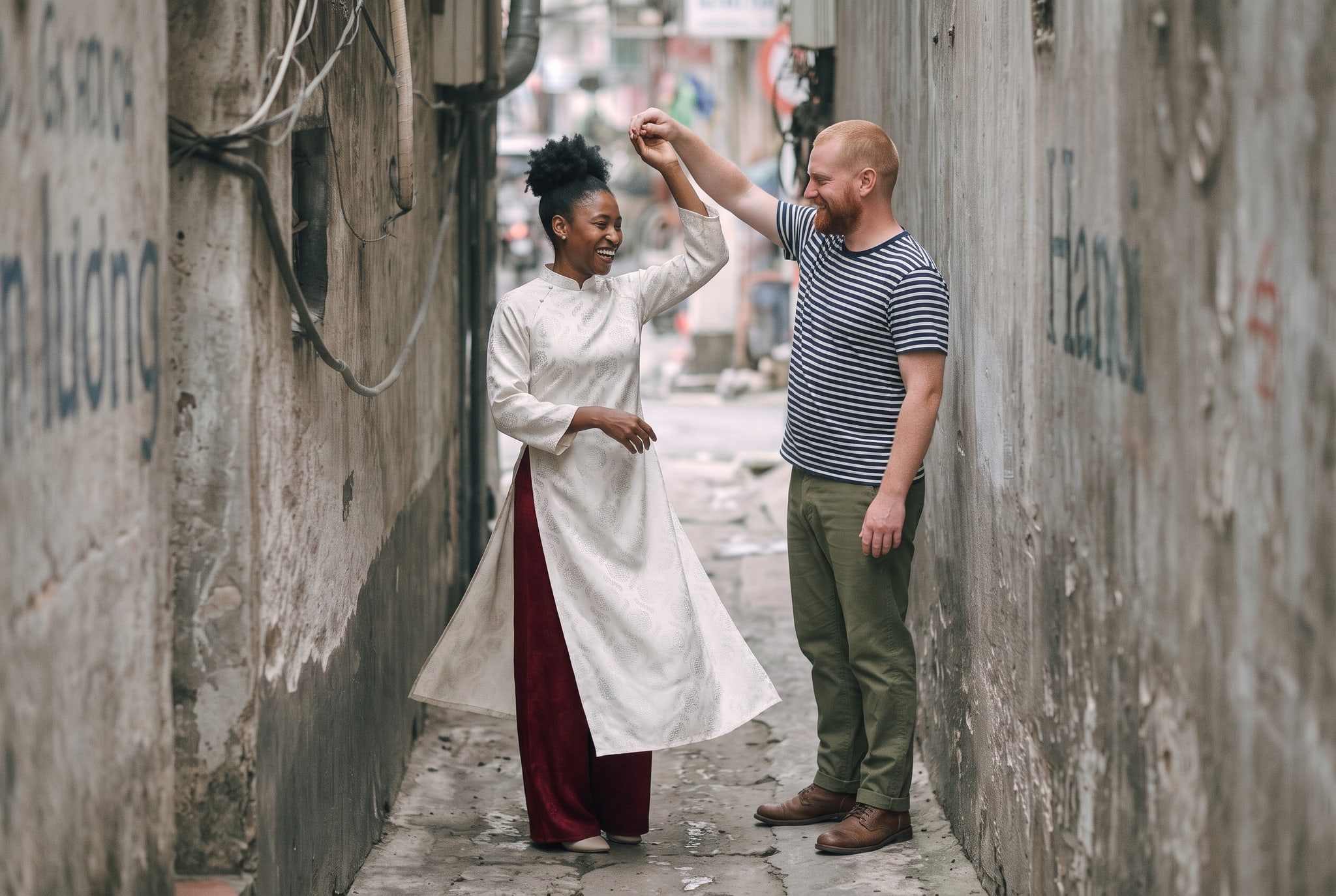
Which workshops actually let photographers in, and how do we arrange it?
Not all of the 50-odd workshops welcome cameras—some owners worry about copyright or just prefer privacy. We've built relationships over five years with roughly a dozen workshops that are reliably open and photographer-friendly. On the day before your shoot, we or our Hoi An team make direct contact, greet the owners in Vietnamese, explain that you're an anniversary couple, and ask permission. Most say yes; a few ask for a small courtesy (which varies by owner and season). We never push past a "no" or sneak shots. The cooperative workshops tend to be those on the main lane near the village entrance—look for open fronts, multiple craftspeople at work, and bins of half-finished furniture. Smaller family shops tucked into alleys are often closed to outsiders. Our photographer knows which ones have the best light angles at specific times and which backgrounds are least cluttered. We communicate this to you the night before via WhatsApp so you know what to expect when you arrive. This prevents disappointment and keeps the morning moving—no scrambling, no wasted light.
What should an anniversary couple actually wear in a carpentry village?
Wood dust, sawing, tight alleys, and uneven ground mean your outfit matters more than at a polished Hoi An riverside shoot. We advise against long flowing áo dài here (though an áo dài shoot is possible if you're willing to hold it carefully)—the hems catch wood shavings, and the fabric snags on rough textures. Light linen or cotton separates work better: simple trousers or a skirt, soft colors (cream, sand, olive, soft blue) that complement wood tones and won't clash with the warm light. Closed shoes or sandals with grip are essential; the alleys are uneven and occasionally wet. Avoid pure white (blends into morning glare) and black (reads too formal against rustic timber). We've found that couples in coordinated neutral or earth-tone outfits photograph better than those in wildly different colors. If you want an áo dài moment, we often build it in at a different location (the old town, a riverbank) and reserve Kim Bong for more relaxed clothing. Jewelry should be minimal—dangling earrings get lost in busy compositions, and heavy necklaces date quickly. Bring a light scarf or shawl if the morning is cool; it adds layers and texture to the frame.
How long does a Kim Bong session usually take, and what else should you do that day?
A focused 2-hour session at the village itself (with moving between 3–4 workshops, outfit changes, and breaks for light and timing) is standard for anniversary couples. We typically build it into a half-day itinerary: 6:30 a.m. pickup, 7:00–9:00 a.m. at the village, then move to a second location—often Hoi An old town or the riverside—for another 1.5–2 hours while light is still soft and you're energized. Some couples extend to a full-day package that includes makeup and hair at your hotel before pickup, a lunch break in Hoi An town, and evening light near the Japanese Covered Bridge or Thu Bon river. Kim Bong on its own tires quickly; the novelty of the workshops fades after two hours, and light quality drops. Pairing it with a contrasting location (narrow lanterned lanes, open water, rice fields in a nearby village) keeps the day fresh and gives you variety in your final gallery. If you've never done a professional shoot before, a half-day with two locations is the sweet spot—long enough to relax into the camera, short enough to stay focused.
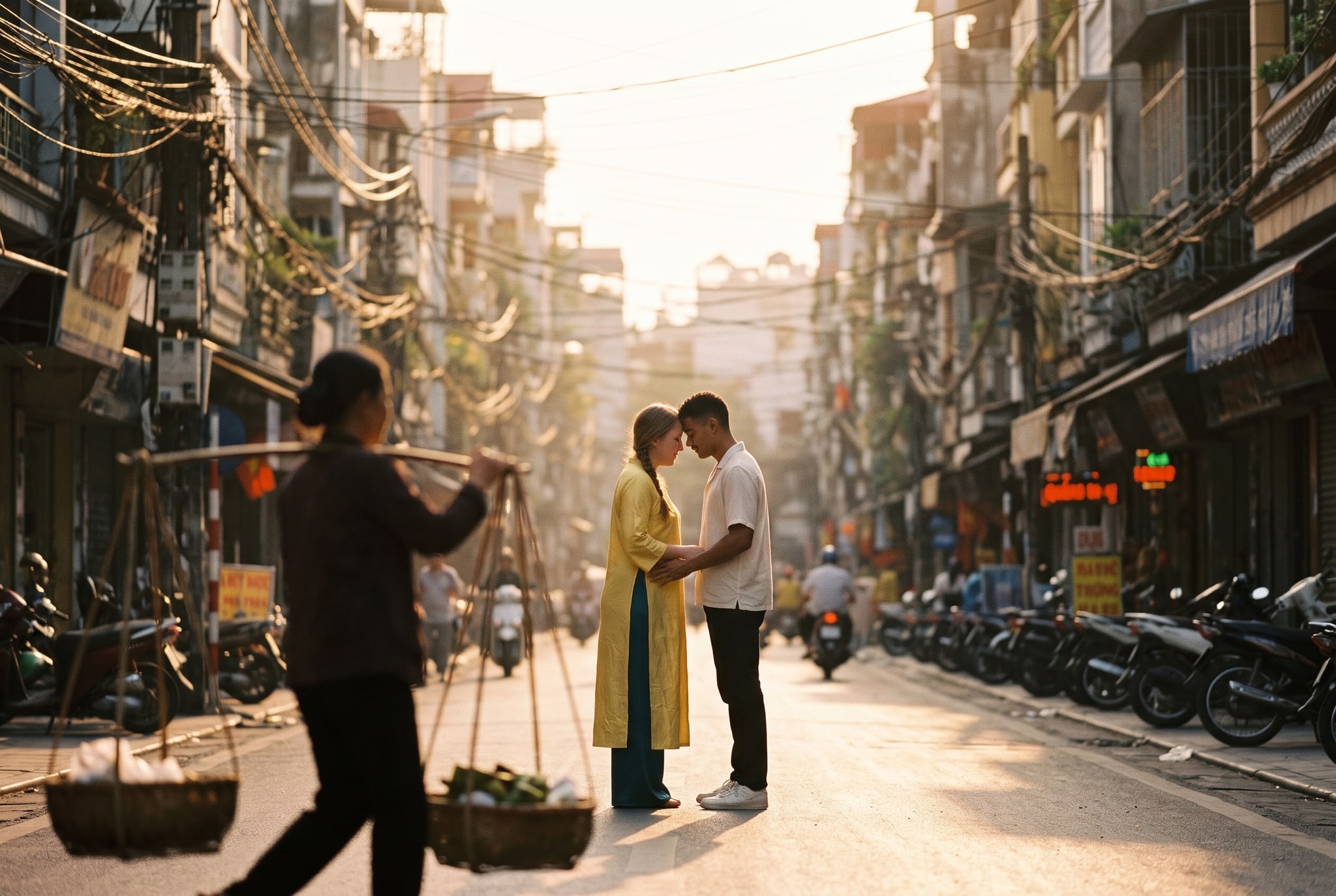
How do anniversary photoshoots at Kim Bong compare to other Hoi An couple sessions?
| Location | Best light | Mood | Crowd factor | Outfit fit | Duration |
|---|---|---|---|---|---|
| Kim Bong workshops | 6:30–9:00 a.m., 4:30–6:30 p.m. | Intimate, textured, working craft | Busy after 10:00 a.m. | Casual, earth tones | 2 hours base |
| Hoi An old town (lanterned lanes) | 5:00–7:30 a.m., 5:30–7:00 p.m. | Romantic, nostalgic, touristy | Heavy all day | Formal, áo dài ideal | 2–3 hours |
| Thu Bon riverside | 6:00–9:00 a.m., 5:00–6:30 p.m. | Serene, reflective, open | Light, locals fishing | Soft, waterside colors | 1.5–2 hours |
| Rice fields (near Thu Tien) | 6:00–8:00 a.m., 4:30–5:45 p.m. | Pastoral, expansive, quiet | Almost none | Practical, natural | 1.5–2 hours |
Kim Bong works best if you want authentic craft atmosphere and don't mind a working-village vibe. Old town suits couples who want that iconic Hoi An postcard look and don't mind crowds. Riverside is for quieter, contemplative moods. Rice fields suit those seeking wide-open space and minimal tourism. Many anniversary couples choose Kim Bong first because it's so visually distinct—you can't get that timber texture anywhere else in the region.
What actually goes wrong on a Kim Bong morning, and how do we prevent it?
Tour buses and crowding. By 9:30 a.m., three to five coach groups of 40–50 people each descend on the village. We've learned to be out and moving to quieter corners or finishing up by then. Early start (6:45 a.m. arrival) solves this.
Unplanned workshop closures. Even if an owner said yes the night before, illness, family events, or a bulk order can close a workshop on shoot day. We always have 2–3 backup locations scouted and keep the mood flexible. Our photographer pivots without drama.
Sawdust on your clothes and hair. Wood shavings stick to fabric and skin. We bring a lint roller and ask you to brush off between workshops. Lightweight fabrics help; you shake once and it's gone. Heavy cotton or linen holds dust longer.
Wet ground from overnight rain or hose-downs. Hoi An can receive sudden rain. We check the forecast the night before and either shift the start earlier (to beat afternoon storms) or move the session to the next day. A 6:00 a.m. start often escapes rain that comes at 11:00 a.m.
You and your partner running out of natural poses. After 90 minutes, couples often look stiff or repeat the same hand placements. We've learned to prompt with specific actions: "sit on the workbench, she stands behind you"; "walk toward that open shutter, don't look at the camera"; "hand her a piece of wood." Authentic movement and interaction beats forced smiling.
The light changing faster than expected in winter. November–January mornings are shorter and the sun climbs faster. We start even earlier (6:15 a.m.) and move quicker between setups. Spring (Feb–April) and autumn (Sept–Oct) give us the most forgiving light duration.
What to check before you book a Kim Bong anniversary session
- Your preferred dates and light times. Do you want early morning (6:30–9:00 a.m.) golden light, or are you inflexible about 2:00 p.m.? Early morning is non-negotiable if you want the village to look its best.
- How long you actually want to shoot. Be realistic: 2 hours is a full village immersion; anything under 90 minutes feels rushed. A full day with two locations is richer but costs more time and energy.
- Whether you have appropriate clothing already. Neutral, simple, practical outfits work here. Formal wedding dress or heavy traditional garments are harder to manage. If you're unsure, discuss with us via WhatsApp before booking.
- Your comfort with crowds and tourist areas. Hoi An and its surroundings are not quiet. If you need absolute solitude, a rice field or private garden special concept shoot might suit you better. Kim Bong is authentic but never empty.
- Whether you want a second location on the same day. Pairing Kim Bong with old town or riverside adds cost and time but doubles the variety in your gallery. Consider your energy level and schedule.
- Whether you've done a professional photoshoot before. First-time couples benefit from a Hanoi or Saigon studio session beforehand to get comfortable on camera, or a longer Hoi An day so you relax by hour two.
See packages and prices on vietnamphotoshoot.com | Chat with us on WhatsApp
We also offer couple photoshoot packages in Hanoi and Saigon if you'd like to shoot in your home city, or explore pre-wedding and elopement options if Kim Bong is part of a larger celebration. For more on Hoi An's possibilities, read our team stories.
FAQ
Can we shoot an áo dài session at Kim Bong?
Yes, but it's a compromise. The hems catch dust and snag on rough wood. We usually recommend a quick áo dài segment (30 min) in a cleaner workshop, then change into practical clothes for the rest. This gives you both looks without stress.
What's the average temperature in the morning at Kim Bong?
November–January mornings are 15–18°C (59–64°F); bring a light layer. February–May runs 20–28°C (68–82°F). September–October is 22–26°C (72–79°F). Evening shoots are cooler and more comfortable.
Do we need to pay the workshop owners?
Most don't expect payment, but some appreciate a small courtesy gesture if you're shooting for 30+ minutes. We handle this and discuss it with you before the shoot day. There's no entrance fee to the village itself.
Can we reschedule if the weather is bad on shoot day?
Yes, we monitor forecasts and can shift the date with 12–24 hours' notice if heavy rain is predicted. A light drizzle in early morning can look atmospheric; we'll assess and give you honest advice via WhatsApp.
How many photos do we get from a 2-hour Kim Bong session?
You'll receive 150–250 edited images from a 2-hour shoot, depending on locations and outfit changes. We cull heavily for quality and deliver only the frames worth keeping. A full-day session yields 250–400 images.
Is Kim Bong safe for couples at 6:30 a.m.?
Yes. The village is a working community; craftspeople arrive early. Local police patrol the area, and we're familiar with the owners and regular shopkeepers. Hoi An is a safe, welcoming town for visitors at any hour.
Proposal & Anniversary
Inclusions, prices and booking are on our booking site.
FAQ
Can we shoot an áo dài session at Kim Bong?
Yes, but it's a compromise. The hems catch dust and snag on rough wood. We usually recommend a quick áo dài segment (30 min) in a cleaner workshop, then change into practical clothes for the rest. This gives you both looks without stress.
What's the average temperature in the morning at Kim Bong?
November–January mornings are 15–18°C (59–64°F); bring a light layer. February–May runs 20–28°C (68–82°F). September–October is 22–26°C (72–79°F). Evening shoots are cooler and more comfortable.
Do we need to pay the workshop owners?
Most don't expect payment, but some appreciate a small courtesy gesture if you're shooting for 30+ minutes. We handle this and discuss it with you before the shoot day. There's no entrance fee to the village itself.
Can we reschedule if the weather is bad on shoot day?
Yes, we monitor forecasts and can shift the date with 12–24 hours' notice if heavy rain is predicted. A light drizzle in early morning can look atmospheric; we'll assess and give you honest advice via WhatsApp.
How many photos do we get from a 2-hour Kim Bong session?
You'll receive 150–250 edited images from a 2-hour shoot, depending on locations and outfit changes. We cull heavily for quality and deliver only the frames worth keeping. A full-day session yields 250–400 images.
Is Kim Bong safe for couples at 6:30 a.m.?
Yes. The village is a working community; craftspeople arrive early. Local police patrol the area, and we're familiar with the owners and regular shopkeepers. Hoi An is a safe, welcoming town for visitors at any hour.
More from the team
Anniversary photoshoot at Da Lat wild sunflower roads
Da Lat's wild sunflower roads bloom August through October. We've shot dozens of couples here—timing, transport and golden hour are everything.
Anniversary photoshoot at Langbiang Mountain: what we plan on the day
Langbiang Mountain draws couples for its pine forest, cool air and misty valleys. We've shot 40+ anniversaries there; here's how we make it work.
Proposal at Vung Tau Lighthouse: Photographer Checklist
Proposing at Vung Tau lighthouse demands precise timing, weather awareness, and a photographer who knows the location's light and crowds. We walk you through what actually happens on the day—and what we've learned goes wrong.