 Cáo Studio
Home › Blog › Pre-Wedding & Elopement
Áo Dài as Wedding Dress: How International Brides Style It
By the Cáo Studio team · Hanoi & Saigon · 2026-10-31
An áo dài wedding dress is a full ensemble: a floor-length silk tunic (áo) fitted through the bust and waist, paired with high-waisted silk trousers (dài), often featuring a high slit on one or both sides. International brides choose it as a main dress, ceremony piece, or pre-wedding statement—worn alone or layered over a Western gown. The best fabrics are silk, silk cotton blend, or linen; avoid polyester, which photographs flat and wrinkles fast. Get fitted by a tailor (in Hanoi, Hoi An, or Saigon) 4–6 weeks before your event; custom áo dài costs less than Western gowns and fits your exact measurements. At Cáo Studio, we've photographed over 200 international brides in áo dài, and those who invested in proper tailoring, chose jewel tones or pastels, and scheduled a pre-wedding photoshoot always felt most confident. Avoid bright neon colors, stiff fabrics, and oversized fits—they flatten your shape and distort in photos. --- Chat with us on WhatsApp ---
Why do international brides choose áo dài over a traditional Western gown?
Áo dài offers cultural immersion, comfort in Vietnam's heat, and timeless elegance. Many international brides—especially those with Vietnamese heritage or a deep connection to the country—wear it as their main dress rather than a backup. It photographs beautifully in natural light and flows dramatically in wind. The garment's slim silhouette flatters almost every frame, and the high slit allows easy movement for ceremony and dancing. Western guests find it exotic; Vietnamese family members see it as a sign of respect. We've noticed brides who wear áo dài report higher confidence than those in heavy Western dresses, especially in tropical humidity.
The practical edge: no corset, no struggling with bustle trains, and you can sit, dance, and enjoy your reception without restriction.
What fabrics and colors photograph best on camera?
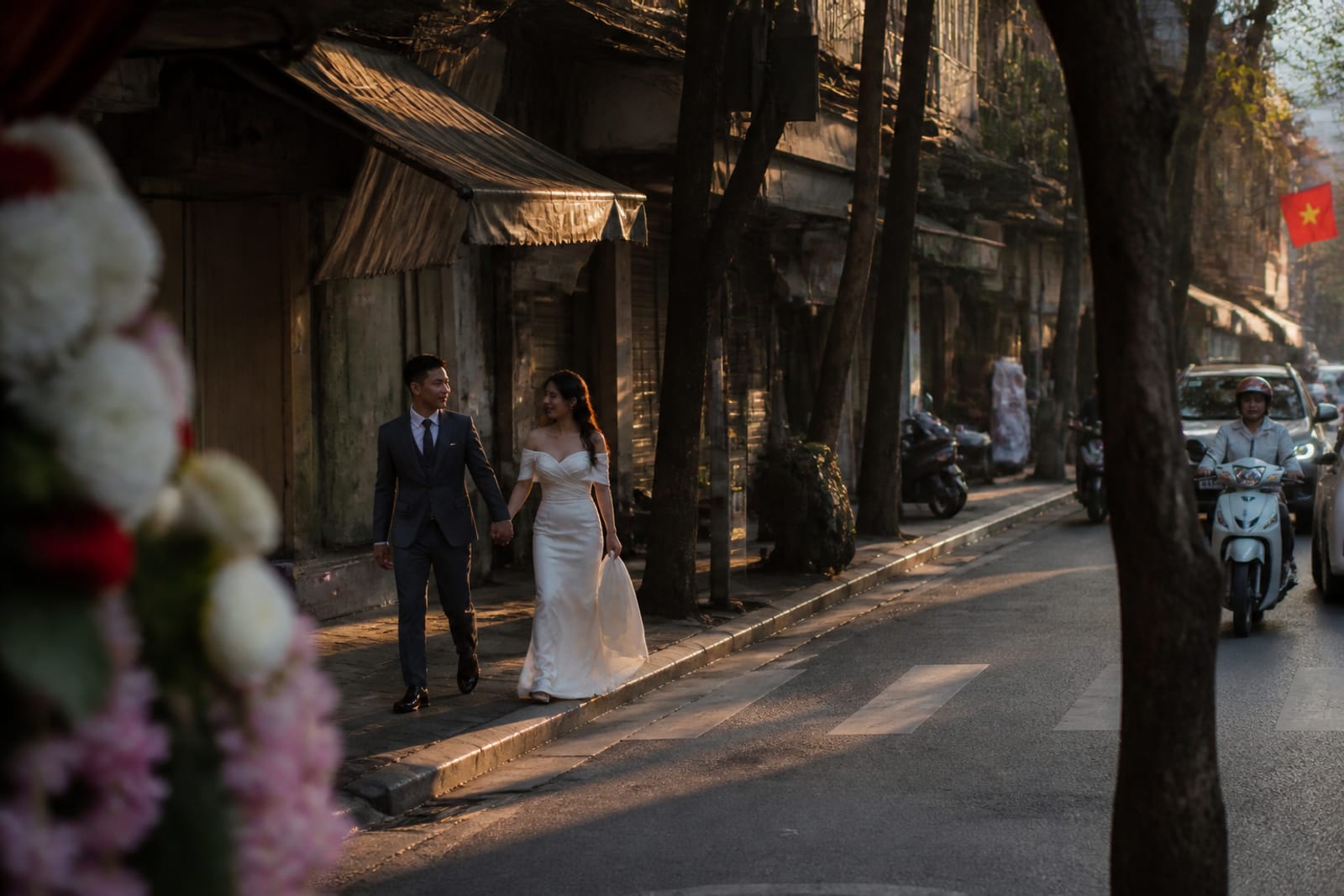
Silk and silk-cotton blends catch light beautifully and show drape and movement in stills and video. Polyester or synthetic blends photograph flat and reflect harsh light unevenly. Jewel tones—emerald, sapphire, ruby, deep plum—create stunning contrast in garden and indoor venues. Soft pastels (blush, lavender, sage) work well for daytime shoots and complement fair skin tones. White and cream áo dài are modern choices but require meticulous tailoring to avoid looking clinical; we recommend ivory with gold or silver embroidery for warmth.
Avoid neon pink, electric blue, or high-saturation colors—they blow out in bright daylight and overwhelm the frame. Metallics (gold, silver thread) add dimension but should be restrained; heavy beading can look costume-like in close-ups.
See packages and prices on vietnamphotoshoot.com
| Fabric | Best For | Camera Behavior | Why It Works |
|---|---|---|---|
| Silk dupioni | Formal ceremony | Catches light, shows texture | High sheen, natural movement |
| Silk cotton blend | All-day wear | Breathable, photograph soft | Drapes well, no wrinkles |
| Linen blend | Casual/daytime | Structured, cool | Earthy tones, relaxed elegance |
| Polyester | Budget option | Stiff, flat appearance | Not recommended for photos |
| Silk with beading | Evening/statement | Heavy, embellishment shows | Risk of over-styling |
How do you style an áo dài for a professional photoshoot?
Layering and minimalist jewelry work best. Wear your áo dài solo against a garden or architectural backdrop—it's statement enough. Avoid competing with the garment: skip heavy necklaces and opt for delicate drop earrings or a thin bracelet. Hair up (chignon or low bun) shows off the neckline; hair down works if your áo dài is plain, but can hide the collar and waist seaming that took your tailor weeks to perfect.
Undergarments matter: seamless, skin-tone shapewear prevents visible panty lines and keeps the silhouette smooth. Shoes are tricky—heels sink into grass at garden venues, so ask your photographer about the terrain. Many brides choose low heels or flat sandals and keep heels in a bag for ceremony-only moments. Bridal photography with áo dài looks freshest when you're moving: walking through a temple courtyard, sitting on temple steps, or laughing with your partner. Static poses feel awkward in a garment designed for flow.
Visit a tailor in Hanoi's Old Quarter, Hoi An's central streets, or Saigon's District 1 if you want to see examples before committing. A good tailor will ask about your photoshoot and adjust seams and slit height accordingly.
What's the timeline from choosing fabric to your photoshoot date?
Book your tailor 6–8 weeks before the shoot. First fitting (2–3 weeks in): you select fabric, decide on embellishment, choose slit style (one side, both, or modest). Second fitting (4 weeks): they'll fit the bodice and check trousers length. Final fitting (1 week before): hem adjustments, button placement, any last tweaks. If alterations are needed after final fitting, most tailors charge extra and may not have time.
Order embroidery or beading early—rush orders cost 30–50% more and risk mistakes. Plain áo dài are ready fastest; custom designs with hand-stitching take longer.
For pre-wedding photoshoots, we recommend at least two áo dài: one for garden/outdoors and one for indoor or temple shots. Many couples shoot in two locations (e.g., botanical gardens and a historic pagoda), so having a change keeps the look fresh and lets you try different styling on the same day.
How do you incorporate an áo dài into a pre-wedding shoot alongside Western dress?
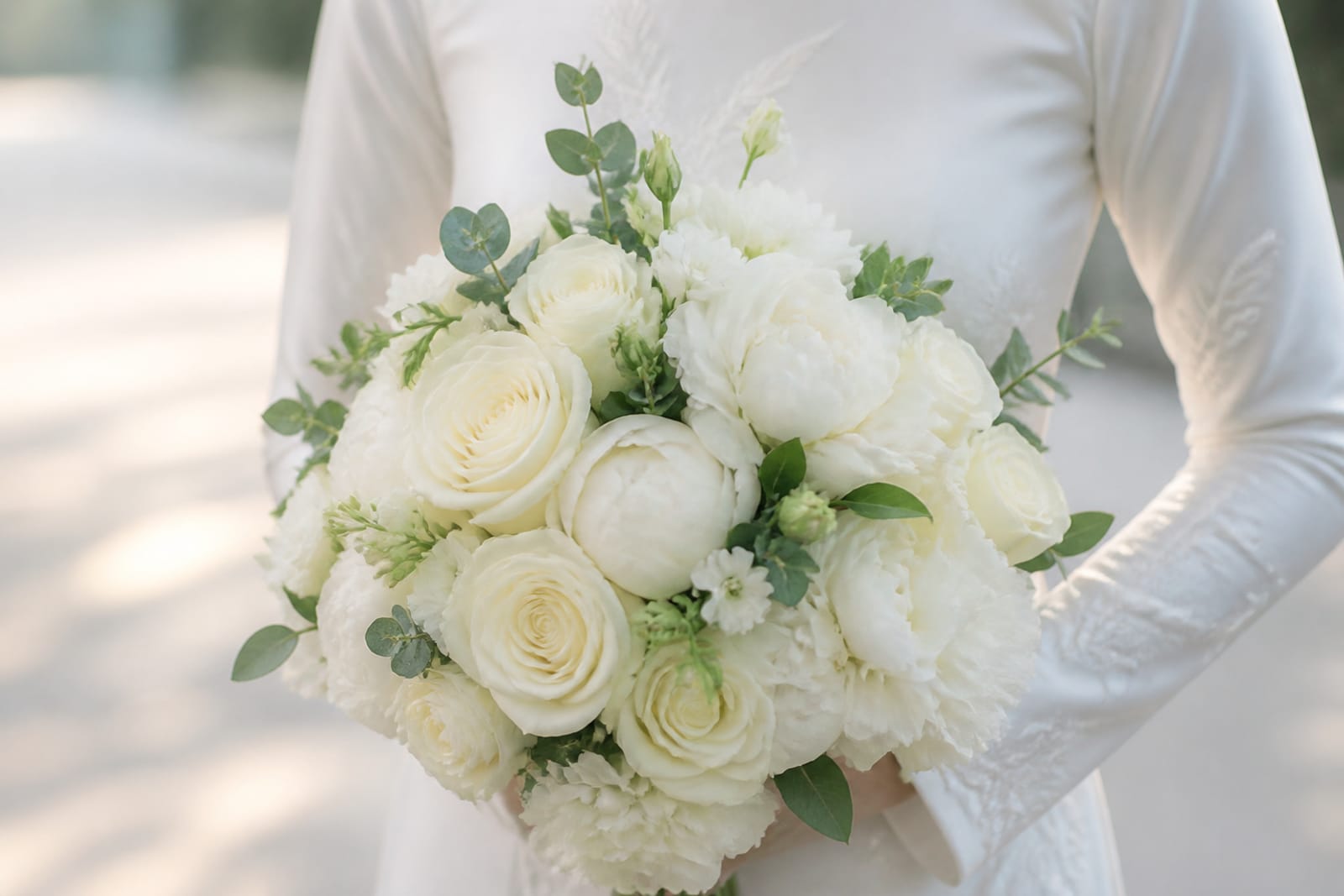
Many international brides do a "two-look" shoot: traditional Western dress for one session, áo dài for another. This works well if you're planning both a Western and Vietnamese ceremony, or if you want maximum variety for your album and social media.
We've found that mixing the two on the same shoot day works if you allow 3–4 hours and schedule the áo dài segment last—that way you're fresh for the more demanding outfit and don't rush the Vietnamese dress. Change in a hotel room or our studio dressing area; we provide mirror space and ironing supplies.
Pair your Western dress with Western jewelry and styling; when you change to áo dài, change accessories too. A bride in a white gown with Western-style updo wearing áo dài looks mismatched. Rebind your hair, swap the clutch for a simple pouch, and let the áo dài's elegance speak on its own.
If you're doing a combined couple photoshoot, coordinate with your partner: if you wear áo dài, he can wear áo groom (traditional suit) or a modern suit in a complementary tone. Matching colors feels cohesive; contrasting tones (her in emerald, him in cream) creates beautiful visual rhythm.
---
---
What to check before you book your photoshoot
Confirm the venue allows shoes. Some temples request no heels or hard-soled shoes. Check with your tailor and photographer about outdoor surfaces—grass, gravel, or temple stone steps affect shoe choice.
Ask your tailor how the slit height affects sitting. A high slit (mid-thigh) looks dramatic but can be awkward during a seated ceremony or dinner. A moderate slit (knee-length) offers elegance and comfort.
Brief your photographer on your áo dài. Send them a photo of your finished dress so they can plan posing and lighting. Professional photographers who've shot áo dài before know how to angle shots to show the fit and drape you paid for.
Schedule hair and makeup close to your shoot time. Áo dài shows your hair and neck; overly heavy makeup or a style that doesn't suit the garment will stand out. We offer makeup and hair at your hotel the morning of, so you're camera-ready without rushing.
Don't alter your áo dài after final fitting. Once it's hemmed and fitted, any changes need a return visit and cost extra. If you lose or gain weight before the shoot, contact your tailor immediately—they may be able to adjust seams.
---
How to book your áo dài photoshoot with Cáo Studio
We offer dedicated áo dài photoshoot packages with locations across Hanoi (temples, colonial villas, botanical gardens), Hoi An (lantern-lit ancient town, riverside), and Saigon (parks, rooftop venues). Sessions run 3–4 hours and include 200–300 edited digital images.
For a full pre-wedding photoshoot with both Western and Vietnamese dress, allow a full day or split across two dates. We'll guide you on timing, location scouting, and styling—including whether your partner should wear traditional áo groom or modern suiting.
Contact us on WhatsApp with photos of your áo dài (or reference photos if still tailoring), your preferred date, and whether you're combining multiple outfits. We'll confirm availability, suggest locations that suit your dress color and style, and brief you on what to expect hour-by-hour on shoot day.
International brides often arrive in Vietnam 2–3 weeks before their shoot to complete tailoring, do fittings, and adjust any styling. If you're timing a photoshoot around a wedding, book proposal and anniversary packages or a special concept shoot for engagements or vow renewals too.
---
See packages and prices on vietnamphotoshoot.com
---
FAQ
Can I wear an áo dài if I don't have Vietnamese heritage?
Yes, absolutely. We've photographed brides from the US, Australia, UK, France, and many other countries in áo dài. The key is wearing it with respect and getting a proper fit. If you're drawn to the garment for its beauty, elegance, or the experience of wearing Vietnamese culture on your wedding day, that's reason enough. Many international brides say wearing áo dài deepened their connection to Vietnam and their Vietnamese partner's family.
How much should I budget for a custom áo dài?
Custom áo dài from a skilled tailor in Hanoi, Hoi An, or Saigon ranges from modest to mid-range—far less than a Western wedding gown. A basic silk áo dài with simple tailoring costs less than a department-store dress. Embroidered or beaded versions cost more but are still less expensive than comparable Western bridal gowns. Prices vary by city and tailor; shop around and ask for references or photos of past work.
What if I sweat a lot or have visible sweat stains in photos?
Silk and silk-cotton blends are naturally moisture-wicking. Avoid polyester, which shows sweat immediately. Wear a seamless undershirt under your áo dài if you're concerned—a thin, skin-tone cotton tank keeps you dry without visible lines. Bring blotting papers to touch up any damp spots before photos. Our team can provide a small fan during breaks to help you stay cool between shots, especially on hot Saigon or Hanoi days.
Can I wear an áo dài in winter or for an outdoor ceremony in a cold climate?
An áo dài works best in warm weather—it's breathable and designed for tropical climates. If you're getting married in winter or a cool country, an áo dài is still beautiful for a photoshoot or reception, but you'll need a wrap, shawl, or light jacket for a ceremony. Silk shawls in coordinating colors look elegant and won't overwhelm the dress. Consider a separate pre-wedding photoshoot session in Vietnam if your main wedding is elsewhere—many couples do this to wear áo dài in its cultural home.
Should my photographer have experience shooting áo dài?
Yes, it helps. Photographers familiar with áo dài know how to angle shots to show the fit, drape, and slit detail. They understand the slit width affects posing—wide slits allow dramatic leg-showing poses, while modest slits suit more traditional stances. They'll light the garment to show fabric texture and any embroidery. At Cáo Studio, our team has shot hundreds of áo dài for both Vietnamese and international brides, so we know how to make yours look its best in every frame.
What's the difference between an áo dài I buy off-the-rack and one that's custom-tailored?
Off-the-rack áo dài are cut generically and often don't fit your exact measurements, especially in the bust, waist, and shoulder width—the fitted sections that define the silhouette. Sleeves may be too long or too short; the trouser rise might not suit your proportions. Custom tailoring (3–4 fittings over 6–8 weeks) means every seam is adjusted to your body, creating a garment that flatters your shape, moves with you, and photographs beautifully. The difference is noticeable in photos: custom áo dài show your curves and posture clearly; ill-fitting off-the-rack versions can look costume-like and unflattering.
Pre-Wedding & Elopement
Inclusions, prices and booking are on our booking site.
FAQ
Can I wear an áo dài if I don't have Vietnamese heritage?
Yes, absolutely. We've photographed brides from the US, Australia, UK, France, and many other countries in áo dài. The key is wearing it with respect and getting a proper fit. If you're drawn to the garment for its beauty, elegance, or the experience of wearing Vietnamese culture on your wedding day, that's reason enough. Many international brides say wearing áo dài deepened their connection to Vietnam and their Vietnamese partner's family.
How much should I budget for a custom áo dài?
Custom áo dài from a skilled tailor in Hanoi, Hoi An, or Saigon ranges from modest to mid-range—far less than a Western wedding gown. A basic silk áo dài with simple tailoring costs less than a department-store dress. Embroidered or beaded versions cost more but are still less expensive than comparable Western bridal gowns. Prices vary by city and tailor; shop around and ask for references or photos of past work.
What if I sweat a lot or have visible sweat stains in photos?
Silk and silk-cotton blends are naturally moisture-wicking. Avoid polyester, which shows sweat immediately. Wear a seamless undershirt under your áo dài if you're concerned—a thin, skin-tone cotton tank keeps you dry without visible lines. Bring blotting papers to touch up any damp spots before photos. Our team can provide a small fan during breaks to help you stay cool between shots, especially on hot Saigon or Hanoi days.
Can I wear an áo dài in winter or for an outdoor ceremony in a cold climate?
An áo dài works best in warm weather—it's breathable and designed for tropical climates. If you're getting married in winter or a cool country, an áo dài is still beautiful for a photoshoot or reception, but you'll need a wrap, shawl, or light jacket for a ceremony. Silk shawls in coordinating colors look elegant and won't overwhelm the dress. Consider a separate pre-wedding photoshoot session in Vietnam if your main wedding is elsewhere—many couples do this to wear áo dài in its cultural home.
Should my photographer have experience shooting áo dài?
Yes, it helps. Photographers familiar with áo dài know how to angle shots to show the fit, drape, and slit detail. They understand the slit width affects posing—wide slits allow dramatic leg-showing poses, while modest slits suit more traditional stances. They'll light the garment to show fabric texture and any embroidery. At Cáo Studio, our team has shot hundreds of áo dài for both Vietnamese and international brides, so we know how to make yours look its best in every frame.
What's the difference between an áo dài I buy off-the-rack and one that's custom-tailored?
Off-the-rack áo dài are cut generically and often don't fit your exact measurements, especially in the bust, waist, and shoulder width—the fitted sections that define the silhouette. Sleeves may be too long or too short; the trouser rise might not suit your proportions. Custom tailoring (3–4 fittings over 6–8 weeks) means every seam is adjusted to your body, creating a garment that flatters your shape, moves with you, and photographs beautifully. The difference is noticeable in photos: custom áo dài show your curves and posture clearly; ill-fitting off-the-rack versions can look costume-like and unflattering.