 Cáo Studio
Home › Blog › Ao Dai Photoshoot
Ao Dai Etiquette for Foreigners: How to Wear it Right
By the Cáo Studio team · Hanoi & Saigon · 2026-11-02
Ao dai etiquette for foreigners centers on context, fit, and intention. Wear it to cultural events, formal dinners, or photoshoots; avoid business meetings where Western dress is expected, temples during active prayer, or casual tourist activities unless invited. The garment demands proper fit—tailored to your body, not borrowed loose—and modest styling: long sleeves, high necklines, no sheer fabrics over bare skin. At Cáo Studio, we work with first-time wearers weekly; most guests book a photoshoot specifically to wear ao dai respectfully in professional photos, paired with a stylist's guidance on posture, movement, and the historical meaning behind each color and pattern. Respect the tradition by learning its origin, choosing quality fabric, and understanding that wearing ao dai as a foreigner is a compliment when done thoughtfully—not appropriation. Chat with us on WhatsApp
When should you wear ao dai as a visitor to Vietnam?
The question we hear most on WhatsApp is: "Will it be weird if I wear ao dai?" The answer depends entirely on context. Wear it to weddings, Tet celebrations, temple visits during non-prayer hours, formal dinners, cultural festivals, or—most common—a professional photoshoot. Don't wear it to grocery shopping, airport arrivals, or business negotiations where your hosts expect Western attire. We've seen guests arrive in hired ao dai for daytime street walks and feel self-conscious; the garment carries weight. Reserve it for moments that honor it. Photoshoots remain the safest, most meaningful entry point for foreigners: you're explicitly celebrating the tradition, a photographer guides your posture, and you walk away with professional images that prove your respect.
Why does fit matter more than most foreigners realize?
We stop photoshoots mid-session to adjust fit at least twice weekly. A loose-fitting ao dai—borrowed from a cousin, bought off a rack—reads as careless, even disrespectful. The garment's elegance depends on its relationship to your body: the áo (tunic) should follow your curves without clinging; the nhập (side slits) should sit at mid-thigh, not sag or ride up. Sleeves must end at your wrist bone. The neckline should sit at your collarbone. When we book international guests for ao dai photoshoots, we always ask: do you own one, or will you need rental and tailoring? Rental-only ao dai from souvenir shops rarely fit properly. A three-hour tailoring session in Hanoi or Saigon—costing less than most Western formal wear—transforms a generic garment into one that looks and feels like yours. Foreigners who invest in tailoring report that wearing it feels like wearing armor: confident, intentional, grounded.
What colors and patterns carry meaning you should know?
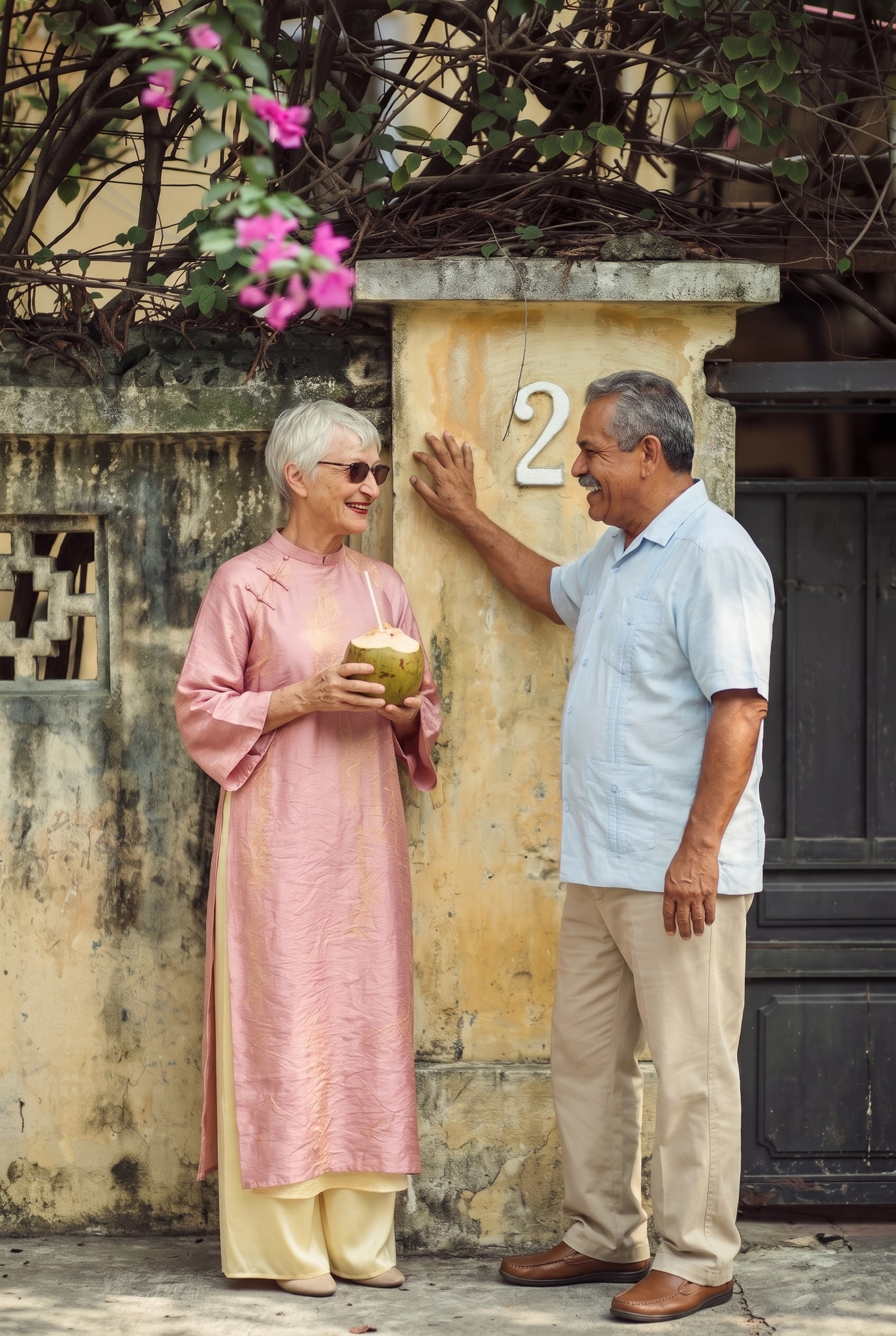
Red and gold ao dai appear at Tet and weddings; white or pastel silk is for everyday formality or photoshoots. Black signals mourning or very formal evening wear. Floral or nature-inspired patterns (peonies, plum blossoms, cranes) suggest celebration and prosperity; geometric or abstract designs read as contemporary. As a foreigner, you won't offend by wearing the "wrong" color—but you'll be noticed and remembered if you choose thoughtfully. We've had guests ask us to source ao dai in specific colors for concept shoots: a soft lavender for a romantic pre-wedding session, deep emerald for a solo portrait series. Each choice tells a story. When you're booking a photoshoot, discuss color psychology with your stylist weeks in advance. A makeup and hair specialist at your hotel can help you choose a shade that suits your complexion and the mood you're chasing.
| Ao Dai Type | Best for | Formality Level | Who should wear it |
|---|---|---|---|
| White silk, plain | Daily formal wear, photoshoots | High | Professionals, students, visitors honoring tradition |
| Pastel silk (lavender, blush, sage) | Romantic events, couple shoots | Medium-high | Engaged couples, romantic photoshoots |
| Red or gold | Tet, weddings, celebrations | Formal | Special occasions; avoid if you have no connection |
| Black | Evening formal, mourning | High/Somber | Avoid as a first-time foreigner wearer |
| Embroidered, patterned | Photoshoots, formal dinners | Medium-high | Visitors seeking traditional flair in images |
How do you move and sit without looking stiff?
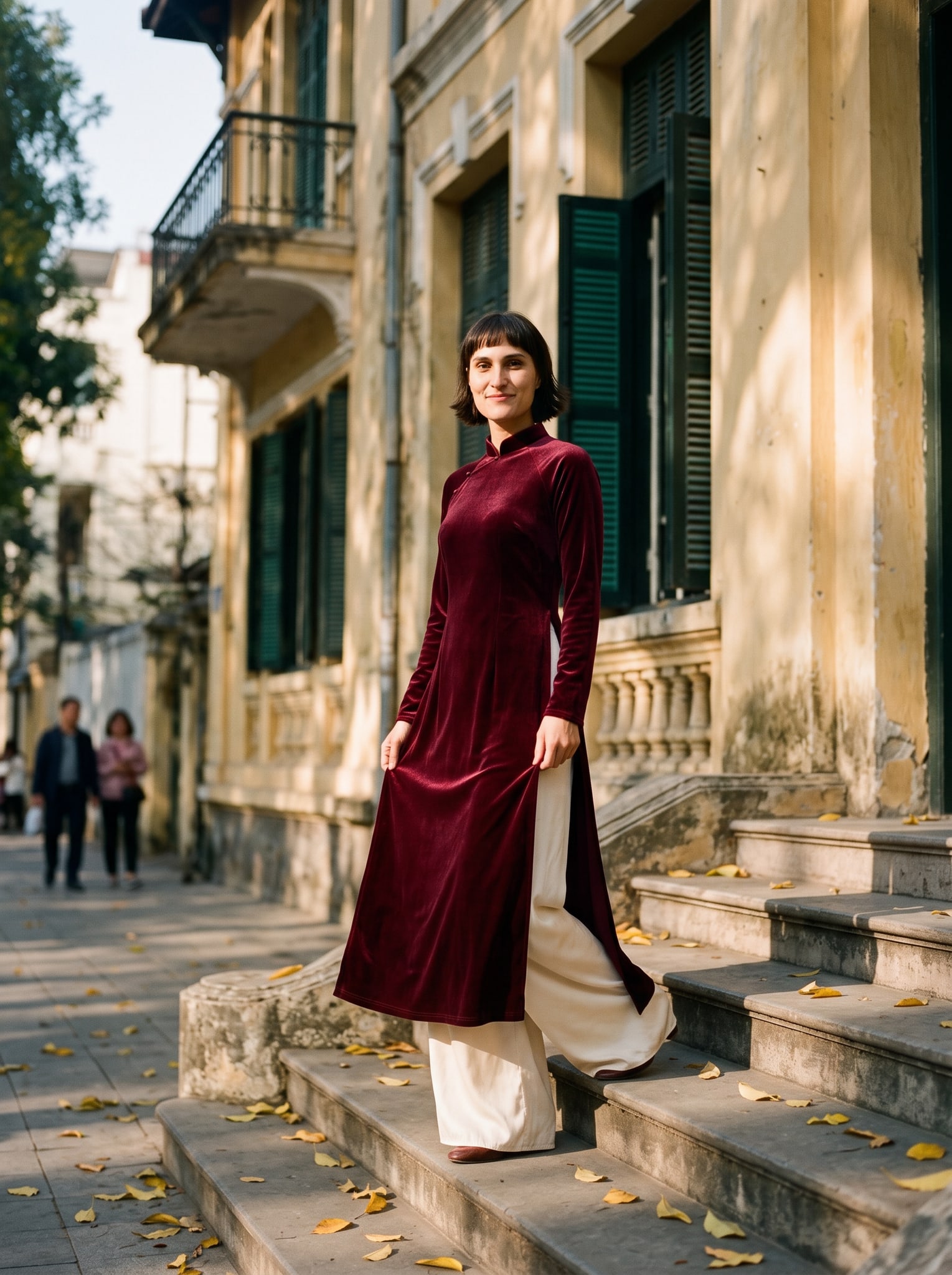
This is the detail that separates a confident ao dai wearer from an uncomfortable one. The garment's length and narrow cut demand a specific posture: stand tall, shoulders back, walk in small steps. Sitting requires care—cross your legs or let them angle together; never sprawl. When you move, the áo should float slightly; rushing makes it cling or wrinkle. On set, our photographers spend the first 20 minutes of an ao dai shoot just coaching movement. We ask guests to walk toward us, turn slowly, place one hand on their hip, cross their arms gently. Most discover that the garment enforces elegance—once you stop fighting it, you move like you're meant to. For a couple photoshoot in ao dai, partners learn to stand close without tangling sleeves, to touch hands without disturbing the fabric. It's almost choreography. Slow, deliberate movement photographs beautifully and feels meditative to wear.
What's the practical difference between owning, renting, and getting tailored in Vietnam?
We track this constantly because it shapes every guest's experience. Owning: you bring ao dai from home or buy one in a mall in Hanoi (Trang Tien area) or Saigon (Ben Thanh market). Cost varies; quality fabric runs high. Tailoring in Vietnam adds weeks if you're visiting short-term. Renting: tourist shops near the Old Quarter in Hanoi or District 1 in Saigon offer daily rentals; your photoshoot stylist usually vetoes them for quality. Getting tailored locally: you find a tailor (we recommend several in both cities), choose fabric (silk, cotton-silk blend, linen), sit for a fitting, and collect in 3–5 days. This is the middle path most first-time foreign visitors take. Cost is reasonable (based on local tailor rates, typical ao dai tailoring in Vietnam sits well under the price of Western formal wear). You own the result, wear it once or many times, and feel authentic. When you book a photoshoot package, ask us for tailor referrals and timelines. We'll guide you through the process so you don't rush.
What to check before you buy or rent your ao dai
- Fit at the shoulders: shoulders should sit right at your shoulder point, not slip or pinch.
- Sleeve length: wrist bone to fingertip, not longer or shorter.
- Áo length: should graze the floor when you stand; hem should not drag or expose ankles excessively.
- Nhập (side slits): check that they sit mid-thigh and don't ride higher when you sit.
- Neckline: no gap at the collarbone; it should follow your neck's curve.
- Fabric weight: silk drapes beautifully; cotton blends are practical for all-day wear; avoid synthetic polyester that clings or wrinkles.
- Color against your skin: stand in daylight, check if it brightens or dulls your face.
- Tailoring seams: ask the tailor about reinforced side seams (high stress on ao dai); confirm they'll adjust hems free if you need it.
See packages and prices on vietnamphotoshoot.com
How does a photoshoot help you understand ao dai etiquette in practice?
We've learned that reading etiquette rules is passive; wearing ao dai while a professional photographer directs you is embodied learning. During a shoot, you discover that the garment moves differently than Western clothes, that posture matters, that certain angles photograph beautifully because they honor the design. Our stylists explain meaning as they dress you: why we choose this color, how the pattern tells a story, what the tunic's cut was designed to do. You see your own reflection in the studio mirror wearing something sacred to another culture—and you feel the weight of that. International guests often tell us afterward that they understand Vietnam's aesthetic, history, and values differently after a photoshoot. It's not just about photos; it's about cultural literacy. If you're visiting Hanoi, our studio there offers tailoring coordination; in Saigon, we do the same. A pre-wedding or concept shoot in ao dai becomes a ritual, not a tourist activity.
FAQ
Can I wear ao dai to a restaurant or casual dinner in Vietnam?
Yes, if it's a formal dinner or celebration—ask your host. For casual meals, Western dress or smart casual is expected. Ao dai signals formality; use it intentionally, not as everyday wear unless you're living long-term in Vietnam.
What if I'm not Vietnamese—is it disrespectful to wear ao dai as a foreigner?
No, if your intention is respectful. Wearing it to honor the tradition, learn about Vietnam, or celebrate an event is welcomed. Wearing it as a costume or to nightclubs crosses into dismissiveness. Vietnamese people see the difference.
How much does tailoring cost in Vietnam for a first-time wearer?
Tailor costs vary by city and fabric choice; we recommend asking our team for current referrals when you book. Getting tailored locally gives you a proper-fitting garment you'll own and wear again, unlike tourist rentals.
Should I wear an áo dài to a Buddhist temple in Vietnam?
Ao dai is appropriate for temple visits outside active prayer hours. Avoid temples during morning or evening prayers unless invited. Wear long sleeves, keep it buttoned, remove shoes inside. Ask the temple staff if you're unsure.
Can I wear ao dai during a family photoshoot if my family members aren't Vietnamese?
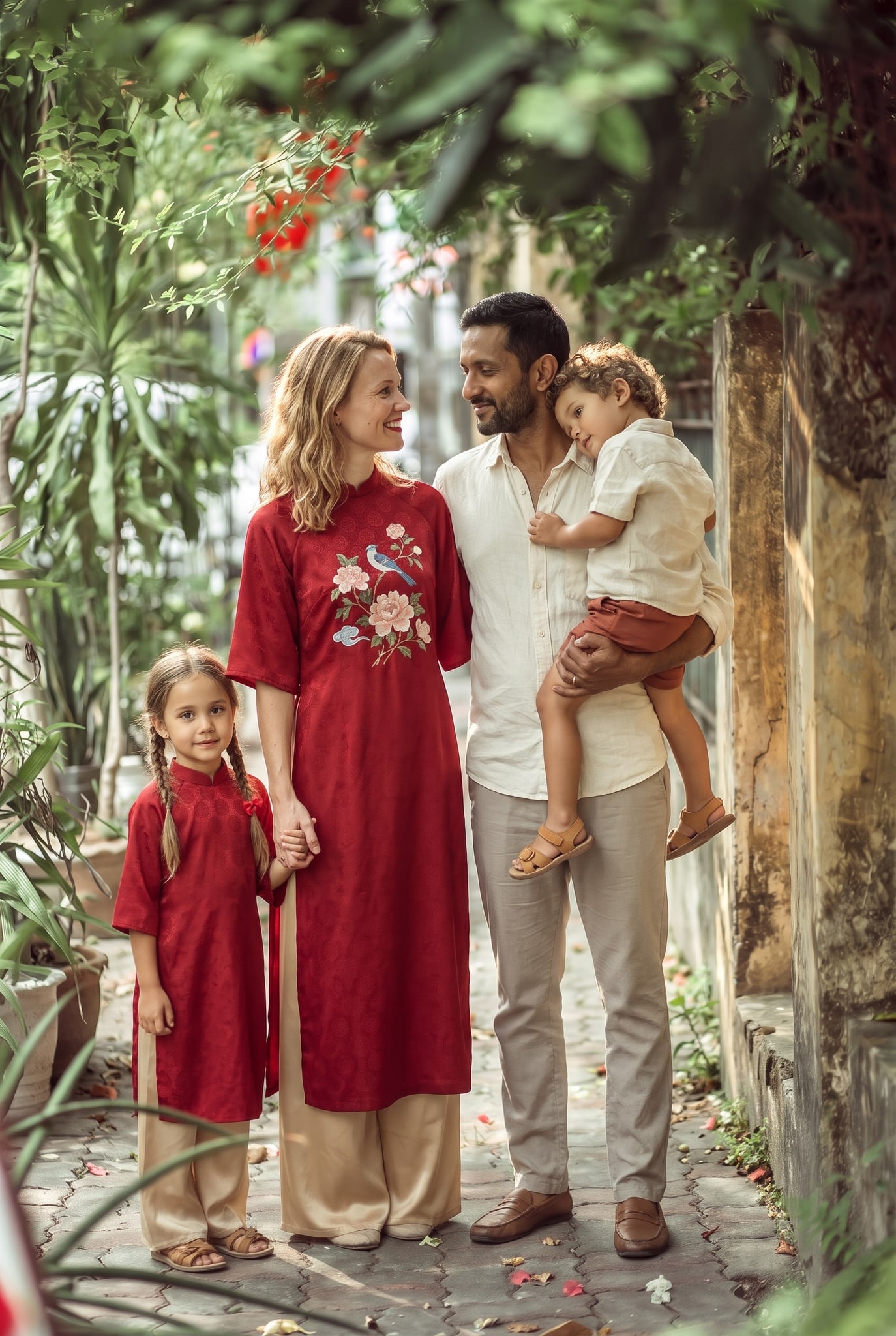
Absolutely. Family photoshoots work beautifully in mixed cultural dress—one member in ao dai, others in meaningful attire. Discuss your vision with the photographer beforehand; we help coordinate outfits so they harmonize in the frame.
What's the difference between áo dài for photoshoots versus everyday wear?
Photoshoot ao dai is usually finer silk, tailored more precisely, styled for visual impact on camera. Everyday ao dai (worn by Vietnamese professionals) may be cotton-silk, simpler patterns, practical for work. As a visitor, prioritize proper fit and quality fabric over style; formality follows.
Ao Dai Photoshoot
Inclusions, prices and booking are on our booking site.
FAQ
Can I wear ao dai to a restaurant or casual dinner in Vietnam?
Yes, if it's a formal dinner or celebration—ask your host. For casual meals, Western dress or smart casual is expected. Ao dai signals formality; use it intentionally, not as everyday wear unless you're living long-term in Vietnam.
What if I'm not Vietnamese—is it disrespectful to wear ao dai as a foreigner?
No, if your intention is respectful. Wearing it to honor the tradition, learn about Vietnam, or celebrate an event is welcomed. Wearing it as a costume or to nightclubs crosses into dismissiveness. Vietnamese people see the difference.
How much does tailoring cost in Vietnam for a first-time wearer?
Tailor costs vary by city and fabric choice; we recommend asking our team for current referrals when you book. Getting tailored locally gives you a proper-fitting garment you'll own and wear again, unlike tourist rentals.
Should I wear an áo dài to a Buddhist temple in Vietnam?
Ao dai is appropriate for temple visits outside active prayer hours. Avoid temples during morning or evening prayers unless invited. Wear long sleeves, keep it buttoned, remove shoes inside. Ask the temple staff if you're unsure.
Can I wear ao dai during a family photoshoot if my family members aren't Vietnamese?
Absolutely. [Family photoshoots](/go/family-photoshoot) work beautifully in mixed cultural dress—one member in ao dai, others in meaningful attire. Discuss your vision with the photographer beforehand; we help coordinate outfits so they harmonize in the frame.
What's the difference between áo dài for photoshoots versus everyday wear?
Photoshoot ao dai is usually finer silk, tailored more precisely, styled for visual impact on camera. Everyday ao dai (worn by Vietnamese professionals) may be cotton-silk, simpler patterns, practical for work. As a visitor, prioritize proper fit and quality fabric over style; formality follows.
More from the team
Ao Dai Photos at Hoi An Lantern Street at Night
Hoi An Lantern Street (Nguyen Hoan) glows at dusk with silk lanterns and reflected light. Our team shoots ao dai here after dark, navigates tight vendor spaces, and handles the low-light challenge with experience from 100+ night sessions.
Ao dai for wedding photos in Quy Nhon: renting, fitting and styling
Quy Nhon's coastal backdrops pair beautifully with traditional ao dai. We walk through rental choices, fitting logistics and how our team coordinates styling on shoot day.
Vietnam Pre-Wedding Photoshoot: What We Book at Cáo Studio
Pre-wedding shoots in Vietnam mean morning light in Hoi An's Old Town, cyclos in Saigon, or terraced fields near Ninh Binh. We walk you through what a session actually costs, how we schedule it, and what goes wrong on the day.