 Cáo Studio
Home › Blog › Ao Dai Photoshoot
Áo Dài Fabrics Explained: Silk, Chiffon, Velvet for Photoshoots
By the Cáo Studio team · Hanoi & Saigon · 2026-11-01
Áo dài fabrics fall into three main camps: silk (heavy, luminous, expensive), chiffon (flowing, delicate, mid-range), and velvet (rich texture, formal, seasonal). At Cáo Studio, we recommend silk for luxury portraits and close-ups because light catches it beautifully; chiffon for movement shots and outdoor Hanoi or Saigon sessions because it breathes and photographs softly; velvet for concept shoots, evening looks, and winter bookings because it holds color and drape. Cost and durability vary—silk wrinkles easily, chiffon needs careful handling, velvet suits one season well. Before ordering, check thread count for silk, weight (gsm) for chiffon, pile density for velvet, and always test how your chosen fabric moves in the studio lights we use. Our stylists will advise which works best for your shoot date, location, and skin tone during your initial WhatsApp chat. Chat with us on WhatsApp
Why does silk work best for close-up áo dài portraits?
Silk reflects light at angles that flatter skin and highlight embroidery detail. When our photographers shoot in soft studio light or morning sun in Hoi An, silk catches subtle gradations—shadows fall softer, highlights sit warmer. The fabric's natural sheen photographs like satin without looking plastic. We've shot hundreds of engagement and pre-wedding áo dài sessions, and silk consistently renders wedding colors (cream, gold, red) with the depth clients expect in albums. The trade-off: silk wrinkles under the arms and creases easily between shots, so our team always travels with a handheld steamer and a lint roller. If you're booking a pre-wedding áo dài shoot, silk pairs perfectly with our makeup and styling service.
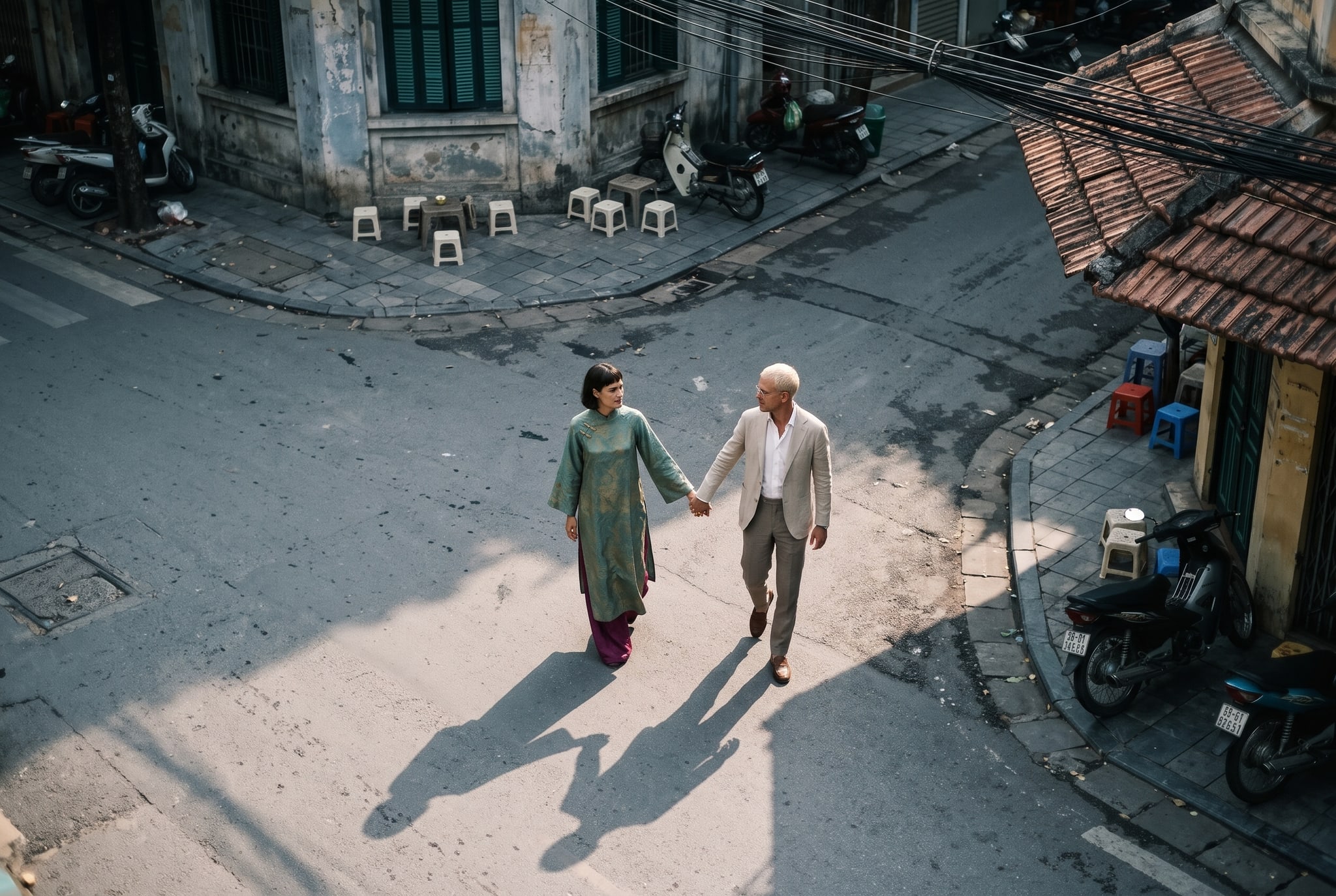
What makes chiffon the easiest fabric for outdoor Hanoi shoots?
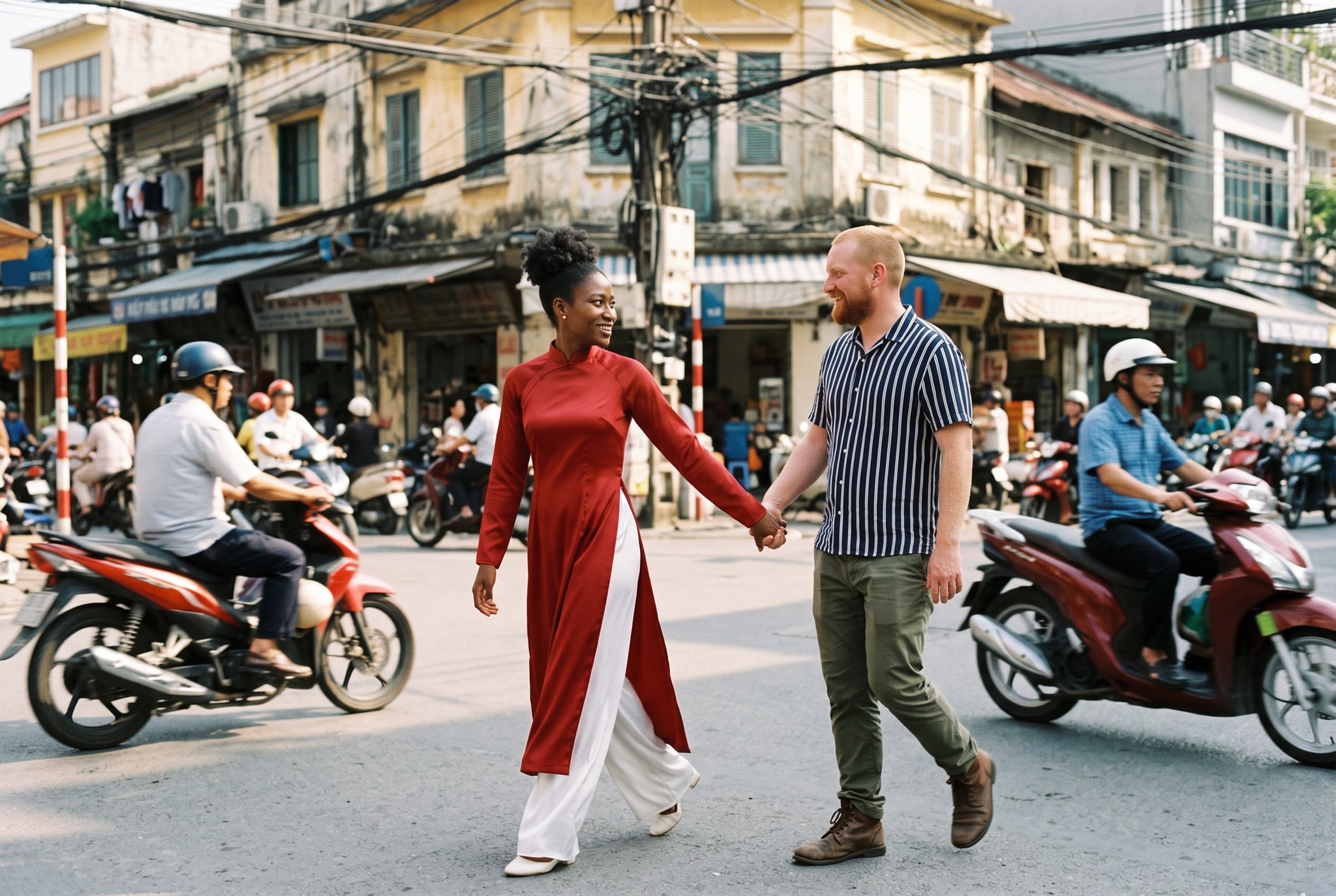
Chiffon breathes. On a humid Hanoi morning near Hoàn Kiếm Lake or a Saigon afternoon in District 1, a guest in heavy silk will wilt—chiffon stays cool and moves with air currents, creating natural folds in photos. The fabric is lighter (typically 28–30 gsm, per our stylists' notes), so it doesn't cling to sweat or sit stiffly. Cameras love the way chiffon drapes because wrinkles disappear when the garment moves; we ask guests to walk, turn, and sit so the fabric does the work. Chiffon also costs less than silk, making it ideal for guests booking a vacation photoshoot who want quality without commitment to an expensive garment. One downside: chiffon tears if snagged on jewelry or studio equipment, so we lay out a clear path and brief guests on handling during fittings.
See packages and prices on vietnamphotoshoot.com
When should you choose velvet over silk or chiffon?
Velvet photographs like jewels. The pile traps light and creates depth, so reds look crimson, blacks look near-black (not gray), and golds look antique. We recommend velvet for special concept shoots—think moody evening portraits, winter holiday sessions, or formal proposals—because the fabric's texture reads beautifully in rich, directional lighting. Velvet also holds its shape better than silk or chiffon, so it's forgiving on bodies and through multiple outfit changes. The catch: velvet has a season. In Hanoi summer (May–September), it's uncomfortably warm and photographs with visible sweat marks. We typically suggest it for November through February bookings or indoor studio sessions in air-conditioned spaces. Pile density matters (higher = richer color, lower = more fragile); check gsm weight when ordering—under 200 gsm can look cheap, over 350 gsm can be stiff.
How do you compare fabric costs and durability for your budget?
Here's what we see from our team's day-to-day experience and guest feedback:
| Fabric | Typical gsm/weight | Durability (home care) | Wrinkles easily? | Best for | Cost basis |
|---|---|---|---|---|---|
| Silk | 16–25 oz | Low (hand wash, iron low) | Yes, fast | Luxury, close-ups, albums | High |
| Chiffon | 28–35 gsm | Medium (machine washable) | No (wrinkles hide) | Outdoor, movement, everyday wear | Mid |
| Velvet | 200–350 gsm | Medium (careful washing) | No | Evening, concept, winter | Mid to high |
| Cotton blend | 120–150 gsm | High (machine washable) | Yes, but resilient | Casual, daytime, families | Low |
| Brocade/jacquard | 150–250 gsm | High (structured) | No | Formal events, accessories | Mid |
Silk costs most because production is labor-intensive and import tariffs are high in Vietnam. You'll spend more upfront but the fabric feels luxurious in person and on camera. Chiffon sits middle-ground—affordable, forgiving, widely available. Velvet sits high because of pile-making labor, though it lasts years if stored properly. A guest booking a couple photoshoot in premium silk will invest more than two guests in chiffon, but both will look stunning in their final images. Check the price list when you book to see what your package includes; our stylists can also source fabric if you arrive without an áo dài.
What should you check before ordering áo dài fabric online?
We've seen guests arrive with gorgeous-looking fabric that photographs flat or wrinkles catastrophically. Here's our pre-order checklist:
- Thread count for silk: 16–25 oz is standard; under 12 oz looks thin, over 25 oz can be stiff.
- Weight (gsm) for chiffon: 28–35 gsm is ideal for flow; under 20 gsm tears easily, over 40 gsm looks plastic.
- Pile direction for velvet: Run your hand both ways before buying; one direction should feel smooth, the other slightly raised. Poorly finished velvet shows footprints in photos.
- Fiber content: 100% silk, polyester-silk blend (easier care), or polyester-chiffon (more affordable). We work with all three; pure silk is hardest to maintain but most photogenic.
- Dye quality: Order a swatch if possible. Cheap dyes fade in Hanoi sunlight and look washed-out in photos. Deep reds and blacks should stay saturated.
- Seam finishing: Examine seams on samples. Raw edges on silk fray; chiffon needs French seams or binding. Velvet seams should be flat-felled to avoid bulk.
- Shrinkage: Silk shrinks 2–5% when washed; chiffon rarely shrinks; velvet can shrink up to 10% if exposed to heat. Ask the seller for care notes.
Book a makeup and hair session at your hotel the morning of your shoot if you're worried about fabric condition—our team can steam and press your áo dài on-site and advise last-minute styling fixes.
How do our stylists pick fabric on the shoot day?
When a guest arrives at our studio in Hanoi or Saigon with two or three áo dài options, our stylists run a quick fabric test. We drape each one under our studio lights (typically 5600K daylight-balanced LEDs) and watch how color renders on camera. We also ask the guest to move—walk, sit, turn—so we see how the fabric behaves. Silk often looks best in the first hour before humidity hits the underarms; chiffon stays camera-ready for hours. If a guest is unsure, we photograph a detail (embroidery, sleeve, neckline) in each fabric and pull the images onto our monitor so they can see what works best. This takes 10 minutes and often saves a whole re-do later. We also consider location: outdoor Hoi An sessions at midday favor light chiffon; indoor proposal shoots under soft tungsten lighting favor silk or velvet. Our team adjusts lighting to suit the fabric, not the other way around, so trust us to work with whatever you bring.
What fabric mistakes do we see most often—and how to avoid them?
Too-heavy silk in summer: Guests buy 25 oz silk thinking it's "better," but it traps heat and shows sweat. We solve this by steering you to chiffon or lighter silk (16–18 oz) for May–September bookings in Hanoi and Saigon. Check our áo dài photoshoot guide for seasonal fabric tips before you order.
Velvet that pills: Low-quality velvet (under 200 gsm or cheap fiber blend) pricks and pills when rubbed—jewelry catches it, shoulders compress it, and the camera sees texture flaws. We inspect velvet carefully on arrival and sometimes recommend a change.
Chiffon that photographs see-through: Ultra-light chiffon (under 25 gsm) can look translucent under studio lights, exposing undergarments. We use a slip or second layer to fix this on the day, but it's better to order 28+ gsm if possible.
Dye that bleeds into lining: Cheap reds and purples sometimes bleed when steamed or sweat-dampened. We always test a corner with a damp cloth during fittings. If dye runs, we either avoid water-based steaming or plan extra touch-ups between shots.
Seams that split during fitting: Poorly finished seams, especially on armholes, tear when guests move. Our stylists inspect the underarm and shoulder area carefully and can add reinforcement stitching in about 20 minutes if needed.
The best way to avoid these? Send us photos of your áo dài via WhatsApp before your shoot date. Our team will review it and flag any concerns so we can plan solutions together.
FAQ
Is silk always the best choice for áo dài photoshoots?
Silk photographs beautifully in close-ups and studio light, but it wrinkles quickly and can feel uncomfortably warm in Hanoi or Saigon humidity. Chiffon is often smarter for outdoor summer sessions and movement shots. Choose silk for luxury, intimate portraits; chiffon for breath and flow. Ask our stylists during your WhatsApp consultation which suits your date and location.
Why does my áo dài fabric look dull in photos even though it looks shiny in person?
Fabric sheen depends on light angle. Silk and satin need soft, directional light to glow; harsh midday sun can flatten them. Our studio lights are tuned to 5600K and positioned to catch shimmer. Bring your áo dài to a fitting so we can test it under our actual lighting rig—you'll see the difference immediately.
Can I machine wash silk or velvet áo dài before my photoshoot?
Never. Silk and velvet should be hand-washed in cool water or dry-cleaned only. Machine washing shrinks silk 2–5%, felts velvet, and fades dye. We recommend a professional press or hand-steaming 1–2 days before your shoot. If you need urgent cleaning, ask us during booking—we work with trusted dry cleaners in Hanoi and Saigon.
What's the difference between silk and polyester-silk blends for photography?
Pure silk has a softer, more luminous sheen and feels luxurious. Polyester blends (30–50% polyester) are easier to care for, wrinkle less, and cost less. On camera, pure silk looks slightly warmer and more sophisticated; blends look solid and practical. Both photograph well—choose based on your budget and post-shoot care tolerance.
If I arrive without an áo dài, can your team source one for my photoshoot?
Yes. We work with local tailors and rental shops in Hanoi and Saigon. Contact us via WhatsApp as soon as you book so we have time to source a garment in your size and color preference. Sourcing usually takes 3–5 working days. Fabric type (silk, chiffon, velvet) depends on availability, but we'll prioritize what suits your shoot date and location.
Does velvet photograph differently in natural light versus studio light?
Velvet shines under directional light (studio or sunrise/sunset) because the pile traps and diffuses rays. In flat midday sun, velvet looks dull and one-dimensional. For outdoor Hoi An or garden sessions, we recommend shooting velvet áo dài in early morning or late afternoon, or bringing a reflector to add dimension. Studio sessions always flatter velvet because we control the light angle precisely.
How do I know if the chiffon I'm buying is good quality for a photoshoot?
Check weight (28–35 gsm is ideal), fiber content (100% polyester or silk-polyester is fine), and dye stability (test a swatch with a damp cloth—it shouldn't bleed). Order a physical sample if possible and drape it near a window to see how light passes through. Send the seller's product photos to our WhatsApp and we'll give honest feedback on suitability before you commit.
Ao Dai Photoshoot
Inclusions, prices and booking are on our booking site.
FAQ
Is silk always the best choice for áo dài photoshoots?
Silk photographs beautifully in close-ups and studio light, but it wrinkles quickly and can feel uncomfortably warm in Hanoi or Saigon humidity. Chiffon is often smarter for outdoor summer sessions and movement shots. Choose silk for luxury, intimate portraits; chiffon for breath and flow. Ask our stylists during your WhatsApp consultation which suits your date and location.
Why does my áo dài fabric look dull in photos even though it looks shiny in person?
Fabric sheen depends on light angle. Silk and satin need soft, directional light to glow; harsh midday sun can flatten them. Our studio lights are tuned to 5600K and positioned to catch shimmer. Bring your áo dài to a fitting so we can test it under our actual lighting rig—you'll see the difference immediately.
Can I machine wash silk or velvet áo dài before my photoshoot?
Never. Silk and velvet should be hand-washed in cool water or dry-cleaned only. Machine washing shrinks silk 2–5%, felts velvet, and fades dye. We recommend a professional press or hand-steaming 1–2 days before your shoot. If you need urgent cleaning, ask us during booking—we work with trusted dry cleaners in Hanoi and Saigon.
What's the difference between silk and polyester-silk blends for photography?
Pure silk has a softer, more luminous sheen and feels luxurious. Polyester blends (30–50% polyester) are easier to care for, wrinkle less, and cost less. On camera, pure silk looks slightly warmer and more sophisticated; blends look solid and practical. Both photograph well—choose based on your budget and post-shoot care tolerance.
If I arrive without an áo dài, can your team source one for my photoshoot?
Yes. We work with local tailors and rental shops in Hanoi and Saigon. Contact us via WhatsApp as soon as you book so we have time to source a garment in your size and color preference. Sourcing usually takes 3–5 working days. Fabric type (silk, chiffon, velvet) depends on availability, but we'll prioritize what suits your shoot date and location.
Does velvet photograph differently in natural light versus studio light?
Velvet shines under directional light (studio or sunrise/sunset) because the pile traps and diffuses rays. In flat midday sun, velvet looks dull and one-dimensional. For outdoor Hoi An or garden sessions, we recommend shooting velvet áo dài in early morning or late afternoon, or bringing a reflector to add dimension. Studio sessions always flatter velvet because we control the light angle precisely.
How do I know if the chiffon I'm buying is good quality for a photoshoot?
Check weight (28–35 gsm is ideal), fiber content (100% polyester or silk-polyester is fine), and dye stability (test a swatch with a damp cloth—it shouldn't bleed). Order a physical sample if possible and drape it near a window to see how light passes through. Send the seller's product photos to our WhatsApp and we'll give honest feedback on suitability before you commit.
More from the team
Ao Dai Photos at Hoi An Lantern Street at Night
Hoi An Lantern Street (Nguyen Hoan) glows at dusk with silk lanterns and reflected light. Our team shoots ao dai here after dark, navigates tight vendor spaces, and handles the low-light challenge with experience from 100+ night sessions.
Ao dai for wedding photos in Quy Nhon: renting, fitting and styling
Quy Nhon's coastal backdrops pair beautifully with traditional ao dai. We walk through rental choices, fitting logistics and how our team coordinates styling on shoot day.
Vietnam Pre-Wedding Photoshoot: What We Book at Cáo Studio
Pre-wedding shoots in Vietnam mean morning light in Hoi An's Old Town, cyclos in Saigon, or terraced fields near Ninh Binh. We walk you through what a session actually costs, how we schedule it, and what goes wrong on the day.