 Cáo Studio
Home › Blog › Ao Dai Photoshoot
Ao dai for wedding photos in Hue: renting, fitting and styling
By the Cáo Studio team · Hanoi & Saigon · 2026-11-02
In Hue, ao dai for wedding photography works best when fitted three weeks before your shoot and styled to suit the location—river, pagoda, or garden—rather than your daily wear. Renting from a Hue tailor costs less upfront and saves packing; buying lets you keep the garment and adjust it later. Cáo Studio books you a fitter in the old town, handles styling changes the morning of the shoot, and photographs you in three to five ao dai across multiple locations if you choose our ao dai photoshoot package. Most guests spend the equivalent of one rental per fitting session and ask us on WhatsApp which option suits their timeline and budget. Avoid ordering online from outside Hue without a local fitting—sizing differs by tailor, and fabric drapes differently in humidity. Chat with us on WhatsApp | See packages and prices on vietnamphotoshoot.com
Should you rent or buy your Hue ao dai for the shoot?
Renting suits travelers who arrive one week before the wedding photoshoot, return home after, and own limited luggage space. You collect the ao dai from a Hue tailor three days before the shoot, return it within 24 hours, and pay per rental. Buying suits couples who want to keep the garment, plan to wear it again, or have flexible timelines for alterations. We've noticed Hue renters choose simpler silhouettes (straight skirts, classic embroidery) to reduce fitting risk, while buyers invest in heavier silk or beaded panels they'll treasure later. The rental market in Hue's District 1 (near the Perfume River) moves fast in peak wedding months (October–November, March–April), so book your tailor through us four weeks ahead. Buying locally and shipping abroad takes six to eight weeks if you want overseas alterations included.
Decision framework: If you stay under two weeks in Hue and fly home same week, rent. If you stay longer, plan to wear it again, or want to gift it, buy.
What does a Hue ao dai fitting session actually involve?
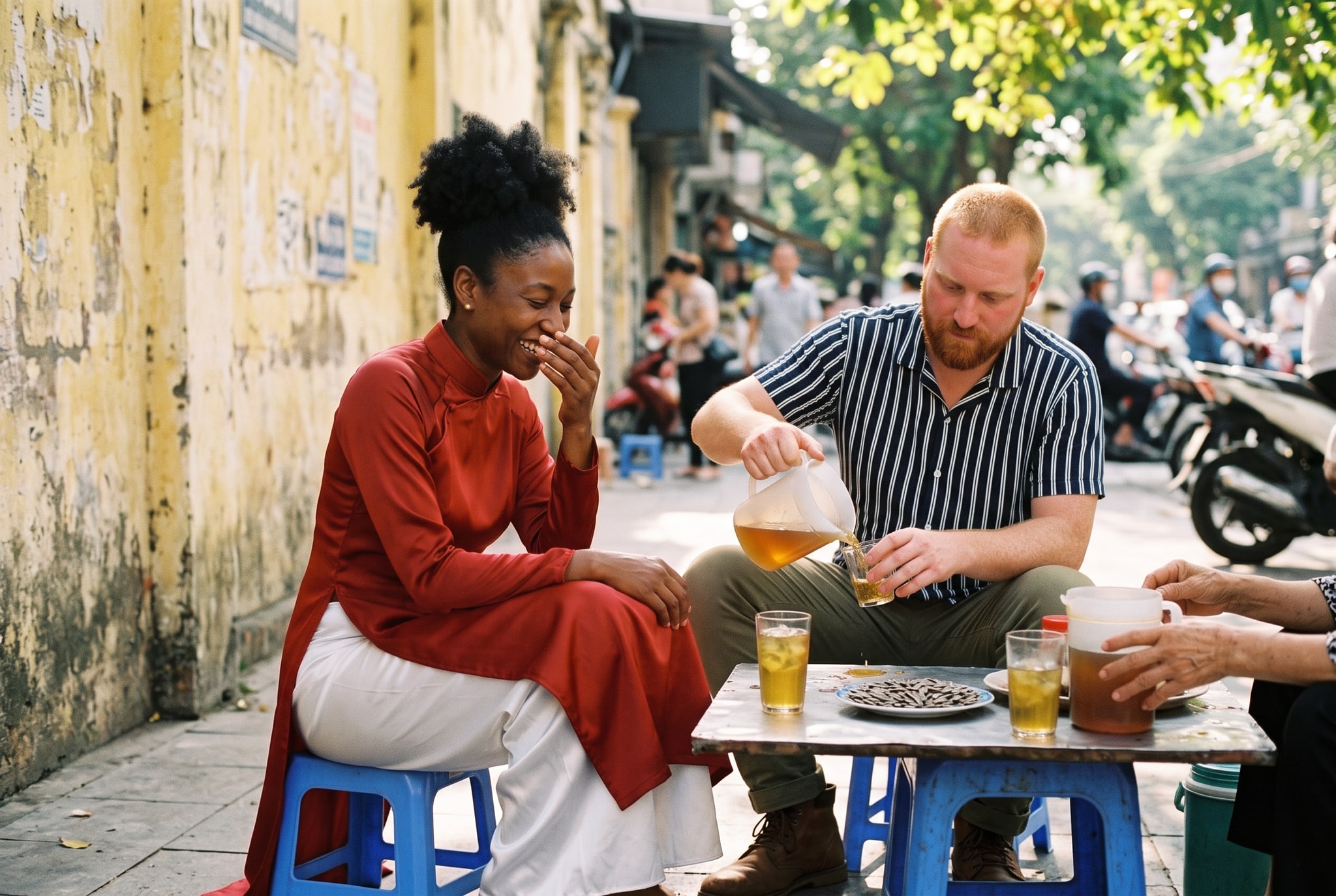
We arrange your first fitting ten days before the shoot. You meet the tailor at their workshop—usually a three-room space with mirrors, bolt racks, and a seamstress station. The process takes 90 minutes. The tailor measures your shoulder, bust, waist, hip, and inseam; pins the áo (tunic) to your body; checks armhole depth and sleeve length; marks the áo hem; and pins the lower skirt length while you stand still. You try on a second áo in a different color or fabric weight to see how your body photographs in silk versus cotton blends. We send you progress photos and fabric samples over WhatsApp. Most guests request one fitting adjustment around day five—usually hem length or sleeve tightness—which the tailor completes by day eight. We've learned that humidity in Hue (average 75–85%) causes fabric to sit slightly lower on day one than day seven, so we over-fit by 1–2 cm on the hem and adjust down if needed.
Ask the tailor directly: Can you adjust the fit if I gain or lose 2 kg before the shoot? Most say yes for a small fee, but confirm in writing.
How do we style three ao dai across Hue's top wedding photo locations?
Your ao dai photoshoot package includes two to three venue changes and three to four ao dai looks if you choose the extended session. Here's how we plan it. The first ao dai is usually a lighter color (cream, blush, pale jade) for morning light at the Citadel's outer walls or Tu Duc Tomb's garden paths—silk photographs softer in bright sun. The second is richer (emerald, burgundy, navy with embroidery) for the Perfume River's stone ferry dock or Thien Mu Pagoda's steps, where darker fabric holds definition against water and shadow. A third might be a playful contrast (gold, orange, or white with bold sleeves) for a private garden in the suburbs or a colonial-era hotel courtyard. Our stylist arrives 90 minutes before the shoot with your ao dai, pressing equipment, and backup alterations (safety pins, stitch tape, and a hand-sewing kit—humidity and movement can pop seams). We choose which ao dai to wear at each location based on light, wall color, and your mood that morning; we've found that switching fabric texture mid-shoot refreshes your energy and gives you visual variety in the final gallery.
Real example: In March 2025, a Hue couple wore a cream silk tunic by the river at 7 a.m., changed to burgundy with embroidered cranes at the Pagoda at 9:30 a.m. (sun had risen, warmer tones read better), and wore a gold ao dai with white trousers in the old-town alley at 11:30 a.m. when side light flattened the embroidery.
What's the true cost breakdown and what should you check before ordering?
We don't quote prices here—ask us for a quote on WhatsApp after you tell us whether you plan to rent or buy. Instead, here's what you'll actually spend time on and should verify:
| Expense type | Who handles it | What to check |
|---|---|---|
| Tailor fitting (1–2 sessions) | Local Hue tailor | Tailor's refund policy if garment doesn't fit on shoot day |
| Ao dai purchase or rental | You + tailor | Tailor accepts edits after delivery; fabric won't fade if exposed to sun before your shoot |
| Alterations/adjustments (seams, hem, sleeves) | Tailor | Turnaround time (most do 24-hour rush for a fee) |
| Styling and pressing morning-of | Cáo Studio | Included in your photoshoot package |
| Hair and makeup (if separate) | Cáo Studio makeup and hair service | Timing: we arrive 60–90 min before shoot; bring pins and hair nets |
What to check before you order:
- Does the tailor provide a receipt with fabric content, care instructions, and fit guarantee?
- Can they accommodate rush alterations (within 24 hours) if something shifts?
- Will they store the ao dai in a sealed garment bag to prevent humidity damage?
- Does the tailor have a backup áo in your size/color in case the first doesn't fit?
- Can you schedule a final 15-minute try-on at the studio the morning of the shoot?
Which ao dai styles photograph best in Hue's light and humidity?
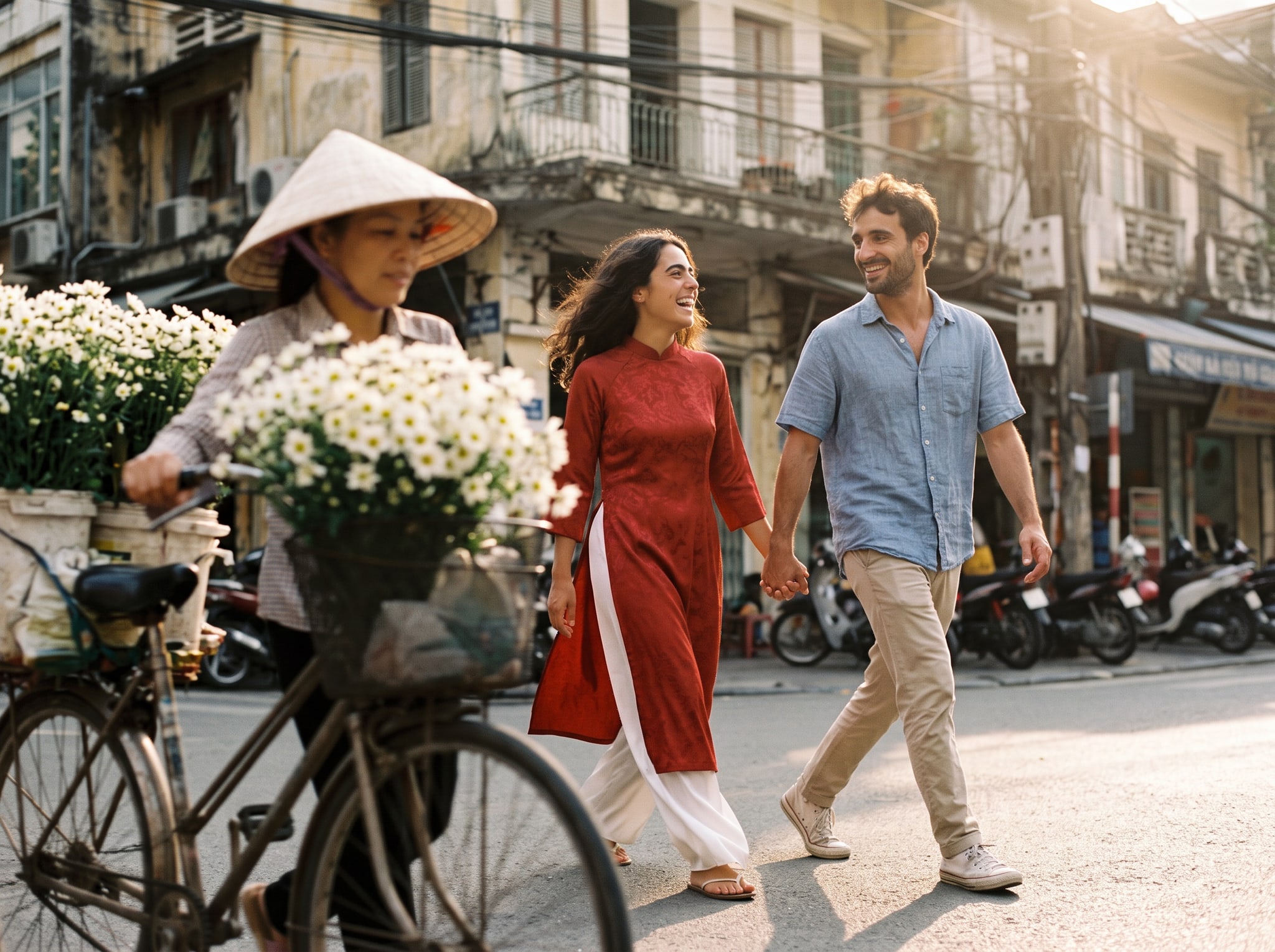
Hue's diffuse light (overcast much of the year, or bright-but-hazy by rivers) favors ao dai with texture: embroidered panels, layered silk, contrasting underskirts, and panels that catch light differently across the frame. Flat, single-color tunics read as blocks in flat light; textured ao dai break up the silhouette. We style most Hue wedding guests in either classic white or jewel-tone ao dai with embroidered sleeves or chest panels, because those details photograph crisply even when the sky is overcast. Lightweight silk and cotton blends move better in humidity and don't cling to your body in 30°C+ heat; heavier silks (charmeuse, dupioni) drape beautifully but feel warm after two hours outdoors. High-neck tunics with short sleeves suit spring (March–May); lower necklines and longer sleeves work better in cooler months (October–February). We avoid pure white for guests who sweat visibly; cream, pale gold, or blush-white photographs similarly but hides marks.
Recommendation: For a first ao dai, choose a jewel tone (emerald, sapphire, burgundy) with 2–3 cm of embroidery on the sleeves and chest. You'll photograph well in any light, the color won't show humidity stains, and you can wear it again to formal events in Hue.
How far ahead should you book your Hue ao dai shoot with fittings included?
Book eight weeks before your travel date if you're buying an ao dai; five weeks if you're renting. Our calendar for Hue's peak months (October–November, February–April) fills up, and local tailors book fitting slots in waves. We coordinate with three trusted tailors in the old town (District 1), two in the suburbs (Phu Xuan area), and one near the university, so we can usually fit new guests within 48 hours of your WhatsApp message. The fitting-to-shoot gap should be at least seven days so the tailor can complete alterations without rush fees and so you have time to request one small adjustment. If you arrive in Hue with less than seven days before your shoot, we can fast-track you: rush fitting on arrival day, one-day alterations, and final approval the evening before the shoot. This costs extra and is stressful for everyone, so avoid it if you can.
Ready to plan your Hue session?
A final note on humidity, humidity, humidity
Hue's rivers and pagodas are photogenic precisely because the air is moist. That same moisture affects your ao dai. Silk wrinkles faster when humidity is high (75%+, common March–May and September–November). We always travel with a small steamer and anti-wrinkle spray; we hang your ao dai in an air-conditioned room the night before, not outdoors. Embroidered panels can feel damp to the touch—this is normal and doesn't harm the thread or fabric, but it means embroidery sits heavier and shows texture more in photos (a good thing). Never fold an ao dai tightly for more than one hour in Hue—creases set quickly and are hard to remove on the day. If you buy your ao dai and plan to wear it again after the shoot, ask the tailor for care instructions specific to Hue's climate; most recommend hand-washing in cool water and air-drying flat, never machine wash.
See packages and prices on vietnamphotoshoot.com
Want to combine your ao dai shoot with other services?
Many Hue guests pair their ao dai photoshoot with our couple photoshoot package to capture both solo ao dai portraits and candid moments together. If you're traveling with family, our family photoshoot package includes ao dai styling for group shots in Hue's gardens. Engaged couples often add our proposal and anniversary package to re-wear their ao dai in a surprise second location. Hair and makeup can be added via our dedicated hotel service—we come to your hotel one hour before the shoot and handle touch-ups between outfit changes.
FAQ
Can we rent from a tailor outside the old town and save money?
Yes, suburban tailors near the university and Phu Xuan market charge less, but fitting adjustments take longer (48–72 hours vs. 24 hours in District 1). Book earlier if you choose a slower tailor.
What if the ao dai doesn't fit on shoot day?
We arrive 90 minutes early and carry a stitch kit, safety pins, and emergency alterations. Small gaps (1–2 cm at the waist or sleeves) we fix on the spot. For larger issues, your tailor provides a backup áo—confirm this in writing when you order.
Do we need to wear undergarments under the ao dai?
Yes. A slip or body-hugging white camisole under the áo and fitted shorts or slip under the skirt prevent transparency and keep you comfortable. The tailor usually advises what weight works best for your fabric.
Is it cheaper to buy an ao dai online and bring it to Hue?
Sometimes, but fit varies wildly between overseas makers and Hue tailors. Shipping back for alterations is slow and risky. We recommend buying locally or renting locally to avoid resize delays.
Can we wear jewelry and accessories with the ao dai?
Yes—simple gold or jade necklaces, drop earrings, and metal bracelets photograph well. Avoid dangling necklaces longer than your waist or wide bracelets that hide your arms. Hats and headpieces (flower crowns, silk headwraps) are popular for garden and pagoda shoots.
How long does a typical Hue ao dai shoot take?
Three to four hours for three locations and two to three ao dai changes. Morning shoots (6–10 a.m.) catch softer light; afternoon shoots start at 3–4 p.m. to avoid harsh midday heat and humidity stains.
What if we want to shoot in rain?
Hue's drizzle (common October–November) photographs beautifully with ao dai. Silk darkens slightly when wet—we bring umbrella and towels. Your tailor should confirm the fabric is colorfast before you commit to a rainy-day shoot.
Ao Dai Photoshoot
Inclusions, prices and booking are on our booking site.
FAQ
Can we rent from a tailor outside the old town and save money?
Yes, suburban tailors near the university and Phu Xuan market charge less, but fitting adjustments take longer (48–72 hours vs. 24 hours in District 1). Book earlier if you choose a slower tailor.
What if the ao dai doesn't fit on shoot day?
We arrive 90 minutes early and carry a stitch kit, safety pins, and emergency alterations. Small gaps (1–2 cm at the waist or sleeves) we fix on the spot. For larger issues, your tailor provides a backup áo—confirm this in writing when you order.
Do we need to wear undergarments under the ao dai?
Yes. A slip or body-hugging white camisole under the áo and fitted shorts or slip under the skirt prevent transparency and keep you comfortable. The tailor usually advises what weight works best for your fabric.
Is it cheaper to buy an ao dai online and bring it to Hue?
Sometimes, but fit varies wildly between overseas makers and Hue tailors. Shipping back for alterations is slow and risky. We recommend buying locally or renting locally to avoid resize delays.
Can we wear jewelry and accessories with the ao dai?
Yes—simple gold or jade necklaces, drop earrings, and metal bracelets photograph well. Avoid dangling necklaces longer than your waist or wide bracelets that hide your arms. Hats and headpieces (flower crowns, silk headwraps) are popular for garden and pagoda shoots.
How long does a typical Hue ao dai shoot take?
Three to four hours for three locations and two to three ao dai changes. Morning shoots (6–10 a.m.) catch softer light; afternoon shoots start at 3–4 p.m. to avoid harsh midday heat and humidity stains.
What if we want to shoot in rain?
Hue's drizzle (common October–November) photographs beautifully with ao dai. Silk darkens slightly when wet—we bring umbrella and towels. Your tailor should confirm the fabric is colorfast before you commit to a rainy-day shoot.
More from the team
Ao Dai Photos at Hoi An Lantern Street at Night
Hoi An Lantern Street (Nguyen Hoan) glows at dusk with silk lanterns and reflected light. Our team shoots ao dai here after dark, navigates tight vendor spaces, and handles the low-light challenge with experience from 100+ night sessions.
Ao dai for wedding photos in Quy Nhon: renting, fitting and styling
Quy Nhon's coastal backdrops pair beautifully with traditional ao dai. We walk through rental choices, fitting logistics and how our team coordinates styling on shoot day.
Vietnam Pre-Wedding Photoshoot: What We Book at Cáo Studio
Pre-wedding shoots in Vietnam mean morning light in Hoi An's Old Town, cyclos in Saigon, or terraced fields near Ninh Binh. We walk you through what a session actually costs, how we schedule it, and what goes wrong on the day.