 Cáo Studio
Home › Blog › Ao Dai Photoshoot
Ao dai for wedding photos in Mekong Delta: renting, fitting and styling
By the Cáo Studio team · Hanoi & Saigon · 2026-11-02
An ao dai wedding photoshoot in the Mekong Delta combines the traditional Vietnamese tunic with the region's distinctive water-village settings. The shoot typically runs 2–3 hours (shorter in extreme heat), involves renting or bringing your own ao dai, a local stylist fitting and pinning it for movement, and a photographer working through the paddies, boat scenes and temple grounds near Cần Thơ or Vĩnh Long. With Cáo Studio, the package includes pickup from your hotel, stylist, photographer, and raw files delivered within 7 days; ask us for a quote on WhatsApp. Most guests rent a ready-made ao dai locally (faster, lower cost) or commission a custom piece in Hanoi beforehand (better fit, keepsake quality). Plan 1–2 weeks ahead if renting, 4–6 weeks if custom-made. Avoid booking during May–September peak heat; shoot early morning or late afternoon instead. Chat with us on WhatsApp | See packages and prices on vietnamphotoshoot.com
How do we choose an ao dai style for Mekong Delta backdrops?
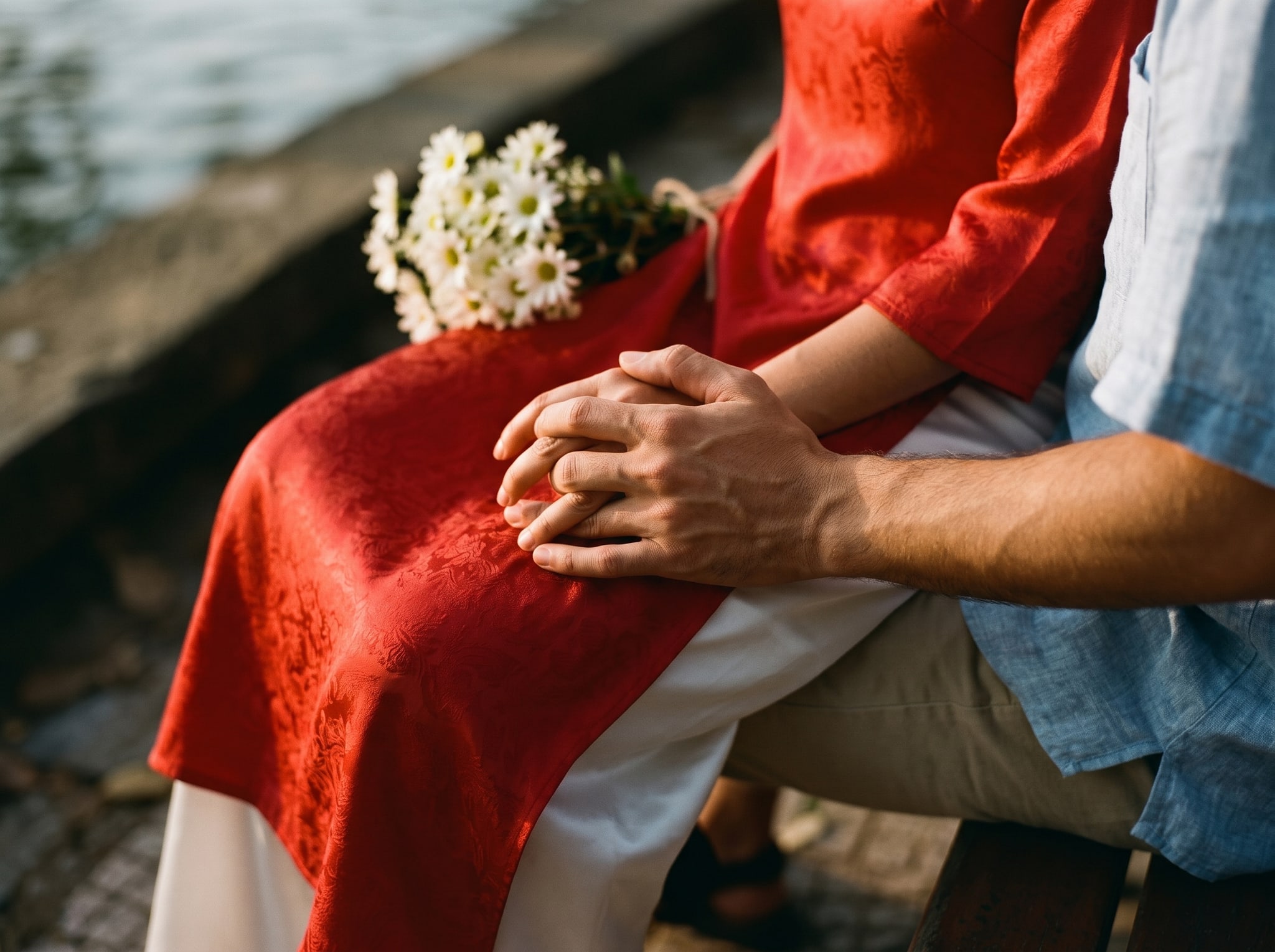
The Mekong setting—water, greenery, wooden boats—calls for lighter ao dai silhouettes and colours that photograph cleanly against those backgrounds. We steer couples toward white, pale pink, soft blue or cream vests paired with high-waisted silk trousers that don't drag through mud or water spray. Heavier, densely embroidered pieces (common in formal Saigon ao dai) often feel visually cluttered when framed against a busy landscape. Our stylists choose based on three factors: the specific backdrop (temple, paddy, boat), the couple's skin tone, and whether the fabric breathes in delta humidity. A silk-cotton blend rents easier than 100% silk and photographs the same way on camera. Once the backdrop location is locked, we pull 3–4 sample styles from traditional ao dai collections and book a 15-minute video call to show how each sits on your body type and moves.
Should we rent locally in the Delta or bring an ao dai from home?
Renting locally (in Cần Thơ or Vĩnh Long) is fast and cheaper, but sizing runs inconsistent across shops—many cater to 60 kg average frames. Bringing your own, or renting from a trusted Hanoi tailor beforehand, guarantees fit but adds luggage weight and dry-cleaning risk. We've seen guests arrive with a beautiful ao dai only to find it pulls across the shoulders once they sit in a boat. Our approach: if you're a standard size (XS–L, 45–65 kg), rent 4–5 days before the shoot in the delta itself; our contacts in Cần Thơ know our styling needs and keep backup sizes. If you're outside that range, custom-commission 5–6 weeks prior or ask us to source and ship a ready-made piece to you beforehand (we handle the coordination). A fitted ao dai reduces restyling on shoot day by 60 minutes. Never rent the morning of the shoot.
See packages and prices on vietnamphotoshoot.com
What happens during the fitting, and how long does it take?
Our stylist arrives 30 minutes before the shoot start time with safety pins, fabric tape, scissors and a small steamer. She pins the side seams tighter if the fabric gaps away from your body, adjusts the neckline so it sits level on your collarbone, and trims any loose threads. If the trousers catch on your ankles (a delta-mud problem), we roll and pin the hem up 2–3 cm on the inside. The whole fitting takes 12–18 minutes on average. We've learned to ask guests to breathe naturally during pinning—many hold their breath, then the fit shifts once movement begins. If an ao dai is too loose through the bust or waist, tape works for 2–3 hours in dry conditions; once you're in boat spray or paddy moisture, tape fails, so renting a smaller size is safer. We always keep one backup safety pin tucked into the lining in case a seam pops during a jump or turn. Humidity here swells fabric, so a snug fit at 7 a.m. feels perfect by 10 a.m.
What styling details matter most for Delta temple and water backdrops?
Ao dai alone doesn't photograph—the accessories and hair complete the frame. For temple shoots (Cái Bè, Mỹ Tho), we pair the tunic with a simple gold chain necklace, avoid large dangling earrings that catch light awkwardly, and style hair in a low bun or half-up wave. Water-village backdrops call for no loose fabric below the shoulders (wind tangles it) and hair pinned or braided so the face reads clearly. We commission silk scarves or conical hats (nón lá) dyed to match the ao dai—these are keepsakes and add region-specific context to the frame. Makeup must be waterproof foundation and long-wear lipstick; delta humidity breaks down standard powder in 45 minutes. Nails: keep them short or manicured in a neutral shade; chipped polish shows in close-ups. Shoes are tricky—most guests want bare feet for temple sequences, but dirt and insect bites are real. We bring washable cotton socks and advise a pedicure 3 days before, not the day prior (swelling). Jewelry should be minimal and secure (no dangly bracelets near boat edges).
How do we manage timing and weather on a Delta shoot day?
We schedule shoots between 6:30–9:30 a.m. or 4:00–6:30 p.m. to avoid midday sun that washes out ao dai detail and creates hard shadows. May–September heat regularly hits 36°C by noon; a guest in 2m of silk fabric can overheat in 40 minutes. Our WhatsApp brief, sent 3 days before, tells couples exactly what time the car picks them up and which hotel lobby. We arrive 15 minutes early, assess the light (cloud cover changes the white-balance target), and repin the ao dai on-site. Rain is common in August–October; we've shot through drizzle (adds moodiness, keeps the couple energized) but cancel if lightning threatens. We always scout the exact location 1–2 days prior so we know where the muddy patches are and which temple stairs are slippery when wet. A backup ao dai in the car is insurance—if the primary one tears or gets muddy beyond a quick rinse, we switch in 3 minutes. We tell guests: bring a light shawl (Delta breezes are real) and tell us immediately if the ao dai feels too tight; we'd rather unpin and reshoot than watch you uncomfortable in 60 photos.
What should we check before renting or ordering an ao dai?
Before you commit:
| Detail | What to check | Why it matters |
|---|---|---|
| Inseam | Tailor measures knee-to-ankle; our team confirms in writing | Too long catches mud; too short feels unfinished |
| Bust gap | Fabric should touch ribs, not pull or gap at armpit | Gaping shows undergarment in boat photos |
| Neckline height | Sits 2 cm below collarbone; not choking neck | High necklines limit head-turn range on camera |
| Seam finish | Edges are sewn, not cut and fraying | Fraying splits under humidity and movement |
| Dye stability | Test on a hidden seam with damp cloth | Delta humidity can bleed excess dye onto skin |
| Sleeve ease | Arm raises to shoulder height without pulling | You'll reach, point and gesture during shoot |
Request photos of the ao dai on a body (not flat), not just on a mannequin. Ask whether the renter washes after each rental (some don't, which shows sweat stains). If custom-commissioning, provide the photographer's name and ask the tailor to build 1 cm extra ease at the bust compared to everyday wear—camera angles add 5–10% visual tightness. Confirm shipping time if ordering from Hanoi; delta post offices close early. Our wedding couple photoshoot package includes a stylist consultation 5 days before, so we catch fit issues and source backups before you arrive.
When should guests arrive in the Mekong Delta, and how does timing affect the shoot?
Most guests come 2–3 days early to adjust to humidity and jet lag. A morning shoot (6:45 a.m. pickup) is easier if you arrive the day before and get one good sleep; an afternoon shoot (3:30 p.m. pickup) suits long-haul arrivals. We've seen guests try a same-day shoot after 13 hours of flights—fatigue shows in eye contact and posture by frame 800. The delta region spans Cần Thơ (largest hub), Mỹ Tho (upriver temples), Vĩnh Long (orchard backdrops) and Châu Đốc (hill views); travel between locations adds 45–90 minutes. If you're combining your shoot with a family visit or partner work trip, tell us early—it shapes location pick and crew availability. Our family photoshoot package coordinates multi-generation timing; the stylist watches for fatigue and rebooks the second ao dai change if anyone looks drained. Never book consecutive shoots (couple + family) on the same day unless the gap is ≥4 hours; resteaming, repin and makeup touch-up take real time.
Can we mix ao dai with Western wedding attire, or shoot in both styles?
Yes, and it's common in Delta shoots. Many couples open in ao dai (temple, morning light, cultural anchor), then change into white gown and tuxedo for boat or evening scenes. The wardrobe swap adds 20–25 minutes if the second outfit is pre-pressed and staged nearby. We've learned to coordinate this with the hotel's laundry team 2 days prior so the Western dress is hanging and ready, not buried in luggage. Proposal and anniversary shoots often combine ao dai for a ceremony shot and casual attire for candid riverside walks. Mixing styles works on camera if the locations feel distinct—temple + ao dai, boat house + gown, paddy walk + casual clothes. Avoid doing all three in one 2-hour shoot; the crew loses focus and the couple feels rushed. A pre-wedding shoot gives you 4–6 hours and multiple outfit changes without stress. Ask us which locations pair best with each style, and we'll map the geography so drive time between shoots is minimal.
What happens to the raw files, and when do we deliver edited photos?
We deliver unedited RAW files within 7 days, and edited selects (50–80 images per hour shot) within 14 days. The photographer uploads both to a shared cloud link (Google Drive or Dropbox) that you can access for one month. We include a printed contact sheet (one page of thumbnail proofs) if you request it in the booking. Delta humidity sometimes corrupts memory cards if the camera isn't sealed properly—this has happened twice in 8 years, and we reshooted both couples at no charge. During post-processing, our editor color-corrects for delta light (which is greener than Hanoi), removes water stains from boat spray, and tunes skin tones in AO DAI photos (certain dyes reflect light differently than Western fabrics). Guests sometimes ask us to extend skin beyond the ao dai seam to "fix" a pinch—we don't do this; the original body shape is what we document. Some couples request black-and-white edits; these take 3–5 extra days because the ao dai detail (embroidery, texture) demands careful toning. We don't charge for standard color editing or minor blemish removal; we charge separately if you request significant retouching (background replacement, major wardrobe alteration).
See packages and prices on vietnamphotoshoot.com
What should couples budget for, and where does cost break down?
We don't state prices here, but the quote includes photographer + stylist labor, 6–8 hours of coverage (including travel), RAW and edited files, and one printed album sample. Ask us for a quote on WhatsApp with your specific location, date and outfit count. Separate costs to plan for: ao dai rental (4–7 days beforehand in the delta) or custom commission (6–8 weeks from tailor in Hanoi), transportation (your hotel to shooting locations, typically included in our package), meals for the crew, and any props (silk scarves, nón lá hats) if custom-made. If you're coordinating with makeup and hair at your hotel, that's an add-on service booked separately. Many guests ask whether they can reduce cost by skipping the stylist—we don't recommend it. A stylist prevents 30–40 minutes of on-site pinning chaos and catches small fit issues (neckline twisted, seam puckering) that show in high-resolution files. Couple package is more economical per hour than solo, because the photographer is already on-site and the stylist works both people at once.
FAQ
How far in advance should we book an ao dai shoot in the Mekong Delta?
Book 3–4 weeks ahead if renting an ao dai locally, or 6–8 weeks if custom-commissioning from a Hanoi tailor. Delta tourist season (November–February) fills faster. If you need a stylist and photographer, confirm Cáo Studio availability 2 months prior; peak wedding season (December–January, June–July) books out quickly. WhatsApp us early to lock dates.
What if the ao dai doesn't fit when we arrive?
Our stylist carries safety pins, fabric tape and a portable steamer. Minor gaps or wrinkles are fixed on-site in 10–15 minutes. If the ao dai is sized wrong (bust too large, length off by 5+ cm), we have one backup option: source a rental from our delta contacts within 4 hours, or pivot to special concept shoots with clothing you already have on hand. Never rent the morning of the shoot.
Can we reuse the rented ao dai for family photos or other occasions?
Yes. Rental periods are typically 4–7 days, so if your photoshoot is on day 3, you can wear it again for a temple visit or family dinner before returning it. Check the rental contract for any "single-use" clauses—most delta shops don't enforce these, but some do. We recommend a dry-clean after the shoot if you plan a second wear.
Is the shoot affected if we arrive during monsoon season (May–October)?
Drizzle and overcast skies are normal and often beautiful on camera—softer light, moody reflections in waterways. We cancel only if lightning threatens or rain is heavy enough to soak through silk. Tell us your arrival dates; we'll assess the seasonal risk and suggest early morning or late afternoon time slots to minimize downpour exposure.
Do we need to bring special footwear, or can we shoot barefoot?
Barefoot works for temple and boat scenes but exposes you to mud, insects and sharp debris. We bring washable cotton socks and advise a pedicure 3 days before (not the day of). If you wear shoes, choose flat ballet flats or simple sandals in neutral colours; they stay invisible in wide shots and don't clash with the ao dai.
What's the difference between renting and custom-commissioning an ao dai?
Rental (local delta shops) is fast, cheaper, and needs 4–7 days' notice; fit can be inconsistent. Custom commission (Hanoi tailors, 6–8 weeks) guarantees perfect fit, superior fabric, and you keep the ao dai forever—ideal for sentimental shoots or non-standard sizes. Ask our team which makes sense for your body type and timeline.
Ao Dai Photoshoot
Inclusions, prices and booking are on our booking site.
FAQ
How far in advance should we book an ao dai shoot in the Mekong Delta?
Book 3–4 weeks ahead if renting an ao dai locally, or 6–8 weeks if custom-commissioning from a Hanoi tailor. Delta tourist season (November–February) fills faster. If you need a stylist and photographer, confirm Cáo Studio availability 2 months prior; peak wedding season (December–January, June–July) books out quickly. WhatsApp us early to lock dates.
What if the ao dai doesn't fit when we arrive?
Our stylist carries safety pins, fabric tape and a portable steamer. Minor gaps or wrinkles are fixed on-site in 10–15 minutes. If the ao dai is sized wrong (bust too large, length off by 5+ cm), we have one backup option: source a rental from our delta contacts within 4 hours, or pivot to [special concept shoots](/go/special-concept) with clothing you already have on hand. Never rent the morning of the shoot.
Can we reuse the rented ao dai for family photos or other occasions?
Yes. Rental periods are typically 4–7 days, so if your photoshoot is on day 3, you can wear it again for a temple visit or family dinner before returning it. Check the rental contract for any "single-use" clauses—most delta shops don't enforce these, but some do. We recommend a dry-clean after the shoot if you plan a second wear.
Is the shoot affected if we arrive during monsoon season (May–October)?
Drizzle and overcast skies are normal and often beautiful on camera—softer light, moody reflections in waterways. We cancel only if lightning threatens or rain is heavy enough to soak through silk. Tell us your arrival dates; we'll assess the seasonal risk and suggest early morning or late afternoon time slots to minimize downpour exposure.
Do we need to bring special footwear, or can we shoot barefoot?
Barefoot works for temple and boat scenes but exposes you to mud, insects and sharp debris. We bring washable cotton socks and advise a pedicure 3 days before (not the day of). If you wear shoes, choose flat ballet flats or simple sandals in neutral colours; they stay invisible in wide shots and don't clash with the ao dai.
What's the difference between renting and custom-commissioning an ao dai?
Rental (local delta shops) is fast, cheaper, and needs 4–7 days' notice; fit can be inconsistent. Custom commission (Hanoi tailors, 6–8 weeks) guarantees perfect fit, superior fabric, and you keep the ao dai forever—ideal for sentimental shoots or non-standard sizes. Ask our team which makes sense for your body type and timeline.
More from the team
Ao Dai Photos at Hoi An Lantern Street at Night
Hoi An Lantern Street (Nguyen Hoan) glows at dusk with silk lanterns and reflected light. Our team shoots ao dai here after dark, navigates tight vendor spaces, and handles the low-light challenge with experience from 100+ night sessions.
Ao dai for wedding photos in Quy Nhon: renting, fitting and styling
Quy Nhon's coastal backdrops pair beautifully with traditional ao dai. We walk through rental choices, fitting logistics and how our team coordinates styling on shoot day.
Vietnam Pre-Wedding Photoshoot: What We Book at Cáo Studio
Pre-wedding shoots in Vietnam mean morning light in Hoi An's Old Town, cyclos in Saigon, or terraced fields near Ninh Binh. We walk you through what a session actually costs, how we schedule it, and what goes wrong on the day.