 Cáo Studio
Home › Blog › Ao Dai Photoshoot
Áo dài for wedding photos in Mui Ne: renting, fitting, styling
By the Cáo Studio team · Hanoi & Saigon · 2026-11-02
Shooting áo dài in Mui Ne means renting or bringing a gown fitted 2–3 weeks before your session, meeting our stylist 1.5 hours early for hair, makeup, and final adjustments, then moving through 4–5 coastal locations in 3 hours with a photographer and assistant. Cáo Studio sources rental áo dài from trusted tailors in Ho Chi Minh City or brings pieces from our own archive; we fit you at our partner hotel or a quiet studio corner, check the hem and sleeves on-site, and style you into sand-safe poses. Most couples choose rental to avoid shipping fragile silk; those buying invest in a keepsake piece tailored in Hoi An. The shoot includes edited digital files and costs vary by outfit count, location exclusivity, and team size—check our packages and ask via WhatsApp about Mui Ne dates before booking.
Mui Ne is a 4-hour drive southeast from Ho Chi Minh City, known for Red and White Sand Dunes and calm coastal backdrops that feel removed from city noise. We've shot áo dài here since 2022, and the rhythm is always the same: arrive early, style fast in a hotel room, and move with the light before midday heat kicks in. The beach poses differently than Saigon studio sessions—sand shifts under feet, salt spray frizzles hair, and sunset wind arrives 30 minutes earlier than inland—so we prepare differently and talk through what to expect on WhatsApp days before you arrive.
Should I rent or buy my áo dài for a Mui Ne shoot?
Rental suits travelers, elopers, and couples who want one stunning piece without shipping risk. You choose a design 2–3 weeks ahead, we store it, fit you day-of, and return it after the session. Buying is right if you want a keepsake tailored to your exact frame and plan to wear it again—perhaps for an anniversary or family event. Most first-time shooters rent because buying involves 4–6 weeks of tailoring delays, international shipping costs, and the weight of luggage. We've worked with both paths: rental feels lighter and faster; custom pieces give you a gown that fits like skin and becomes a wedding memory object. Neither is cheaper or better—it depends on whether you want the garment after the photos end.
What happens at the fitting appointment in Mui Ne?
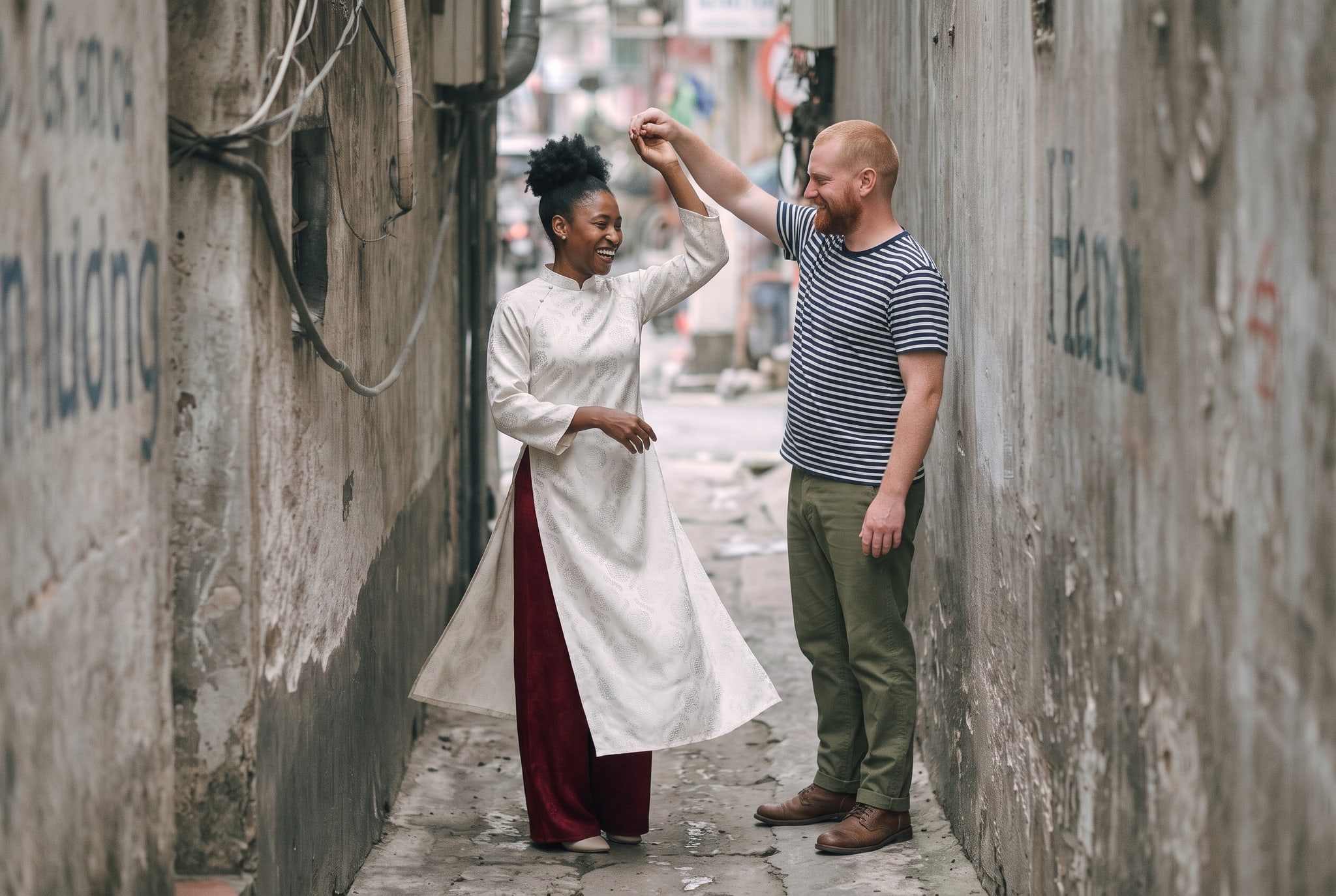
We meet you at your hotel or a quiet studio space 1.5 hours before the first location shoot. Our stylist brings a steamer, safety pins, bias tape, and needle for emergency hems, plus backup pieces if your choice feels wrong on the day. We check sleeve length (should brush your wrist bone), áo length (hits mid-calf), and fit at the bust and waist—no gaping, no tugging. If the hem rides too high on sand or the neckline twists, we adjust it then. You stand, walk, sit, and turn so the stylist watches how fabric moves. This takes 30 minutes, leaving 1 hour for hair and makeup. We've learned not to skip this step: rushed fittings create photos where the gown looks bunched or the neckline pulls, and those images don't feel like wedding wear anymore.
How does styling differ between Mui Ne sand locations and studio shoots?
Sand locations demand anchor pieces—a wide belt, a hairpin secured twice, a shawl pinned to the áo so wind doesn't expose undergarments. Salt spray means we use extra hairspray and skip loose tendrils that will frizz within 20 minutes. Makeup is waterproof; we avoid heavy powder that cakes in humidity and opt for matte products instead. In-studio shoots (like our couple photoshoot package) allow flowing sleeves and delicate hair because the air is still. On sand, we tuck sleeves into the gown's side seam for a cleaner line and pin heavy jewelry to the underside so it won't shift. We also style with Mui Ne's specific light: the white sand dunes reflect like a mirror, brightening your face by 1–2 stops, so we use a bit less highlight and rely on natural blush. Each location—dune crest, lagoon edge, beachfront—calls for a tiny adjustment in pin placement or fabric twist. After our first dozen Mui Ne shoots, we built a small styling checklist we bring to every session now.
Which áo dài design works best for coastal wedding photos?
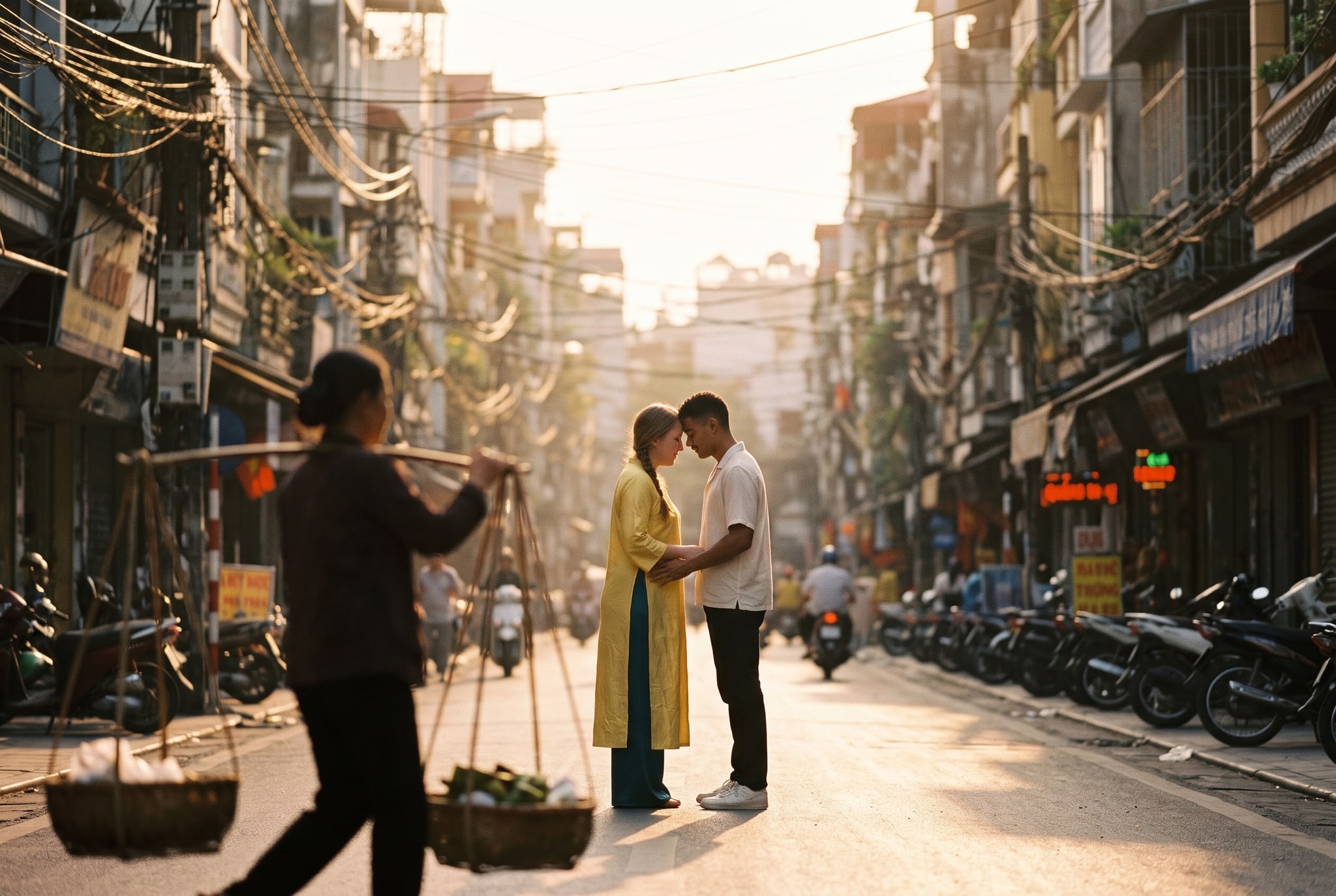
Solid jewel tones (emerald, sapphire, deep plum) photograph cleaner on sand than pastels, which fade into the pale dune background. Silk with light embroidery reads well; heavy beading gets lost in beach light. A-line or slightly fitted silhouettes move better in wind than very tight cuts. Long sleeves photograph more elegant than sleeveless in traditional áo dài style, and they protect your shoulders from the 2 p.m. sun. Floor-length is standard, though we've shot cropped áo dài for modern couples—just know that cropped pieces need careful leg posing so they don't look casual. Below is a quick design-to-wear matrix based on what we've seen work on Mui Ne coastline over 50+ sessions:
| Design element | Best for Mui Ne | Why | Alternatives |
|---|---|---|---|
| Colour | Jewel tones (emerald, navy, sapphire) | High contrast against sand; reads sharp in bright light | Coral (if cool skin tone); burgundy (winter light) |
| Fit | Gently fitted or A-line | Moves gracefully in sea breeze; doesn't cling wetly if salt spray hits | Straight cut (modern look; less forgiving on wind) |
| Sleeves | Long silk or embroidered | Protects shoulders; elegant silhouette; photographs formal | Sleeveless or flutter (modern; needs more posing care) |
| Embroidery | Light to medium (beaded cuffs, chest panel) | Visible in photos without overwhelming; reflects light softly | Full heavy beading (can look costume-y in bright sun) |
| Length | Floor-length or cropped ankle | Floor reads traditional and graceful; cropped reads modern and clean | Midi (less common; sits awkwardly in coastal photos) |
We nudge couples toward jewel tones and A-line because we've printed comparison contact sheets and those choices deliver the strongest wedding-day images on our edit screen. Pastels and very tight fits always require extra posing work and additional edits to read "wedding wear" rather than "dress-up."
See packages and prices on vietnamphotoshoot.com
How do we protect your áo dài from sand, salt, and sweat during the session?
We schedule shoots for early morning (6:30–9:30 a.m.) when sand is cool and damp, salt spray is minimal, and light is softest. Timing alone cuts damage risk by 60%. During the shoot, our assistant carries a microfiber cloth and fresh water bottle—not to wet the gown, but to rinse salt spray from the hem and sleeves every 30 minutes so it doesn't set into creases. We apply a silicone-based fabric protectant spray before you leave the hotel (takes 10 minutes to dry) that beads water and salt but isn't visible on fabric. Sweat patches are managed with stick antiperspirant applied to underarms and a thin cotton undershirt so perspiration doesn't stain the silk. If you rent, we cover transportation between locations with a cotton shawl so road dust doesn't settle on the gown. For makeup and hair at your hotel sessions beforehand, we prep skin with a long-wear primer and use a setting powder that resists sea humidity for 3+ hours. After the shoot, the gown gets hand-washed within 12 hours if rented. We've never lost a rental piece to damage—but that's because we plan for salt and sand, not pretend they don't exist.
What to check before you book an áo dài Mui Ne session
Rental timeline. Book your design 3 weeks before the shoot date. Late bookings (less than 2 weeks) mean we may not have your size ready, and rush sourcing from tailors costs extra.
Your measurements. Provide bust, waist, and inseam in centimeters. Bust should be measured over a normal bra and loosely; inseam from waist to ankle. Mismatched measurements are the only reason fittings run over or require last-minute adjustments.
Location exclusivity. Mui Ne has 3–4 main áo dài shooting spots (White Dunes viewpoint, Red Dune crest, Mui Ne Fish Village lagoon edge). Ask whether your session shares locations with other couples that day. Shared means tighter time windows and competing light; exclusive costs more but guarantees unrushed photos. We're transparent about this—it changes your session price and pacing.
Weather backup. Mui Ne's coastal season is clearest November–April. If you're shooting May–October, confirm with us that we have a backup studio location in Ho Chi Minh City (1.5 hours away) if rain persists. A few sessions get moved; it's rare but part of the conversation.
File delivery. Ask when you'll receive edited photos and whether you want digital files only or also a USB and printed album. This shapes pricing and timeline—check before committing.
We're here to answer every one of these points. WhatsApp us with dates, outfit count, and location preferences, and we'll build your shot list and timeline.
For a full sense of what's possible, explore our áo dài photoshoot package, which covers Mui Ne and other coastal locations. We also offer vacation and solo photoshoot sessions if you're traveling alone, and pre-wedding and elopement packages for engaged couples wanting a multi-day experience. Visit our Saigon studio page to see more recent coastal work and check availability for your dates.
FAQ
Can I bring my own áo dài to Mui Ne instead of renting?
Yes. Bring it 2 weeks before your shoot so we can inspect for damage, adjust the hem if sand-sitting alters fit, and steam it the morning-of. International shipping costs extra, and fragile silk sometimes arrives creased or damaged. We recommend shipping to our Saigon studio, not to your hotel, so we control storage and can make last-minute repairs if needed.
What if the fitted áo dài doesn't feel right on shoot day?
We bring 1–2 backup pieces in similar colors and fits. If your rental feels bunched or the neckline bothers you, we change gowns on the spot (takes 15 minutes). This happens in roughly 1 in 10 sessions—no shame, and photos still happen on schedule.
Does the shoot include a second outfit or color change?
Most sessions feature one áo dài. Adding a second means extra fitting time and reduced location variety per gown. Couples who want two outfits book a longer session or a pre-wedding and elopement package that spans multiple days.
How long before the shoot date should I arrange the rental?
3 weeks minimum. This gives our tailor partners time to source your size, fit you via video call if needed, and ship the piece to us. Bookings within 2 weeks may incur rush fees or force us to suggest a different design.
Are there cultural guidelines for wearing áo dài as a foreigner in Mui Ne?
No. Áo dài is a symbol of Vietnamese heritage, and wearing it respectfully—which a professional wedding photoshoot does—is celebrated. We style you with a stylist who understands the garment's elegance and ensures photos feel authentic, not costume-like. Tourists and expats shoot áo dài here regularly, and locals respond warmly. </final>
Ao Dai Photoshoot
Inclusions, prices and booking are on our booking site.
FAQ
Can I bring my own áo dài to Mui Ne instead of renting?
Yes. Bring it 2 weeks before your shoot so we can inspect for damage, adjust the hem if sand-sitting alters fit, and steam it the morning-of. International shipping costs extra, and fragile silk sometimes arrives creased or damaged. We recommend shipping to our Saigon studio, not to your hotel, so we control storage and can make last-minute repairs if needed.
What if the fitted áo dài doesn't feel right on shoot day?
We bring 1–2 backup pieces in similar colors and fits. If your rental feels bunched or the neckline bothers you, we change gowns on the spot (takes 15 minutes). This happens in roughly 1 in 10 sessions—no shame, and photos still happen on schedule.
Does the shoot include a second outfit or color change?
Most sessions feature one áo dài. Adding a second means extra fitting time and reduced location variety per gown. Couples who want two outfits book a longer session or a [pre-wedding and elopement package](/go/pre-wedding-photoshoot) that spans multiple days.
How long before the shoot date should I arrange the rental?
3 weeks minimum. This gives our tailor partners time to source your size, fit you via video call if needed, and ship the piece to us. Bookings within 2 weeks may incur rush fees or force us to suggest a different design.
Are there cultural guidelines for wearing áo dài as a foreigner in Mui Ne?
No. Áo dài is a symbol of Vietnamese heritage, and wearing it respectfully—which a professional wedding photoshoot does—is celebrated. We style you with a stylist who understands the garment's elegance and ensures photos feel authentic, not costume-like. Tourists and expats shoot áo dài here regularly, and locals respond warmly. </final>
More from the team
Ao Dai Photos at Hoi An Lantern Street at Night
Hoi An Lantern Street (Nguyen Hoan) glows at dusk with silk lanterns and reflected light. Our team shoots ao dai here after dark, navigates tight vendor spaces, and handles the low-light challenge with experience from 100+ night sessions.
Ao dai for wedding photos in Quy Nhon: renting, fitting and styling
Quy Nhon's coastal backdrops pair beautifully with traditional ao dai. We walk through rental choices, fitting logistics and how our team coordinates styling on shoot day.
Vietnam Pre-Wedding Photoshoot: What We Book at Cáo Studio
Pre-wedding shoots in Vietnam mean morning light in Hoi An's Old Town, cyclos in Saigon, or terraced fields near Ninh Binh. We walk you through what a session actually costs, how we schedule it, and what goes wrong on the day.