 Cáo Studio
Home › Blog › Ao Dai Photoshoot
Ao Dai Photos at Japanese Covered Bridge: Studio Guide
By the Cáo Studio team · Hanoi & Saigon · 2026-11-02
The Japanese Covered Bridge (Chùa Cầu), built in the 16th century and spanning the Thu Bồn River in Hoi An's Old Town, is a natural choice for ao dai photography. Sessions typically run 90–180 minutes depending on crowd flow and outfit changes. Cáo Studio shoots here year-round, coordinating timing (early morning or late afternoon offer best light and fewer tourists), ao dai color selection to match the bridge's warm timber tones and green water, and crew positioning to avoid tourist bottlenecks. The bridge allows photography but foot traffic is constant; we scout location 15 minutes before the booked session start, adapt framing on the day if crowds spike, and plan backup angles from the riverside. Cost varies by package length and whether styling, hair, or makeup is included on-site or pre-arranged at your hotel. Chat with us on WhatsApp | See packages and prices on vietnamphotoshoot.com
Why is the Japanese Bridge the top choice for ao dai?
The bridge itself is a UNESCO-listed symbol of Hoi An, instantly recognizable in any photo gallery. Its arched wooden structure, red railings, and lantern details create natural frames and depth. The surrounding water, stone banks, and Old Town architecture add layers without competing with the ao dai's silhouette. We've found that specific ao dai colors—jewel tones, pastels, and metallics—photograph distinctly against the bridge's earthy palette. The bridge's 18-meter length gives us multiple compositional options: wide shots from the water level, close portraits mid-span, detail frames of the lanterns, and silhouettes at golden hour. No other single location in Hoi An delivers this range without requiring multiple outfit or location changes.
What time of day does our team actually shoot here?
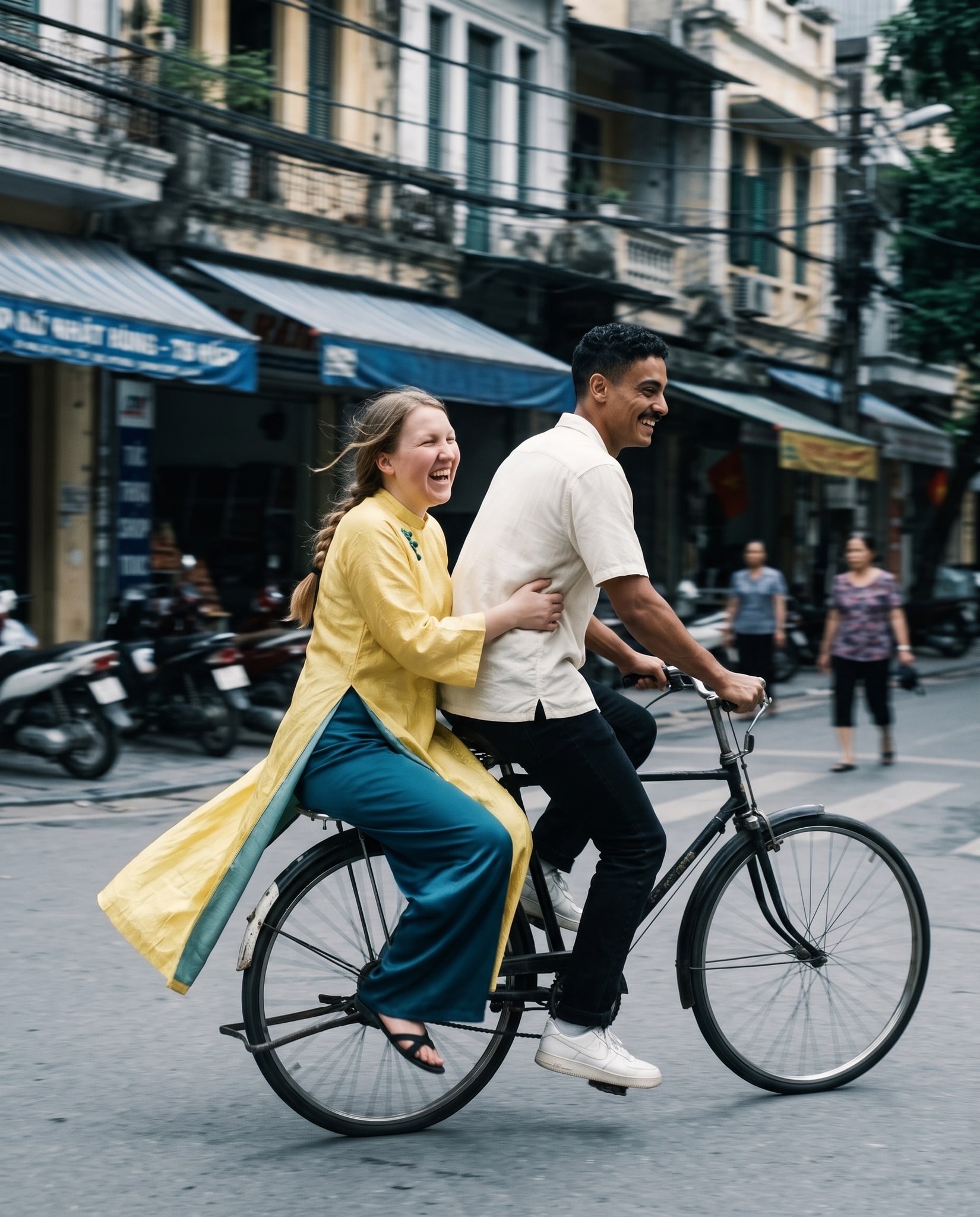
We book sessions between 6:00 and 8:00 a.m., or 5:00 and 7:00 p.m., when tourist foot traffic dips and natural light is directional and soft. Midday (10 a.m.–4 p.m.) brings intense overhead sun, harsh shadows under the bridge's roof, and crowd density that forces us to wait 20–30 minutes between frames. Early morning light hits the bridge's east face, illuminating the water and reducing backlit silhouettes. Late afternoon light rakes across the stone and timber, warming skin tones and casting long shadows—excellent for couple poses and group shots. We've learned that a 7:15 a.m. start often hits the "sweet spot": locals are commuting (not posing for photos), tourists are breakfasting in the Old Town, and we have 45 minutes of uninterrupted shooting before crowd buildup. We brief guests on WhatsApp the evening before, confirming exact arrival time and what to wear underneath the ao dai for quick changes.
See packages and prices on vietnamphotoshoot.com
How do we handle crowd management on the day?
We arrive 20–30 minutes early, scout the bridge's current foot traffic, and position our photographer and stylist at either end. If a tour group is on the bridge, we move to the riverside or approach from the south bank rather than wait. We've found that tourists are typically concentrated in the bridge's interior during the first 5 minutes of any 30-minute window; we use that time for wide environmental shots, then move into closer portraits as the crowd thins. Our assistants hold a simple "studio session in progress" sign (in Vietnamese and English) that politely signals other visitors to wait or take alternate routes. If a wedding or major tourist influx arrives unexpectedly, we pivot: we've shot on the Thu Bồn's northern bank using the bridge as a backdrop, or we move 50 meters upstream where the water mirrors the bridge and fewer people congregate. We never ask guests to wait idle; every transition is choreographed so styling, hair, and posing happen back-to-back.
What ao dai styles and colors work best against the bridge?
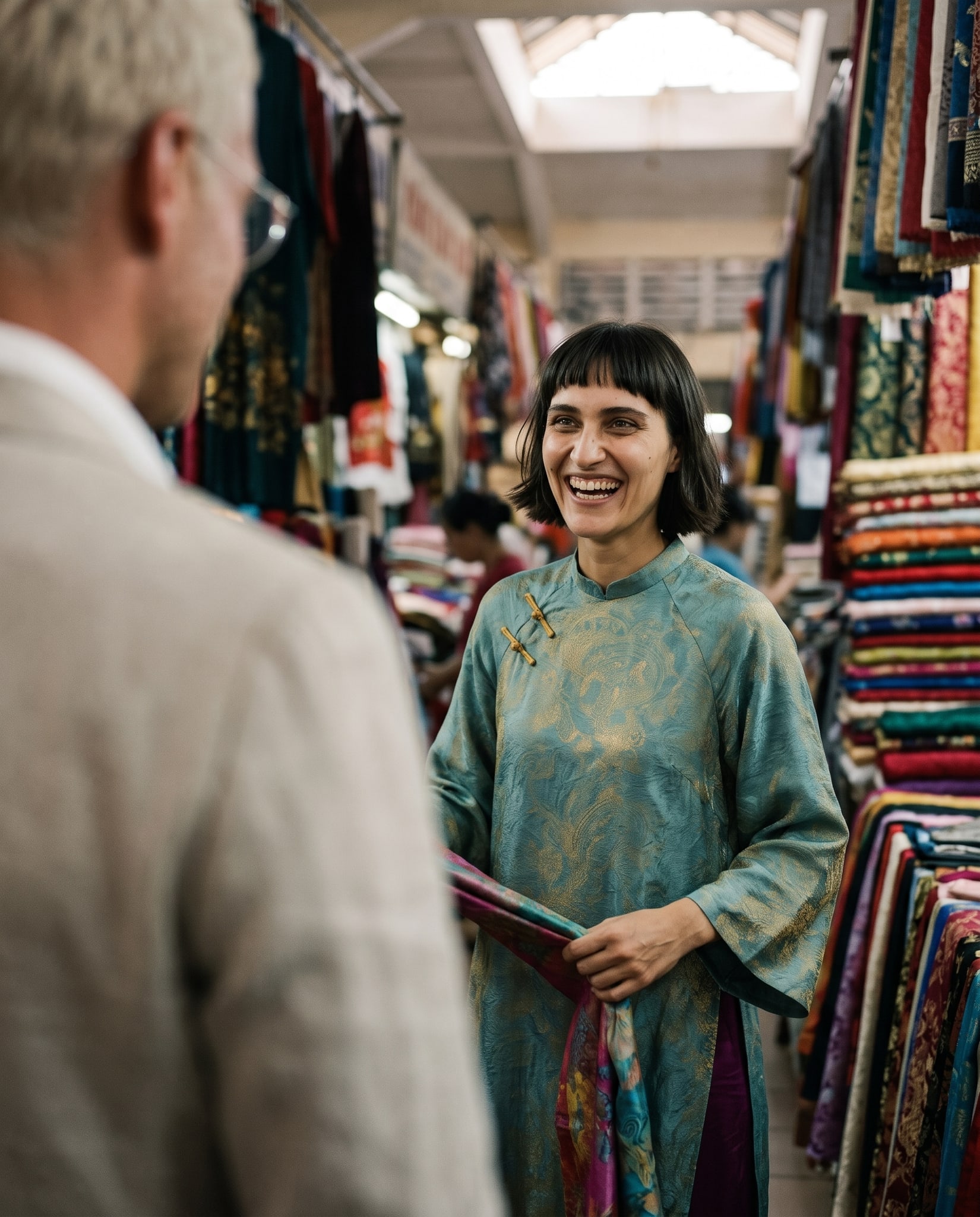
Our stylists choose based on season, light direction, and the guest's skin tone. In dry season (November–April), jewel tones—emerald, sapphire, burgundy—read crisp and distinct. In rainy season (May–October), lighter silks and pastels—blush, cream, soft gold—cut through humidity haze. Metallics and brocades photograph exceptionally well at golden hour; their sheen plays off the bridge's timber grain. We typically avoid neons and very pale whites that blow out in morning backlight. For couples, we coordinate one warm tone and one cool tone—e.g., burgundy áo dài and teal áo dài—so both read clearly against the bridge and each other. Guests often ask whether sleeveless or long-sleeved áo dài matters; we advise long sleeves for a more formal, traditional read, but sleeveless works if the guest prefers movement and cooler comfort. We always request guests bring 2–3 áo dài options if booking a longer session; switching outfits mid-bridge-shoot refreshes compositions and gives clients variety without leaving the location.
What decisions do we make on-site if light or crowds change?
If clouds roll in and light flattens, we shift from backlit silhouettes to side-lit close portraits and detail frames of jewelry, embroidery, or the bridge's lantern details. If sudden rain begins (common in rainy season), we either pause and resume when it clears, or accelerate to the most essential poses and wrap early—clients always approve this in the booking chat beforehand. If a large tour group arrives, we don't ask guests to wait; instead, we move composition angles to exclude them, shoot tighter crops to isolate the ao dai and bridge architecture, or pivot to riverside angles where the bridge frames the subject without foot traffic. We've learned that flexibility on the day produces better results than rigid adherence to a pre-planned shot list. If a guest is uncomfortable with remaining tourist presence, we offer to finish the session at the nearby pre-wedding and elopement package location—An Hội Islet or a private riverside garden—and deliver more frames there instead. This honesty builds trust and ensures clients leave satisfied.
What to check before you book
| Consideration | What to confirm | Why it matters |
|---|---|---|
| Session length | 90 min vs. 180 min | Longer sessions allow outfit changes and different angles; shorter books are tighter timing |
| Ao dai source | Rent, bring own, or rent locally | Rentals via our stylists fit and align with our color strategy; guest-brought áo dài may not suit bridge light |
| Hair & makeup | On-site at bridge or pre-arranged at hotel | Bridge location has no prep space; pre-arranged at makeup and hair at your hotel removes dawn stress |
| Backup plan | Alternative location if weather/crowds spike | Hoi An has multiple ao dai–suitable sites; confirm your studio names an alternate in writing |
| Final delivery | Digital files, prints, or albums | Bridge shoots generate 80–120 frames; clarify if you want contact sheets, edited selects, or albums |
Book early (2–4 weeks for peak season, November–March) because morning and evening slots fill first at the Japanese Bridge. Confirm your exact arrival time via WhatsApp 24 hours before; we'll send a pin on our studio location in Hoi An's Old Town. Bring comfortable shoes (you'll walk riverside and climb the bridge twice), a light shawl or cardigan for wind exposure, and expect some foot traffic—it's part of the location's character and often adds authentic Hoi An atmosphere to images.
Ready to shoot your ao dai session here?
We've guided 200+ guests through morning and evening ao dai sessions at the Japanese Bridge since opening our Hoi An operations in 2019. Our stylists, photographers, and crew know every angle, every light window, and every way to handle unexpected crowds. Check out our full ao dai photoshoot package for session lengths and add-ons (styling, makeup, multiple outfits), or explore couple photoshoot options if you're celebrating with a partner.
See packages and prices on vietnamphotoshoot.com
Not sure if the Japanese Bridge is right for you? Our WhatsApp team can suggest alternatives based on your ao dai color, preferred light, and comfort with crowds. We also offer special concept shoots if you want a private permit or combination location (bridge + nearby garden + lantern evening light). Message us with your vision.
FAQ
Can we book a private shoot without other tourists on the bridge?
The bridge is open public infrastructure; we cannot reserve it. Early morning (6:30–7:30 a.m.) typically has the fewest visitors. A permit for exclusive use must be arranged directly with Hoi An's cultural heritage office weeks in advance—we can advise on contacts but recommend accepting shared-space sessions for simplicity and authentic Hoi An experience.
Do we need to bring our own ao dai or can we rent one?
You can bring your own or rent locally. Our stylists work with trusted rental partners in Hoi An's Old Town and can coordinate fittings if you book makeup and hair at your hotel the same morning. Rentals ensure the ao dai fits and aligns with light strategy; we recommend renting if uncertain about sizing or color compatibility with the bridge.
What if the weather turns rainy on the day of our session?
Light rain doesn't cancel shoots; it often creates moody, romantic mood and reduces crowds. Heavy downpour does pause us. We have covered waiting areas and will either resume when rain stops or shift to indoor Old Town locations and deliver frames there—all discussed upfront when you book. Rainy season (May–October) sessions are cheaper for this reason.
How many outfit changes can we do in a 180-minute session?
Typically two to three outfit changes, including time to refresh hair and makeup. One change is guaranteed in longer sessions; we spend 60–90 minutes on the bridge per outfit to maximize compositional variation. If you bring extra ao dai, we can attempt three, but transitions add 10–15 minutes each, so discuss this with your stylist when booking.
Will the final photos include other tourists or just us and the bridge?
Edited photos will have you as the clear focal point; minor tourist figures in the background are normal and rarely objectionable. If a large group intrudes mid-pose, we wait or reframe. Tight crops and selective focus reduce background clutter. If you require completely clear backgrounds, early morning (6:30–7:00 a.m.) or private-permit bookings (arranged separately) are your only options.
What's the difference between shooting here versus at a private garden or riverside location in Hoi An?
The bridge is iconic, public, and instantly recognizable—your photos announce "Hoi An" without explanation. Private locations offer solitude and controlled backgrounds but lack the bridge's historical character. Many couples book both: bridge session for iconic portraits, then pre-wedding and elopement package at An Hội or a garden for casual couples frames. Ask about combination bookings via WhatsApp.
Ao Dai Photoshoot
Inclusions, prices and booking are on our booking site.
FAQ
Can we book a private shoot without other tourists on the bridge?
The bridge is open public infrastructure; we cannot reserve it. Early morning (6:30–7:30 a.m.) typically has the fewest visitors. A permit for exclusive use must be arranged directly with Hoi An's cultural heritage office weeks in advance—we can advise on contacts but recommend accepting shared-space sessions for simplicity and authentic Hoi An experience.
Do we need to bring our own ao dai or can we rent one?
You can bring your own or rent locally. Our stylists work with trusted rental partners in Hoi An's Old Town and can coordinate fittings if you book [makeup and hair at your hotel](/go/makeup-and-hair) the same morning. Rentals ensure the ao dai fits and aligns with light strategy; we recommend renting if uncertain about sizing or color compatibility with the bridge.
What if the weather turns rainy on the day of our session?
Light rain doesn't cancel shoots; it often creates moody, romantic mood and reduces crowds. Heavy downpour does pause us. We have covered waiting areas and will either resume when rain stops or shift to indoor Old Town locations and deliver frames there—all discussed upfront when you book. Rainy season (May–October) sessions are cheaper for this reason.
How many outfit changes can we do in a 180-minute session?
Typically two to three outfit changes, including time to refresh hair and makeup. One change is guaranteed in longer sessions; we spend 60–90 minutes on the bridge per outfit to maximize compositional variation. If you bring extra ao dai, we can attempt three, but transitions add 10–15 minutes each, so discuss this with your stylist when booking.
Will the final photos include other tourists or just us and the bridge?
Edited photos will have you as the clear focal point; minor tourist figures in the background are normal and rarely objectionable. If a large group intrudes mid-pose, we wait or reframe. Tight crops and selective focus reduce background clutter. If you require completely clear backgrounds, early morning (6:30–7:00 a.m.) or private-permit bookings (arranged separately) are your only options.
What's the difference between shooting here versus at a private garden or riverside location in Hoi An?
The bridge is iconic, public, and instantly recognizable—your photos announce "Hoi An" without explanation. Private locations offer solitude and controlled backgrounds but lack the bridge's historical character. Many couples book both: bridge session for iconic portraits, then [pre-wedding and elopement package](/go/pre-wedding-photoshoot) at An Hội or a garden for casual couples frames. Ask about combination bookings via WhatsApp.
More from the team
Ao Dai Photos at Hoi An Lantern Street at Night
Hoi An Lantern Street (Nguyen Hoan) glows at dusk with silk lanterns and reflected light. Our team shoots ao dai here after dark, navigates tight vendor spaces, and handles the low-light challenge with experience from 100+ night sessions.
Ao dai for wedding photos in Quy Nhon: renting, fitting and styling
Quy Nhon's coastal backdrops pair beautifully with traditional ao dai. We walk through rental choices, fitting logistics and how our team coordinates styling on shoot day.
Vietnam Pre-Wedding Photoshoot: What We Book at Cáo Studio
Pre-wedding shoots in Vietnam mean morning light in Hoi An's Old Town, cyclos in Saigon, or terraced fields near Ninh Binh. We walk you through what a session actually costs, how we schedule it, and what goes wrong on the day.