 Cáo Studio
Home › Blog › Ao Dai Photoshoot
Áo Dài Photos at Trà Que Vegetable Village: What We Shoot On-Site
By the Cáo Studio team · Hanoi & Saigon · 2026-11-01
Áo dài photos at Trà Que Vegetable Village mean shooting in an active agricultural space 3 km north of Hoi An town, where the main appeal is natural greenery and rustic labor scenes. Most shoots run 2–3 hours early morning (5:30–8:30 am) or late afternoon (4–6 pm) to catch soft light and avoid the midday heat and farm traffic. Cáo Studio brings a stylist and photographer who scout the exact rows and water channels the night before, coordinate with farm staff, and adapt poses for muddy ground and narrow paths. The áo dài drags through wet soil, so we pack a steamer and microfiber cloths and choose synthetic or poly-blend fabrics over silk. This is not a manicured backdrop—it's a real place where vendors work—so expect authentic chaos: chickens, tourists, flooded paddies during rainy season. Cost varies by group size and styling; check packages on vietnamphotoshoot.com for current rates and what's included (hair, makeup, props, final images).
Why does morning light matter more here than anywhere else in Hoi An?
Trà Que sits in a valley with tall palms and banana trees on all sides, so direct sun only hits the main central rows between 7 and 8:30 am. After 9 am, shadows dominate, and skin tones go flat in our camera. Early light is warm and directional—it catches the áo dài silk and makes the greens glow behind the subject without washing out fabric detail. We've learned to start shoots at 5:45 am (guests arrive at 5:15) so the stylist and makeup artist have 30 minutes to work while the light is still soft and cool. By 6:30 am the photographer is shooting, and by 8 am we move to shaded rows near the herb beds where diffused light flatters the face. Afternoon sessions (starting 3:30 pm) work only March–August; in winter the sun is too low and behind hills by 5 pm.
What fabrics survive the mud and water best?
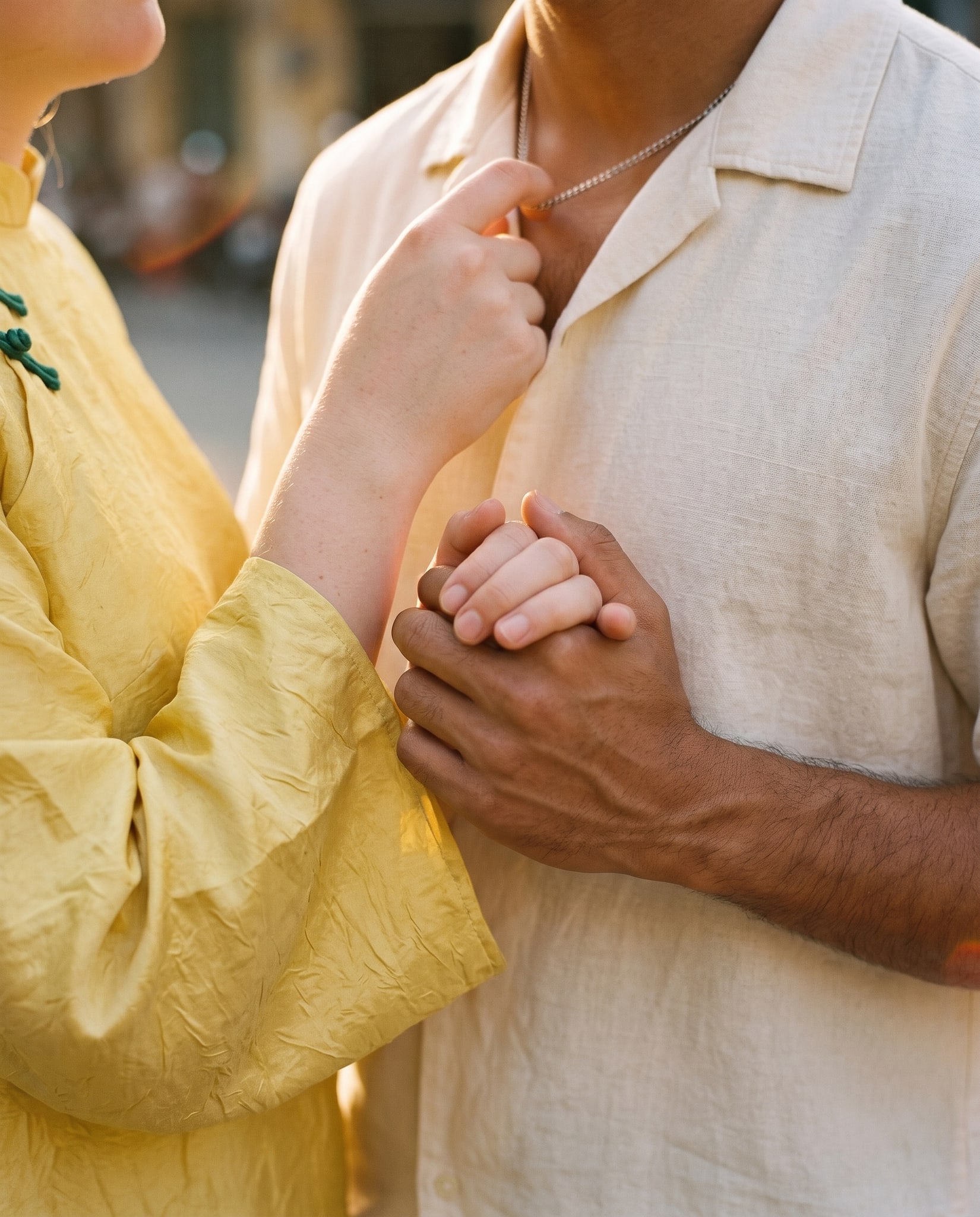
We stopped recommending silk áo dài for this location after the first season—cleaning costs exceeded client budgets and some stains never lifted. Now we ask clients at booking: Do you own a synthetic or poly-blend áo dài, or shall we arrange one? Nylon-silk blends, 100% polyester, and cotton-silk mixes dry faster, take steaming without water rings, and shed mud when it dries. We bring two steam presses in a soft cooler (one dies every other month from humidity), microfiber cloths, and a spray bottle with distilled water to remove silt before steaming. We also carry thin plastic sheeting to kneel on when posing, and we ask clients to wear dark socks or slip-on shoes—laced shoes get stuck in mud. Pure silk is beautiful but requires a dedicated laundry day and we've had clients ask for refunds when they saw the bill. So our on-site decision is simple: if the áo dài is silk, we avoid the deepest water rows and shoot only on the narrow raised paths. This cuts location variety but protects the garment.
How do we schedule around actual farm work?
Farm work and tourist hours overlap unevenly. Between 6 and 7 am, vendors are just arriving with baskets and setting up irrigation—it's chaotic but photogenic. Between 8 and 10 am, guided tours come through in groups of 20+, and our clients end up in someone else's background. We book shoots with farm staff the day before via the Hoi An tourism office, and they ask us to avoid the weaving section (narrow, not open to photos) and the main path where tour buses turn. We've learned to budget 15 minutes of walking to find a clear row, and we shoot the same 4–5 spots we scouted because improvising on-site wastes light and battery. One mistake we made early: scheduling a couple shoot for 11 am thinking it would be quiet. The farm was hosting a school tour, and every photo had 30 kids waving in the background. Now we check the farm calendar. Summer (July–August) is slowest; Tet and June are packed.
What happens to hair and makeup when you're kneeling in wet soil?
Foundation and powder separate fast in humidity. We use a water-resistant base and set makeup with setting spray rated for humidity (we use MAC Fix+). Hair goes in a low bun pinned tighter than usual—outdoor wind and repeated posing (kneeling, standing, crouching) loosens it. We bring bobby pins, hair clips, and a second hair spray (matte finish, not shiny, to reduce glare). After the first hour, sweat and humidity undo most updos, so we plan a 10-minute touch-up break around 7:30 am. Makeup artists carry blotting papers, not powder puffs, because powder sits visible on skin in natural light. One stylist learned this the hard way: she used cake powder mid-shoot and the client's forehead looked gray in photos. Now we use a tiny amount of translucent spray between poses instead. The hardest part is keeping the áo dài neckline clean when the client is sweating—we bring a cotton scarf and dab the neck and shoulders every 20 minutes.
How do we price and package village shoots versus studio shots?
Studio shoots in Hanoi or Saigon are controlled: lighting, backdrop, timing. Village shoots are longer (adding scout time and commute), higher risk (weather, light variability, unexpected crowds), and need a steamer and cleanup team. We charge a location fee on top of the base package. Most clients book our áo dài photoshoot package and then ask about adding Trà Que. A solo or couple session includes the photographer, stylist, one outfit change, and digital files. If a client wants Trà Que plus hotel hair and makeup service, they often book the makeup and hair at your hotel add-on so the stylist has a base to work from before the commute. We don't offer Trà Que as a standalone booking—we always pair it with a package because the logistics are too complex otherwise. Families and groups often choose Trà Que because the landscape is dramatic and forgiving of varied poses; they book family photoshoot packages and add the location. Check vietnamphotoshoot.com for exact rates, but the logic is: base package + location fee + styling/hair/makeup if not bundled.
See packages and prices on vietnamphotoshoot.com
Comparison: Four ways to shoot áo dài, where Trà Que fits
| Setting | Light Control | Outfit Changes | Timing | Best For |
|---|---|---|---|---|
| Cáo Studio (Hanoi/Saigon) | Full | 3–4 | Flexible | Pristine silk, detail shots, couples |
| Hoi An Old Town Streets | Moderate | 2–3 | Early morning | Heritage framing, architecture |
| Trà Que Village | Low (natural, time-dependent) | 1–2 | Fixed 5:30–8:30 am or 3:30–6 pm | Authentic greenery, labor scenes, families |
| Hotel Room or Resort | Full | 2–3 | Flexible | Intimate, elopement, no commute |
All locations require booking via vietnamphotoshoot.com; prices vary by package and add-ons.
What to check before you book Trà Que
- Fabric type: Confirm your áo dài is synthetic-blend or poly-mix, or arrange a rental. Pure silk requires path-only shooting.
- Arrival time: We start at 5:15 am. Traffic from Hoi An town is light but unpredictable. Plan 45 minutes from town center.
- Weather: Rainy season (September–November) floods paddies and cancels shoots same-day. Reschedule options are booked 2 weeks ahead.
- Farm access: Farm hours are 5:30 am–6 pm. We cannot extend shoots beyond 8:30 am or 6 pm.
- Digital files: Confirm whether your package includes retouched images or RAW files. Trà Que outdoor light needs color grading; ask if that's in your package before booking.
- Commute: If you're staying in Saigon or Da Nang, plan to overnight in Hoi An or Da Nang the night before. Commute times are 1.5–2 hours.
We've also worked with clients on couple photoshoot packages and special concept shoots in the village—elopements, anniversary renewals, and cultural heritage sessions. If you want to pair the farm backdrop with another location (Old Town, beach), we can chain shoots together in one day if light and timing align. Most importantly: trust your photographer's read on the farm that morning. If vendors are blocking rows or tour groups are dense, we pivot to shaded herb beds and still deliver strong images. Authenticity is the goal, not a perfect manicured shot.
For more real stories from our shoots, read our team stories on the blog.
FAQ
Can we shoot at Trà Que if it rains?
Light rain is fine if the áo dài is synthetic. Heavy rain (>5 mm/hour) cancels same-day because paths become slippery and light is too dark for faces. We reschedule free of charge; new dates are offered 2 weeks ahead during the same season.
How many outfit changes can we do at Trà Que?
Usually one change maximum. Carrying backup áo dài through mud and changing outdoors (no facilities) takes 20–30 minutes and eats into golden-hour light. Most clients do a color change (red, pink, white) at one spot rather than a full outfit swap.
Do we need to pay the farm directly or is it included?
Farm access fee is included in the location add-on; we pay the farm manager directly on-site. You do not need to contact them separately or bring cash.
Is Trà Que suitable for solo travelers or only couples and families?
Solo travelers shoot there regularly. The village is quiet and introspective for single-subject portraits; we focus on close-ups of the áo dài detail and face. Some solo clients prefer it to busy Old Town streets because they feel less self-conscious posing alone.
What happens if we don't like our photos from Trà Que—can we reshoot?
Reshoot requests depend on your package terms. Some packages include a second shoot within 30 days if light or weather was poor on the first day. Ask about reshoot policy when you book; it's clearer than a blanket guarantee for outdoor location work.
Ao Dai Photoshoot
Inclusions, prices and booking are on our booking site.
FAQ
Can we shoot at Trà Que if it rains?
Light rain is fine if the áo dài is synthetic. Heavy rain (>5 mm/hour) cancels same-day because paths become slippery and light is too dark for faces. We reschedule free of charge; new dates are offered 2 weeks ahead during the same season.
How many outfit changes can we do at Trà Que?
Usually one change maximum. Carrying backup áo dài through mud and changing outdoors (no facilities) takes 20–30 minutes and eats into golden-hour light. Most clients do a color change (red, pink, white) at one spot rather than a full outfit swap.
Do we need to pay the farm directly or is it included?
Farm access fee is included in the location add-on; we pay the farm manager directly on-site. You do not need to contact them separately or bring cash.
Is Trà Que suitable for solo travelers or only couples and families?
Solo travelers shoot there regularly. The village is quiet and introspective for single-subject portraits; we focus on close-ups of the áo dài detail and face. Some solo clients prefer it to busy Old Town streets because they feel less self-conscious posing alone.
What happens if we don't like our photos from Trà Que—can we reshoot?
Reshoot requests depend on your package terms. Some packages include a second shoot within 30 days if light or weather was poor on the first day. Ask about reshoot policy when you book; it's clearer than a blanket guarantee for outdoor location work.
More from the team
Ao Dai Photos at Hoi An Lantern Street at Night
Hoi An Lantern Street (Nguyen Hoan) glows at dusk with silk lanterns and reflected light. Our team shoots ao dai here after dark, navigates tight vendor spaces, and handles the low-light challenge with experience from 100+ night sessions.
Ao dai for wedding photos in Quy Nhon: renting, fitting and styling
Quy Nhon's coastal backdrops pair beautifully with traditional ao dai. We walk through rental choices, fitting logistics and how our team coordinates styling on shoot day.
Vietnam Pre-Wedding Photoshoot: What We Book at Cáo Studio
Pre-wedding shoots in Vietnam mean morning light in Hoi An's Old Town, cyclos in Saigon, or terraced fields near Ninh Binh. We walk you through what a session actually costs, how we schedule it, and what goes wrong on the day.