 Cáo Studio
Home › Blog › Ao Dai Photoshoot
Ao Dai Poses for Beginners: Real Poses Our Studio Uses
By the Cáo Studio team · Hanoi & Saigon · 2026-11-02
An áo dài pose is a deliberate body position that flatters the gown's flow and silhouette while you feel confident and natural. Beginners do best with three foundation poses: standing with weight on one leg to create line definition, seated with one knee lifted slightly and hands in your lap, and slow walking shots where the fabric moves around you. At Cáo Studio we spend the first 15 minutes of a session just standing still, breathing, and letting our photographer and stylist adjust your shoulders, chin tilt, and hand placement—no movement until you feel settled. Most guests worry they'll look stiff; we tell them that áo dài poses are slow, not dynamic. The gown does the work; you stay still and elongate. Book an áo dài photoshoot with us and we'll guide you through each pose step-by-step, adjusting for your body and the silk's drape. Chat with us on WhatsApp | See packages and prices on vietnamphotoshoot.com
Why beginners freeze up in áo dài poses?
The gown is heavy silk that moves on a delay. Your brain expects instant feedback; the fabric lags. That disconnect makes you tense your shoulders, hold your breath, and lock your joints—exactly what kills a photo. We've shot hundreds of first-time wearers, and the moment they stop fighting the fabric and let it hang, their faces relax and the frame becomes electric. The pose itself isn't hard; the psychology is.
What does standing pose actually mean in our shoots?
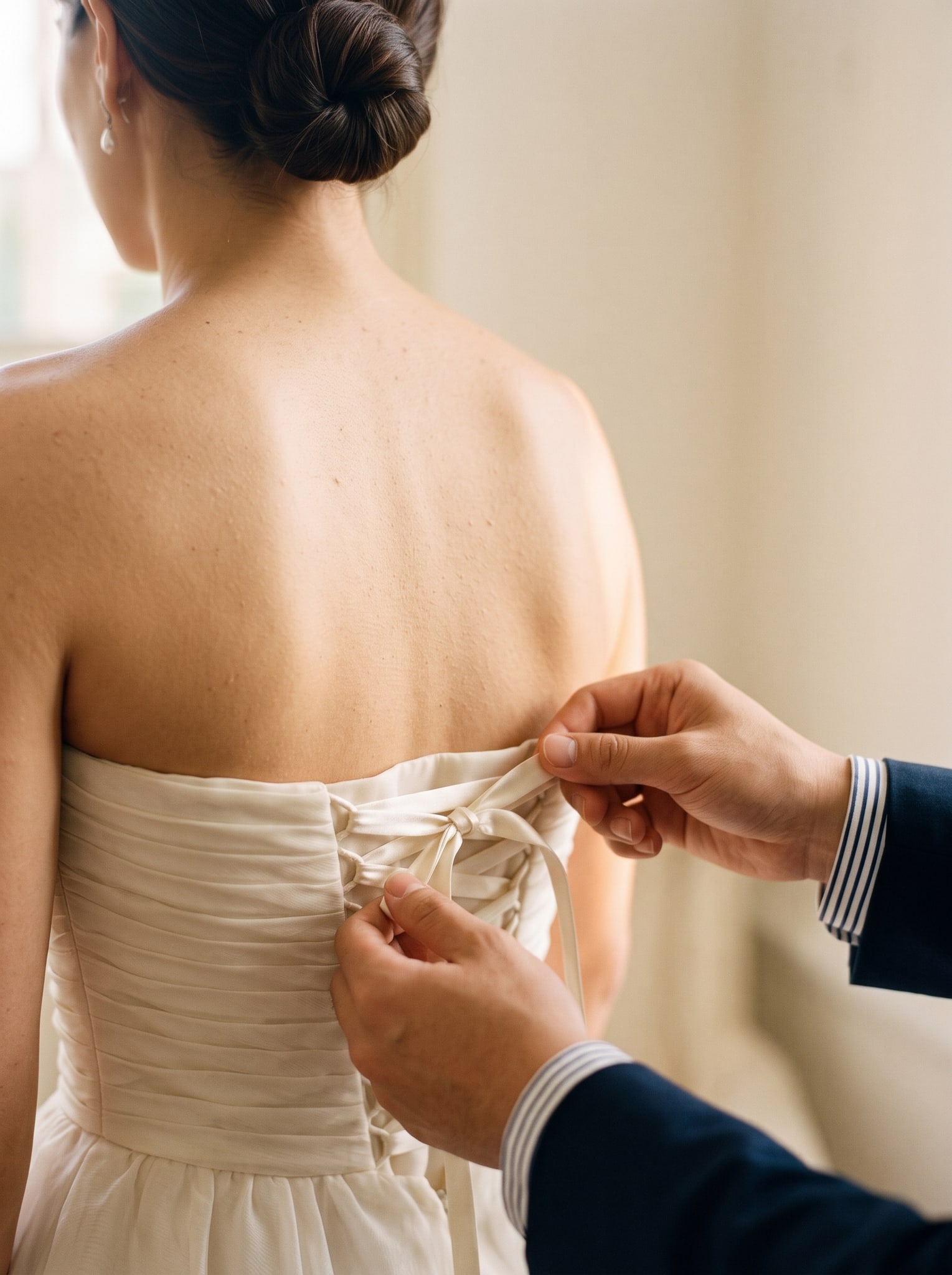
Standing pose doesn't mean feet together, arms at sides—that's manikin posture. We teach weight shift: stand with 70% of your weight on your back leg, front knee soft, back heel lifted slightly off the ground. This creates a diagonal line from your back hip through your neck. Your hands either rest on your front thigh, hang open at your sides, or sit one over the other at your belly. The áo dài's front panel falls over your hip; this pose reveals it without bunching. In a real Hanoi shoot last month, a guest kept both feet flat and wondered why the silk looked collapsed around her waist. We moved her back foot back 12 inches, lifted the heel, and the entire skirt regained shape. That one shift took 10 seconds and changed every frame.
How do we handle sitting poses when the gown is so structured?
Sitting poses scare beginners because the gown's train bunches if you sit wrong. We use the "one-leg-lifted" rule: sit on a bench or stool, keep your back straight (support your lumbar, not your shoulders), lift your front knee slightly, and drape the fabric across your lap with one hand. The train flows down the back of the bench and pools on the floor. Your other hand rests on your lifted knee or tucks into the fabric folds. We never ask guests to sit cross-legged; it strangles the áo dài at the thighs and photographs as cramped. Last week in Saigon, we shot a solo session where the guest wanted to sit on a stone step near the river. Our stylist spent two minutes arranging the train on the step behind her, pinning it subtly with a safety pin so it wouldn't slip when she shifted weight. That prep took time but the sitting frames looked editorial. Sitting poses are less about body position and more about how we manage the fabric around you.
What movement poses actually work, or do we keep everything still?
Movement poses—walking, turning, looking over shoulder—are essential, but they're not fast. Slow walk from camera toward a wall, turn 45°, walk back. That's one cycle; one photographer shoots 30–40 frames in 12 seconds. The áo dài train follows 2 beats behind your body, so we ask you to walk like you're tired, not urgent. Walking shoots are when guests finally smile genuinely; they're doing something familiar, not holding a frozen frame. Turning poses work well indoors: stand, turn your head to camera, touch your collarbone or fold hands, then turn away and look back over your shoulder. We use a lot of "look back" poses in Hoi An because the light during golden hour hits your cheekbone and neck beautifully. Movement poses give the gown dimension; it photographs completely different when you move vs. stand still.
How do pose types differ by location and season?
Location changes what poses work. In a crowded Hanoi Old Quarter street, we use tight standing and seated poses; movement poses risk bumping pedestrians or losing the background focus. In a private garden or at Cáo Studio Hanoi, we use more walking and turning cycles because we control the space. In Hoi An or Ninh Binh, we combine standing poses with architectural frames—lean against a doorway, sit on a heritage bench, walk along a silent alley—because the location is the pose. Season matters too: in winter (November–February), we avoid very still poses because guests get cold and shivering reads in photos; we add movement to keep them warm and engaged. In summer, we slow everything down and give longer breaks between pose sequences because the humidity and heat (especially in Saigon) drain energy fast. A guest shot in summer Ninh Binh three years ago told us she wished we'd sat her down more; we did, and that session yielded her favorite frames.
| Pose type | Best for | Key setup | Common mistake |
|---|---|---|---|
| Standing, weight-shifted | Solos, couples, close-ups of gown | Back foot back, heel up, front knee soft | Feet parallel, weight centered—kills the line |
| Seated, one-leg-lifted | Formal moments, intimate shots | Train pooled behind, hand on lifted knee | Sitting cross-legged or too far back on seat |
| Walking, slow pace | Transitions, capturing fabric flow | 2-step rhythm, hands relaxed | Walking too fast; fabric doesn't photograph the movement |
| Turning, look-back | Profile and three-quarter frames | Turn 45°, pause, look over shoulder | Jerky head turn; we ask you to flow the turn, not snap it |
Chat with us on WhatsApp | See packages and prices on vietnamphotoshoot.com
What to check before you book your first áo dài session?
- Do you own or rent the áo dài? If renting in Ho Chi Minh City or Hanoi, pick it up the day before so it hangs and settles; rental fabric is often compressed. If we provide or recommend tailors, we'll send links.
- What's your comfort level with stillness? If you move a lot in everyday life, tell us. We'll build in more walking poses and fewer long static holds.
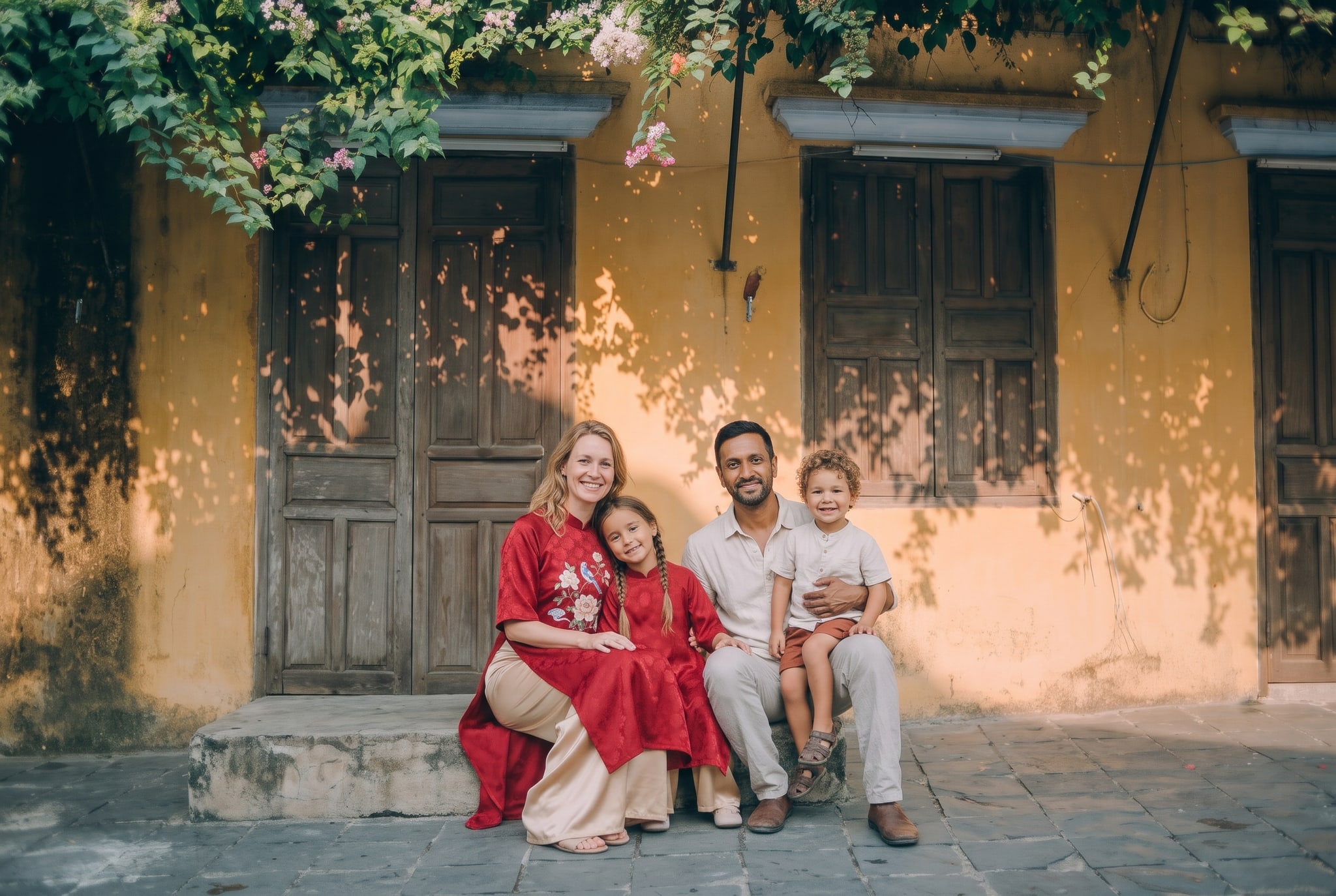
- Is this shoot solo, couple, or family? Solo sessions at Cáo Studio focus entirely on you and the gown. Couple shoots add interaction poses (hand-holding, looking at each other) that change the dynamic. Family sessions compress poses into tighter sequences because more people mean less individual framing time.
- What's your priority—documentary or posed? If you want natural moments, we guide you through poses lightly and shoot more frames during transitions. If you want magazine-style frames, we slow down, perfect each pose, and do fewer setups. Tell us upfront.
- Have you worn an áo dài before? First-time wearers need 10–15 minutes of acclimation (walking around, sitting, checking the fit) before we start framing. We build that into the shoot.
Chat with us on WhatsApp | See packages and prices on vietnamphotoshoot.com
How our team actually guides a beginner through their first pose sequence
Here's the real order we use: You arrive, we do hair and makeup (handled by our team or you bring yours; we offer hotel makeup and hair if you book early). You change into the áo dài. We spend the first 5 minutes just looking at you in the gown—checking the fit, the train length, any pulling at shoulders or underarms. Then we take you to the shooting space and shoot a few "finding your stance" frames: you stand where we tell you, we adjust your shoulders, we shift your weight. You don't pose yet; we're calibrating. Then we give you the standing pose (weight on back leg, front knee soft) and shoot 10–15 frames. Then we move your hands: hands down, hands on thigh, one hand on collarbone. Each hand position is 5–8 frames. Then we try sitting. Then movement. This isn't fast—a single standing-pose sequence is 15–20 minutes. By the end, you're not thinking about your body; you're thinking about the silk and the light. That's when the magic happens. We never rush beginners through poses because the best frame is always the one where you've stopped trying and started being.
Chat with us on WhatsApp | See packages and prices on vietnamphotoshoot.com
Real pose problems we solve on the day
Slouching shoulders. Most guests pull shoulders up when they're nervous. We place a hand on your upper back and press down gently; one correction and your whole frame lengthens. Tucked chin. The áo dài neckline is high and delicate; you instinctively tuck your chin to protect it. We ask you to lengthen your neck as if a string is pulling the crown of your head upward. Stiff hands. Hands feel huge when you're not sure what to do with them. We always give you something to hold—fabric, a fold of the gown, the edge of a bench—or we position hands so they look intentional, not abandoned. Fabric bunching. If the áo dài bunches at your hip or thigh, it's usually the stylist's job to adjust it, not yours. We do that between every pose shift. Smiling vs. neutral. Beginners expect to smile; áo dài photography often works better with a calm, open face. We tell you: "Think about someone you love, not the camera." That softens your expression without forcing a grin. If you want to smile, we guide a gentle smile, not a wide one.
Why beginners should book a dedicated session, not rush an áo dài shoot into a group event
Couple shoots and family photoshoots compress time. If you're new to posing and wearing an áo dài, a group setting means we rush your pose sequence to fit everyone. A solo or pre-wedding session gives you the full time—usually 1.5 to 2 hours—to settle, try different poses, and build comfort. We've seen couples who book solo áo dài sessions first, then do a couple shoot later; the second session is always stronger because they've already lived in the gown. If budget is tight, ask about special concept shoots that combine áo dài with another element (couple, family, proposal) in one extended session—you get the depth of a solo shoot but with added meaning.
FAQ
Do I need to practice poses at home before my session?
No. Practiced poses feel stiff in photos. We guide you in real-time based on how the gown fits your body that day. The silk, light, and your mood are all variables; we adjust on the fly. If you're anxious, we recommend a 10-minute walk the morning of your shoot to settle your nervous system—that's more valuable than practicing hand positions.
What if I feel awkward or self-conscious during the shoot?
Every beginner feels this in the first 20 minutes. We slow down, chat about why you chose the áo dài, take breaks, and remind you that the gown is the star—you're just showing it off. We also show you frames on the camera screen after each sequence; seeing yourself in the images instantly builds confidence. By frame 50 or 60, you're usually relaxed.
Can I wear heels or go barefoot in áo dài poses?
Heels elongate your line and work for standing poses, especially in formal or pre-wedding shots. Barefoot works for sitting and movement poses, and feels more natural in heritage locations like Hoi An. We recommend shoes for the first half of your session, barefoot for the second half, if the venue allows. Tell us your preference when you message us on WhatsApp.
How many poses should I expect in a typical session?
We typically cycle through 5–7 distinct poses per hour (standing, seated, walking, turning, back-to-back if you're a couple, etc.), shooting 200–300 frames total. We don't count poses; we count moments. A single pose might yield 20 frames as we adjust light, your hands, your gaze. Quality over quantity always.
What's the difference between poses for a solo áo dài session and a couple's pre-wedding shoot?
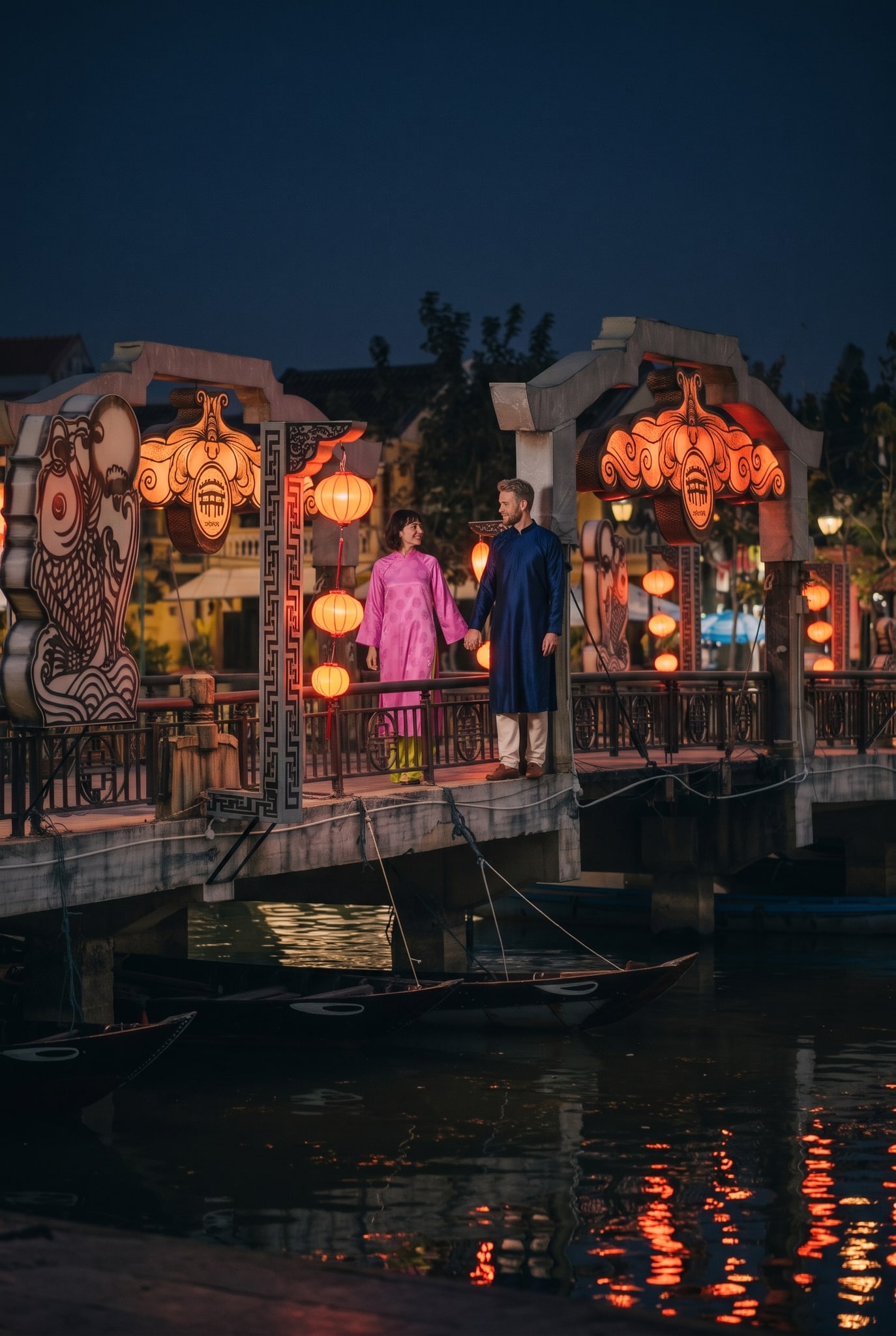
Solo poses isolate you and the gown—weight shifts, hand placement, walking patterns. Couple poses add interaction: hand-holding, looking at each other, walking together (the man usually walks slightly behind and to the side). Pre-wedding áo dài shoots also include emotion—laughing together, him adjusting her gown, intimate close-ups of the embrace. Solo is about form; couple is about connection. Both require a beginner session, but couple shoots demand more communication.
Do you adjust poses if I have mobility issues or old injuries?
Absolutely. Tell us before your session. We modify every pose—sitting on higher chairs if standing is hard, avoiding certain angles if an old injury flares, using props (benches, walls) for support. The áo dài is flexible enough to work with any body. We've shot guests with limited mobility and created beautiful frames by focusing on seated, draped, and supported poses.
Ao Dai Photoshoot
Inclusions, prices and booking are on our booking site.
FAQ
Do I need to practice poses at home before my session?
No. Practiced poses feel stiff in photos. We guide you in real-time based on how the gown fits your body that day. The silk, light, and your mood are all variables; we adjust on the fly. If you're anxious, we recommend a 10-minute walk the morning of your shoot to settle your nervous system—that's more valuable than practicing hand positions.
What if I feel awkward or self-conscious during the shoot?
Every beginner feels this in the first 20 minutes. We slow down, chat about why you chose the áo dài, take breaks, and remind you that the gown is the star—you're just showing it off. We also show you frames on the camera screen after each sequence; seeing yourself in the images instantly builds confidence. By frame 50 or 60, you're usually relaxed.
Can I wear heels or go barefoot in áo dài poses?
Heels elongate your line and work for standing poses, especially in formal or pre-wedding shots. Barefoot works for sitting and movement poses, and feels more natural in heritage locations like Hoi An. We recommend shoes for the first half of your session, barefoot for the second half, if the venue allows. Tell us your preference when you message us on WhatsApp.
How many poses should I expect in a typical session?
We typically cycle through 5–7 distinct poses per hour (standing, seated, walking, turning, back-to-back if you're a couple, etc.), shooting 200–300 frames total. We don't count poses; we count moments. A single pose might yield 20 frames as we adjust light, your hands, your gaze. Quality over quantity always.
What's the difference between poses for a solo áo dài session and a couple's pre-wedding shoot?
Solo poses isolate you and the gown—weight shifts, hand placement, walking patterns. Couple poses add interaction: hand-holding, looking at each other, walking together (the man usually walks slightly behind and to the side). Pre-wedding áo dài shoots also include emotion—laughing together, him adjusting her gown, intimate close-ups of the embrace. Solo is about form; couple is about connection. Both require a beginner session, but couple shoots demand more communication.
Do you adjust poses if I have mobility issues or old injuries?
Absolutely. Tell us before your session. We modify every pose—sitting on higher chairs if standing is hard, avoiding certain angles if an old injury flares, using props (benches, walls) for support. The áo dài is flexible enough to work with any body. We've shot guests with limited mobility and created beautiful frames by focusing on seated, draped, and supported poses.
More from the team
Ao Dai Photos at Hoi An Lantern Street at Night
Hoi An Lantern Street (Nguyen Hoan) glows at dusk with silk lanterns and reflected light. Our team shoots ao dai here after dark, navigates tight vendor spaces, and handles the low-light challenge with experience from 100+ night sessions.
Ao dai for wedding photos in Quy Nhon: renting, fitting and styling
Quy Nhon's coastal backdrops pair beautifully with traditional ao dai. We walk through rental choices, fitting logistics and how our team coordinates styling on shoot day.
Vietnam Pre-Wedding Photoshoot: What We Book at Cáo Studio
Pre-wedding shoots in Vietnam mean morning light in Hoi An's Old Town, cyclos in Saigon, or terraced fields near Ninh Binh. We walk you through what a session actually costs, how we schedule it, and what goes wrong on the day.