 Cáo Studio
Home › Blog › Ao Dai Photoshoot
Áo dài wedding photos at Bat Trang ceramic village
By the Cáo Studio team · Hanoi & Saigon · 2026-11-02
Bat Trang ceramic village is a working pottery community where Cáo Studio photographs couples and solo brides in traditional áo dài, usually across 2–4 hours in the morning when kilns are active and light is soft. The shoot includes a stylist (áo dài selection and fitting), makeup artist, photographer, and pre-booked access to studio workshops and village lanes; you pay Cáo Studio one package fee that covers all staff, not separate charges per person. The location is best in dry season (October–April); rainy months risk muddy paths and studio closures. Most couples choose this for the handmade, artisanal vibe that looks authentic in photos without needing a formal venue. Ask us for a quote on WhatsApp to confirm dates, what áo dài colors work best here, and whether you want couple or solo framing.
Why do potters' workshops make stronger wedding photos than hotel backdrops?
The clay dust, exposed brick, and water wheels at Bat Trang create color contrast that makes áo dài fabric pop without competing with the subject. When we scout a location, we look for weathered walls that don't repeat every five meters—repetition flattens the frame. Bat Trang's kilns and stacked unfired pieces add depth because the eye reads layers. Hotel rooms, even luxury ones, often have flat painted walls that absorb light. Here, roughness reflects and scatters light in ways that soften skin tone without losing detail. We've shot this village for five years and still find new corner angles each season.
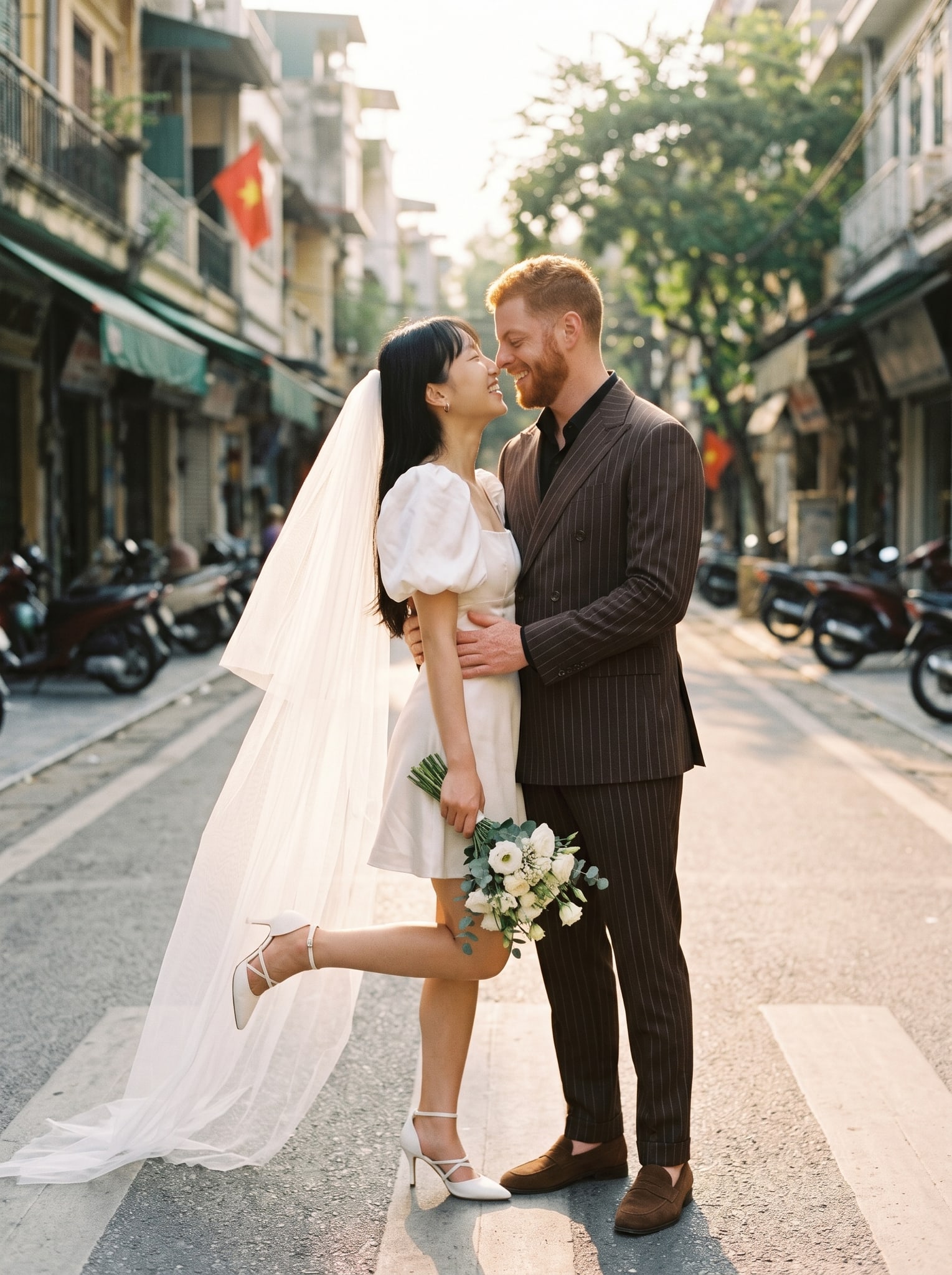
How do we manage the logistics of a moving crew in a working pottery village?
We arrive before sunrise with the couple, stylist, and makeup artist—the photographer scouts framing while makeup happens in a cool studio corner. Village access requires permissions we handle directly (not the couple's job), and we stay in two zones: the southern workshops near the main kiln and the northern residential lanes. Between setups we brief the couple on where to position their feet (clay dust stains white dress hems) and which workshops allow us inside versus shooting from the doorway. We always have a backup route if a kiln is firing—the sound and heat are real but move around. We never shoot during lunch hours when potters are resting and the village feels empty.
What áo dài colors photograph strongest against clay and ceramic patterns?
Deep jewel tones—burgundy, forest green, deep plum—read sharply against earthy clay because the saturation contrasts. Soft pastels (peach, pale pink) blend with the terracotta and white-glaze pottery, making the áo dài merge with the setting. Red works if it's a true red (not orange-ish) and paired with gold embroidery. White and cream áo dài photograph cleanly here but risk looking too formal against the rustic vibe; they work better in couple shots where the partner's áo dài color anchors the frame. Black is striking but absorbs heat in direct sun—morning light solves this. We ask the stylist to bring 3–4 options and test each against actual pottery pieces on arrival, not pre-guess. Our áo dài photoshoot package includes this color-matching consultation.
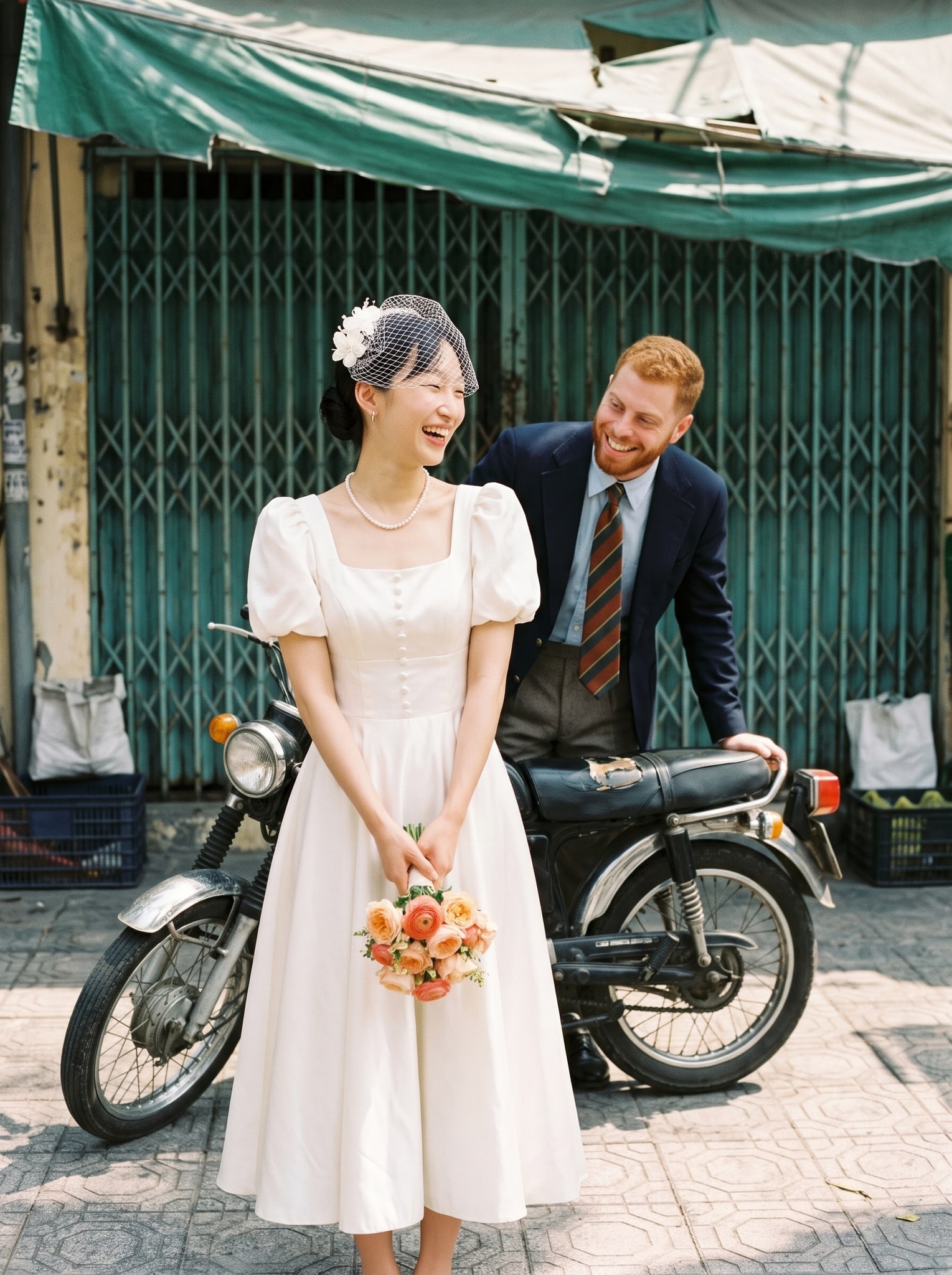
Do we shoot couple portraits differently at Bat Trang than solo shots?
Yes. For couples, we use the village lanes as a narrative path—walking shots, hands on pottery, seated by a kiln—because two bodies fill the frame and the setting becomes secondary. Solo brides need tighter framing around the áo dài detail and face because a single figure against a large workshop can look isolated. We pose solo subjects at doorways (the pottery behind them reads as a frame within the frame) and ask them to interact with objects—touching a clay vessel, leaning against a wheel. Couples can move; solos need stillness and micro-expressions. This is why couple photoshoots and solo sessions feel different here even in the same location.
What goes wrong on Bat Trang shoots and how do we fix it?
Mud after rain: Paths are unpaved. If it rained the night before, we shoot only in the studio areas and north residential lane. We carry footwear change and towels.
Kiln firing schedule: Some kilns fire on Tuesday and Thursday mornings; others are seasonal. We confirm the village's firing calendar two weeks out. If no kilns are firing, the location loses its most photogenic backdrop.
Couple hesitation with clay dust: First-time visitors worry about staining clothes. Our stylist briefs them: clay dust brushes off light fabric; water stains are the actual risk. We work near water sources and always have a clean towel.
Makeup sweat in humidity: Morning humidity (May–September) causes sweat even in cool air. We apply a mattifying primer and check makeup every 30 minutes. This is standard for makeup and hair at your hotel or on-location work year-round.
Lighting flattens after 9 a.m.: Morning light is soft and directional; by mid-morning the sun is high. We schedule shoots 6:30–9:30 a.m. or book afternoon sessions (4–6 p.m.) as backup.
| Factor | Solo áo dài shoot | Couple shoot | Pre-wedding concept |
|---|---|---|---|
| Shoot length | 2–3 hours | 2.5–4 hours | 3–5 hours |
| Number of outfits | 1–2 áo dài | 2–3 áo dài per person | 3–4 mixed (áo dài + áo dài second colors) |
| Crew size | Photographer + stylist + makeup artist | Photographer + stylist + makeup artist | Photographer + stylist + makeup artist + assistant |
| Best season | October–April (morning) | October–April (morning or late afternoon) | October–April (morning + late afternoon = full day) |
| Interaction with pottery | Posed with pieces, doorway framing | Walking, couple-centric, setting as stage | Narrative sequence (arrival, dressing, portraits, detail) |
See packages and prices on vietnamphotoshoot.com
What to check before you book a Bat Trang ceramic village shoot
Confirm the date with us two weeks ahead. We need to check kiln schedules and village access. Public holidays sometimes mean reduced pottery activity.
Bring two pairs of shoes. One for the car, one for the village. Clay dust is slippery when wet.
Choose áo dài color with the stylist in advance. If you have a family heirloom or custom piece, send photos. We'll tell you if the color reads well here.
Plan for 6:30 a.m. arrival if you want morning light. Makeup happens on-location in a studio corner. Breakfast after the shoot is common.
Ask about our proposal and anniversary package if this is a surprise. We can coordinate secret details and timing.
Understand the setting is working—not a museum. Potters are there. Kilns are firing. This is not a curated photo set.
If you're considering special concept shoots or a pre-wedding photoshoot that spans multiple locations, Bat Trang works well as one chapter in a longer story. Cáo Studio Hanoi runs these shoots year-round; ask us for a quote on WhatsApp to discuss your specific date and vision.
FAQ
Is Bat Trang ceramic village a working pottery community or a tourist attraction?
It's both. Active potters and kilns operate daily, but workshops welcome visitors and photographers. We arrange access through studio owners we work with; you don't book separately. The authenticity is real—potters are working, not posing.
How far is Bat Trang from Hanoi and how long does the commute take?
About 15 km south of central Hanoi. Travel time is 30–45 minutes by car depending on traffic and your hotel location. We handle transportation logistics when you book through Cáo Studio.
Can we shoot Bat Trang in the afternoon or evening instead of morning?
Late afternoon (4–5 p.m.) works if the sun is low and on the west side. Evening light is warm but unpredictable in rainy season. Morning is always the safest bet for consistent, soft light. Ask us about your specific date.
What if it rains on the day of our shoot?
We reschedule if heavy rain is forecast. Light rain is manageable—we stay in covered studio areas and the north lanes. If booked for morning and rain occurs overnight, we'll contact you 48 hours prior to discuss options.
Does the shoot include the áo dài itself or do we bring our own?
Our áo dài photoshoot package includes styling consultation and access to a stylist who helps you choose and fit pieces. If you have a heirloom or custom áo dài, bring it and we'll work with that instead. Ask us what's included in your quote.
Can we add other people—family members, groomsmen—to the Bat Trang shoot?
Yes. Additional people change the crew size and shoot length. This is different from a couple photoshoot—it becomes a group or family session. Contact us on WhatsApp with how many people and the composition you want, and we'll give you a quote.
What is the best season to shoot at Bat Trang?
October through April. Dry weather, cooler temperatures, and consistent morning light. May through September is humid, and kiln schedules can be unpredictable. Rainy season (August–September) risks muddy paths and shortened shoot windows.
Ao Dai Photoshoot
Inclusions, prices and booking are on our booking site.
FAQ
Is Bat Trang ceramic village a working pottery community or a tourist attraction?
It's both. Active potters and kilns operate daily, but workshops welcome visitors and photographers. We arrange access through studio owners we work with; you don't book separately. The authenticity is real—potters are working, not posing.
How far is Bat Trang from Hanoi and how long does the commute take?
About 15 km south of central Hanoi. Travel time is 30–45 minutes by car depending on traffic and your hotel location. We handle transportation logistics when you book through Cáo Studio.
Can we shoot Bat Trang in the afternoon or evening instead of morning?
Late afternoon (4–5 p.m.) works if the sun is low and on the west side. Evening light is warm but unpredictable in rainy season. Morning is always the safest bet for consistent, soft light. Ask us about your specific date.
What if it rains on the day of our shoot?
We reschedule if heavy rain is forecast. Light rain is manageable—we stay in covered studio areas and the north lanes. If booked for morning and rain occurs overnight, we'll contact you 48 hours prior to discuss options.
Does the shoot include the áo dài itself or do we bring our own?
Our [áo dài photoshoot package](/go/ao-dai-photoshoot) includes styling consultation and access to a stylist who helps you choose and fit pieces. If you have a heirloom or custom áo dài, bring it and we'll work with that instead. Ask us what's included in your quote.
Can we add other people—family members, groomsmen—to the Bat Trang shoot?
Yes. Additional people change the crew size and shoot length. This is different from a [couple photoshoot](/go/couple-photoshoot)—it becomes a group or family session. Contact us on WhatsApp with how many people and the composition you want, and we'll give you a quote.
What is the best season to shoot at Bat Trang?
October through April. Dry weather, cooler temperatures, and consistent morning light. May through September is humid, and kiln schedules can be unpredictable. Rainy season (August–September) risks muddy paths and shortened shoot windows.
More from the team
Ao Dai Photos at Hoi An Lantern Street at Night
Hoi An Lantern Street (Nguyen Hoan) glows at dusk with silk lanterns and reflected light. Our team shoots ao dai here after dark, navigates tight vendor spaces, and handles the low-light challenge with experience from 100+ night sessions.
Ao dai for wedding photos in Quy Nhon: renting, fitting and styling
Quy Nhon's coastal backdrops pair beautifully with traditional ao dai. We walk through rental choices, fitting logistics and how our team coordinates styling on shoot day.
Vietnam Pre-Wedding Photoshoot: What We Book at Cáo Studio
Pre-wedding shoots in Vietnam mean morning light in Hoi An's Old Town, cyclos in Saigon, or terraced fields near Ninh Binh. We walk you through what a session actually costs, how we schedule it, and what goes wrong on the day.