 Cáo Studio
Home › Blog › Ao Dai Photoshoot
Ao dai wedding photos at Bay Mau coconut forest: our shoot day
By the Cáo Studio team · Hanoi & Saigon · 2026-11-04
Bay Mau coconut forest—a maze of water channels and century-old coconut palms near Ninh Binh town—is one of our most-booked locations for ao dai wedding and engagement shoots. A session typically runs 3–4 hours: boat ride (30 min each way), styling and touch-ups on water, 90–120 minutes of shooting among the trees, outfit changes, and travel buffer. We pair these with ao dai photoshoot packages or couple and pre-wedding sessions. Cost basis: ask us for a quote on WhatsApp. What to avoid: arriving in heavy rain (boats become unsafe), wearing loose ao dai without securing the hem (water splash is unavoidable), or expecting perfectly dry hair in humid August. Cáo Studio books boats through local operators and arrives early to scout light and water levels—we've learned the hard way that tide and weather shift the best angles daily. Chat with us on WhatsApp
What happens in the first two hours at Bay Mau?
We meet guests at our Ninh Binh base (Hang Mua area, 15 km from Bay Mau) at 6:30 a.m. or 2:00 p.m. depending on season and light preference. The photographer, stylist, and makeup artist travel together; hair and makeup happen in a rented room or guesthouse nearby—never in a van. We check the ao dai fit, iron creases in the silk or cotton, and apply base makeup that can survive humidity and water spray. By 7:45 a.m., the boat is loaded with lighting flags, reflectors, and backup outfits. The boatman navigates us through narrow channels (water depth varies; rainy season is deeper, drier months are shallower). Once we reach the main grove, we spend the first 30 minutes finding the exact tree alignment and water clarity—we've had shoots where the water level dropped overnight, forcing us to switch to a secondary location with less reflection. On a clear day, morning light filters gold through the palms and hits the water at 45 degrees; that's the 90-minute window we exploit before sun overhead washes out color.
See packages and prices on vietnamphotoshoot.com
Why do ao dai hems and sleeves need pre-session planning?
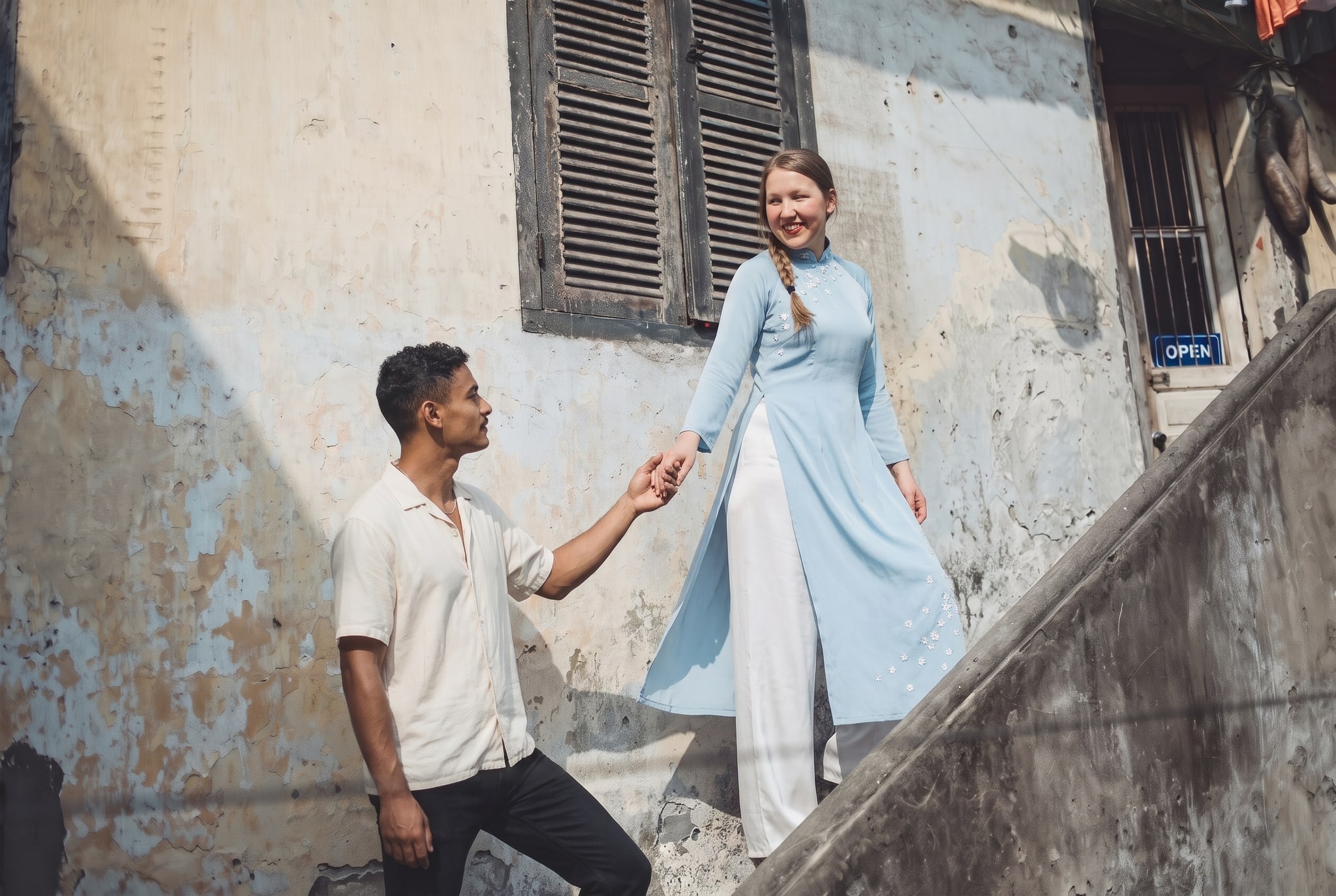
Ao dai are designed for dry land. The tunic skirt can billow and absorb water, the long sleeves drag, and the fabric (usually silk, linen, or cotton-polyester) shows water stains visibly. We learned this the hard way during a May shoot: the bride's white ao dai absorbed brown water on the hem and took three outfit changes to dry. Now we brief every guest: wear ao dai over fitted pants or leggings that dry fast; we bring microfiber towels and a small portable fan for between-shot drying. For water shots (wading or boat poses), we recommend darker colors (navy, deep teal, burgundy) over white or pastels. The stylist applies fabric starch spray to the bottom 15 cm of the skirt the night before—it repels minor water splashes. Silk ao dai are stunning but absorb moisture; cotton-blend versions dry in half the time. We always ask the guest to send a photo of their ao dai fabric two weeks ahead so we can judge drying risk and plan extra change time.
How do we manage boat movement and camera stability?
A wooden or fiberglass boat rocks constantly on water channels. Our photographer uses a monopod for stability (not a full tripod—space is too tight and weight matters on narrow boats). Shutter speed is locked at 1/500th or faster to freeze the motion; we let the camera's autofocus track focus rather than relying on manual settings that shift in choppy moments. The assistant holds a large reflector to bounce light upward into the guest's face—the boat's gentle sway means the reflector catches the moving water's reflection, which is actually beautiful and natural. We've stopped using umbrellas to shield the camera (too much wind resistance and they flip on water). Instead, the stylist stands between the photographer and the sun to block harsh overhead rays during midday shoots, which also shades the guest's face. Boat speed is another factor: we ask the boatman to move at walking pace for movement shots, then cut the engine for stationary portraits. We always do a test shot first (with the second camera) to confirm focus and white balance—water reflects blue-green light, which can throw color off if we don't adjust.
What outfit changes work best in a cramped boat setting?
Most guests plan two ao dai changes: one light color or pattern for opening shots, one darker or metallic tone for later light (as the sun moves west). Changing happens on the boat because walking wet back to shore wastes 15 minutes and the guest's confidence drops. We've designed a change routine: the stylist drapes a large sarong or changing robe around the guest's shoulders; the photographer turns to frame the next setup; the boatman holds the boat steady; the change takes 3–4 minutes. We pack outfits in order of use in a waterproof bag. If a guest wants three changes, we've learned to schedule an extra 45 minutes—hanging wet fabric to air-dry on the boat sails (yes, really—it works) while shooting other angles. Accessories matter: we avoid dangling earrings that catch on ao dai neck ties, and we never use flower crowns (humidity kills fresh flowers within 30 minutes; faded petals show instantly in close-ups). Couples often want matching or coordinated ao dai; we've seen many grooms choose traditional black ao dai with gold embroidery, which photographs beautifully against the green palms and blue water.
Which locations inside Bay Mau work for different photo styles?
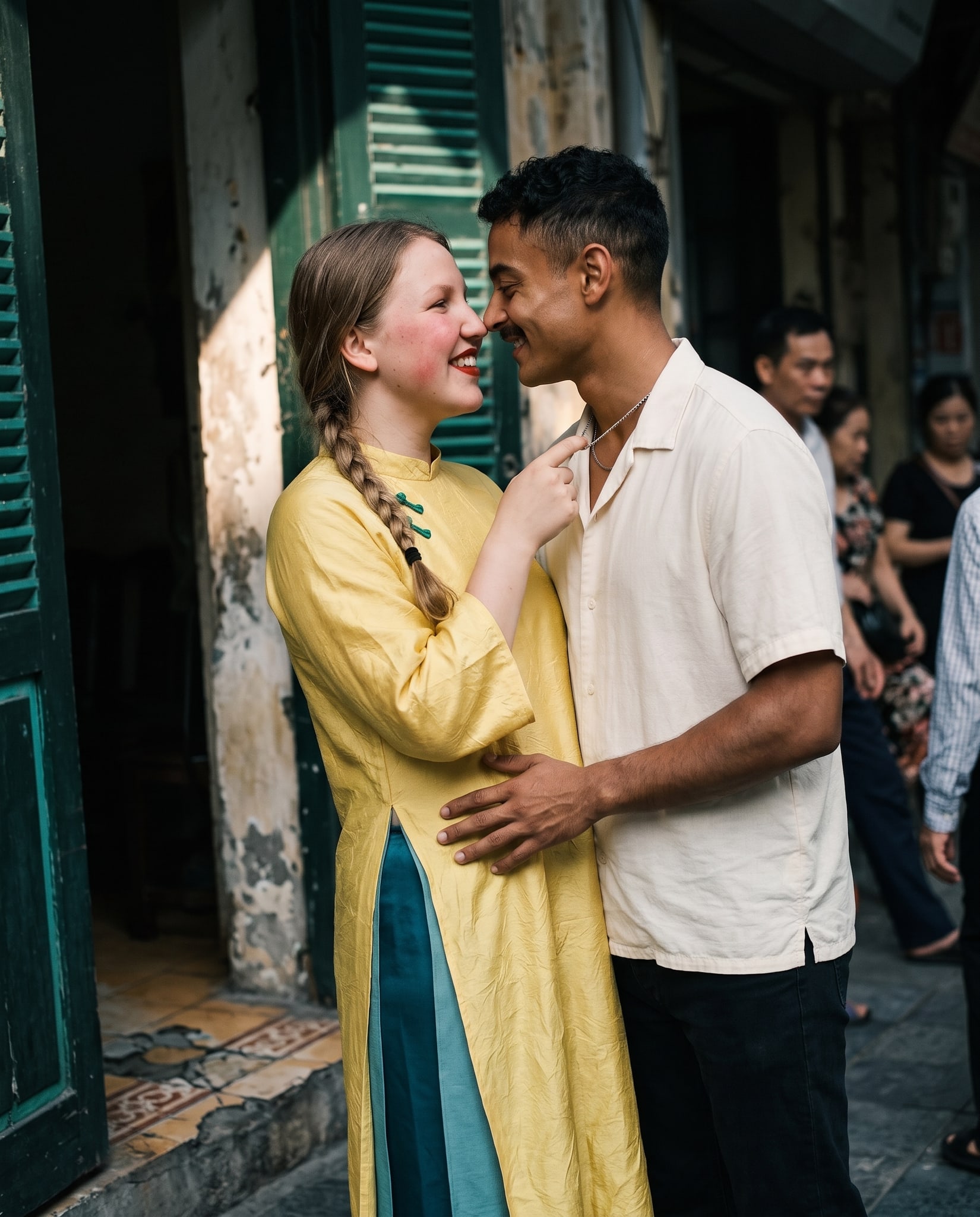
The forest is roughly 80 hectares; we've identified three main zones through 40+ shoots. The canal entrance (left side near boat dock) has sparse, tall palms with dramatic trunk spacing—best for full-length silhouettes and wide landscape shots; light is direct early morning. The central dense area (40 minutes in by boat) has twisted trunks and layered canopy—best for intimate portraits and close-ups where the background is pure green shadow; the reflected light is softer and more forgiving on skin tone. The far western reach (60 minutes in) has open water and a few isolated trees—ideal for movement shots (walking, dancing, running) and couple dynamics where you want the subject to own the frame. We scout the route the day before shoots to check water level and tree health (fallen branches, debris). The tide schedule also matters: Bay Mau's channels are fed by inland runoff and the Red River influence; we check water forecasts and past shoot photos to know which zone will be clear or murky on a given date. During the 2025 dry season, we shifted most bookings to the central zone because water in the entrance dropped below boat depth.
Comparison: Bay Mau versus other Ninh Binh ao dai backdrops
| Location | Water feature | Light window | Outfit swaps | Best for | Distance from town |
|---|---|---|---|---|---|
| Bay Mau coconut forest | Narrow canals, reflections | 6:00–9:00 a.m. (morning); 4:00–6:00 p.m. (evening) | 2–3 | Romantic, forest drama | 15 km |
| Hang Mua base | Dry limestone hills, caves | 7:00 a.m.–4:00 p.m. year-round | 1–2 | Bold, architectural, couple energy | 3 km |
| Mua Cave interior | Cave shadows, natural framing | 9:00 a.m.–11:00 a.m. only | 1 | Mysterious, intimate | 3 km |
| Trang An boat route | Wider river, karst backdrop | 6:00–8:30 a.m. (best) | 1–2 | Grand, epic landscape | 8 km |
Chat with us on WhatsApp to discuss your location
What to check before you book a Bay Mau session
- Ao dai color and fabric—send a photo two weeks ahead; darker colors dry faster and show water stains less.
- Weather window—we monitor the 10-day forecast; rain cancels boat shoots (unsafe). Ask about rescheduling terms on your package.
- Boat operator and insurance—we use licensed local boatmen with life vests for all passengers; confirm your package covers this.
- Travel time budget—add 90 minutes for round-trip from Ninh Binh town; if you're staying in Hanoi, factor a 2-hour drive each way.
- Sunrise vs. golden hour—early morning (6:30–8:00 a.m.) gives cool, clear light on water; late afternoon (4:30–6:00 p.m.) is warmer and less crowded but requires faster shots before darkness.
- Outfit drying time—allow 15 minutes between major outfit changes; if humidity is above 80%, add another 10 minutes per piece.
- Post-processing—water and reflections can introduce color casts; we always shoot RAW and correct white balance in post (no filter will fix muddy water in a light ao dai).
Pages from our team you may need
FAQ
How much does a Bay Mau ao dai photoshoot cost?
Pricing depends on session length, team size, and whether you book standalone or as part of a couple or pre-wedding package. Ask us for a quote on WhatsApp—we'll tailor it to your vision and timeline. Payment is flexible: online link, bank transfer, or card from abroad.
What if it rains the day of our shoot?
We monitor forecasts three days ahead. If rain is heavy, we reschedule to your next available date (covered by our standard package terms). Light drizzle we can shoot through—actually creates moody, romantic tones—but boat safety comes first, so we'll advise cancellation if conditions turn unsafe.
Can we do a Bay Mau shoot in August or September?
Yes, but humidity and water are at their highest. We schedule shoots for very early morning (6:00 a.m. start) to avoid midday heat and sweat marks on ao dai. Ao dai drying time doubles in monsoon season, so plan for three outfit changes maximum. Water reflections are richer in rainy months because the color is deeper.
Do we need a makeup artist on the boat, or can we do makeup at the guesthouse?
We do full makeup at your hotel or our base room before boarding (90 minutes for bridal, 45 minutes for groom/guest). On the boat, our stylist carries touch-up supplies: powder, lip stain, blotting papers. Waterproof foundation and eyeliner are essential—humidity melts standard makeup within 30 minutes. If you're bringing your own makeup artist, please ensure they use water-resistant products.
How many photos do we get from a 3-hour Bay Mau session?
We deliver 100–150 edited photos from a standard ao dai session, split across outfits and locations. You'll see 8–15 shots per outfit change, including wide frames, portraits, and detail close-ups. All images are color-corrected for water reflection cast and delivered in high resolution (6000+ px width) within two weeks.
Can we combine Bay Mau with another Ninh Binh location in one day?
Yes, and we often do. A typical day: Bay Mau boat session (4 hours including travel), lunch break, then Hang Mua hill or cave session (2 hours). This requires longer packages and earlier starts. We charge travel time and boatman fees separately—ask about our special concept and multi-location shoots.
What should my spouse or partner wear if they're not in ao dai?
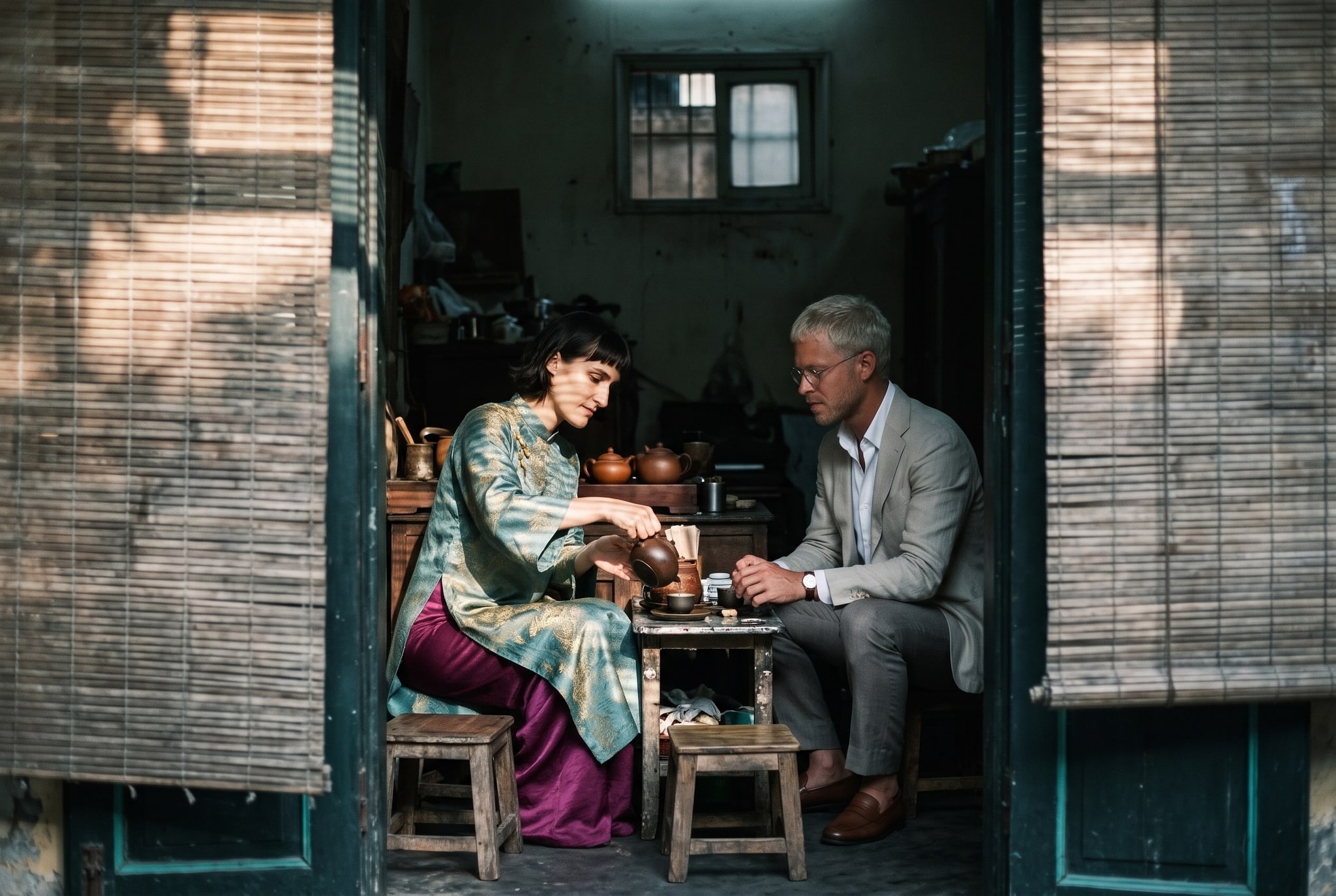
Many grooms wear traditional black or navy ao dai with gold embroidery; others choose formal linen shirts or light blazers. Avoid tight pants (wet and uncomfortable); linen or cotton blend are best. Bright colors and pastels show boat-side splashes easily, so dark tones (navy, charcoal, deep green) photograph better. Shoes: no shoes on the boat (barefoot or water sandals only). We've learned the hard way that leather shoes left on wet boats develop mold within hours. ===
Ao Dai Photoshoot
Inclusions, prices and booking are on our booking site.
FAQ
How much does a Bay Mau ao dai photoshoot cost?
Pricing depends on session length, team size, and whether you book standalone or as part of a [couple or pre-wedding package](/go/pre-wedding-photoshoot). Ask us for a quote on WhatsApp—we'll tailor it to your vision and timeline. Payment is flexible: online link, bank transfer, or card from abroad.
What if it rains the day of our shoot?
We monitor forecasts three days ahead. If rain is heavy, we reschedule to your next available date (covered by our standard package terms). Light drizzle we can shoot through—actually creates moody, romantic tones—but boat safety comes first, so we'll advise cancellation if conditions turn unsafe.
Can we do a Bay Mau shoot in August or September?
Yes, but humidity and water are at their highest. We schedule shoots for very early morning (6:00 a.m. start) to avoid midday heat and sweat marks on ao dai. Ao dai drying time doubles in monsoon season, so plan for three outfit changes maximum. Water reflections are richer in rainy months because the color is deeper.
Do we need a makeup artist on the boat, or can we do makeup at the guesthouse?
We do full makeup at your hotel or our base room before boarding (90 minutes for bridal, 45 minutes for groom/guest). On the boat, our stylist carries touch-up supplies: powder, lip stain, blotting papers. Waterproof foundation and eyeliner are essential—humidity melts standard makeup within 30 minutes. If you're bringing your own makeup artist, please ensure they use water-resistant products.
How many photos do we get from a 3-hour Bay Mau session?
We deliver 100–150 edited photos from a standard [ao dai session](/go/ao-dai-photoshoot), split across outfits and locations. You'll see 8–15 shots per outfit change, including wide frames, portraits, and detail close-ups. All images are color-corrected for water reflection cast and delivered in high resolution (6000+ px width) within two weeks.
Can we combine Bay Mau with another Ninh Binh location in one day?
Yes, and we often do. A typical day: Bay Mau boat session (4 hours including travel), lunch break, then Hang Mua hill or cave session (2 hours). This requires longer packages and earlier starts. We charge travel time and boatman fees separately—ask about [our special concept and multi-location shoots](/go/special-concept).
What should my spouse or partner wear if they're not in ao dai?
Many grooms wear traditional black or navy ao dai with gold embroidery; others choose formal linen shirts or light blazers. Avoid tight pants (wet and uncomfortable); linen or cotton blend are best. Bright colors and pastels show boat-side splashes easily, so dark tones (navy, charcoal, deep green) photograph better. Shoes: no shoes on the boat (barefoot or water sandals only). We've learned the hard way that leather shoes left on wet boats develop mold within hours. ===
More from the team
Traditional Vietnamese wedding elements for your Hoi An photos
Planning a Hoi An photoshoot with traditional Vietnamese wedding pieces? We walk through which elements photograph best, what to source locally, and how our team styles them on the day.
Ao dai wedding photos at Valley of Love Da Lat
Valley of Love in Da Lat is Vietnam's most romantic pink flower garden. We shoot ao dai there year-round, working with the mist, light and blooms to create timeless wedding imagery.
Ao dai wedding photos at Langbiang Mountain: what we shoot
Langbiang Mountain near Dalat offers misty pine forests and cool air that suit áo dài fabric beautifully. We share how our team runs these shoots, what fails on the day, and which package fits your vision.