 Cáo Studio
Home › Blog › Ao Dai Photoshoot
Áo Dài Wedding Photos at Cát Cát Village: Studio Guide
By the Cáo Studio team · Hanoi & Saigon · 2026-11-02
Cát Cát Village, a terraced settlement 15 km from Sapa town, has become a signature location for ao dài wedding and couple photoshoots because of its layered landscapes, traditional architecture and changing light through the morning. A typical session with Cáo Studio runs 3–4 hours starting at 06:00, includes one ao dài (provided or your own), a stylist, photographer and assistant, and produces 150–250 edited images. You'll navigate stone steps, narrow paths and wet grass, so footwear and fitness matter. We guide clients on outfit prep via WhatsApp, scout the location 48 hours before, and adjust timing if rain or fog shifts visibility. Cost and package options depend on group size, outfit changes and how many locations you visit within the village; ask us for a quote when you chat. Chat with us on WhatsApp | See packages and prices on vietnamphotoshoot.com
Cát Cát Village in the northern mountains has become one of the most requested backdrops for ao dài wedding and couple photoshoots because of its dramatic rice terraces, traditional stone architecture, morning mist and the sense of stepping into a living postcard. We started shooting there three years ago, and now one in five of our ao dài bookings happens in or near Sapa. The village itself sits on a steep slope; you walk down weathered stone steps to reach the best light and landscape frames. Brides often ask if it's worth the trek, whether the mist will cooperate, and how we keep the ao dài clean on muddy paths. This guide shares what we've learned running 60+ shoots there—the hour-by-hour rhythm, the decisions we make on set, what catches us by surprise, and the styling and package choices that matter.
How do we start a Cát Cát shoot before sunrise?
We tell clients to meet our team at a fixed point in Sapa town (usually the town square or your hotel) at 05:30, because the 30-minute drive to the village and the 10-minute walk to the first location eats time, and we need to be shooting by 06:45 when the light is soft and the village is less crowded. On arrival, our stylist checks your ao dài fit, pins any loose seams, adjusts your hair (we usually bring bobby pins and a small mirror), and our photographer scouts the stone steps and terraces for the first three poses while you settle. We ask clients to wear slip-on shoes because you'll need to remove them for many frames—carrying heels in a bag and walking in flat sandals keeps the ao dài hem clean. One bride forgot this and we spent 20 minutes cleaning mud from the bottom; now we text reminders. By 06:50 we're shooting, and the mist is usually thickest between 06:45 and 08:00, so we prioritize landscape-heavy frames first and close-up portraits second. If clouds roll in earlier than expected, we pivot to the stone-arch bridge or the lower terraces where backlighting still works.
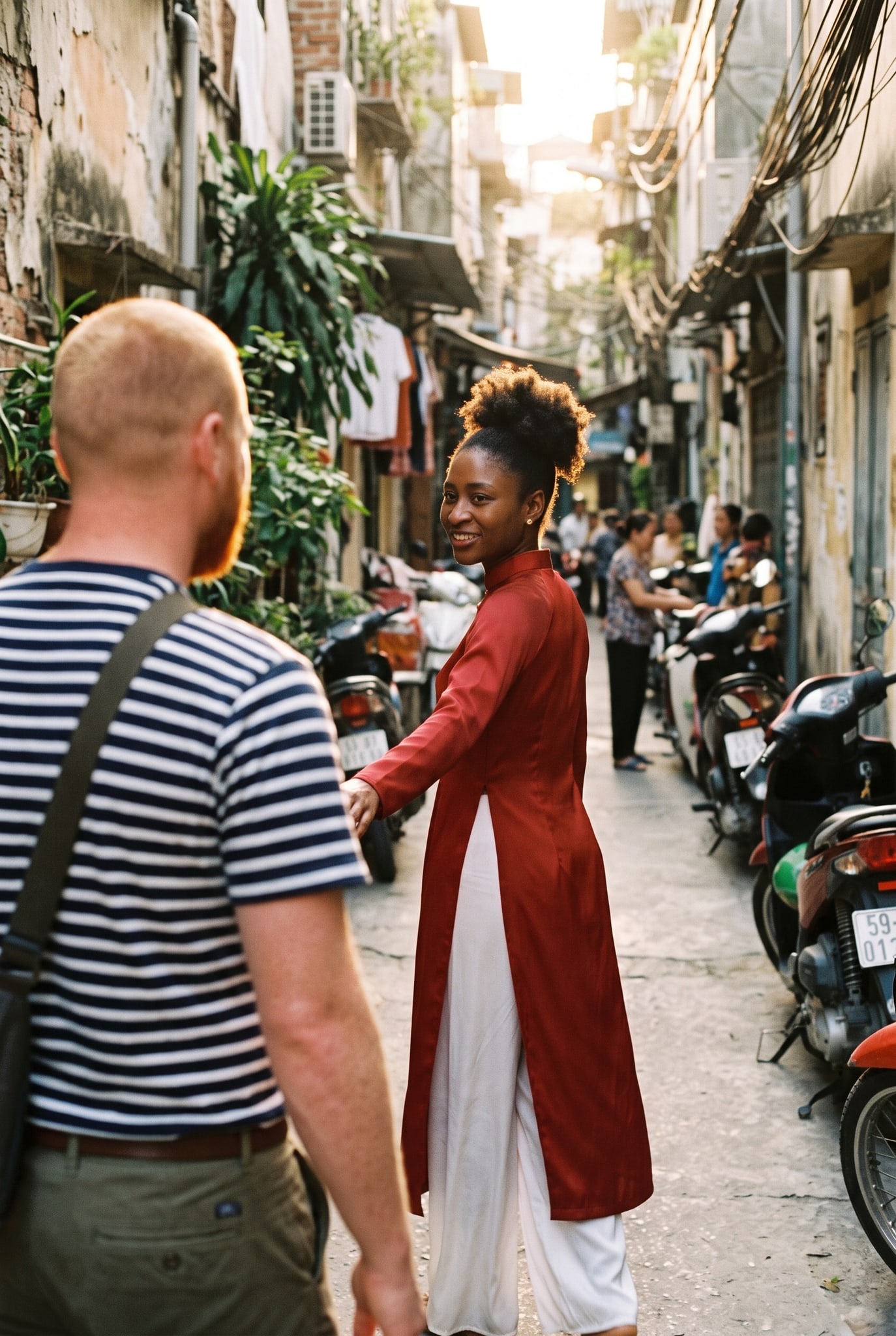
What happens when fog or rain changes our plan?
Cát Cát sits at 1500 meters, so weather shifts fast and unpredictably. We scout the location 48 hours before every shoot via phone with a local contact, check the live weather camera on our laptop, and message the client with a weather update the night before. If fog is heavier than forecast, we have three backup moves: (1) shoot closer to the village houses where stone walls frame the ao dài even without terrace depth, (2) wait 90 minutes for the mist to thin—we've done this and the patience paid off, or (3) move the session to a lower elevation like the Silver Waterfall area, 20 minutes away, where conditions are often clearer. Rain stops about half our early-morning shoots temporarily; we carry two large umbrellas, protect the camera with a rain sleeve, and ask clients if they're comfortable in light drizzle (most are—the ao dài and your hair look ethereal in rain, and the light is incredibly soft). We've never cancelled a session outright; we've delayed start time, cut the session short and added a makeup and hair touch-up, or moved the location. Clients appreciate honesty: we text at 05:00 if conditions look risky, give them the three options, and let them decide.
Which ao dài styles work best on those mountain paths?
A tunic ao dài with a straight skirt (áo dài truyền thống) is the safest choice because it's easier to walk in and less likely to catch on stone or thorns than a flared or layered skirt. We've seen brides arrive with three-layer flared skirts and beautiful embroidery, and those frames are stunning, but the extra fabric slows movement and can snag on rough steps. Our team offers a curated ao dài wardrobe—traditional solid colors (white, ivory, blush, cream) and classic pale silk or cotton brocade—because these photograph cleanly against the green and gray landscape without competing for visual weight. If you bring your own, we ask you to send photos beforehand so we can assess the hem length, sleeve fit, and skirt structure; we've had to safety-pin a loose waistband and adjust a long hem to prevent tripping. One couple chose a deep crimson ao dài with gold embroidery, and while it was breathtaking in full sun, the weight and restricted movement meant they tired faster and we got fewer candid frames. A light, simple ao dài lets you move naturally, which translates to more relaxed posing and better images. We guide you toward this on your first WhatsApp message, showing examples from past Cát Cát shoots, and you can always ask our stylists during the hotel makeup and hair session before we drive out.
| Ao dài style | Movement ease | Photogenic against terrace backdrop | Energy needed for 3-hour session | When to choose it |
|---|---|---|---|---|
| Straight tunic, light silk | High | Excellent (clean lines) | Low (minimal fatigue) | First-time visitors, morning fog shoots, fitness-conscious clients |
| Layered or flared skirt | Medium | Very striking (drama) | Medium–high (slower pace) | Afternoon sun, stationary poses, clients with modeling experience |
| Embroidered brocade, structured | Medium | Stunning (detail) | High (heavy, restricts stride) | Shaded forest locations, couples who stop frequently to pose |
| Modern ao dài (asymmetric, fitted) | High | Good (contemporary contrast) | Low (lightweight) | Younger couples, editorial style, mixed location shoots |
What do we tell clients on WhatsApp about fitness and footwear?
We message every Cát Cát booking with a simple checklist: "The village has 200+ stone steps, some steep. You'll walk 2–3 km total. Wear trainers or flat sandals you can slip off for photos. Bring a small backpack for your phone and a light scarf. Eat breakfast." Most clients handle it fine, but we've learned to flag this early because one bride arrived in high heels, hadn't eaten, and after 90 minutes was exhausted and uncomfortable—we shortened the session, rested for 30 minutes at a café in town, and rescheduled the second outfit to her final day. Another groom had a knee injury he didn't mention and couldn't navigate the lower terraces; we adapted by shooting on the upper stone paths and village lanes instead, which still looked beautiful. We always pair the client with our photographer or assistant on the steeper sections and position ourselves to catch spontaneous moments as they walk naturally. The walk itself is content; we photograph couples moving hand-in-hand down the steps, and some of our most memorable frames come from those transitions. We remind clients that the physical engagement—the breath, the slight exertion, the real smiles—shows in the images.
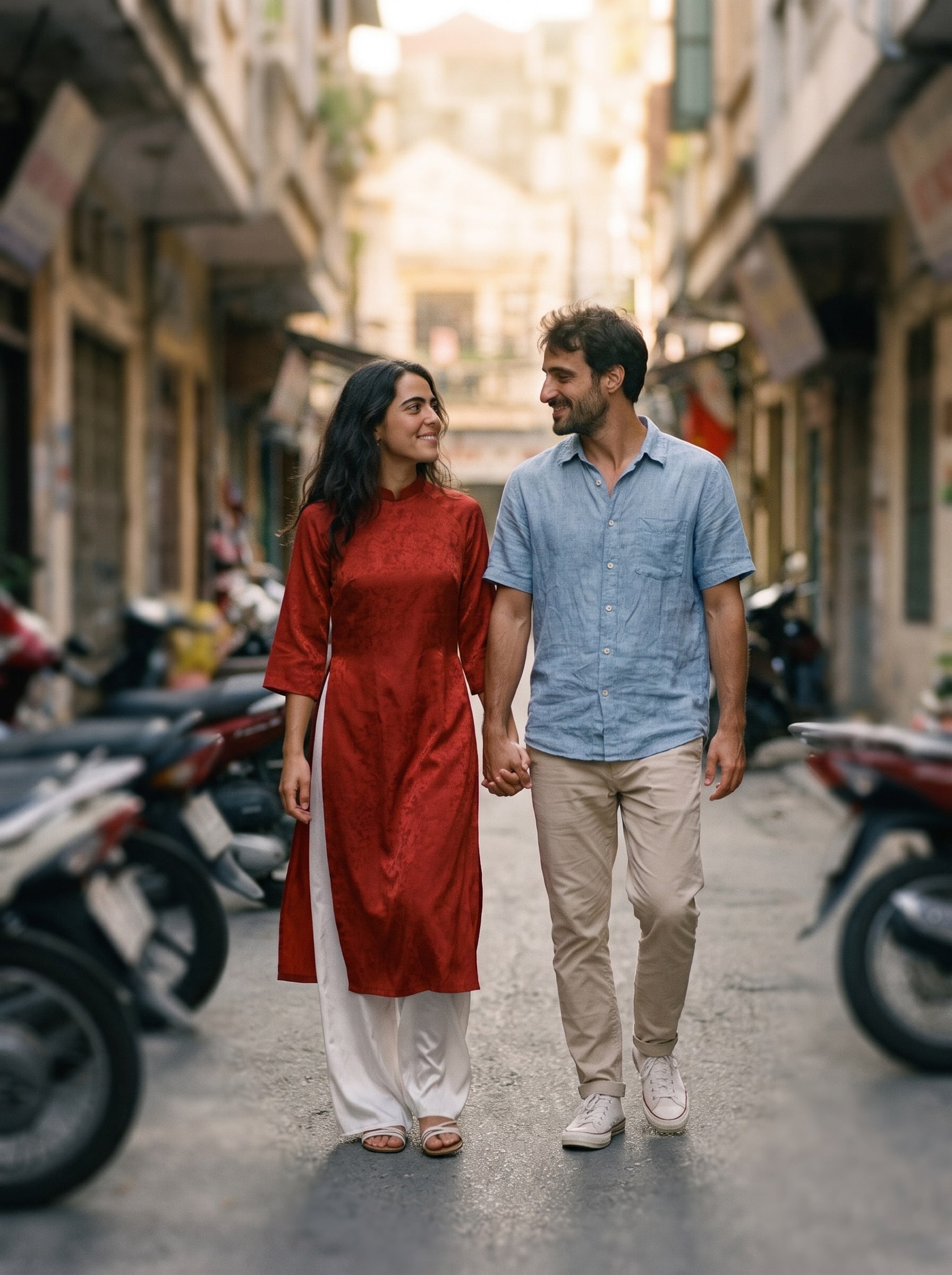
How do we manage styling, outfit changes and time on location?
A standard 3-hour Cát Cát session usually fits one ao dài comfortably and a second outfit (áo dài or Western dress) if you're willing to compress poses or skip a break. We advise clients to choose one show-stopping ao dài and use the second outfit (if you want it) for the café shoot or for lower-light frames near the stone bridge where a lighter palette stands out less. Our stylist carries a small kit: bobby pins, a sewing needle, a fabric pen, a steamer (we hike a portable one in cooler months), makeup touch-up products, and a lint roller. If an ao dài seam loosens or the collar shifts, we fix it in 3–5 minutes. Hair is checked every 45 minutes because wind, humidity and walking dislodges pins; we re-pin on location rather than reshooting multiple times. We've learned to ask clients if they want to change into a second outfit at the 90-minute mark or the 150-minute mark; earlier and they miss the peak light, later and the mood is rushed. One couple brought four outfit changes and expected all to fit in three hours; we gently explained the math on WhatsApp before the shoot, showed them our timeline template, and they chose their top two. Cát Cát is not a location where you dash through five outfit changes; the landscape, the light, and the village's rhythm reward lingering and depth.
Which package option works best for Cát Cát Village shoots?
Our ao dài photoshoot package includes one outfit, styling, photography and one location—that's the baseline. If you're drawn to Cát Cát and want to add the couple photoshoot layer (partner or spouse), the session extends and the package includes both individual and joint frames. We've noticed that couples booking Cát Cát often choose to also book our makeup and hair at your hotel service the morning of, because the 90-minute prep session in your hotel removes stress, ensures makeup is weather-tested before you trek out, and lets you review the day's timing one last time. Some clients ask about combining Cát Cát with a second location (like the Silver Waterfall or Sapa Old Quarter); that's possible within our special concept shoot framework, which allows flexible itineraries and longer days. The trade-off: a Cát Cát-only morning shoot is focused, immersive and less rushed; a two-location day is richer but requires an earlier start and a faster pace. Ask us for a quote on your preferred package when you message; we'll tell you what timing and logistics look like. Most ao dài brides choosing Cát Cát pair it with our proposal and anniversary package if it's an engagement or vow-renewal shoot, or book our pre-wedding photoshoot option for a full-day itinerary across multiple villages.
Chat with us on WhatsApp | See packages and prices on vietnamphotoshoot.com
What goes wrong and how do we fix it?
Our most common snag: clients underestimate humidity and mist, and their hair (especially freshly styled at the hotel) starts to frizz or stick to their skin by 08:30. We now carry a lightweight hairspray and a microfiber cloth in our kit and reapply before the second set of poses. Second issue: stone steps are genuinely slippery when wet, especially in light rain or morning dew. We walk behind clients with a steady hand out, and we've never had a fall, but we brief them firmly: "Move slowly, test each step, let us guide you." Third issue: café owners and other tourists sometimes drift into frames between 07:00 and 09:00. We scout the location to identify the quietest angles and time our poses to avoid congestion, but we've learned to position ourselves as a human barrier and chat with café staff beforehand (a small gesture or kind word helps). Fourth issue: the ao dài hem can drag in mud puddles or thorny grass. We ask clients to hold the skirt slightly higher when walking and to tell us if it gets wet; our stylist wipes it with a clean cloth and resets the pose. Finally, battery life: the cold mountain air drains camera and phone batteries faster. We carry two spare batteries, a portable charger, and we advise clients to turn off phone location and Bluetooth during the shoot to preserve battery if they want to capture video or audio.
What should you check before booking Cát Cát with us?
Timing: Ask us for your preferred shoot month and time. Cát Cát is best May–October (less mist, more predictable light); November–March is mist-heavy, which is beautiful if you want ethereal frames, but visibility is lower and the village is colder. Fitness and mobility: Be honest about your ability to walk steep stone steps for 2–3 hours. If you have knee or ankle concerns, we can shift the itinerary to upper village paths or a shorter walk. Ao dài origin: If you're bringing your own ao dài, send photos and your measurements to our stylist in advance. If you want to rent or wear one from our collection, confirm the color and style options early—demand is highest May–August. Weather backup: Ask what our policy is if conditions are unsafe on the day; we always reschedule free or move location, and we'll confirm this in your booking agreement. Group size: Cát Cát works best for couples, pairs or solo brides (1–2 people). Groups of 3+ are possible but require longer sessions and more careful route planning; ask us about logistics if your party is larger. Transportation: Confirm who provides the drive from Sapa town (we do as part of our package) and whether you need hotel pickup. The drive is scenic and part of the experience.
Chat with us on WhatsApp | See packages and prices on vietnamphotoshoot.com
FAQ
Is Cát Cát Village suitable for destination ao dài weddings or just photoshoots?
Cát Cát is ideal for photoshoots and pre-wedding sessions, not ceremonies—there's no formal venue space. Many couples do a Cát Cát photoshoot as part of their pre-wedding trip and hold the actual wedding elsewhere. We can coordinate the timing and styling if you're planning both.
How early do we need to arrive in Sapa to book a Cát Cát shoot?
We typically schedule shoots on the day you contact us or the next available day. If you're visiting Sapa for a specific date, message us 2–3 weeks ahead so we can hold the slot and coordinate hotel transfers. High season (May–August) fills faster.
Can we bring a groom or family member and still fit in one ao dài session?
Yes. If it's a couple, both of you can wear traditional dress (áo dài for him, áo dài for her) or you can choose Western wear for the partner. We shoot individual frames and couple frames together. If it's a family group (3+), the session runs longer and we focus on one ao dài wearer; ask us about logistics for larger groups.
What if we're traveling in the rainy season and we still want to shoot at Cát Cát?
Cát Cát is stunning in light rain—mist thickens, greens deepen, and the ao dài looks ethereal. We've shot there in drizzle and rain many times. Heavy downpour is rare, but if it happens, we offer a shorter session, a café stop, or a location shift. Ask us about our flexibility when you book.
Do we need to hire both a photographer and a stylist, or can we do it with just one?
We always send both. The stylist manages the ao dài, hair, makeup touch-ups and pacing, while the photographer captures frames and directs poses. This duo works best on mountain terrain where you need steady hands and attention while moving. You can't do this alone or with a solo operator safely or comfortably.
How many images do we receive and in what format?
A 3-hour Cát Cát session typically yields 150–250 edited digital images in high-resolution JPEG and raw file formats. We deliver them via cloud link (Google Drive or similar) within 10 business days. You can download, print, or share as you wish. Ask us about additional prints or albums if you want physical keepsakes.
Ao Dai Photoshoot
Inclusions, prices and booking are on our booking site.
FAQ
Is Cát Cát Village suitable for destination ao dài weddings or just photoshoots?
Cát Cát is ideal for photoshoots and pre-wedding sessions, not ceremonies—there's no formal venue space. Many couples do a Cát Cát photoshoot as part of their pre-wedding trip and hold the actual wedding elsewhere. We can coordinate the timing and styling if you're planning both.
How early do we need to arrive in Sapa to book a Cát Cát shoot?
We typically schedule shoots on the day you contact us or the next available day. If you're visiting Sapa for a specific date, message us 2–3 weeks ahead so we can hold the slot and coordinate hotel transfers. High season (May–August) fills faster.
Can we bring a groom or family member and still fit in one ao dài session?
Yes. If it's a couple, both of you can wear traditional dress (áo dài for him, áo dài for her) or you can choose Western wear for the partner. We shoot individual frames and couple frames together. If it's a family group (3+), the session runs longer and we focus on one ao dài wearer; ask us about logistics for larger groups.
What if we're traveling in the rainy season and we still want to shoot at Cát Cát?
Cát Cát is stunning in light rain—mist thickens, greens deepen, and the ao dài looks ethereal. We've shot there in drizzle and rain many times. Heavy downpour is rare, but if it happens, we offer a shorter session, a café stop, or a location shift. Ask us about our flexibility when you book.
Do we need to hire both a photographer and a stylist, or can we do it with just one?
We always send both. The stylist manages the ao dài, hair, makeup touch-ups and pacing, while the photographer captures frames and directs poses. This duo works best on mountain terrain where you need steady hands and attention while moving. You can't do this alone or with a solo operator safely or comfortably.
How many images do we receive and in what format?
A 3-hour Cát Cát session typically yields 150–250 edited digital images in high-resolution JPEG and raw file formats. We deliver them via cloud link (Google Drive or similar) within 10 business days. You can download, print, or share as you wish. Ask us about additional prints or albums if you want physical keepsakes.
More from the team
Ao Dai Photos at Hoi An Lantern Street at Night
Hoi An Lantern Street (Nguyen Hoan) glows at dusk with silk lanterns and reflected light. Our team shoots ao dai here after dark, navigates tight vendor spaces, and handles the low-light challenge with experience from 100+ night sessions.
Ao dai for wedding photos in Quy Nhon: renting, fitting and styling
Quy Nhon's coastal backdrops pair beautifully with traditional ao dai. We walk through rental choices, fitting logistics and how our team coordinates styling on shoot day.
Vietnam Pre-Wedding Photoshoot: What We Book at Cáo Studio
Pre-wedding shoots in Vietnam mean morning light in Hoi An's Old Town, cyclos in Saigon, or terraced fields near Ninh Binh. We walk you through what a session actually costs, how we schedule it, and what goes wrong on the day.