 Cáo Studio
Home › Blog › Ao Dai Photoshoot
Ao dai wedding photos at Dong Van Karst Plateau
By the Cáo Studio team · Hanoi & Saigon · 2026-11-02
An ao dai wedding photoshoot at Dong Van Karst Plateau (Ha Giang province, northern Vietnam) combines traditional Vietnamese dress with UNESCO-listed limestone geology. Most sessions run 4–6 hours including travel from town, 40–80 outfit changes, and 500–1,200 edited digital images. You'll work with a Cáo Studio photographer, stylist, and makeup artist; we handle wardrobe, lighting, and post-production. Sessions work year-round but October–November offers coolest temperatures and clearest light. Before booking, confirm altitude tolerance (plateau sits 1,000–1,500 m up), physical stamina for rocky terrain, and whether you want one location or multiple. Transport logistics cost extra; budget travel time into your day. Most couples pair this with a couple photoshoot package or extend to a pre-wedding shoot across 2–3 days in the region. Chat with us on WhatsApp
Why Dong Van's geology transforms ao dai imagery
Dong Van Karst is not a studio backdrop—it's a living formation of jagged limestone pillars, verdant valleys, and stone pathways that frame ao dai fabric in ways flat urban studios cannot. When we shoot there, every meter of plateau reveals new negative space: red earth trails wind below ao dai hems, cliff edges echo the ao dai's vertical silhouette, and golden-hour light catches silk embroidery against dark stone. The plateau's rough texture contrasts with the garment's smoothness, which our photographer uses to emphasize the ao dai's craftsmanship. One couple in 2025 wanted images that felt "timeless and rooted"—Dong Van's thousand-year-old geology did that work for us; we made 200 final images where the landscape never upstaged the dress. That said, uneven ground and wind gusts demand a stylist who can fix folds fast. We learned early not to schedule shoots on plateau during rain season (May–September); wet rock is slippery and algae dulls color clarity.
How we structure a Dong Van shoot day hour by hour
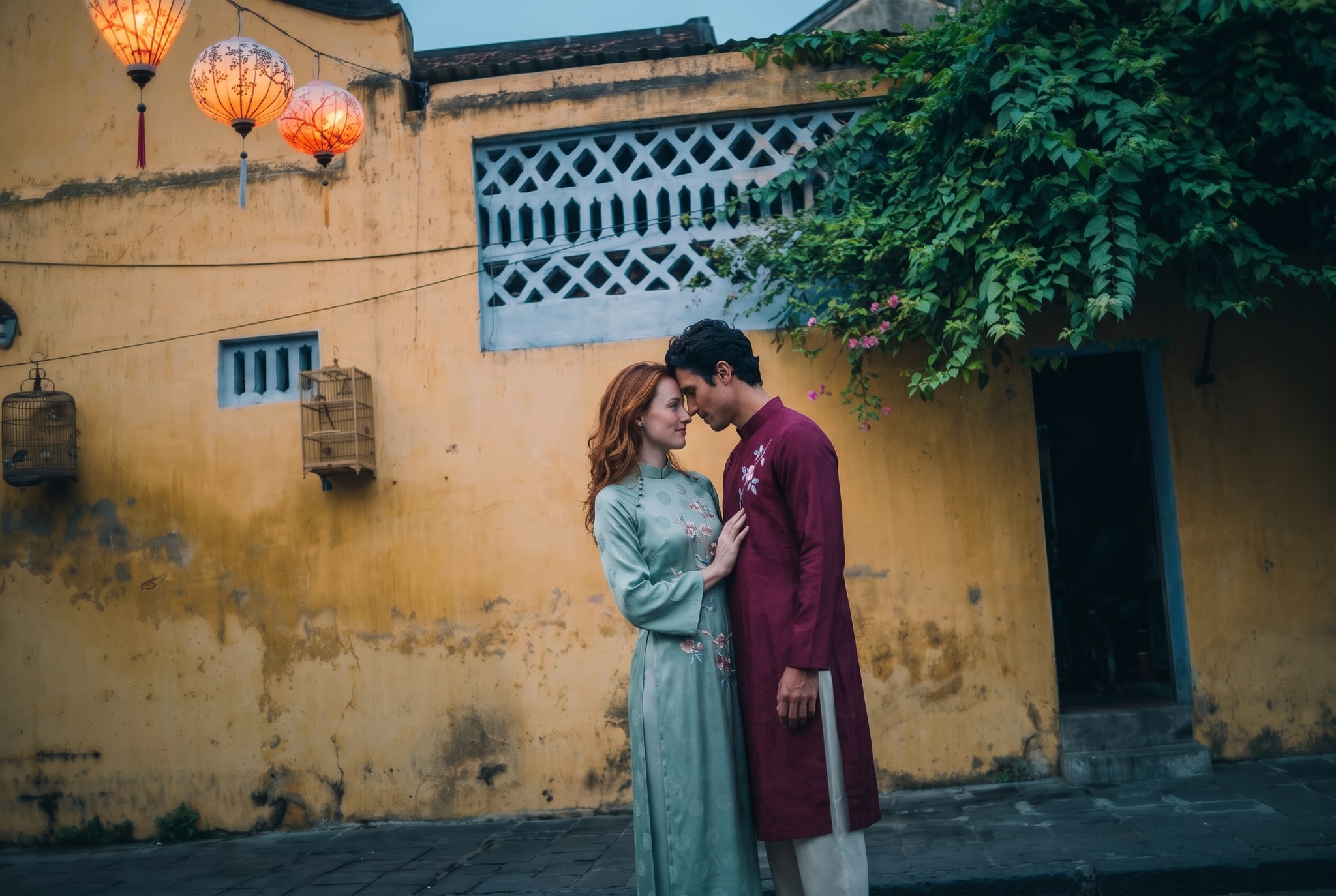
Our typical Dong Van session starts 5:30 a.m. in Ha Giang town (90 km south) to hit sunrise around 6:45 a.m. on the plateau proper. Our photographer and you travel together—usually 2.5 hours uphill. At base camp (a pre-arranged shaded spot), our stylist lays out ao dai, does final hair and makeup touch-ups, and checks wind exposure. Shoot block 1 runs 7:00–9:30 a.m.: fast, golden light, fewer tourists. We do 15–20 outfit changes here and move between 3–4 nearby stone formations. 9:30–11:00 a.m. is travel and rest—we walk to mid-plateau viewpoints (steeper, more dramatic) while light hardens. Block 2 is 11:00 a.m.–1:00 p.m.: midday light is harsh, so we hunt shadows under cliff overhangs and use stone reflectors to sculpt faces. 1:00–2:30 p.m. is lunch (we pack local food or eat in nearby Dong Van village). Final block 3 runs 2:30–4:30 p.m.: softer, angled light returns; this is when we shoot emotional couples' portraits and walking sequences. We leave plateau by 5:00 p.m. to avoid dark descent. Total on-site: ~8 hours; actual shooting: ~4 hours. The pace sounds rushed, but experienced stylists and photographers move efficiently. Mistakes we've made: underestimating bathroom access (none on plateau; tell guests beforehand), overloading costume counts (we now cap 25 outfits per session, not 40), and not bringing backup batteries—plateau cold drains power fast.
See packages and prices on vietnamphotoshoot.com
Outfit count, styling decisions, and what works on rocky terrain
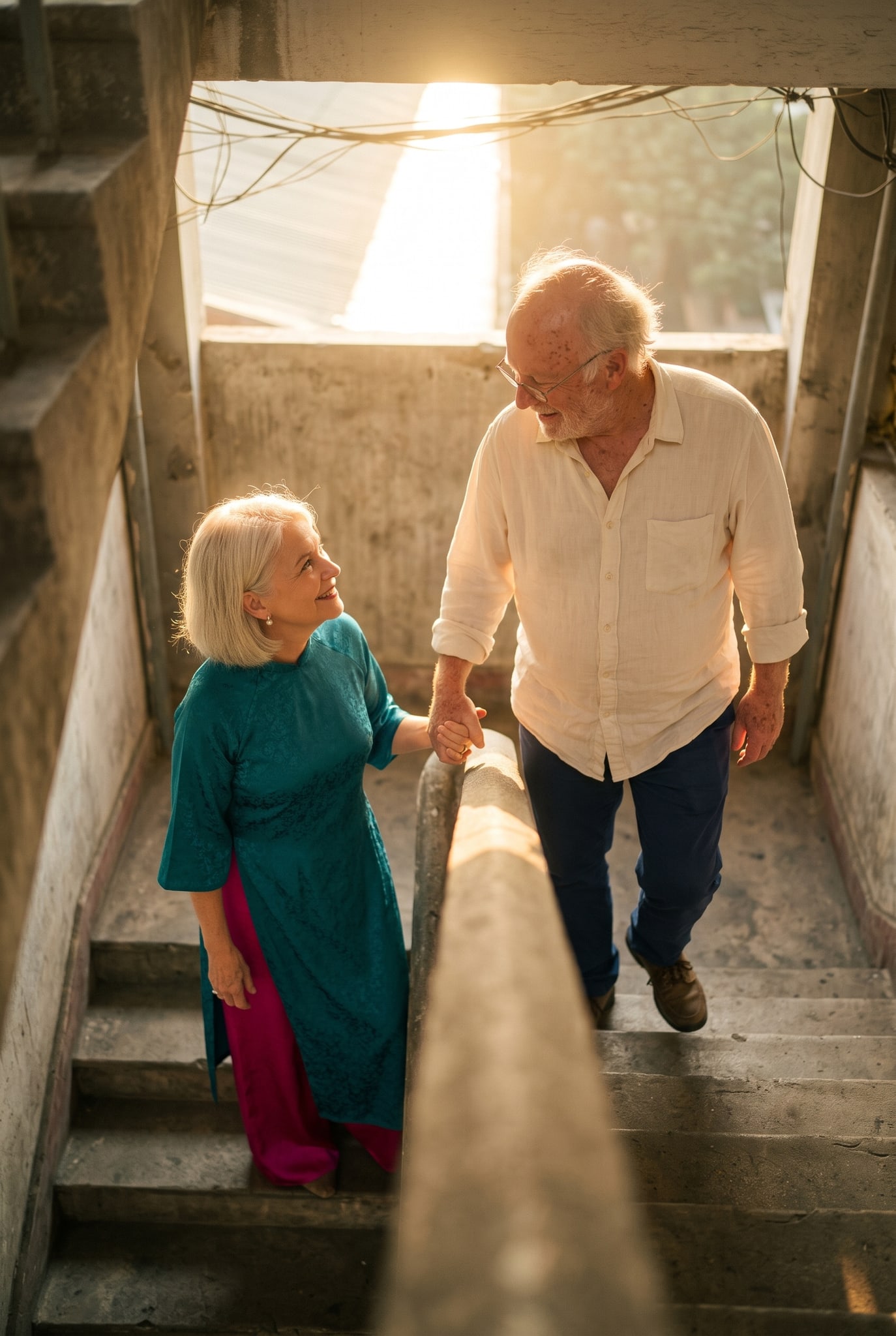
This is where preparation separates a smooth session from a stressful one. Ao dai are long, delicate, and designed for smooth ground. Rocky plateau means hems snag, embroidery can catch on stone edges, and wind (constant up there) whips fabric. We plan outfit rotation differently than studio shoots: we prioritize 8–12 hero outfits that photograph well from multiple angles, then add 5–8 lighter, faster-change pieces. Hero outfits might include a hand-embroidered silk ao dai in deep crimson (shows richly against grey stone), a traditional white ao dai with matching turban (classic, timeless), a blush ombré silk piece (soft in hard light), and perhaps a modern fusion ao dai with asymmetric panels (breaks up rocky monotony). For terrain, we avoid open hems and long trailing panels (snag risk) and favor fitted waist, reinforced shoulders, and shorter back trains (easier to manage on inclines). Our stylists bring hem clips, safety pins, fabric tape, and lint rollers—we spend 60–90 seconds per outfit change, not 5 minutes. Couples who stress about "one perfect dress" often regret limiting choices; we guide clients toward a special concept shoot package that includes styling consultation before arrival, so outfit picks are finalized and tested. One bride brought 18 ao dai; we edited down to 10 in a 30-minute call. She felt more in control and enjoyed the shoot more.
Seasonal light, weather, and timing: what the plateau teaches us
October–November light at Dong Van is why photographers dream about it: cool, angled sun, low humidity, and clear air for 50+ km sightlines. In these months, we schedule shoots 6:00–7:00 a.m. starts to catch sunrise mist clearing off valleys. December–January is bright and cold (5–10°C at dawn); we bring hand warmers and lighter ao dai for comfort. February–April warms up but dust season kicks in (Saharan dust reaches northern Vietnam March–April), which reduces clarity and makes post-processing harder. May–September: humidity peaks, rain is frequent, mist hangs until 10:00 a.m., and afternoon thunderstorms roll in unpredictably. We've had to reschedule three shoots due to sudden rain; our policy is to move dates free or switch to Hanoi studio sessions if travel is impossible. August is worst—we barely book the plateau then. Wind is constant year-round but strongest October–November, which is why we pair with experienced stylists; inexperienced teams struggle. We once worked with an external stylist (client's request) who'd never shot on plateau; she wasn't prepared for wind and we lost 90 minutes to costume chaos. Now we insist our in-house stylists lead Dong Van shoots. Couple who ask "which season is prettiest?" usually mean "which is safest?"—answer: October–November, followed by late March and early April.
| Factor | October–November | December–January | Feb–April | May–September |
|---|---|---|---|---|
| Light quality | Golden, low angle, sharp | Bright, cool, clear | Brightening, dust risk | Humid, mist-heavy, unpredictable |
| Temperature | 15–22°C | 5–10°C | 10–18°C | 20–28°C, 90%+ humidity |
| Wind | Steady | Steady | Variable | Gusts + rain risk |
| Outfit risk | Low | Low (cold chafing) | Medium (dust sticks to silk) | High (rain, mold) |
| Recommended start | 6:00–7:00 a.m. | 7:00–8:00 a.m. | 6:30–7:30 a.m. | Avoid; use studio |
Logistics, transport, and costs—what couples never expect
Dong Van Plateau sits ~200 km northeast of Hanoi city center, reachable only by road. Our standard offer is to arrange professional driver + vehicle (separate from photographer/stylist vehicle), but we do not include fuel or mileage in base packages—that's quoted separately based on your location. If you stay in Ha Giang town (advised), round-trip town-to-plateau is ~180 km and takes 5–6 hours including uphill time. Couples often assume "I'll rent a motorbike and follow the photographer"—we strongly discourage this. Plateau roads are narrow, unguarded, and dangerous in low light. We've seen near-misses. Better plan: your group travels with our driver in one vehicle, our photographer in another. Parking at plateau is unregulated; we have trusted spots where vehicles are safe and visible. No fuel stations on plateau; we fill up in town beforehand. Bathroom breaks are at villages only, not on rocks. Couples from Hanoi often add 1–2 nights in Ha Giang to rest, explore Dong Van market (colorful textiles, local inspiration), and shoot a second day if budget allows. Couples from Saigon usually fly into Hanoi the day before, stay overnight, and drive up next morning. This stretches to a 3-day trip minimum. We've supported couples who combine a Dong Van session with a vacation photoshoot across the Ha Giang loop—those are 2–3 day photo tours, not one-session shoots. We coordinate with local guides and homestays we trust.
What to check before you book: a pre-shoot checklist
Before committing to Dong Van, confirm these:
- Fitness & altitude: Are you comfortable hiking uneven ground for 4–6 hours? Plateau elevation (1,000–1,500 m) is not extreme but affects breathing during exertion. If you're unsure, try a 2-hour hill walk first.
- Ao dai fit: Wear your ao dai before shoot day. Walk in it. Sit in it. Can you manage stairs and rocky steps without tearing seams or catching hems? Many ao dai are tailored for smooth, flat indoor spaces. Plateau changes that.
- Season readiness: Check weather forecasts 2 weeks before. October–November? You're safe. June–August? Reconsider or plan backup studio dates.
- Group size: Keep it under 5 people total (couple + photographer + stylist + guide, or couple + 2 immediate family). More people = longer setups, more time lost, exhausted photographer.
- Budget for contingencies: Rain delays, rescheduled travel, or extra driver hours—we pad our estimates. Get a written logistics quote, not just package price.
- Communication: Confirm outfit list, hair & makeup style, and arrival time in writing 1 week before. Surprises on shoot day cause stress and delays.
We recommend all clients book a makeup and hair service 1–2 days before if they're arriving from abroad; jet lag + high altitude + demanding shoot = tired faces. A pre-shoot makeup trial (even virtual, over video call) catches issues we'd otherwise fix on-site under time pressure.
FAQ
Can we shoot at Dong Van in monsoon season (May–September)?
Technically yes, but we discourage it. Rain, humidity, mist, and mud make plateau unsafe and reduce image clarity. We've rescheduled four shoots due to afternoon thunderstorms. If you're set on summer dates, we offer backup studio sessions in Hanoi or Saigon with similar ao dai styling.
How many outfit changes are realistic in one Dong Van session?
We recommend 10–15 outfit changes maximum. Plateau logistics (walking between locations, no full-service dressing rooms, wind management) mean each change takes 60–90 seconds. Couples who insist on 25+ outfits feel rushed; we've learned to guide them toward realistic numbers in the pre-shoot call.
Do we need to hire a local guide in addition to the Cáo Studio team?
Not required, but helpful for couples who want cultural context, local photography spots beyond standard viewpoints, or security in remote areas. We can connect you with trusted guides; that's a separate fee.
What happens if weather turns bad on shoot day?
We have a rescheduling policy: if conditions become unsafe (lightning, flash floods, zero visibility), we pause and offer a full reschedule on another date or a studio alternative in Hanoi. We don't shoot in hazardous conditions—safety comes first.
Are Dong Van shoots more expensive than studio sessions?
Yes, due to travel, longer day, and extra logistics. Dong Van sessions include transport, driver, weather contingency time, and outdoor skill set. We quote all-in on our booking site; no hidden costs, but plan for higher investment than urban shoots.
Can we combine Dong Van with other locations in Ha Giang region?
Absolutely. Ha Giang loop offers rice terraces, cave entrances, and village markets—all usable for ao dai shoots. We often structure 2–3 day photo tours combining Dong Van with nearby spots. Ask us about multi-location packages.
Ao Dai Photoshoot
Inclusions, prices and booking are on our booking site.
FAQ
Can we shoot at Dong Van in monsoon season (May–September)?
Technically yes, but we discourage it. Rain, humidity, mist, and mud make plateau unsafe and reduce image clarity. We've rescheduled four shoots due to afternoon thunderstorms. If you're set on summer dates, we offer backup studio sessions in Hanoi or Saigon with similar ao dai styling.
How many outfit changes are realistic in one Dong Van session?
We recommend 10–15 outfit changes maximum. Plateau logistics (walking between locations, no full-service dressing rooms, wind management) mean each change takes 60–90 seconds. Couples who insist on 25+ outfits feel rushed; we've learned to guide them toward realistic numbers in the pre-shoot call.
Do we need to hire a local guide in addition to the Cáo Studio team?
Not required, but helpful for couples who want cultural context, local photography spots beyond standard viewpoints, or security in remote areas. We can connect you with trusted guides; that's a separate fee.
What happens if weather turns bad on shoot day?
We have a rescheduling policy: if conditions become unsafe (lightning, flash floods, zero visibility), we pause and offer a full reschedule on another date or a studio alternative in Hanoi. We don't shoot in hazardous conditions—safety comes first.
Are Dong Van shoots more expensive than studio sessions?
Yes, due to travel, longer day, and extra logistics. Dong Van sessions include transport, driver, weather contingency time, and outdoor skill set. We quote all-in on our booking site; no hidden costs, but plan for higher investment than urban shoots.
Can we combine Dong Van with other locations in Ha Giang region?
Absolutely. Ha Giang loop offers rice terraces, cave entrances, and village markets—all usable for ao dai shoots. We often structure 2–3 day photo tours combining Dong Van with nearby spots. Ask us about multi-location packages.
More from the team
Ao Dai Photos at Hoi An Lantern Street at Night
Hoi An Lantern Street (Nguyen Hoan) glows at dusk with silk lanterns and reflected light. Our team shoots ao dai here after dark, navigates tight vendor spaces, and handles the low-light challenge with experience from 100+ night sessions.
Ao dai for wedding photos in Quy Nhon: renting, fitting and styling
Quy Nhon's coastal backdrops pair beautifully with traditional ao dai. We walk through rental choices, fitting logistics and how our team coordinates styling on shoot day.
Vietnam Pre-Wedding Photoshoot: What We Book at Cáo Studio
Pre-wedding shoots in Vietnam mean morning light in Hoi An's Old Town, cyclos in Saigon, or terraced fields near Ninh Binh. We walk you through what a session actually costs, how we schedule it, and what goes wrong on the day.