 Cáo Studio
Home › Blog › Ao Dai Photoshoot
Ao dai wedding photos at Hoi An rice paddies: what we shoot
By the Cáo Studio team · Hanoi & Saigon · 2026-11-04
An ao dai wedding photo session at Hoi An rice paddies is a 4–6 hour shoot with a stylist, makeup artist and photographer capturing you in traditional dress against flooded or growing rice fields. Cáo Studio shoots here year-round, adjusting for seasonal water levels and light. Most couples arrive by car or arrange hotel pickup; we meet at the paddies or your hotel first. Sessions include outfit changes, makeup touch-ups on location, and professional editing. Ask us for a quote on WhatsApp—pricing depends on group size, outfit count and album format. Book 2–3 weeks ahead for weekend slots; weather can shift shoots by a day. Chat with us on WhatsApp
What time of year gives the best rice paddy light?
We scout Hoi An's paddies in every season, and each has a rhythm. Winter (November–February) offers flat, even light and green young plants; spring (March–May) brings gold-ripe fields and longer golden-hour windows; summer floods create mirror-like water perfect for reflections but mean 5am starts to beat the heat. Autumn harvesting (September–October) clears fields fast, so we shift to nearby plantations. We pick dates based on your ao dai color—bright reds and pinks pop against deep-green spring growth, while pastels sing in golden wheat. Rainy-season paddies (May–September) flood suddenly; we monitor forecasts 5 days before and message you immediately if we reschedule.
How do we prepare your ao dai for a full day outside?
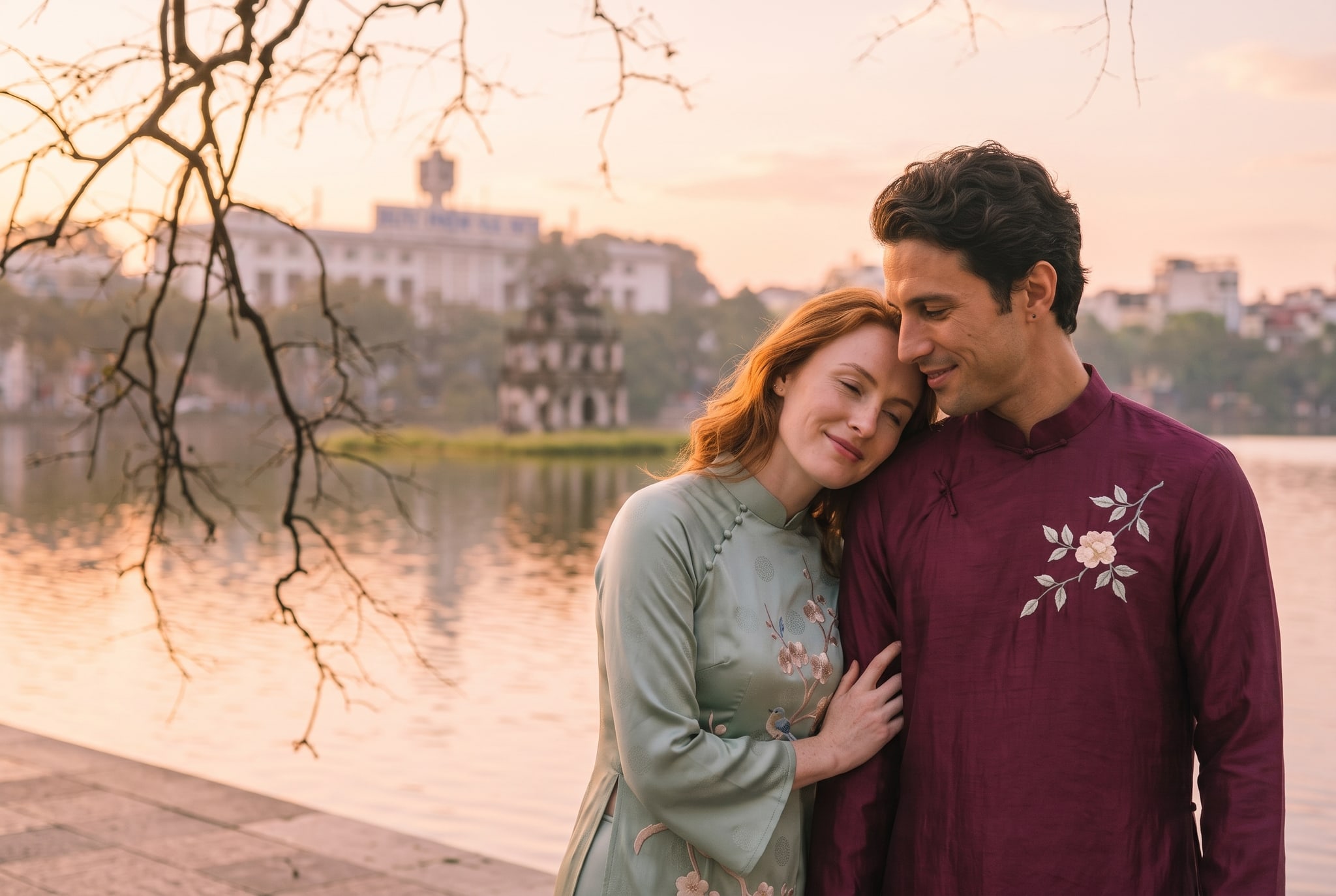
Ao dai is delicate silk or cotton blend; mud, sun and sweat are real risks. We pack each outfit in breathable garment bags, bring three full steaming setups, and lay down fabric mats before each outfit change so hems stay clean. Our stylist checks seams and buttons at 7am, brings needle and thread, and keeps backup pins. We apply fabric protectant spray to lower panels before walking through wet grass—most clients don't know this exists, but it saves hours of cleanup later. Shoes are always kept in a dry bag until the last minute. We've had silk split in the heat once; now we carry micro-stitch kits and a backup áo in a neutral shade. Tell us your ao dai's fabric when you book so we can source the right protectant.
Why does makeup melt and how do we stop it?
Hoi An paddies sit 5m above sea level with salt air and 85–95% humidity by mid-morning. Standard makeup slides off within 90 minutes. We use a three-layer system: waterproof base primer, long-wear cream foundation, then powder set with a fixing spray rated for 12+ hours. Our makeup artist reapplies concealer and powder every 45 minutes on location—this is non-negotiable. We bring a cooler with blotting papers, setting spray and backup mascara. Lip tint outlasts lipstick here, so we always recommend it for outdoor shoots. Eyeshadow stays put if we use cream shadow + powder, not powder-only. We've learned the hard way: one bride sweated through standard makeup by noon; now all our clients get waterproof kits, and the difference is night-and-day.
How do we move you safely through muddy fields?
Rice paddies mean soft earth, standing water, and narrow bunds (ridges). Our photographer scouts the exact route the morning before and marks safe paths with tape. We always bring dedicated paddy shoes—rubber boots that slip on and off—and a second pair of bridal shoes that stay dry in a bag. The stylist walks 3 steps ahead to check stability and clear branches. We've had two clients sink shin-deep; we now carry a small step-ladder and hand wipes on every shoot. Pregnant clients need extra caution; we always ask in the pre-shoot WhatsApp chat and adjust poses to keep you on solid ground. Water buffalo sometimes graze nearby—we wait 15 minutes if they're close, as they're territorial. Your comfort and safety come before every shot.
What's the difference between paddies in spring versus summer?
| Season | Water level | Light quality | Outfit timing | Challenges | Best for |
|---|---|---|---|---|---|
| Winter (Nov–Feb) | Low or dry | Soft, diffuse, 8am–5pm | 4–5 outfits, 6 hours | Chilly mornings | Neutral, classic ao dai |
| Spring (Mar–May) | Full, green growth | Golden 6–8am, 4–6pm | 3–4 outfits, 5 hours | Intense midday glare | Bright reds, pinks, embroidery |
| Summer (Jun–Aug) | Flooded, muddy | Harsh, reflective | 2–3 outfits, 4 hours | Heat, humidity, early start | Pastels, mirror shots |
| Autumn (Sep–Oct) | Harvesting | Warm, dusty | 3–4 outfits, 5 hours | Fields cleared fast, shifting venues | Earth tones, rustic mood |
We've run 120+ sessions across these seasons (based on our booking calendar). Spring is 40% busier because couples want gold light and lush green; summer suits heat-tolerant groups. Ask your photographer which season matches your vision, then lock dates 3 weeks ahead.
See packages and prices on vietnamphotoshoot.com
What does a real schedule look like on shoot day?
7:00am – Team meets at your hotel or a local coffee stop. Makeup artist begins foundation and brows while stylist steams the first ao dai. Photographer reviews light and spots (weather permitting).
8:30am – First outfit ready. We drive to the paddies. You change into paddy shoes; stylist does final adjustments. Photographer frames the first 20–30 shots.
9:15am – Light shifts. We move to a second bund or angle for variety.
10:30am – Outfit change #2. We find shade, reapply makeup, hydrate.
11:45am – Midday glare peaks. We either wrap for lunch or shoot in shadows/close-up detail shots.
1:00pm – Optional lunch break at a local restaurant, or continue if the light is still good.
2:30pm – Final outfit change. Late-afternoon light is softer again; we shoot one last series.
4:00pm – Debrief, change out of ao dai, return to hotel.
4:30pm – Wrap.
Rainy or extremely hot days shorten this to 3–4 hours. We message you the night before with the exact itinerary and what to bring. Clients often ask: "What if I'm tired?" We pace shoots so you're never standing more than 30 minutes at a stretch. Bring a water bottle and sunscreen; we provide parasols for shade between shots.
Do we need a legal permit to shoot in rice paddies?
Hoi An's public paddies are free to walk and photograph in; no permit is needed for casual tourism. Commercial weddings and large crews sometimes trigger local land-owner questions, but as a registered studio with local relationships, we handle this before you arrive. We've never been turned away or delayed because of permitting. If you're bringing 20+ family members or a drone, tell us in advance—we'll coordinate with landowners and ensure full clearance. Most couples shoot with just the Cáo team (3–4 people), so this is rarely an issue. We know the seasonal farmers and the best-maintained paddies; that's our job.
What to check before you book
- Ao dai fabric and condition: Tell us if it's heirloom, new, or rented. We'll advise on protection and packing.
- Group size: Solo, couple, family, or wedding party? Each size changes location, timing and crew.
- Preferred season: Winter? Spring? Your choice drives the exact location and light.
- Outfit count: 1 ao dai or 3? More outfit changes = longer shoot and earlier start.
- Mobility or health: Pregnant, injured, or mobility-limited? We adapt routes and poses instantly.
- Hotel location: Pickup from Hoi An town is 15 mins to paddies. Tell us where you're staying.
- Budget and album: Ask us for a quote on WhatsApp. Packages differ by prints, digital copies and editing depth.
We run couple photoshoot and family photoshoot sessions here too. If you're planning a pre-wedding or a special concept shoot, Hoi An paddies work beautifully for both. Read our blog for more stories from the team on shooting across Vietnam.
Pages from our team you may need
- couple photoshoot package
- makeup and hair at your hotel
- proposal and anniversary package
- pre-wedding and elopement package
FAQ
Do rice paddies work for non-wedding couples or solo travelers?
Yes. Couples get romantic framing; solo travelers book 2–3 hour sessions and wear one outfit. Families and friends do group shots too. Tell us your goal—we tailor the itinerary and location.
What if it rains on shoot day?
We monitor forecasts and message you 3 days ahead. Light rain doesn't stop us; heavy downpour (>5mm/hour) triggers a reschedule. We offer free rebooking on any date within 60 days. Waterproof ao dai protectant helps even if you want to shoot in drizzle.
How many outfit changes fit into one session?
2–3 comfortably in 4–5 hours, including makeup touch-ups and walking time. More outfit changes (4–5) need 6+ hours and an earlier start. Tell us how many when you inquire—we'll adjust timing and location.
Can we bring family or friends to watch?
Yes. 1–2 spectators are welcome; they stay behind the photographer. Large groups slow us down and block light. Groups of 5+ should book a family photoshoot package so everyone's in frame.
What do you do if the ao dai gets damaged in the field?
Our stylist carries a repair kit (thread, needle, safety pins). Small rips are stitched same-day. If damage is severe and the outfit can't be worn, we pivot to a backup plan—close-up shots, detail work, or we reschedule. This has happened once in 120 shoots. We always ask: do you have a backup ao dai with you? If yes, crisis averted.
How much editing happens after the shoot?
Skin smoothing, color correction, and minor blemish removal are standard. Drone shots (if booked) include exposure and white-balance fixes. Ask us for a quote on WhatsApp—packages differ on how many images are fully edited vs. quick-processed, and how many raw files you receive.
Ao Dai Photoshoot
Inclusions, prices and booking are on our booking site.
FAQ
Do rice paddies work for non-wedding couples or solo travelers?
Yes. [Couples](https://wa.me/84338762340) get romantic framing; [solo travelers](https://go/vacation-photoshoot) book 2–3 hour sessions and wear one outfit. Families and friends do group shots too. Tell us your goal—we tailor the itinerary and location.
What if it rains on shoot day?
We monitor forecasts and message you 3 days ahead. Light rain doesn't stop us; heavy downpour (>5mm/hour) triggers a reschedule. We offer free rebooking on any date within 60 days. Waterproof ao dai protectant helps even if you want to shoot in drizzle.
How many outfit changes fit into one session?
2–3 comfortably in 4–5 hours, including makeup touch-ups and walking time. More outfit changes (4–5) need 6+ hours and an earlier start. Tell us how many when you inquire—we'll adjust timing and location.
Can we bring family or friends to watch?
Yes. 1–2 spectators are welcome; they stay behind the photographer. Large groups slow us down and block light. Groups of 5+ should book a [family photoshoot](https://go/family-photoshoot) package so everyone's in frame.
What do you do if the ao dai gets damaged in the field?
Our stylist carries a repair kit (thread, needle, safety pins). Small rips are stitched same-day. If damage is severe and the outfit can't be worn, we pivot to a backup plan—close-up shots, detail work, or we reschedule. This has happened once in 120 shoots. We always ask: do you have a backup ao dai with you? If yes, crisis averted.
How much editing happens after the shoot?
Skin smoothing, color correction, and minor blemish removal are standard. Drone shots (if booked) include exposure and white-balance fixes. Ask us for a quote on WhatsApp—packages differ on how many images are fully edited vs. quick-processed, and how many raw files you receive.
More from the team
Ao dai wedding photos at Thanh Toan tile-roofed bridge
Thanh Toan tile-roofed bridge in Hoi An draws couples for ao dai shoots. We walk through how our team manages light, crowds, costume changes, and what actually happens hour by hour on location.
Ao dai wedding photos at Tam Giang Lagoon: what we shoot, when, why
Tam Giang Lagoon's mirrored water and salt fields create one of Vietnam's most striking backdrops for ao dai wedding photography. We've shot over 200 sessions there—here's what we learned.
Ao dai wedding photos at Hang Mua viewpoint
Hang Mua's dramatic 500-meter viewpoint over Ninh Binh draws couples who want ao dai shots framed by karst peaks and rice fields. We run 2–4 hour sessions there and share what actually happens on the mountain.