 Cáo Studio
Home › Blog › Ao Dai Photoshoot
Ao dai wedding photos at Hoi An yellow wall streets: what we book
By the Cáo Studio team · Hanoi & Saigon · 2026-11-02
Shooting ao dai on Hoi An's yellow walls means 4–8 hours with our photographer, stylist and makeup artist in the Old Town's most photogenic lanes—Nguyen Huu Chi, Tran Phu, the riverside. You arrive in your chosen ao dai (ours or yours); we move between 3–5 locations, reshooting outfits or poses as light shifts. Most couples book a couple photoshoot package combining Hoi An with another site (Hoi An rice fields, coconut boat). Weather is the main variable: April–May heat hits 38°C, October–November stays 22–26°C. Early morning (5:30–8am) or late afternoon (3–6pm) avoids crowds and harsh midday glare. Cáo Studio provides hair, makeup and styling guidance; you receive edited digital files. The yellow walls work because they're a living backdrop—not a flat set—so light, foot traffic and reflections shift hourly, which is why timing and a plan matter. Chat with us on WhatsApp
Why Hoi An's yellow walls work for ao dai—and when they don't
Hoi An Old Town's mustard-yellow shophouses and French colonial walls create a color harmony with silk ao dai that photographs almost by accident. We've shot thousands of frames there, and the light hits the fabric in ways that make even phone photos look magazine-ready. But we also see visitors arrive at noon, stand against a wall in direct sun, and leave disappointed—highlights blown, skin washed out, ao dai color flattened. The yellow walls only sing in soft light: golden hour (6–7am or 4–5:30pm), overcast mornings, or shade under the eaves. If you're booking, we always ask: what time suits your travel schedule? Morning means you're awake at 5am, but you'll have the Old Town nearly to yourself. Afternoon means sharing space with cruise-ship crowds and fighting for angles. Winter (November–February) gives consistent overcast light all day; summer (May–September) forces you into early or late slots. We've learned to suggest a time before confirming a date, not after.
How we structure an ao dai session on the yellow walls
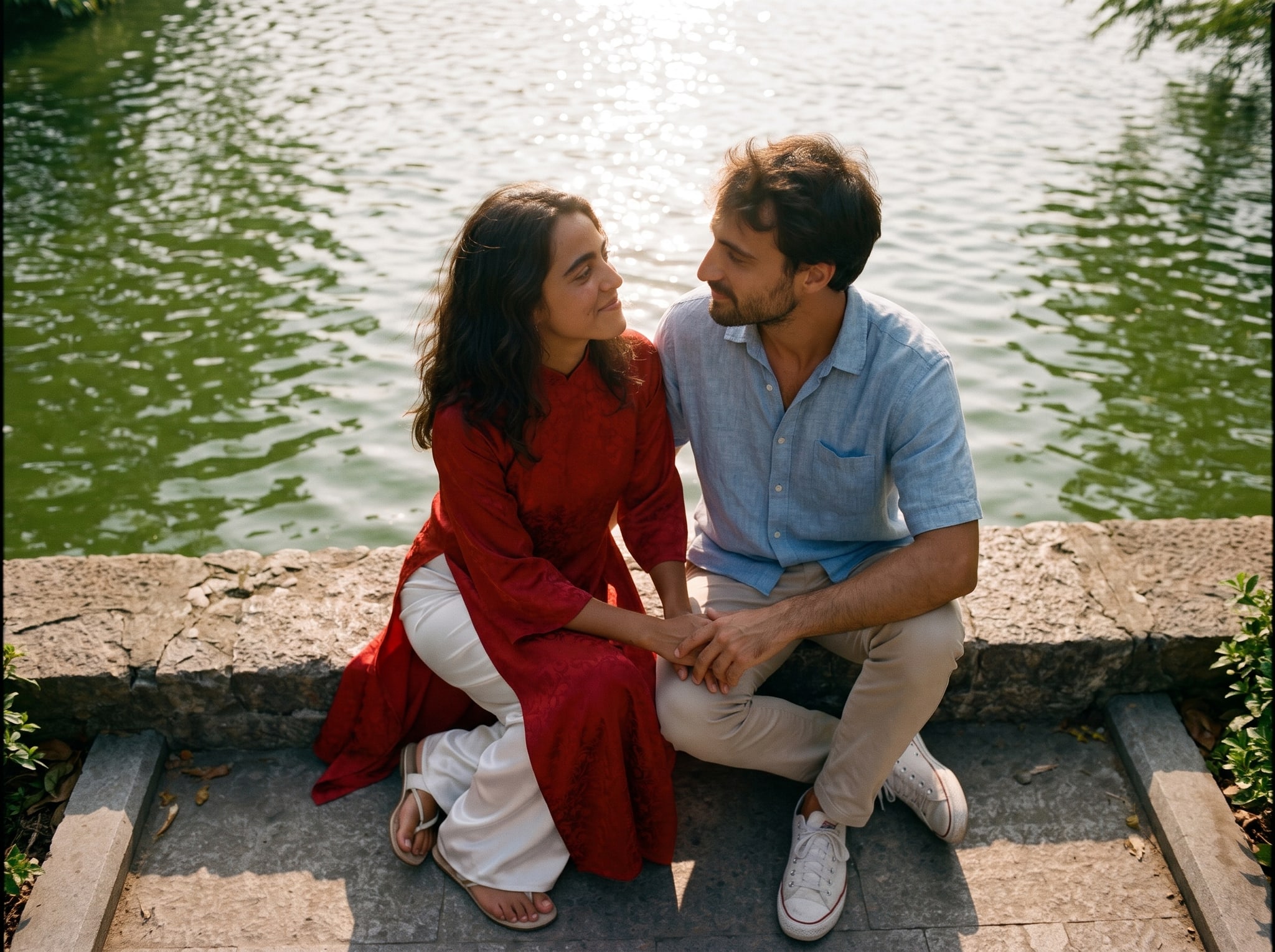
Our team arrives in Hoi An the day before or early morning to scout light and plan positions. When you arrive—usually 6am for an early slot—our makeup artist is already set up in a quiet café or your hotel room. You spend 45 minutes in hair and makeup while the photographer scouts the first location. By 7am you're in the ao dai, and we shoot for the first hour at 2–3 nearby spots before light gets harsh. Around 8am we pause, regroup, and either outfit-change or move to a second site (Cam Thanh coconut boats are a 20-minute drive). After lunch (your choice; we sometimes recommend a local spot), we resume at 3:30pm if the light is still usable, or wrap for the day. Couples who book a full day (7am–2pm or 3pm–8pm) get 80–100 edited images; half-day shoots (4–5 hours) yield 40–60. We always tell clients: the first outfit and location feel stiff because everyone's nervous. By hour three, you relax, and the best frames come then. Expect us to ask you to walk toward us ten times, laugh on cue, and pose in ways that feel unnatural until you see the image. That's the work.
See packages and prices on vietnamphotoshoot.com
What to choose: Hoi An only, or Hoi An plus a second location?
| Setup | Best for | What you get | Duration | When to book |
|---|---|---|---|---|
| Hoi An Old Town alone | First ao dai shoot, tight schedule, budget-conscious | 40–60 edited images, one outfit, 4–5 locations within walking distance | 4–5 hours morning or afternoon | 2–4 weeks ahead |
| Hoi An + rice fields | Hoi An vibes plus rural backdrop | 80–100 images, 2 outfits, Hoi An streets + Tam Thanh rice terrace or coconut boats | 7–8 hours (early start to late afternoon) | 3–6 weeks ahead |
| Hoi An + Hoi An riverside/boat | Couples wanting water in frames, softer scene changes | 60–80 images, 1–2 outfits, Old Town + sunset boat or riverside walk | 5–6 hours (afternoon focus) | 2–4 weeks ahead |
| Hoi An + Ninh Binh day-trip | Maximum variety, willing to travel, elopement or anniversary vibe | 120–150 images, 2–3 outfits, Hoi An morning + Ninh Binh limestone afternoon | 10–12 hours or split 2 days | 4–8 weeks ahead |
Most couples we see pick Hoi An plus one other location. The reason: one backdrop starts to feel repetitive after 90 minutes of shooting, even with pose changes. Moving location resets everyone's energy and gives a completely different color palette to edit toward. If you have just one morning in Hoi An, commit to the Old Town alone and make it count—we'll use every minute. If you're spending 2–3 days, split across two locations, because the contrast between them is where the photo album gets compelling.
Timing: how light and crowds shape what we actually book
We don't suggest Hoi An ao dai shoots in July or August. The heat climbs above 35°C, humidity sits at 85–90%, and makeup starts melting by 8:30am. Makeup artist frustration and your own discomfort means fewer genuinely smiling frames. April–May is hotter but shorter-lived. September–October sees the tail end of monsoon—overcast skies are actually a gift, because light is soft all day—but rain can cancel. November through February is our sweet spot: 20–28°C, mostly dry, blue skies or soft clouds. March sees tourists pile in for the same reason, so permits for group shoots and finding a quiet angle takes longer. We always give clients a heat/crowd/light chart in the WhatsApp conversation when they inquire. The best-lit hour in Hoi An is 6–7am. The most crowded is 9am–3pm. The most beautiful light returns at 4–5:30pm but involves shadows growing long, which means tighter framing. Choose your time based on your threshold for early wake-ups and crowd patience.
What Cáo Studio brings that matters: styling, outfit options, and what goes wrong
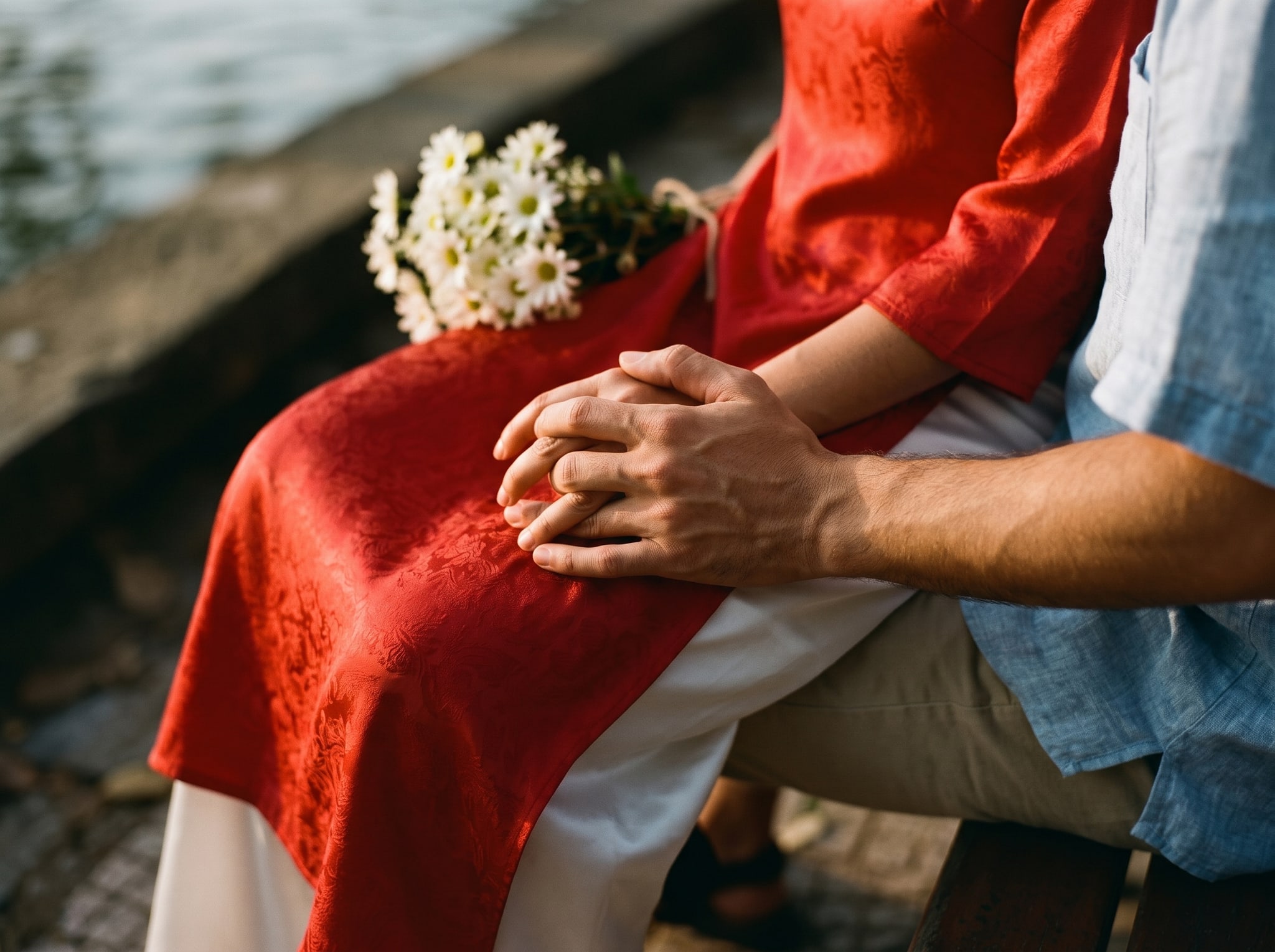
We walk into a Hoi An shoot with a style plan. Before you arrive, we ask: do you want classical (silk, muted colors, neutral makeup)? Modern (fitted cut, bright hues, bold lips)? Mix-and-match (two outfits, one tonal one playful)? Couples from abroad often expect to rent an ao dai on the day, but finding a good fit in Hoi An takes 1–2 hours of fitting-room visits and bad lighting. We either source it ahead (we have a tailor in Hoi An we've worked with for three years and trust) or recommend clients bring their own if they own one. Makeup is another place things go wrong: heavy makeup melts in humidity, and unfamiliar eyeshadow colors (e.g., cool silvers) can clash with warm mustard walls. Our makeup artist carries a lint roller, blotting papers, and at least three lipstick backups because we always need to refresh between locations. We've also learned that couples spend mental energy worrying about how they look instead of being present. So we shoot a lot of non-posed frames: walking, talking, holding hands, laughing at nothing. Those frames—where you've forgotten the camera—often end up in the final album. The moment you relax (usually hour three), the real session begins.
Before you book: what to confirm and what to prepare
Outfit fit and color. Ao dai must be fitted to you before the shoot, not borrowed loose. Loose fabric catches wind awkwardly and reads as sloppy in close-ups. If renting in Hoi An, visit the tailor at least two days before; last-minute fittings show in the photos.
Makeup and skin prep. If you have oily skin, tell us ahead. We'll apply primer and use powder strategically. If you're prone to breakouts, send a photo of your face a week before so our makeup artist can plan coverage without heavy foundation. Sunscreen the morning of, but something matte so makeup sits right.
Hair and ao dai neck. Long hair pinned up reads better in traditional ao dai (the high, fitted neckline needs the neck visible). If you want hair down, the ao dai must be styled looser or it crowds the frame. Decide this with our stylist over WhatsApp before arrival.
Location scouting feedback. If you have a specific wall, shop corner, or street segment you dream of, send a photo or location pin on WhatsApp. We'll check if we can shoot there (some shops don't permit; permits are needed for tripods in certain areas) and time our route around foot traffic and light angle.
Payment and booking window. We accept Visa, Mastercard, bank transfer (Vietnam and international), or online payment link through our booking site. Book 3–6 weeks ahead for Hoi An during peak seasons (November–February, June); 2–3 weeks for shoulder seasons. Last-minute bookings (under 10 days) are possible but limit outfit or location options.
Comparing package types: when Hoi An ao dai is the right choice
Couple photoshoots in Hoi An suit anniversary or elopement vibes where the two of you and the yellow walls tell the story. Pre-wedding couples often book pre-wedding packages that span 2–3 locations over multiple days; Hoi An is usually day one. If you're traveling solo or with family, family or vacation photoshoots can include an ao dai session, though the pacing is different (more group poses, fewer solo couples shots). Hotel-based makeup and hair services make sense if you're getting ready at a Hoi An boutique hotel and want us to arrive there instead of a café—this adds 30 minutes of setup time but means no rushing to a location.
See packages and prices on vietnamphotoshoot.com
The Hoi An yellow walls are not the only ao dai backdrop—we also shoot in Hanoi's French Quarter, Saigon's Bitexco rooftop, and Ninh Binh's limestone. But Hoi An is the one where the ao dai color, the heritage architecture, and the light collide most reliably. The trade-off is crowds and the need for early timing. If you go, go early or late, bring patience, and trust your photographer to find the angles no one else sees.
FAQ
What's the best season to shoot ao dai on Hoi An yellow walls?
November–February (cool, dry, consistent light). March–April is crowded. May–September is hot and humid; heat makes makeup melt and energy flag. October sees monsoon tail-end overcast, which is lighting gold but carries rain risk.
Do we need to own an ao dai, or can we rent in Hoi An?
Rental is possible but slow. Good tailors take 1–2 days to fit. If you own one, bring it (airplane-friendly if rolled). If not, we can source one ahead or guide you to a trusted rental shop. Confirm fit at least two days before shooting.
How many outfits should we do in one session?
One outfit for a 4–5 hour session is standard and enough. Two outfits (one tonal, one colorful) works well for 7–8 hour all-day bookings. Three or more outfits eats time on changes; we advise against it unless you're pre-wedding splitting across two days.
What time of day gives the best light for ao dai colors to pop?
6–7am (golden, soft, Old Town quiet) or 4–5:30pm (warm, long shadows, fewer crowds). Noon–3pm is harsh and flattens color. Overcast all-day light (October–November) works too but loses the golden glow.
Can we shoot specific streets or shop locations?
Most of the Old Town is open for photography. Some shops ask permission; we handle that. Bridges and riverside parks may need permits if we use tripods. Send us location pins on WhatsApp before booking and we'll confirm feasibility.
How long does the full turnaround from shoot to edited images take?
Typically 2–3 weeks. We edit all images, color-correct for the yellow walls and ao dai fabric, and deliver via a private link. Rush delivery (1 week) is possible for additional cost; discuss when booking.
Ao Dai Photoshoot
Inclusions, prices and booking are on our booking site.
FAQ
What's the best season to shoot ao dai on Hoi An yellow walls?
November–February (cool, dry, consistent light). March–April is crowded. May–September is hot and humid; heat makes makeup melt and energy flag. October sees monsoon tail-end overcast, which is lighting gold but carries rain risk.
Do we need to own an ao dai, or can we rent in Hoi An?
Rental is possible but slow. Good tailors take 1–2 days to fit. If you own one, bring it (airplane-friendly if rolled). If not, we can source one ahead or guide you to a trusted rental shop. Confirm fit at least two days before shooting.
How many outfits should we do in one session?
One outfit for a 4–5 hour session is standard and enough. Two outfits (one tonal, one colorful) works well for 7–8 hour all-day bookings. Three or more outfits eats time on changes; we advise against it unless you're pre-wedding splitting across two days.
What time of day gives the best light for ao dai colors to pop?
6–7am (golden, soft, Old Town quiet) or 4–5:30pm (warm, long shadows, fewer crowds). Noon–3pm is harsh and flattens color. Overcast all-day light (October–November) works too but loses the golden glow.
Can we shoot specific streets or shop locations?
Most of the Old Town is open for photography. Some shops ask permission; we handle that. Bridges and riverside parks may need permits if we use tripods. Send us location pins on WhatsApp before booking and we'll confirm feasibility.
How long does the full turnaround from shoot to edited images take?
Typically 2–3 weeks. We edit all images, color-correct for the yellow walls and ao dai fabric, and deliver via a private link. Rush delivery (1 week) is possible for additional cost; discuss when booking.
More from the team
Ao Dai Photos at Hoi An Lantern Street at Night
Hoi An Lantern Street (Nguyen Hoan) glows at dusk with silk lanterns and reflected light. Our team shoots ao dai here after dark, navigates tight vendor spaces, and handles the low-light challenge with experience from 100+ night sessions.
Ao dai for wedding photos in Quy Nhon: renting, fitting and styling
Quy Nhon's coastal backdrops pair beautifully with traditional ao dai. We walk through rental choices, fitting logistics and how our team coordinates styling on shoot day.
Vietnam Pre-Wedding Photoshoot: What We Book at Cáo Studio
Pre-wedding shoots in Vietnam mean morning light in Hoi An's Old Town, cyclos in Saigon, or terraced fields near Ninh Binh. We walk you through what a session actually costs, how we schedule it, and what goes wrong on the day.