 Cáo Studio
Home › Blog › Ao Dai Photoshoot
Ao Dai Wedding Photos at Japanese Covered Bridge: Studio Guide
By the Cáo Studio team · Hanoi & Saigon · 2026-11-02
The Japanese Covered Bridge—Chùa Cầu in Vietnamese—is a 400-year-old arched structure in Hoi An's ancient town. Couples choose it for ao dai shoots because the curved wooden bridge, lanterns, and river light create layered frames; morning light (before 8 a.m.) and late afternoon (after 4 p.m.) minimize tourist crowds. A typical session with Cáo Studio runs three to four hours, including hair and makeup onsite or at your hotel, outfit changes, and 200+ edited digital images. The bridge is public; photography is free, but early booking (8–10 weeks) ensures our photographer and stylist availability and lets us scout current access points. Budget varies by package—from ao dai solo sessions to couple pre-wedding shoots—and covers our team's time, styling, and digital delivery. Chat with us on WhatsApp
Why does morning light matter more at the bridge than afternoon?
The bridge runs east-west. Morning sun (6–8 a.m.) hits the river below and bounces warm, diffused light onto your face while your ao dai catches top rim light. By 10 a.m., direct overhead light flattens color and creates harsh shadows in the bridge's wooden beams—your makeup and embroidery lose depth. We tell clients: if you're a romantic, pick sunrise; if you want rich jewel tones and texture pop, shoot 5–7 p.m. when the river goes bronze and the lanterns start glowing. The bridge itself is most photogenic in its first 90 minutes of operation, before the tour groups queue at the entrance.
See packages and prices on vietnamphotoshoot.com
What do we pack and prepare the night before?
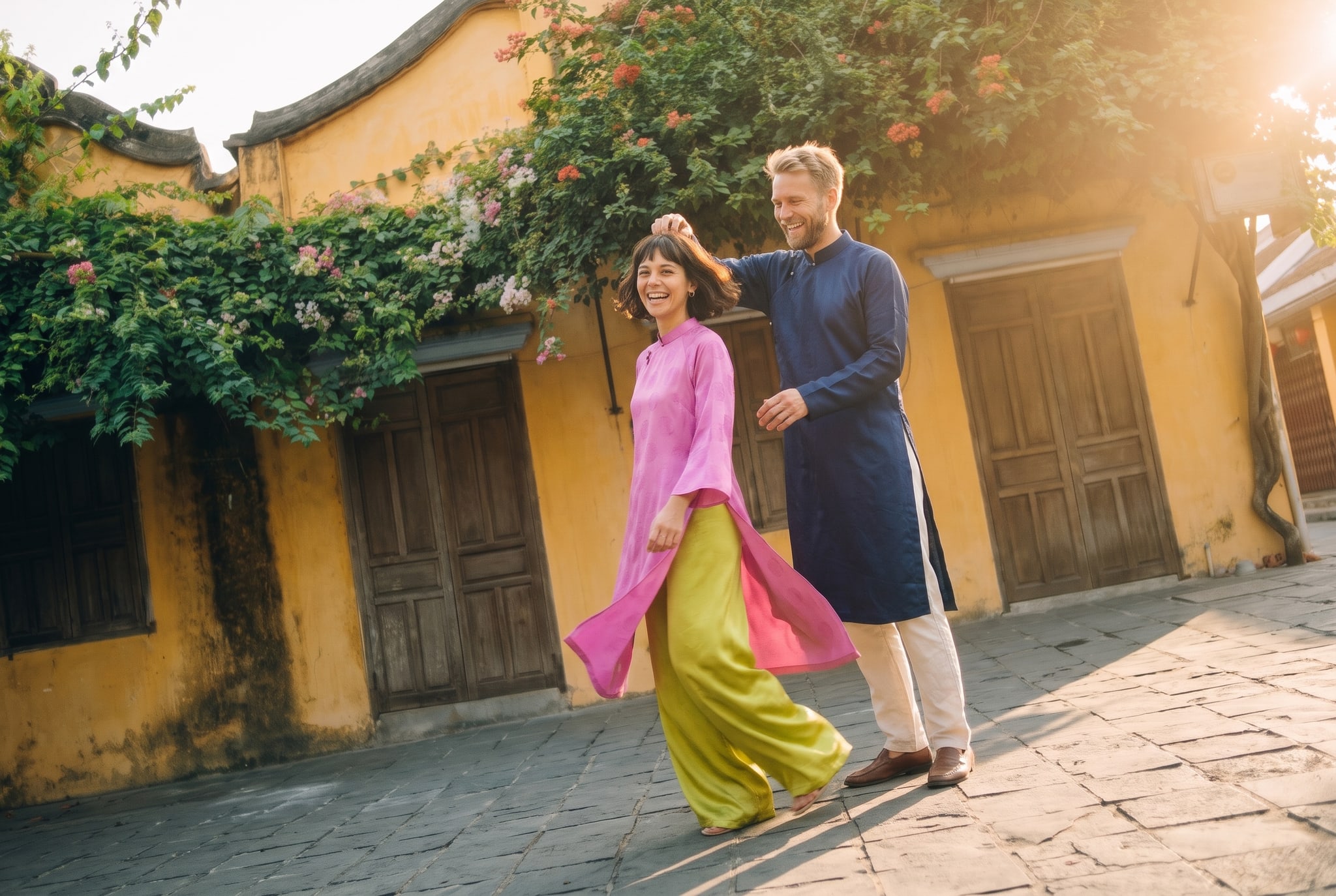
Our kit for a bridge shoot is stripped down: one assistant carries reflectors, a backup battery, and a lens cloth; our stylist brings safety pins, hem tape, scissors, and a small iron. We do not bring lighting rigs—the bridge forbids tripods in high season. Our photographer scouts the route by 5:15 a.m. to spot the day's best angles, water level (monsoon floods change the lower steps), and which tourists are already there. We arrive at your hotel or meeting point 90 minutes before first light with one of our makeup artists; if you book our makeup and hair service, we set up on your hotel balcony or in a quiet lobby corner. If you've hired your own makeup artist, we meet you at the bridge entrance by 6 a.m. with your ao dai steamed and ready. We've learned: bring two ao dai, never one. Humidity and water spray from the river soak fabric; if you love a second outfit, we pivot without panic.
How do we manage the crowd without delaying you?
The bridge opens to tourists at 7 a.m. By 8:30 a.m., it's packed. We book bridge shoots in two windows: 5:45–7:30 a.m. (before tourists arrive, near-empty platform, best light), or 4:45–6:30 p.m. (golden hour, fewer families, lanterns starting to glow). We've found that a 6-minute walk upriver to the small stone platform near the silk shop gives us equally beautiful bridge framing with zero crowds. If you're a couple, we shoot the bridge arch itself for two frames, then move you to that platform, the lantern-lit alley behind, and the riverside path where the reflection is softest. One of our stylists keeps watch on the bridge entrance and signals when tour buses pull up; that's when we shift your poses to angles where tourists don't photobomb. We time outfit changes (which take 12 minutes) in a locked shopkeeper's back room; we pre-arrange this access during our scout visit. You stay on schedule; we stay sane.
| Timing | Light quality | Crowd level | Why book this | Prep needed |
|---|---|---|---|---|
| 5:45–7:30 a.m. | Warm, diffused | Almost empty | Best ao dai texture, no tourists, intimate | Early hotel pickup, stylist arrives 5 p.m. prior day |
| 4:45–6:30 p.m. | Golden, soft | Moderate (fewer families) | Lanterns glow, romantic backdrop, less rush | Flexible afternoon, bring second outfit to change |
| 8 a.m.–4 p.m. | Harsh, flat, shadows | Peak busses | Avoid entirely | — |
Which package should you choose for a bridge session?
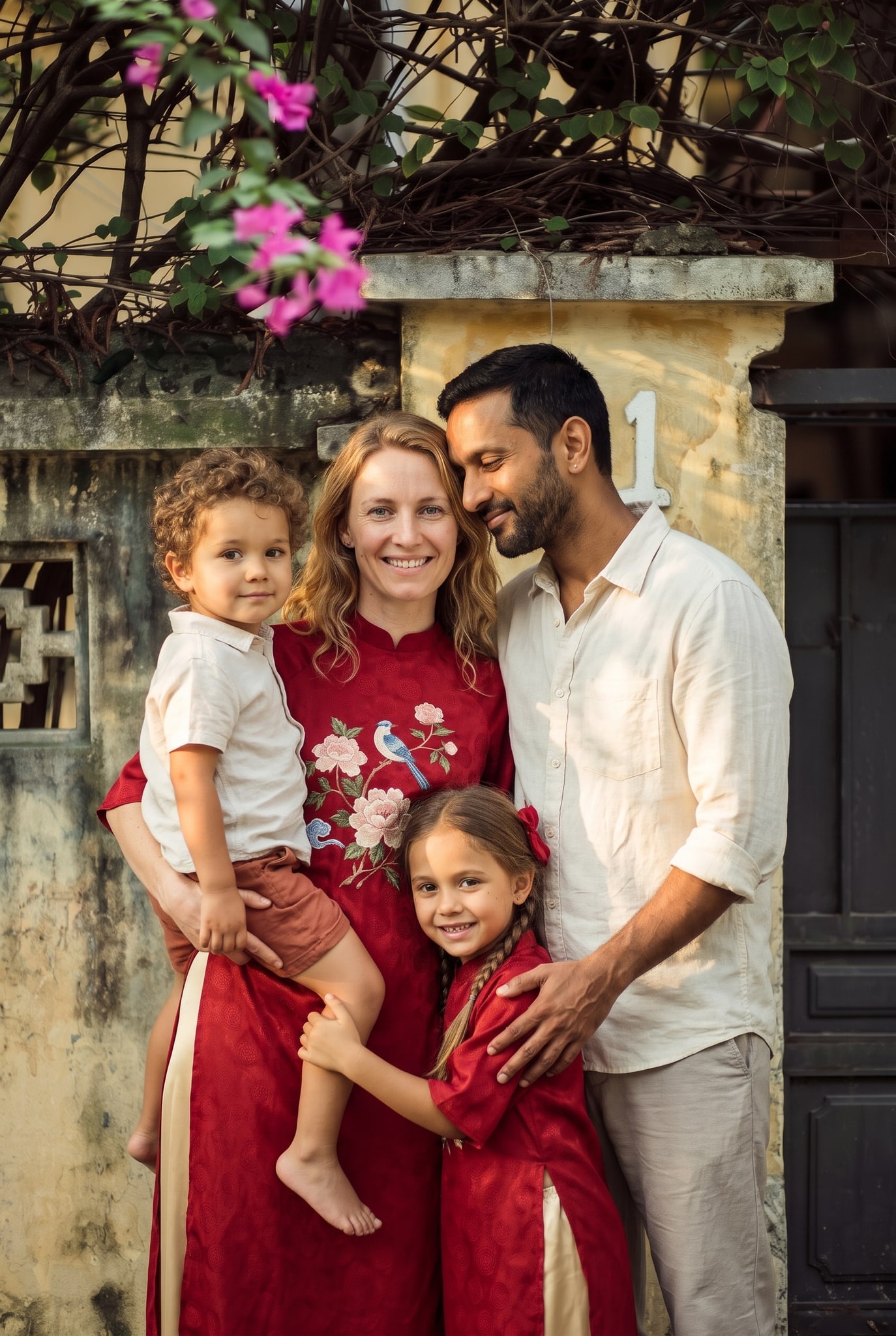
If it's you solo in an ao dai, our vacation and solo photoshoot covers four hours with one photographer and a stylist; you'll get 150+ images and one outfit. If you're a couple doing pre-wedding or elopement at the bridge, the pre-wedding photoshoot includes a second location (often the riverside tea house or the silk lantern workshop) plus a second outfit, hair and makeup touch-ups between venues, and 250+ images over five hours. Married couples booking an anniversary renewal or proposal can upgrade to the proposal and anniversary package, which adds a printed album or canvas. If your family is visiting from abroad and wants a multi-generational group portrait at the bridge, our family photoshoot works for up to six people in one ao dai each (or ao tu than for men) and runs three hours. Prices differ; all packages include digital delivery within two weeks and the option to order prints or albums from our studio. Chat with us on WhatsApp to confirm your exact dates and how many outfit changes you want—that's the main variable that shifts what you book.
What outfit choices should you think about before your shoot?
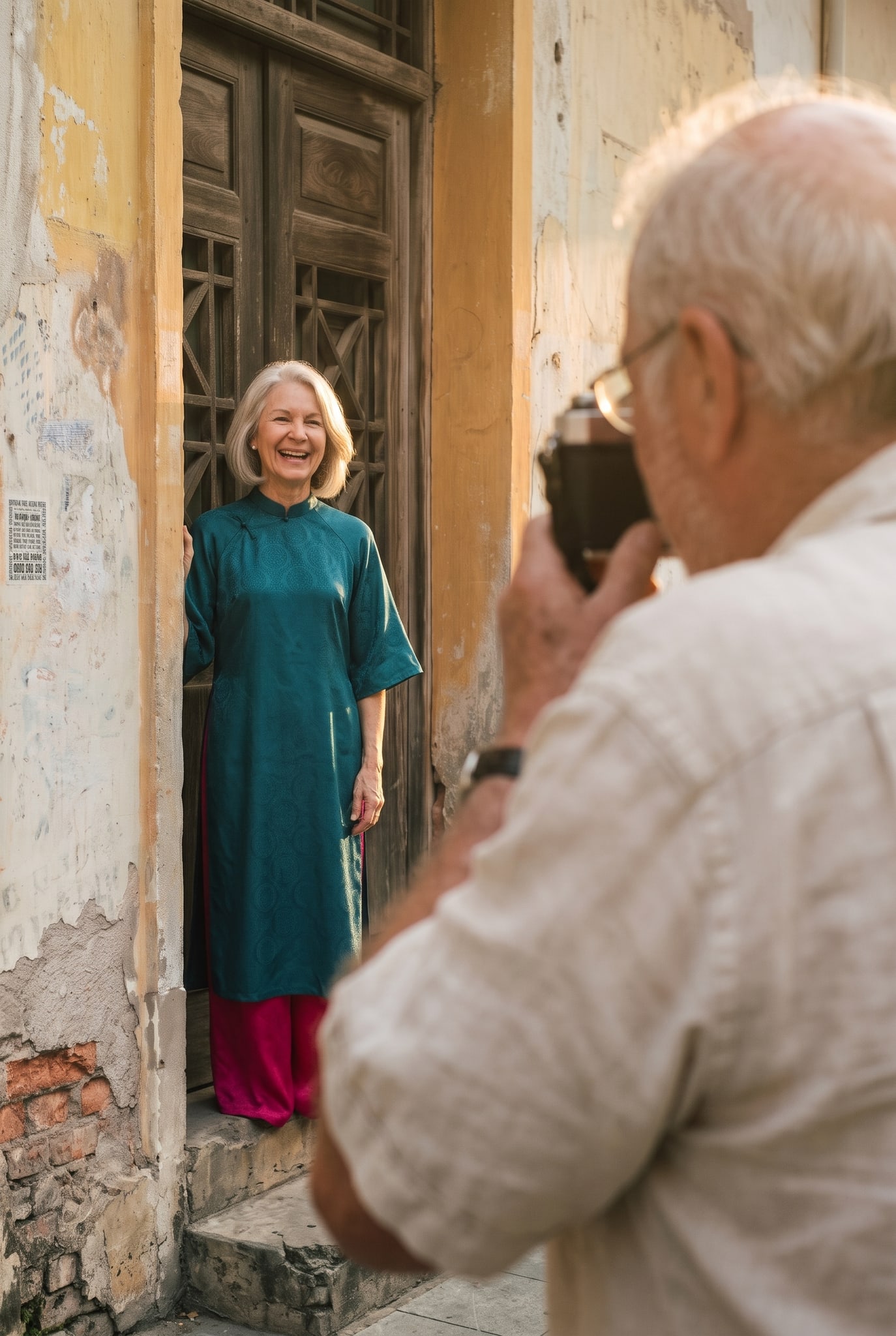
Most clients ask: "Should I wear a traditional ao dai or a modern designer one?" We've shot both. A traditional tailored ao dai (simple, silk-lined, minimal embroidery) photographs cleaner at the bridge because the light picks up fabric drape and embroidery detail without overwhelming the frame; your face stays the focal point. A heavily beaded or sequined ao dai (popular for Instagram) photographs best in that 5–7 p.m. golden hour when the beads catch the light; in harsh morning sun, they can read flat or too shiny. If you're ordering a custom ao dai, tell your tailor: fitted waist, high slit (the bridge has low steps, and a slit lets you climb safely), and silk or silk-blend fabric in deep jewel tones (ivory, burgundy, emerald, navy) that read well in shadows and reflections. We tell clients: if you're unsure, book a second outfit. For couples, we often see grooms in a matching formal áo gile (sleeveless vest with ao dai) or a black or navy formal ao dai; women in a contrasting or coordinating shade. The bridge's curves favor silhouettes that flow; tight, stiff fabrics read stiff in photos. If you're renting, ask the ao dai shop whether the tailor can adjust the fit after you see photos—most won't, so rent from a shop near Hoi An that offers exchanges.
What unexpected things happen at the bridge, and how do we fix them?
River water. On humid mornings, spray from below soaks the lower hem of your ao dai. We bring microfiber towels and a small hair dryer (battery-powered, waterproof) to dry the silk without damaging embroidery. Loose ao dai straps slip during climbing; our stylist pins them inside every single frame. Light changes fast in the 90-minute window; our photographer shoots in manual mode and adjusts exposure every 10 frames, not relying on auto. Tourists do appear in backgrounds; we shoot from angles where they're out of frame, or we ask them politely (with a smile and a phrase in English or Chinese) to step aside for 30 seconds—it works 85% of the time. The bridge's reflection in the water is only visible from the lower bank during flood season; we adapt by shooting from the arch itself or the upper platform. One couple's second ao dai didn't fit after alterations; we pivoted to a layered shot using the stylist's emergency wrap. The bridge can be slippery after rain; we check weather three days before, and if heavy rain is forecast, we reschedule rather than risk falls or equipment damage. You won't see these problems in the final images because we solve them in real time.
What to check before you book a Japanese Covered Bridge shoot
- Dates: The bridge is open daily; book eight to ten weeks ahead so we can confirm your exact time slot and scout that week's access.
- Outfit: Decide whether you're renting, buying, or bringing your own. If renting in Hoi An, visit the shop early in your trip so alterations are done by your shoot date.
- Makeup and hair: Choose whether you want our artist onsite (ideal for early mornings; happens at your hotel the evening before or 4 a.m. on shoot day) or your own artist joining us at the bridge. If your own, they must arrive by 5:45 a.m.
- Second outfit: One ao dai works; two outlets create pacing and give you more variety in final images. If you're changing, tell us—we'll allocate time.
- Location pairing: The bridge alone is 45 minutes of shooting. If your package includes a second venue, decide now: riverside tea shop, lantern-making workshop, silk tailor's garden, or the ancient town's narrow alleys. Travel time between venues is 15 minutes.
- Weather backup: Hoi An's monsoon season is September through November (high water, afternoon downpours). If rain is forecast for your shoot date, contact us three days before—we'll reschedule at no extra cost.
- Delivery timeline: All packages include digital images delivered within two weeks. If you need rush delivery (five business days), confirm pricing and turn-around when you book.
See packages and prices on vietnamphotoshoot.com
FAQ
Can we do a bridge shoot if we've never worn an ao dai before?
Yes. We have styled hundreds of first-time wearers. Wear it the day before your shoot for 30 minutes to get comfortable. Our stylist will adjust fit, show you how to walk (small steps, hips forward), and position you so the fabric flows in light. The bridge's curves hide uncertainty; confidence comes fast once you see the first frame on our camera screen.
What's the earliest we can start shooting at the bridge?
5:45 a.m., when the bridge opens and the light is softest. We meet you or your makeup artist at the bridge entrance by 5:40 a.m. If you want us to do your makeup onsite at your hotel, we arrive by 3:45 a.m.—this is doable; many clients choose it for early light priority.
Is the bridge free to photograph, or are there fees?
The bridge is free to enter and photograph. No permit is required. We do not pay location fees. If you rent an ao dai or book a private tea house for a second location, those vendors charge separately.
How many outfit changes can we fit into a four-hour session at the bridge?
Realistically, two ao dai (one at the bridge, one at a second location nearby). Changing takes 12–15 minutes including hair touch-ups. A third change is possible if it's a five-hour package and we skip the second venue, but most couples prefer two locations and two outfits for variety.
What if it rains on our scheduled shoot day?
We reschedule at no cost. Light rain (mist) is manageable—we've shot in it and the images are moody and romantic. Heavy rain makes footing unsafe on the bridge steps and risks our equipment. We monitor the forecast starting three days before and contact you with a reschedule offer if storms are predicted.
Can we book the bridge exclusively, without other tourists?
No. The bridge is a public monument; no exclusive bookings exist. We optimize framing and timing to minimize tourists in your shots, but you won't have the bridge alone. Early morning (5:45–7 a.m.) comes closest to solitude.
Ao Dai Photoshoot
Inclusions, prices and booking are on our booking site.
FAQ
Can we do a bridge shoot if we've never worn an ao dai before?
Yes. We have styled hundreds of first-time wearers. Wear it the day before your shoot for 30 minutes to get comfortable. Our stylist will adjust fit, show you how to walk (small steps, hips forward), and position you so the fabric flows in light. The bridge's curves hide uncertainty; confidence comes fast once you see the first frame on our camera screen.
What's the earliest we can start shooting at the bridge?
5:45 a.m., when the bridge opens and the light is softest. We meet you or your makeup artist at the bridge entrance by 5:40 a.m. If you want us to do your makeup onsite at your hotel, we arrive by 3:45 a.m.—this is doable; many clients choose it for early light priority.
Is the bridge free to photograph, or are there fees?
The bridge is free to enter and photograph. No permit is required. We do not pay location fees. If you rent an ao dai or book a private tea house for a second location, those vendors charge separately.
How many outfit changes can we fit into a four-hour session at the bridge?
Realistically, two ao dai (one at the bridge, one at a second location nearby). Changing takes 12–15 minutes including hair touch-ups. A third change is possible if it's a five-hour package and we skip the second venue, but most couples prefer two locations and two outfits for variety.
What if it rains on our scheduled shoot day?
We reschedule at no cost. Light rain (mist) is manageable—we've shot in it and the images are moody and romantic. Heavy rain makes footing unsafe on the bridge steps and risks our equipment. We monitor the forecast starting three days before and contact you with a reschedule offer if storms are predicted.
Can we book the bridge exclusively, without other tourists?
No. The bridge is a public monument; no exclusive bookings exist. We optimize framing and timing to minimize tourists in your shots, but you won't have the bridge alone. Early morning (5:45–7 a.m.) comes closest to solitude.
More from the team
Ao Dai Photos at Hoi An Lantern Street at Night
Hoi An Lantern Street (Nguyen Hoan) glows at dusk with silk lanterns and reflected light. Our team shoots ao dai here after dark, navigates tight vendor spaces, and handles the low-light challenge with experience from 100+ night sessions.
Ao dai for wedding photos in Quy Nhon: renting, fitting and styling
Quy Nhon's coastal backdrops pair beautifully with traditional ao dai. We walk through rental choices, fitting logistics and how our team coordinates styling on shoot day.
Vietnam Pre-Wedding Photoshoot: What We Book at Cáo Studio
Pre-wedding shoots in Vietnam mean morning light in Hoi An's Old Town, cyclos in Saigon, or terraced fields near Ninh Binh. We walk you through what a session actually costs, how we schedule it, and what goes wrong on the day.