 Cáo Studio
Home › Blog › Ao Dai Photoshoot
Ao dai wedding photos at Lan Ha Bay: what we plan on shoot day
By the Cáo Studio team · Hanoi & Saigon · 2026-11-04
Shooting ao dai wedding photos at Lan Ha Bay means arriving before 6 a.m. to catch gold-hour light on the water, then navigating limestone terrain, boat logistics, and humidity that tests every fabric and makeup choice. Cáo Studio books a private long-tail boat, stages the bride and groom on deck or at secluded coves, and plans outfit changes between sunrise (often overcast), mid-morning (boat glare), and late afternoon (softer, warmer tones). The shoot runs 4–6 hours; budget an extra hour for transport from Hanoi. Ao dai silk wrinkles and saltwater spray damages fabric, so we pack a steamer, protect hems with plastic, and brief guests on boat boarding steps. Cost basis depends on boat rental, photographer count, and makeup/hair—ask us for a quote on WhatsApp. Success hinges on tide times, weather windows, and whether the bride moves freely in the áo dài or prefers a second outfit for easier climbing. Chat with us on WhatsApp
Why does Lan Ha Bay work better than a studio for ao dai?
The bay's unscripted backdrop—water, islands, rock formations—frames ao dai silk as sculptural, not decorative. In a studio, we light fabric to show seam detail and embroidery. On water, sunlight does half the work, and the bride becomes part of a landscape. We've shot hundreds of ao dai portraits; outdoors, guests consistently say they feel "inside a story" rather than "in front of a camera." Studio shoots are faster and cheaper; Lan Ha Bay shoots are riskier but more memorable. Choose the bay if your ao dai cost significantly, if the fabric has hand-embroidered details, or if you want photos that feel cinematic rather than formal.
What time do we actually arrive, and when do we stop?
We ask guests to meet the boat at Ha Long City's dock by 5:30 a.m. Makeup and hair happen in a shoreside hotel room or in a private cabin on the boat while anchored, starting at 4 a.m.—one hour for the bride, 30 minutes for the groom. First photos are on deck or at the water's edge by 6:45 a.m., when light is soft and the bay is calm. We shoot through 7:30–11 a.m. (peak sun, harsher shadows, but vibrant color), then break for lunch and outfit change. Second session runs 2 p.m.–4 p.m. (afternoon light softer again). We wrap by 5 p.m. or earlier if weather turns. Total time on water: 5–6 hours. Return to Hanoi by 8 p.m.
See packages and prices on vietnamphotoshoot.com
How do we protect the ao dai from salt spray and humidity?
Saltwater and humidity are the two enemies we fight all day. We bring a portable steamer to touch up wrinkles between location changes. Before boarding, we brief the bride: don't lean on railings, keep the hem away from boat seats, and let us handle climbing into and out of photo positions. We pack plastic garment bags in the boat cabin; the ao dai goes into one immediately after each session ends. Humidity means makeup sets faster (we use long-wear primer), but sweat can break down concealer near the eyes and jaw, so we ask the bride's mom to bring blotting papers and a small powder compact. Saltwater stains the silk only if it dries on fabric—we have bottled water and cotton cloths to rinse any splash immediately. One session we shot on a rougher-than-expected morning; the groom's cuff brushed wet limestone. We rinsed it at the boat's freshwater tap, dabbed with a microfiber towel, and steamed it dry within 20 minutes.
What camera and lighting setup do we use on a boat?
We bring one mirrorless camera (usually Canon R5 or Nikon Z9), one backup body, and three lenses: 24–70 mm for couple shots, 70–200 mm for wide bay scenes, and 35 mm fixed for detail work (embroidery, hands, faces). No tripod; we shoot handheld or brace against the boat rail. Reflectors are too bulky on a boat, so we work with available light—sun on face, water reflection as fill. When the bride's face falls into shadow against bright water, we ask her to turn slightly toward the light or reposition slightly. Groom often shields the bride from wind, which doubles as a natural fill-light blocker. We do not use flash; it flattens silk texture and reads as artificial outdoors. The biggest challenge is boat rocking—we shoot at 1/800 s or faster to freeze motion. One afternoon, a motorboat passed nearby; the wake rocked us for two minutes. We stopped, waited, and resumed. Guests understood; the photos stayed sharp.
Which ao dai style and color photograph best at the bay?
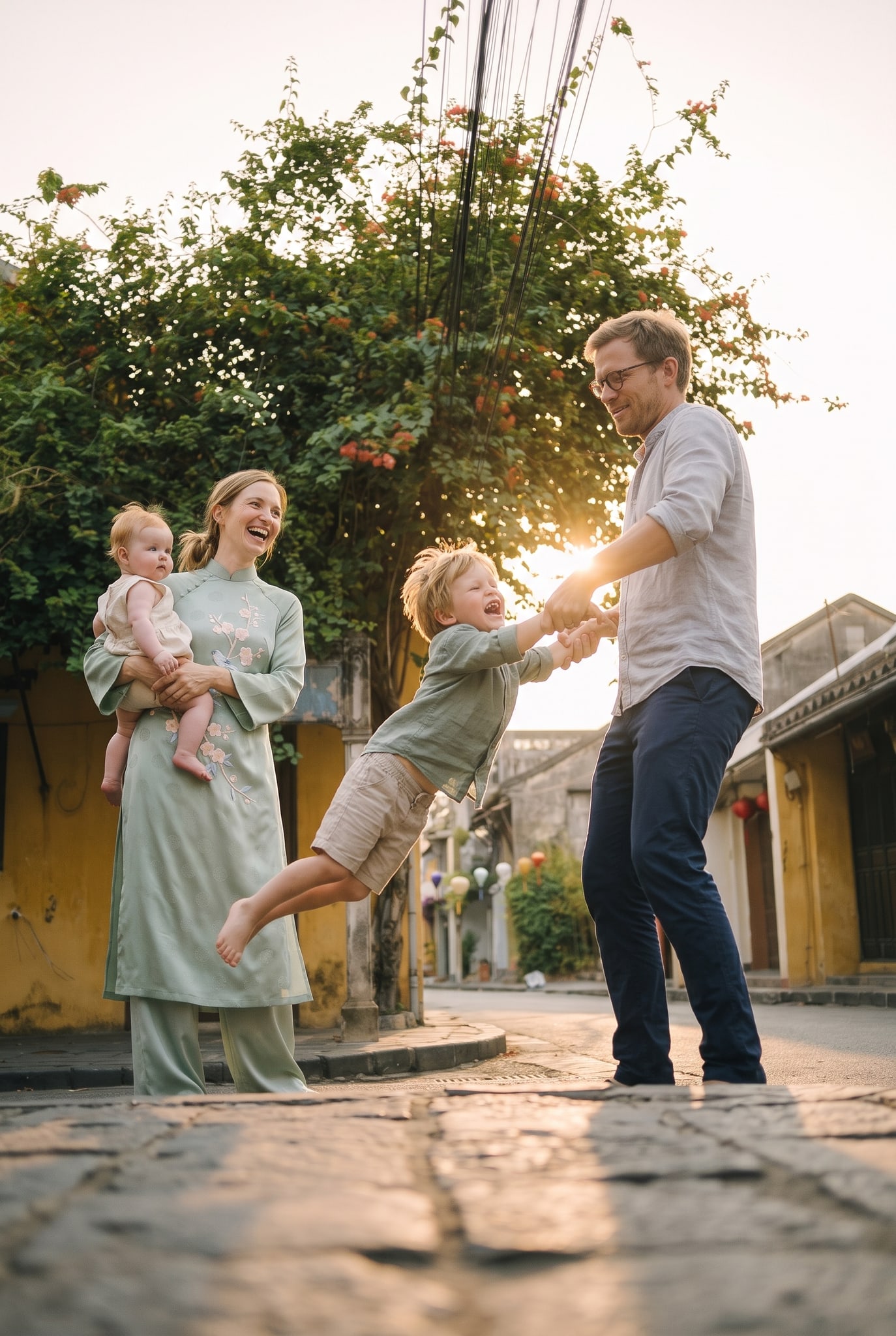
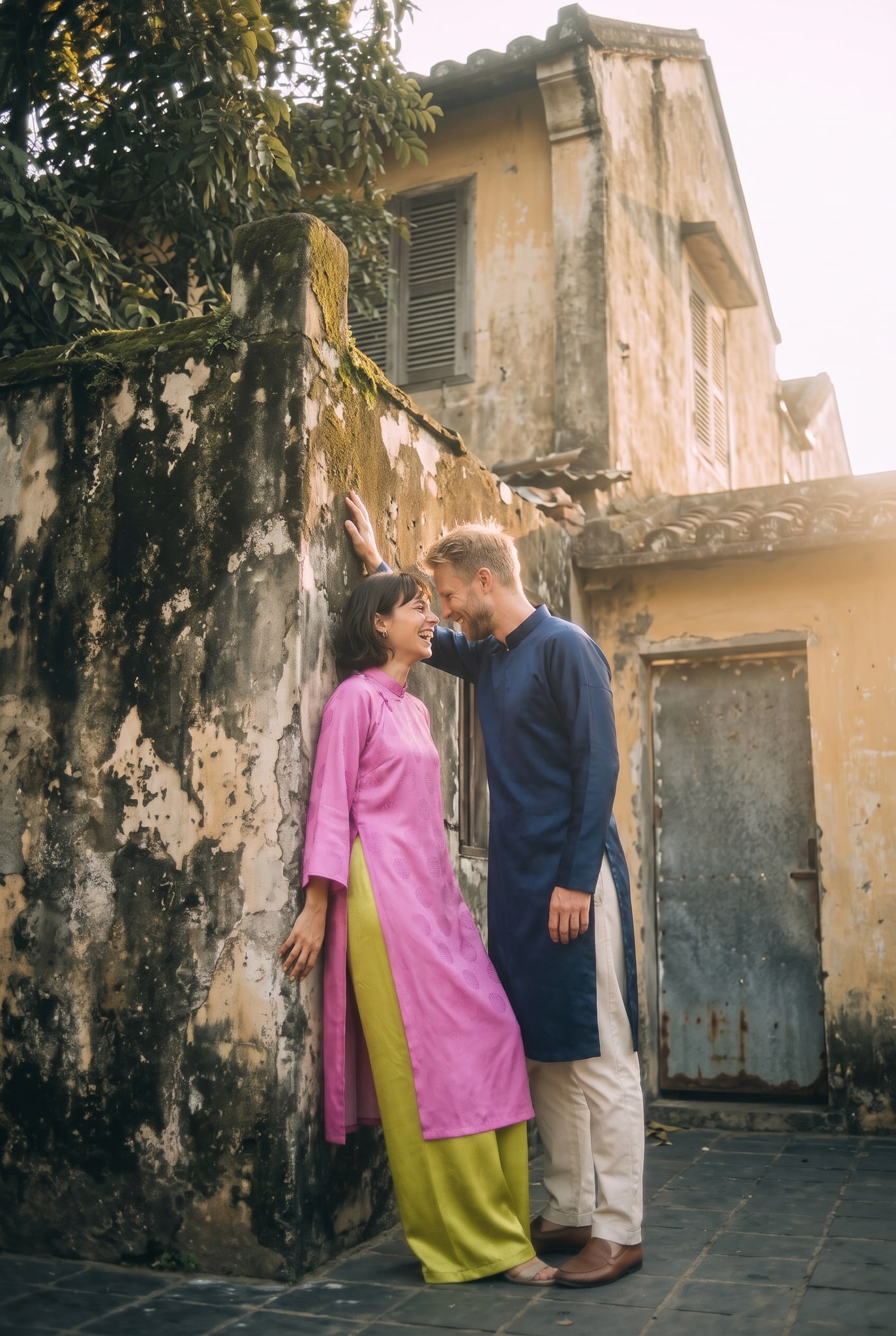
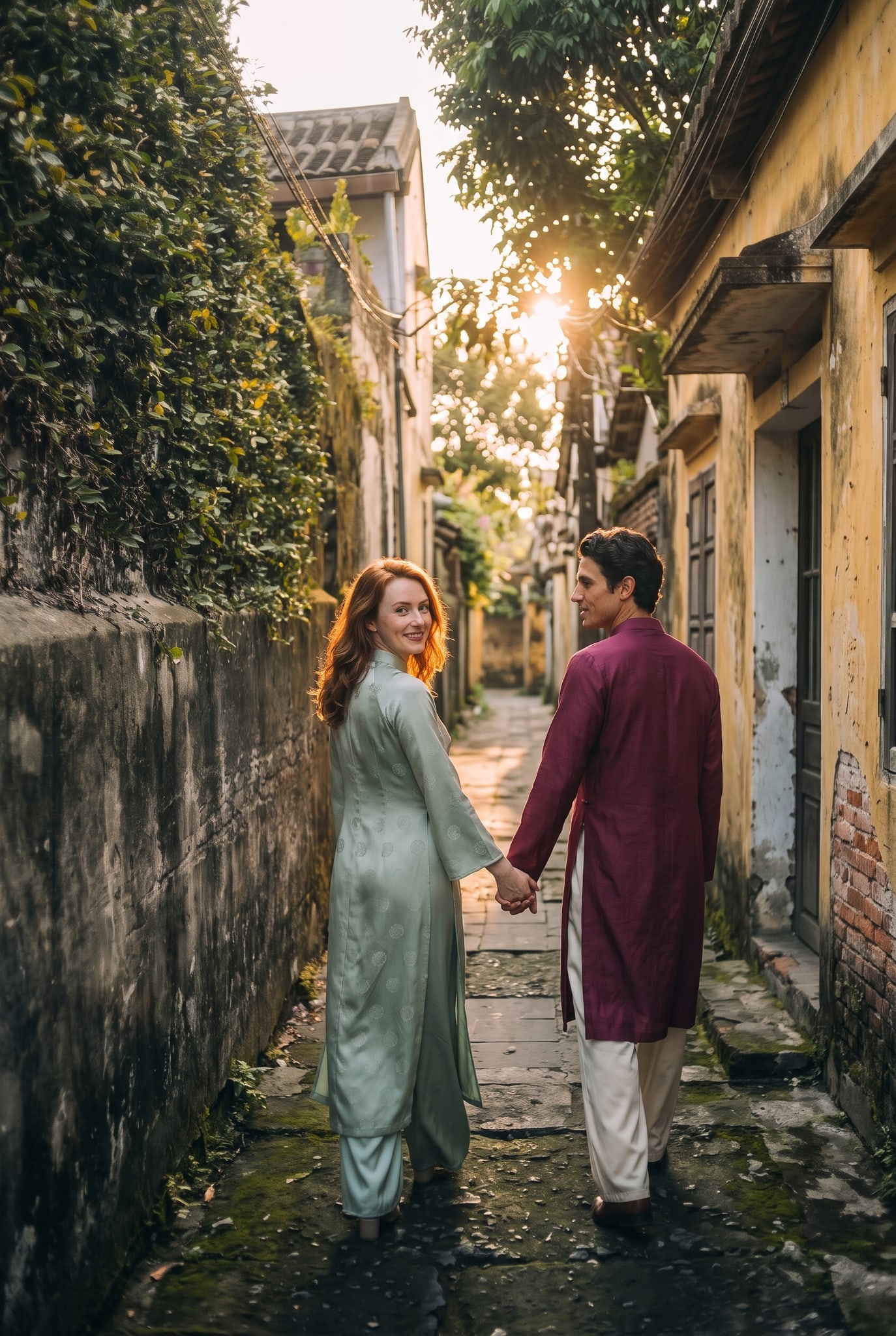
Cream, ivory, blush, and pale gold silk pick up reflected water light beautifully and read clean in backlit shots. Deep jewel tones (emerald, sapphire, burgundy) are dramatic but require more light control; they can look muddy in shadow. Heavily embroidered designs with metallic thread catch sun flare if we angle wrong—we position the bride slightly away from the sun to show embroidery as texture rather than glint. Áo dài with long, flowing sleeves move beautifully in boat breeze; fitted sleeves are restrictive when climbing between photo spots. Minimalist ao dai (plain silk, no beading) photograph as elegant and timeless; ornate designs feel more formal-event. We recommend a classic ao dai silhouette for first photos (lighter, simpler) and a heavily decorated design for second outfit (more visual impact in afternoon light). If the bride owns two ao dai, plan 15 minutes for the change; if we source a rental, we arrive with it already steamed and on a hanger.
| Ao dai style | Best light | Water backdrop | Movement on boat | Recommended shoot window |
|---|---|---|---|---|
| Cream silk, minimal embroidery | Backlit (sunrise) | Shows fabric texture | Easy climbing | 6:30–8:30 a.m. |
| Deep jewel tone, gold beading | Side-lit (noon–2 p.m.) | Rich, saturated | Moderate (heavier) | 2:00–4:00 p.m. |
| Blush silk, hand-embroidered motif | Diffused light (overcast) | Soft, romantic | Easy | Any time, plan for clouds |
| White with metallic thread | Low sun angle | Glare risk; front-lit better | Flexible | After 3:00 p.m. |
What happens if weather turns bad, and do we reshoot?
Overcast skies are fine—they soften light and reduce harsh shadows, and ao dai colors often photograph richer in cloud-diffused light. Rain is the real issue. Light rain for 10–15 minutes, we pause, the bride steps inside the cabin, we wait. Heavy rain cancels the shoot; we reschedule within 30 days at no extra cost. We check the weather forecast three days before, then again the morning of. If we see >60% chance of heavy afternoon rain, we ask the couple to start earlier (4:30 a.m. makeup, 6:00 a.m. first photos). Typhoon season (June–October) brings higher uncertainty; guests booking summer dates should expect a 15% chance of reschedule. We've only reshoot on a no-charge basis; we do not offer refunds, but we work flexibly to find a date within two months. One groom asked if we could "move the shoot to Ha Long City itself instead of the bay" due to a rain forecast; we said yes, and we pivoted to limestone formations and cave entrances near the city center. Same ao dai, different mood, same quality.
Do we offer makeup and hair on the boat, or does it happen onshore?
We prefer onshore because the boat cabin is cramped, the mirror is small, and motion makes precision work harder. We book a nearby hotel room in Ha Long City (usually 5 minutes by car from the dock) for makeup and hair. The bride sits with a proper vanity mirror, natural light, and space to move without hitting anything. If the couple insists on boat-based hair and makeup, we do it—but we charge extra for logistics and allow an extra 45 minutes. Onshore, we deliver the bride to the boat by 6:45 a.m. ready to shoot. Our makeup and hair service includes touch-ups during the shoot (powder, lipstick, hair pins), so the bride stays camera-ready through the day. One bride's veil became tangled in rigging; her mom (who was on the boat) untangled it in 30 seconds. We had no hair person onboard that day, but the rigging was visible; we've since learned to brief guests on boat geometry before the shoot.
What should we check before booking an ao dai wedding shoot at Lan Ha Bay?
Before you commit:
- Confirm boat logistics: Does the provider include cabin space for makeup? Is drinking water onboard? What is the max number of guests (often 6–8 people total)?
- Ask about the bride's comfort: Can she move freely in the ao dai, or do we need a second outfit for casual moments?
- Check ao dai fit: Tight áo dài restrict arm movement during climbing and posing. Loose fit photographs better and feels safer on water.
- Verify tide and weather: We choose shoot dates based on calm seas (tide tables) and forecast windows. Book flexibility (no fixed date-only) into your plan.
- Plan outfit change timing: If using two ao dai, the change takes 15 minutes (on the boat) or 30 minutes (onshore). Second outfit extends the shoot by at least an hour.
- Understand edit style: Lan Ha Bay photos often have a cinematic, color-graded look (warm and moody, or cool and dreamy). Ask to see samples of previous bay shoots in our portfolio.
Why is a boat shoot more expensive than a studio ao dai session?
Boat rental, transport to Ha Long City from Hanoi (2.5 hours each way), fuel, and guide fees add cost. Studio shoots have zero logistics. Compare our ao dai photoshoot package (studio or outdoor Hanoi) with bay shoots—the bay costs more because of boat, travel, and a longer workday for our team. If budget is tight, ask about couple photoshoots at Hoan Kiem Lake or Old Quarter; these are outdoor, scenic, and do not require a boat. Bay shoots are worth the cost if the ao dai is heirloom-quality, the couple wants investment-grade photos, or they've always dreamed of water backdrops.
See packages and prices on vietnamphotoshoot.com
How long does it take to drive from Hanoi to Lan Ha Bay, and should we hire a driver?
From central Hanoi to Ha Long City is 160–180 km, roughly 2.5–3 hours by car (depending on traffic and the exact dock location). We recommend guests hire a private driver (not a taxi) the evening before; the driver picks them up at the hotel at 2:30 a.m., arrives at the dock by 5:00 a.m., and waits. Guests shower, have coffee, then makeup begins. We sometimes arrange this; ask us on WhatsApp. Alternatively, rent a car—but the bride will be tired after makeup and won't want to drive. One couple drove themselves; the groom's hands were shaking from the early start and the excitement, and they nearly missed a turn. Hire a driver. Our team can coordinate if you are based in Hanoi; if you are flying into Saigon or another city, we'll brief your driver on timing via WhatsApp.
Can we shoot ao dai at Lan Ha Bay if we are not married or getting married?
Yes. Solo and vacation photoshoots happen at Lan Ha Bay; many travelers rent an ao dai for a day and want professional photos. We've shot couples who are engaged (pre-wedding style), couples who simply want a day-out photoshoot in traditional dress, and solopreneurs building portfolio images. The shoot process is identical: boat, makeup, timing, outfits. The mood is usually lighter (no wedding ceremony stress). We also offer special concept shoots—themed ao dai sessions with props, choreography, or storytelling. One solo traveler wanted photos "as if I were a character in a historical drama"; we booked a sunrise boat session and directed her poses to look cinematic rather than formal. Ao dai and water work for any genre, not just weddings.
FAQ
Do we need to own an ao dai, or can Cáo Studio provide one?
You can own or rent. We work with local rental shops in Ha Long City and Hanoi; rentals are available the day before the shoot. Ask us to arrange it—we coordinate sizing, steaming, and delivery. Owned áo dài photograph best if they fit perfectly; we'll brief you on fit before the shoot.
What if the groom wears a tuxedo instead of traditional dress?
We've shot couples in mixed dress (bride in ao dai, groom in suit or casual shirts). The contrast can be striking. For formality, we recommend the groom wear an ao dai or a linen shirt that complements the bride's colors. Ask us for examples of mixed-dress shoots.
Can guests and family members come on the boat and appear in photos?
Yes, if the boat has capacity (usually 6–10 passengers). Family photos on the boat are possible; we often include 2–3 candid shots of the couple with family. Extra passengers may increase boat rental cost. Confirm headcount with us before booking.
What happens to photos if there is a boat malfunction or we get seasick?
In 10+ years, we've never had a boat breakdown; providers maintain fleets daily. Seasickness is rare; the bay is usually calm. If it happens, we pause, the person rests in the cabin, and we continue with others. We've rescheduled shoots due to medical issues; email us and we'll work out a refund or reschedule.
How do we receive and view the final photos?
We deliver edited images via a private online gallery (link sent via email) within 2–3 weeks of the shoot. You can download, share, or order prints. We also offer album printing and video slideshow edits. Ask for delivery timeline and format options on WhatsApp.
Is there a backup date if we cancel last-minute?
Cancellations within 7 days of the shoot date are non-refundable; we keep the payment as a reservation fee for that date slot. Reschedules within 60 days are free. Cancellations earlier than 7 days receive a full refund or credit toward a future shoot.
Ao Dai Photoshoot
Inclusions, prices and booking are on our booking site.
FAQ
Do we need to own an ao dai, or can Cáo Studio provide one?
You can own or rent. We work with local rental shops in Ha Long City and Hanoi; rentals are available the day before the shoot. Ask us to arrange it—we coordinate sizing, steaming, and delivery. Owned áo dài photograph best if they fit perfectly; we'll brief you on fit before the shoot.
What if the groom wears a tuxedo instead of traditional dress?
We've shot couples in mixed dress (bride in ao dai, groom in suit or casual shirts). The contrast can be striking. For formality, we recommend the groom wear an ao dai or a linen shirt that complements the bride's colors. Ask us for examples of mixed-dress shoots.
Can guests and family members come on the boat and appear in photos?
Yes, if the boat has capacity (usually 6–10 passengers). Family photos on the boat are possible; we often include 2–3 candid shots of the couple with family. Extra passengers may increase boat rental cost. Confirm headcount with us before booking.
What happens to photos if there is a boat malfunction or we get seasick?
In 10+ years, we've never had a boat breakdown; providers maintain fleets daily. Seasickness is rare; the bay is usually calm. If it happens, we pause, the person rests in the cabin, and we continue with others. We've rescheduled shoots due to medical issues; email us and we'll work out a refund or reschedule.
How do we receive and view the final photos?
We deliver edited images via a private online gallery (link sent via email) within 2–3 weeks of the shoot. You can download, share, or order prints. We also offer album printing and video slideshow edits. Ask for delivery timeline and format options on WhatsApp.
Is there a backup date if we cancel last-minute?
Cancellations within 7 days of the shoot date are non-refundable; we keep the payment as a reservation fee for that date slot. Reschedules within 60 days are free. Cancellations earlier than 7 days receive a full refund or credit toward a future shoot.
More from the team
Ao dai wedding photos at Thanh Toan tile-roofed bridge
Thanh Toan tile-roofed bridge in Hoi An draws couples for ao dai shoots. We walk through how our team manages light, crowds, costume changes, and what actually happens hour by hour on location.
Ao dai wedding photos at Tam Giang Lagoon: what we shoot, when, why
Tam Giang Lagoon's mirrored water and salt fields create one of Vietnam's most striking backdrops for ao dai wedding photography. We've shot over 200 sessions there—here's what we learned.
Ao dai wedding photos at Hang Mua viewpoint
Hang Mua's dramatic 500-meter viewpoint over Ninh Binh draws couples who want ao dai shots framed by karst peaks and rice fields. We run 2–4 hour sessions there and share what actually happens on the mountain.