 Cáo Studio
Home › Blog › Ao Dai Photoshoot
Ao Dai Wedding Photos at Mui Ne Red Sand Dunes
By the Cáo Studio team · Hanoi & Saigon · 2026-11-04
Ao dai wedding photos at Mui Ne red sand dunes combine the silk gown's elegance with Vietnam's most dramatic landscape—red and white dunes that shift hour by hour in light. Mui Ne is 220 km from Ho Chi Minh City; a shoot day runs 5–7 hours including hair, makeup, travel and 2–3 location changes. Cáo Studio handles all logistics: we arrive before dawn to scout light, bring backup outfits for sand-resistance, coordinate with local guides, and work around peak tourist hours (9 a.m.–4 p.m.). Cost varies by group size, outfit count and location choices—ask us for a quote on WhatsApp. Most couples choose either a single ao dai or a mix of ao dai with Western wedding dress. Red sand clings to silk; we factor in restyling time every 45 minutes and bring absorbent fabrics to protect hems. Chat with us on WhatsApp
Why the red sand dunes work better for ao dai than other Mui Ne spots?
White sand dunes, fishing villages and coastal roads all photograph well, but red sand creates contrast against the ao dai's deep jewel tones or pastels that white sand will wash out. We've shot both; red sand intensifies reds, blacks and emeralds, while the texture adds movement to fabric folds. White sand reads flat in midday light and requires stronger color grades in post. The red dunes also attract fewer tour groups before 7 a.m., giving us clean sight lines for full-length portraits. We always time arrival for 5:30 a.m. to catch the first light angle; by 8 a.m., bus-loads of tourists fill the main ridge.
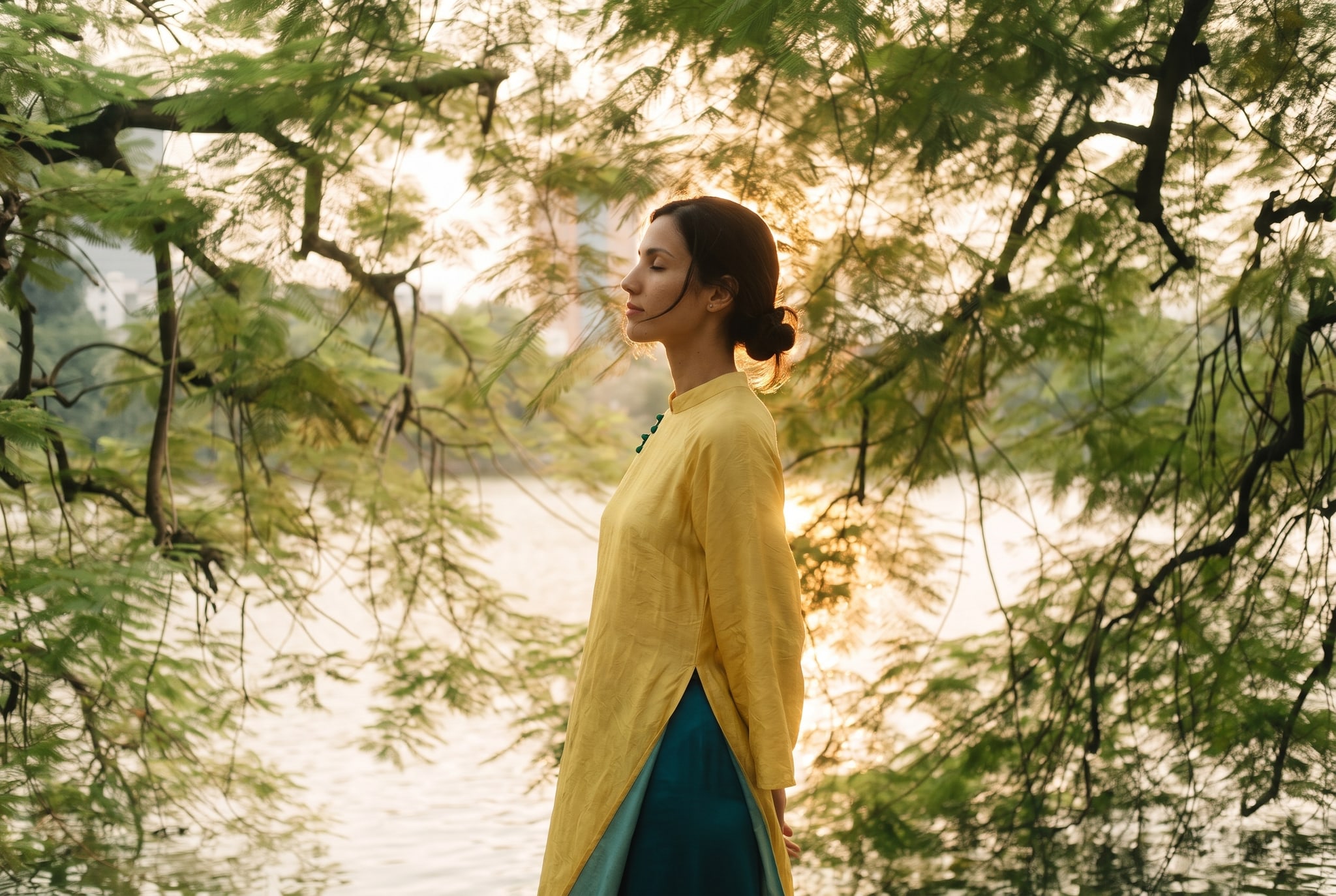
How do we protect the ao dai from sand during a Mui Ne shoot?
Sand on silk is every stylist's nightmare—it doesn't brush out, it embeds and causes fraying. Our team uses three layers of defense: we bring wide cotton scarves to wrap around the hem while walking between spots, apply a light spray starch to the lower skirt before the shoot to seal fibers, and work in sequences so restyling happens in the vehicle (we lease a private car for every Mui Ne shoot). Between outfit changes, we brush gently downward into a bin, never fold the fabric while sandy, and hang each piece in a garment bag with cedar. If sand sticks to embroidery, we let it dry completely and use a fine-tooth comb on the back of the fabric. One bride in 2024 wore a heavy brocade ao dai; by hour four, the weight had settled sand into every pleat. We switched to a lighter silk version and asked her to stand rather than sit during that segment. The difference was visible in the final gallery.
See packages and prices on vietnamphotoshoot.com
What time of year produces the best red sand dune photos?
Timing splits three ways: November to January (cool, low humidity, shortest shadows at sunrise), March to April (wildflower season, sand color peaks after rain), and June to August (heat, but longest golden hours). We avoid May and September—heat mirages distort focus and midday sand reflects so much light we lose detail in white embroidery. In cooler months, the ao dai drapes cleanly; fabric doesn't cling to sweat. We recommend booking between 6 a.m. and 1 p.m. year-round; afternoon light flattens the dunes and sand glare becomes unmanageable. December to January is our peak season; couples appreciate the cool air for hair and makeup longevity. March sand color is richest after an overnight rain, but roads may be boggy—we coordinate with Mui Ne guides to confirm access. For each season, we adjust hydration breaks (more water in summer, fewer in winter) and outfit transitions.
| Season | Best for | Light quality | Why check with us first |
|---|---|---|---|
| Nov–Jan | Cool comfort, short shadows | Golden 5:30–8 a.m., even noon | Peak season; book 2 months ahead |
| Mar–Apr | Color saturation, wildflowers | Rich red, dramatic shadows | Post-rain access needs local confirmation |
| Jun–Aug | Golden hours, drama | Long sunset window (6:30–8 p.m.) | Heat affects hair/makeup, needs extra styling |
| May, Sep | Avoid | Heat haze, glare, mirages | We don't recommend these months |
What outfit combinations work best for a red sand dune backdrop?
Single-ao-dai shoots work when the gown is a statement: deep maroon, navy, or gold brocade that reads against red earth. We've seen pale pink and white ao dai fade into the lighter patches of sand between dunes. Mixed shoots—ao dai for ceremony, Western dress for reception dress changes—give you variety but add 90 minutes to the day. One couple brought three ao dai (one for each parent's choice) and felt rushed; we now recommend a maximum of two outfits unless the shoot extends to 8 hours. Accessory weight matters: heavy jewelry (gold belts, layered necklaces) creates friction marks on silk in high heat and humidity; we suggest lightweight silver or a single statement piece. For long brocade gowns with trains, a second assistant is essential; sand collects in pooled fabric, and one person can't manage the shot while keeping the train clean. Ask us whether your specific ao dai suits the dunes before booking—we'll ask for photos and advise on timing and protection needs.
What actually goes wrong on a Mui Ne red sand dune shoot, and how do we fix it?
Blown highlights on white embroidery happen in direct sun; we use circular reflectors to fill shadows and tell couples to face slightly away from the sun at peak times. Wind knocks over the train; we stake fabric with sandbags or ask the groom to anchor it subtly in photos. Hair frizz in humid coastal air requires a volumizing spray that sets curls against moisture; we bring backup bobby pins and small touch-up powder. Couple slips on steep sand slopes; we shoot on gentler ridges and scout footing before the bride enters in heels (we often recommend flat sandals for walking, heels for portraits only). Vehicle gets stuck in soft sand; our driver knows the solid routes, but if weather has been wet, we confirm road access the morning of the shoot. Makeup melts; we use waterproof base, blotting papers every 30 minutes, and schedule a full retouch at the halfway point. One groom's shoe sole separated from the upper while walking; we gaffer-taped it and shot him barefoot for half the session—it looked intentional and romantic. These aren't deal-breakers; they're part of the day's story.
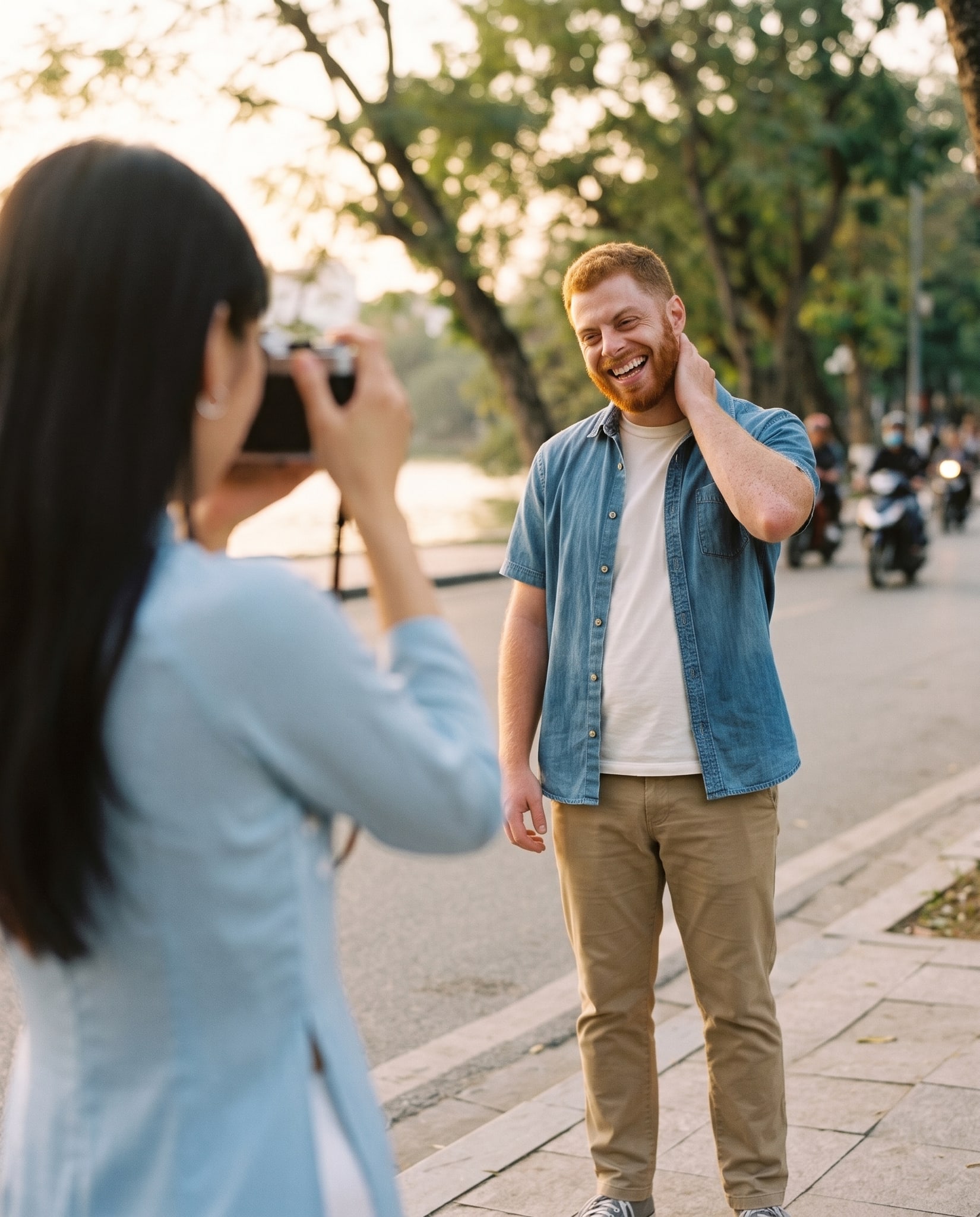
How far is Mui Ne from Hanoi and Saigon, and does it change how we plan a shoot?
Mui Ne sits 220 km south of Ho Chi Minh City (4–5 hour drive), making it accessible for same-day shoots if you start at 3 a.m., or overnight trips if you want a relaxed pace. From Hanoi, it's 1,600+ km and requires flights or 24-hour travel—not practical for one-day shoots. We partner with Cáo Studio Saigon for Mui Ne bookings; the Saigon team manages all logistics and coordinates with Hanoi on final gallery turnaround. If you're based in Hanoi and want a Mui Ne shoot, we recommend a 3-day package: fly into Saigon, spend a night in Mui Ne town for acclimatization, shoot early morning on day two, and fly home day three. This removes rush stress and lets us book a larger vehicle and longer session. Couples shooting in Hanoi often choose Hoang Cau Lake or the Old Quarter instead; red dunes don't suit Hanoi logistics for fly-in guests. When you inquire, tell us your city and dates; we'll suggest the realistic option.
What should you check before booking a Mui Ne ao dai wedding shoot with us?
Fabric type: Bring a swatch or photos of your ao dai if you're unsure about sand resistance. Heavy brocades are beautiful but absorb moisture and sand; lighter silks are easier to manage.
Outfit count: Two maximum is sustainable in 5–7 hours with restyling and travel. Three pieces forces compromises on location time and photo variety.
Footwear: Plan heels for portraits, flats or sandals for walking. Mui Ne sand is soft; stilettos sink and tire feet quickly.
Hair and makeup timing: Arrive at your Mui Ne hotel (or the shoot vehicle) 90 minutes before dawn if you want hair and makeup on-site. Otherwise, we can do hair and makeup in Saigon before departure (ask about hotel makeup and hair services).
Weather confirmation: We check forecasts and road conditions three days before. If sand is too wet or wind gusts exceed 30 km/h, we either reschedule or move to a sheltered coastal location.
Guest count: Photographer, stylist, and driver are included. If you want a videographer or bring parents, we adjust the vehicle and timeline—confirm in advance.
Budget flexibility: Ask for a quote on WhatsApp; Mui Ne shoots cost more than city shoots due to travel and logistics. We can offer options: a shorter session, a single location, or a smaller team.
See packages and prices on vietnamphotoshoot.com
Where else near Mui Ne can we shoot an ao dai if the red dunes don't work on the day?
If sand conditions are poor, we pivot to three nearby locations: the white dunes (softer light, less dramatic but easier on fabric), Po Sah Inor Beach (rocky, dramatic—suits dark ao dai and groom in traditional áo ghi), or Fairy Stream, a freshwater creek through clay banks where light filters through mangroves and the ao dai's colors glow. Each has different sand behavior and requires different outfit strategies. We scout all four locations the evening before; you don't choose—we choose based on weather, tide, and light forecast. This flexibility is why Mui Ne shoots aren't "guaranteed" red dunes; we promise great photos in the best conditions available on your day.
Can we combine a Mui Ne ao dai shoot with other Vietnam photo locations?
Yes. We often build 3–5-day trips: day one in Ho Chi Minh City (city couple shoots or proposal sessions at War Remnants Museum or the Saigon River), day two Mui Ne red dunes, day three Ninh Binh limestone cliffs or Ha Long Bay. This requires advance coordination between teams. We partner with guides in Ninh Binh and Ha Long to ensure seamless hand-offs. The pre-wedding and elopement package is designed exactly for this—multiple locations, multiple days, one cohesive story. Ask us for a multi-location itinerary; we'll price it as a package, not à la carte.
FAQ
Will the red sand stain the ao dai permanently?
No. Sand brushes out fully once dry. We use a soft-bristle brush and never rinse; water sets sand into fibers. Let the gown dry completely (24 hours), then brush gently downward outdoors. If any sand persists, a professional dry cleaner removes it without damage.
What if it rains the morning of our Mui Ne shoot?
We monitor weather from three days out. Light rain (< 5 mm) is workable; we use umbrellas and shoot softer, moodier scenes. Heavy rain or flooding cancels the shoot and we reschedule at no extra cost or refund in full. Mud also makes slopes unsafe, so we call it early if conditions degrade.
Can we shoot our Mui Ne wedding ceremony at sunset, not sunrise?
Sunset (5:30–7 p.m.) is doable but crowded with tourists. We'd need to navigate tour buses and shadows from dunes cover half the landscape by 6:30 p.m. Sunrise light is superior for ao dai color and clarity. If sunset is essential, we book a private guide to secure an empty ridge and use stronger lighting gear.
How many photos do we get from a Mui Ne ao dai shoot?
We deliver 60–150 edited photos, depending on session length and outfit changes. A 5-hour session with one ao dai yields ~80 photos. Two outfits or a 7-hour day produces 120–150. All images are fully edited, color-graded, and delivered via cloud link within 14 days.
Do we need a model release or permission to shoot at Mui Ne red dunes?
No formal permit is required for personal wedding photography. If your photos are used commercially (print, publication, advertising), we'll advise on local permissions. Always let your local guide and driver know your plans; they can suggest restricted zones or private ridge areas to avoid.
Can we hire Cáo Studio for a Mui Ne group or family shoot, not just weddings?
Yes. The family photoshoot package and special concept shoots work beautifully at Mui Ne. Same logistics apply: early start, sand protection, outfit counts. Large groups (8+ people) require extra assistants and a bigger vehicle; ask for a custom quote.
Ao Dai Photoshoot
Inclusions, prices and booking are on our booking site.
FAQ
Will the red sand stain the ao dai permanently?
No. Sand brushes out fully once dry. We use a soft-bristle brush and never rinse; water sets sand into fibers. Let the gown dry completely (24 hours), then brush gently downward outdoors. If any sand persists, a professional dry cleaner removes it without damage.
What if it rains the morning of our Mui Ne shoot?
We monitor weather from three days out. Light rain (< 5 mm) is workable; we use umbrellas and shoot softer, moodier scenes. Heavy rain or flooding cancels the shoot and we reschedule at no extra cost or refund in full. Mud also makes slopes unsafe, so we call it early if conditions degrade.
Can we shoot our Mui Ne wedding ceremony at sunset, not sunrise?
Sunset (5:30–7 p.m.) is doable but crowded with tourists. We'd need to navigate tour buses and shadows from dunes cover half the landscape by 6:30 p.m. Sunrise light is superior for ao dai color and clarity. If sunset is essential, we book a private guide to secure an empty ridge and use stronger lighting gear.
How many photos do we get from a Mui Ne ao dai shoot?
We deliver 60–150 edited photos, depending on session length and outfit changes. A 5-hour session with one ao dai yields ~80 photos. Two outfits or a 7-hour day produces 120–150. All images are fully edited, color-graded, and delivered via cloud link within 14 days.
Do we need a model release or permission to shoot at Mui Ne red dunes?
No formal permit is required for personal wedding photography. If your photos are used commercially (print, publication, advertising), we'll advise on local permissions. Always let your local guide and driver know your plans; they can suggest restricted zones or private ridge areas to avoid.
Can we hire Cáo Studio for a Mui Ne group or family shoot, not just weddings?
Yes. The [family photoshoot package](/go/family-photoshoot) and [special concept shoots](/go/special-concept) work beautifully at Mui Ne. Same logistics apply: early start, sand protection, outfit counts. Large groups (8+ people) require extra assistants and a bigger vehicle; ask for a custom quote.
More from the team
Áo dài for wedding photos in Mai Chau and Pu Luong: rent or buy?
Mai Chau and Pu Luong offer dramatic terraced landscapes for áo dài shoots, but altitude, humidity and rural fittings require different rental and styling choices than Hanoi studios.
Ao dai wedding photos at Sao Beach: what we plan on shoot day
Sao Beach's white sand and clear water draw couples and solo travelers for ao dai photos. We walk through our real workflow on the sand, the gear we bring, timing decisions, and what to watch before your session.
Ao Dai Wedding Photos at Muong Hoa Valley Rice Terraces
Muong Hoa Valley in Sapa draws couples for its cascading rice terraces and morning mist. We've run ao dai shoots there since 2021 — here's how we plan them, what goes wrong, and whether it fits your vision.