 Cáo Studio
Home › Blog › Ao Dai Photoshoot
Ao dai wedding photos at O Quy Ho pass: what we do on shoot day
By the Cáo Studio team · Hanoi & Saigon · 2026-11-01
O Quy Ho pass (4,000 m, near the Sapa plateau) works for ao dai because fog wraps mountains in soft, diffuse light — no harsh shadows on fabric folds. Cáo Studio runs these shoots in spring and autumn when weather is stable. A full session takes 6–8 hours: pre-dawn travel, 3–4 hours shooting (two outfits typical), wardrobe changes in our van, midday break, then descent by 4 p.m. We include a makeup artist and three wardrobe pieces unless you request more. The pass requires real fitness and acclimatization; some guests feel altitude effects. We handle logistics — permits, driver, styling — so you focus on posing. Cost depends on team size and outfit count; ask us for a quote on WhatsApp and we'll tailor a package. Chat with us on WhatsApp
Why does O Quy Ho's fog make ao dai look better than studio backdrops?
Sunlight reflecting off clouds creates an even, shadowless wash across your dress. Studio strobes mimic this, but only partially. At O Quy Ho, the fog itself becomes a filter: warm skin tones pop; white silk and tulle glow without glare. Reds and blues stay saturated. We've shot the same dress in Hanoi studios and on the pass — the pass version always reads cleaner in the fabric detail. Mist also hides crowds and roads behind you, leaving nothing but mountains. That natural diffusion saves us editing time and makes your dress the only focal point.
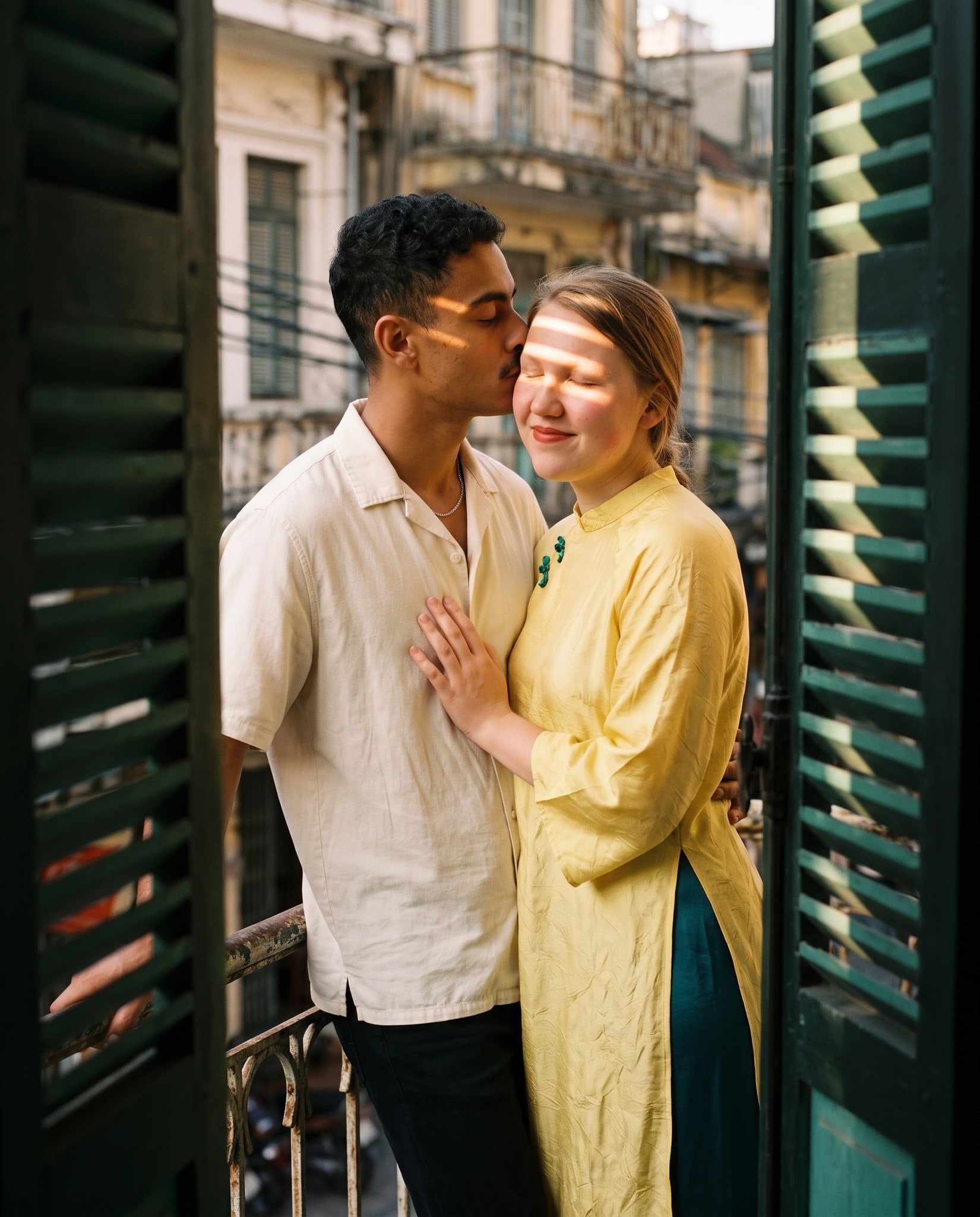
What's the real difference between spring and autumn shoots at O Quy Ho?
Spring fog (March–May) is thicker and lingers into mid-morning, giving us 5–6 hours of soft light. Paths are muddy; guests need trekking shoes. Temperature hovers around 8–12°C, so layering under your ao dai is essential. Autumn (September–October) brings clearer skies, faster sunrise, and sharper shadows — we start earlier and work harder to avoid harsh backlighting. Paths dry out. Temperature is 5–10°C at peak elevation. We prefer spring for ao dai because the guaranteed fog simplifies lighting; autumn is faster but demands more precision in pose timing. Both seasons fill our calendar weeks ahead, so book early if you have a preference.
How do we handle wind without damaging your dress fabric?
Wind hits hardest above 3,500 m, where gusts can swing the hem unpredictably. Our team uses three tactics: (1) positioning you with the pass to your back, so the ao dai flows downslope naturally; (2) our stylist holds the skirt behind you — invisible in frame — to anchor the folds; (3) we choose lighter fabrics (silk, cotton blend) over heavy brocade if you're open to a second outfit. We carry safety pins, clips, and a small folding screen if wind spikes. On our last spring shoot, a guest's brocade ao dai started flapping at 4,200 m; our stylist pinned the inner layers to the dress slip, and we restyled the outer hem in 3 minutes. The final images showed no wrinkles. Avoid rigid fabrics or trains if wind bothers you; we'll advise when you book.
Which ao dai designs photograph best at high altitude?
Classic A-line cuts in ivory, blush, or jewel tones suit the soft, cool light — they don't compete with the landscape. Beaded bodices and embroidered panels catch diffuse light and photograph without glare. Heavy brocade (gold, burgundy) works if you're comfortable with layering underneath; it reads expensive and stays stable in wind. Áo dài with side slits (thigh-high or higher) are risky above 3,500 m because the wind flips them; we suggest saving those for lower venues. Patterns — florals, geometric — fade into background noise when the pass is misty; solids are safer. We tell couples to bring a traditional floor-length dress plus a lighter second outfit (silk, simple) for the 4,000 m shots. That contrast gives you a full gallery: formal and ethereal in one shoot.
See packages and prices on vietnamphotoshoot.com
What's your honest timeline and what actually takes time on the day?
| Phase | Start | Duration | What we do | Common delays |
|---|---|---|---|---|
| Pickup & drive | 5:00 a.m. | 90 min | Van from Sapa town; guests hydrate, eat light snack | Traffic, late pickups |
| Acclimatization walk | 6:30 a.m. | 30 min | Climb 200 m gently; photographer scouts light angles | Altitude sickness, slow pace |
| First outfit & makeup touch | 7:00 a.m. | 45 min | Stylist dresses you; makeup artist resets face for mist/chill | Fabric adjustments, wind gusts |
| Shoot, outfit 1 | 7:45 a.m. | 120 min | Pose across 3–4 locations; we move you every 8–10 min | Cloud breaks, regrouping for couple shots |
| Outfit change & break | 9:45 a.m. | 30 min | Change in van, eat, rest; crew packs gear | Cramped space, cold fingers |
| Shoot, outfit 2 | 10:15 a.m. | 90 min | Second location or higher altitude; light starts warming | Wind increases; shadows sharpen |
| Descent & departure | 11:45 a.m. | 120 min | Drive to town, final touch-ups in studio | Landslides (rare), traffic on main road |
Delays we see most: couples arriving late (we build in 15-min buffer), altitude making guests slow (we reset pace early), wind reshuffling the ao dai hem (our stylist fixes in 2–3 min). Bring water, a snack, and a sweater under your dress. Don't skip the acclimatization walk — it prevents headaches and awkward breathing in photos.
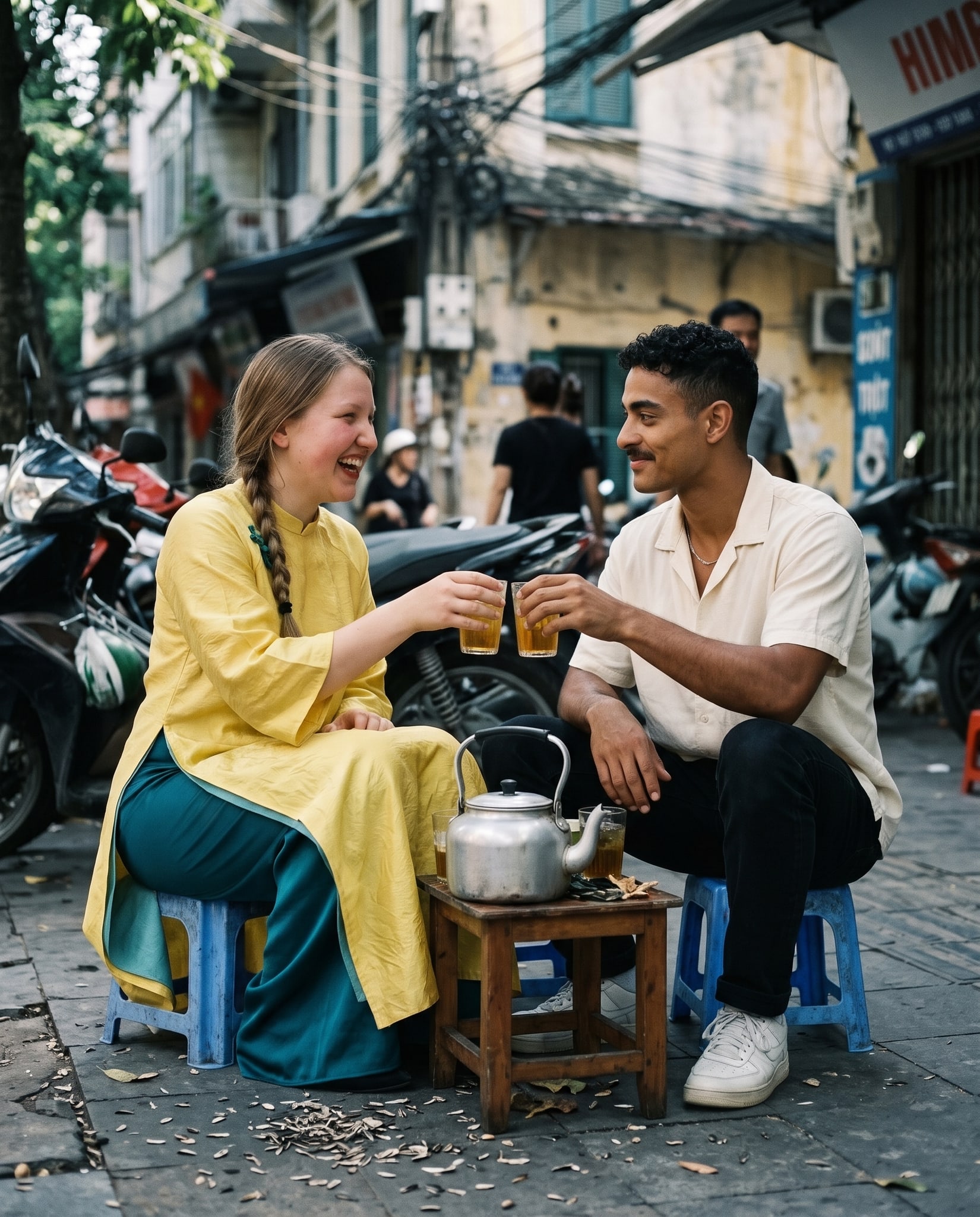
How do we choose between O Quy Ho and other northern Vietnam locations?
We compare on three dimensions: light consistency, safety, and ao dai readability.
| Venue | Altitude | Fog season | Ao dai reads | Risk level | Best for |
|---|---|---|---|---|---|
| O Quy Ho pass | 4,000 m | Spring, early autumn | Perfect (soft, even) | Moderate (weather, fitness) | Classic, traditional couples |
| Fansipan peak (Sapa) | 3,143 m | Spring, autumn | Good (sometimes direct sun) | Low (cable car, paved) | Groups, less athletic guests |
| Ta Van village (Sapa) | 1,500 m | Year-round | Good (rice field backdrop) | Very low (accessible, warm) | Families, tight budgets |
| Tam Coc limestone (Ninh Binh) | Sea level | Year-round | Very good (karst drama, soft valley light) | Very low (easy access) | Couples wanting river, not altitude |
| Cat Ba island (Halong Bay) | 300 m | Spring, autumn | Excellent (sea + mist) | Low (coastal, stable) | Destination weddings, elopements |
O Quy Ho wins if you want iconic alpine drama and don't mind fitness demands. If you prefer easier logistics and equally stunning fabric detail, Tam Coc limestone or coastal shoots at Cat Ba) deliver in 4 hours with no altitude risk. We'll help you choose based on your fitness, timeline, and dress weight when you book your ao dai photoshoot).
What to check before you book an O Quy Ho ao dai shoot
Your fitness. Can you walk uphill for 30 minutes carrying a 2–3 kg dress? Have you hiked above 3,000 m? We'll ask on WhatsApp. If you're unsure, we'll suggest a lower venue with the same aesthetic result.
Weather windows. Spring (March–May) has a 70% chance of morning fog; autumn (September–November) is 60%. Winter is unpredictable (snow, zero visibility). Summer is too warm and cloudy for clear images. We monitor forecasts 7 days before your shoot and reschedule if fog chance drops below 50%.
Ao dai weight and fabric. Lightweight silk and cotton blends (under 1 kg) work. Heavy brocade with metal thread (2+ kg) is exhausting to wear at altitude. Check with your tailor: ask the dress weight and whether it's pre-shrunk (mountain damp can affect fit). Bring a backup outfit in your backpack if you own one.
Footwear. O Quy Ho paths are rocky and muddy in spring, dry but uneven in autumn. Wear trekking shoes with ankle support during the shoot; we'll photograph you in them or barefoot (if dry). Avoid heels or flip-flops — guests slip, and we lose time. We keep a spare pair of shoes in the van.
Altitude acclimatization. Arrive in Sapa 1–2 days before your shoot if you live at sea level. Drink 3–4 liters of water daily before and after. Avoid alcohol the night before. On the morning, eat carbs and protein. Headaches and dizziness happen; we have pain relief and descend if needed.
Team size. A couple with photographer, stylist, and makeup artist is standard. Add a second photographer if you want simultaneous couple + solo shots (saves time, ensures coverage). Adding family members (parents, siblings) requires extra time for group setups; budget an extra 1–2 hours.
Why couples return to O Quy Ho even after their wedding shoot
We've had guests book a couple photoshoot) on their honeymoon, then return a year later for anniversary shots. The pass changes subtly: mist patterns shift, vegetation grows, your dress may be different (formal for the first, casual for the second). One couple shot their pre-wedding in spring fog, then came back in autumn to capture the same dress in sharp, golden light — two completely different moods, same location. That flexibility keeps O Quy Ho booked. If you're planning a destination ao dai shoot with us, mention whether you see yourself returning; we'll note it and tailor the first session to set up a great callback.
For couples in a rush or from lower-altitude regions, we also offer pre-wedding shoots at more accessible locations) — you get the same styling and professionalism without the climbing.
See packages and prices on vietnamphotoshoot.com
Pages from our team you may need
- couple photoshoot package
- makeup and hair at your hotel
- proposal and anniversary package
- pre-wedding and elopement package
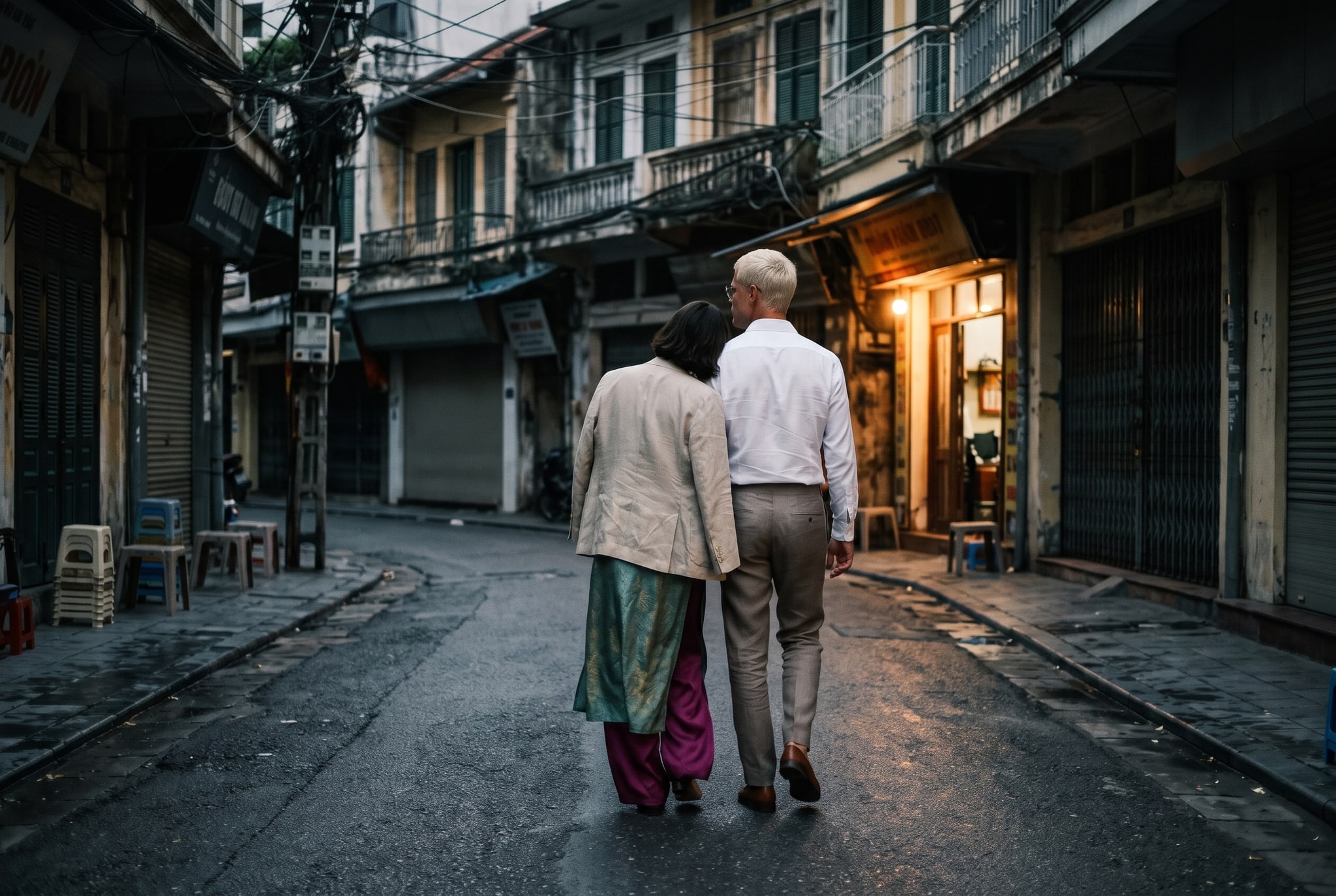
FAQ
Is O Quy Ho safe for a bride in an ao dai during labor or pregnancy?
No. Altitude above 3,500 m can lower oxygen to the baby; exertion raises heart rate. We recommend venues below 2,000 m (Sapa town, Ninh Binh, Hanoi outskirts). A stylist and photographer can still shoot you beautifully closer to sea level.
Can we shoot O Quy Ho in winter or monsoon season?
Possible but risky. December–February brings snow, sleet, and zero visibility 3–4 days per week. Your dress gets soaked; makeup runs. September–November is wet but more stable. We advise spring (March–May) or autumn (September–October). Book early; those months fill fast.
How many outfit changes can we do in one O Quy Ho session?
Typically two. A third is physically possible but exhausting: you'd descend at 1 p.m. instead of 11:45 a.m., losing the best light. We recommend two outfits (traditional + lighter silk) or one outfit shot in two locations (upper pass and lower slope, different light angles).
Do we need a special ao dai for altitude, or will my regular dress work?
Your regular dress works if it's lightweight (silk, cotton, under 1.5 kg) and not a train. Heavy brocade, weighted hems, and beaded trains get uncomfortable above 3,500 m and create wind problems. Ask your tailor the dress weight. Bring a backup in your bag if you own a second piece.
What happens if weather turns bad on the morning of our shoot?
We monitor conditions at 5:00 a.m. and decide by 5:30 a.m. If fog is zero and no improvement forecast, we reschedule (no charge) or move to a lower backup location (easier light, same day). If partial fog exists, we shoot and adapt. You won't waste a trip — we have alternatives ready.
Ao Dai Photoshoot
Inclusions, prices and booking are on our booking site.
FAQ
Is O Quy Ho safe for a bride in an ao dai during labor or pregnancy?
No. Altitude above 3,500 m can lower oxygen to the baby; exertion raises heart rate. We recommend venues below 2,000 m (Sapa town, Ninh Binh, Hanoi outskirts). A stylist and photographer can still shoot you beautifully closer to sea level.
Can we shoot O Quy Ho in winter or monsoon season?
Possible but risky. December–February brings snow, sleet, and zero visibility 3–4 days per week. Your dress gets soaked; makeup runs. September–November is wet but more stable. We advise spring (March–May) or autumn (September–October). Book early; those months fill fast.
How many outfit changes can we do in one O Quy Ho session?
Typically two. A third is physically possible but exhausting: you'd descend at 1 p.m. instead of 11:45 a.m., losing the best light. We recommend two outfits (traditional + lighter silk) or one outfit shot in two locations (upper pass and lower slope, different light angles).
Do we need a special ao dai for altitude, or will my regular dress work?
Your regular dress works if it's lightweight (silk, cotton, under 1.5 kg) and not a train. Heavy brocade, weighted hems, and beaded trains get uncomfortable above 3,500 m and create wind problems. Ask your tailor the dress weight. Bring a backup in your bag if you own a second piece.
What happens if weather turns bad on the morning of our shoot?
We monitor conditions at 5:00 a.m. and decide by 5:30 a.m. If fog is zero and no improvement forecast, we reschedule (no charge) or move to a lower backup location (easier light, same day). If partial fog exists, we shoot and adapt. You won't waste a trip — we have alternatives ready.
More from the team
Ao Dai Photos at Hoi An Lantern Street at Night
Hoi An Lantern Street (Nguyen Hoan) glows at dusk with silk lanterns and reflected light. Our team shoots ao dai here after dark, navigates tight vendor spaces, and handles the low-light challenge with experience from 100+ night sessions.
Ao dai for wedding photos in Quy Nhon: renting, fitting and styling
Quy Nhon's coastal backdrops pair beautifully with traditional ao dai. We walk through rental choices, fitting logistics and how our team coordinates styling on shoot day.
Vietnam Pre-Wedding Photoshoot: What We Book at Cáo Studio
Pre-wedding shoots in Vietnam mean morning light in Hoi An's Old Town, cyclos in Saigon, or terraced fields near Ninh Binh. We walk you through what a session actually costs, how we schedule it, and what goes wrong on the day.