 Cáo Studio
Home › Blog › Ao Dai Photoshoot
Ao Dai Wedding Photos at Po Nagar Cham Towers
By the Cáo Studio team · Hanoi & Saigon · 2026-11-02
Po Nagar Cham Towers in Nha Trang, built in the 8th century, provides soaring brick-and-stone backdrops that make ao dai silhouettes shine. A typical wedding shoot here runs three to four hours, usually in early morning (6–8 a.m.) or late afternoon (4–6 p.m.) to avoid crowds and harsh midday light. Cáo Studio coordinates with couples on ao dai color (white, gold, or jewel tones photograph distinctly under different sky conditions), handles permit logistics, and positions you at the main tower plaza, upper terraces, and shaded garden alcoves. The session includes two outfit changes, professional makeup touch-ups on-site, and edited gallery delivery. Since Po Nagar is a working temple, we brief you on respectful behavior; tourist flow peaks 10 a.m.–3 p.m., so early or sunset slots give you clearer frames. Cost sits at the mid-to-premium end of wedding packages. Chat with us on WhatsApp | See packages and prices on vietnamphotoshoot.com
Why Does Po Nagar's Architecture Match Ao Dai So Well?
Po Nagar's weathered terracotta and stone towers create a visual echo of ao dai's flowing silk—both speak to Vietnamese heritage. The main tower rises 28 meters; its narrow doorways, spiral stairs, and elevated platforms force composition choices that isolate you against sky and stone rather than merging you into background clutter. When we frame an ao dai from below looking up at the tower, the fabric catches light on one side, shadow on the other, giving dimension that flat resort backdrops cannot match. The site's sacred context also matters: couples feel the weight of the place, which shows in their expressions—less forced smiling, more genuine presence. We position you on the eastern terrace facing west in late afternoon, so the tower glows amber behind you while your ao dai catches golden hour light on its front. That directional interplay is what separates a snapshot from a keepsake photograph.
See packages and prices on vietnamphotoshoot.com
What Time of Day Actually Works Best Here?
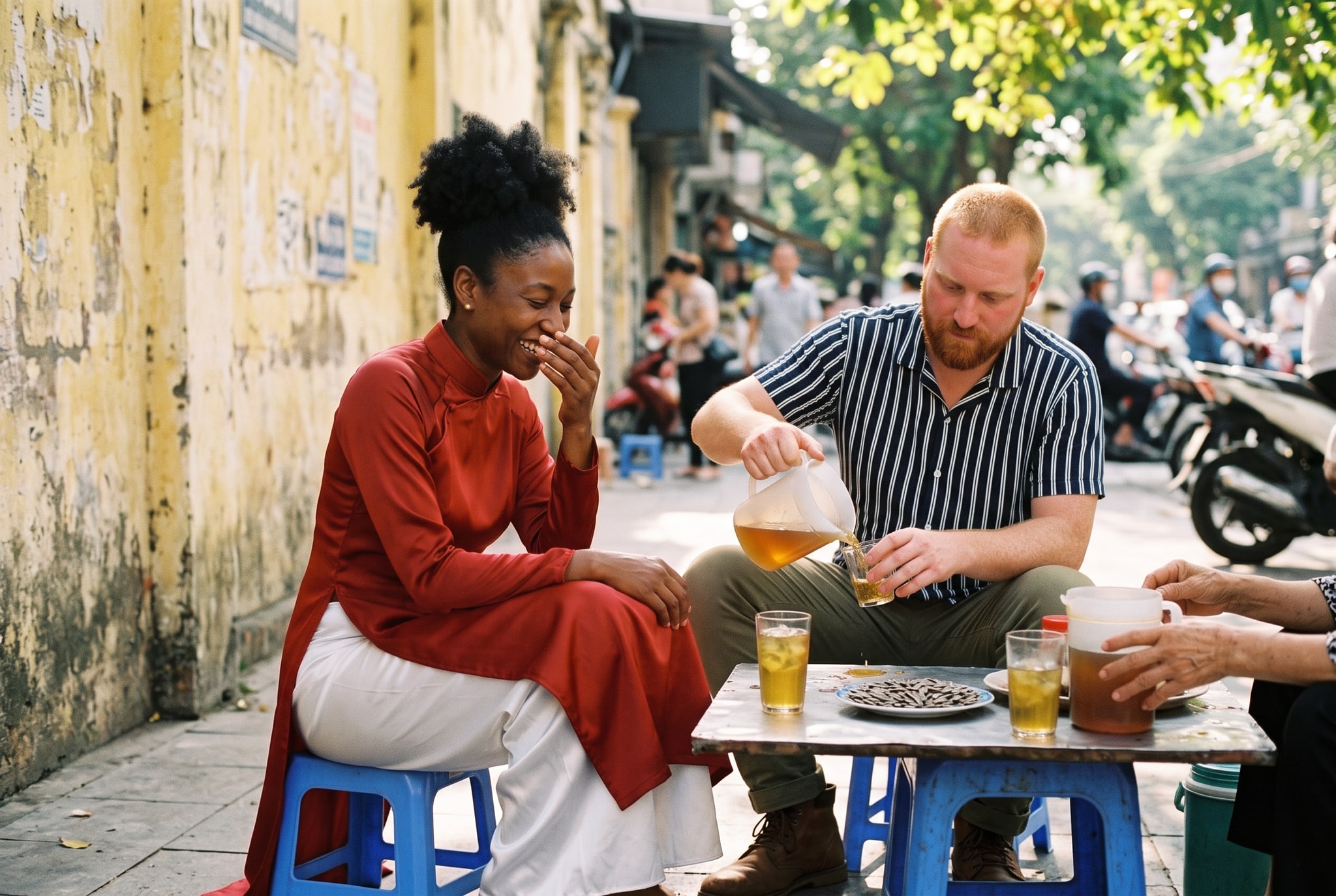
Early morning (6–7 a.m.) and sunset (5–6:30 p.m.) are not poetic suggestions—they are logistics. At 7 a.m., we have clear light, zero tourist crowds, and two hours before temple ceremonies bring pilgrims. The stone still holds coolness, so your makeup stays set. By 9 a.m., tour buses unload; we can still shoot, but we're navigating umbrellas, selfie sticks, and framing around strangers. Midday (11 a.m.–3 p.m.) is ruled out: harsh shadows split your face, ao dai colors wash out to white, and heat makes your ao dai wrinkle and makeup run. Late afternoon (4 p.m. onward) brings golden light that flatters every skin tone and makes ao dai silk glow, but cloud cover after 5:30 p.m. darkens fast, cutting shooting time. We tell couples: pick 6–7 a.m. if you want calm and clarity; pick 4:30–5:45 p.m. if you accept crowd noise for that warm glow. Nha Trang's monsoon season (October–December) means afternoon clouds; dry season (January–April) offers consistent late-light quality. Neither time slot costs more, but the decision shapes your entire session.
How Do Ao Dai Color and Material Choices Change at This Location?
White ao dai photographs crisp and formal against weathered brick, but at Po Nagar, the stone leans warm terracotta, so white fabric sometimes reads as cool-blue in shadow. Gold and jewel-tone ao dai (emerald, sapphire, crimson) hold their color across shadow and light; we see them pop in galleries where white fades. Silk ao dai catches directional light in ways cotton blends cannot—the weave sparkles when sun hits it tangentially. Matte or embroidered fabrics photograph more forgiving than plain silk because they diffuse light rather than creating hot spots. If you bring two ao dai, choose one formal (traditional collar, intricate embroidery) and one simpler (easier to move in on stairs, faster to change into). We've shot brides in full ornate ao dai struggling on the spiral staircase inside the main tower—the fabric snagged, the train pooled, and one outfit took forty minutes to arrange for a single frame. On the second outfit (a sleeker modern ao dai), we captured eight strong shots in twenty minutes. Material weight matters too: lighter silk flows on breezes and shows movement; heavy brocade looks sculptural but needs stillness. Tell us your ao dai fabric and color during booking; we'll suggest lighting angles and timing to suit it.
What Happens When Tourists, Weather, or Access Surprises You?
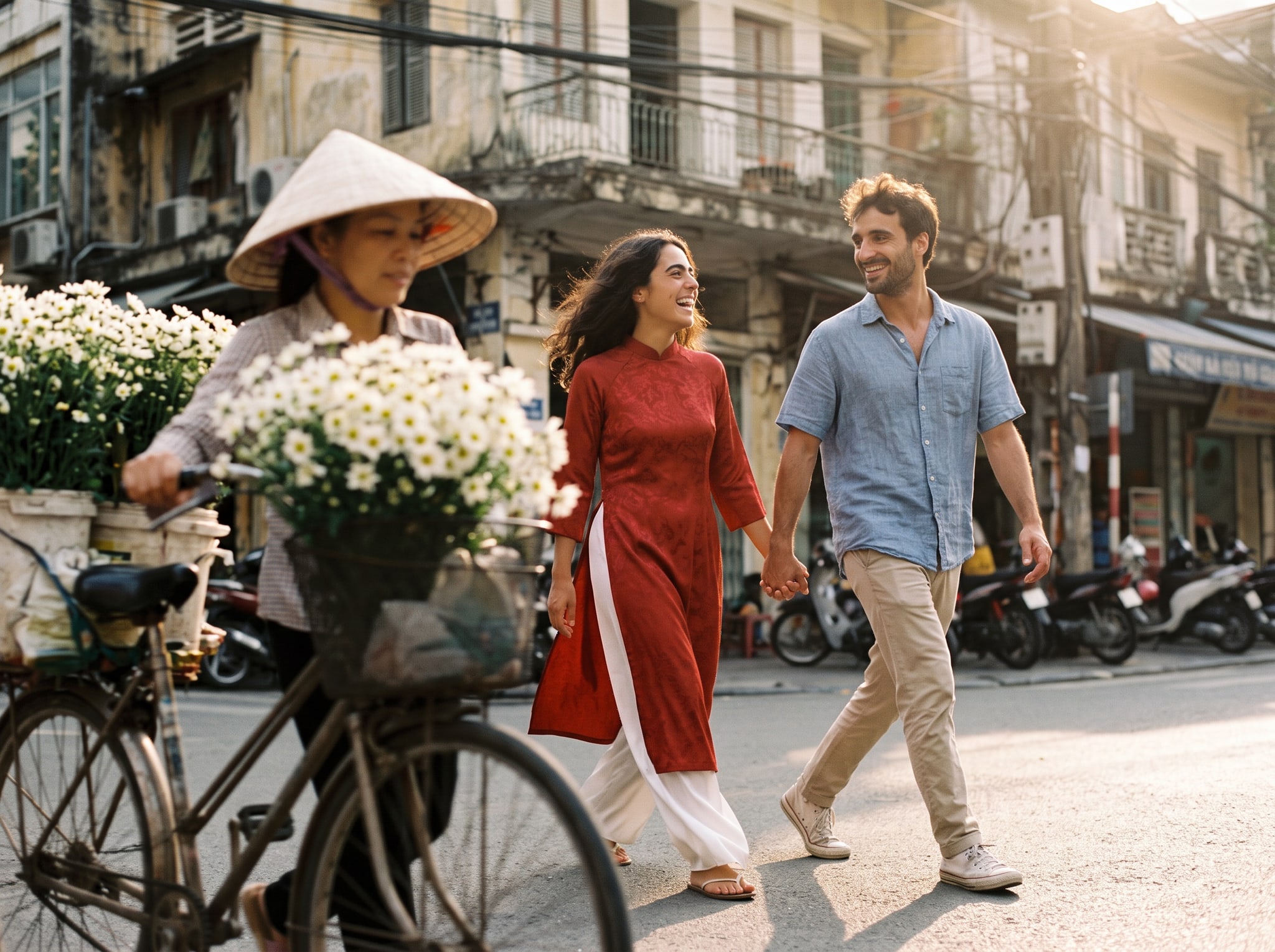
On a March shoot, we arrived at 6:45 a.m. with a couple in gold ao dai and found the main plaza cordoned off for a temple ceremony starting at 7:30 a.m. We pivoted to the garden terraces on the north side—fewer people, softer light through stone archways, equally strong frames. The couple lost their original vista, but gained intimacy. In another session, mid-afternoon monsoon clouds rolled in at 4:15 p.m., turning golden hour into flat gray. We accelerated the second outfit change, shot the couple's first outfit in the cloud-filtered light (which actually softened shadows beautifully, though unexpected), and swapped to an indoor sequence using the temple's side archways and lower corridors where carved stone provides texture without direct sun dependency. One bride's ao dai hem caught on ancient steps; we photographed the snag, laughed, and it became a favorite candid frame. Weather and crowds are not failures—they are constraints that rewire composition. A guide or local knowledge helps: we know which terraces stay empty until 8 a.m., which archways give shade if sun is too hard, and which stairs are narrow enough to require changed access plans. We always scout Po Nagar beforehand if possible, or text the on-site coordinator the evening before. If you live overseas and cannot visit beforehand, send us reference images of poses or framing you love; we'll map them to Po Nagar's geometry before the session.
How Does a Po Nagar Ao Dai Session Fit Into Larger Wedding Plans?
Po Nagar is not a replacement for a main ceremony or reception shoot—it is a pre-wedding or additional editorial session. Many couples book ao dai photoshoot packages a week or two before their ceremony to capture formal, unhurried images in cultural dress. Others combine it with a couple photoshoot at a second location on the same day: for instance, Po Nagar at dawn in ao dai, then a beach or street market session in Western wear at noon, then hotel room portraits in evening light. If you are traveling from overseas, a three-location itinerary spreads across two days to avoid exhaustion and allow wardrobe changes without rushing. We coordinate makeup and hair at your hotel as a first appointment, then drive you to Po Nagar, then to a second location. Some couples book a proposal and anniversary package that includes Po Nagar as the proposal backdrop, then revisit for anniversary ao dai portraits years later. The tower's permanence and your ao dai's timelessness mean frames shot in 2026 will still feel current and meaningful in 2036. Consider your wedding date, travel timeline, and how formal you want these images: if you need them for album covers or prints, budget a dedicated three-hour session here. If they are bonus editorial content, a two-hour early-morning add-on works.
| Session Type | Best For | Timing | Outfit Count | Why Po Nagar Fits |
|---|---|---|---|---|
| Dedicated ao dai shoot | Formal portraits only, cultural emphasis | 6–7 a.m. or 4:30–5:45 p.m. | 2 outfits | Tower framing isolates you; no wedding logistics pressure |
| Pre-wedding combo (two locations) | Diverse imagery, mix of formal and casual | 6–8 a.m. (Po Nagar), 12–2 p.m. (beach) | 3 outfits | Po Nagar dawn shot, then street or nature in golden light |
| Wedding day insert | Couple portraits between ceremony and reception | 3–5:30 p.m. (Po Nagar) | 1 outfit (your ao dai) | Late afternoon light warm; session fits 2–3 hours between events |
| Anniversary or vow-renewal | Revisit heritage years later | Any time (early or sunset preferred) | 1–2 ao dai | Stone and couple age together; timeless framing |
What to Check Before You Book Po Nagar
Accessibility and fitness: Po Nagar includes narrow stairs, uneven stone paths, and a 28-meter climb inside the main tower. If climbing is difficult, we can skip the interior and shoot the exterior terraces and garden—equally strong frames, no stairs. Wear flat shoes (no heels; ao dai does not pair with heels here). Test your ao dai movement on stairs beforehand if possible; many brides have never worn one.
Permits and fees: Po Nagar requires a small entry fee per person (collected at the gate; bring cash or mobile payment). If you are a Vietnamese national, rates are lower. We handle scheduling and coordination, but you should expect standard temple etiquette: no loud music, no poses that mock or trivialize the site, covered shoulders and knees if visiting the inner sanctum (though you will be in ao dai, which meets the code). Some couples hire a local guide; we can recommend one.
Season and weather: Nha Trang's dry season (January–April) is ideal for consistent light and clear sky. November–January brings occasional rain. May–September is hot and humid, and afternoon thunderstorms are common. Book early morning in wet months to avoid afternoon storms.
Travel and accommodation: Po Nagar is in central Nha Trang, a coastal city two hours north of Ho Chi Minh City by plane or car (about five hours by road). Most couples stay in Nha Trang for 2–3 days if they book a full itinerary (hotel session, Po Nagar, beach portraits, city editing). Coordinate with our Saigon or Hanoi studios if you are flying in; we can arrange local logistics or connect you with travel partners.
See packages and prices on vietnamphotoshoot.com
We also run couple photoshoot packages and pre-wedding sessions at other Vietnamese heritage sites—from Hoi An's old town lantern light to Ninh Binh's limestone cliffs. Each location demands different timing, outfit, and light strategies. Po Nagar's strength is its stone permanence and the way ao dai silk interacts with centuries-old brick. If you want cultural weight and formal elegance, this is the right choice.
FAQ
Can we shoot inside the main tower at Po Nagar?
Yes, but interior light is dim and stone is narrow. We use natural light from doorways and small window openings, which limits framing options. Most strong shots happen on exterior terraces and gardens where sunlight is stronger. Interior frames work best as close-ups or silhouettes. Stairs inside are steep and tight; test your ao dai movement beforehand.
What if we arrive and it is too crowded?
We scout alternate terraces and archways on the north and west sides of the complex that see fewer tourists. If crowds are overwhelming (rare before 8 a.m.), we extend by 30 minutes or pivot to a nearby secondary temple or garden in Nha Trang. We have never cancelled a session due to crowds, but we have adjusted the exact location within Po Nagar's grounds.
Do we need two different ao dai, or can we repeat one outfit?
You can repeat one outfit—many couples do. Two outfits break visual monotony and let you explore different poses and terraces without outfit changes eating into shoot time. If you bring two, we recommend one formal (embroidered, traditional) and one simpler (easier to move in). One outfit works fine; we simply shoot more angles and compositions with it.
How long until we get edited photos?
Gallery delivery is typically 7–10 days after the session if you are local, and 10–14 days if you are overseas (we color-grade and retouch all frames before sending a digital link). Print orders ship separately; ask us for timeline when you book.
Should we hire a guide at Po Nagar, or does Cáo Studio handle all logistics?
We coordinate entry, timing, and on-site safety; a professional guide is optional but helpful if you want historical context and cultural details. Many couples skip the guide and rely on our crew for framing and pacing. Tell us during booking if you want a guide recommendation.
Can we bring family or a videographer to Po Nagar for our shoot?
Yes. Family members can observe from a distance without cluttering frames. Videographers are welcome; we coordinate timing to avoid overlap (we do not shoot video, but you can hire a separate crew). Let us know during booking so we can plan spacing and logistics.
Ao Dai Photoshoot
Inclusions, prices and booking are on our booking site.
FAQ
Can we shoot inside the main tower at Po Nagar?
Yes, but interior light is dim and stone is narrow. We use natural light from doorways and small window openings, which limits framing options. Most strong shots happen on exterior terraces and gardens where sunlight is stronger. Interior frames work best as close-ups or silhouettes. Stairs inside are steep and tight; test your ao dai movement beforehand.
What if we arrive and it is too crowded?
We scout alternate terraces and archways on the north and west sides of the complex that see fewer tourists. If crowds are overwhelming (rare before 8 a.m.), we extend by 30 minutes or pivot to a nearby secondary temple or garden in Nha Trang. We have never cancelled a session due to crowds, but we have adjusted the exact location within Po Nagar's grounds.
Do we need two different ao dai, or can we repeat one outfit?
You can repeat one outfit—many couples do. Two outfits break visual monotony and let you explore different poses and terraces without outfit changes eating into shoot time. If you bring two, we recommend one formal (embroidered, traditional) and one simpler (easier to move in). One outfit works fine; we simply shoot more angles and compositions with it.
How long until we get edited photos?
Gallery delivery is typically 7–10 days after the session if you are local, and 10–14 days if you are overseas (we color-grade and retouch all frames before sending a digital link). Print orders ship separately; ask us for timeline when you book.
Should we hire a guide at Po Nagar, or does Cáo Studio handle all logistics?
We coordinate entry, timing, and on-site safety; a professional guide is optional but helpful if you want historical context and cultural details. Many couples skip the guide and rely on our crew for framing and pacing. Tell us during booking if you want a guide recommendation.
Can we bring family or a videographer to Po Nagar for our shoot?
Yes. Family members can observe from a distance without cluttering frames. Videographers are welcome; we coordinate timing to avoid overlap (we do not shoot video, but you can hire a separate crew). Let us know during booking so we can plan spacing and logistics.
More from the team
Ao Dai Photos at Hoi An Lantern Street at Night
Hoi An Lantern Street (Nguyen Hoan) glows at dusk with silk lanterns and reflected light. Our team shoots ao dai here after dark, navigates tight vendor spaces, and handles the low-light challenge with experience from 100+ night sessions.
Ao dai for wedding photos in Quy Nhon: renting, fitting and styling
Quy Nhon's coastal backdrops pair beautifully with traditional ao dai. We walk through rental choices, fitting logistics and how our team coordinates styling on shoot day.
Vietnam Pre-Wedding Photoshoot: What We Book at Cáo Studio
Pre-wedding shoots in Vietnam mean morning light in Hoi An's Old Town, cyclos in Saigon, or terraced fields near Ninh Binh. We walk you through what a session actually costs, how we schedule it, and what goes wrong on the day.