 Cáo Studio
Home › Blog › Ao Dai Photoshoot
Ao dai wedding photos at Ta Van village: what we book first
By the Cáo Studio team · Hanoi & Saigon · 2026-11-01
Ta Van—the village of ethnic H'Mong people north of Sapa town—offers terraced rice paddies, wooden stilt houses, and mist-heavy mornings that frame ao dai in muted greens and grays. Cáo Studio books most sessions for 4–6 hours starting before 7 a.m., when light is soft and foot traffic light. A typical day includes one outfit change (usually a brighter solid-color ao dai for morning, a patterned or jewel-toned second for afternoon), 20–35 final images, hotel pickup, and a guide familiar with safe paths and family permissions. We always scout location shifts during the 10 a.m. sun peak—paddies flatten light, so we move to shaded house entries or forest edges. Cost depends on team size (photographer + stylist, or photographer alone) and whether hair/makeup happens on-site or at your hotel; ask us for a quote on WhatsApp. Avoid booking midday (11 a.m.–2 p.m.) unless you want high-contrast, dramatic shadows; most couples regret that choice by hour three. Chat with us on WhatsApp
What time of year does light work best in Ta Van?
Golden-hour light is strongest October through April, when mornings are cool and mist clears by 8 a.m. May–September brings cloud cover that's flattering for skin but dull for landscape detail. We've shot sessions in every month; summer requires earlier starts (6:30 a.m. instead of 7 a.m.) to beat heat and crowds. Autumn gives the clearest paddies and sharpest shadows—plan accordingly if landscape detail matters as much as portrait warmth.
Why do we change ao dai styles between morning and light shifts?
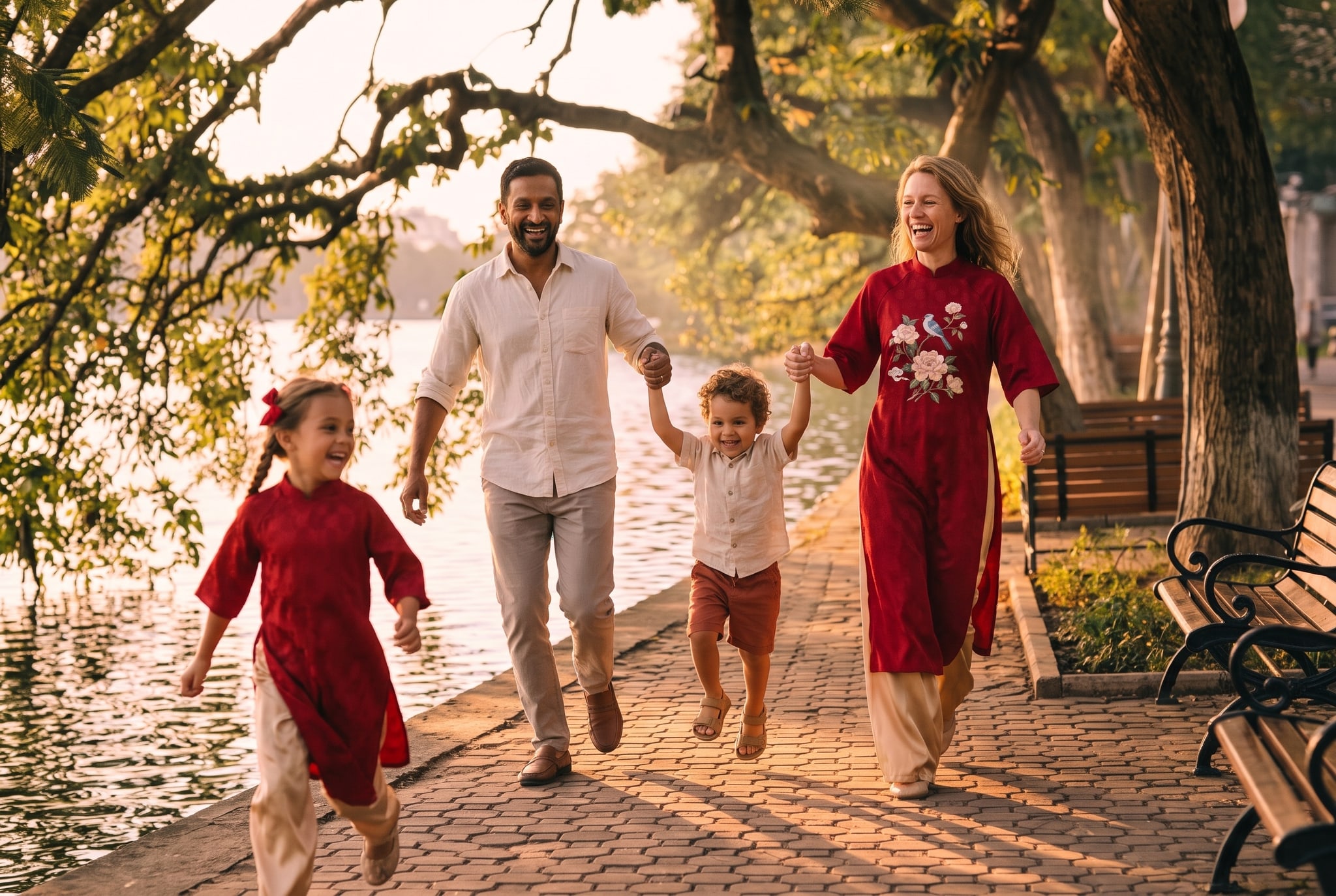
Morning paddies reflect cool, pale tones; afternoon light turns golden and hits from the side, so jewel tones and brocades photograph richer. We also move location after 10 a.m. because direct sun flattens rice-field perspective. A solid white or cream ao dai reads pure at dawn; by 3 p.m., a burgundy or emerald silk glows. We tell couples to pick one outfit they love deeply and one they're curious about—the wardrobe switch breaks up the rhythm for us and keeps energy high when legs and feet are tiring.
| Ao dai style | Best light window | Why it works | Who picks it |
|---|---|---|---|
| White/cream silk | 6:30–8:30 a.m. | Catches mist, reads ethereal | Minimalist brides, first outfit |
| Jewel-tone solid | 2:00–4:30 p.m. | Golden side-light deepens color | Couples wanting richness, second outfit |
| Patterned brocade | 8:00 a.m.–10:00 a.m. | Detail visible, not washed by harsh sun | Statement-loving couples, any slot |
| Pastel or blush | Golden hour (4:30–5:30 p.m.) | Warm light wraps softly | Intimate second sessions or elopers |
How do we handle guest flow and family permissions in Ta Van?
We email or WhatsApp households 2–3 days ahead through our Sapa contact; permissions are almost always granted, and a small courtesy gift (tea, incense, fruit) goes a long way. On shoot day, we arrive with the couple and guide, scout safe angles from public paths, and never frame house interiors or children without asking again in the moment. Morning sessions (before 9 a.m.) mean fewer tourists and villagers moving through fields. We've had sessions cut short twice—once when a family began harvesting earlier than expected, once when unexpected rain flooded a low paddy—so we always identify three location backups and brief couples on a 15-minute pivot plan before we start.
See packages and prices on vietnamphotoshoot.com
What gear and team do we bring to Ta Van?
A photographer, a stylist, and a hair/makeup artist (if booked) is standard; a second photographer adds 45 minutes to the shoot but doubles image count. We carry two camera bodies, a drone (if the couple wants aerial shots of paddies—weather dependent), reflectors for shadow fill, backup ao dai clips, and a small first-aid kit. Our guide carries water, sun protection, and a portable phone charger. We don't shoot in active rain, though mist is fine—wet rice mud is slippery and ao dai hems suffer. Shuttle service from Sapa town or your hotel is included; round-trip takes 90 minutes with travel time built in, so a 4-hour session nets you about 3 hours on location.
Which ao dai designers and fabrics photograph best in Ta Van's landscape?
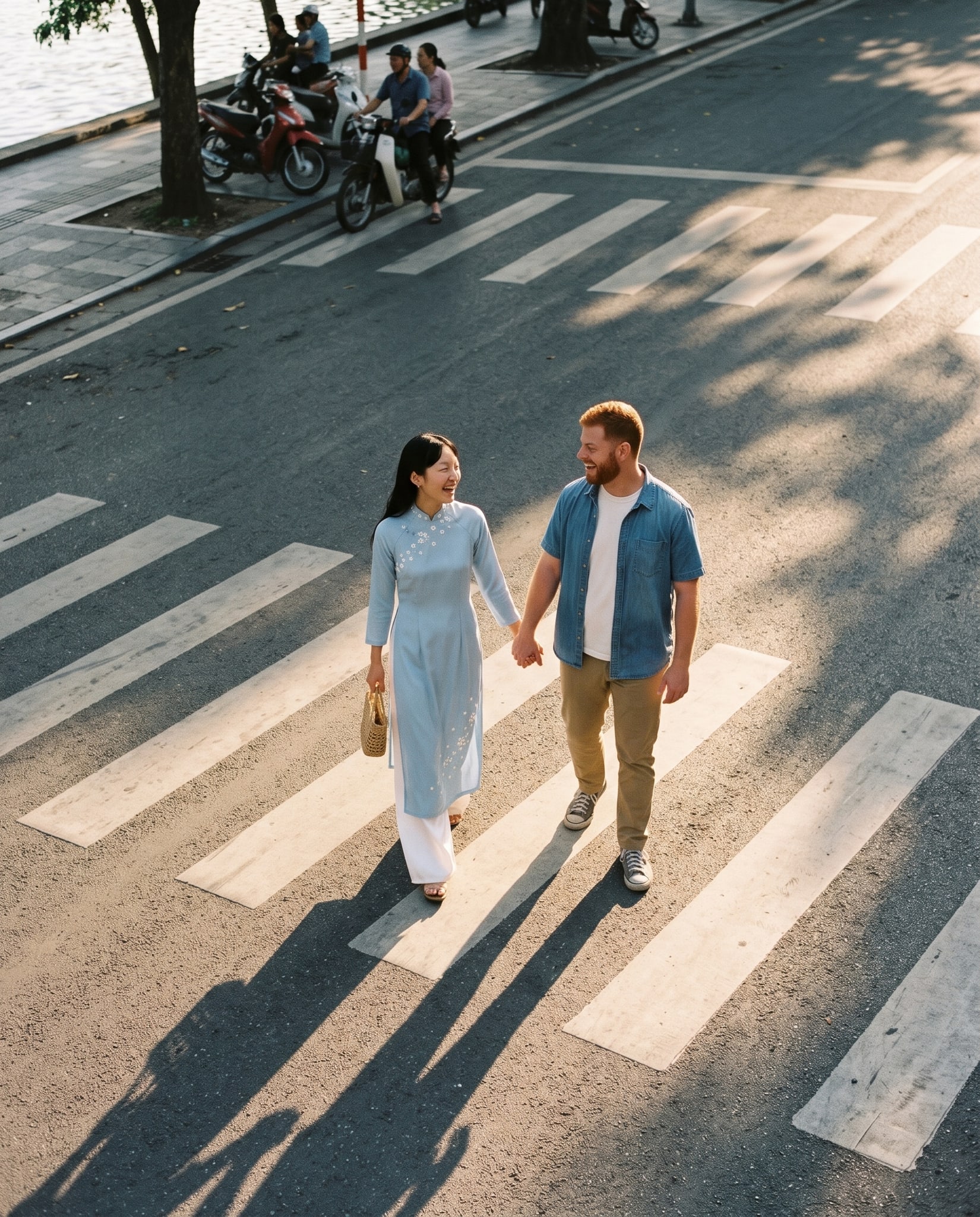
We work with couples' own ao dai or source locally in Hanoi or Saigon through trusted tailors. For Ta Van, we recommend natural-fiber silks and cotton brocades (they drape better in humidity and read richer in soft morning light) over polyester synthetics, which flatten. Solid colors—white, cream, jewel tones, pastels—photograph cleaner against chaotic paddy textures; overly ornate embroidery competes with the landscape. Asymmetrical or modern cuts photograph fresher than traditional styles in wide-angle field shots. If you're ordering an ao dai specifically for this shoot, ask the tailor about weight and fabric stretch—Ta Van involves walking on uneven paths for 3–4 hours, and a heavy, stiff ao dai becomes a liability by hour two. We've had couples rent from traditional ao dai studios in Hanoi or bring vintage pieces; both work if fit is right.
What to check before you book
- Fitness and footwear: Ta Van paths are muddy, steep, and uneven. Couples in heels or with mobility limits should mention it—we can adapt locations and shorten walking stretches. Flat sandals or hiking shoes stay off-camera but essential underneath.
- Weather and rain date: October–December has rare rain; May–July brings frequent showers. We include one date shift (same deposit, new date) if weather cancels; a second shift costs rescheduling time. Ask about weather guarantee policy upfront.
- Ao dai condition and fit: Worn ao dai, loose seams, or tight waists photograph poorly and leave you sore after 4 hours. Bring a backup clip, safety pins, and confirm ao dai length clears muddy paths by at least 2 inches.
- Hydration and stamina: Even fit couples tire by hour 3 in humidity. We build in a 10-minute rest after hour 2; bring electrolyte drink, not just water. Tell us if anyone has heat sensitivity or medication timing needs.
- Hotel pickup and timing: Confirm your hotel address and exact pickup time the day before. Sapa traffic (7–8 a.m.) is light but unpredictable; we leave 15 minutes early to buffer delays.
- Image delivery timeline: We deliver edited images within 14 days for standard sessions, sooner if you need a rush file for social media or printing. Ask about video add-ons (drone footage, edit-to-music short clips) separately.
For couples wanting a full pre-wedding experience that includes Ta Van plus other Sapa or Ninh Binh locations, see our pre-wedding and elopement package. If you're part of a larger group (family or friends), we also run family photoshoot sessions that can loop in multiple locations. For makeup and hair preparation before Ta Van, we offer on-site hotel styling in Sapa so you arrive field-ready and don't rush through beauty work.
FAQ
Can we shoot Ta Van if neither of us is from Vietnam?
Yes. International couples are standard. We handle guide communication, homestay permissions, and local customs; you bring passport copies (some homestays ask for ID before photos). Health insurance that covers rural areas and basic first aid is smart. We've shot more than 50 Ta Van sessions with travelers from North America, Europe, and Australia.
What if we only want one ao dai and no second outfit?
We adjust timing and location moves—we'll shoot one outfit across 3–4 locations (paddies, house entry, forest edge, water buffalo corner) to create variety. One outfit works; two gives you more image diversity and breaks up physical fatigue.
How many final images do we get from a Ta Van session?
20–35 edited, delivered photos depending on package. Longer sessions (6 hours) yield more. We also deliver a private online gallery with 80–120 unedited selects so you can request reshoots of specific moments. Rush delivery is available for an extra fee; ask on WhatsApp.
Is Ta Van crowded with tourists in October?
October is medium-busy—10–20 tourists per morning. We shoot early (6:30–7:00 a.m. start) to miss peak foot traffic (9 a.m.–4 p.m.). November–December is quieter but cooler and occasionally misty; January–March is clearest but coldest. Weekdays are quieter than weekends.
Can we bring a friend or family member to watch the session?
Yes. One extra person is fine and doesn't add to the team cost. More than one and we charge a small guide fee. Ta Van paths are narrow and wet; we ask non-shooting guests to stay 10–15 meters back during shooting to avoid stepping into frames and to keep safety margins.
What's the weather backup plan if it rains the morning of the shoot?
We offer a reschedule within 14 days at no extra cost. If you need to shoot that same day, we move to covered locations (house porches, forest edges, covered paths) and adjust lighting—photos look different but still beautiful. We decide with you by 6:30 a.m. based on forecast and your appetite for postponing.
Ao Dai Photoshoot
Inclusions, prices and booking are on our booking site.
FAQ
Can we shoot Ta Van if neither of us is from Vietnam?
Yes. International couples are standard. We handle guide communication, homestay permissions, and local customs; you bring passport copies (some homestays ask for ID before photos). Health insurance that covers rural areas and basic first aid is smart. We've shot more than 50 Ta Van sessions with travelers from North America, Europe, and Australia.
What if we only want one ao dai and no second outfit?
We adjust timing and location moves—we'll shoot one outfit across 3–4 locations (paddies, house entry, forest edge, water buffalo corner) to create variety. One outfit works; two gives you more image diversity and breaks up physical fatigue.
How many final images do we get from a Ta Van session?
20–35 edited, delivered photos depending on package. Longer sessions (6 hours) yield more. We also deliver a private online gallery with 80–120 unedited selects so you can request reshoots of specific moments. Rush delivery is available for an extra fee; ask on WhatsApp.
Is Ta Van crowded with tourists in October?
October is medium-busy—10–20 tourists per morning. We shoot early (6:30–7:00 a.m. start) to miss peak foot traffic (9 a.m.–4 p.m.). November–December is quieter but cooler and occasionally misty; January–March is clearest but coldest. Weekdays are quieter than weekends.
Can we bring a friend or family member to watch the session?
Yes. One extra person is fine and doesn't add to the team cost. More than one and we charge a small guide fee. Ta Van paths are narrow and wet; we ask non-shooting guests to stay 10–15 meters back during shooting to avoid stepping into frames and to keep safety margins.
What's the weather backup plan if it rains the morning of the shoot?
We offer a reschedule within 14 days at no extra cost. If you need to shoot that same day, we move to covered locations (house porches, forest edges, covered paths) and adjust lighting—photos look different but still beautiful. We decide with you by 6:30 a.m. based on forecast and your appetite for postponing.
More from the team
Ao Dai Photos at Hoi An Lantern Street at Night
Hoi An Lantern Street (Nguyen Hoan) glows at dusk with silk lanterns and reflected light. Our team shoots ao dai here after dark, navigates tight vendor spaces, and handles the low-light challenge with experience from 100+ night sessions.
Ao dai for wedding photos in Quy Nhon: renting, fitting and styling
Quy Nhon's coastal backdrops pair beautifully with traditional ao dai. We walk through rental choices, fitting logistics and how our team coordinates styling on shoot day.
Vietnam Pre-Wedding Photoshoot: What We Book at Cáo Studio
Pre-wedding shoots in Vietnam mean morning light in Hoi An's Old Town, cyclos in Saigon, or terraced fields near Ninh Binh. We walk you through what a session actually costs, how we schedule it, and what goes wrong on the day.