 Cáo Studio
Home › Blog › Pre-Wedding & Elopement
Avoid crowds at Hanoi Opera House: timing and permits for wedding photos
By the Cáo Studio team · Hanoi & Saigon · 2026-11-04
The Hanoi Opera House stays crowded 10 a.m.–5 p.m. most days; we shoot pre-wedding couples between 6–7:30 a.m. or after 5:30 p.m. to dodge tour groups. You don't need a formal permit for exterior photos on public streets, but interior access (if desired) requires advance coordination with management—we handle this. The façade photographs best in soft morning light or golden hour, when shadows are minimal and other visitors are rare. Cáo Studio books these time slots months ahead and scouts the exact camera angles the week before. Most couples pair Opera House shots with nearby venues (Hoan Kiem Lake, French Quarter) in a single 2–3 hour session to maximize light and location diversity. Chat with us on WhatsApp
Why does the Opera House get so crowded, and when do we actually shoot there?
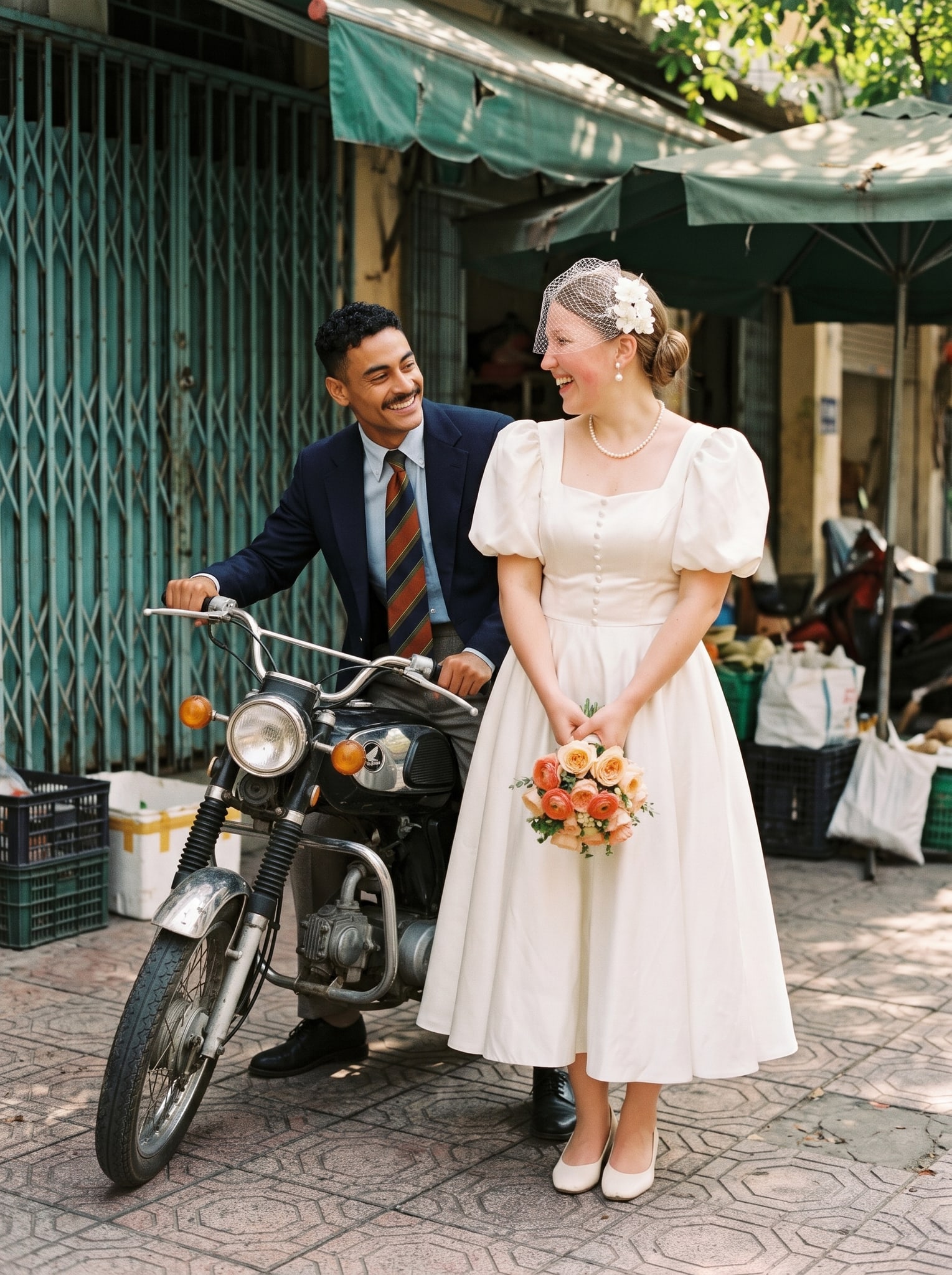
The Hanoi Opera House is Vietnam's most photographed colonial building. Tour buses arrive 10 a.m.–4 p.m.; selfie groups cluster on the front steps all day. We've learned that 6–7 a.m. and after 6 p.m. offer near-empty façades. On weekends, even early mornings fill by 7:30 a.m., so we book Friday or Tuesday shoots when possible. Our photographers arrive 30 minutes early to scope lighting and confirm the street barriers (construction or events shift weekly). The 15-minute golden window after sunset—when the building's exterior lights are soft and foot traffic has thinned—is our backup slot if morning weather fails.
What permits or permissions do we actually need to shoot there?
We don't need a permit to photograph the Opera House exterior from public streets or the plaza. Interior access (lobbies, staircases) requires a call to management 1–2 weeks prior; they usually grant 20–30 minute access for couples if we book a small time slot. Police occasionally ask to see ID if they notice professional gear, but a simple explanation that we're shooting a couple's photos has always resolved this. We keep a letter from our studio (in Vietnamese and English) stating the shoot date, couple names, and locations—this speeds up any checks. Never claim you're a tourist if stopped; honesty and a calm tone work.
How far in advance do we actually book Opera House time slots?
Popular dates (October–November, March–April, weekends) book 4–8 weeks ahead. We reserve specific 45-minute windows with our preferred photographer to guarantee he's available and has scouted the light forecast. Last-minute couples (1–2 weeks out) can often shift to a weekday or shoulder-season date if a prime slot is gone. We ask new clients their top three location choices so we can pivot if Opera House is full. Rainy days are rare blockers—we'll reschedule once, but rain on the Opera House façade can actually create moody, dramatic shots if the couple agrees.
See packages and prices on vietnamphotoshoot.com
What does a typical morning shoot at Opera House look like, hour by hour?
5:45 a.m.: Our team meets the couple at the studio or their hotel for final hair and makeup (or we do it on-site if they've booked makeup and hair at your hotel). We confirm the weather forecast and review poses.
6:15 a.m.: We arrive at the Opera House. The street cleaners are still working; foot traffic is minimal. Our photographer tests light angles and adjusts the backup plan if clouds block sun.
6:30–7:15 a.m.: Core photoshoot. We use 2–3 nearby angles: main façade, side entrance, and the plaza steps. Few tourists interfere.
7:20 a.m.: Bus tours start arriving; we wrap or move to a secondary nearby venue (Hoan Kiem Lake is 300 meters away).
7:30–8:30 a.m. (optional): Second location shoot—lake walk, French Quarter café, or Hanoi street corner—while light is still soft.
9 a.m.: Couple heads to breakfast; we begin editing a preview gallery.
We've found this rhythm keeps couples relaxed and guarantees 200–300 usable shots before the crowds arrive. Couples often say the quiet morning energy makes poses feel natural rather than rushed.
How do Opera House crowds compare to other Hanoi pre-wedding venues, and which should you choose?
| Venue | Peak crowd times | Best shoot window | Who it's for | Notes |
|---|---|---|---|---|
| Opera House façade | 10 a.m.–5 p.m. | 6–7 a.m. or after 6 p.m. | Classic, iconic couples | Permits easy; exterior only. Interior requires advance notice. |
| Hoan Kiem Lake | 7 a.m.–6 p.m. (constant foot traffic) | 5:30–6:30 a.m. or dusk | Nature-loving, romantic pairs | Free, public; always some joggers; misty mornings are dreamy. |
| French Quarter streets | 9 a.m.–9 p.m. | 6:30–8 a.m. weekdays | Couples wanting urban texture | Café crowds increase after 8 a.m.; fewer tourists before breakfast rush. |
| Ninh Binh limestone | 7 a.m.–5 p.m. (tour boats everywhere) | Early dawn or late afternoon | Adventure-seeking couples | 90 minutes from Hanoi; remote feel if you time it right; special concept shoot base. |
| Old Quarter hidden lanes | 10 a.m.–4 p.m. | 6:30–8 a.m. or 5:30–7 p.m. | Couples seeking local texture | Fewer Western tourists; scooters are constant; we scout safe, photogenic alleys. |
Couples often bundle Opera House (30 min) with Hoan Kiem Lake (45 min) and a French Quarter café (30 min) into a single pre-wedding photoshoot session—it keeps energy high, gives us three distinct backdrops, and avoids the crowd squeeze of staying at one venue too long.
What time of year should you avoid, and when do we actually see fewer crowds?
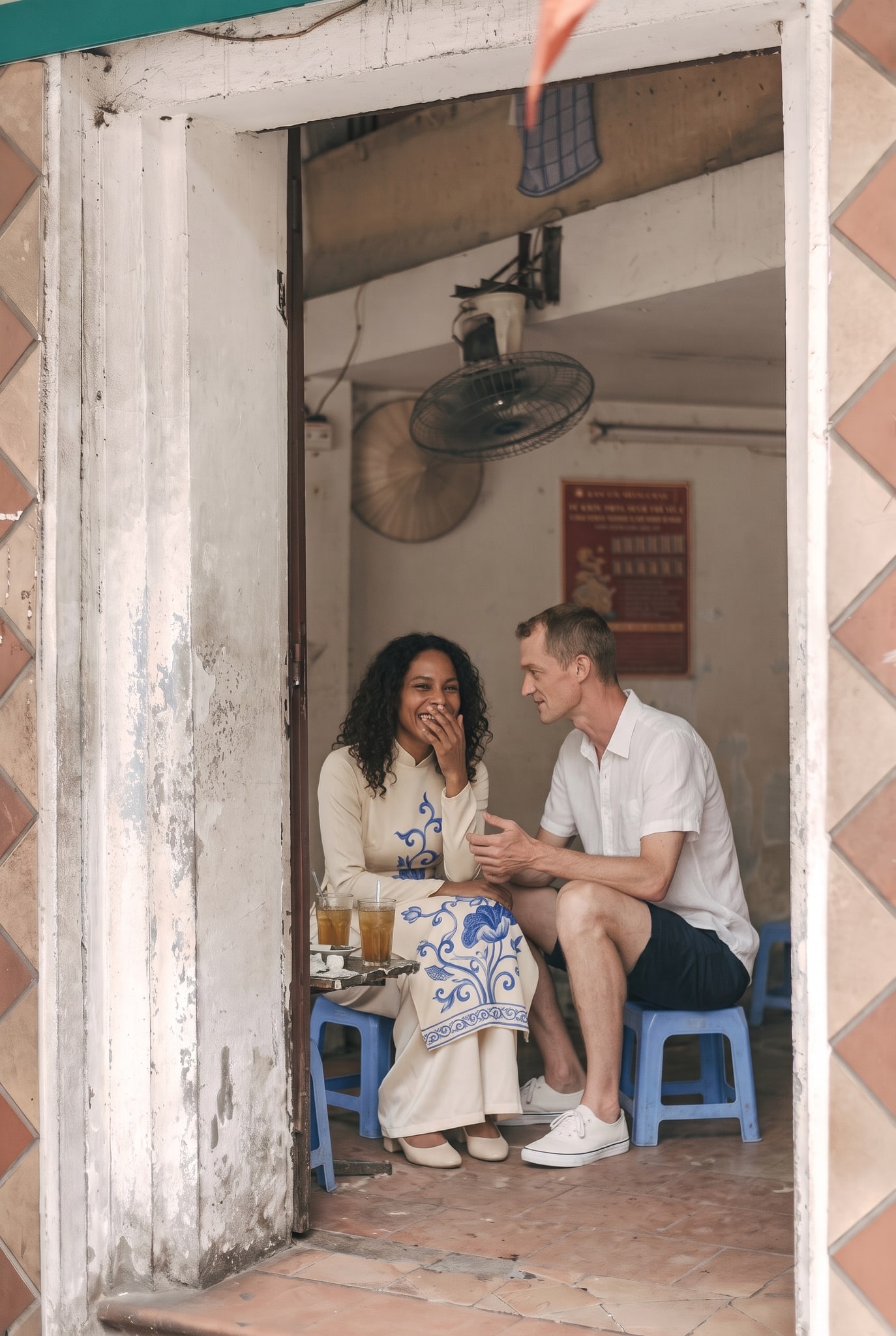
October–November and March–April are peak. Tour groups are heaviest on weekends and public holidays (Tet, National Day). We recommend couples shoot on Tuesday–Thursday in May, June, or September for genuine solitude—weather is warm, light is still good, and tourist volume drops 30–40%. July–August brings humidity and afternoon storms; we still shoot then (rain creates mood), but morning-only sessions are more reliable. January–February (post-Tet) is surprisingly quiet at the Opera House; couples shifting their plans here often find last-minute availability. Rainy days often gift us empty plazas—many couples see rain as a problem, but our stylists and photographers treat it as a creative asset (moody reflections, soft light, fewer onlookers).
How do we handle bad weather or last-minute Opera House closures?
We've had the Opera House close twice in five years (once for a state event, once for emergency repairs). We always have a backup location list: the nearby old post office (French Quarter), Lake Hoan Kiem's quieter north shore, or a rooftop in the French Quarter. If weather turns on shoot day, we either reschedule (most couples agree to one reschedule), or pivot to indoor venues—a boutique hotel lobby, a café with character, or the Cáo Studio space itself for a styled session. We message clients by 5:30 a.m. on shoot day if we're moving; most couples appreciate the flexibility. Rain has never killed a session; it's just changed the mood.
What should you check before booking an Opera House pre-wedding shoot with us?
Before you commit:
- Confirm your shoot date 4–6 weeks ahead (popular dates fill fast).
- Decide if you want exterior-only or if interior access is worth the logistics.
- Check the weather forecast 7 days prior; we'll suggest a backup date if rain is 70%+ likely.
- Confirm hair and makeup timing—on-site (at your hotel or ours) or at the studio before we head to Opera House.
- Ask us if a secondary location is included or costs extra (most couple photoshoot packages include 2–3 venues; ask to clarify).
- Request a location scout photo if this is your first time; our team sends a phone-photo preview of exact angles a few days before.
On shoot day:
- Wear comfortable shoes (cobblestones around Opera House are uneven).
- Bring a light layer—early morning is cool, especially in winter.
- Have your ID ready (rarely checked, but legal requirement).
- Don't bring valuables; keep one person watching bags while posing.
- Expect 2–3 hours total (including travel and setup); plan breakfast after.
What does a typical morning shoot at Opera House look like, hour by hour?
5:45 a.m.: Our team meets the couple at the studio or their hotel for final hair and makeup (or we do it on-site if they've booked makeup and hair at your hotel). We confirm the weather forecast and review poses.
6:15 a.m.: We arrive at the Opera House. The street cleaners are still working; foot traffic is minimal. Our photographer tests light angles and adjusts the backup plan if clouds block sun.
6:30–7:15 a.m.: Core photoshoot. We use 2–3 nearby angles: main façade, side entrance, and the plaza steps. Few tourists interfere.
7:20 a.m.: Bus tours start arriving; we wrap or move to a secondary nearby venue (Hoan Kiem Lake is 300 meters away).
7:30–8:30 a.m. (optional): Second location shoot—lake walk, French Quarter café, or Hanoi street corner—while light is still soft.
9 a.m.: Couple heads to breakfast; we begin editing a preview gallery.
We've found this rhythm keeps couples relaxed and guarantees 200–300 usable shots before the crowds arrive. Couples often say the quiet morning energy makes poses feel natural rather than rushed.
See packages and prices on vietnamphotoshoot.com
Ready to shoot at Hanoi Opera House?
Couples interested in Opera House photos should reach out to our Hanoi team to check availability. We'll confirm your ideal date, walk you through the morning itinerary, and coordinate hair, makeup, and any secondary venues. Most couples pair Opera House with nearby couple photoshoot packages that include a second or third location—ask us how to bundle them into one seamless session. If you're considering a special concept (vintage inspired, fashion-focused, or romantic), we can weave that into the Opera House backdrop, too.
FAQ
Do we need a permit to photograph at Hanoi Opera House?
No permit is required for exterior photos on public streets or the plaza. Interior access (lobbies, staircases) requires advance coordination with management—we handle this 1–2 weeks prior. Police occasionally check ID if they see professional gear, but a calm explanation and our studio letter resolve it instantly.
Why do you shoot at 6 a.m. instead of midday?
Tour buses arrive 10 a.m.–4 p.m., flooding the plaza with 50+ people per hour. Early morning offers 15–30 minute windows of near-empty spaces, soft directional light, and zero distractions for posing. Golden hour after 6 p.m. works too, but the Opera House's exterior lights kick in by 6:45 p.m., changing the mood.
What if it rains on our shoot day?
We reschedule once for free if rain is 70%+ likely 7 days prior. If light rain occurs, we sometimes continue (moody reflections on wet pavement look stunning). Heavy rain bumps the couple to a backup indoor venue or a rescheduled date—most couples choose to reschedule rather than rush.
Can we shoot interior spaces inside the Opera House?
Yes, but it requires booking management 1–2 weeks ahead. We call them, explain the couple's shoot date, and request 20–30 minutes access. They usually grant this for couples; it allows lobby and staircase photos. Exterior-only shoots never need approval.
How many locations can we fit into a pre-wedding session?
Typically 2–3 locations in a 2–3 hour session. We pair Opera House (30 min) with Hoan Kiem Lake (45 min) and a French Quarter café or street (30 min). More locations dilute time per venue; we advise couples to go deep at 2–3 places rather than shallow at five.
What's the difference between weekday and weekend shoots at Opera House?
Weekdays (Tue–Thu) stay quiet until 8 a.m.; weekends fill by 7:30 a.m. We often recommend couples shift to a Tuesday or Wednesday if they're flexible—same light quality, fewer interruptions, and easier rescheduling if weather shifts.
Pre-Wedding & Elopement
Inclusions, prices and booking are on our booking site.
FAQ
Do we need a permit to photograph at Hanoi Opera House?
No permit is required for exterior photos on public streets or the plaza. Interior access (lobbies, staircases) requires advance coordination with management—we handle this 1–2 weeks prior. Police occasionally check ID if they see professional gear, but a calm explanation and our studio letter resolve it instantly.
Why do you shoot at 6 a.m. instead of midday?
Tour buses arrive 10 a.m.–4 p.m., flooding the plaza with 50+ people per hour. Early morning offers 15–30 minute windows of near-empty spaces, soft directional light, and zero distractions for posing. Golden hour after 6 p.m. works too, but the Opera House's exterior lights kick in by 6:45 p.m., changing the mood.
What if it rains on our shoot day?
We reschedule once for free if rain is 70%+ likely 7 days prior. If light rain occurs, we sometimes continue (moody reflections on wet pavement look stunning). Heavy rain bumps the couple to a backup indoor venue or a rescheduled date—most couples choose to reschedule rather than rush.
Can we shoot interior spaces inside the Opera House?
Yes, but it requires booking management 1–2 weeks ahead. We call them, explain the couple's shoot date, and request 20–30 minutes access. They usually grant this for couples; it allows lobby and staircase photos. Exterior-only shoots never need approval.
How many locations can we fit into a pre-wedding session?
Typically 2–3 locations in a 2–3 hour session. We pair Opera House (30 min) with Hoan Kiem Lake (45 min) and a French Quarter café or street (30 min). More locations dilute time per venue; we advise couples to go deep at 2–3 places rather than shallow at five.
What's the difference between weekday and weekend shoots at Opera House?
Weekdays (Tue–Thu) stay quiet until 8 a.m.; weekends fill by 7:30 a.m. We often recommend couples shift to a Tuesday or Wednesday if they're flexible—same light quality, fewer interruptions, and easier rescheduling if weather shifts.
More from the team
Elopement Photos at Mui Ne Fishing Village: What We Shoot
Mui Ne fishing village offers intimate sand dunes, colourful boats, and golden-hour light that feel timeless for elopement photography. We've shot dozens of couples there—here's what we learned.
Pre-wedding photoshoot in Hue in November: weather, light and crowds
November in Hue is one of Vietnam's most predictable months for outdoor photography. We've run dozens of sessions there and want to share what actually happens on the ground—the light, the crowds, and the decisions we make hour by hour.
Pre-wedding photoshoot in Hue in August: weather, light and crowds
August in Hue brings intense heat and unpredictable afternoon rain. We've run dozens of pre-wedding shoots there and learned what time of day works, which locations stay dry longest, and how to keep your hair and makeup perfect in the humidity.