 Cáo Studio
Home › Blog › Pre-Wedding & Elopement
Avoid Da Lat Sunflower Crowds: Wedding Photo Timing Guide
By the Cáo Studio team · Hanoi & Saigon · 2026-11-02
Da Lat's rolling sunflower fields—especially along roads near Thung Lũng Tình Yêu and Langbian Plateau—draw peak crowds between 6–10 a.m. and 3–5 p.m., turning an intimate pre-wedding shoot into a photobomb gauntlet. We at Cáo Studio send our photographer and stylist 5–6 weeks ahead to map light angles, access gates, and shoulder hours (usually 11 a.m.–2 p.m., when tour buses clear). Expect a 4–5 hour session on-site; wear an áo dài or Western gown (both work, depending on your pre-wedding shoot style); bring water and a hat because midday sun is brutal. The real secret: book your session in September–October, after the summer tourist surge but when flowers still peak. Ask us for a quote on WhatsApp to lock dates early—popular time slots vanish two months ahead. Chat with us on WhatsApp
Why are peak hours (6–10 a.m., 3–5 p.m.) impossible for uncluttered Da Lat flower shots?
Tour buses and selfie-stick crowds cluster in early morning and late afternoon because light looks good and hotels push checkout/check-in times. We've arrived at 6:30 a.m. and counted 40+ tourists and 5 coach buses already parked on the shoulder. By 10 a.m., roads are clogged. At 4 p.m., the same chaos repeats as sunset hunters arrive. Our solution: shoot 11 a.m.–2 p.m., when tour groups are eating lunch and individual travelers are resting at cafés. The trade-off is harsher overhead light—we compensate with wide-brimmed hats, dappled shade from tree lines, and reflectors to bounce fill light onto your face. A mid-day session means fewer photobombs but requires careful posing and styling to avoid blown-out skin tones.
Which season gives you flower-full roads without September–October tourist surges?
Late August through mid-October is the sweet spot: flowers are dense, and peak international tourist season hasn't fully exploded yet. July is too early (flowers sparse), and November onward they fade. We book pre-wedding shoots in Da Lat for September almost exclusively because the weather is stable (cooler than summer, drier than spring), flowers are at 80–90% bloom, and the rush doesn't peak until Chinese and Korean holidays mid-month. If you're set on June or July, expect 30–40% fewer flowers on roadsides; you'll spend more time hiking to private gardens. If you book November–December, we often shift the concept to Langbian's misty tea plantations instead—equally stunning, fewer sunflowers, fresher aesthetics. Pro tip: avoid Dragon Boat Festival and Lunar New Year; Da Lat sees 5× normal foot traffic those weeks.
Should you hire a local Da Lat guide, or book direct with Cáo Studio?
We work with two trusted local guides who know which gates are open, where landowners allow access, and which roadsides are public vs. private. Hiring a guide separately costs extra, creates coordination headaches (our photographer and guide have different radio frequencies), and can mean last-minute location swaps that wreck your outfit and timing. We include location scouting and local access in pre-wedding packages—our photographer travels to Da Lat 1–2 days before your shoot to confirm roads, check flower density, and identify backup spots if rain or construction blocks primary sites. If you hire a guide independently, tell them upfront you want uncrowded corners; many default to the same three Instagram-famous spots. With Cáo, your guide and photographer are aligned on avoiding crowds from day one.
See packages and prices on vietnamphotoshoot.com
What's the real hourly breakdown of a Da Lat sunflower pre-wedding day with Cáo?
We structure sessions like this:
| Time | What happens | Why it matters |
|---|---|---|
| Hour 1 (on-site) | Arrival, wardrobe check, light meter test at first location | Stylist confirms áo dài fit in humidity; photographer checks white balance on flowers |
| Hour 2–3 | First two locations (shoulder roads or open fields) | Best light falls here; crowds still minimal before lunch |
| Hour 4 (break) | Hydrate, outfit change, lunch snack provided by us | Heat is peak; flowers still intact; tourists eating |
| Hour 5–6 | Third location (often a garden or private patch) or detail/couple closeups | Light softens; fewer foot traffic; guards/landowners less vigilant |
| Hour 7–8 | Pack, final touch-ups, depart by 4 p.m. | Avoids 4–5 p.m. tour-bus exodus; you're fresh, not exhausted |
Total on-site time: 4–5 hours. We include hair and makeup touch-ups between locations and water/snacks. You'll receive 150–250 final images (exact count depends on package), delivered within two weeks.
Which outfit choice (áo dài vs. Western gown) photographs better in crowded sunflower zones?
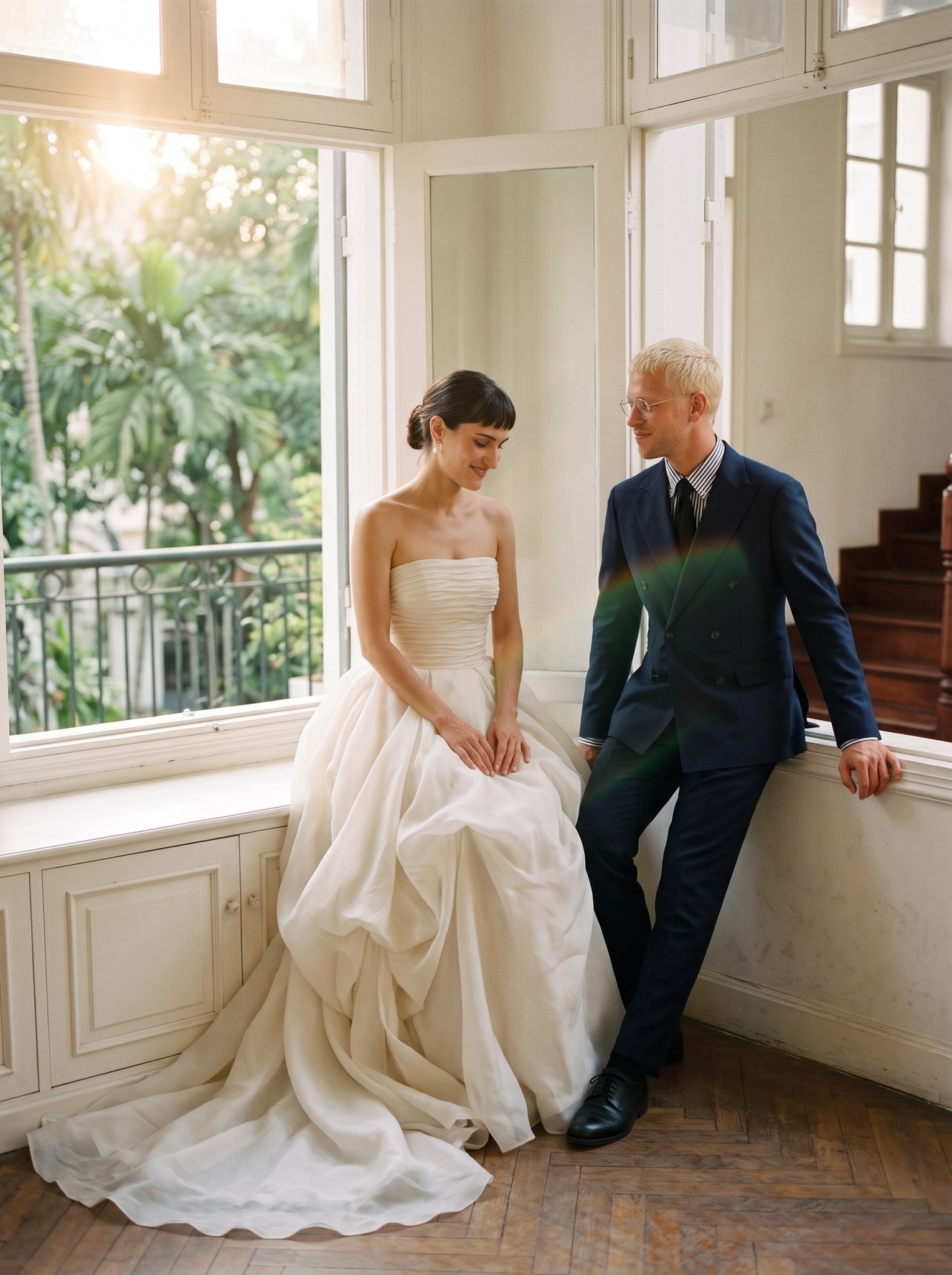
Both work—it's aesthetic, not logistics. An áo dài (traditional Vietnamese silk dress) photographs with historical gravity and draws fewer stares from passing tourists because they assume you're part of a cultural shoot, not a selfie session. A Western wedding gown stands out, which means more phone cameras aimed at you, but the contrast of formal white against golden flowers is dramatic. We lean toward áo dài for Da Lat specifically because the garment's flowing silhouette moves better through narrow farm rows, the jewel tones (emerald, sapphire, burgundy) pop against yellow flowers, and locals are less likely to interrupt. If you choose a gown, we position you in wider open fields where crowds are naturally sparser and we can shoot tighter crops to exclude bystanders. Fabric weight matters: áo dài in silk is lighter and cooler (Da Lat midday heat is 28–32°C); gowns in satin or organza can feel heavy in humidity. Ask us which suits your body type and wedding timeline on WhatsApp.
How do you actually scout and lock down uncrowded access to private and public sunflower roads?
Our photographer visits Da Lat 5–6 weeks before your shoot date. She walks or drives 4–5 candidate roads between 11 a.m.–2 p.m. (your booked time), photographs light quality, counts foot traffic, and notes which sections have fences or "private garden" signs. We then confirm access with local residents or garden owners by leaving a small note and returning the next day for permission. For public roads (government-owned, no-fence stretches), we check with the District Tourism Office for any construction or closures. We create a location map with three primaries and two backups, ranked by crowd risk and light angle. If weather turns bad, we shift to backup within the hour—you don't wait. Road access can change (flooding, local events, new construction), so we confirm 72 hours before your date by phone call with our local contact. We've had to pivot twice in five years due to a wedding happening in a rented field and a landslide blocking a road; backup sites kept shoots on track.
What to check before you book your Da Lat pre-wedding shoot
- Season: Is your date within Sept–Oct, or are you flexible? July–Aug and Nov+ require different flower expectations.
- Time commitment: Can you spend 4–5 hours on-site? Shorter sessions mean fewer locations and tighter composition; longer ones are exhausting in Da Lat heat.
- Outfit fit: Will your áo dài or gown breathe in 28–30°C humidity? Test it before arrival. We provide a cooling tent between shots.
- Physical ability: Sunflower fields have uneven ground, narrow paths, and hills. Wear comfortable shoes; we walk 1–2 km total across locations.
- Backup dates: Popular weeks fill 8–10 weeks out. If Sept 15–30 is booked, can you move to early Oct or late Aug?
- Transport: We arrange transportation to/from Hanoi or Saigon via partner (ask for quote). You don't drive yourself; focus on looking calm.
Ask us which pre-wedding package matches your vision. For Hanoi-based clients, we handle travel logistics from our Hanoi studio; Saigon clients depart from our Saigon location. Same professional crew either way.
FAQ
Can you shoot Da Lat sunflowers year-round, or only Sept–Oct?
Flowers bloom June–October, but Sept–Oct offers peak density, stable cool weather, and fewer crowds. June–Aug flowers are sparse (30–50% bloom). Nov onward, blooms fade to 10–20%. We shoot in off-season only if clients insist; expect fewer flower-focused frames and a shift to landscape or tea-garden concepts instead.
What happens if rain hits your Da Lat pre-wedding day?
Da Lat rains are usually brief afternoon showers, not all-day storms. We monitor forecasts daily and shift to backup indoor locations (old villas, market alleyways, café interiors) or reschedule 48 hours if meteorologists predict sustained downpour. Your áo dài or gown may get wet; we bring waterproof covers and dry cloths. You're never stranded—backup dates are built into contracts.
Do I need a permit to shoot in Da Lat sunflower fields?
Public roadsides don't require permits. Private gardens do—we handle landowner permission as part of our location scouting. If you hire an independent photographer, you must contact garden owners yourself. We include this in all pre-wedding packages; no surprise fees or access denials.
How many final photos do we receive from a 4–5 hour Da Lat session?
150–250 edited images, depending on package and number of outfit changes. Budget days (fewer locations, one outfit) yield ~120 keepers. Premium days (3+ locations, two outfits, detail shots) deliver 200–250. All are color-graded and retouched; delivery is within two weeks of shoot.
Can we add a second day in Da Lat (e.g., misty morning in tea plantations + afternoon sunflowers)?
Yes. We offer extended pre-wedding shoots that combine Da Lat locations—misty Langbian tea gardens at dawn, sunflower roads mid-morning–afternoon, and old-town Dalat street corners at dusk. Two-day shoots are popular for couples wanting maximum variety. Ask us for a quote on WhatsApp; pricing is per location and photographer hours.
Pre-Wedding & Elopement
Inclusions, prices and booking are on our booking site.
FAQ
Can you shoot Da Lat sunflowers year-round, or only Sept–Oct?
Flowers bloom June–October, but Sept–Oct offers peak density, stable cool weather, and fewer crowds. June–Aug flowers are sparse (30–50% bloom). Nov onward, blooms fade to 10–20%. We shoot in off-season only if clients insist; expect fewer flower-focused frames and a shift to landscape or tea-garden concepts instead.
What happens if rain hits your Da Lat pre-wedding day?
Da Lat rains are usually brief afternoon showers, not all-day storms. We monitor forecasts daily and shift to backup indoor locations (old villas, market alleyways, café interiors) or reschedule 48 hours if meteorologists predict sustained downpour. Your áo dài or gown may get wet; we bring waterproof covers and dry cloths. You're never stranded—backup dates are built into contracts.
Do I need a permit to shoot in Da Lat sunflower fields?
Public roadsides don't require permits. Private gardens do—we handle landowner permission as part of our location scouting. If you hire an independent photographer, you must contact garden owners yourself. We include this in all [pre-wedding packages](/go/pre-wedding-photoshoot); no surprise fees or access denials.
How many final photos do we receive from a 4–5 hour Da Lat session?
150–250 edited images, depending on package and number of outfit changes. Budget days (fewer locations, one outfit) yield ~120 keepers. Premium days (3+ locations, two outfits, detail shots) deliver 200–250. All are color-graded and retouched; delivery is within two weeks of shoot.
Can we add a second day in Da Lat (e.g., misty morning in tea plantations + afternoon sunflowers)?
Yes. We offer extended [pre-wedding shoots](/go/pre-wedding-photoshoot) that combine Da Lat locations—misty Langbian tea gardens at dawn, sunflower roads mid-morning–afternoon, and old-town Dalat street corners at dusk. Two-day shoots are popular for couples wanting maximum variety. Ask us for a quote on WhatsApp; pricing is per location and photographer hours.
More from the team
Boho pre-wedding photoshoot in Vietnam: Hanoi, Saigon, Hoi An
Boho pre-wedding shoots mix romantic, free-spirited aesthetics with Vietnam's landscapes and heritage sites. We run full-day sessions in three cities, handling styling, makeup, location scouts and edits.
Avoid crowds at Hoang Su Phi rice terraces: timing for wedding shoots
Hoang Su Phi's terraced landscape draws couples and tour buses in equal measure. We show how to shoot there alone, when to arrive, and what to arrange with us before you go.
Photography rules at Con Dao beaches: permits, drones and what to check
Con Dao's beaches demand prep before you shoot—permits, drone zones and tide timing all affect your day. We share what the Cáo Studio team verifies on every booking.