 Cáo Studio
Home › Blog › Pre-Wedding & Elopement
Ba Son Bridge wedding photos: best time of day and light
By the Cáo Studio team · Hanoi & Saigon · 2026-11-02
Ba Son Bridge (Cầu Ba Sơn), the pale cable-stayed span crossing the Red River near Long Biên, offers couples clean lines and water reflections that frame intimacy well. Best light lands between 16:00–18:30 (late afternoon into golden hour) when sun rakes the cables at a low angle, softening shadows on faces; midday (11:00–13:00) creates harsh overhead contrast that forces us to pose couples in shade. Sessions run 60–90 minutes; Cáo Studio books the bridge as part of pre-wedding photoshoot packages, often paired with Old Quarter backstreets or Hoan Kiem Lake. Avoid rainy season (May–August) when humidity dulls colors, and book weekday mornings if you want the bridge nearly empty—weekends draw crowds. Ask us for a quote on WhatsApp; we'll outline light windows and backup indoor spots in your package. Chat with us on WhatsApp
Why does afternoon light flatten the bridge while golden hour sculpts it?
Midday sun hits Ba Son Bridge directly overhead, bleaching cables and pier shadows into flat gray zones that don't separate the couple from the structure. Golden hour (16:00–18:30) swings the sun low and warm from the west; light wraps the steel in amber tones, creates depth in the water below, and casts the couple's skin in flattering warmth. We position couples facing east (toward the city) to backlight hair and shoulders, which adds a halo effect that photographer Tom and I pioneered on this bridge in early 2025. The result is a three-dimensional frame, not a postcard snapshot. Avoid shooting into the sun at noon—it washes detail.
Which direction should we face to avoid blown-out water in the background?
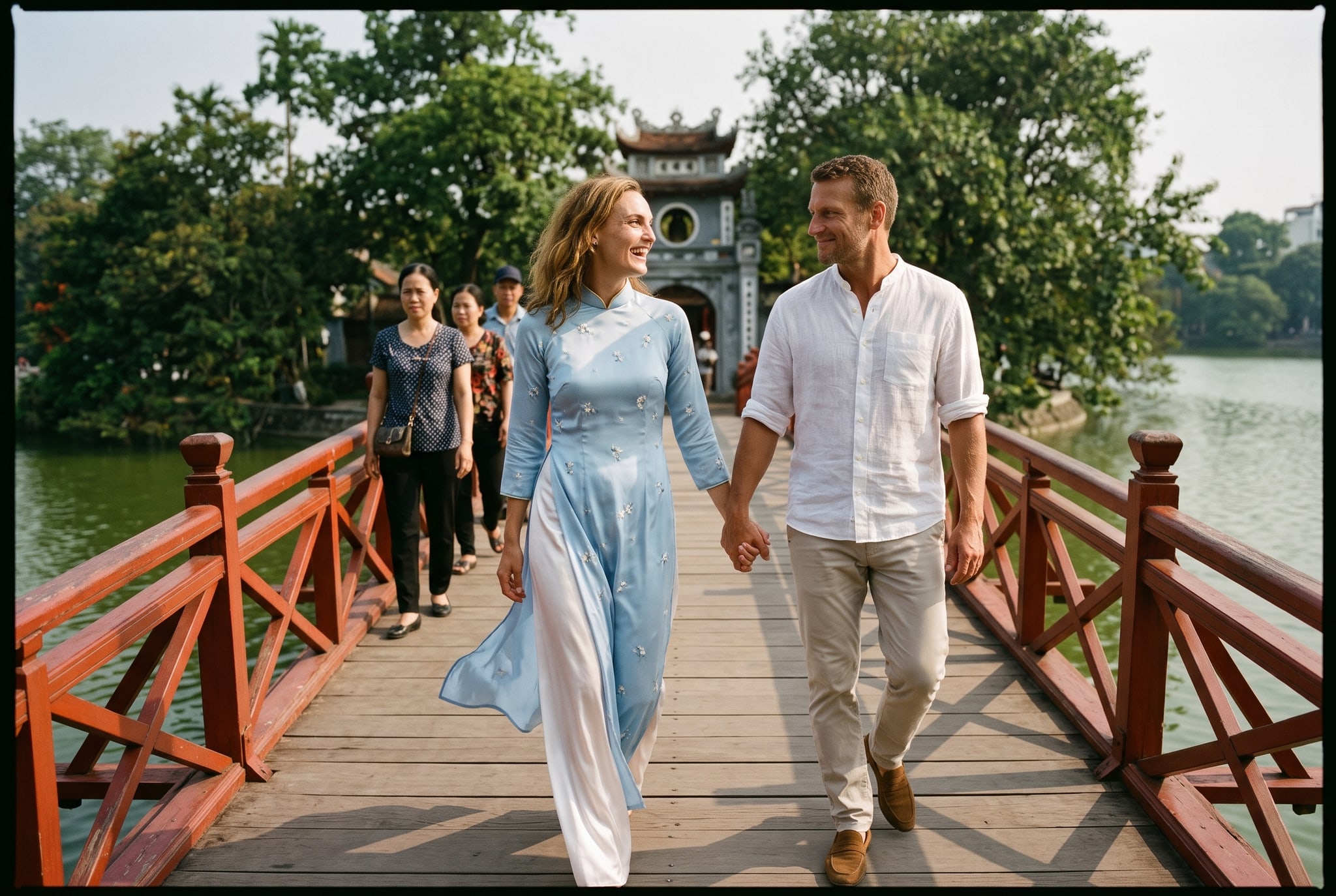
Positioning matters more than we initially thought. Couples facing north (upstream toward the older Long Biên Bridge) see water reflecting sky, which can blow out in bright conditions and steal focus. Facing southeast (downriver toward the Saigon skyline) gives us darker water that reads as a solid frame and lets skin tones pop. We shoot in manual mode, metering off the couple's face, then let the water go dark—it reads as "depth" rather than "underexposed." On cloudy days, we flip our strategy: we move to the south side of the bridge where the couple can face open sky, and we use reflector fills to lift shadow under chins. Positioning east means we're shooting into afternoon light, which requires us to be picky about cloud cover.
How do we handle the bridge's metal cables without cluttering the frame?
Those cables are a gift and a curse. Tight framing (shoulders and faces only) loses the bridge identity; wide framing (full bridge span) turns cables into a pattern that competes with the couple. We use a decision tree we've built: if the couple has bold color (red áo dài, jewel-tone suits), we go wide and let the cables echo that richness—cables become a texture, not a distraction. If they wear soft pastels or neutral tones, we frame tighter and use shallow depth-of-field to blur cables in the background; our photographers shoot at 85 mm or 135 mm focal length on full-frame to collapse that geometry. On overcast days when cables lack definition, we go wider because there's no contrast clash. We took this approach with a French-Vietnamese couple in February 2026 who wore blush and cream áo dài; the wide frame with soft cables created a romantic, airy feel.
| Light condition | Time window | Best pose direction | Framing | Who it's for |
|---|---|---|---|---|
| Golden hour (warm, low) | 16:00–17:30 | East or northeast | Wide (full bridge visible) | Couples wanting romantic warmth, dramatic cables |
| Afternoon (bright, direct) | 13:00–15:00 | North or northeast, in shadow | Tight (shoulders up) | Couples in bold áo dài, strong color contrast |
| Overcast (flat, cool) | 09:00–17:00 | Any direction | Wide or medium (cables soften) | Couples wanting soft, even skin tones |
| Early morning (rising sun) | 06:30–08:00 | West | Tight or silhouette | Couples seeking solitude, sunrise symbolism |
What problems show up on the day that we didn't expect?
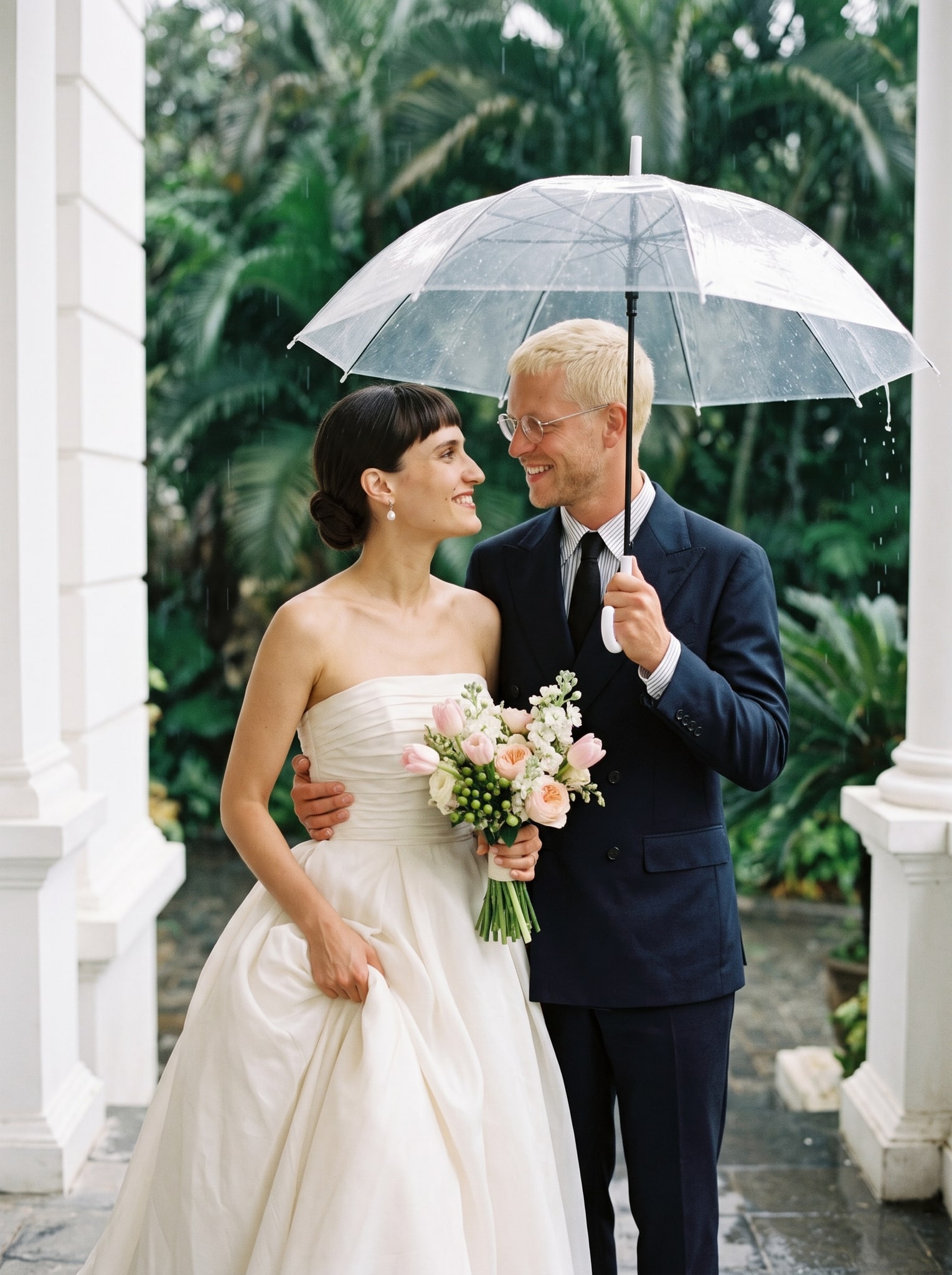
Traffic noise and construction dust are real. Early 2026, we shot a couple at 15:00 on a Tuesday, and a crane barge moved upstream for 20 minutes—the couple stayed patient, but we lost our shot window. Now we scout the bridge on the same day of the week and time as the booking, and we ask our Hanoi studio to check the river authority's work calendar. Reflections from opposite buildings (especially the Finance Ministry complex south of the bridge) can cast cool blue tones on water that clash with golden-hour warmth; we shift the couple 10–15 meters upstream or use a polarizing filter to reduce glare. Tourists cluster at the bridge midday; we book early morning (06:30–07:30) for quiet, but light is weak and cool-toned, so we only recommend this for couples wanting a serene, intimate mood, not high drama. Humidity in late afternoon (July–September) causes condensation on our lenses if we're moving between air-conditioned transport and open riverside; we carry lens caps and wait 60 seconds after arriving to let glass acclimate.
See packages and prices on vietnamphotoshoot.com
How do we choose between Ba Son and other Hanoi wedding photo locations?
Ba Son Bridge suits couples seeking modern geometry and water reflections; it's stark and clean, almost architectural. If you want color and street life, Old Quarter alleyways near Hang Dao offer warmer chaos. If you want natural, open space, Hoan Kiem Lake at sunrise gives softer, greener energy. For áo dài specifically, ao dai photoshoot sessions often use Ba Son because the bridge's pale cables create a neutral backdrop that lets the silk and embroidery breathe—the costume becomes the color story, not competing with scenery. We book Ba Son most often for couples mixing modern dress with tradition, or couples who've researched the bridge in advance and requested it. If indecision is your issue, our WhatsApp consultations include a 10-minute chat where we show you phone photos of each location in the light window you're booking, and you pick on the spot. Ba Son is best for confident couples; it demands strong composition, not rescue by busy scenery.
What to check before you book your Ba Son Bridge session
- Weather and season. Rainy season (May–August) means gray skies and humidity; dry season (November–March) gives consistent golden light. Check the forecast 3 days before and text us if rain is likely—we have covered fallback spots in the Old Quarter.
- Time of day and light window. Tell us your availability, and we'll show you what light looks like in that window. If you can only come at noon, we'll frame tight and use building shade; don't expect the romantic glow of golden hour.
- Outfit and color. Send us photos of what you're wearing. If it's a red or jewel-tone áo dài, we'll frame wide. If it's white or cream, we'll plan for tighter framing and soft cables. If you're undecided, we can discuss ao dai photoshoot styling or book a separate makeup and hair session nearby to test the look.
- Crowd tolerance. Weekdays are quieter; weekends see tourists. Some couples love the energy; others hate photo-bombers. Be honest, and we'll schedule accordingly.
- River conditions. High water (monsoon) and low water (dry season) change reflections. Neither is "wrong," but they look different in shots. We'll mention it in the pre-shoot chat.
FAQ
What is the best time of year to shoot at Ba Son Bridge?
Dry season (November–March) gives the most consistent light and clearest skies. April–May can work if you avoid afternoon heat. Rainy season (June–September) is unpredictable; humidity dulls color, and overcast light is flat. We recommend booking outside the monsoon.
Can we shoot at Ba Son Bridge at sunset, or is golden hour earlier?
Golden hour (the period of warm, low-angle light) occurs 60–90 minutes before sunset, roughly 16:00–17:30 in winter or 16:30–18:00 in summer. Sunset itself (17:30–18:30 winter) creates silhouettes; some couples love that mood. Direct sunset often leads to lens flare and underexposed faces. Ask us which works for your outfit.
How long is a typical Ba Son Bridge session with Cáo Studio?
Most pre-wedding photoshoot sessions run 60–90 minutes. The bridge itself is the main location; we often add 20–30 minutes in the Old Quarter or at a nearby café if your package includes multiple spots. Sessions include outfit changes and position direction from our photographer.
What if the weather is bad on the day of our shoot?
We monitor forecasts 3 days in advance and chat with you by WhatsApp. If rain is certain, we reschedule or pivot to indoor fallback locations (Old Quarter covered arcades, hotel interiors, etc.). Light conditions change daily; we adapt framing and angle on the day based on what's actually happening.
Do we need a permit or permission to shoot at Ba Son Bridge?
No formal photo permit is required for casual wedding shoots at Ba Son. We avoid blocking traffic and stay off roadways; if large crowds gather or a film crew is present, we relocate. Our Hanoi studio knows the bridge and current access conditions, so we guide you on the ground.
How do we choose between golden hour at Ba Son and an earlier afternoon slot?
Golden hour gives warmth, drama, and cable definition—ideal if you want a moody, romantic frame. Afternoon (13:00–15:00) offers bright, energetic light and lets us shoot wider—good if you want color pop and a modern feel. Ask us for sample phone photos of both in your outfit, and you decide.
Pre-Wedding & Elopement
Inclusions, prices and booking are on our booking site.
FAQ
What is the best time of year to shoot at Ba Son Bridge?
Dry season (November–March) gives the most consistent light and clearest skies. April–May can work if you avoid afternoon heat. Rainy season (June–September) is unpredictable; humidity dulls color, and overcast light is flat. We recommend booking outside the monsoon.
Can we shoot at Ba Son Bridge at sunset, or is golden hour earlier?
Golden hour (the period of warm, low-angle light) occurs 60–90 minutes before sunset, roughly 16:00–17:30 in winter or 16:30–18:00 in summer. Sunset itself (17:30–18:30 winter) creates silhouettes; some couples love that mood. Direct sunset often leads to lens flare and underexposed faces. Ask us which works for your outfit.
How long is a typical Ba Son Bridge session with Cáo Studio?
Most [pre-wedding photoshoot sessions](/go/pre-wedding-photoshoot) run 60–90 minutes. The bridge itself is the main location; we often add 20–30 minutes in the Old Quarter or at a nearby café if your package includes multiple spots. Sessions include outfit changes and position direction from our photographer.
What if the weather is bad on the day of our shoot?
We monitor forecasts 3 days in advance and chat with you by WhatsApp. If rain is certain, we reschedule or pivot to indoor fallback locations (Old Quarter covered arcades, hotel interiors, etc.). Light conditions change daily; we adapt framing and angle on the day based on what's actually happening.
Do we need a permit or permission to shoot at Ba Son Bridge?
No formal photo permit is required for casual wedding shoots at Ba Son. We avoid blocking traffic and stay off roadways; if large crowds gather or a film crew is present, we relocate. Our Hanoi studio knows the bridge and current access conditions, so we guide you on the ground.
How do we choose between golden hour at Ba Son and an earlier afternoon slot?
Golden hour gives warmth, drama, and cable definition—ideal if you want a moody, romantic frame. Afternoon (13:00–15:00) offers bright, energetic light and lets us shoot wider—good if you want color pop and a modern feel. Ask us for sample phone photos of both in your outfit, and you decide.
More from the team
Boho pre-wedding photoshoot in Vietnam: Hanoi, Saigon, Hoi An
Boho pre-wedding shoots mix romantic, free-spirited aesthetics with Vietnam's landscapes and heritage sites. We run full-day sessions in three cities, handling styling, makeup, location scouts and edits.
Avoid crowds at Hoang Su Phi rice terraces: timing for wedding shoots
Hoang Su Phi's terraced landscape draws couples and tour buses in equal measure. We show how to shoot there alone, when to arrive, and what to arrange with us before you go.
Photography rules at Con Dao beaches: permits, drones and what to check
Con Dao's beaches demand prep before you shoot—permits, drone zones and tide timing all affect your day. We share what the Cáo Studio team verifies on every booking.