 Cáo Studio
Home › Blog › Vacation & Solo Photoshoot
Ba Vi National Park Photoshoot: What We Learned Shooting Here
By the Cáo Studio team · Hanoi & Saigon · 2026-11-02
Ba Vi National Park is a 2,100-hectare nature reserve northwest of Hanoi, known for dense vegetation, limestone peaks and mist that rolls in before noon. Cáo Studio has shot couple and family sessions there since 2023, and we've found that half-day shoots (3–4 hours) work best because the light fades fast and trails get muddy after rain. Most guests book our vacation photoshoot package, which includes 2–3 outfit changes, a driver and one of our Hanoi photographers; we recommend arriving by 07:00 to catch morning mist and avoid afternoon heat. The forest canopy creates soft, diffused light perfect for romantic or editorial looks, but trails are steep and worn, so bring sturdy footwear, check the weather forecast the night before, and tell us if you have mobility concerns when you message us on WhatsApp—we'll scout an easier route or suggest a backup date. Chat with us on WhatsApp | See packages and prices on vietnamphotoshoot.com
Why does the mist matter more than the views?
Photographers come to Ba Vi expecting to see the whole valley. What we see instead is the mist working harder than the vista. By 09:30, fog moves in thick enough to hide the peak, but that's when the magic happens for us—soft backlighting, jewel tones in the leaves, and no harsh shadows on faces. Guests who chase clear skies are usually disappointed; those who embrace the haze and bring jewel-toned ao dais or deep forest greens end up with editorial-grade frames. The mist also helps hide crowds—weekday mornings we've found the park almost empty. Conclusion: plan for mist, not panoramas, and time your shoot to start before 08:00.
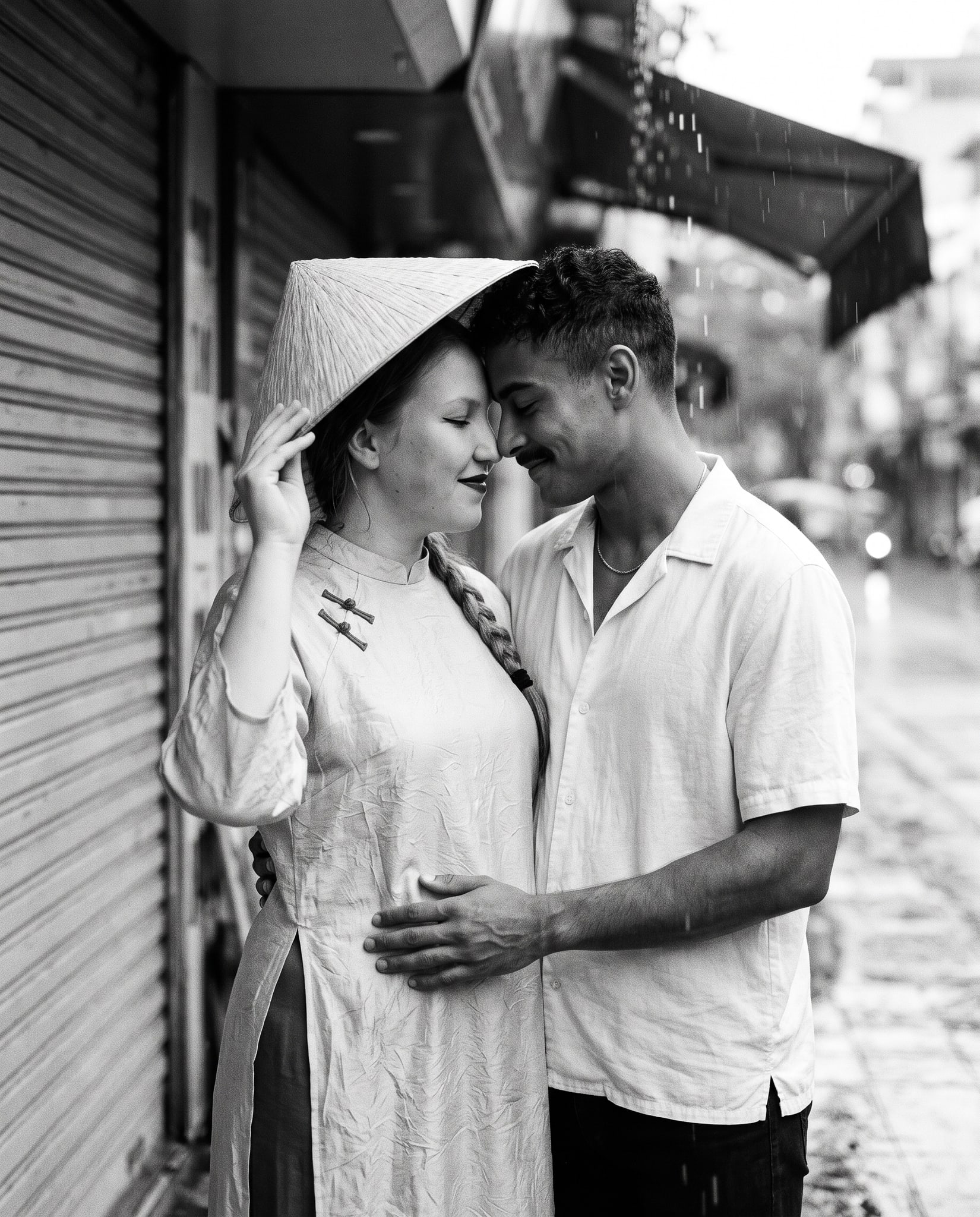
How do outfit changes work on steep terrain?
We've learned this the hard way. The park has no changing rooms, no restrooms past the entrance, and trails are rocky. On a shoot with three outfit changes, we pack a pop-up privacy tent (2 kg, folds into our kit bag), bring a thermos of water, and identify a sheltered spot near the first viewpoint before the shoot begins. One session we scheduled four outfit changes and spent 20 minutes hiking between each location—guests were exhausted, light changed, and the photographer missed the good window. Now we limit steep-forest shoots to two outfit changes maximum, and reserve the third for a flatter zone near the park entrance or a nearby tea plantation. If you're booking our vacation photoshoot package, tell us your outfit ideas early—we'll advise on weight, materials (cotton ao dai breathes better than silk in humidity) and logistics. Conclusion: fewer outfit changes, heavier prep, sharper results.
What do we tell guests about the wet season?
June through September, the park gets afternoon downpours. We've shot in light drizzle and produced moody, atmospheric frames; we've also had shoots cut short by sudden rain turning trails to mud. Our rule: if rain is forecast for the afternoon, we shift the shoot to early morning only (starting 07:00, finishing by 11:00) or reschedule. We carry rain capes for the team but not guests—wet ao dai clings to the body and can't be fixed on set. One couple insisted on shooting in intermittent rain; we did it, the frames looked dramatic, but the cleanup took hours and they were uncomfortable. Now we message clients the evening before with a weather update and a clear yes/no recommendation. If they still want to proceed, we document that agreement on WhatsApp. Conclusion: rain shoots are possible but risky; early morning in dry season (October–May) is the safe choice.
| Shoot Type | Best Season | Outfit Count | Trail Difficulty | Duration | Who It Fits |
|---|---|---|---|---|---|
| Couple romantic | Oct–May, early morning | 2 | Moderate (1–2 km) | 3–4 hours | Partners wanting intimate forest frames |
| Family group | Oct–May, sunrise slot | 2 | Easy (0.5–1 km, near entrance) | 2.5–3 hours | Kids, elderly, mobility concerns |
| Solo editorial | Oct–May, misty dawn | 3 | Moderate–steep (2–3 km) | 4–5 hours | Solo travelers, portfolio builders |
| Ao dai heritage shoot | Oct–May, golden light | 2–3 ao dai | Moderate | 3–4 hours | Cultural keepsake, multiple looks |
Where should we position the base camp and rig the lighting?
We don't rely on natural light alone—by 10:00, the canopy is so dense that faces go dark. We scout the shoot two weeks ahead, walk the trails with the photographer and stylist, and pick 3–4 spots with a mix of canopy density and a nearby clear-enough zone for a reflector rig or a battery-powered light source. Our kit includes a 1.2-meter 5-in-1 reflector and a small LED panel (powered by rechargeable battery, lasts 8 hours). We set up the base camp—water, snacks, backup outfits, first aid—at the entrance or a shaded clearing 15 minutes' walk in, never far from the exit in case of emergency. On a recent couple shoot, we placed the reflector at one spot and watched the gold bounce soften the bride's jawline; at another, we used the LED to backlight mist and create a halo effect. Guests don't see the gear work, but they see the difference in the final images. Conclusion: light rigging in forest canopy is essential; it looks effortless because we prepare for weeks.
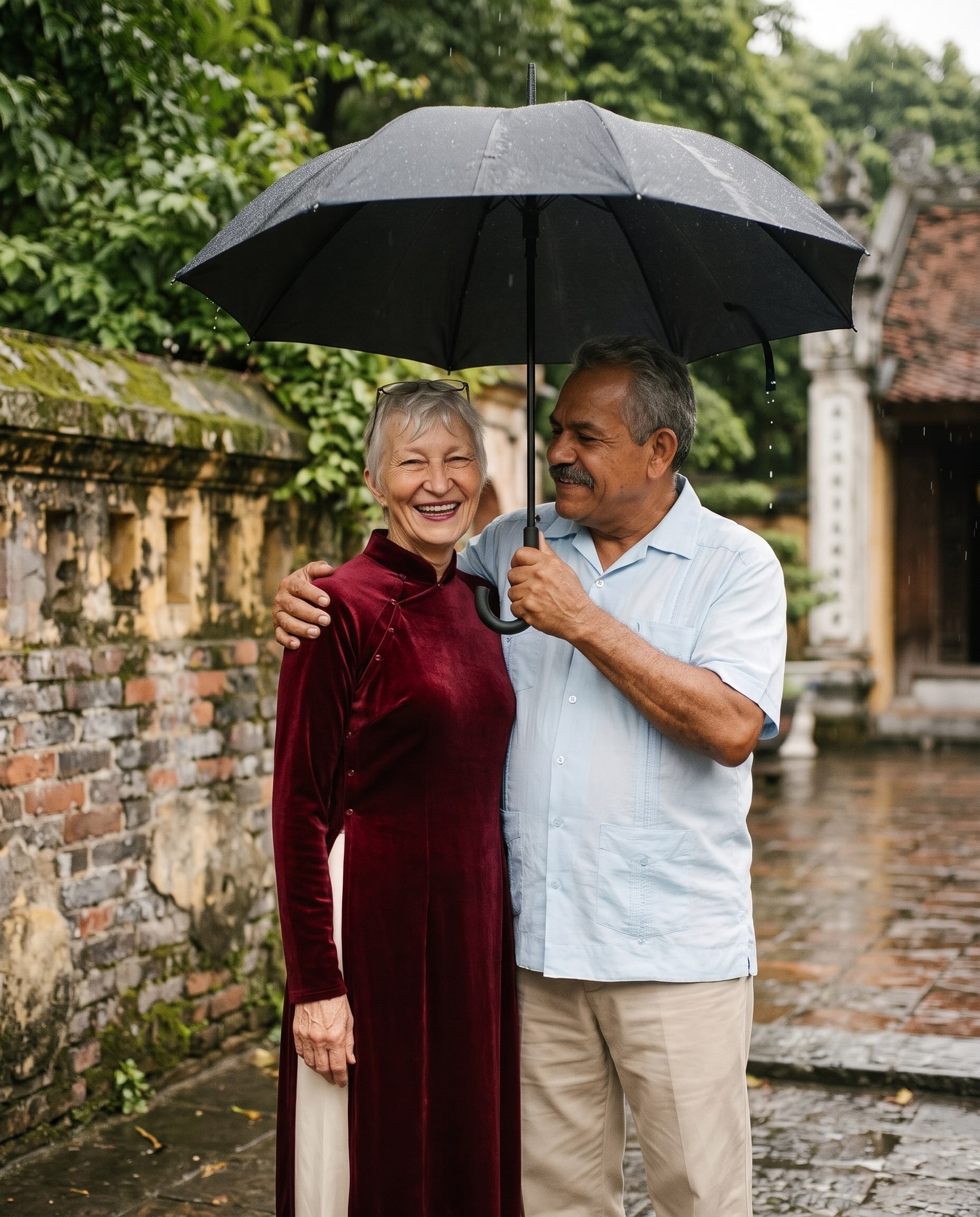
What's the honest difference between a half-day and a full-day Ba Vi shoot?
A half-day (3–4 hours) covers two outfit changes and two to three key locations. We shoot the mist phase, move to an elevated viewpoint, change outfits, and return before the afternoon light flattens. Guests are fresh, the pace feels luxurious, and we capture 150–200 keepers. A full-day shoot (7–8 hours) adds afternoon locations—maybe a waterfall zone, a tea plantation on the border of the park, and a second wardrobe shift late in the day. Sounds good on paper. In reality, feet ache, mist clears, heat peaks at 14:00–15:00, and energy dips. We've found that 6 hours (a "long half-day") is the sweet spot: two outfit changes, three main locations, no rushed setup, time for a proper meal, and light that still reads. Ask us about our vacation photoshoot package options—we offer flexible timings, and can advise whether to add on a second location or keep Ba Vi as the main focus. Conclusion: longer shoots need careful pacing; 4–6 hours delivers sharper results than a marathon day.
See packages and prices on vietnamphotoshoot.com
What to check before you book a Ba Vi session
- Footwear: Bring waterproof hiking shoes or trail boots. Sandals and flip-flops cause slips and mud stains on ao dai hems.
- Weather forecast: Check the night before. Rain in the forecast? Ask us to shift to early morning or choose a different date.
- Mobility or physical limits: If you have knee, ankle or back concerns, tell us when you message on WhatsApp. We can adjust the route and suggest flat alternatives.
- Outfit materials: Heavy satin ao dai in summer humidity is uncomfortable. Cotton or lightweight silk breathes better and dries faster if there's light rain.
- Arrival time: Hanoi traffic can add 30 minutes to the journey. Plan to leave your hotel by 06:00 if you want to be in the park by 08:00.
- Backup date: Don't book this as a one-shot. Have a second date in mind in case weather forces a reschedule.
Chat with us on WhatsApp | See packages and prices on vietnamphotoshoot.com
Thinking beyond Ba Vi? Other options near Hanoi.
If Ba Vi feels too remote or weather-risky, we also shoot couple sessions in central Hanoi (Old Quarter, Hoan Kiem Lake, French Quarter), family photoshoots at nearby temples and gardens, and special concept shoots at tea plantations in Thai Nguyen (60 km away, easier logistics, equally moody light). Ba Vi is ideal for couples and solo travelers with 3–5 hours and a taste for adventure; for families with young children or guests with tight timelines, city or plantation shoots often deliver faster, lower-stress results with the same cinematic quality. Chat with us about your vision and mobility, and we'll recommend the best fit.
FAQ
How long is the drive from Hanoi to Ba Vi National Park?
About 90 minutes from central Hanoi (Hoan Kiem area) in light traffic. During rush hour (07:00–09:00 or 17:00–19:00), add 30 minutes. We always include the driver and vehicle in our vacation packages, so you don't worry about directions or parking.
Do we need hiking experience to shoot at Ba Vi?
No. The main trails are well-marked and used by families daily. Moderate fitness helps—some slopes are steep—but we scout routes ahead and adjust for your ability. Tell us any physical concerns when you book, and we'll plan accordingly.
Can we shoot in the rain?
Yes, but it's risky. Wet ao dai becomes heavy and clings; trails turn slippery; and weather can worsen fast. We recommend the dry season (October–May) and early mornings to avoid afternoon downpours. If rain happens, we pivot to shorter shots or offer a reschedule.
What's included in the vacation photoshoot package for Ba Vi?
Our vacation photoshoot package includes a professional photographer, 2–3 outfit changes, a Hanoi-based driver, and a digital gallery of edited images. Hair and makeup at your hotel can be added. Chat with us on WhatsApp for exact inclusions and timing options.
Should we hire a guide inside the park?
You don't need one for the popular trails—they're obvious and safe. We scout ahead and know the best photo spots, so you're guided by our photographer. If you want natural history or bird-watching info, the park entrance offers paid guides; we can arrange that separately.
What's the best time of year to shoot at Ba Vi?
October through November and February through March. Mist is reliable, temperatures are cool, and rain is less frequent. December–January can be crisp and clear but crowded with Hanoi visitors escaping city heat. June–September is hot and wet; possible but demanding.
Can we combine Ba Vi with another location in one day?
Yes. A nearby tea plantation or the base camp at lower elevation can be added to a longer shoot (6–7 hours). We've done combo shoots successfully, but packing too much means rushed setups and tired guests. Ask us to design a two-location day; we'll time the transitions and outfit changes.
Vacation & Solo Photoshoot
Inclusions, prices and booking are on our booking site.
FAQ
How long is the drive from Hanoi to Ba Vi National Park?
About 90 minutes from central Hanoi (Hoan Kiem area) in light traffic. During rush hour (07:00–09:00 or 17:00–19:00), add 30 minutes. We always include the driver and vehicle in our vacation packages, so you don't worry about directions or parking.
Do we need hiking experience to shoot at Ba Vi?
No. The main trails are well-marked and used by families daily. Moderate fitness helps—some slopes are steep—but we scout routes ahead and adjust for your ability. Tell us any physical concerns when you book, and we'll plan accordingly.
Can we shoot in the rain?
Yes, but it's risky. Wet ao dai becomes heavy and clings; trails turn slippery; and weather can worsen fast. We recommend the dry season (October–May) and early mornings to avoid afternoon downpours. If rain happens, we pivot to shorter shots or offer a reschedule.
What's included in the vacation photoshoot package for Ba Vi?
Our [vacation photoshoot package](/go/vacation-photoshoot) includes a professional photographer, 2–3 outfit changes, a Hanoi-based driver, and a digital gallery of edited images. Hair and makeup at your hotel can be added. Chat with us on WhatsApp for exact inclusions and timing options.
Should we hire a guide inside the park?
You don't need one for the popular trails—they're obvious and safe. We scout ahead and know the best photo spots, so you're guided by our photographer. If you want natural history or bird-watching info, the park entrance offers paid guides; we can arrange that separately.
What's the best time of year to shoot at Ba Vi?
October through November and February through March. Mist is reliable, temperatures are cool, and rain is less frequent. December–January can be crisp and clear but crowded with Hanoi visitors escaping city heat. June–September is hot and wet; possible but demanding.
Can we combine Ba Vi with another location in one day?
Yes. A nearby tea plantation or the base camp at lower elevation can be added to a longer shoot (6–7 hours). We've done combo shoots successfully, but packing too much means rushed setups and tired guests. Ask us to design a two-location day; we'll time the transitions and outfit changes.
More from the team
Honeymoon Photoshoot in Hoi An: What Our Team Sees on Set
Hoi An draws newlyweds for its lantern-lit old town and riverbank light. We've shot hundreds of couples there—here's what actually happens during your session, hour by hour, and how to choose between what we offer.
Nhat Tan Peach Blossom Gardens Photoshoot: What We Book
Nhat Tan peach blossoms peak for just three weeks each January–February. We run morning sessions there to beat tourist crowds and capture soft light—here's how our studio plans them and what actually happens on the ground.
Truc Bach Lake Photoshoot: What to Book at Cáo Studio
Truc Bach Lake is one of Hanoi's most photographed water landmarks. We run sessions there 3–4 times weekly, and share how to get the best light, what to wear, and what actually happens during a shoot.