 Cáo Studio
Home › Blog › Pre-Wedding & Elopement
Bai Dinh Pagoda wedding photos: best time of day and light
By the Cáo Studio team · Hanoi & Saigon · 2026-11-02
Bai Dinh Pagoda, Vietnam's largest pagoda in Ninh Binh province, demands early mornings (5:30–7:30 a.m.) or late afternoons (3:30–5:30 p.m.) to avoid harsh midday shadows that flatten features and wash out colors. We choose golden hour—roughly one hour before sunset—when warm, directional light hits the main temple and surrounding stone steps without glare. A full session typically runs 2–3 hours and includes the entrance courtyard, main prayer hall, and rooftop views. Cáo Studio scouts the site weekly to anticipate cloud cover, crowd flow, and monk schedules; on delivery day, we brief couples on modest dress codes and permit timing. Overcast skies work well too—diffused light suits close portraits—but sunny days without cloud break require either early start or late finish to succeed. Chat with us on WhatsApp
Why early morning light changes everything at Bai Dinh
Most couples assume afternoon golden hour, but dawn light at Bai Dinh has a unique advantage: soft, directional rays hit the main pagoda's east-facing facade without competing with sky brightness. At 6:00 a.m., shadows are long and sculptural, revealing stone texture and architectural detail that vanish by noon. The air is also cooler and clearer—less haze, crisper skin tones in close-ups. We've noticed morning light also reduces foot traffic; monks complete early prayers by 7:00 a.m., giving us clear sightlines to the central courtyard and rooftop platform. However, early morning demands punctuality: light changes fast, and we lose golden tones by 8:00 a.m. as the sun climbs. Early shoots suit couples willing to wake at 5:00 a.m. and finish by 8:30 a.m.—ideal for those planning a mid-morning reception elsewhere in Ninh Binh or heading to Hoa Lu caves afterward.
How does late-afternoon light compare for couples on a tight schedule?
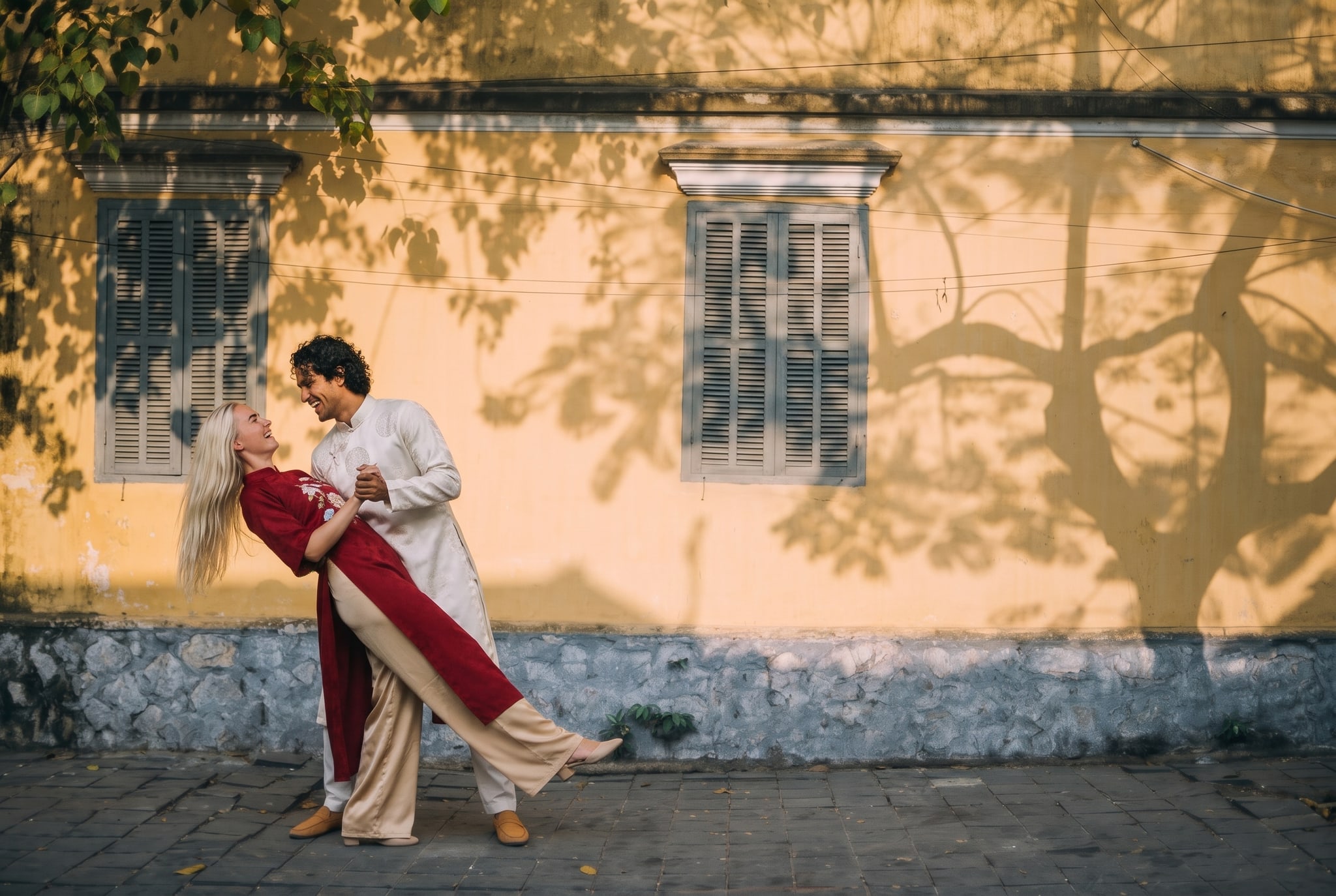
Late afternoon (3:30–5:30 p.m.) offers longer shooting windows and fits travelers who prefer a midday rest or lunch break. The sun's angle at this hour creates warm, flattering tones across the main temple's stone surfaces and draws soft halos around couples standing near the entrance archway. Shadows are gentler than at dawn, but they fall northward, so we position shoots on the south-facing steps and courtyards to keep faces evenly lit. The trade-off: afternoon crowds are heaviest around 4:00–5:00 p.m., especially on weekends and holidays. We've learned to start at 3:30 p.m. sharp to secure clear frames before tourist groups arrive, then shift to upper terraces where fewer people linger. Afternoon light also suits couples in heavier ao dai or formal wear—cooler morning temperatures demand layering or wraps, while afternoon allows sleeveless gowns without discomfort. Late-afternoon shoots work best for pre-wedding sessions paired with ao dai photoshoot package bookings, since fabric colors glow under warm, low-angle sun.
What happens on overcast days—is soft light better or worse?
We actually prefer overcast skies at Bai Dinh for close-up portraits and detail shots: cloud-diffused light wraps around faces without casting hard shadows under eyes or chins, making skin tones look smoother and more flattering. However, overcast light loses the warm glow couples expect in pre-wedding imagery, so our stylists pair muted or jewel-toned ao dai with gray skies, while sunny days call for lighter fabrics that catch golden reflections. On fully overcast days (cloud cover above 70%), we shoot wider landscapes to emphasize pagoda architecture and geometric frames—stone railings, temple doors, staircase lines—since these graphical elements don't rely on golden light to stand out. Our team checks weather forecasts daily and adjusts shot lists 24 hours before the session: if rain or thick clouds are predicted, we propose shifting the date rather than accepting flat light and dull colors. Overcast conditions rarely ruin a shoot; they simply require different creative choices than sunny days, so we communicate these trade-offs upfront via WhatsApp.
How does crowd timing affect which shots we can actually capture?
Bai Dinh Pagoda admits around 1,000–1,500 visitors daily (estimated from entry staff chats), with peaks between 10:00 a.m.–12:00 p.m. and 2:00–5:00 p.m. on weekends. Our experience: early morning (before 7:30 a.m.) and late evening (after 5:30 p.m.) offer near-empty courtyards, but light quality drops after sunset. Midweek mornings (Monday–Thursday, 6:00–7:30 a.m.) give us the best combo—clean backgrounds, golden light, minimal foot traffic. We've also learned that weekend afternoons require us to shoot in tighter, intimate framings (close portraits on side staircases, reflection shots in water features) rather than wide establishing shots, since crowds fill the main temple steps. For couples choosing our pre-wedding and elopement package, we always recommend weekday morning sessions to maximize location variety. If a couple insists on weekend afternoons (family schedules, visiting relatives), we build in extra time and plan backup interior locations (prayer halls, side corridors) where fewer tourists venture.
What's the practical shot list we build for a 3-hour Bai Dinh session?
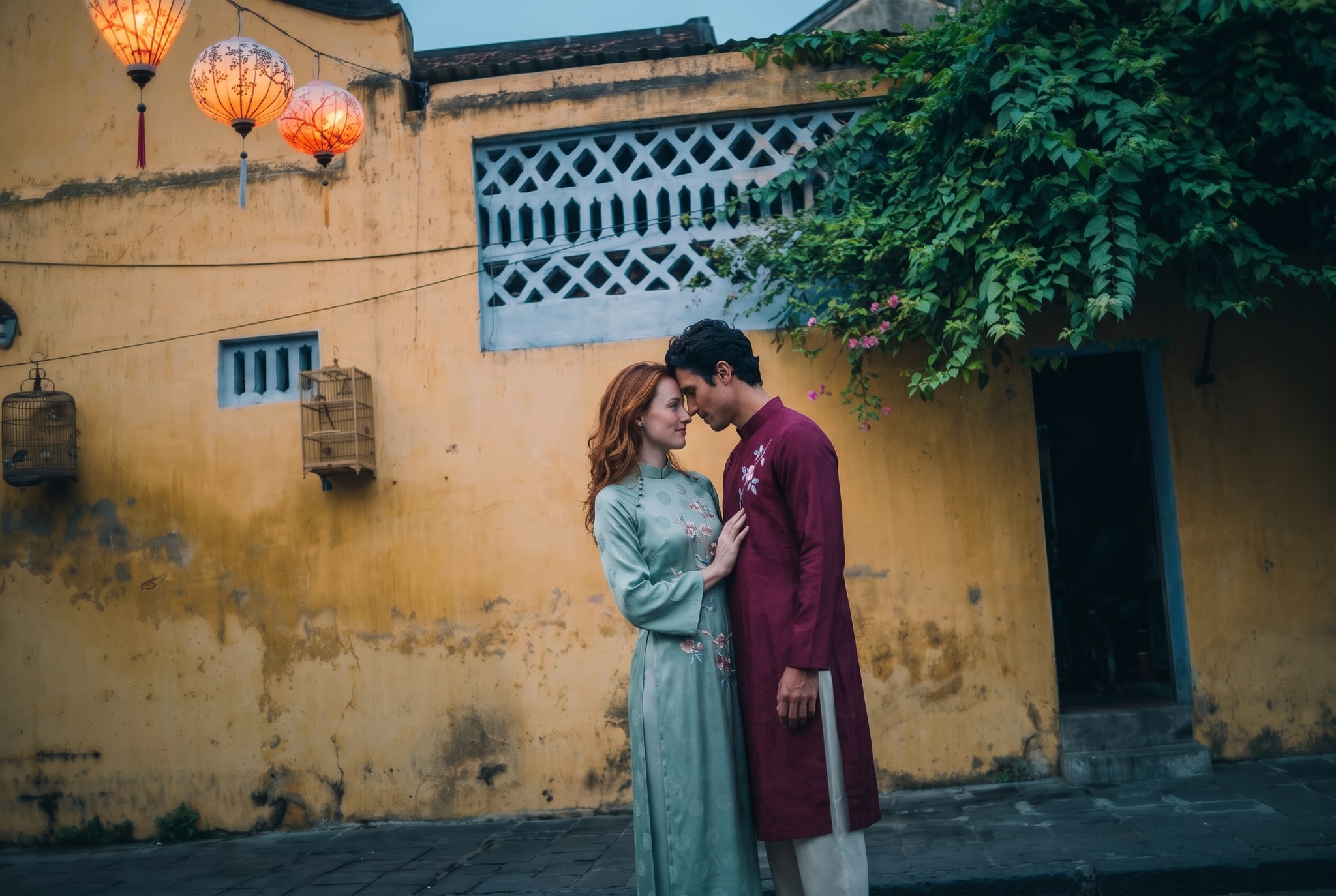
Based on dozens of shoots at Bai Dinh, we structure sessions into location blocks tied to light conditions and crowd flow. Early morning sessions (5:30–8:30 a.m.) begin with couple portraits on the main entrance steps under soft golden light (30 min), move to the rooftop platform for wide architectural frames (45 min), then shift to side courtyards and stone bridge details as light fills the courtyards (60 min). Final 45 minutes focus on candid walking shots and close details (ao dai fabric, jewelry, shoes) as morning light turns neutral. Afternoon sessions (3:30–6:30 p.m.) reverse the flow: we start in shaded side areas and interior corridors (30 min), move to sun-lit rooftop terraces as light drops lower (60 min), then finish on the main steps and entrance as golden light peaks (60 min). We allow 15–20 minutes buffer for logistics—helping couples adjust ao dai, briefing monks about our presence, repositioning for wind or unexpected crowds. Couples booking couple photoshoot package routes typically include 200–250 final edited images; Bai Dinh sessions usually yield 400–500 raw frames, so we curate generously to show the full pagoda experience.
| Timing | Light Quality | Crowd Level | Best For | Ao Dai Colors | Shoot Duration |
|---|---|---|---|---|---|
| 5:30–7:30 a.m. | Soft golden, directional | Minimal | Architecture, intimate portraits | Jewel tones, whites | 2–2.5 hours |
| 9:00–11:00 a.m. | Bright, high-angle | Light | Wide landscapes, ao dai detail | Pastels, silks | 2–2.5 hours |
| 1:00–3:00 p.m. | Harsh, flat | Moderate–high | Not recommended | Any | Avoid |
| 3:30–5:30 p.m. | Warm golden, low-angle | Peak | Romantic, couples, architecture | Bright, metallics | 2–3 hours |
| After 5:30 p.m. | Orange–deep amber | Moderate | Silhouettes, moody, intimate | Dark, structured | 1–1.5 hours |
See packages and prices on vietnamphotoshoot.com
What to check before you book a Bai Dinh shoot
Verify access and monk schedules: Bai Dinh is an active temple, so visit hours matter. Entry typically closes at 4:30 p.m., but we book with advance notice from our Ninh Binh coordinator—get confirmation from us that the time slot is locked before your deposit clears. Confirm weather policy: If forecast shows heavy rain or thick fog within 24 hours, we always offer a free reschedule rather than shoot in flat, wet conditions. Check our terms on WhatsApp before committing. Dress code and comfort: Modest clothing required—shoulders and knees covered. Ao dai works perfectly; Western bridal gowns need a cover-up or shawl, and heels must have grip for steep stone stairs. Ground truth on light: If you're set on "golden hour," confirm whether you mean dawn or sunset; late afternoon at Bai Dinh is 3:30–5:30 p.m., not 6:00 p.m., because the pagoda's position blocks direct sunset. Permit and insurance: We handle all permits and liability; your contract specifies Cáo Studio's coverage, so review the booking confirmation carefully. Travel time: Bai Dinh is 1.5–2 hours north of Hanoi and 2.5–3 hours from Saigon; allow buffer time for traffic, especially if you're combining it with makeup and hair at your hotel service the same morning.
How do we adapt if light or crowds don't match the forecast?
On-the-day reality often differs from planning. We've arrived at Bai Dinh to find unexpected tour groups, weather changes, or monk ceremonies blocking our main shot list. Here's what we do: within 30 minutes of arrival, our lead photographer and stylist scout available light and clear zones, then text the couple a revised shot sequence via WhatsApp—usually switching from outdoor rooftop to interior prayer halls if crowds spike, or moving to the water reflection pools behind the main temple if light is harsher than forecast. We never tell a couple "the light is bad, so we'll skip this location"; instead, we find the best available frames and reframe our story (moody interiors instead of bright courtyards, silhouettes instead of lit faces). Couples on pre-wedding and elopement package sessions always include a 15–20 minute buffer built into our timeline for exactly these adjustments. We shoot at least 350 frames per hour to ensure we capture usable shots across changing conditions, not just perfect moments. Communication happens continuously: our photographer checks in via WhatsApp if major changes arise.
Our team at Cáo Studio Hanoi and Cáo Studio Saigon has shot at Bai Dinh in every season and light condition since 2019. We've learned that the "best" time isn't one-size-fits-all—it depends on your ao dai color, comfort with early mornings, tolerance for crowds, and vision for mood. Read our blog for more Ninh Binh shoot stories, or message us directly with your dates and preferences; we'll recommend the exact time slot that maximizes your session.
FAQ
Can we shoot Bai Dinh before 5:30 a.m. for even softer light?
Technically yes, but the pagoda gates don't unlock until 5:15 a.m. at earliest. Before that, we'd be shooting from public roads outside the temple, which limits scenic framing and risks interruption by early monks or security. We've tried it once and lost 20 minutes to access delays; now we build in 5:00 a.m. arrival for gate timing.
What if we want golden hour at sunset instead of sunrise?
Sunset at Bai Dinh peaks around 5:15–5:45 p.m. (depending on season), but the pagoda's western walls face away from the setting sun, so your couple won't glow with golden light on the main temple steps—the rooftop terraces catch it better. Evening shoots after 5:30 p.m. also overlap closing time, so we'd need special permit extension. Sunrise golden hour (6:30–7:30 a.m.) actually offers stronger, more flattering light on the main facade.
Do rainy days ruin Bai Dinh photos, or can we work with wet stone textures?
Light rain creates moody, atmospheric images—wet stone gleams beautifully under soft overcast light, and puddles reflect the pagoda's architecture. However, heavy rain floods steps, makes ao dai hems drag, and drives tourists to covered areas, reducing privacy. We shoot light rain happily; we reschedule for downpours. Check the forecast 24 hours before; if rain is predicted, message us immediately for a free date swap.
Should we book Bai Dinh with another location in Ninh Binh, or is 3 hours enough?
Three hours is ample for Bai Dinh alone and yields 250+ final images. If you want a second location (Hoa Lu temples, Tam Coc boats, Mua Cave), plan a combined 5–6 hour session and start by 6:00 a.m. Couples booking our pre-wedding and elopement package often pair Bai Dinh (3 hours) + Hoa Lu (2 hours) as a full-day Ninh Binh experience.
What ao dai colors photograph best at Bai Dinh in early morning versus afternoon?
Early morning (cool, directional light): jewel tones (emerald, sapphire, burgundy) and whites show the most depth and richness. Afternoon (warm, golden light): bright reds, golds, pinks, and metallics glow; pastels can look washed out. Stone-gray pagoda architecture complements both, but the ao dai color choice should match light direction—dark tones for golden hour, lighter for overcast or bright mornings.
Pre-Wedding & Elopement
Inclusions, prices and booking are on our booking site.
FAQ
Can we shoot Bai Dinh before 5:30 a.m. for even softer light?
Technically yes, but the pagoda gates don't unlock until 5:15 a.m. at earliest. Before that, we'd be shooting from public roads outside the temple, which limits scenic framing and risks interruption by early monks or security. We've tried it once and lost 20 minutes to access delays; now we build in 5:00 a.m. arrival for gate timing.
What if we want golden hour at sunset instead of sunrise?
Sunset at Bai Dinh peaks around 5:15–5:45 p.m. (depending on season), but the pagoda's western walls face away from the setting sun, so your couple won't glow with golden light on the main temple steps—the rooftop terraces catch it better. Evening shoots after 5:30 p.m. also overlap closing time, so we'd need special permit extension. Sunrise golden hour (6:30–7:30 a.m.) actually offers stronger, more flattering light on the main facade.
Do rainy days ruin Bai Dinh photos, or can we work with wet stone textures?
Light rain creates moody, atmospheric images—wet stone gleams beautifully under soft overcast light, and puddles reflect the pagoda's architecture. However, heavy rain floods steps, makes ao dai hems drag, and drives tourists to covered areas, reducing privacy. We shoot light rain happily; we reschedule for downpours. Check the forecast 24 hours before; if rain is predicted, message us immediately for a free date swap.
Should we book Bai Dinh with another location in Ninh Binh, or is 3 hours enough?
Three hours is ample for Bai Dinh alone and yields 250+ final images. If you want a second location (Hoa Lu temples, Tam Coc boats, Mua Cave), plan a combined 5–6 hour session and start by 6:00 a.m. Couples booking our [pre-wedding and elopement package](/go/pre-wedding-photoshoot) often pair Bai Dinh (3 hours) + Hoa Lu (2 hours) as a full-day Ninh Binh experience.
What ao dai colors photograph best at Bai Dinh in early morning versus afternoon?
Early morning (cool, directional light): jewel tones (emerald, sapphire, burgundy) and whites show the most depth and richness. Afternoon (warm, golden light): bright reds, golds, pinks, and metallics glow; pastels can look washed out. Stone-gray pagoda architecture complements both, but the ao dai color choice should match light direction—dark tones for golden hour, lighter for overcast or bright mornings.
More from the team
Boho pre-wedding photoshoot in Vietnam: Hanoi, Saigon, Hoi An
Boho pre-wedding shoots mix romantic, free-spirited aesthetics with Vietnam's landscapes and heritage sites. We run full-day sessions in three cities, handling styling, makeup, location scouts and edits.
Avoid crowds at Hoang Su Phi rice terraces: timing for wedding shoots
Hoang Su Phi's terraced landscape draws couples and tour buses in equal measure. We show how to shoot there alone, when to arrive, and what to arrange with us before you go.
Photography rules at Con Dao beaches: permits, drones and what to check
Con Dao's beaches demand prep before you shoot—permits, drone zones and tide timing all affect your day. We share what the Cáo Studio team verifies on every booking.