 Cáo Studio
Home › Blog › Pre-Wedding & Elopement
Bat Trang ceramic village wedding photos: best time of day and light
By the Cáo Studio team · Hanoi & Saigon · 2026-11-04
Bat Trang ceramic village in Hanoi's Gia Lâm district offers earthy, textured backdrops that work for pre-wedding shoots year-round, but light timing is critical. Early morning (6–7 a.m.) gives soft, diffused light and empty alleys; midday sun creates harsh shadows across pottery stacks and brick facades that flatten the image. Late afternoon (4–5 p.m.) delivers warm golden light ideal for couple silhouettes and close-ups, though crowds and dust from kiln work increase. We recommend late afternoon shoots October to March (cooler, clearer air) or early morning April to September (heat peaks by 10 a.m.). Bat Trang is best paired with a pre-wedding and elopement package that includes location scouting and multiple outfit changes. Avoid midday altogether; the village atmosphere disappears under harsh overhead light. Chat with us on WhatsApp
Why midday light ruins Bat Trang's character
The potter's wheels, clay heaps, and brick kiln walls have depth and texture—but only when side-lit. At noon, direct overhead sun bleaches the red brick to orange, erases the shadow detail in pottery stacks, and forces couples into squinting, unflattering poses. We've shot at 11 a.m. and lost 40 minutes to reshuffling light angles because every wall face looked identical and flat. The potters' hands and wheel work, which tell the village story, disappear into silhouette. By contrast, 4 p.m. light rakes across the same brick at 45 degrees, revealing mortar lines, kiln scars, and the worn character that makes Bat Trang different from a generic urban backdrop. Midday also means full tourist foot traffic—vendors, school groups, kilns at peak production with thick dust clouds that cloud the lens. We always schedule shoots outside 11 a.m.–3 p.m. or accept we're paying a reshoot visit later.
What early morning gives you that afternoon cannot
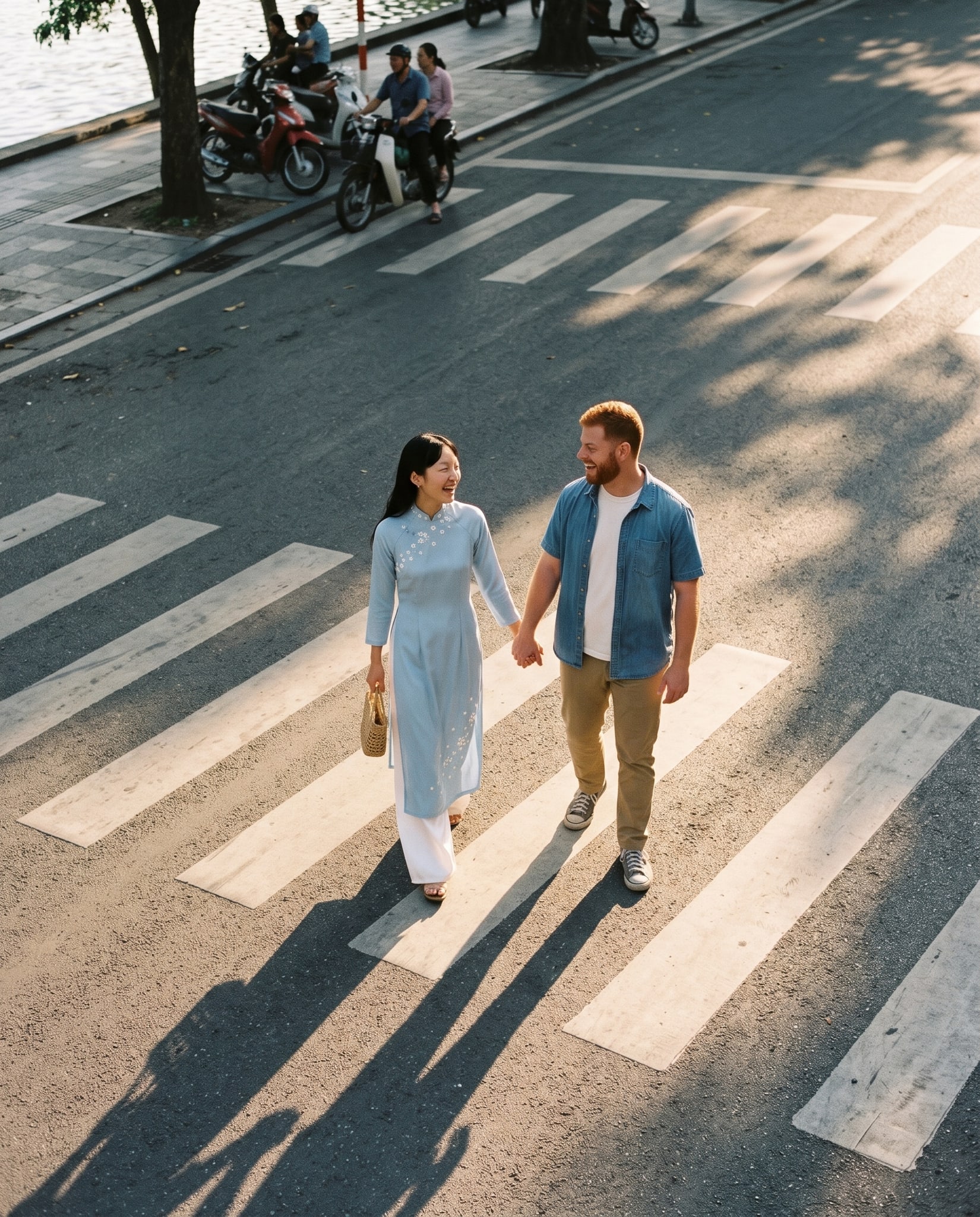
Starting a shoot at 6 or 6:30 a.m. means you're shooting in the kiln's opening hours, when potters arrive and clay wheels begin turning. The light is soft, diffused, and even—no harsh shadows to dodge. Brick and pottery read as full-toned, rich colors. More importantly, alleys are nearly empty; you own the frame without asking 30 people to step back. We've had couples stand alone in alleys for 15 minutes at dawn with zero interruptions. The downside: air is cool (couples often shiver in silk áo dài), and the village wakes to the smell of smoke from kilns—beautiful for mood, less pleasant for breathing between takes. The light window is narrow—by 7:30 a.m., the sun climbs too high and softness fades. Early shoots also demand a 5 a.m. hotel pickup and makeup done in dim light (we bring full ring lighting to the hotel room). If your couple prefers to sleep until 8 a.m., morning Bat Trang is not the fit.
Golden hour (4–5 p.m.) captures emotion and detail best
Late afternoon light at Bat Trang is what we call "forgiving." Warm, raking, directional—it sculpts faces, shows texture in fabric (áo dài silk catches orange light beautifully), and makes brick glow. Shadows are deep enough to create mood but not so harsh that eyes become dark holes. We typically start a 4 p.m. shoot and finish by 5:45 p.m.; by 6 p.m., light turns peachy and loses the golden balance. In this 90-minute window, we can move the couple through four or five locations—the main kiln complex, a potters' alley, a clay-stacking yard, a brick wall corner, and a narrow passage with hanging clay drying racks. The evening energy in the village is also peak. Potters are cleaning up, carrying finished pieces, checking kilns—genuine activity happens in the frame without feeling staged. Crowds thin to shoppers and the occasional tourist group, manageable for a photographer moving fast. The cost of this timing is that you must finish by twilight; no buffer for slow setup or couple indecision.
See packages and prices on vietnamphotoshoot.com
Season matters as much as hour of day
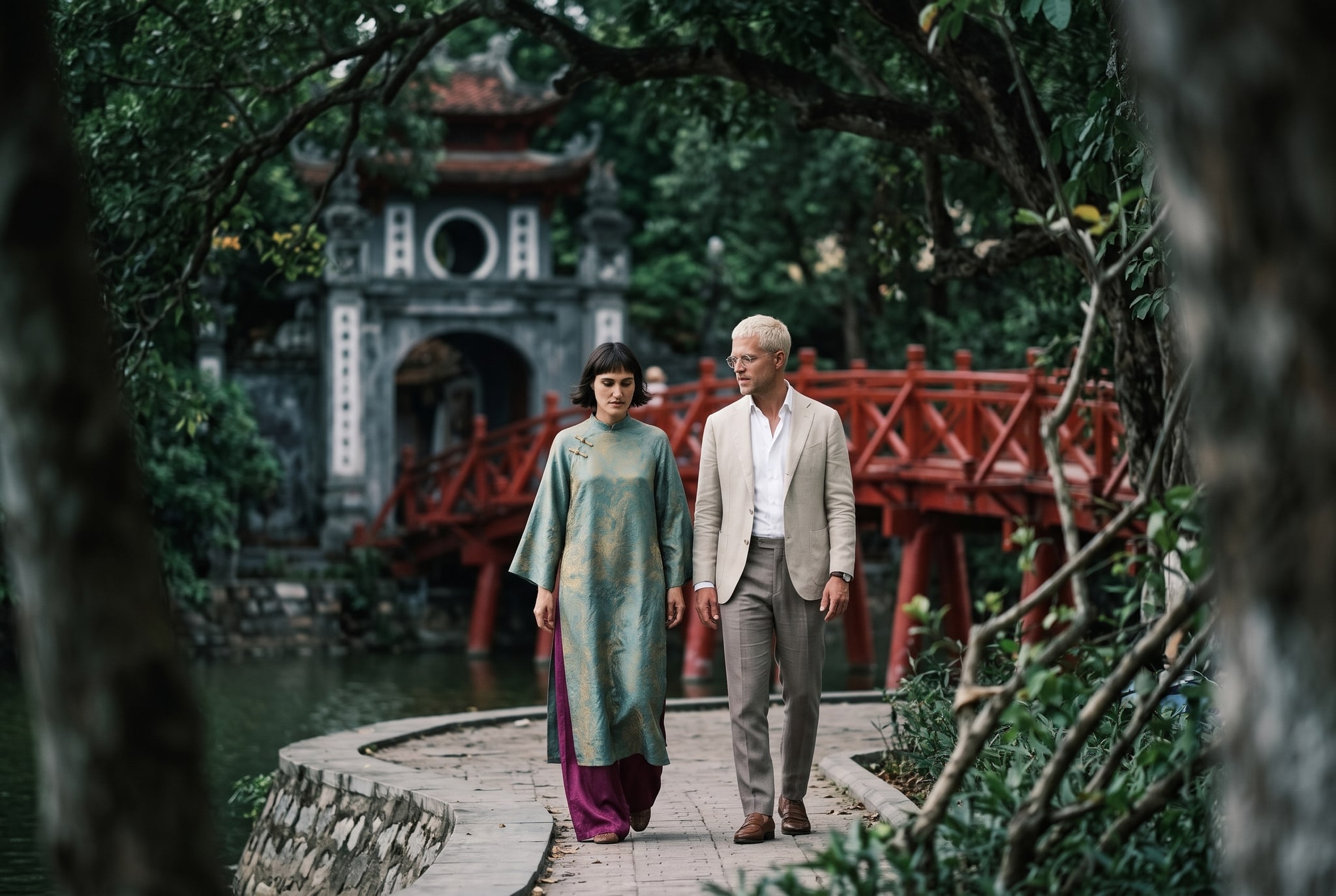
October through March is Hanoi's dry season; humidity is lower, the sky clearer, and dust settles faster after kiln activity. Morning light in winter is crisper, afternoon light steadier. We prefer November–February for Bat Trang because the air rarely has haze, and couples are comfortable in full áo dài without heat exhaustion risk. April through September flips the challenge. Mornings heat up fast—by 8 a.m., temperature reaches 28°C and climbing. Humidity makes dust and kiln smoke cling to the air, softening detail. Afternoon heat becomes brutal for couples in traditional dress; we've seen makeup melt by 4:30 p.m. and had to reapply between locations. Rain is also unpredictable in summer; a clear morning can turn thunderstorm by 5 p.m. If shooting in hot season, we prioritize early morning (6–7 a.m.) and advise makeup and hair at your hotel service so touch-ups are fast and close by.
How we use Bat Trang as part of a multi-location session
A full pre-wedding photoshoot often pairs Bat Trang (1–1.5 hours) with a second location—usually the Old Quarter, a lake park, or a temple gate—because one village alone fills only 45 minutes efficiently. We schedule Bat Trang at golden hour (4–5 p.m.) and then move to a second spot by 5:45 p.m. for dusk color or night shots of pagoda lights reflecting in water. This sequence works because the couple is warm, makeup is set, and the village heat is fading. Alternatively, early morning Bat Trang (6–7 a.m.) feeds into a 9 a.m. second location with fresher light and less foot traffic stress. Mixing seasons and hours: if a couple insists on a summer shoot, we do Bat Trang at dawn and end by 7:30 a.m., then move to an air-conditioned temple or indoor vintage shop for outfit change and makeup retouch. Never back-to-back outdoor in peak heat. The logistics team uses a simple table to guide the day's flow:
| Timing | Location sequence | Outfit 1 | Outfit 2 | Best for |
|---|---|---|---|---|
| 6 a.m. start | Bat Trang (dawn) → Old Quarter (8:30–10 a.m.) | Áo dài | Western dress | Cool air, empty streets, calm couple |
| 4 p.m. start | Lake park (2–3 p.m.) → Bat Trang (4–5:45 p.m.) | Western/casual | Áo dài or formal | Golden light, evening village energy, sunset buffer |
| 8 a.m. mid-season | Bat Trang (8–9:30 a.m.) → Temple gate (10 a.m.–noon) | Áo dài | Formal/áo dài | Moderate heat, morning clarity, pedestrian flow manageable |
What to check before you book a Bat Trang shoot
Confirm kiln activity schedule. Bat Trang kilns operate Monday–Saturday, 6 a.m.–5 p.m. roughly. Sunday, many are closed; the village feels dead, backdrops look abandoned. If you prefer the liveliness of active pottery work in your frames, avoid Sunday.
Verify weather forecast 3 days before. Dust storms (especially April–May) can turn Bat Trang's rustic charm into a haze that kills detail. We cancel or reschedule if visibility drops below 500 meters or rain is forecast within your shooting window.
Check couple comfort in heat. Bat Trang has no shade; by 3 p.m., the brick alleys are ovens. If the couple is not acclimated to Hanoi's heat or wearing heavy áo dài, early morning or late afternoon is mandatory. Midday outdoor poses for 1+ hour will result in exhaustion, flushed skin, and resentment in the photos.
Plan outfit changes at a real base. There are no dedicated rest areas in the village. We scout a pottery workshop or café owner beforehand who lets the couple use a private corner for makeup touch-ups and outfit swap. Changing in a public alley is risky (privacy, dust, wardrobe damage).
Communicate arrival and pickup times to your driver and photographer. Bat Trang's layout is a maze of narrow brick alleys; a driver unfamiliar with the location will spend 15 minutes lost. We provide a WhatsApp pin and photo of the exact meeting point the week before.
A couple photoshoot package with Cáo Studio includes location planning, a photographer familiar with Bat Trang's light cycles, and a makeup artist on standby if heat requires a touch-up. If you're also interested in other Hanoi shoots, explore Cáo Studio Hanoi sessions and browse more stories from the team about seasonal timing and location logistics across Vietnam.
FAQ
Can we shoot at Bat Trang in the middle of the day if we use reflectors and fill flash?
Reflectors and fill flash help but don't solve the core problem: midday sun flattens texture. Pottery stacks and brick walls lose the depth that makes Bat Trang distinctive. You'll get usable images, but the character is muted. We've tried it; the reshoot rate jumps because couples feel the energy is missing, even if technically exposed.
Is early morning too cold for an áo dài shoot in winter?
October–February mornings in Hanoi sit around 12–16°C at 6 a.m. Áo dài is silk, not insulating. Couples often shiver visibly. We bring a cotton wrap or lightweight coat for between-pose warmth and remove it for shots. Makeup can also tighten in the cold. A makeup and hair at your hotel session completed in a warm room, then travel immediately to the location, reduces this discomfort.
What if the potters ask us to leave or charge a fee to shoot?
Bat Trang is a public village; there's no official "shoot permit." However, active kilns are private workshops. If we're framing a potter at the wheel, we ask permission first and offer a small courtesy tip (50,000–a quoted price, informal). Most potters are gracious; a few say no and we move to the next alley. Never argue or ignore a "no." The village thrives on respect, and word travels fast.
How long should we budget for a Bat Trang-only shoot versus Bat Trang plus a second location?
Bat Trang solo is 1–1.5 hours efficiently (roughly 4–5 outfit/location combinations). A duo-location day is 4–5 hours total with travel and outfit changes. A pre-wedding and elopement package typically bundles these; ask us for a quote on WhatsApp to fit your schedule.
Can we do a Bat Trang shoot during monsoon (May–September)?
Yes, but with conditions. Humidity means heavy air and kiln dust cling; detail softens. Heat exhaustion is real. Early morning (6–7 a.m.) is safer than afternoon. Avoid the absolute worst weeks (mid-July to mid-August, when heat peaks and tourists flood). We recommend late May or early September for a summer Bat Trang session, paired with Cáo Studio Hanoi hotel-based makeup prep to keep the couple cool between locations.
Pre-Wedding & Elopement
Inclusions, prices and booking are on our booking site.
FAQ
Can we shoot at Bat Trang in the middle of the day if we use reflectors and fill flash?
Reflectors and fill flash help but don't solve the core problem: midday sun flattens texture. Pottery stacks and brick walls lose the depth that makes Bat Trang distinctive. You'll get usable images, but the character is muted. We've tried it; the reshoot rate jumps because couples feel the energy is missing, even if technically exposed.
Is early morning too cold for an áo dài shoot in winter?
October–February mornings in Hanoi sit around 12–16°C at 6 a.m. Áo dài is silk, not insulating. Couples often shiver visibly. We bring a cotton wrap or lightweight coat for between-pose warmth and remove it for shots. Makeup can also tighten in the cold. A [makeup and hair at your hotel](/go/makeup-and-hair) session completed in a warm room, then travel immediately to the location, reduces this discomfort.
What if the potters ask us to leave or charge a fee to shoot?
Bat Trang is a public village; there's no official "shoot permit." However, active kilns are private workshops. If we're framing a potter at the wheel, we ask permission first and offer a small courtesy tip (50,000–100,000 VND, informal). Most potters are gracious; a few say no and we move to the next alley. Never argue or ignore a "no." The village thrives on respect, and word travels fast.
How long should we budget for a Bat Trang-only shoot versus Bat Trang plus a second location?
Bat Trang solo is 1–1.5 hours efficiently (roughly 4–5 outfit/location combinations). A duo-location day is 4–5 hours total with travel and outfit changes. A [pre-wedding and elopement package](/go/pre-wedding-photoshoot) typically bundles these; ask us for a quote on WhatsApp to fit your schedule.
Can we do a Bat Trang shoot during monsoon (May–September)?
Yes, but with conditions. Humidity means heavy air and kiln dust cling; detail softens. Heat exhaustion is real. Early morning (6–7 a.m.) is safer than afternoon. Avoid the absolute worst weeks (mid-July to mid-August, when heat peaks and tourists flood). We recommend late May or early September for a summer Bat Trang session, paired with [Cáo Studio Hanoi](/go/hanoi) hotel-based makeup prep to keep the couple cool between locations.
More from the team
Photography rules at Ta Phin village: permits, drones and what to check
Ta Phin village in Sapa draws photographers for its Hmong culture and layered mountain light. We've shot dozens of sessions there—here's what actually works and what stops shoots cold.
Pre-Wedding Photo Ideas and Poses at O Quy Ho Pass
O Quy Ho Pass sits on the Hanoi–Sapa border at 1,200 metres. Our couples shoot there for its curves, mist and isolation—but the weather and logistics demand a different approach than valley shoots.
Is O Quy Ho Pass Good for Pre-Wedding Photos? Pros, Cons, Alternatives
O Quy Ho pass in Sapa draws couples seeking high-altitude drama, but tight timelines, unpredictable fog, and logistics make it risky for pre-wedding shoots. We've scouted it; here's what actually works. #