 Cáo Studio
Home › Blog › Vacation & Solo Photoshoot
Best pre-wedding photo spots in Hanoi for couples
By the Cáo Studio team · Hanoi & Saigon · 2026-11-02
Hanoi's strongest pre-wedding locations fall into four types: lakeside (Hoàn Kiếm Lake, West Lake reflections), street architecture (French Quarter, Tràng Tiền), natural green (Botanical Garden, Thảo Điền Park), and cultural landmarks (Temple of Literature, Long Biên Bridge). Most couples choose 2–3 spots in one 4–6 hour shoot; we handle scouting, timing (golden hour is non-negotiable), permits where needed, and outfit changes. The best sessions pair one iconic landmark with one quiet residential street—contrast matters. Cáo Studio books location packages that include hair, makeup, and wardrobe advice; couples typically invest in outfits before the shoot. Check weather 3 days before, and allow 20–30 minutes per location for setup, poses, and natural light shifts. Chat with us on WhatsApp | See packages and prices on vietnamphotoshoot.com
Why do couples pick Hanoi's lakeside locations?
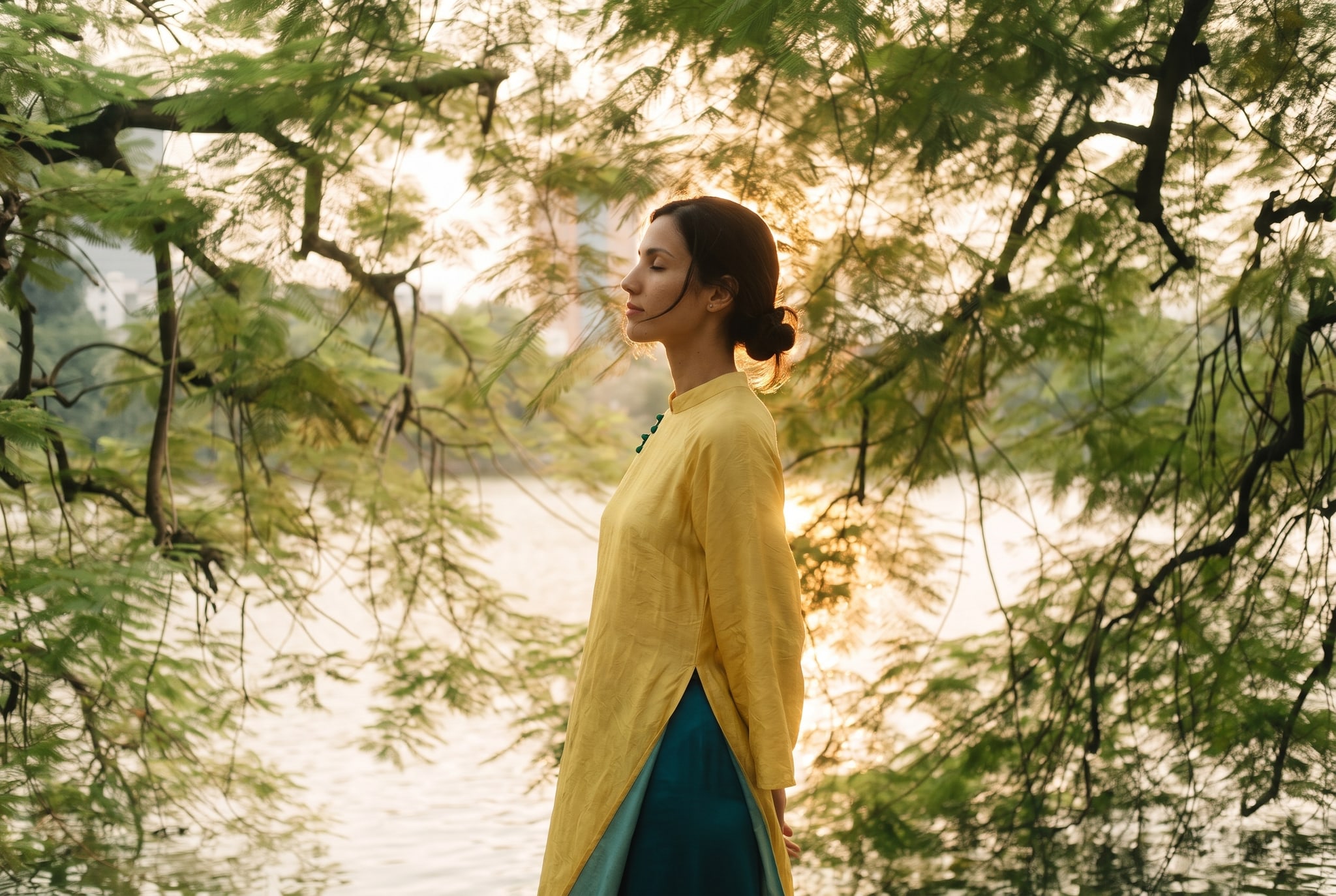
Water reflects light and frames couples softly. Hoàn Kiếm Lake at sunrise gives cool blue tones; West Lake at sunset warms skin and creates rim light. We've noticed calm mornings (6–7 a.m.) mean no crowds and still reflections—but traffic noise picks up by 8 a.m. Lakeside also works for ao dai: silk moves beautifully against water backgrounds, and the humidity stays manageable near the bank.
When to shoot: sunrise (5:30–6:30 a.m.) or late afternoon (4:30–5:30 p.m.). What to watch: water level (monsoon season, July–September, can flood paths); wear slip-on shoes for quick changes near the bank. Couples choosing lakeside usually pair it with one urban street for contrast—the quiet water frames the couple, then the city frames the story.
Which French Quarter streets work best for pre-wedding photos?
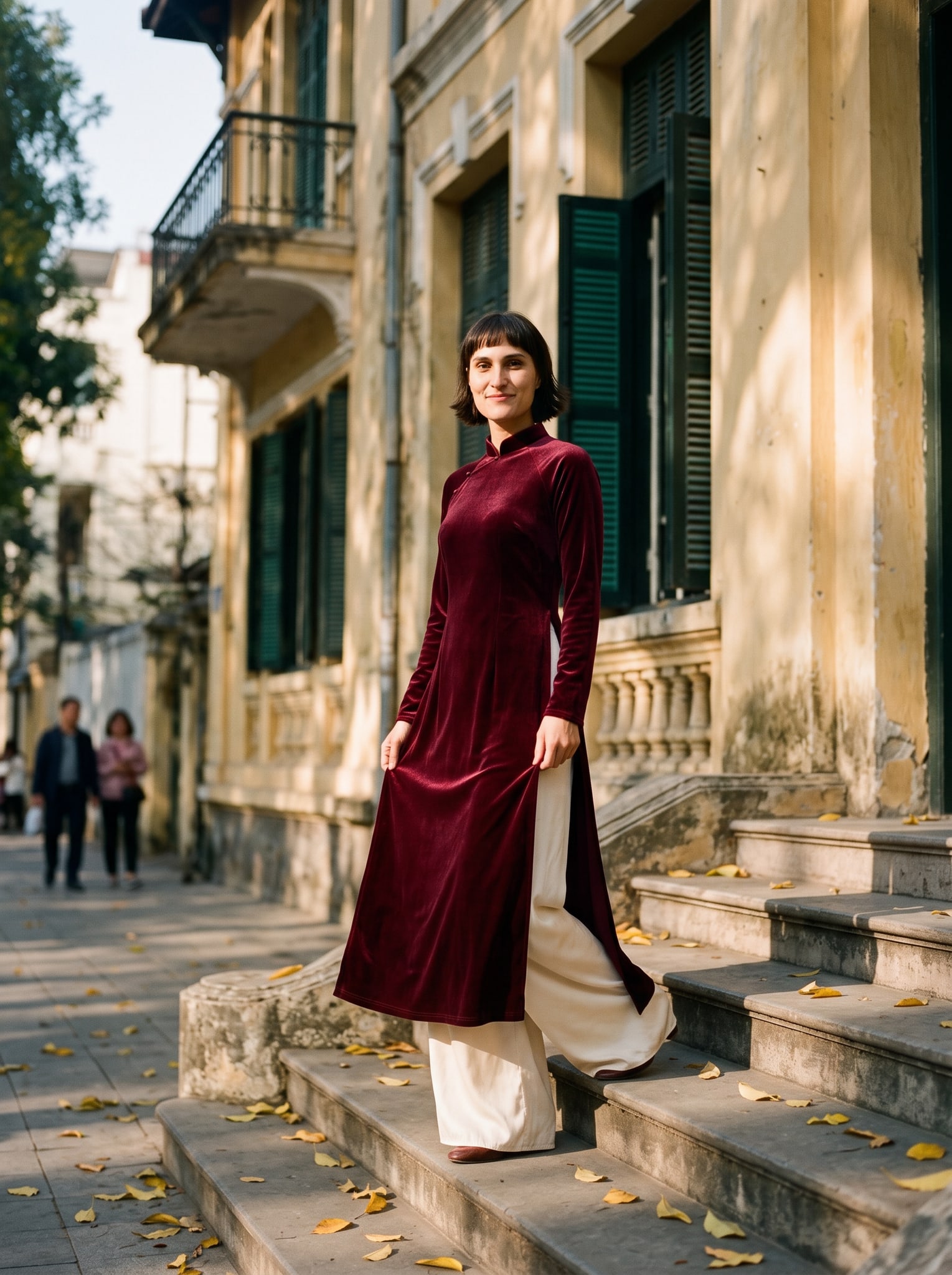
The French Quarter (around Tràng Tiền, Hàng Ngang, Tả Hiến) offers colonial shutters, pastel walls, and narrow lanes with dappled light. We favour early mornings (before 8 a.m.) when alleys are empty and light rakes across facades. Shadows from overhead lines can break up faces, so we position couples perpendicular to the light, not parallel.
Our go-to blocks:
- Tràng Tiền near the old post office (cool grey stone, framing trees)
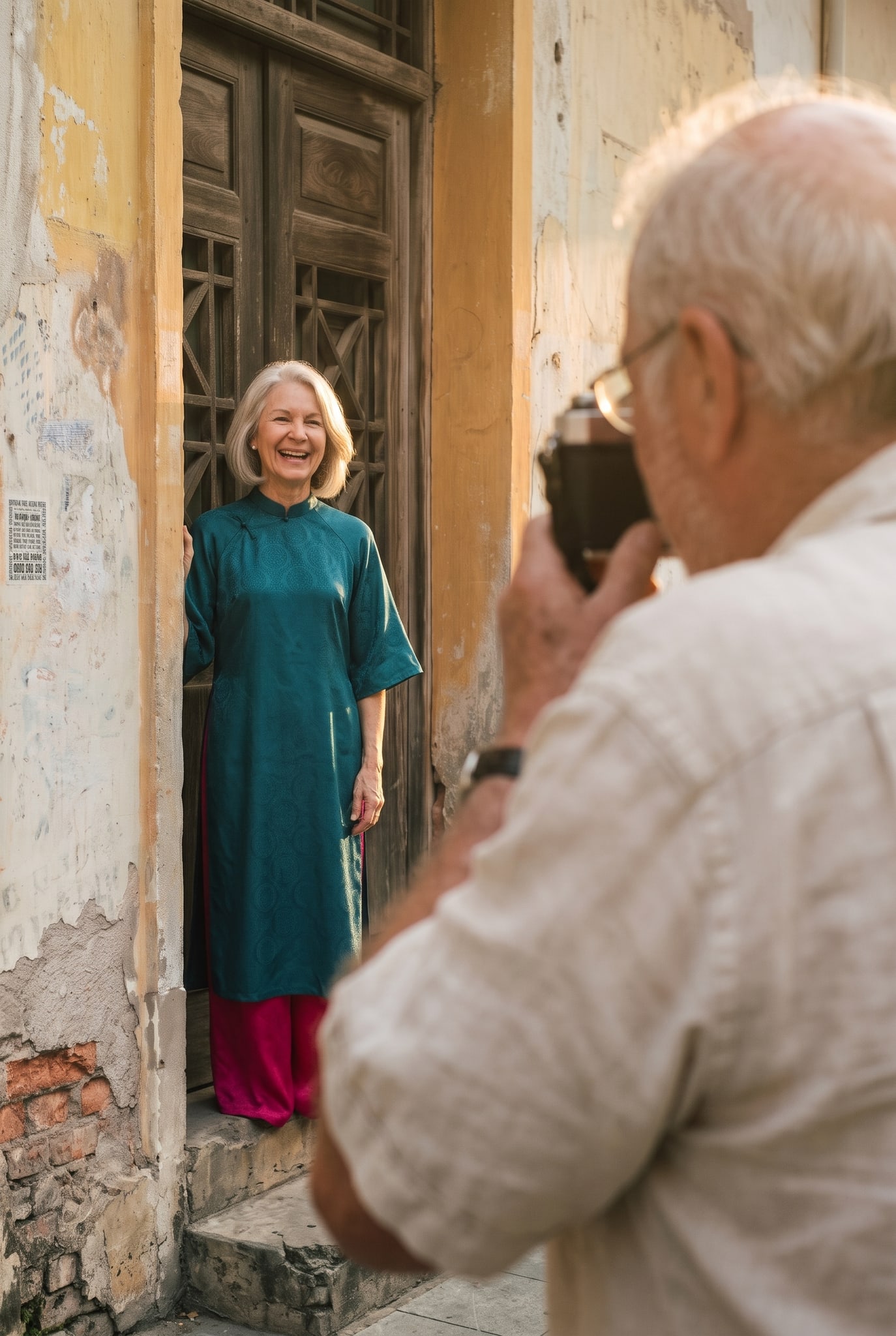
- Hàng Ngang alley (yellow-stucco walls, period doors)
- Tạ Hiến corner (red bricks, morning sun)
Street vendors set up 7–8 a.m.; by 9 a.m., foot traffic blocks sightlines. We typically spend 45 minutes here, then move. Colonial light lasts about 90 minutes before the street goes flat. Couples often choose French Quarter as their "intimate" location—smaller crowds than Hoàn Kiếm, and the scale suits two people rather than family groups.
What makes the Botanical Garden and green spaces different?
Trees give natural framing and soften harsh midday light. The Hanoi Botanical Garden (Thảo Điền, near Ba Đình Square) has manicured paths, ferns, and shade—ideal if you're shooting midday (11 a.m.–3 p.m.). Trees diffuse sun, which means you can work later than at open lakeside.
Why couples book it: no crowds mid-week, natural texture (leaves, bark, greenery), soft overhead light, and climate (cooler than concrete streets). The trade-off is permission: park entry is about 15,000 VNĐ per person (we arrange). We usually spend 90 minutes here because the scale is large and couples relax in nature.
Our check: ask the gate staff if photo shoots need approval (unofficial shoots sometimes happen, but booking through us handles it). The garden's winding paths mean longer walks in heels—we remind couples to bring flats, change shoes on-site. Botanical backdrops suit ao dai photoshoots especially; we've built themed shoots around seasonal blooms (chrysanthemums Oct–Nov, lotus flowers late Aug).
How does Temple of Literature fit a pre-wedding shoot?
The Temple of Literature (Văn Miếu) is Hanoi's top tourist landmark and a UNESCO site. It's architecturally dense—courtyards, stone pathways, scholar statues—but crowded 9 a.m.–5 p.m. We book 6:30–7:30 a.m. or 5:30–6:30 p.m. to avoid tour groups.
What we shoot: the central courtyard (wide-angle, symmetry), the tortoise stele walkway (intimate framing), and smaller courtyards (intimate detail). The stone path from north gate absorbs raking light beautifully. Red lanterns and ornamental gates photograph as dynamic backgrounds—but they also mean visual clutter if a couple stands off-centre.
Why it works: Văn Miếu is symbolically important (scholars, heritage, learning—couples often comment it represents their shared values). The real constraint: entry fee (~30,000 VNĐ), and official photo sessions require notification to site staff. We handle the logistics. Expect 60 minutes here; rushing looks thin. First-time visitors sometimes feel stiff on sacred ground—we spend 10 minutes walking the space first, then shoot.
What's Long Biên Bridge—and why do so many couples shoot there?
Long Biên Bridge (Cầu Long Biên) is a 1902 French steel structure crossing the Red River. It's iconic, industrial, and moody. We shoot it dawn or dusk when the bridge is less congested and the sky has colour. The walkway is narrow and active (pedestrians, cyclos, motorcycles)—but that's part of the energy.
Why couples love it: it's edgy, historical, and unforgettable. The contrast between organic (river, light, sky) and mechanical (steel, angles) creates tension that suits modern editorial looks. We've found couples doing concept shoots often choose Long Biên for its narrative—industrial romance, grit, movement.
What we avoid: midday glare (no shade), overcrowding (peak hours 7–9 a.m., 4–6 p.m.), and wind (can blow ao dai unpredictably). Safety: the bridge has no formal photography zone, so we position away from traffic, use a spotter, and keep movement fluid. Sunrise (5:30–6:15 a.m.) gives soft light and almost nobody else. This location suits adventurous couples; conservative pairs prefer temples or gardens.
How do we choose outfit changes for each location?
We recommend 2–3 outfits across 3–4 locations. The rule: outfit tone should suit place tone.
| Location | Outfit type | Why it works |
|---|---|---|
| Lakeside (Hoàn Kiếm) | Ao dai or formal Western | Water needs elegance; silk moves with reflections |
| French Quarter | Casual-elegant or modern dress | Urban scale suits contemporary style; red brick matches warm tones |
| Botanical Garden | Romantic, whimsical, or flowy ao dai | Nature absorbs bold colour; texture matters (lace, silk) |
| Temple of Literature | Formal or modest ao dai | Sacred site favours respect; long lines flattering in symmetry |
| Long Biên Bridge | Editorial, edgy, dark, or modern | Industrial backdrop reads clean; bold colour or minimalism |
Our process: we send a mood board 2 weeks before the shoot. Couples bring 2–3 outfits; we choose on-site based on light and crowd. Ao dai usually stays with the photographer (we steam it between locations; wrinkles matter). Western formal wear (dress, suit, heels) we pack in a garment bag. Changes happen in our car or a nearby café (we scout bathrooms earlier). Total outfit time: 15 minutes per change, including touch-ups.
What we check: do shoes work on stone, brick, and metal? Can the outfit move (sitting, walking, kneeling for close-ups)? Is the colour washed out by stone or does it pop? We've had couples arrive in heavy winter fabrics in May—not ideal. Breathable, wrinkle-resistant fabrics (cotton-silk blend, linen) survive an 8-hour session better than pure silk or heavy brocade.
What time of year and hour of day should we book?
Hanoi's photographic window shifts with season.
Oct–Nov (autumn, ideal): 15–20°C, low humidity, clear skies. Golden hour extends. Couples book 2–3 months ahead; this is peak season.
Dec–Jan (cool, clear): similar light quality, but pollution from coal heating peaks after 10 a.m. Shoot 6–8 a.m. for visibility. Couples wear winter-weight ao dai or formal Western wear.
Feb–Mar (spring): humidity creeps up; afternoon heat arrives. Pollen from blooms can trigger allergies. Suit early shoots (5:30–8 a.m.). Gardens peak (flowers everywhere).
Apr–May (pre-monsoon): 25–30°C, haze from industrial activity. Golden hour shortens. Avoid midday entirely; 5–7 a.m. or 4:30–6:30 p.m. only.
Jun–Sep (monsoon): 28–35°C, sudden rain, oppressive humidity. Light is flat midday. Shooting possible but exhausting; fewer couples book. If you do, 5–7 a.m., then retreat indoors for couple portraits (makeup and styling). We've had three surprise downpours in this window last year; always have umbrellas and a contingency indoor location (café, hotel lobby).
Golden hour rule: in Hanoi, magic light window is 45–60 minutes at sunrise and sunset. We aim to catch the first 30 minutes of sunrise (5:30–6:00 a.m. in Oct–Nov, 6:00–6:30 a.m. in Dec–Jan) at a lakeside or open location, then move indoors or tree-covered streets before 7 a.m.
What should we prepare before we book—a checklist?
1. Clarify location count. How many spots do you actually want to shoot? Two (fast, 4 hours) or four (deep, 6–8 hours)? Time adds pressure if you're running late. We've watched couples lose the Botanical Garden's calm light because their previous location ran 20 minutes over.
2. Choose primary outfit early. Ao dai? Western formal? Casual? Ao dai requires a tailor (4–6 weeks, even alterations). Western wear you might own. Decide by week 2 of booking.
3. Check weather 3 days before. Monsoon (Jun–Sep) can derail morning shoots. We pivot to an indoor concept or reschedule. Couples flexible on dates have fewer cancellations.
4. Confirm permit status. Some temples (Văn Miếu, Một Cột) appreciate advance notice. We handle it. But couples should know: if you hire a photographer outside our team, they may not navigate permit logistics. We include this in our pre-wedding package.
5. Plan for hair and makeup. Will you do it at home or our studio? Home shoots (we visit your hotel) save an hour of travel. Our hotel hair and makeup service is booked 1 week before; stylists arrive 1.5 hours before shoot start.
6. Set a realistic budget for outfits. Ao dai ranges from 1.5M to 5M+ VNĐ (tailors in Hanoi Old Quarter are cheaper; custom ao dai takes time). Western formal wear you might borrow or rent. Shoes: plan slip-ons for quick changes. We've had couples arrive in brand-new heels that caused pain by hour 3.
7. Test comfort at each location. If you've never walked Temple of Literature's stone paths in formal wear, do it a week before. Same with lakeside grass or French Quarter cobblestones. Confidence in shoes and outfit comfort = relaxed faces in photos.
What to check before you order: Does your package include styling advice? Travel time between locations? Touch-up makeup? Retouching? Delivery of final images (digital, USB, or album)? Some couples assume all photos are edited; we deliver raw and edited selects per the package. Clarify expectations on image count (typically 40–80 edited photos per couple shoot, per our standard offering).
How does our team actually run a Hanoi pre-wedding shoot?
Hour 1 (5:30–6:30 a.m., lakeside): We meet at Hoàn Kiếm Lake's Turtle Tower entrance. Stylist does final hair/makeup touch-up (10 min), photographer scouts light angle (5 min), couple gets comfortable (10 min), then shoot (25 min). We move along the north shore, watching sun climb. No crowds yet. By 6:30 a.m., first food vendors arrive; we wrap and move.
Hour 2 (6:45–7:45 a.m., French Quarter): 15-minute drive or cyclo ride (we often send couple in a cyclo for a candid shot—they love this detail). We're in Tràng Tiền before foot traffic hits. Tight framing, alleys, shadows. Outfit change top (if planned) happens in a nearby café we've scouted. Shoot 35 min, drive to location 3 by 7:45 a.m.
Hour 3 (8:00–9:15 a.m., Botanical Garden or Temple): Entry, light scout, 60–75 minutes of shooting. By 9:30 a.m., tour groups swell. We wrap early and debrief: couple hydrates, stylist checks makeup (humidity is 75%+ by now). Hair holds okay, but sweat shows on foreheads—we have blotting papers and powder. Outfit change #2 here if planned.
Hour 4+ (9:30 a.m.–12:30 p.m., studio or indoor concept): If couples booked an indoor session, we move to our studio (studio Hanoi is in Hoan Kiem district, close to Old Quarter). If outdoor-only, we wrap. Most couples do 4–6 hour sessions; by 11 a.m., light is harsh and energy dips. We cap outdoor shooting by 10 a.m., then pivot to portraits, couple details, hands, close-ups indoors (softer light, styling control).
What goes wrong: Weather (surprise rain, fog), couple nerves (stiffness, not smiling naturally—we talk them through it), shoes fail (heel breaks on uneven brick), ao dai tears slightly (we have a seamstress on call; takes 20 minutes). Late starts (traffic, styling delay at hotel) cost us the best light window. We communicate 4 days before: "Please be ready 5:15 a.m.; we leave at 5:25 a.m. If you're late, we lose the lake light." Couples take this seriously once they understand the light window is 30 minutes, not all morning.
What to check before you buy:
- Location count & timing: 4 hours (2 locations) or 6 hours (3–4 locations)? Early morning shoots are best but exhausting. Check if you prefer one long session or two half-day sessions.
- Outfit & styling included? Does your package cover hair, makeup, and outfit advice, or just photography? Hotel hair and makeup service can be added if you're staying in District 1 or Ba Dinh.
- Image delivery: How many edited photos? USB, digital gallery, or printed album? Retouching included?
- Location permits & logistics: Are Văn Miếu or other sites pre-approved, or do you pay entry fees separately?
- Outfit changes: How many outfit changes fit in your timeframe? Each adds 15–20 minutes.
See packages and prices on vietnamphotoshoot.com | Chat with us on WhatsApp
Which location pairs best for a half-day shoot?
Couples with limited time (4 hours) pick one "iconic" and one "quiet" spot. Hoàn Kiếm Lake + French Quarter (45 min drive + 30 min in car = 2.5 hours shooting) is our most common pairing. Temple of Literature + a residential alley near Hoan Kiem (same 4-hour window) works for formal, heritage-minded couples. West Lake + a nearby café street (Nguyen Huu Huan) suits relaxed, lifestyle-focused couples. The pairing strategy: contrast location tone (grand + intimate), light direction (open + sheltered), and walking intensity (big park + small alley). We send couples a map of both spots one week before so they visualize transitions.
Should we book a couple photoshoot or a full pre-wedding session?
A couple shoot is 2–3 hours, usually in one location, best for engagements or anniversary refreshes. A pre-wedding session is 4–8 hours, multiple locations, includes outfit changes, and is designed for couples planning a wedding (photos for invitations, albums, video teasers). If you're deciding between the two: couple shoots are intimate, focused, and lower-pressure; pre-wedding sessions are story-based, comprehensive, and need more planning. Chat with us to map out your timeline—if you're 2–3 months from wedding day, a pre-wedding session is ideal. If you want one beautiful portrait session for memories, a couple shoot fits better.
FAQ
What's the best time of year to shoot a pre-wedding session in Hanoi?
October–November (cool, clear skies, extended golden hour) is peak. December–January is close second. Avoid June–September (heat, humidity, haze). We recommend booking 6–8 weeks ahead for autumn, 4–6 weeks for winter or spring.
Do we need permits to shoot at landmarks like Temple of Literature?
Most Hanoi temples appreciate advance notice; photo shoots are usually allowed. We handle permits and notifications as part of our service. Entry fees (20,000–30,000 VNĐ per person) are separate. Tourist zones like Long Biên Bridge don't require permits, but we position away from traffic for safety.
How many outfit changes fit in a 6-hour shoot?
Typically 2–3 outfit changes, including hair/makeup touch-ups. Each change costs 15–20 minutes. A 6-hour shoot yields 60–90 minutes of actual shooting time per location after setup, travel, and changes. Plan outfit strategy (lakeside ao dai, French Quarter Western wear, etc.) with your photographer when you book.
Can we shoot in monsoon season (June–September)?
Yes, but early morning only (5–7 a.m.) before humidity peaks and rain arrives. Afternoon shoots risk sudden downpours. Expect haze and flat light. Indoor or concept shoots are better for this season. We've rescheduled shoots in July–August due to weather; flexible couples do better.
What should we bring on the day of the shoot?
Slip-on shoes (changes), hair clips, deodorant, blotting paper, water (lots), snacks, phone charger, and any outfit accessories (jewellery, belts). We bring touch-up makeup, a steamer, an umbrella, and a first-aid kit. Plan to be dressed and camera-ready 15 minutes before shoot start.
How do we book with Cáo Studio—what's the next step?
Message us on WhatsApp or check vietnamphotoshoot.com for packages and availability. We ask about location preferences, outfit style, date, and timeline. Once confirmed, you'll receive a detailed brief 4 weeks before, then a final itinerary and photographer's scouting notes 1 week before. Payment is via card, bank transfer, or online link once you've confirmed the package.
Vacation & Solo Photoshoot
Inclusions, prices and booking are on our booking site.
FAQ
What's the best time of year to shoot a pre-wedding session in Hanoi?
October–November (cool, clear skies, extended golden hour) is peak. December–January is close second. Avoid June–September (heat, humidity, haze). We recommend booking 6–8 weeks ahead for autumn, 4–6 weeks for winter or spring.
Do we need permits to shoot at landmarks like Temple of Literature?
Most Hanoi temples appreciate advance notice; photo shoots are usually allowed. We handle permits and notifications as part of our service. Entry fees (20,000–30,000 VNĐ per person) are separate. Tourist zones like Long Biên Bridge don't require permits, but we position away from traffic for safety.
How many outfit changes fit in a 6-hour shoot?
Typically 2–3 outfit changes, including hair/makeup touch-ups. Each change costs 15–20 minutes. A 6-hour shoot yields 60–90 minutes of actual shooting time per location after setup, travel, and changes. Plan outfit strategy (lakeside ao dai, French Quarter Western wear, etc.) with your photographer when you book.
Can we shoot in monsoon season (June–September)?
Yes, but early morning only (5–7 a.m.) before humidity peaks and rain arrives. Afternoon shoots risk sudden downpours. Expect haze and flat light. Indoor or concept shoots are better for this season. We've rescheduled shoots in July–August due to weather; flexible couples do better.
What should we bring on the day of the shoot?
Slip-on shoes (changes), hair clips, deodorant, blotting paper, water (lots), snacks, phone charger, and any outfit accessories (jewellery, belts). We bring touch-up makeup, a steamer, an umbrella, and a first-aid kit. Plan to be dressed and camera-ready 15 minutes before shoot start.
How do we book with Cáo Studio—what's the next step?
Message us on WhatsApp or check vietnamphotoshoot.com for packages and availability. We ask about location preferences, outfit style, date, and timeline. Once confirmed, you'll receive a detailed brief 4 weeks before, then a final itinerary and photographer's scouting notes 1 week before. Payment is via card, bank transfer, or online link once you've confirmed the package.
More from the team
Honeymoon Photoshoot in Hoi An: What Our Team Sees on Set
Hoi An draws newlyweds for its lantern-lit old town and riverbank light. We've shot hundreds of couples there—here's what actually happens during your session, hour by hour, and how to choose between what we offer.
Nhat Tan Peach Blossom Gardens Photoshoot: What We Book
Nhat Tan peach blossoms peak for just three weeks each January–February. We run morning sessions there to beat tourist crowds and capture soft light—here's how our studio plans them and what actually happens on the ground.
Truc Bach Lake Photoshoot: What to Book at Cáo Studio
Truc Bach Lake is one of Hanoi's most photographed water landmarks. We run sessions there 3–4 times weekly, and share how to get the best light, what to wear, and what actually happens during a shoot.