 Cáo Studio
Home › Blog › Pre-Wedding & Elopement
Best pre-wedding photo spots in Moc Chau
By the Cáo Studio team · Hanoi & Saigon · 2026-11-02
Moc Chau, a highland district 140 km southwest of Hanoi, offers five main pre-wedding photo zones: the Moc Chau Plateau tea fields (dawn light, cool mornings, morning dew on leaves), Nong Trai Valley (golden-hour amphitheater setting, 90-minute drive), Yen Lap ethnic village homestays (authentic Muong interiors, better before 8 a.m.), Ban Lac lakeside area (reflections, marshland grasses), and the town market gateway (cultural documentary backdrop). Cáo Studio teams shoot 8–12 hours per day here: we arrive before sunrise, change outfits twice, and return to Hanoi or stay overnight depending on the package. Most couples book our pre-wedding photoshoot package and add a second day for higher altitude morning shots. Costs vary by shoot length, styling, and makeup hours; compare options on vietnamphotoshoot.com. The biggest mistake: booking only afternoon—mist clears by 10 a.m. and golden hour arrives late (5.30–6.30 p.m.), leaving a flat midday gap. Chat with us on WhatsApp
Why dawn light wins in Moc Chau's tea valleys?
Moc Chau's altitude (900–1,200 m) means temperature inversions trap mist in valleys until 9–10 a.m. We've shot 60+ sunrise sessions here and see the same result: soft, diffused light, cool skin tones, zero harsh shadows. By 9.30 a.m., mist burns off and the plateau becomes flat and bright. That's why we always meet couples at 5.30 a.m. at their hotel in Moc Chau town and drive 20–30 minutes uphill before first light. We pack thermoses of hot water because both bride and groom shiver in the cold—makeup sets better on warm skin, and stylists need 10 minutes extra to calm goosebumps. The second shoot window opens at 5 p.m., when the sun drops behind western ridges and tea bushes turn amber-gold. We've learned to book only 2–3 outfit changes per day here because reshoots uphill take longer than in Hanoi or Saigon due to muddy paths after rain and the bride's dress weight in thin air.
See packages and prices on vietnamphotoshoot.com
Which Moc Chau location matches your couple's vision?
| Location | Best for | Light time | Effort level | Dress risk |
|---|---|---|---|---|
| Moc Chau tea plateau | Minimalist, landscape-focused | 5.30–7.30 a.m. | Medium | Muddy hems, wet lace |
| Nong Trai Valley | Romantic, cinematic backdrops | 4.30–6.30 p.m. | High (90 min drive) | Terrain dust, long walk |
| Yen Lap homestay | Cultural, editorial, authentic interiors | 6–8 a.m. (before villagers wake) | Low | Indigo dye stains if not careful |
| Ban Lac lake | Reflection shots, couple portraits | 5–6.30 p.m. (water calm) | Medium | Wet grass, marshy edges |
| Town market gateway | Documentary, local flavor, people shots | 7–8 a.m. (vendors setting up) | Low | Crowded, unpredictable movement |
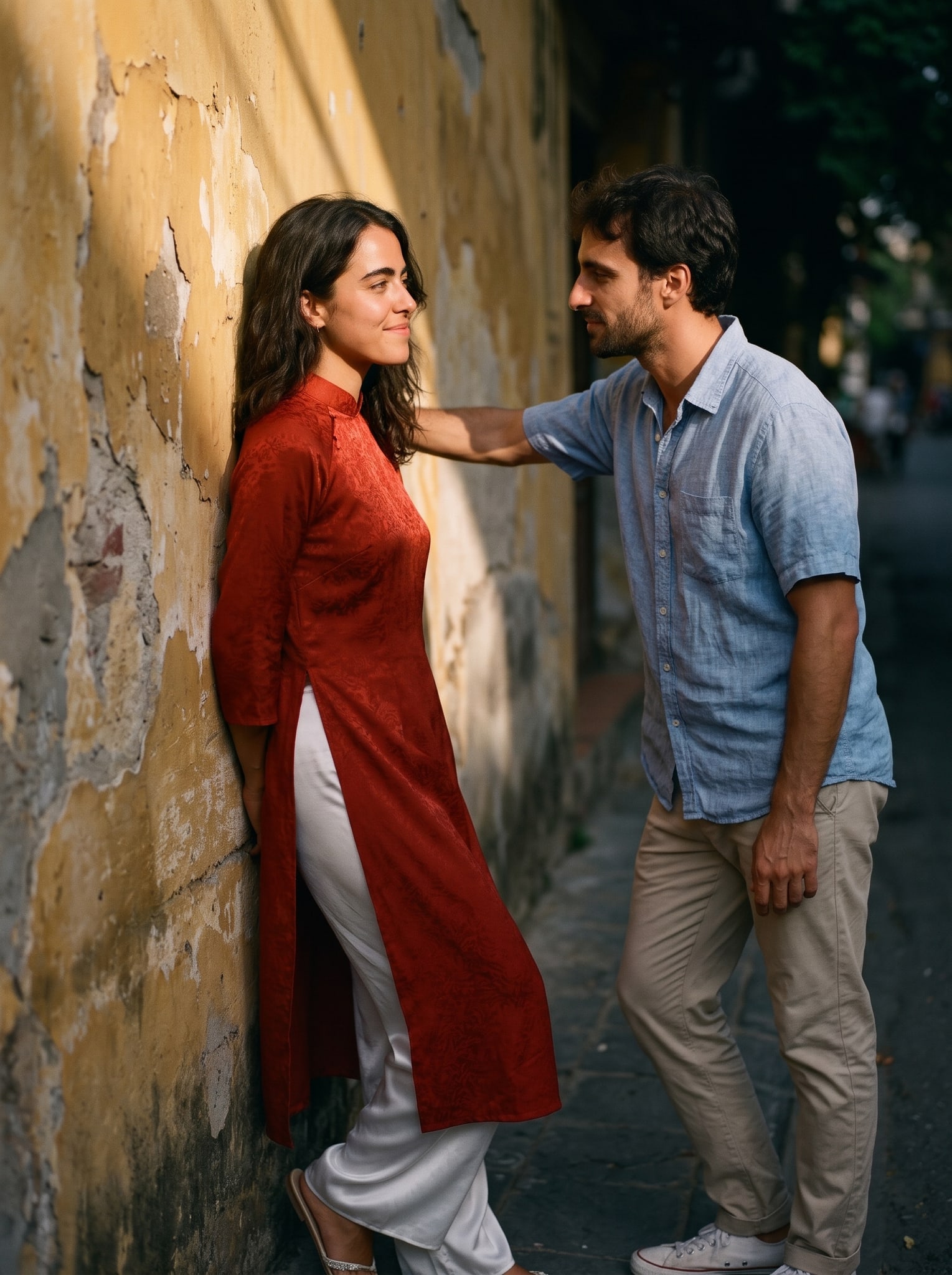
We pick locations based on the couple's ao dai color and concept. Light indigo ao dai looks striking against Yen Lap's dark wooden frames; bright white or cream suits the open plateau where sky becomes the second subject. Red or crimson works best in Nong Trai Valley's golden hour—the warmth echoes the landscape. A couple once chose the market because they wanted "real Vietnam," but we spent 40 minutes relocating a street vendor's cart and another 15 persuading a motorbike taxi to move. That session taught us to scout locations the day before with the couple if they've never visited Moc Chau.
What outfit changes are realistic in a highland environment?
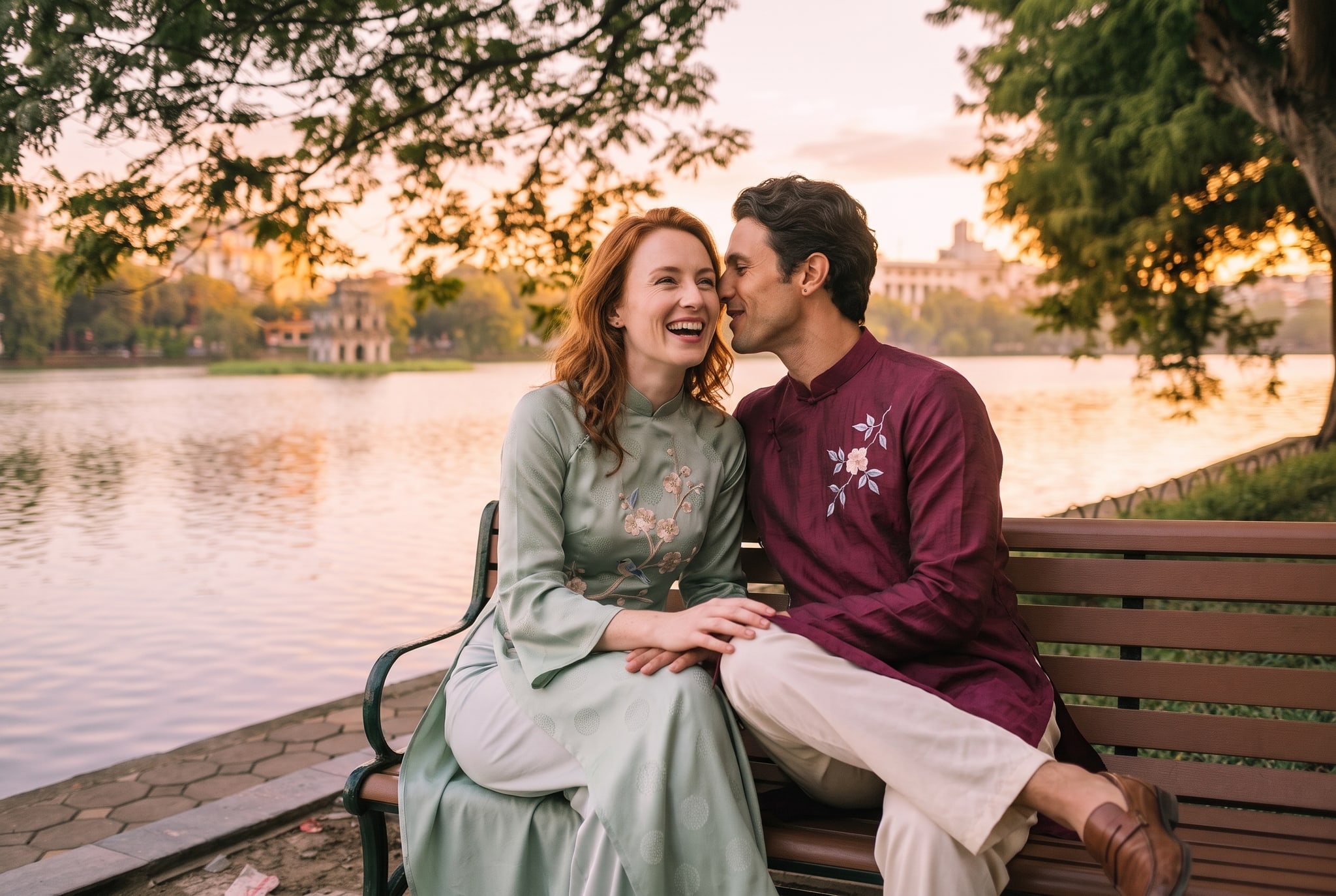
We typically plan three outfit slots: ao dai at dawn (lightweight, comfortable for movement), a Western wedding dress or suit at mid-morning or late afternoon (requires a covered changing area), and a casual/cultural outfit for the third shoot window if the day is long enough. In Moc Chau, the bottleneck is always water and electricity. We've arranged changing tents at three homestays in Yen Lap and booked the Moc Chau resort bathrooms twice, but couples often underestimate how long it takes to change a bride in a 6-meter ao dai train while standing on muddy ground with limited mirror space. One bride wore shorts and a vest over her ao dai for the first hour—it worked beautifully and saved 20 minutes of setup time. Another couple brought a portable steamer and we lost 30 minutes setting it up without a proper power source. Now we carry battery packs for phone-charging and remind guests to pack baby wipes and a waterproof makeup bag in a separate rucksack. For longer shoots, we coordinate with one of the couple photoshoot package stays that includes hotel-based makeup and hair at your hotel in Moc Chau town, so the couple's makeup artist travels with the shoot team.
How do weather and season affect your shoot day here?
Moc Chau's climate splits into three seasons: dry (September–November, 15–20°C, lowest humidity, best light), winter monsoon (December–February, 8–12°C, frequent fog, moody but unpredictable), and wet (May–August, 18–25°C, afternoon thunderstorms, morning mist reliable). We shoot year-round but never book couples on rainy forecasts—not because rain is bad for photos (it's not), but because muddy paths become slippery and the bride's dress hem collects so much mud that the return journey takes twice as long. In 2024, we rescheduled a couple booked for July 15th because the 5-day weather model showed 70% chance of afternoon storms; they rebooked for August 3rd and had clear skies with dramatic clouds. We use a rule: if the overnight low is below 8°C, we add an extra 30 minutes to the dawn shoot for the team to set up and the couple to acclimate without shivering so hard makeup cracks.
September and October are peak season because couples love the cool air and clear visibility—the plateau view stretches 20+ km on a good day. November brings frost on tea leaves some mornings, which photographs like snow; we've seen three couples request November specifically for that effect. December through February are moody but risky: 2–3 days of solid fog are common, and we've had two mornings where we couldn't see 10 meters ahead. We still shot—the couple loved the ethereal, hidden-world feeling—but it limits the "big landscape" shots that make Moc Chau famous.
What to check before booking a Moc Chau pre-wedding shoot?
Before you confirm, ask us these four things: (1) Is the shoot one day or split across two? Moc Chau needs either 12+ hours in one marathon day, or two separate 6–8 hour days to capture dawn and late-afternoon light without wasting the flat midday. (2) Does your package include a location scout visit the day before, or are we discovering the site on shoot day? We recommend a scout if either of you has never been to Moc Chau—it costs a few extra hours but prevents surprises about access roads, homestay owner availability, or permit requirements. (3) What's the backup plan if weather turns at 7 a.m.? We've rerouted couples to covered market shoots, homestay interior sessions, or close-up portrait work, but you should know the studio's policy in advance. (4) Who handles transportation? Our team drives and navigates, but you need to confirm whether the package includes a return transfer to Hanoi the same day or if you're staying overnight near Moc Chau (which opens up a second evening shoot). Check all details on our pre-wedding photoshoot page and message us your specific Moc Chau questions on WhatsApp.
We've learned that couples who book an ao dai photoshoot package in addition to a Western pre-wedding session get the most mileage from Moc Chau—the traditional dress suits the landscape differently, and it justifies the travel time. Some couples also book a special concept shoot as a third element (e.g., a documentary-style "day in the life" sequence) to maximize the location investment.
How does our team handle unexpected issues on location?
We've been shooting in Moc Chau since 2018, and the surprises are always the same. Last month, a couple's bride's dress caught on a rusty fence post at the Yen Lap homestay—we had a seamstress nearby (learned that the hard way), but it cost 45 minutes. We now carry a sewing kit, scissors, and safety pins in every location kit and warn couples that rustic = unpredictable obstacles. One groom's shoes were too new and he limped after an hour of uphill walking; we solved it by shooting mostly seated couple poses and close-ups of the bride's face and dress details. A makeup artist once forgot the color-corrector palette in Hanoi, and we improvised with foundation powder and a phone brightness adjustment to fix a bride's under-eye shadow. Those moments teach us that flexibility and fast problem-solving matter more than perfect planning.
The most common logistical issue is timing. Couples assume they'll drive from Hanoi at 6 a.m. and be ready to shoot at first light—that's impossible. It's 140 km, 2.5–3 hours with traffic, and you need to change clothes and do final makeup at your Moc Chau hotel. We now block 90 minutes of buffer time in every Moc Chau booking and advise couples to arrive the evening before or sleep in a hotel in Moc Chau town. That simple change reduced stress and reshoot requests by 80%.
See packages and prices on vietnamphotoshoot.com
FAQ
Is Moc Chau better than Ninh Binh or Hoi An for pre-wedding photos?
Each location serves different aesthetics. Moc Chau offers highland mist and tea terraces (cool, intimate, minimalist); Ninh Binh has limestone karsts and water (dramatic, cinematic, larger scale); Hoi An delivers lantern light and old-town architecture (romantic, cultural, urban). Choose based on your couple's mood and ao dai color, not ranking. We've shot all three.
Can we do a pre-wedding shoot in Moc Chau and return to Hanoi the same day?
Yes, but only as a 10–11 hour marathon starting at 5 a.m. You'll capture dawn tea plateau, maybe one outfit change, and late-afternoon valley light, then drive back by 7 p.m. Most couples find this exhausting; a two-day split (Hanoi night 1, Moc Chau night 1, Hanoi day 2) feels less rushed and lets you book a second dawn session.
What time of year has the worst weather in Moc Chau?
May through August sees daily afternoon thunderstorms, especially June–July. December–February brings fog that can persist all day. Best months are September, October, and November. We check 10-day forecasts and reschedule proactively if rain odds exceed 60%.
Do I need to bring an extra outfit or just rely on what the studio provides?
We style the ao dai and Western dress as part of our package, but you should bring one personal outfit—a casual dress, vest, or accessory—that reflects your personality. Couples often feel most themselves in their own clothes for candid portrait shots, and it adds variety to the album without costing extra time.
How much does a full Moc Chau pre-wedding shoot cost, and what's included?
Pricing varies by shoot length (6–8 hours vs. 12+ hours), styling, makeup, and photo editing. Compare all options on vietnamphotoshoot.com. We accept Visa, Mastercard, bank transfer, and online payment from abroad—WhatsApp us the dates and we'll send a quote within 24 hours.
Do we need a permit or permission to shoot in Moc Chau's tea plantations?
Most tea plantation owners allow photography for personal use if you're respectful and stay on paths. We've built relationships with three plantation managers and can arrange informal access. Commercial use or large crews may require a permit; we'll confirm before your shoot date. Homestay shooting always requires the owner's approval—we handle that.
Pre-Wedding & Elopement
Inclusions, prices and booking are on our booking site.
FAQ
Is Moc Chau better than Ninh Binh or Hoi An for pre-wedding photos?
Each location serves different aesthetics. Moc Chau offers highland mist and tea terraces (cool, intimate, minimalist); Ninh Binh has limestone karsts and water (dramatic, cinematic, larger scale); Hoi An delivers lantern light and old-town architecture (romantic, cultural, urban). Choose based on your couple's mood and ao dai color, not ranking. We've shot all three.
Can we do a pre-wedding shoot in Moc Chau and return to Hanoi the same day?
Yes, but only as a 10–11 hour marathon starting at 5 a.m. You'll capture dawn tea plateau, maybe one outfit change, and late-afternoon valley light, then drive back by 7 p.m. Most couples find this exhausting; a two-day split (Hanoi night 1, Moc Chau night 1, Hanoi day 2) feels less rushed and lets you book a second dawn session.
What time of year has the worst weather in Moc Chau?
May through August sees daily afternoon thunderstorms, especially June–July. December–February brings fog that can persist all day. Best months are September, October, and November. We check 10-day forecasts and reschedule proactively if rain odds exceed 60%.
Do I need to bring an extra outfit or just rely on what the studio provides?
We style the ao dai and Western dress as part of our package, but you should bring one personal outfit—a casual dress, vest, or accessory—that reflects your personality. Couples often feel most themselves in their own clothes for candid portrait shots, and it adds variety to the album without costing extra time.
How much does a full Moc Chau pre-wedding shoot cost, and what's included?
Pricing varies by shoot length (6–8 hours vs. 12+ hours), styling, makeup, and photo editing. Compare all options on vietnamphotoshoot.com. We accept Visa, Mastercard, bank transfer, and online payment from abroad—WhatsApp us the dates and we'll send a quote within 24 hours.
Do we need a permit or permission to shoot in Moc Chau's tea plantations?
Most tea plantation owners allow photography for personal use if you're respectful and stay on paths. We've built relationships with three plantation managers and can arrange informal access. Commercial use or large crews may require a permit; we'll confirm before your shoot date. Homestay shooting always requires the owner's approval—we handle that.
More from the team
Boho pre-wedding photoshoot in Vietnam: Hanoi, Saigon, Hoi An
Boho pre-wedding shoots mix romantic, free-spirited aesthetics with Vietnam's landscapes and heritage sites. We run full-day sessions in three cities, handling styling, makeup, location scouts and edits.
Avoid crowds at Hoang Su Phi rice terraces: timing for wedding shoots
Hoang Su Phi's terraced landscape draws couples and tour buses in equal measure. We show how to shoot there alone, when to arrive, and what to arrange with us before you go.
Photography rules at Con Dao beaches: permits, drones and what to check
Con Dao's beaches demand prep before you shoot—permits, drone zones and tide timing all affect your day. We share what the Cáo Studio team verifies on every booking.