 Cáo Studio
Home › Blog › Pre-Wedding & Elopement
Best time of year for pre-wedding photoshoot in Hanoi
By the Cáo Studio team · Hanoi & Saigon · 2026-11-02
The best pre-wedding season in Hanoi depends on what you want: September–November offers crisp golden light, dry weather and lush green after monsoon; December–February is cold (5–10°C) with occasional mist, ideal for moody tones; March–May brings humidity and haze but soft pastels if you shoot early morning; June–August is hot, wet and crowded with monsoon rain, best avoided. Cáo Studio shoots year-round, but most couples book autumn because light is steady, locations like Hoàn Kiếm Lake and the Red River dike look freshest, and scheduling is flexible. Winter suits couples wanting drama; spring and summer require dawn starts and careful location scouting. Book 2–3 months ahead in peak season.
Why does Hanoi light change so much across the year?
Hanoi sits at 21°N, so the sun angle swings 47 degrees across the year—that's massive for photography. In autumn (September–November), the sun stays lower and moves slower, giving us 4–5 hours of "golden hour" light each day instead of the 90 minutes you get in summer. Winter brings haze from heating and dust; that diffuses light but flattens color unless you're shooting near water or in shade. Spring humidity creates warm lens flare; summer sun is directly overhead by noon, leaving harsh shadows. We've noticed that September light is almost identical to November, but October feels the richest—warm, directional, no haze. Most couples who care about color and glow pick October specifically.
Which season keeps your locations looking fresh?
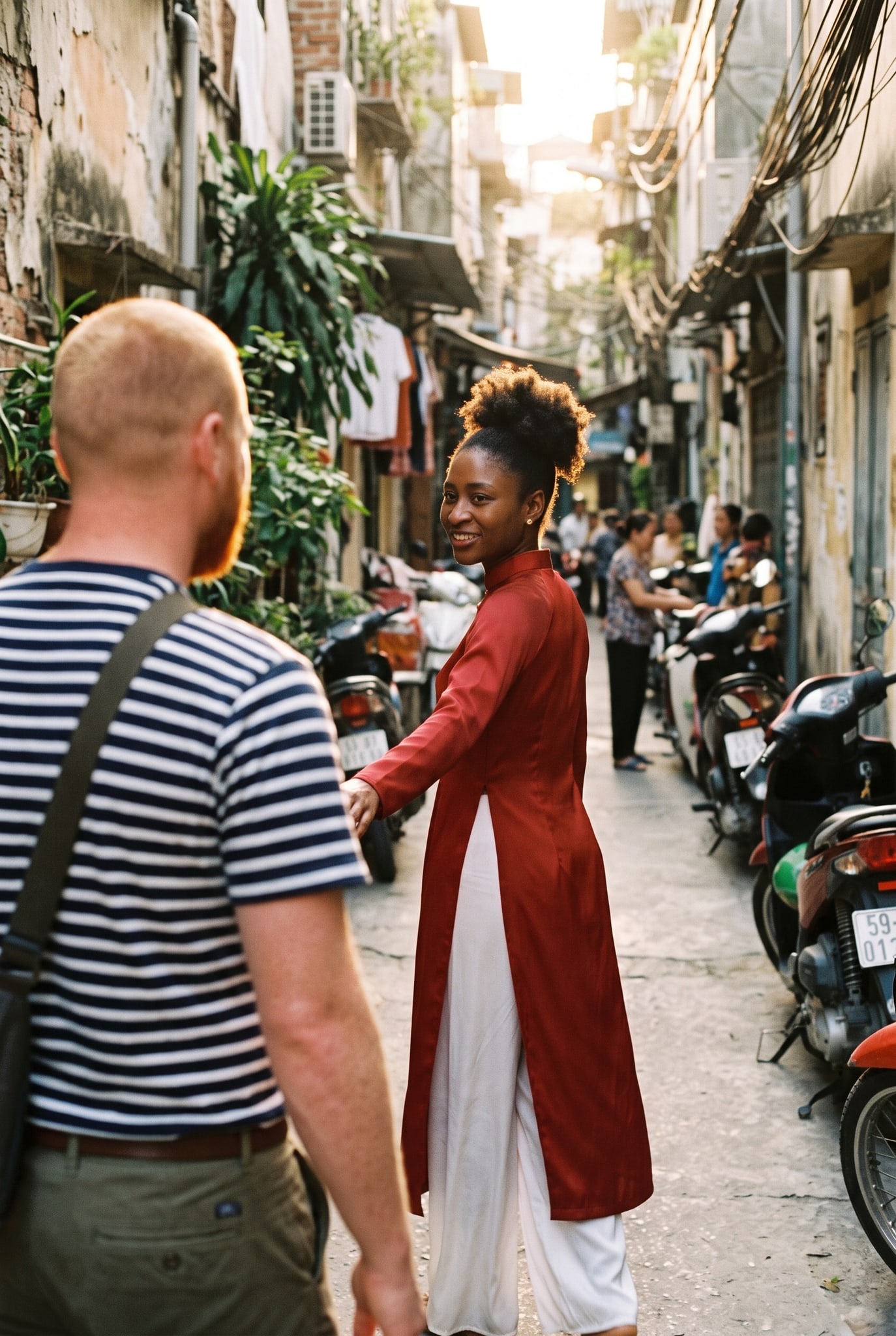
After the June–August monsoon, Hanoi's gardens and trees burst green by early September. The Red River dike is vibrant, temple grounds are clear of puddles, and the old quarter's narrow streets drain fast. By December, green fades but architecture stands out starkly—stone, brick and stucco read better in low winter light. Spring (March–May) is humid and dusty; haze sits over the city by 10 a.m., turning distant backgrounds gray. Summer rain floods streets and makes parks muddy—we've had to scramble to find dry pavement in District 1 during August shoots. If your dream is overgrown French colonial walls with vines and moss, that's best April–May. If you want crisp temple steps and clean lake edges, September–November is reliable. We check weather forecasts two weeks before each shoot and always have two location backup plans; in summer, we sometimes swap outdoor work for studio or indoor temple shoots to protect your outfits.
How does temperature affect what you can wear?
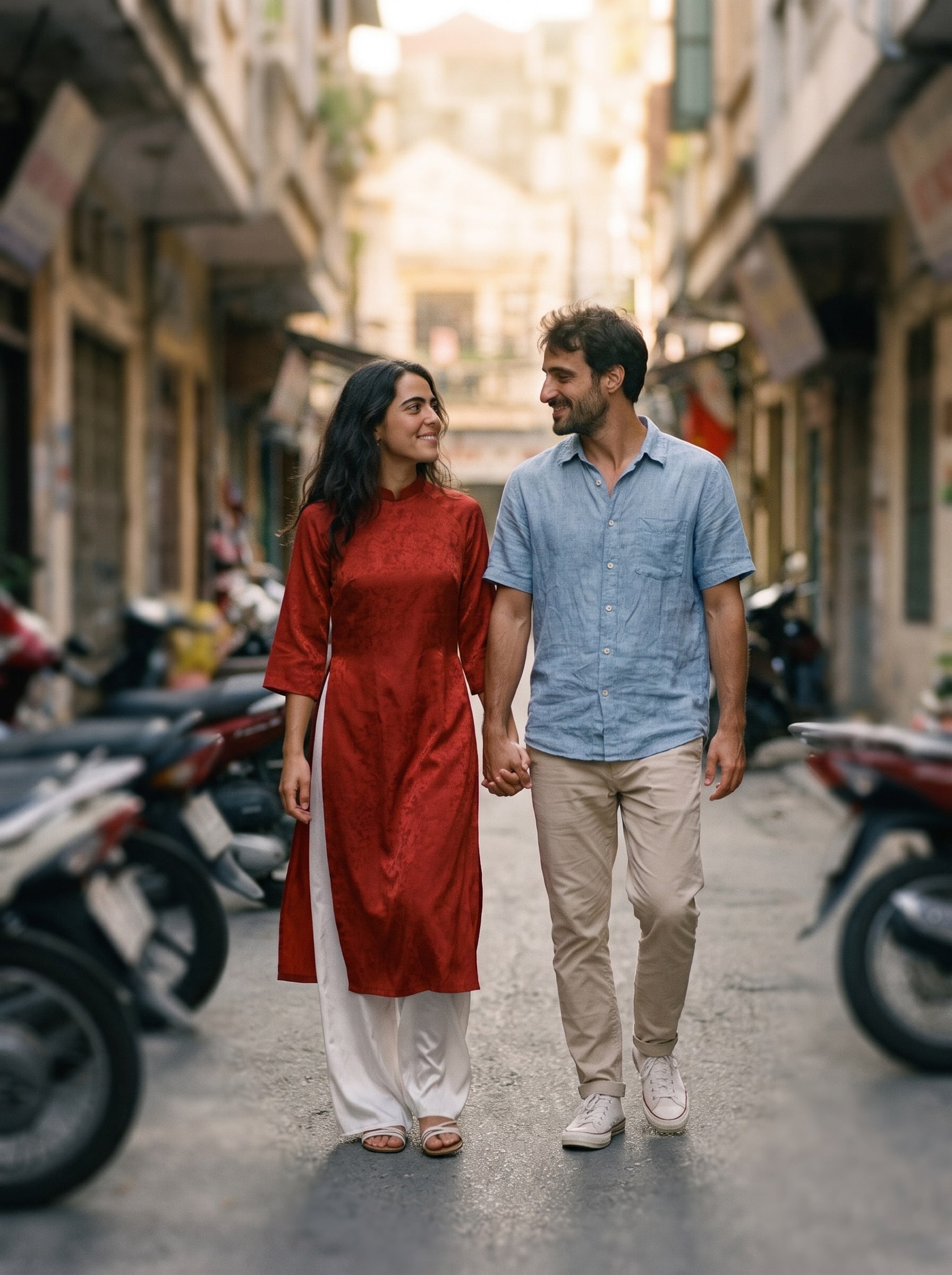
Temperature matters more than you'd think for comfort during a 4–6 hour shoot. September–November averages 20–28°C; you stay comfortable in silk ao dài, lace, lightweight fabrics and layers without sweating through makeup. December–February drops to 10–18°C—couples can wear heavier embroidered áo dài, velvet, wool and structured pieces, but our makeup artist needs to adjust foundation (cooler skin holds powder longer) and hands get cold for styling. March–May is 25–35°C with 70% humidity; makeup sets slower, clothes cling, and thick fabrics wilt. We've learned to use setting spray twice and swap heavy brocade for cotton-silk blends in spring shoots. Summer (June–August) is 28–35°C and 80%+ humidity—only lightweight, breathable fabrics work, and we schedule shoots for 6–8 a.m. to avoid midday heat. If you're traveling from abroad and packing one outfit, autumn is safest; if you love dramatic texture and weight, book winter.
What about cost and booking timeline?
| Season | Booking lead time | Location variety | Outfit comfort | Best for |
|---|---|---|---|---|
| Sep–Nov | 8–12 weeks | Excellent (dry, green) | High (20–28°C) | First choice: light, ease, options |
| Dec–Feb | 6–10 weeks | Very good (clear, stark) | Moderate (need layers) | Moody, drama, bold color |
| Mar–May | 4–8 weeks | Fair (haze by midday) | Low (hot, humid) | Early-morning shoots, pastels |
| Jun–Aug | 2–6 weeks | Poor (rain, crowds) | Very low (heat, sweat) | Avoid unless flexible on dates |
We don't adjust our day rate by season, but September–November books 60–70% of our annual pre-wedding volume, so availability shrinks fast (based on Cáo Studio's booking calendar, Jan 2026). If you're set on autumn, reserve 3 months ahead. December–February opens up more freely, and you still get excellent results—just expect cooler light and fewer green backdrops. Spring and summer are quieter, so you can book 4–6 weeks out, but you'll spend more energy finding shaded locations and managing heat. Check our pre-wedding package details to confirm dates and lead times.
See packages and prices on vietnamphotoshoot.com
What do you actually need to check before picking your date?
Before you confirm a season, nail down three things: your travel dates (fixed? flexible?), whether you want a specific location vibe (temple, lake, old town, countryside), and if you're importing outfits or buying/renting in Hanoi. If you're flying in once and the date is locked, autumn is your safest bet—worst case, a day of light cloud cover still looks beautiful, and we have backups. If you can move your shoot by ±2 weeks, ask us for a mini weather forecast (we check 10-day and 30-day patterns) and we'll suggest the window with the clearest mornings and steadiest light. If you're renting áo dài or buying fabrics here, spring and summer give you more time to prep (book 2 months early to let tailors work). If you're bringing everything from abroad, avoid monsoon season (June–August) because unpredictable rain can soak luggage and delay delivery. We send WhatsApp reminders one month, two weeks, and five days before your shoot with a detailed weather check and outfit/location confirmation—that's when you catch any last-minute concerns.
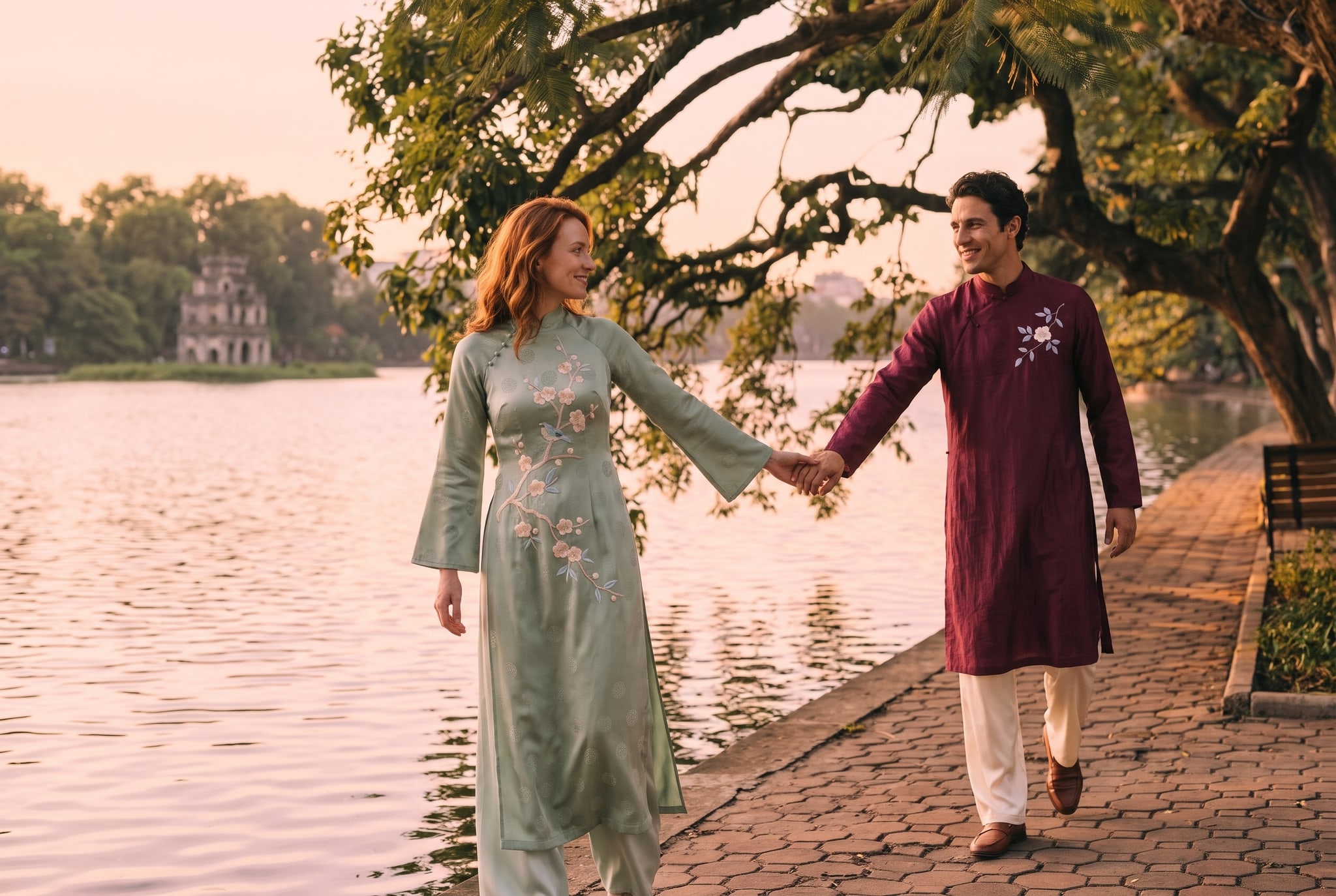
If you're pairing your pre-wedding shoot with other services—say, makeup and hair at your hotel the morning of, or a couple photoshoot in a different location on another day—let us know the full plan when you book. We can stagger them across the best light windows and make sure your outfits, styling and energy work across both sessions. Many couples also add an ao dai photoshoot package if they want traditional garment portraits separate from Western wedding wear—winter is actually great for that because the heavier embroidered pieces photograph more dramatically in low light.
How does the monsoon change where you can shoot?
June–August monsoon doesn't stop us, but it rewrites the playbook. Rain can dump 50–100 mm in a few hours; the Red River rises, streets flood, and temple grounds close. We've done indoor pre-wedding shoots in colonial villas and heritage hotels on rainy days—they're moody and private, but they're Plan B. If you must shoot in summer, we lock in indoor/covered locations by May (old town studio, French mansion interiors, hotel ballrooms) because outdoor scouting becomes impossible. Green fades earlier in summer heat; by July, trees look tired and dust haze thickens. The one upside: fewer tourists clog Hoàn Kiếm and the old quarter, so early morning (6–7 a.m.) shoots in August feel abandoned and intimate. But your outfit dries slowly in humidity, makeup touch-ups happen every 45 minutes, and our flash batteries drain faster in the heat. Unless you love that raw, close-to-nature feeling, avoid summer for pre-wedding work.
Choosing a pre-wedding season in Hanoi is ultimately a trade: autumn trades booking urgency for unbeatable light and comfort; winter trades cold for drama and solitude; spring and summer trade easiness for flexibility and lower crowds. We've shot in every month and found magic in each, but we see why autumn wins. Plan ahead, tell us your vision, and we'll time it right.
FAQ
Can we shoot outdoors in December–February, or is it too cold?
Yes—10–18°C is cool, not cold. Couple shoots are active (walking, laughing), so you stay warm. We adjust styling (layers, heavier fabrics) and makeup sets better in cool air. Mornings around 8 a.m. are coldest but light is clearest. Bring a light cardigan for breaks.
What happens if it rains on our pre-wedding shoot day?
We monitor weather 5 days out and confirm by WhatsApp. Light rain doesn't stop us—it adds moodiness and you can shield with an umbrella as a prop. Heavy rain? We have two backup indoor locations (heritage café, covered temple walkway) booked and swap on the morning. No shoot is cancelled; it just shifts location.
Is October or November better for light?
October edges November—slightly warmer (25–28°C vs. 20–24°C), more consistent golden hour, and trees still vibrant. November is equally good but light turns cooler and grass browns earlier. If you can pick one autumn month, October is most forgiving.
Can we do a pre-wedding shoot in summer if we book early morning only?
Yes—6–7 a.m. shoots in July–August work, and you avoid heat and crowds. Light is soft, streets are quiet, but you need to finish by 10 a.m. and outfit changes become hard because humidity is already high. Makeup artist brings extra powder and setting spray. Suit couples who love the raw, rushed, intimate feeling.
How much do we need to pay extra for a winter or summer shoot compared to autumn?
We charge the same rate year-round. No season surcharge. Autumn books faster so you need more notice, but the price is identical. Pick based on light and vibe, not cost.
Do we need to book a hotel or stay longer in low season?
No—you can fly in, shoot, and fly out any season. Low season (Dec–Feb, Jun–Aug) actually means easier hotel availability and sometimes better rates. Autumn is busier for hotels too. Book your shoot first, then accommodation around it.
Pre-Wedding & Elopement
Inclusions, prices and booking are on our booking site.
FAQ
Can we shoot outdoors in December–February, or is it too cold?
Yes—10–18°C is cool, not cold. Couple shoots are active (walking, laughing), so you stay warm. We adjust styling (layers, heavier fabrics) and makeup sets better in cool air. Mornings around 8 a.m. are coldest but light is clearest. Bring a light cardigan for breaks.
What happens if it rains on our pre-wedding shoot day?
We monitor weather 5 days out and confirm by WhatsApp. Light rain doesn't stop us—it adds moodiness and you can shield with an umbrella as a prop. Heavy rain? We have two backup indoor locations (heritage café, covered temple walkway) booked and swap on the morning. No shoot is cancelled; it just shifts location.
Is October or November better for light?
October edges November—slightly warmer (25–28°C vs. 20–24°C), more consistent golden hour, and trees still vibrant. November is equally good but light turns cooler and grass browns earlier. If you can pick one autumn month, October is most forgiving.
Can we do a pre-wedding shoot in summer if we book early morning only?
Yes—6–7 a.m. shoots in July–August work, and you avoid heat and crowds. Light is soft, streets are quiet, but you need to finish by 10 a.m. and outfit changes become hard because humidity is already high. Makeup artist brings extra powder and setting spray. Suit couples who love the raw, rushed, intimate feeling.
How much do we need to pay extra for a winter or summer shoot compared to autumn?
We charge the same rate year-round. No season surcharge. Autumn books faster so you need more notice, but the price is identical. Pick based on light and vibe, not cost.
Do we need to book a hotel or stay longer in low season?
No—you can fly in, shoot, and fly out any season. Low season (Dec–Feb, Jun–Aug) actually means easier hotel availability and sometimes better rates. Autumn is busier for hotels too. Book your shoot first, then accommodation around it.
More from the team
Boho pre-wedding photoshoot in Vietnam: Hanoi, Saigon, Hoi An
Boho pre-wedding shoots mix romantic, free-spirited aesthetics with Vietnam's landscapes and heritage sites. We run full-day sessions in three cities, handling styling, makeup, location scouts and edits.
Avoid crowds at Hoang Su Phi rice terraces: timing for wedding shoots
Hoang Su Phi's terraced landscape draws couples and tour buses in equal measure. We show how to shoot there alone, when to arrive, and what to arrange with us before you go.
Photography rules at Con Dao beaches: permits, drones and what to check
Con Dao's beaches demand prep before you shoot—permits, drone zones and tide timing all affect your day. We share what the Cáo Studio team verifies on every booking.