 Cáo Studio
Home › Blog › Pre-Wedding & Elopement
Cat Cat Village Wedding Photos: Best Time & Golden Light
By the Cáo Studio team · Hanoi & Saigon · 2026-11-04
Cat Cat village, a 30-minute drive from Sapa town, sits at 1,200m elevation with dramatic rice terraces and traditional Hmong homes. Golden hour—the first 90 minutes after sunrise or last 90 before sunset—wraps the terraces in warm amber light and eliminates harsh shadows on faces. We shoot there most often between 5:45–6:45 a.m. or 4:30–5:45 p.m., depending on season. Morning light cuts through mist; evening light grazes the contours of the fields and throws couple silhouettes into relief. Our stylists bring lightweight layers because temperature swings 8–12°C between sunrise and midday. Avoid 11 a.m.–3 p.m.: overhead sun flattens features, creates unflattering shadows under chins, and washes out skin tones. We always check weather forecasts 48 hours before and have a backup indoor village homestead location in mind—rain is common June–August. Pre-wedding shoots at Cat Cat typically run 2.5–3 hours; ask us for a quote on WhatsApp. Chat with us on WhatsApp
Why does sunrise light at Cat Cat feel different than at sea level?
Sapa's high altitude means the sun clears the valley walls later and drops faster in the afternoon. At 1,200m, we get 15–20 minutes of direct, unfiltered golden-hour light before the sun hits the mountain ridge to the west. At sea level, that same light window stretches 30–40 minutes because the horizon is lower. We've timed it across 40+ shoots: Cat Cat's narrow valley creates a "natural aperture" that concentrates light intensity. Mist hangs in the fields until 6:15 a.m. most days, which softens and diffuses light—ideal for couple portraits where we want glow without blown-out highlights on foreheads. By 6:45 a.m., the mist clears, contrast jumps, and we shift to landscape and movement shots where sharper detail matters.
What time of day do the Hmong market vendors appear—and does it change our shoot flow?
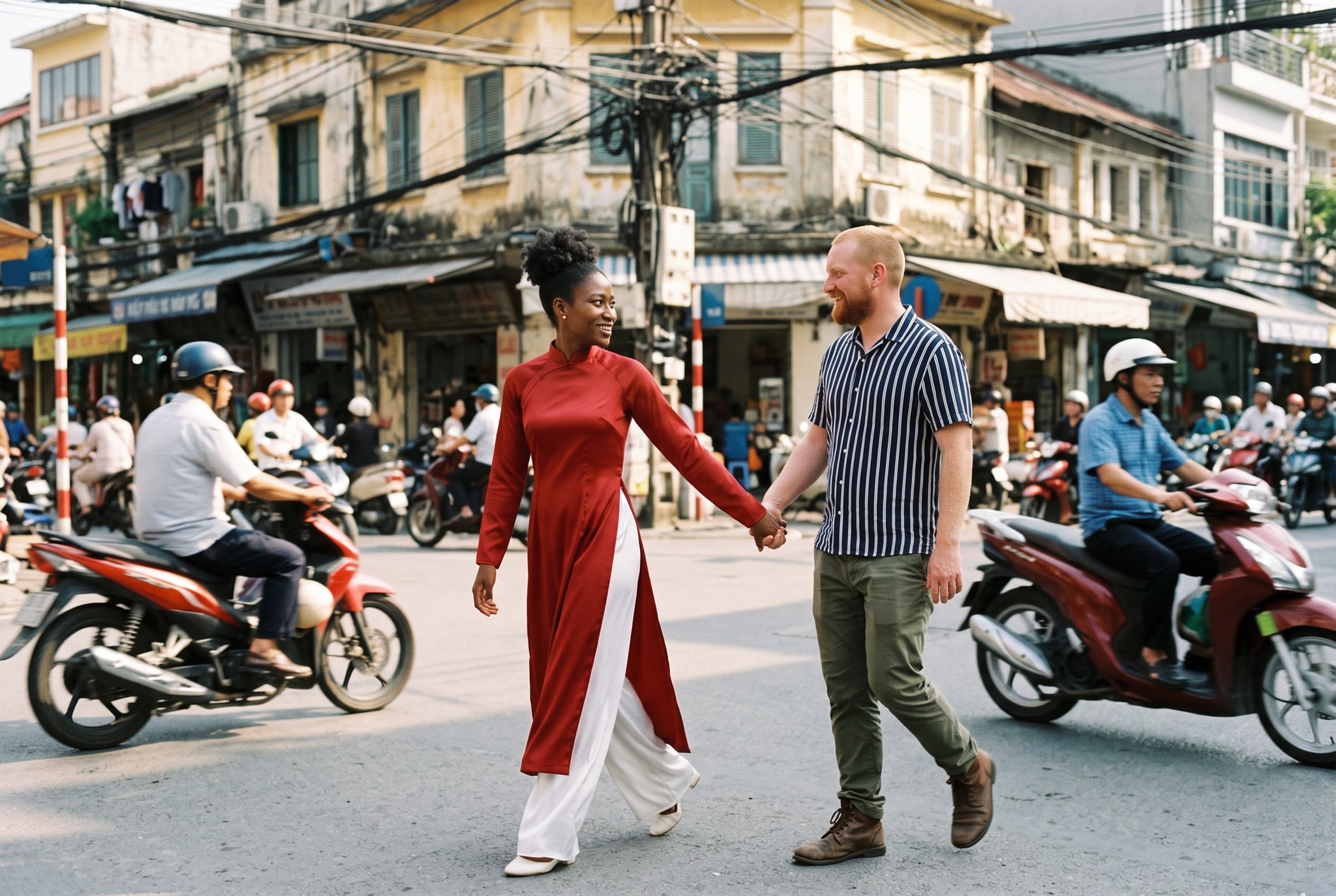
The Cat Cat market (locally called chợ Mèo) opens around 7 a.m. and peaks 7:30–9 a.m. Vendors arrive with flowers, textiles, and fresh produce; tourists start filtering in by 8 a.m. We schedule couple portraits before 7:15 a.m. to avoid crowds in background frames—even a slight blur of moving figures breaks the intimacy of bridal portraits. By 9 a.m., the market becomes a creative asset: we use vendor stalls and hanging textiles as foreground framing, and couples love candid moments among the activity. On several shoots, brides have worn traditional Hmong indigo jackets borrowed from vendors (we arrange this beforehand)—the market becomes part of the story rather than an obstacle. Evening shoots (4:30 p.m. onward) encounter almost no pedestrian traffic, which suits couples who want solitude but miss the cultural texture morning offers.
See packages and prices on vietnamphotoshoot.com
How does rice terrace geometry change between morning and afternoon shots?
Morning light rakes across terraces from the east, throwing each contour into sharp relief—the paddies look sculptural and three-dimensional. Afternoon light (4:30–5:45 p.m.) comes from the west and flattens terraces slightly but amplifies the layering: each step of rice catches the golden glow in sequence, creating a "staircase of light" effect. We've built two shooting approaches around this: morning = couple in the foreground with terrace texture behind (detail-rich, graphic); afternoon = couple positioned mid-terrace so their bodies break up the layered light patterns (dreamy, editorial). Rain runoff in the terraces creates puddles and reflections. Summer (June–August) means fuller water levels and stronger reflections; winter (November–February) dries out the paddies, so we reposition to include village rooflines and tree lines for depth. Neither is "better"—it's a choice. Afternoon also allows us to shoot concept ideas that rely on silhouette: backlighting against the sun turns the couple into a unified shape against glowing fields.
Should we avoid cloudy days, or can we use overcast light to our advantage?
Overcast skies at Cat Cat are not a failure—they're a different toolkit. On cloudy mornings (50% of our bookings June–August), we lose the mist-diffused glow but gain flat, shadowless light ideal for skin clarity and color saturation. Bridal makeup shows no unflattering shadows; reds and purples in traditional áo dài pop without blown-out highlights. We shift to tighter framing—close-ups of hands, rings, fabric detail—because the landscape loses the golden-hour drama. Couples who want emotional intimacy over landscape grandeur often prefer overcast shoots. We've also learned to lean into the mood: overcast light pairs beautifully with couple embraces and in-motion walking shots where the soft, even illumination flatters movement. However, heavy cloud cover (visibility <100m) does require backup plans. We move shoots to nearby Silver Waterfall or reposition inside Hmong homesteads with large windows. Checking a Sapa weather forecast 48 hours out tells us whether to pack extra reflectors (sunny day backup) or embrace the softer palette.
| Timing | Light Character | Best For | Risk & Mitigation |
|---|---|---|---|
| 5:45–6:45 a.m. | Warm amber through mist; soft shadows | Intimate couple portraits, bridal close-ups | Mist clears by 6:45; must shoot fast or shift to landscape |
| 7:00–9:00 a.m. | Clear, high contrast; market activity peak | Candid moments, vendor interactions, detail shots | Crowds increase; reserve exclusive time or shoot earlier |
| 11:00 a.m.–3:00 p.m. | Overhead, flat, harsh | Avoid unless essential; shelter indoors or reschedule | Unflattering shadows under chin, washed-out skin tones |
| 4:30–5:45 p.m. | Golden side-light; terrace layering | Silhouette, editorial movement, landscape drama | Sun dips fast; must finish by 5:50 p.m. or lose light entirely |
| Overcast | Flat, even, shadowless | Skin clarity, bridal makeup, tight framing | Landscape loses drama; compensate with storytelling, embraces |
What do we actually pack and set up on a Cat Cat morning shoot?
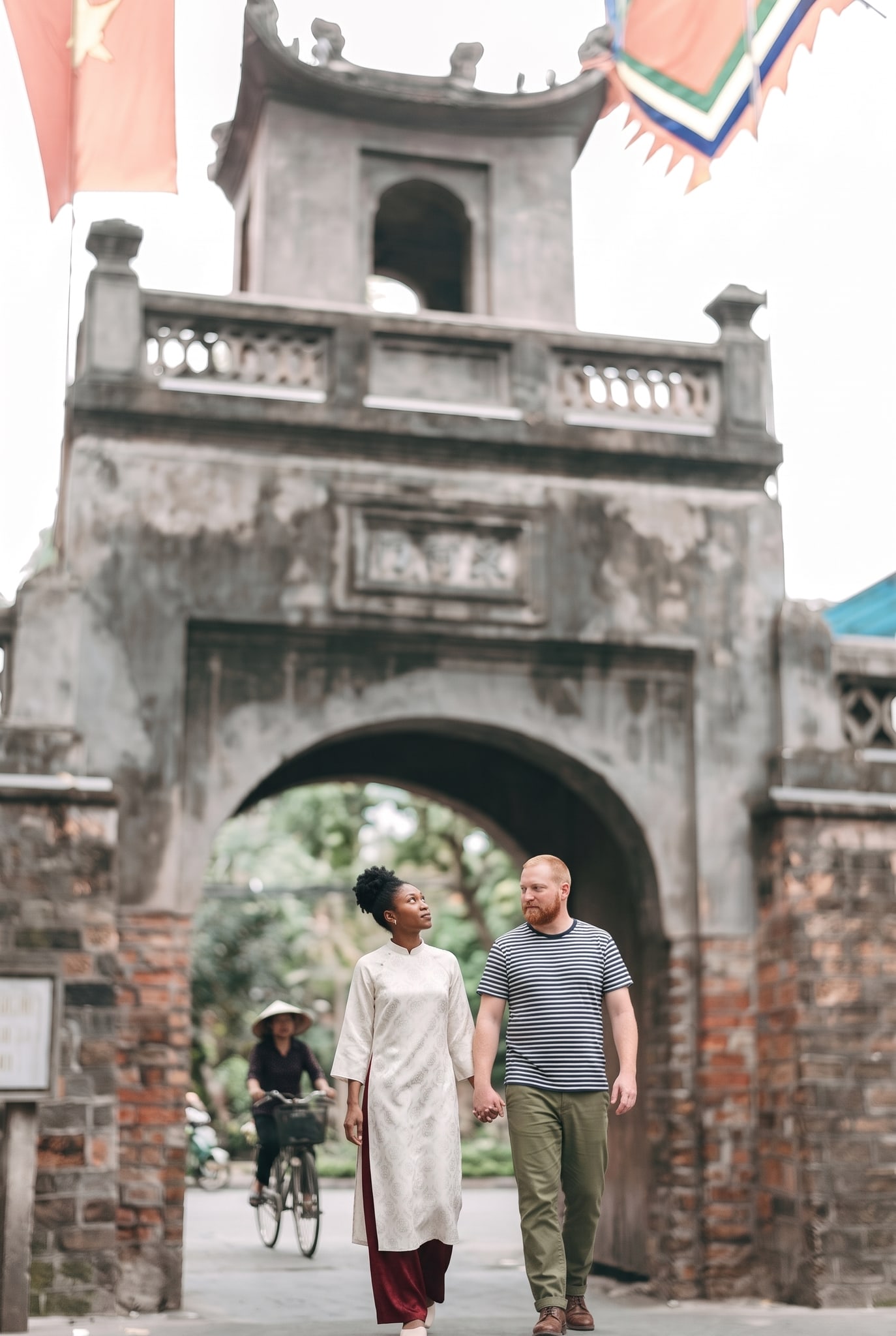
Our kit changes by season and time. For a 5:45 a.m. start, we bring: one large backlit reflector (silver/gold) to bounce morning light if the couple stands in shadow; a 2-stop ND filter for the main camera (Sapa mist intensifies exposure; we often overexpose by 0.7 stops in raw, so the ND steadies shutter speed); wireless microphone for capturing ambient sound (market chatter, rice-field birdsong adds texture to video reels); two backup batteries (cold at altitude drains them 30% faster); and a weatherproof bag for the second camera body. We station our assistant 20 meters downhill with a handheld reflector to lift shadows on the bride's face during terrace portraits—this is critical because without it, faces go dark against bright sky. By 7:00 a.m., we switch to handheld work: ditching the tripod, we move between vendors, terraces, and homestead interiors. We've learned to recruit a Hmong local guide (arranged through our Sapa hotel contact 24 hours ahead) who unlocks access to family homesteads for intimate indoor shots—these add cultural depth and serve as weather backup. Total shoot time: 2.5–3 hours. We finish by 9:00 a.m., which gives couples time to rest before afternoon activities or transition to other Sapa location shoots like waterfalls.
What time-of-day factors change between seasons—and how do we adapt?
November–February (winter, dry season): sunrise happens later (~6:30 a.m.); mist is thinner and clears faster (by 6:15 a.m.); light is cooler and bluer. We shoot 6:15–7:15 a.m. instead of 5:45 a.m., and we boost whites in post-processing to counteract cool tones. Terraces are drier but reflect less light, so we increase reflector use. March–May (spring): mist thickens, sunrise light intensifies, and we're back to 5:45 a.m. starts. This is peak pre-wedding season—we book Cat Cat 3–4 times weekly. June–August (monsoon): fog hangs until 7:30 a.m.; rain is 60% probable; we prioritize the 4:30–5:45 p.m. slot when afternoon light burns through clouds. September–October (autumn): crisp, clear mornings; mist is light but present; golden hour lasts longer. We shoot 5:45 a.m. or 4:00 p.m. (earlier sunset). Our team checks the Sapa weather API every morning at 5:00 a.m. and texts the couple by 5:15 a.m. if we're shifting time or location. Flexibility here prevents cancellations and builds trust.
What to check before you book a Cat Cat wedding shoot
Light timing is non-negotiable. Ask the studio if they scout Cat Cat in your month—not all photographers do. Confirm the exact start time: 5:45 a.m. is firm for golden-hour morning light; afternoon starts before 4:30 p.m. waste weak light. Ask about mist probability for your dates (50%+ June–August). Verify backup locations in writing; some studios have none. Check if a local guide is included—this unlocks homestead access and cultural authenticity. Request sample frames from shoots in your month to see how the studio handles light and mist in that season. Ask whether the price includes assistant time (crucial for reflector work on terraces). Confirm weather contingency: does the studio reschedule free, or offer an indoor package? Bring weather-appropriate clothing: layers for 8–12°C swings; waterproof jacket June–August.
Pages from our team you may need
FAQ
What's the single best time to shoot at Cat Cat village for wedding photos?
5:45–6:45 a.m., when golden light filters through mist and the market is quiet. Afternoon (4:30–5:45 p.m.) is second-best, favoring silhouettes and landscape drama. Avoid 11 a.m.–3 p.m. entirely—overhead sun creates harsh shadows and washed-out skin.
Does overcast weather ruin a Cat Cat pre-wedding shoot?
No. Overcast light flattens shadows, saturates colors, and suits intimate couple portraits and bridal close-ups beautifully. It's a stylistic choice, not a failure—though you'll trade landscape grandeur for emotional intimacy.
Why does our Cat Cat photo shoot differ so much from sea-level golden hour?
Sapa sits at 1,200m elevation; the narrow valley compresses golden hour into 15–20 minutes by concentrating light intensity. Mist at sunrise diffuses light differently than at sea level, creating a softer, more magical quality.
Should we hire a local guide for a Cat Cat wedding shoot, or is it optional?
Hire one—they unlock family homestead access for indoor backup shots, add cultural storytelling, and ensure vendor relationships stay smooth. Arrange 24 hours ahead through your accommodation.
How do we adapt timing if we're booking Cat Cat in June, August, or monsoon season?
Expect mist until 7:30 a.m. and 60% rain probability. Prioritize the 4:30–5:45 p.m. afternoon slot when light burns through clouds, or ask the studio about an indoor alternative package. Always confirm a weather contingency.
Can we shoot at Cat Cat for both morning and afternoon in one day?
Yes—couples often book a pre-wedding package covering 4–5 hours total. Morning (5:45–8:00 a.m.) captures terraces and market; afternoon (4:30–5:45 p.m.) captures silhouettes. This requires two location setups and costs more—ask for a quote on WhatsApp.
Do we need permits or permission to shoot at Cat Cat village?
No formal permit, but cultural respect is essential. Avoid shooting Hmong vendors' faces without consent. A local guide (included in premium packages) handles this seamlessly and often arranges homestay access that solo tourists never get.
What backup locations exist if weather turns bad at Cat Cat?
Silver Waterfall (15 min away), Sapa church and town square (30 min), or private Hmong homestead interiors with large windows. A quality studio plans this before the shoot day—verify backup options before booking.
Pre-Wedding & Elopement
Inclusions, prices and booking are on our booking site.
FAQ
What's the single best time to shoot at Cat Cat village for wedding photos?
5:45–6:45 a.m., when golden light filters through mist and the market is quiet. Afternoon (4:30–5:45 p.m.) is second-best, favoring silhouettes and landscape drama. Avoid 11 a.m.–3 p.m. entirely—overhead sun creates harsh shadows and washed-out skin.
Does overcast weather ruin a Cat Cat pre-wedding shoot?
No. Overcast light flattens shadows, saturates colors, and suits intimate couple portraits and bridal close-ups beautifully. It's a stylistic choice, not a failure—though you'll trade landscape grandeur for emotional intimacy.
Why does our Cat Cat photo shoot differ so much from sea-level golden hour?
Sapa sits at 1,200m elevation; the narrow valley compresses golden hour into 15–20 minutes by concentrating light intensity. Mist at sunrise diffuses light differently than at sea level, creating a softer, more magical quality.
Should we hire a local guide for a Cat Cat wedding shoot, or is it optional?
Hire one—they unlock family homestead access for indoor backup shots, add cultural storytelling, and ensure vendor relationships stay smooth. Arrange 24 hours ahead through your accommodation.
How do we adapt timing if we're booking Cat Cat in June, August, or monsoon season?
Expect mist until 7:30 a.m. and 60% rain probability. Prioritize the 4:30–5:45 p.m. afternoon slot when light burns through clouds, or ask the studio about an indoor alternative package. Always confirm a weather contingency.
Can we shoot at Cat Cat for both morning and afternoon in one day?
Yes—couples often book a [pre-wedding package](/go/pre-wedding-photoshoot) covering 4–5 hours total. Morning (5:45–8:00 a.m.) captures terraces and market; afternoon (4:30–5:45 p.m.) captures silhouettes. This requires two location setups and costs more—ask for a quote on WhatsApp.
Do we need permits or permission to shoot at Cat Cat village?
No formal permit, but cultural respect is essential. Avoid shooting Hmong vendors' faces without consent. A local guide (included in premium packages) handles this seamlessly and often arranges homestay access that solo tourists never get.
What backup locations exist if weather turns bad at Cat Cat?
Silver Waterfall (15 min away), Sapa church and town square (30 min), or private Hmong homestead interiors with large windows. A quality studio plans this before the shoot day—verify backup options before booking.
More from the team
Pre-wedding photoshoot in Phu Quoc June: weather, light, crowds
June is Phu Quoc's monsoon season. Our studio has shot dozens of couples there in early summer—here's what weather and crowds really mean for your pre-wedding day.
Pre-wedding photoshoot in Phu Quoc July: weather, light, crowds
July is Phu Quoc's wet season, but it opens creative possibilities: moody skies, empty beaches after storms, and dramatic backlighting. We'll walk you through what happens on the ground.
Pre-wedding photoshoot in Phu Quoc November: weather, light, crowds
November is peak season for pre-wedding shoots in Phu Quoc: weather is stable, light is soft, but crowds peak mid-month. We share what our team sees on the ground.