 Cáo Studio
Home › Blog › Pre-Wedding & Elopement
Cau Dat tea hills wedding photos: best time of day and light
By the Cáo Studio team · Hanoi & Saigon · 2026-11-04
Cau Dat's elevation (1,500m) and tea-row geometry create dramatic shadows and mist that peak between 06:00–08:00 and 16:30–18:30. The best wedding light arrives in the dry season (November–April), when morning fog burns off slowly and late-afternoon sun hits rows at a shallow angle. We typically schedule pre-wedding couples for 5–6 hours starting early, catching mist on the first hour, repositioning as light moves, then racing the sunset. Cáo Studio books these sessions year-round, but humidity and cloud cover in summer (May–October) reduce visibility and require backup indoor or roadside locations. Ask us for a quote on WhatsApp and mention your preferred date—we check actual weather patterns for your week and adjust the timeline or suggest an alternative nearby site. Chat with us on WhatsApp
Golden hour and misty mornings at Cau Dat produce the most romantic wedding light. Learn when to shoot, what we see on set, and how to book your session.
Cau Dat's elevation (1,500m) and tea-row geometry create dramatic shadows and mist that peak between 06:00–08:00 and 16:30–18:30. The best wedding light arrives in the dry season (November–April), when morning fog burns off slowly and late-afternoon sun hits rows at a shallow angle. We typically schedule pre-wedding couples for 5–6 hours starting early, catching mist on the first hour, repositioning as light moves, then racing the sunset. Cáo Studio books these sessions year-round, but humidity and cloud cover in summer (May–October) reduce visibility and require backup indoor or roadside locations. Ask us for a quote on WhatsApp and mention your preferred date—we check actual weather patterns for your week and adjust the timeline or suggest an alternative nearby site.
Why does morning mist at Cau Dat look so different in photos than in person?
Mist absorbs and scatters light, softening shadows and creating depth between tea rows. Your eye sees mist as flat white; the camera records it as layers of tone, with the closest rows sharp and distant hills fading to nothing. In real time, mist feels romantic but quiet. In a photograph, mist becomes drama—cool tones, romance, a sense of privacy. We've shot Cau Dat in August when mist burned off by 08:15 and the site looked almost two-dimensional. By November, mist lingers until 09:00, giving us soft light for an extra 45 minutes. The trade-off: mist also means lower overall brightness, so we push ISO and aperture wider. Conclusion: morning mist is a natural filter that flatters couple photography more than individual portraits.
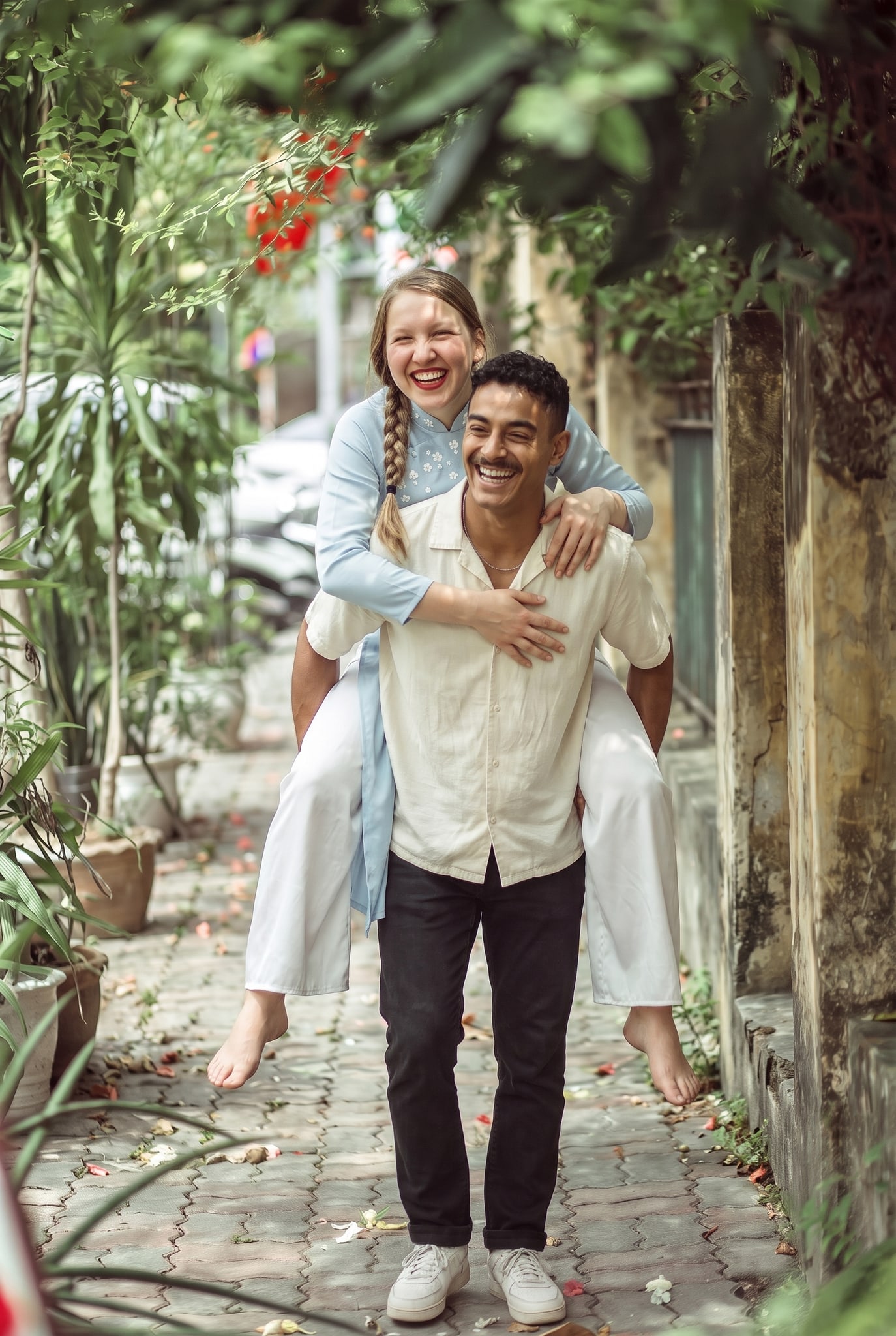
What happens to light quality between 08:00 and 16:00 at Cau Dat?
By mid-morning (08:30–10:00), mist clears and the sun rises above the tea canopy, creating harsh overhead shadows that flatten the landscape. We rarely shoot during this window unless the couple wants clean, high-contrast editorial images. Between 10:00 and 15:00, light is bright but unflattering for romance—skin tones lean cool, shadows under eyes deepen, and the tea rows lose dimension. Around 15:30, the sun drops low enough that it skims across the rows again, rebuilding that dimensional quality. We use this dead-light window for logistical tasks: changing outfits, moving between locations within Cau Dat, or heading to backup sites like Tuyen Lam Lake (15 minutes south) where tree cover and water provide natural diffusion. Conclusion: plan your main couple shots either before 08:30 or after 16:00 to maximize flattering light.
How do clouds and rain affect our shooting schedule on the day?
We check the hourly forecast the morning before and again at 05:30 on shoot day. If clouds are moving in predictably (say, 30% cover by noon), we front-load morning mist shots and shift the evening session earlier. If rain is in the forecast, we move the whole shoot to indoor tea-processing facilities nearby or a hotel ballroom in Da Lat city (25 km away). We've had two days when clouds arrived unexpectedly at 11:00 and we pivoted to the Tuyen Lam road with tree-dappled light instead—different vibe, but the images held up. The couples we brief beforehand about this flexibility respond well; those who expect a fixed 08:00–18:00 timeline sometimes feel disappointed when we say "let's shoot the mist now and skip the afternoon heat." Conclusion: weather unpredictability at 1,500m is real; flexibility on the day saves the session.
Should we shoot tea rows straight-on or angle across the slope?
Straight-on rows create repetition and can look like a "wallpaper" backdrop if the couple is centered. Angled across the slope—shooting from one row toward another 200m away—builds depth and frames the couple within the landscape rather than in front of it. We also use steep side angles where the rows create leading lines converging toward a distant vanishing point. In the first hour (mist still present), side angles work best because the light is diffuse and doesn't create confusing shadows in deep rows. By evening, when light is directional, we mix straight-on shots with angled ones to vary the narrative. One couple asked us to shoot looking upslope (rows rising behind them). In low light, this backlit them too much and blew the sky. We corrected by dropping ISO and reducing aperture, then repositioning them to a mid-slope area where the background gradient was gentler. Conclusion: angled shots across the slope are more dynamic; mix approaches and meter for the couple's face, not the background.
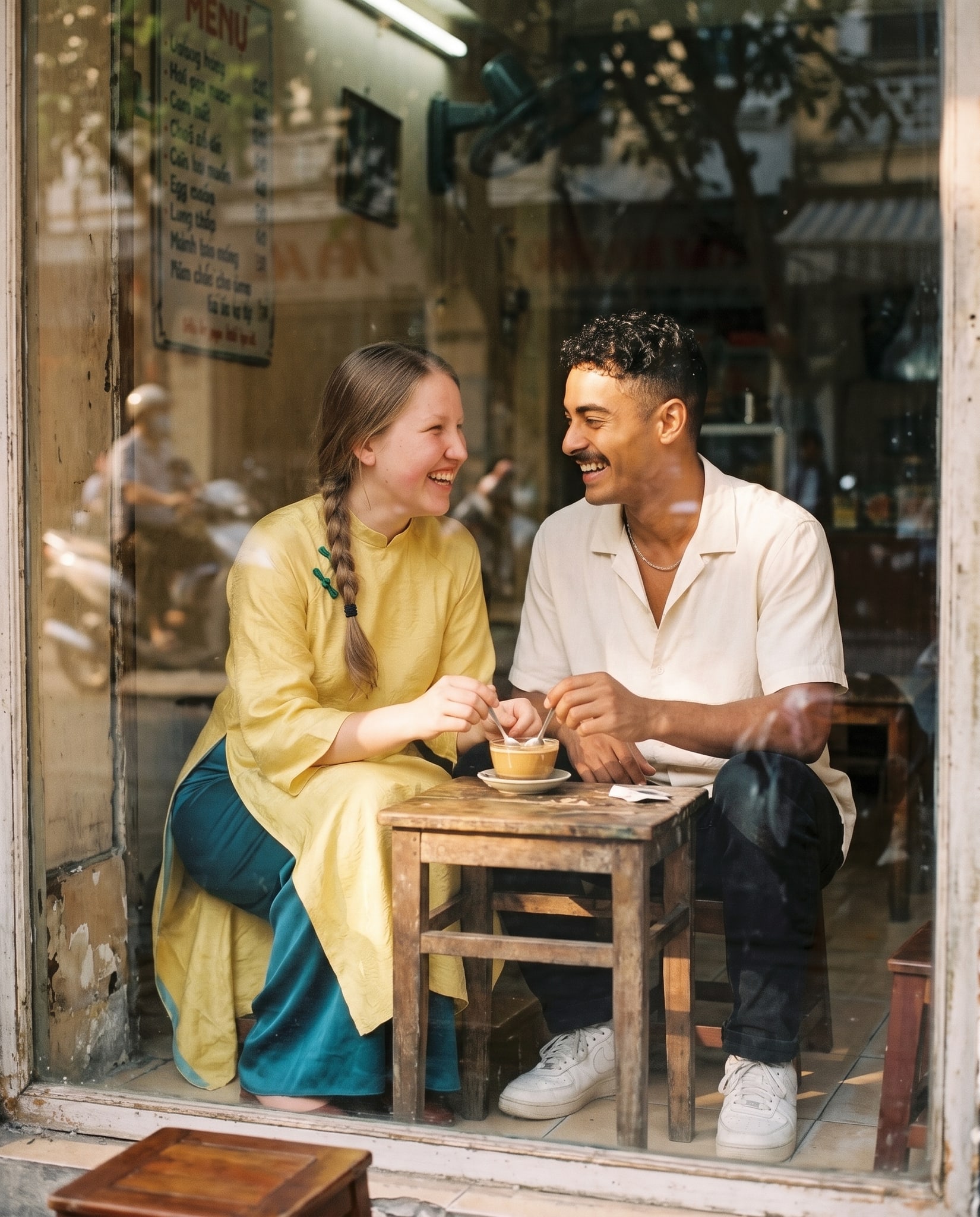
What do you tell couples about outfit and makeup choices for this location?
Red, magenta, and deep jewel tones read better than pastels against the green rows. Whites and light pinks wash out in morning mist unless the couple is backlit. We recommend ao dai or formal wear in jewel tones for early shoots; lighter fabrics can work for evening when the light is warmer and more forgiving. Makeup needs to be more defined at Cau Dat than in studio—the natural light is soft but large, so a light hand with foundation can look pale in the photos. We typically brief couples on a WhatsApp call a week before: "Wear jewel tones, don't worry about perfect foundation, and bring a shawl because 1,500m feels 10 degrees cooler at dawn." Hair in loose waves or loose braids works better than tight updos because the wind at elevation is real, and loose textures read better in soft morning light. For ao dai photoshoot options, the deep indigo and ruby-red fabrics are best for Cau Dat. Conclusion: bold colors and loose textures maximize the location's romantic natural light.
See packages and prices on vietnamphotoshoot.com
Booking and timing: what to check before you confirm
| Time of year | Light character | Mist | Best start time | Backup plan | Right for |
|---|---|---|---|---|---|
| Nov–Feb | Warm low angle, long shadows | 60–90 min duration | 06:30 | Indoor Da Lat sites | Romantic couples seeking mist |
| Mar–Apr | Warm, shorter mist | 30–45 min | 07:00 | Tuyen Lam Lake | Warm tones, some mist |
| May–Oct | Flat, high humidity, cloud cover | Rare | 05:30 (hope for break) | Hotel ballroom or tea facility | Flexible couples, editorial style |
When you contact us to book a pre-wedding photoshoot, mention:
- Your preferred date range (Cau Dat is bookable year-round, but November–February guarantees better light)
- Whether you want mist as a priority or dramatic shadows
- How flexible you are if weather demands a location shift
- Outfit colors and style (so we can advise on contrast)
We then send you a 3-day weather preview and a proposed hour-by-hour timeline. If you're traveling from abroad and need hair and makeup on location, we can arrange makeup and hair at your hotel in Da Lat, 30 km from Cau Dat, so you arrive ready and we save 90 minutes of travel time. For couples doing a proposal and anniversary session at Cau Dat, we typically add 2–3 hours because the light is so varied; ask us for a quote on WhatsApp.
What to check before you book
- Weather history for your dates: We pull 5-year climate data for Cau Dat; if you're booking May–October, expect a backup plan.
- Travel time from your hotel: Cau Dat is 1.5–2 hours from central Da Lat; if you're staying in Saigon or Hanoi, budget a night in Da Lat or negotiate an early-morning departure.
- Backup location preferences: If rain moves in, would you prefer an indoor tea facility, a hotel room, or Tuyen Lam Lake? Tell us so we can prep.
- Outfit confirmations: Send photos of what you're wearing at least one week before. We'll advise on contrast and microphone placement if you're doing a vow exchange.
- Sunrise or sunset priority: We can't do both in one day at Cau Dat and maintain light quality. Choose one, and we'll build the rest of the timeline around it.
See packages and prices on vietnamphotoshoot.com
Pages from our team you may need
- ao dai photoshoot package
- couple photoshoot package
- makeup and hair at your hotel
- proposal and anniversary package
FAQ
What's the earliest we can start shooting at Cau Dat to catch mist?
We typically start at 06:00–06:30 (late November through early April) to catch mist at its peak. In summer, mist is rare and burns off by 07:30 even if present. Earlier starts require a night in Da Lat; most couples find 06:30 realistic and arrive energized.
Can we shoot at Cau Dat in the rain?
Yes, but with limits. Light drizzle adds atmosphere and the tea rows glisten beautifully. Heavy rain makes footing unsafe on wet slopes and reduces visibility to near-zero. We stay in contact throughout the morning and pivot to an indoor tea facility or hotel room if conditions worsen.
How does the afternoon light compare to morning at Cau Dat?
Afternoon light (16:30–18:30) is warmer and more directional, creating strong dimension in the rows. It's equally flattering but reads as more dramatic than morning mist. Choose morning for romance, afternoon for editorial warmth and bold contrast.
Do we need to hire a local guide or request permits for Cau Dat?
No permit is required for photography. The tea plantation welcomes visitors and photographers. We brief our couples on respectful behavior (don't walk into active picking areas, stay on marked paths) and build logistics into our timeline.
Is Cau Dat suitable for a full-day session, or should we mix it with other Da Lat locations?
A 5–6 hour session at Cau Dat alone is ideal because we can chase light across multiple slopes and outfits. Mixing Cau Dat with Tuyen Lam Lake or Da Lat city adds travel time; we recommend this only if you want radically different aesthetics (mist rows + lakeside + urban garden in one day).
What if we want a [couple photoshoot](https://vietnamphotoshoot.com/go/couple-photoshoot) at Cau Dat but live in Hanoi—do we need to book a specific package?
We have flexible vacation and solo photoshoot options and special concept shoot bookings that can be adapted to Cau Dat or anywhere in Vietnam. Hanoi couples often combine this with a two-day trip to Da Lat. Ask us for a quote on WhatsApp with your dates and we'll build a custom timeline.
Pre-Wedding & Elopement
Inclusions, prices and booking are on our booking site.
FAQ
What's the earliest we can start shooting at Cau Dat to catch mist?
We typically start at 06:00–06:30 (late November through early April) to catch mist at its peak. In summer, mist is rare and burns off by 07:30 even if present. Earlier starts require a night in Da Lat; most couples find 06:30 realistic and arrive energized.
Can we shoot at Cau Dat in the rain?
Yes, but with limits. Light drizzle adds atmosphere and the tea rows glisten beautifully. Heavy rain makes footing unsafe on wet slopes and reduces visibility to near-zero. We stay in contact throughout the morning and pivot to an indoor tea facility or hotel room if conditions worsen.
How does the afternoon light compare to morning at Cau Dat?
Afternoon light (16:30–18:30) is warmer and more directional, creating strong dimension in the rows. It's equally flattering but reads as more dramatic than morning mist. Choose morning for romance, afternoon for editorial warmth and bold contrast.
Do we need to hire a local guide or request permits for Cau Dat?
No permit is required for photography. The tea plantation welcomes visitors and photographers. We brief our couples on respectful behavior (don't walk into active picking areas, stay on marked paths) and build logistics into our timeline.
Is Cau Dat suitable for a full-day session, or should we mix it with other Da Lat locations?
A 5–6 hour session at Cau Dat alone is ideal because we can chase light across multiple slopes and outfits. Mixing Cau Dat with Tuyen Lam Lake or Da Lat city adds travel time; we recommend this only if you want radically different aesthetics (mist rows + lakeside + urban garden in one day).
What if we want a [couple photoshoot](https://vietnamphotoshoot.com/go/couple-photoshoot) at Cau Dat but live in Hanoi—do we need to book a specific package?
We have flexible [vacation and solo photoshoot](https://vietnamphotoshoot.com/go/vacation-photoshoot) options and [special concept shoot](https://vietnamphotoshoot.com/go/special-concept) bookings that can be adapted to Cau Dat or anywhere in Vietnam. Hanoi couples often combine this with a two-day trip to Da Lat. Ask us for a quote on WhatsApp with your dates and we'll build a custom timeline.
More from the team
Photography rules at Ta Phin village: permits, drones and what to check
Ta Phin village in Sapa draws photographers for its Hmong culture and layered mountain light. We've shot dozens of sessions there—here's what actually works and what stops shoots cold.
Pre-Wedding Photo Ideas and Poses at O Quy Ho Pass
O Quy Ho Pass sits on the Hanoi–Sapa border at 1,200 metres. Our couples shoot there for its curves, mist and isolation—but the weather and logistics demand a different approach than valley shoots.
Is O Quy Ho Pass Good for Pre-Wedding Photos? Pros, Cons, Alternatives
O Quy Ho pass in Sapa draws couples seeking high-altitude drama, but tight timelines, unpredictable fog, and logistics make it risky for pre-wedding shoots. We've scouted it; here's what actually works. #