 Cáo Studio
Home › Blog › Pre-Wedding & Elopement
Cholon and Thien Hau Pagoda wedding photos: best time of day and light
By the Cáo Studio team · Hanoi & Saigon · 2026-11-02
Thien Hau Pagoda in District 5, Saigon, offers dramatic interior light and golden exterior details. Shoot October to March (dry season) at sunrise (6:00–7:15 a.m.) for empty grounds and soft backlight on the main courtyard, or late afternoon (4:30–5:45 p.m.) when incense rises and east-facing walls glow. Avoid midday (10 a.m.–2 p.m.): harsh shadows ruin the red pillars and tile work. A Cáo Studio shoot here runs 2–3 hours depending on location changes; we scout access routes before your session and coordinate with temple staff about foot traffic. Most couples pair this with Binh Tay Market nearby for contrast. Book a pre-wedding session to lock your preferred time slot.
Chat with us on WhatsApp | See packages and prices on vietnamphotoshoot.com
What makes Thien Hau Pagoda light so difficult in midday?
Between 10 a.m. and 2 p.m., the sun sits directly over the courtyard. Shadows from roof eaves split the bride's face; red columns cast black stripes across ao dai. We've shot here dozens of times and learned: the main shrine faces east, so noon light comes from the back, washing out detail on carved wooden screens. Interior incense smoke—beautiful in soft light—becomes murky. Our workaround: shoot inside the corridors where pillars frame the subject naturally, or wait until late afternoon. The 2024–2026 dry season (Oct–Mar per local humidity data) gives clearest skies, but even then, 1–3 p.m. requires fill flash to balance skin tones against gold leaf.
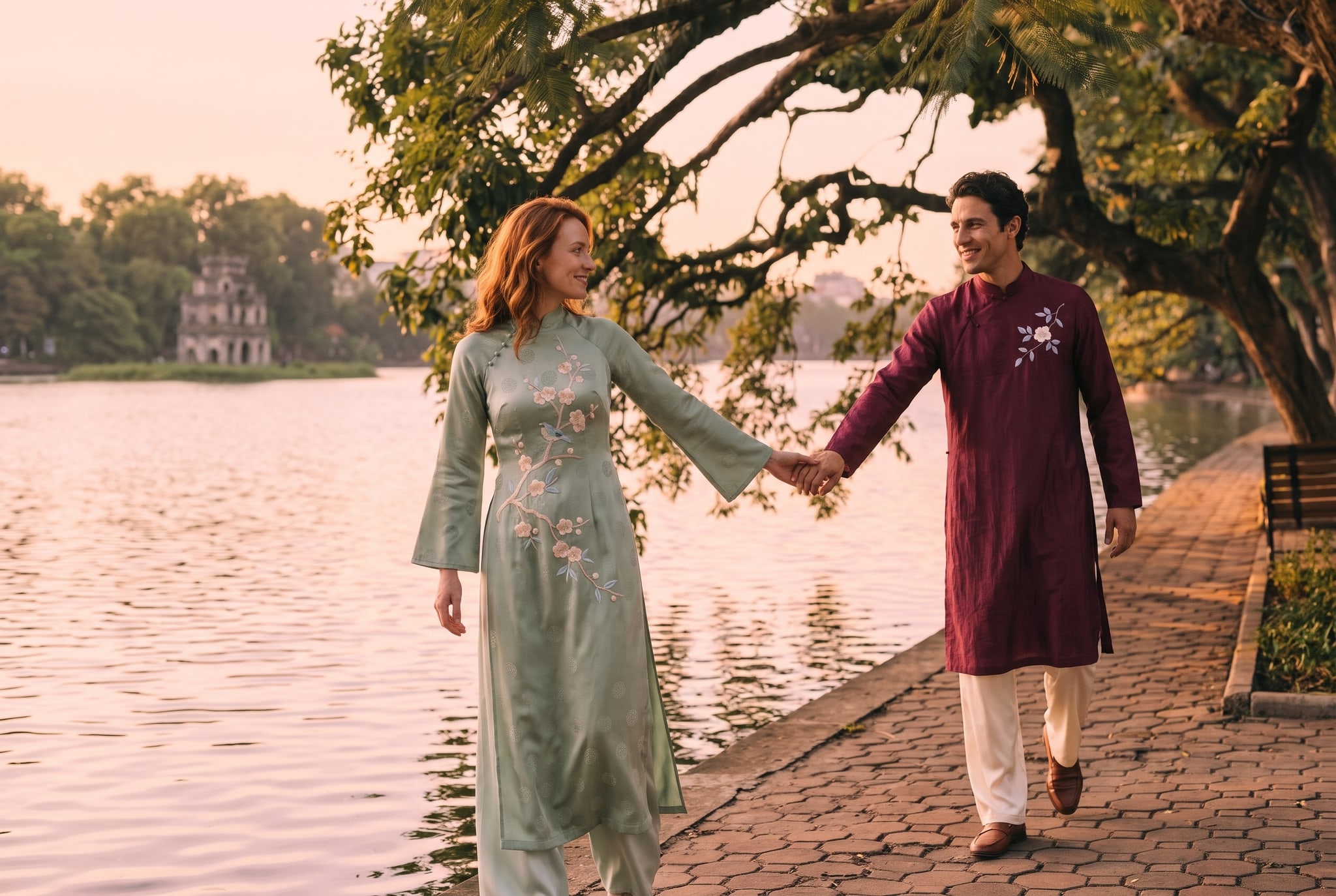
Why is 4:30–5:45 p.m. the magic window for Cholon?
At 4:30 p.m., the setting sun hits the east-facing temple entrance at a 35-degree angle, turning red-lacquered doors into glowing rectangles. Incense rises visibly in this golden light. We time our shots so the bride's profile catches the warm glow while the groom stays slightly in shadow—it creates visual depth without blown-out skin. By 5:45 p.m., vendors close shop nearby, fewer tourists move through the courtyard, and the light softens to amber. The pagoda's tile roof picks up this warmth. We tell couples: bring a silk shawl for indoors (pagodas stay cool year-round) and schedule 90 minutes for this slot. Evening sessions fill fastest; book a pre-wedding package 4–6 weeks ahead if you want this time.
How does dry season light differ from monsoon at this temple?
October–March offers contrast-rich skies: deep blues behind ornate roofs, sharp shadows for definition. May–September clouds flatten the scene; overcast days require pushing sensor settings, and we spend extra time on color grading to recover warmth in skin tones. We've shot both—dry season is faster, monsoon demands patience. Rain adds reflections on courtyard tiles, which some couples love, but it closes the main shrine intermittently. Our team checks the forecast 48 hours before: if rain arrives, we reschedule or pivot to covered arcades. One couple in September 2024 chose the overcast light specifically because incense mist became a design element. Dry season suits traditional couples; monsoon suits artistic vision. Either way, book at least a half day for your pre-wedding shoot to adapt to weather.
Should sunrise or sunset dominate your Thien Hau session?
| Session | Light quality | Crowd level | Best for | Timing | What to watch |
|---|---|---|---|---|---|
| Sunrise (6:00–7:15 a.m.) | Soft, directional, cool-toned | Nearly empty | Detail shots, ao dai color | 75 minutes | Cold light needs white-balance correction; bride may feel rushed |
| Late afternoon (4:30–5:45 p.m.) | Warm, golden, incense visible | Light foot traffic | Emotional portraits, glow | 75 minutes | Popular slot; book early; sun drops fast in winter |
| Midday (avoid 10 a.m.–2 p.m.) | Harsh, contrasty, shadow-heavy | Peak tourist flow | — | — | Shadows ruin faces and ao dai details |
Sunrise appeals to couples who want clean light and solitude. We arrive at 5:45 a.m. to coordinate with temple staff. The bride's ao dai color saturates beautifully, and incense from overnight prayers still lingers. The downside: 6 a.m. is cold (around 18°C in winter), and the bride may not feel camera-ready. We bring a robe and heating pad; most couples do hair and makeup at their hotel beforehand, then touch up on-site. Sunset is emotional—the pagoda feels alive, staff finish duties, and natural light flatters faces. But the sun vanishes by 6:15 p.m. in winter, so you lose 30 minutes. Sunrise gives you 75 stable minutes; sunset gives 60 and then tungsten indoors. Both are superior to midday. Pick a time slot based on your energy, not Instagram alone.
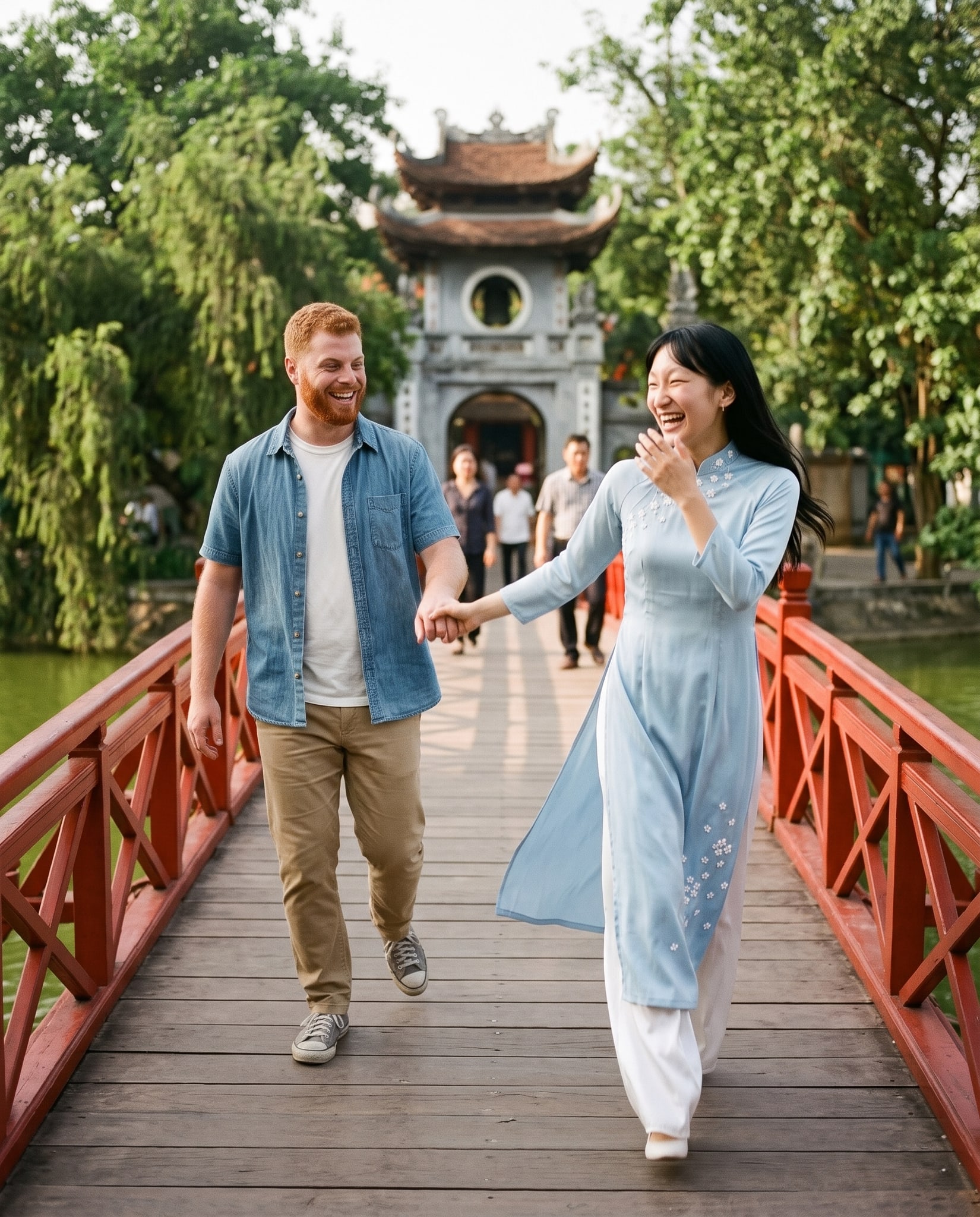
How do we adapt our team's gear for Thien Hau's mixed light?
The main shrine has tungsten bulbs (warm, dim) mixed with daylight from high windows. We shoot with a 24–70 mm lens at f/2.8 to gather low light without losing ceremony atmosphere. A tripod steadies interior shots where shutter speed dips to 1/40th. Our second photographer covers courtyard details with available light. We never use direct flash inside—it erases the spiritual tone. For bride and groom portraits, we use off-camera flash triggered remotely, angled to mimic the incense's warm glow. One decision we make daily: shoot RAW, not JPEG, because mixed tungsten and daylight means we color-grade later to unify skin tone across locations. Bring your own lighting? We advise against it—temple staff may restrict it, and natural light here is strong enough with our setup. The crew includes a gaffer who reads light and adjusts on the fly. You focus on the moment; we handle the rest.
What to check before you book your Thien Hau pre-wedding shoot
Confirm temple access first. Thien Hau welcomes photographers but requests notice. Our office files a courtesy email 1–2 weeks before; you're welcome to contact them directly too (District 5 main line). Verify your package includes 2–3 hour duration. A pre-wedding photoshoot should allow time for multiple outfits and location changes within the pagoda grounds. Check if hair and makeup are included. If not, book on-site hotel hair and makeup separately so you're camera-ready by start time. Ask about edit timeline. We deliver a first gallery (40–60 images) 2 weeks post-shoot; full gallery (150–250 images) in 4 weeks. Bring the ao dai in advance if you'll change outfits. Pagoda corridors have limited fitting rooms; we steaming and pressing on-site when possible. Plan your transportation. Parking near Cholon is tight on weekends. We can advise rideshare drop-off points.
See packages and prices on vietnamphotoshoot.com
Why Cholon location matters beyond Thien Hau
Couples often combine Thien Hau with Binh Tay Market (5 minutes away) or the narrow "tube houses" of District 5's old trading streets. Morning light floods the market's arched corridors; we've shot there back-to-back with the pagoda, capturing two entirely different moods in one session. The market closes by 4 p.m., so if you choose sunset at the pagoda, you'll need a separate day for Binh Tay. Our pre-wedding packages can span multiple neighborhoods; specify your must-sees when you book, and we'll map travel time. Some couples add a cyclo ride through Cholon at dusk—magic light, minimal vehicle noise compared to central Saigon. Plan this with your photographer during your WhatsApp consultation.
Chat with us on WhatsApp | See packages and prices on vietnamphotoshoot.com
If you're also considering a couple photoshoot or ao dai photoshoot elsewhere in Saigon, we can bundle sessions to maximize your time on the ground. Cáo Studio's Saigon team is based in District 1; we reach Cholon in 15 minutes. Let's build your day together.
FAQ
Can we shoot inside Thien Hau Pagoda's main shrine, or only the courtyard?
Both are possible with staff permission. The shrine interior is dimmer and requires slower shutter speeds, but incense and gilt create unmatched atmosphere. We coordinate access during your booking; most couples do 50% courtyard, 50% interior.
What should we wear if we're coming for sunset in late winter?
Bring layers. Sunset light is warm, but temperatures drop to 15–18°C by 6 p.m. in January–February. We schedule hair and makeup early so you can add a shawl or jacket until we start shooting.
Do we need to hire a temple guide, or does Cáo Studio handle logistics?
We handle it. Our team has relationships with temple staff and knows access points, restricted areas, and best positions. You don't need a separate guide, though if you want cultural commentary for video, we can arrange that during your WhatsApp chat.
How many outfit changes can we fit into a 2-hour session at Cholon?
Two outfit changes (ao dai + Western dress, or two ao dai colors) fit comfortably. Three changes is tight; we'd recommend a longer session or accept fewer poses per outfit. Mention your vision when you book.
What if weather is rainy on our scheduled date?
We reschedule or pivot to covered areas (arcades, corridors). Some couples love overcast light; we discuss options 48 hours ahead and adjust the shot list if needed. Your deposit holds your new date.
Are there other temples in District 5 with similar light quality we could combine with Thien Hau?
Jade Emperor Pagoda (further north) has darker interiors but ornate carvings. Ong Bon Pagoda (nearby) is smaller and less crowded. We can scout any location in your consultation and recommend timing.
Pre-Wedding & Elopement
Inclusions, prices and booking are on our booking site.
FAQ
Can we shoot inside Thien Hau Pagoda's main shrine, or only the courtyard?
Both are possible with staff permission. The shrine interior is dimmer and requires slower shutter speeds, but incense and gilt create unmatched atmosphere. We coordinate access during your booking; most couples do 50% courtyard, 50% interior.
What should we wear if we're coming for sunset in late winter?
Bring layers. Sunset light is warm, but temperatures drop to 15–18°C by 6 p.m. in January–February. We schedule hair and makeup early so you can add a shawl or jacket until we start shooting.
Do we need to hire a temple guide, or does Cáo Studio handle logistics?
We handle it. Our team has relationships with temple staff and knows access points, restricted areas, and best positions. You don't need a separate guide, though if you want cultural commentary for video, we can arrange that during your WhatsApp chat.
How many outfit changes can we fit into a 2-hour session at Cholon?
Two outfit changes (ao dai + Western dress, or two ao dai colors) fit comfortably. Three changes is tight; we'd recommend a longer session or accept fewer poses per outfit. Mention your vision when you book.
What if weather is rainy on our scheduled date?
We reschedule or pivot to covered areas (arcades, corridors). Some couples love overcast light; we discuss options 48 hours ahead and adjust the shot list if needed. Your deposit holds your new date.
Are there other temples in District 5 with similar light quality we could combine with Thien Hau?
Jade Emperor Pagoda (further north) has darker interiors but ornate carvings. Ong Bon Pagoda (nearby) is smaller and less crowded. We can scout any location in your consultation and recommend timing.
More from the team
Boho pre-wedding photoshoot in Vietnam: Hanoi, Saigon, Hoi An
Boho pre-wedding shoots mix romantic, free-spirited aesthetics with Vietnam's landscapes and heritage sites. We run full-day sessions in three cities, handling styling, makeup, location scouts and edits.
Avoid crowds at Hoang Su Phi rice terraces: timing for wedding shoots
Hoang Su Phi's terraced landscape draws couples and tour buses in equal measure. We show how to shoot there alone, when to arrive, and what to arrange with us before you go.
Photography rules at Con Dao beaches: permits, drones and what to check
Con Dao's beaches demand prep before you shoot—permits, drone zones and tide timing all affect your day. We share what the Cáo Studio team verifies on every booking.