 Cáo Studio
Home › Blog › Special Concept Shoot
Cinematic Film Look Photoshoot Vietnam: Our Studio Guide
By the Cáo Studio team · Hanoi & Saigon · 2026-11-02
A cinematic film look means shooting with warm or cool colour palettes, shallow focus on faces, and compositions that feel like stills from a narrative. In Vietnam, this style works best during golden hour in Hoi An's old town or Hanoi's French Quarter, where light is already moody. Cáo Studio builds this through colour grading in post, lens choice (50mm or 85mm primes at f/2.8), and directing guests into poses that feel candid rather than posed. Sessions run 2–4 hours depending on the package; cost varies by location and team size. The look requires overcast light or strong backlighting to avoid blown-out skies—bright midday sun fights it. Book 2–4 weeks ahead so we can scout locations and prep a shot list that matches your narrative, whether that's a couple's love story or a solo traveler's journey. Chat with us on WhatsApp | See packages and prices on vietnamphotoshoot.com
Why does cinematic film style work so well in Vietnam right now?
The soft, humid light in Vietnam's early morning and late afternoon naturally creates muted, diffused tones—exactly what cinematic film demands. We've noticed since 2025 that guests wanting this look choose destinations like Ninh Binh's karst landscapes, Hoi An's lantern-lit streets after 6 p.m., and Hanoi's tree-lined lakes because they read as "already cinematic" before we even adjust colour in post. The style also suits the storytelling mood many international travelers want; they're not chasing bright, cheerful snapshots but rather visual narratives that feel like a film excerpt.
What we avoid: midday shoots in full sun on busy streets. The harsh shadows and high contrast fight the soft, moody palette the client expects, and we end up spending twice as long in editing to salvage the look—which means delays and frustration. We always recommend starting sessions at 3 p.m. or later, or booking an early morning slot before 7 a.m.
See packages and prices on vietnamphotoshoot.com
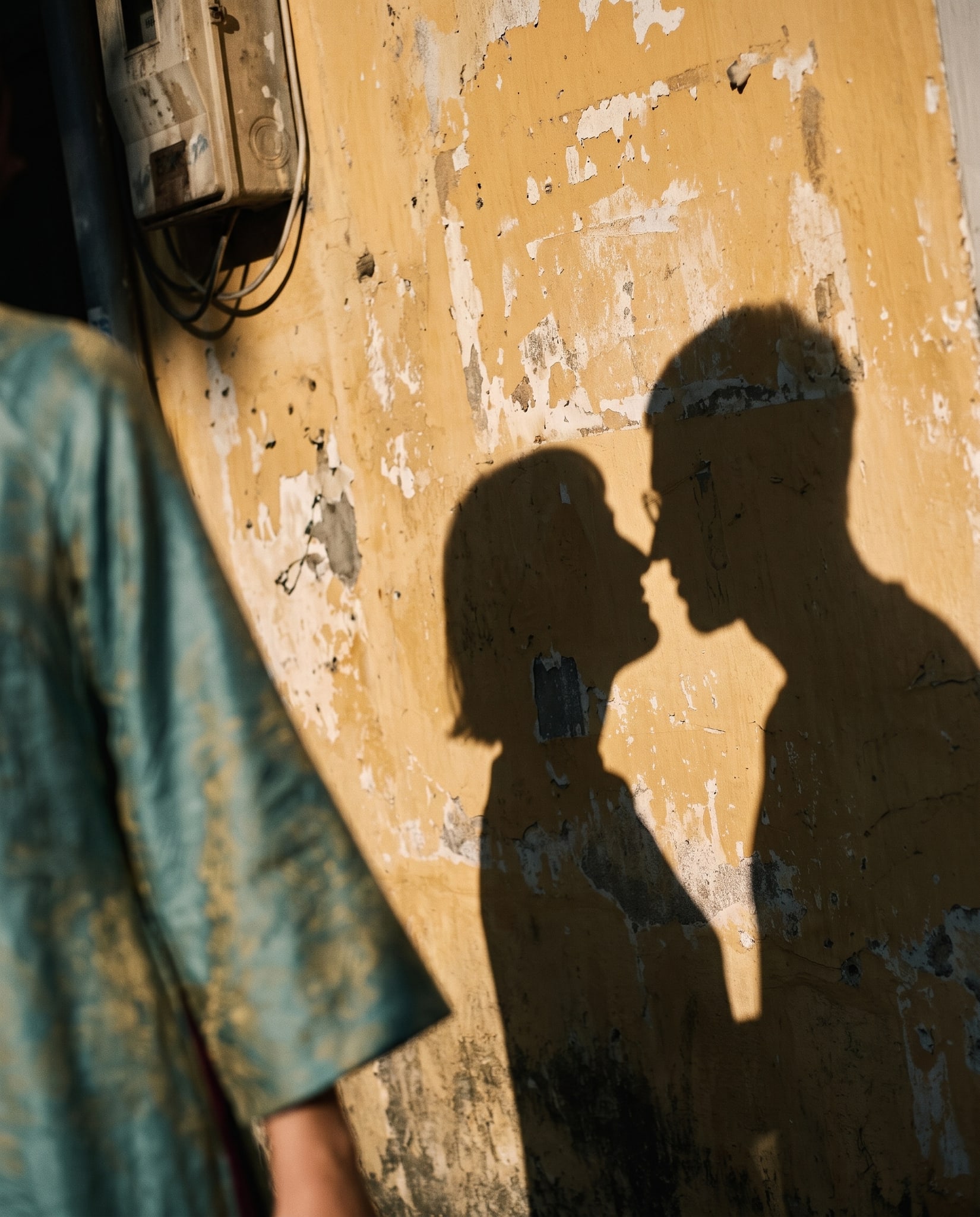
What camera settings create that moody, film-like look?
We shoot in aperture priority (f/1.8 to f/2.8) on 50mm or 85mm prime lenses to keep backgrounds soft and draw focus tightly to the subject's face. ISO sits between 800–2000 depending on available light, and we keep shutter speed at 1/250th or faster to avoid motion blur. Colour temperature matters: we often dial in 5500K–6500K in-camera to avoid the yellow cast that midday or tungsten light can add, then push toward cooler tones (cyan, subtle blues) in Lightroom.
The real secret isn't the camera—it's the shooting style. We tell guests to move slowly, look away from the lens, interact with their environment rather than perform. A cinematic frame happens when the subject is doing something (walking, touching a doorway, looking at their partner) and the light catches them mid-moment. This takes patience; a cinematic 2-hour shoot generates 300–400 frames, not 100.
How do we choose Vietnam locations that look cinematic without editing?
Hoi An's Ancient Town works because the buildings already have aged, amber tones that don't need heavy grading. The narrow streets create natural framing, and the lanterns provide warm backlighting at night. Ninh Bing's Tam Coc and Mua Cave offer dramatic, layered depth—karst peaks recede into mist, which looks inherently cinematic. In Hanoi, we favour the French Quarter's colonial villas and the Red River embankment at dusk; in Saigon, Binh Quoi Village's riverside gardens and the War Remnants Museum's exterior provide texture without feeling like a tourist backdrop.
What fails: busy, modern shopping districts and resort hotel lobbies. They lack the visual depth and narrative weight cinematic film needs. We've learned to suggest locations that solve half the cinematic puzzle before we even pick up the camera.
Compare your options:
| Location | Best Time | Light Type | Cinematic Ease | Crowd Factor |
|---|---|---|---|---|
| Hoi An Ancient Town | 5–8 p.m. | Lantern amber + golden hour | Very high | Medium (best after 7 p.m.) |
| Ninh Binh/Mua Cave | 6–7 a.m. or 4–5 p.m. | Diffused + side light | Very high | Low |
| Hanoi French Quarter | 6–7 a.m. | Cool, soft daylight | High | Low |
| Red River embankment | 5–7 p.m. | Backlit golden | High | Medium |
| Saigon Binh Quoi Village | 4–6 p.m. | Warm diffused | High | Low |
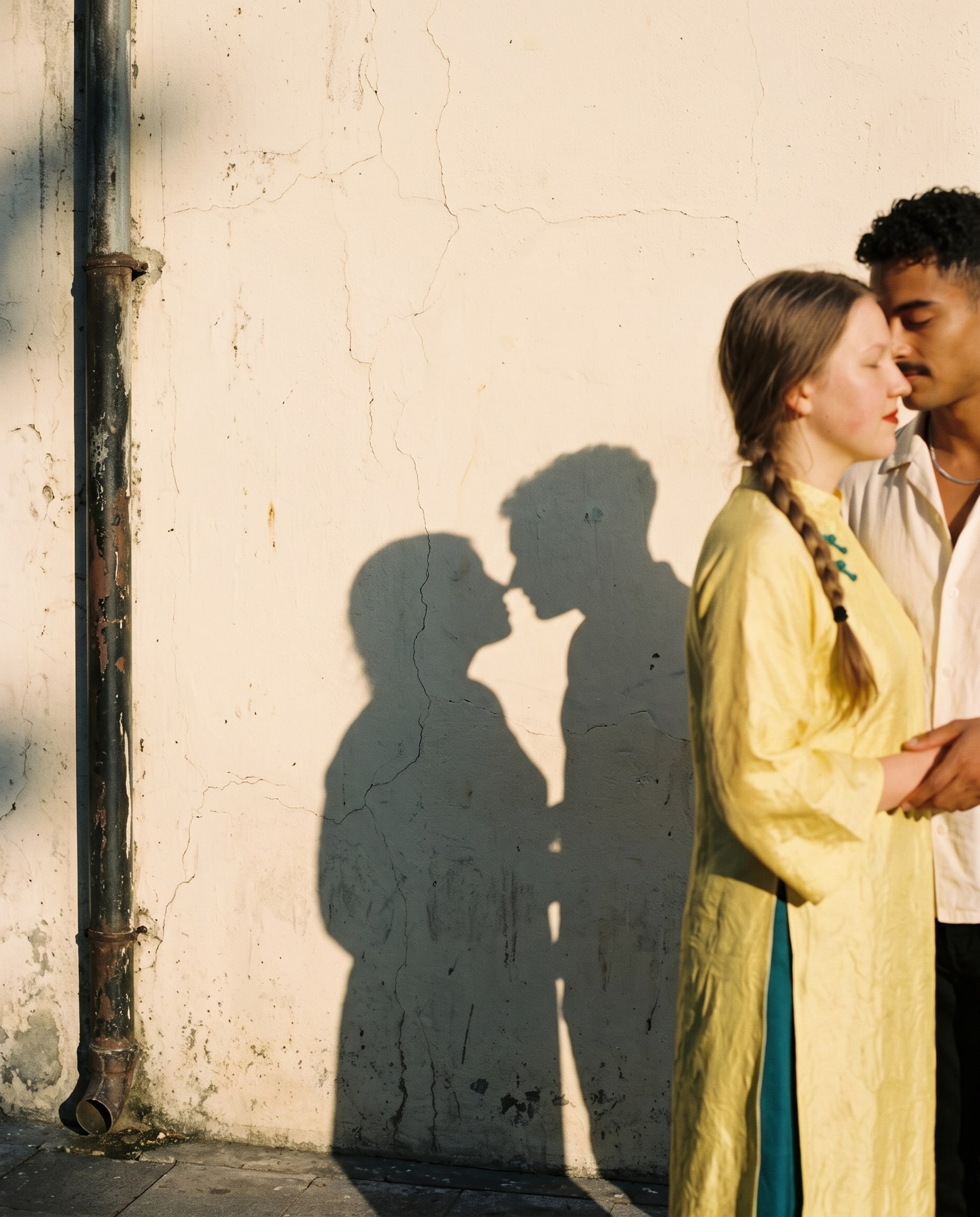
Which Cáo Studio package actually delivers cinematic film look?
Our special concept shoots are built for this. We spend 4 hours scouting, planning a shot list around your narrative (couple's journey, solo traveler's discovery, etc.), and using dedicated colourist time in post. The photographer and stylist arrive knowing exactly which frames need which colours.
Pre-wedding and elopement sessions also deliver cinematic storytelling because they're structured as narrative arcs—preparation, first look, moments together, celebration. We grade these as visual chapters, which feels inherently filmic.
Avoid: quick 1-hour solo vacation sessions in high-noon light. The timeline doesn't allow for location scouting or detailed colour work, and the harsh sun fights the moody aesthetic. If you're booking a vacation photoshoot, request early morning or late afternoon, and let us know cinematic film is your goal so we can plan the route.
Couples looking for narrative depth who add our optional colourist service (we grade each image individually for mood and consistency) see the biggest cinematic transformation.
What colour grades make the cinematic look, and when do we apply them?
We shoot in flat, neutral colour profiles to capture maximum information, then grade in Lightroom and Capture One. For cinematic film, we typically:
- Lift shadows (add 8–15 points to the black and dark mid-tones) so the image feels less contrasted and more like aged film stock.
- Reduce saturation overall by 5–10 points, then selectively boost warm tones (oranges, yellows) in skin and cool tones (cyans, blues) in the background. This creates separation without neon feel.
- Crush blacks slightly (lower the black point by 2–4 points) to add that subtle fade film cameras produce over time.
- Add a warm/cool split: push highlights toward amber (5500K–6500K), shadows toward cool (7500K+). This mimics tungsten and daylight mixing, which feels nostalgic.
- Add grain selectively—0.3–0.7 on the luminance channel only, not colour, to avoid noise while adding texture.
Post-processing time is critical. A cinematic 2-hour shoot needs 8–12 hours of editing (compared to 4–6 for a standard colour edit). If a package doesn't mention dedicated colour grading, the images won't have that cohesive, moody look; they'll feel colour-corrected, not graded.
We apply these grades in batches for consistency across 200+ frames, then fine-tune 15–20 hero shots individually. Clients see 40–50 final images from a cinematic session.
What should you check before booking a cinematic shoot?
Before you book:
- Confirm the photographer has a portfolio of cinematic film work (not just bright, saturated travel photos). Ask to see 5–10 examples from Vietnam shoots specifically.
- Ask if the package includes a colourist or if colour work is extra. Cinematic requires post-processing time; budget packages often skip this step.
- Specify your narrative. "Moody couple's moment in Hoi An" is clearer than "cinematic vibe." We build shot lists around your story.
- Check location scouting is included. A 1-hour "quick session" won't allow us to find the right light and background.
- Confirm shooting time. If they offer high-noon slots without mentioning golden hour, they're not optimizing for the look you want.
- Ask how many final images you'll receive and in what format. Cinematic sessions produce fewer (40–50) high-effort finals, not 300 quick JPEGs.
When you're booking:
- Mention cinematic film as your aesthetic goal in the intake form. We'll adjust the shot list, location, and team composition.
- Choose Hoi An, Ninh Binh, or Hanoi locations if possible. They require less editing intervention to look cinematic.
- Book 3–4 weeks ahead. Scouting and detailed post-processing can't be rushed.
- If you're an international traveler, pay via the online link on vietnamphotoshoot.com (Visa, Mastercard accepted globally) or arrange bank transfer. We confirm bookings once payment clears.
See packages and prices on vietnamphotoshoot.com
We've found that clients who ask these questions before booking are happiest with the result—because they understand that cinematic film is a production, not a snapshot.
FAQ
Can we get a cinematic film look in one hour?
No—cinematic requires location scouting, intentional light timing, and 8+ hours of colour grading. Minimum is 2–3 hours on-set; expect 20–30 final images, not 100. Rushing the process produces overworked or inconsistent edits. Book special concept or pre-wedding packages that include colour work.
Does cinematic film look work better in Hanoi, Saigon, or Hoi An?
Hoi An and Ninh Binh are easiest—the architecture and light are already moody. Hanoi works well in the French Quarter at dawn. Saigon requires more selective location choice but is doable in riverside gardens. Avoid modern districts in any city for this aesthetic.
What if the light is too bright on the day of the shoot?
We reschedule to early morning or late afternoon if the client agrees. If that's not possible, we shoot in shade or use backlighting to create depth, then spend extra time in post-processing to push the moody look. This increases editing time and may delay image delivery by 1–2 weeks.
Do I need to wear specific clothing for a cinematic look?
Neutral, muted tones (grays, blacks, cream, rust, sage) photograph better than bright colours. Textures (linen, velvet, leather) read as more cinematic than shiny or neon fabrics. We suggest this during booking; our stylists can advise if you're unsure.
How much more expensive is cinematic grading than standard colour correction?
It depends on the package. Special concept shoots and pre-wedding sessions include detailed colour grading. Vacation or family sessions can add optional colourist work. Check the package details on vietnamphotoshoot.com to see what's included.
Can we add cinematic grading to a shoot that's already been done elsewhere?
We don't grade files shot by other photographers. Cinematic grading works best when the photographer shot in flat colour profiles specifically for that purpose. If you're booking with us, we build it into the shoot from the start.
Special Concept Shoot
Inclusions, prices and booking are on our booking site.
FAQ
Can we get a cinematic film look in one hour?
No—cinematic requires location scouting, intentional light timing, and 8+ hours of colour grading. Minimum is 2–3 hours on-set; expect 20–30 final images, not 100. Rushing the process produces overworked or inconsistent edits. Book [special concept](/go/special-concept) or [pre-wedding](/go/pre-wedding-photoshoot) packages that include colour work.
Does cinematic film look work better in Hanoi, Saigon, or Hoi An?
Hoi An and Ninh Binh are easiest—the architecture and light are already moody. Hanoi works well in the French Quarter at dawn. Saigon requires more selective location choice but is doable in riverside gardens. Avoid modern districts in any city for this aesthetic.
What if the light is too bright on the day of the shoot?
We reschedule to early morning or late afternoon if the client agrees. If that's not possible, we shoot in shade or use backlighting to create depth, then spend extra time in post-processing to push the moody look. This increases editing time and may delay image delivery by 1–2 weeks.
Do I need to wear specific clothing for a cinematic look?
Neutral, muted tones (grays, blacks, cream, rust, sage) photograph better than bright colours. Textures (linen, velvet, leather) read as more cinematic than shiny or neon fabrics. We suggest this during booking; our stylists can advise if you're unsure.
How much more expensive is cinematic grading than standard colour correction?
It depends on the package. [Special concept shoots](/go/special-concept) and [pre-wedding sessions](/go/pre-wedding-photoshoot) include detailed colour grading. Vacation or family sessions can add optional colourist work. Check the package details on vietnamphotoshoot.com to see what's included.
Can we add cinematic grading to a shoot that's already been done elsewhere?
We don't grade files shot by other photographers. Cinematic grading works best when the photographer shot in flat colour profiles specifically for that purpose. If you're booking with us, we build it into the shoot from the start.
More from the team
Fishing Village Concept Photoshoot Vietnam: How We Shoot It
A fishing village photoshoot captures Vietnam's working waterfront—nets, boats, morning light, real people. We share how our team runs these shoots from location scout to final delivery.
Cruise Stop Saigon Photoshoot at Phu My Port: Studio Guide
Cruise passengers have 8–12 hours in Saigon. We photograph guests right from Phu My Port, handling transport and changing rooms so you step off the ship and into an áo dài or couple session.
Vietnam photoshoot for Thai travelers: studio guide 2026
Thai travelers choose Cáo Studio for culturally authentic photoshoots in Vietnam—from traditional áo dài sessions to couples and concept shoots. Here's how our team runs these shoots and what to expect from arrival to delivery.