 Cáo Studio
Home › Blog › Pre-Wedding & Elopement
Cinematic pre-wedding photos in Hoi An: How our team creates them
By the Cáo Studio team · Hanoi & Saigon · 2026-11-04
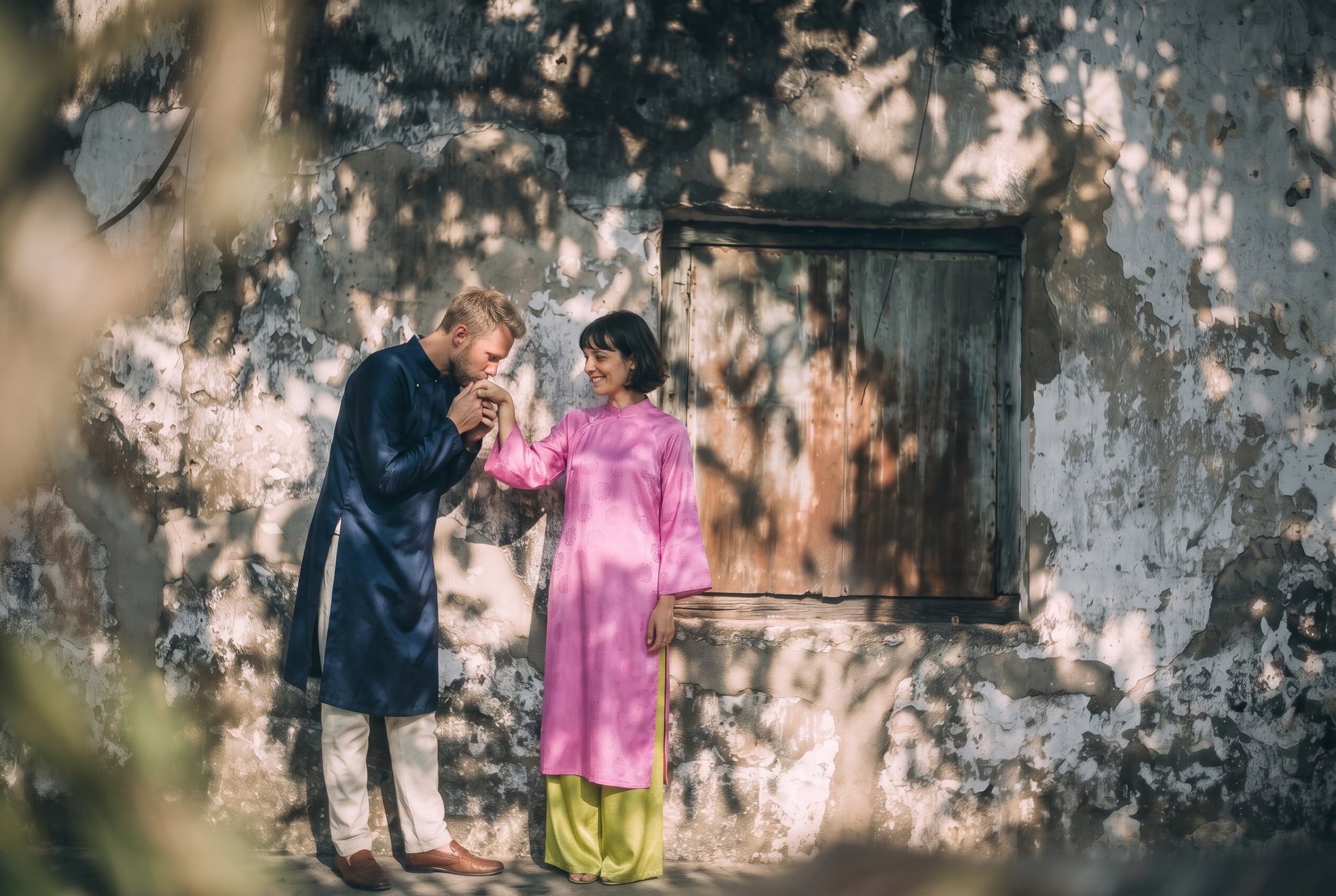
Cinematic pre-wedding photos in Hoi An are long-form visual stories—not just posed portraits—shot with camera movement, color-graded in a unified tone, and framed around the location's heritage. Hoi An works because it has built-in cinematic ingredients: Ancient Town lanterns, the Thu Bồn River at sunset, French-era yellow walls, and narrow alleys with soft light. A typical Cáo Studio shoot runs 4–6 hours, covering 3–5 locations, with an áo dài change and a couples session. Cinematic work needs a photographer who understands pacing (when to move, when to sit), a stylist who knows which fabrics catch light, and a team that scouts the day before. Cost varies by location count, team size, and edit scope—ask us for a quote on WhatsApp. First-time couples often book "cinematic" thinking it means lots of slow-motion or music; it actually means intentional framing, movement within the frame, and color harmony.
What does "cinematic" actually mean on a shoot day?
Cinematic isn't a camera setting or filter. It's a decision tree: do we follow you walking, or frame you still? Do we shoot at the lantern's exact moment, or wait for cloud cover? On our last Ancient Town shoot, we arrived at 3 p.m. and watched the light cross the yellow French-colonial wall for 90 minutes before we posed the couple—the 20-minute window when the warmth matched their áo dài was our shot. Most photographers shoot on a tighter schedule. We shoot for rhythm: two minutes of walking shots, a pause, then a still moment, then movement again. That rhythm, in the edit, becomes a cinematic feel, not a frantic gallery. Editing is where cinematic lives—color grading locks all frames into one mood, and the sequence of shots (close-up hands, wide river, detail of embroidery) tells a story instead of showing thirty similar angles.
Which Hoi An locations give the strongest cinematic frame?
The Ancient Town delivers lanterns and texture, but it floods with tourists 8 a.m.–5 p.m. We book 6:30 a.m. starts or 5:30 p.m. onwards; the light is softer, and foot traffic drops by 70 percent. The Japanese Bridge frames perfectly at sunset if you're there by 5:15 p.m.—after 5:45 p.m., shadows dominate the underside. Thu Bồn River paths north of the bridge have fewer tourists and offer 200 meters of uncluttered river-edge framing. Cam Thanh coconut boat rides work in late afternoon (3–5 p.m.) when the water reflects the sky's color; we've noticed morning boats face glare and harsh overhead sun. The French colonial villas on Phan Bội Châu Street are cinematic but private—permissions take 2–3 days, and owners sometimes cancel. We always have a backup: the Hoi An Memories museum courtyard has morning light that bounces off cream-colored walls, and it's predictable. Our scouts note which locations have power outlets (for backup batteries), shade (for crew breaks), and which days the lantern festival runs (crowds triple those evenings).
How does pre-wedding and elopement work differ from standard couple shoots?
A pre-wedding shoot is narrative: it opens with both of you separate (in different locations), moves through a meeting moment, and ends with intimacy—the story of "how you came together." An elopement captures one day's events—venue prep, getting ready, ceremony, first kiss, celebration. A couple shoot (without the elopement context) is timeless; it focuses on connection in one or two locations, often on a weekend trip. Cinematic framing changes with the type: a pre-wedding's narrative arc needs wide shots (showing the separation of locations) and close-ups (showing the moment you see each other); an elopement needs coverage (no shot can be missed because there's no re-do); a couple shoot can take more creative risk—slower, more stillness. We ask couples on WhatsApp before they book which story they want to tell. A couple wanting a romantic escape (6 hours, two locations, lots of laughter) isn't the same as a couple documenting their pre-wedding journey (two full days, getting-ready scenes, family, symbolic locations). Our couple photoshoot package works for the first; the pre-wedding package works for the second.
What breaks down on shoot days, and how do we fix it?
Weather is the biggest wildcard. In 2025, we scouted a Cam Thanh shoot for a couple from Australia; forecast said clear. 2 p.m., monsoon hit. We shifted the couple to the Hoi An Memories courtyard (5 minutes away), swapped the river walk for a cloister, and shot the backup location we'd identified that morning. The edit looked seamless because the color grading unified both locations. We brief every couple: "Bring a light cardigan or pastel shawl; Hoi An's humidity is 85 percent, and sweat shows on camera under lights." A couple arrived in a heavy silk áo dài; by hour 2, makeup was breakdown, and the fabric wilted. We've learned to ask about fabric weight on WhatsApp before confirming. Internet can fail—we always film on multiple cards, backup one offsite immediately after the first hour, and never delete in-camera footage until the edit is final. One makeup artist was delayed by traffic (a wedding convoy on the bridge); we shifted the shot order, started with getting-ready footage first (no makeup needed for that), and caught up. The couple never noticed the delay. Couples often arrive late (jet lag, getting-ready took longer than planned). We never start the paid shoot time counting until you're both ready and at the first location. That's written in the booking confirmation, but we repeat it on WhatsApp 24 hours before.
How do you choose between cinematic and traditional framing?
| Cinematic approach | Who it's for | Why pick it | What to check |
|---|---|---|---|
| Camera movement, color-graded mood, narrative arc | Couples wanting a film-like story; second-time remarrying; artistic couples | Feels intimate and non-posed; the edit is unique | Do you have time for a 4–6 hour shoot? Can you commit to viewing a 3–5 min edit reel? |
| Traditional (posed, varied angles, lots of smiles) | First-time couples, those wanting variety; large album prints | Easier to share across family; more poses to choose from | Do you want 200+ photos or a curated 50-frame story? |
| Hybrid (60% cinematic moment, 40% traditional posed) | Most of our clients; want story + choice | Best of both; you get the film feel and traditional family-album photos | Does your venue allow 5+ locations, or are you in one spot? |
Ask us for a quote on WhatsApp. Most couples pick hybrid because it balances the cinematic feeling (slow walks, genuine laughs, color-graded warmth) with the practical need for posed shots (parent-approved prints, safe angles). Pure cinematic is for couples who trust the edit completely and are okay with a shorter final gallery (50–70 frames vs. 150). We guide this on our first WhatsApp call, showing examples from previous Hoi An shoots.
See packages and prices on vietnamphotoshoot.com
What does your team actually do the day before?
Our photographer walks the 3–5 locations alone (no couple). She notes where the sun will be at each time slot, which walls have reflectors (light-colored surfaces that fill shadows), where tourists gather, and which corners are private. She photos the light from 15 minutes before to 15 minutes after the planned shoot time, building a real light map—not a guess. The stylist checks áo dài fit on a dress form we bring (fabric can shift in humidity), confirms which colors work with the location's walls, and preps a backup outfit. The makeup artist confirms the couple's skin type via WhatsApp photos and brings backup foundation (just in case tone shifts with humidity or travel). We charge a scouting fee; it's included in full-day packages but itemized if you're doing a standalone 2-hour shoot. This prep is why our cinematic shoots feel intentional—we're not discovering the light as we go; we're already in conversation with it. Couples sometimes ask, "Can we just start in the morning without scouting?" Yes, but that couple gets a standard shoot, not a cinematic one. The framing choices (waiting 40 minutes for the right light angle, moving 200 meters to avoid a coach tour, pausing the couple so a shadow passes) only happen if we've spent three hours the day before understanding the space.
What to check before you book a cinematic pre-wedding shoot in Hoi An
- Dates matter. Lantern Festival (monthly full moon) draws 10,000+ visitors; we shoot before 7 a.m. or post 8 p.m. to avoid crowds.
- Outfit choice. Traditional áo dài (cinematic priority) or modern dress (logistically easier). We'll advise which reads on camera in Hoi An's light.
- Location count. More locations = more scouting, longer shoot, higher cost. Three locations (riverside, Ancient Town, cloister) is our standard cinematic package.
- Couple communication. You'll brief us on WhatsApp about vibe (romantic, playful, intimate, adventurous). We show mood-board edits from past Hoi An shoots; you pick a color tone.
- Travel time to Hoi An. From Hanoi: 14 hours by road or 1 hour flight + 30 min transfer. From Saigon: 9 hours by road or 1 hour flight + transfer. Factor in rest time before the shoot.
- Edit timeline. Cinematic editing (color grading, sound design, review rounds) takes 3–4 weeks. Faster turnarounds mean fewer revisions.
- Team size. A two-person team (photographer + stylist) costs less; a three-person team (+ makeup artist) lets us cover getting-ready and location shoots. Ask on WhatsApp what fits your budget.
How does the cinematic workflow fit into wider pre-wedding planning?
A full pre-wedding and elopement package can span two days and include getting-ready footage, outfit changes, and family moments—not just the couple's romance. We work backwards from your wedding date: if you need the final edit for a ceremony video montage, tell us 6 weeks ahead. If it's just for engagement announcements, 4 weeks works. Hoi An shoots need to be booked at least 8 weeks prior because location scouting availability fills up (especially December–February). If you're also booking makeup and hair at your hotel in Hoi An, we'll coordinate timing so the team arrives with makeup supplies while the photographer starts location footage. This workflow prevents the "we're running two hours behind" panic. We've run shoots for couples who are also having a Saigon couple session before or after Hoi An; Cáo Studio Hanoi and Cáo Studio Saigon teams sync timing so there's no double-booking or missed handoffs.
FAQ
What's the real difference between a 4-hour and 6-hour cinematic shoot in Hoi An?
Four hours covers two locations, one outfit change, one light window (e.g., sunset). Six hours covers three to four locations, two outfit changes, and morning or golden-hour light. The extra time lets us capture "beat changes"—the couple's energy shifts as they move through the town. More locations = more story, more edit options, better cinematic pacing.
Can we do a cinematic shoot in one location?
Technically yes, but it undermines the visual narrative. Cinematic depends on location transitions (visual contrast, mood shifts). One location becomes a "long-form couple shoot." If you're staying in one villa or resort, we focus on light changes and micro-movements (walking the garden over two hours) rather than location hopping.
Do we need to speak English or Vietnamese for the shoot?
No. Our photographer and stylist communicate through movement, music, and WhatsApp photos. We've shot couples from 12 countries; gesture and laughter are universal. We send a WhatsApp brief the day before in English and Vietnamese.
What happens if we hate the cinematic edit style after we see it?
We do one full revision round. If it's still not the vibe, we'll re-edit in a more traditional style (more poses, more smiles, less color grading). This costs extra; most couples love the cinematic first cut, so we rarely do this. We show a mood edit before the shoot so surprises are minimal.
Should we book a local Hoi An photographer or travel with you from Hanoi or Saigon?
Local photographers often know the town better and charge less. We travel from Hanoi or Saigon because we bring a coordinated team (photographer, stylist, makeup), manage scouting rigorously, and deliver a unified color grade across all frames. If budget is tight and you're already in Hoi An, a local photographer works. If you want narrative consistency and a cinematic film edit, our full team is the package.
How much does a cinematic shoot cost compared to a standard couple shoot?
Cinematic includes location scouting (fee or included, depends on package), longer shooting hours (typically 4–6 hours vs. 2–3), coordinated team, and professional color grading. Ask us for a quote on WhatsApp—prices vary by season, team size, and location count. We accept Visa, Mastercard, online payment, and bank transfer from abroad.
Pre-Wedding & Elopement
Inclusions, prices and booking are on our booking site.
FAQ
What's the real difference between a 4-hour and 6-hour cinematic shoot in Hoi An?
Four hours covers two locations, one outfit change, one light window (e.g., sunset). Six hours covers three to four locations, two outfit changes, and morning or golden-hour light. The extra time lets us capture "beat changes"—the couple's energy shifts as they move through the town. More locations = more story, more edit options, better cinematic pacing.
Can we do a cinematic shoot in one location?
Technically yes, but it undermines the visual narrative. Cinematic depends on location transitions (visual contrast, mood shifts). One location becomes a "long-form couple shoot." If you're staying in one villa or resort, we focus on light changes and micro-movements (walking the garden over two hours) rather than location hopping.
Do we need to speak English or Vietnamese for the shoot?
No. Our photographer and stylist communicate through movement, music, and WhatsApp photos. We've shot couples from 12 countries; gesture and laughter are universal. We send a WhatsApp brief the day before in English and Vietnamese.
What happens if we hate the cinematic edit style after we see it?
We do one full revision round. If it's still not the vibe, we'll re-edit in a more traditional style (more poses, more smiles, less color grading). This costs extra; most couples love the cinematic first cut, so we rarely do this. We show a mood edit before the shoot so surprises are minimal.
Should we book a local Hoi An photographer or travel with you from Hanoi or Saigon?
Local photographers often know the town better and charge less. We travel from Hanoi or Saigon because we bring a coordinated team (photographer, stylist, makeup), manage scouting rigorously, and deliver a unified color grade across all frames. If budget is tight and you're already in Hoi An, a local photographer works. If you want narrative consistency and a cinematic film edit, our full team is the package.
How much does a cinematic shoot cost compared to a standard couple shoot?
Cinematic includes location scouting (fee or included, depends on package), longer shooting hours (typically 4–6 hours vs. 2–3), coordinated team, and professional color grading. Ask us for a quote on WhatsApp—prices vary by season, team size, and location count. We accept Visa, Mastercard, online payment, and bank transfer from abroad.
More from the team
Pre-wedding photoshoot in Phu Quoc June: weather, light, crowds
June is Phu Quoc's monsoon season. Our studio has shot dozens of couples there in early summer—here's what weather and crowds really mean for your pre-wedding day.
Pre-wedding photoshoot in Phu Quoc July: weather, light, crowds
July is Phu Quoc's wet season, but it opens creative possibilities: moody skies, empty beaches after storms, and dramatic backlighting. We'll walk you through what happens on the ground.
Pre-wedding photoshoot in Phu Quoc November: weather, light, crowds
November is peak season for pre-wedding shoots in Phu Quoc: weather is stable, light is soft, but crowds peak mid-month. We share what our team sees on the ground.