 Cáo Studio
Home › Blog › Pre-Wedding & Elopement
Cua Dai Beach Wedding Photos: Best Time and Light
By the Cáo Studio team · Hanoi & Saigon · 2026-11-01
Cua Dai Beach near Hoi An is a 4 km crescent of pale sand and gentle water, ideal for pre-wedding shoots when you work with the sun and tide. Golden hour (one hour before sunset, one hour after sunrise) delivers soft directional light that flatters skin and creates natural rim lighting; we shoot most couples in that window. Low tide—check local tide tables—exposes smooth sand for clean compositions and reflections. Avoid midday sun (11 a.m.–3 p.m.): harsh shadows flatten features and create squinting. We book most pre-wedding and elopement sessions here for 2–3 hours, combining beach portraits with detail shots in the dunes. Season matters: November–February offer cooler air and clearer skies; June–September bring afternoon storms and humidity that challenge makeup and mood. Cáo Studio has shot Cua Dai since 2019 and knows tide patterns, light angles, and which spots give the best backdrop without crowds.
When does golden hour actually start and end at Cua Dai?
Golden hour is not a fixed clock time—it shifts with season and latitude. In Hoi An (roughly 15.9°N), sunrise is 5:30 a.m. in December and 5:50 a.m. in June; sunset ranges from 5:15 p.m. (winter) to 6:50 p.m. (summer). Golden hour lasts roughly 50–70 minutes after sunrise and 60–90 minutes before sunset. We check the sun position the morning of the shoot using a weather app and drive to Cua Dai with our team 15 minutes early to scout light direction. If a bride wants to include a sunrise session, we arrive by 5:00 a.m. and stand on the beach facing east to see how the sun clears the treeline and hits the wet sand. Pre-dawn and dawn light is often softer and cooler-toned than evening; it suits couples who want ethereal, delicate tones. Evening golden hour feels warmer and more romantic. Most couples choose 4:30–6:00 p.m. because it fits wedding day schedules and the light is forgiving. We avoid 3:00–4:00 p.m. even in winter: the sun is still too high and creates unflattering shadows under eyes and chins.
Why does low tide matter for beach portraits?
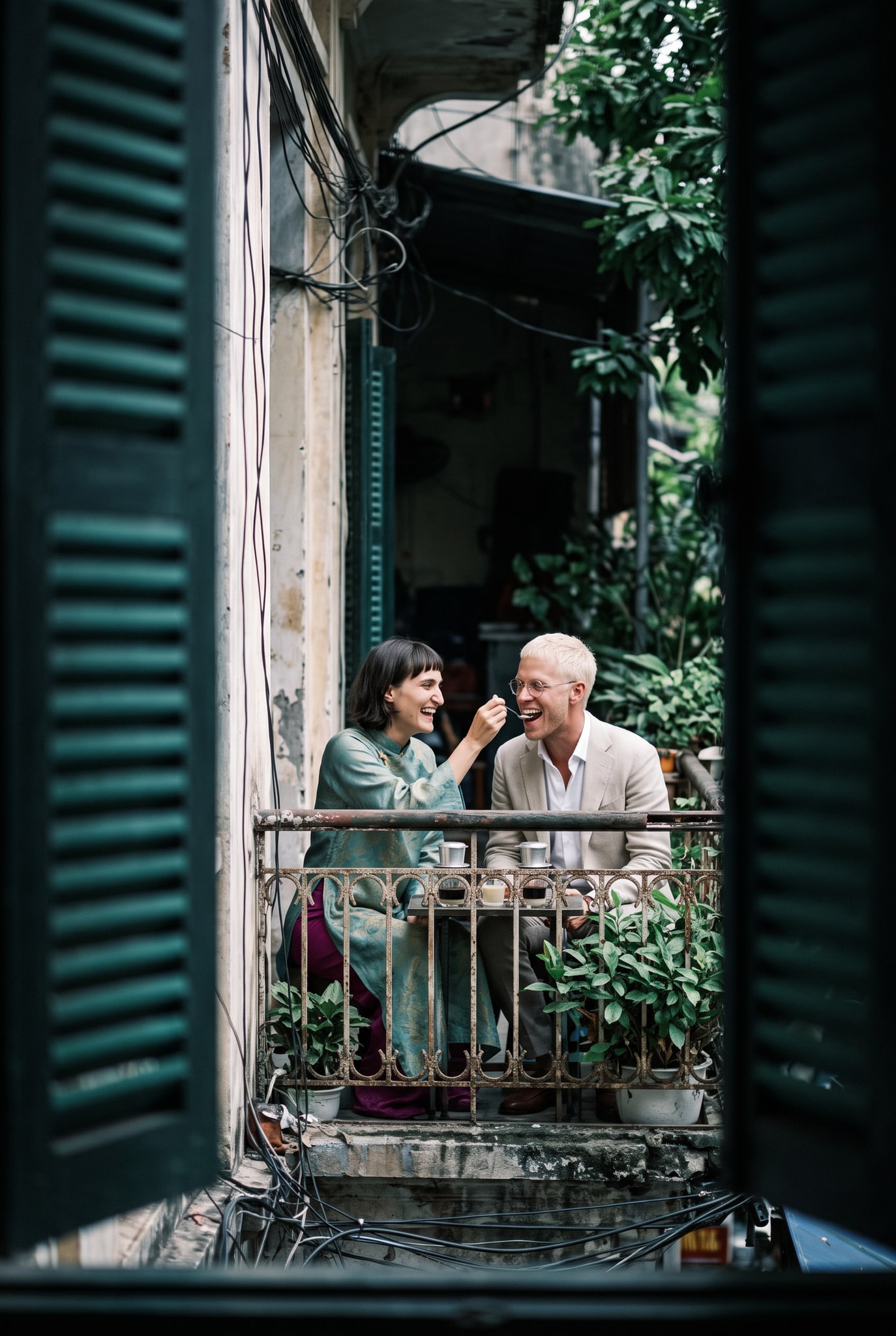
At high tide, Cua Dai's wet sand narrows to a thin band near the waterline, forcing us to shoot uphill on dry sand with less reflection and texture. At low tide—typically 4–6 hours after sunrise or sunset, varies daily—the beach expands to 100+ meters, offering flat, reflective wet sand that acts like a natural mirror and bounces soft fill light onto faces. Wet sand also frames the couple in patterns and texture, adding dimension to otherwise flat compositions. We check tide tables for Hoi An daily; our photographer carries a tide app on his phone. If a bride schedules a session at 2:00 p.m. and we see high tide is due at 2:30 p.m., we shift the start earlier or move to the northern section of Cua Dai near the river mouth, where shallow channels stay exposed longer. Low tide also means firmer sand, so the couple doesn't sink and cause dress hems to drag. In summer (June–August), tides can be unpredictable due to rain; we always have a backup concept—nearby dunes, a fishing village—in case the beach is unusable.
How do clouds and season affect light quality?
Overcast skies act like a massive softbox, diffusing sunlight evenly and eliminating harsh shadows. On cloudy days in November–January, we often get soft, flattering light even at noon. However, thick clouds can make skin tones look flat and dull, and light levels drop, forcing us to use wider apertures (f/2.0–f/4.0) and higher ISOs (1600+), which can soften fine detail. We prefer "broken cloud"—partly cloudy skies with a visible sun position—because it gives directional rim light without harsh shadows. Summer clouds (June–August) are often thick and gray due to approaching monsoons; light quality is flat, humidity soaks makeup, and afternoon thunderstorms can force us to wrap 30 minutes early. Winter (November–February) offers clearer, crisper skies and the most consistent golden hour. Our tip: if a couple insists on a summer date, we schedule earlier—7:00–9:00 a.m.—when light is soft and storms are less likely. If they choose winter, we book flexible times (4:00–6:30 p.m.) to chase the best light as it moves.
What light direction works best for your face shape?
Side light (when the sun is 90 degrees to the camera, camera looks across the couple) sculpts cheekbones and jawlines; we use this for couples with round faces. Back light (sun behind the couple, camera facing the sun) creates a rim light halo on hair and shoulders, flattering everyone but risking lens flare; we use a lens hood or ask the couple to turn slightly. Front light (sun behind the camera) is flat but safe, showing full expressions. We position ourselves based on face shape the moment we arrive: if a groom has a wider face, we'll shoot him in ¾ profile with side light; if a bride has a delicate jawline, we use front-to-side light to show it off. Golden hour light naturally comes from a low angle, so as the sun descends, it becomes side light, the most flattering for most faces. We rarely shoot directly into the sun (full back light) unless we're after a silhouette or artistic effect. Our stylists brief the couple beforehand: "We'll be shooting you so the light hits your left side first—that's where the sun is. Turn your chin slightly into the light so we see your jawline." This takes 5 seconds and saves 10 bad frames.
What should you wear and bring to get the best light in photos?
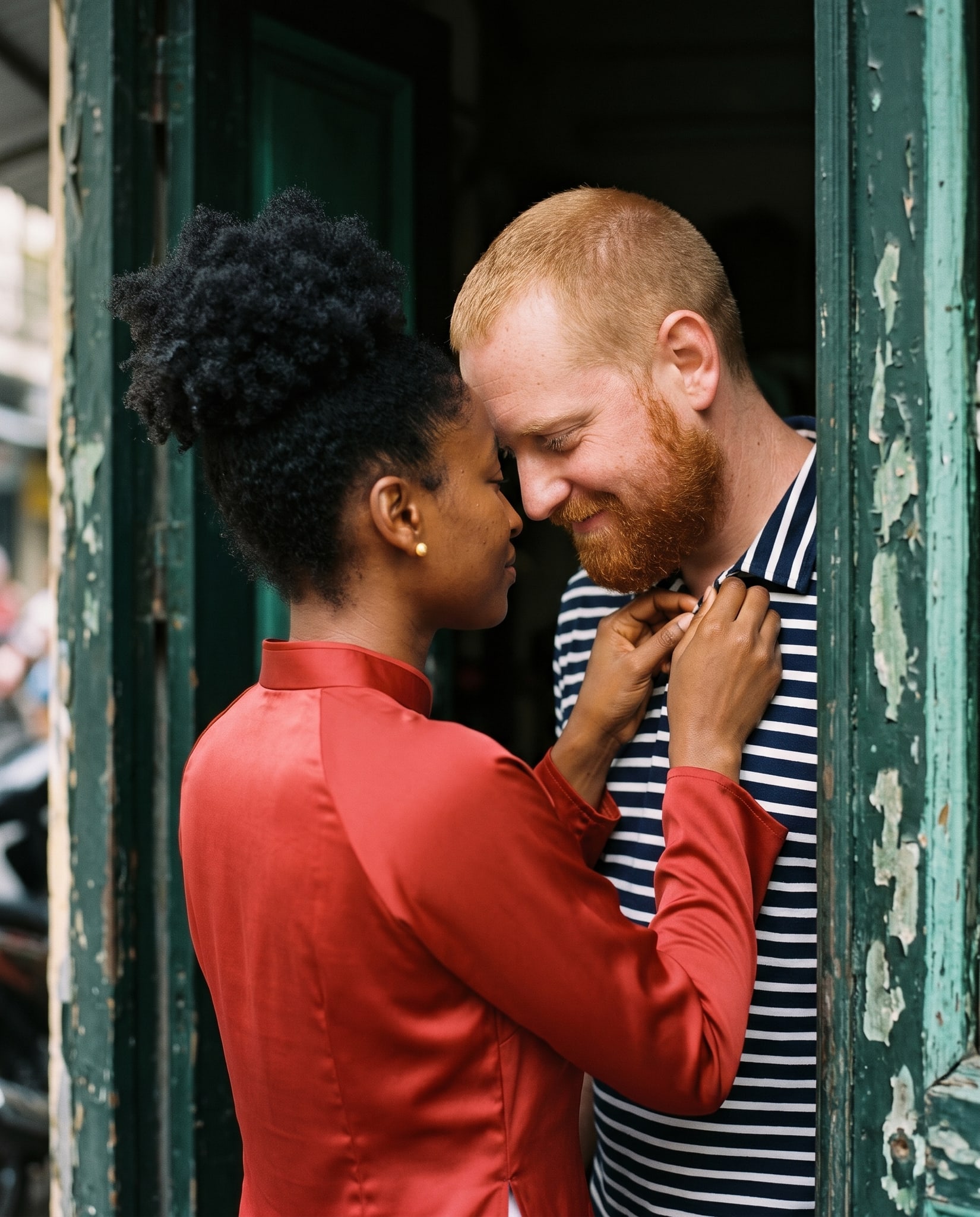
Fabric and color absorb and reflect light differently. Light, loose fabrics (silk, chiffon, linen) catch golden hour's warmth and move beautifully in soft wind. Dense, dark fabrics (heavy satin, wool) can look flat unless lit from behind. Pale and jewel-tone colors (ivory, sage, navy, burgundy) sing in golden hour; neon or hot pink can overwhelm skin tones if the light is too warm. We advise couples to bring a change of outfit: one formal look for the first hour, one casual or flowing outfit for the second hour as light changes. A lightweight shawl or overshirt helps if the wind picks up or the bride gets cold waiting between frames. Sunscreen is essential—even with golden hour, UV is strong, and sunburn shows in photos taken an hour later. We tell couples: "Apply sunscreen 15 minutes before we start so it's set, not shiny." Bare feet or simple sandals work on Cua Dai's sand; avoid heavy shoes that leave deep footprints and distract the eye. We carry a beach bag with touch-up powder (matte finish for sand wind), a water bottle, a diffuser for wind-blown hair, and a white reflector to bounce fill light onto faces in shaded areas. These small tools are the difference between a 2-hour session where makeup stays fresh and one where the bride looks blown out by 6:30 p.m.
See packages and prices on vietnamphotoshoot.com
Comparison: Morning vs. Evening Sessions at Cua Dai
| Factor | Sunrise (5:30–7:00 a.m.) | Golden Hour Evening (4:30–6:30 p.m.) | Midday (11 a.m.–2 p.m.) |
|---|---|---|---|
| Light quality | Soft, cool-toned, diffused | Warm, directional, romantic | Harsh, contrasty, shadows under eyes |
| Makeup durability | Best (cooler, less sweating) | Good (warm, natural look) | Worst (heat breaks down powder, lipstick) |
| Tide timing | Varies (must check calendar) | Varies (must check calendar) | Varies (must check calendar) |
| Crowd level | Minimal (fishers only) | Light (some tourists, locals) | Heavy (peak beach hours) |
| Couple energy | Requires early wake; romantic vibe | Relaxed; fits wedding day schedule | Exhausting; hurried feeling |
| Best for | Ethereal, serene tones; low-energy sessions | Classic romance; storytelling | Emergency backup only |
What to check before you book Cua Dai for your session
Tide table alignment. Check the Hoi An tide calendar 2–4 weeks before your date. If low tide is 8:00 a.m. and you want golden hour at 5:30 p.m., you're booking a high-tide slot—alert us, and we'll plan for a tighter framing or move to the river mouth. Ask your photographer to confirm this before payment.
Weather forecast and season. November–February: book with confidence; light is predictable. June–August: book with a flexible reschedule clause. We allow free reschedule up to 7 days before if forecast shows >60% rain.
Outfit suitability. Heavy wedding dresses can drag in wet sand; ask your seamstress to add weights or ask us for a petticoat rental. Groom's tux will absorb sweat in summer; bring a casual shirt for the second outfit.
Early arrival for light check. On shoot day, arrive 15 minutes early so our photographer can scout the exact sun position and brief you on positioning. This prevents "I didn't know we'd be facing that direction" regrets.
Backup location. Ask what the backup plan is if weather or tide doesn't cooperate. We have three backup spots near Hoi An: An Bang Beach (similar light, rockier terrain), dunes near Cua Dai, and a riverside garden. Know what you're agreeing to.
For a full range of options—couple photoshoots, proposal and anniversary sessions, or a special concept shoot beyond the beach—explore our packages. Our Cáo Studio team in Hanoi and Cáo Studio team in Saigon also serve the Central region. Read more stories from real shoots to see light, timing, and location in action.
FAQ
What time of year has the clearest skies at Cua Dai?
November–February offers dry season, cooler air, and consistent blue skies. June–August brings monsoon clouds and afternoon storms, making midday light flat and unpredictable. We recommend winter for reliability unless you want overcast softness.
Can we shoot at Cua Dai at midday if we have a specific time conflict?
Technically yes, but results suffer: harsh shadows under eyes, squinting, and fast makeup breakdown. We'll use a large diffuser and reposition for side light, but advise postponing 1–2 hours if possible. Expect more touch-ups during the session.
How do I know what tide time is on my shoot date?
Check the Hoi An tide table online or send us your date via WhatsApp; our photographer checks automatically and confirms the best time with you. Tides shift daily by ~50 minutes, so don't assume it's the same as last year.
What if it rains an hour before we're supposed to shoot at Cua Dai?
Rain often clears within 30 minutes in the tropics. We stay in touch via WhatsApp and decide together: reschedule, move to a sheltered backup spot, or postpone. Light after rain is often softer and fresher, so don't panic immediately.
Should we book sunrise or sunset, and which is more romantic?
Sunrise is ethereal and quieter; sunset is warmer and more typically "romantic." Sunrise requires early wake and no breakfast before photos. Sunset fits wedding day schedules better. Both work; choose based on your energy and what mood you want.
Pre-Wedding & Elopement
Inclusions, prices and booking are on our booking site.
FAQ
What time of year has the clearest skies at Cua Dai?
November–February offers dry season, cooler air, and consistent blue skies. June–August brings monsoon clouds and afternoon storms, making midday light flat and unpredictable. We recommend winter for reliability unless you want overcast softness.
Can we shoot at Cua Dai at midday if we have a specific time conflict?
Technically yes, but results suffer: harsh shadows under eyes, squinting, and fast makeup breakdown. We'll use a large diffuser and reposition for side light, but advise postponing 1–2 hours if possible. Expect more touch-ups during the session.
How do I know what tide time is on my shoot date?
Check the Hoi An tide table online or send us your date via WhatsApp; our photographer checks automatically and confirms the best time with you. Tides shift daily by ~50 minutes, so don't assume it's the same as last year.
What if it rains an hour before we're supposed to shoot at Cua Dai?
Rain often clears within 30 minutes in the tropics. We stay in touch via WhatsApp and decide together: reschedule, move to a sheltered backup spot, or postpone. Light after rain is often softer and fresher, so don't panic immediately.
Should we book sunrise or sunset, and which is more romantic?
Sunrise is ethereal and quieter; sunset is warmer and more typically "romantic." Sunrise requires early wake and no breakfast before photos. Sunset fits wedding day schedules better. Both work; choose based on your energy and what mood you want.
More from the team
Boho pre-wedding photoshoot in Vietnam: Hanoi, Saigon, Hoi An
Boho pre-wedding shoots mix romantic, free-spirited aesthetics with Vietnam's landscapes and heritage sites. We run full-day sessions in three cities, handling styling, makeup, location scouts and edits.
Avoid crowds at Hoang Su Phi rice terraces: timing for wedding shoots
Hoang Su Phi's terraced landscape draws couples and tour buses in equal measure. We show how to shoot there alone, when to arrive, and what to arrange with us before you go.
Photography rules at Con Dao beaches: permits, drones and what to check
Con Dao's beaches demand prep before you shoot—permits, drone zones and tide timing all affect your day. We share what the Cáo Studio team verifies on every booking.