 Cáo Studio
Home › Blog › Pre-Wedding & Elopement
Destination elopement in Ha Giang: a photographer's planning guide
By the Cáo Studio team · Hanoi & Saigon · 2026-11-02
Ha Giang elopement shoots happen across 2–4 hours on winding mountain roads north of Hanoi, typically October–November or March–April when skies clear and temperatures stay mild. Cáo Studio sends a photographer, stylist and makeup artist; couples wear áo dài or Western dress depending on the landscape. The session includes scouting (usually day before), early light at passes like Quan Ba or Nhân Mạ, and golden-hour shots in village settings. No standard elopement "package" exists because Ha Giang logistics change with season, road conditions and how many locations you want—but booking happens through our pre-wedding elopement service. Plan 6–8 weeks ahead; tell us your vision on WhatsApp and we'll quote based on travel, team size and shoot length. Chat with us on WhatsApp
Why Ha Giang works for elopements when done in the right season
Many couples think "elopement" means flying to a beach or resort. Ha Giang elopement is remote-mountain intimacy: just you, your partner, and our team in fog, terraced fields and stone villages. We've shot there in August monsoon (never again—landslides, zero visibility, team stuck 4 hours on a single road) and in May (perfect light, 26°C, but roads crowded with tourists). October–November is our honest recommendation: dry, clear, cool mornings (15–18°C at 1,200m elevation), and the road to Quan Ba Pass stays passable. March–April works too but brings occasional rain and haze from burning. The constraint is weather predictability, not beauty—Ha Giang is stunning year-round, but your photos depend on visibility and safe travel. We tell couples upfront: if you book December–February, expect fog and a shorter shoot window (we lose 1–2 hours to cloud cover). The trade-off for choosing Ha Giang is acceptance that mountain logistics trump venue perfection.
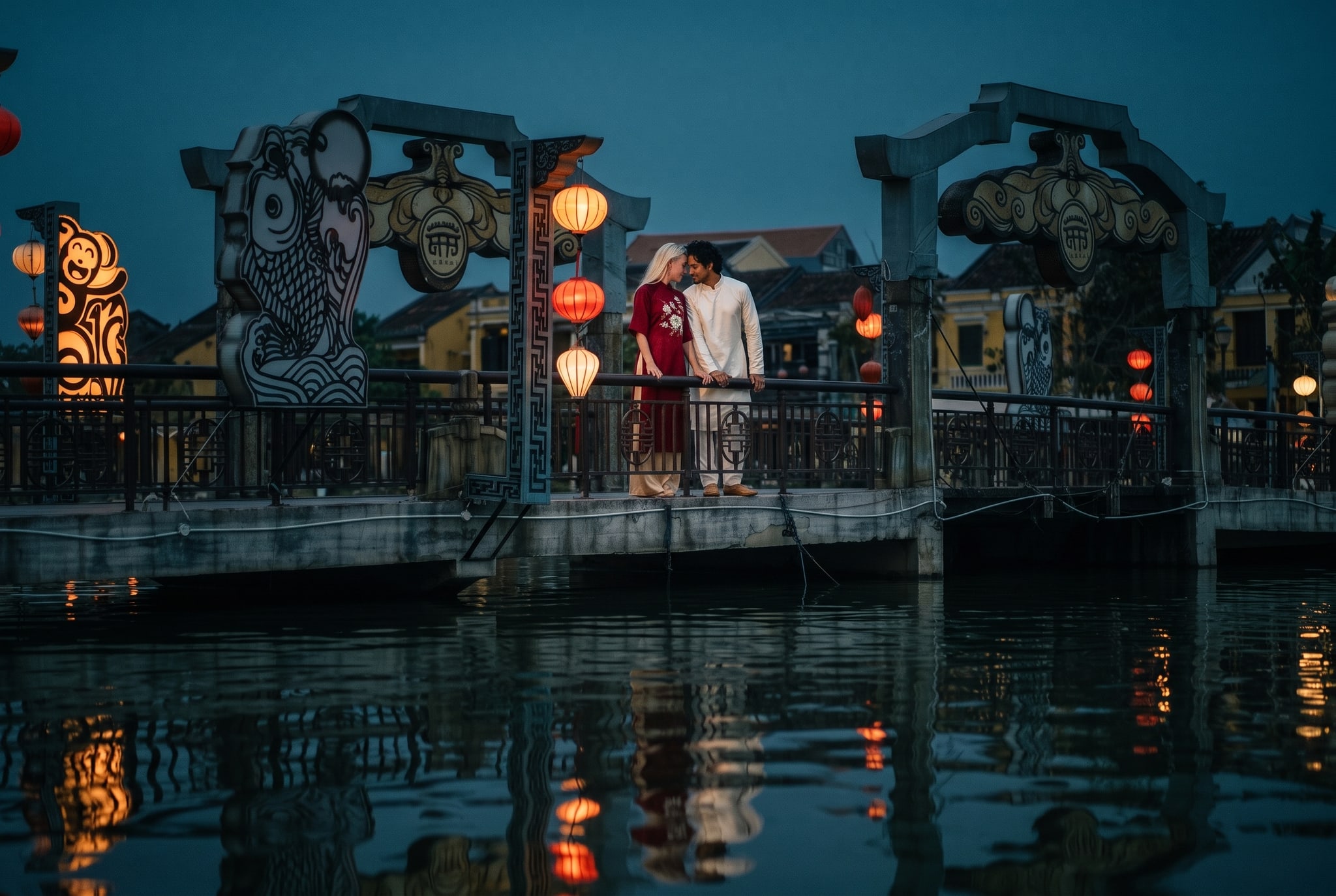
How we scout locations the day before and adjust on shoot day
Scouting happens the afternoon before your shoot. Our photographer and a stylist drive from Hanoi (3.5 hours), scout 3–4 spots (Quan Ba overlook, rice paddies near Đồng Văn, a village homestay for golden hour), take test shots in similar light, and check road conditions. We text the couple photos and timing—"sunrise at Quan Ba means 5:30am pickup, 45 minutes drive, 20 minutes setup." Then on shoot day we wake at 4:30am, review weather (we check both local Ha Giang stations and satellite), and decide: do we start at Quan Ba as planned, or shift to a lower-elevation spot if fog is thick at the top? We've abandoned the original first location twice in five years—once because a landslide blocked the road; once because a wedding convoy was shooting on the same pass. We always have a backup plan drafted during scouting. The couple doesn't see this friction; they see the team arriving calm, with a revised itinerary. Honesty saves time: if conditions are rough, we shoot 3 strong locations instead of rushing 5 mediocre ones.
See packages and prices on vietnamphotoshoot.com
Áo dài vs. Western dress in Ha Giang mountains: what actually looks best
This is the decision we guide most couples through on their scouting day. Áo dài (the traditional silk tunic and pants) photographs beautifully in rice paddies and village backdrops—the fabric moves, the lines are flattering, and the color contrast against green or stone feels timeless. But áo dài isn't warm at sunrise in October when it's 16°C and windy at elevation. Western dress (a simple wedding gown, or an understated white or champagne outfit) works if you're comfortable in layers: a shawl, a lace cardigan, or a structured jacket. One couple wore an áo dài for the first two hours (Quan Ba, village streets), then changed into a Western dress for golden hour in the rice paddies—that's 4 hours of shooting, and the wardrobe shift added 15 minutes of makeup touch-ups but gave them two completely different visual stories. We've learned: ask yourself "do I want to be warm, or do I want one iconic dress for all light?" If you want both comfort and visual drama, plan a change. Our makeup artist carries portable makeup, so touch-ups between locations take 10 minutes max. For Ha Giang specifically, avoid heavy fabrics that catch wind and never wear white if you're shooting near dusty roads—we've seen white dresses stained by road dust in no time.
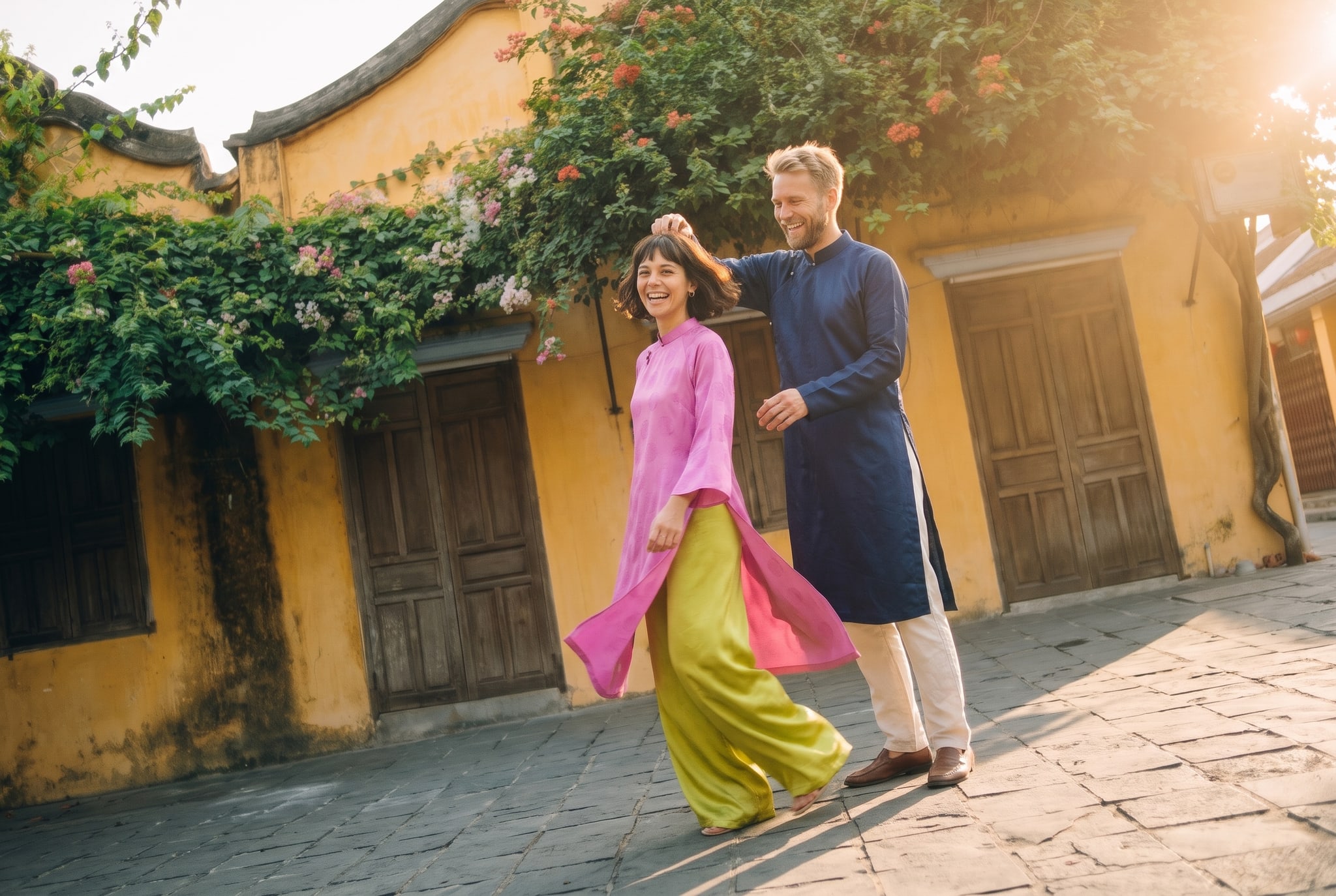
Timing the shoot: why 7am–3pm works better than sunrise-to-sunset
Couples often ask: "Can't we shoot all day?" In Hanoi or Hoi An, yes—we do. In Ha Giang, the answer is "not if you want to be safe." The road back to Hanoi gets chaotic after 4pm (tour buses, local traffic, light fades fast at elevation), and our team needs to be off the mountain by 5pm to drive home safely by 8:30pm. Practically: sunrise is 6:30am in November; we start at 7am (after a 3.5-hour drive from Hanoi the night before, the team is tired). We shoot until 2:30pm, leaving time for a long lunch break where the couple rests and we review the day's images. That's 7.5 hours on the ground, minus 1 hour for setup, breaks and wardrobe changes—so roughly 6 solid hours of shooting across 3–4 locations. It's not a 12-hour marathon, but it's structured time that works with mountain logistics. If you want more hours, you'd need to stay overnight in Ha Giang (we arrange homestays; add one night), which lets us shoot the evening before (golden hour 5pm–7pm) and start earlier the next morning. That shifts cost and logistical complexity, so discuss it early.
Pre-elopement questions to answer together before booking
Before you contact us, talk through these with your partner. We ask during the WhatsApp consultation:
- Season and backup dates: Pick your first-choice dates (e.g., October 15–20), and name three alternative weekends. We check our team availability and weather climate data.
- Dress and aesthetic: Áo dài, Western dress, or both? Formal or casual? Ha Giang calls for practical footwear (we've seen heels sink in mud)—tell us and we'll scout accordingly.
- Guest count: Just the two of you? Family members or close friends watching? Each extra person changes logistics (more transport, longer setup, privacy implications). We typically keep it to the couple + our 3-person team.
- Overnight or day-trip: One day of shooting from Hanoi (early morning drive, evening return), or stay near Ha Giang? Overnight opens more light and locations but costs more.
- Post-shoot timeline: When do you need edited images? We deliver a gallery within 10 days of the shoot; full retouched album in 3–4 weeks. If you're flying out, tell us—we can prioritize selects for your departure.
| Question | Day-trip option | Overnight option | Best for whom |
|---|---|---|---|
| Logistics | Hanoi pickup 3:30am, return by 8:30pm | Homestay check-in day before, more time on mountain | Couples who value sleep & relaxed pace |
| Shooting hours | 6 hours across 3–4 locations | 8–10 hours across 4–5 locations | Those wanting variety & multiple outfit changes |
| Setup & travel fatigue | Team tired after long drive both ways | Team rested, better energy in light | Brides/grooms who prioritize image quality |
| Cost basis | Standard elopement shoot rate | Add accommodation, extend shoot hours | Budget-conscious vs. comprehensive |
| Weather buffer | One-day window; harder to reschedule | Overnight stay allows one-day postponement | Risk-averse couples |
Use this table to decide what elopement scope matches your priorities. Most couples choose day-trip and are happy; some regret not booking overnight when they see how many locations were missed due to travel time.
What to check before you book with us
- Weather forecast and cancellation terms: Ha Giang sits at 1,000–1,500m elevation. Check typical conditions for your chosen dates and ask us about our rescheduling policy if typhoon or landslide warnings appear. We've postponed twice in five years.
- Road access: Verify the main pass (Quan Ba, Nhân Mạ) isn't closed for maintenance. We monitor this weekly during high season and will alert you immediately.
- Visa and travel insurance: International couples need Vietnam visas and travel insurance that covers mountain activities. Not a photography issue, but it's a blocker.
- Physical fitness: Ha Giang shoots involve walking—rice paddies, stone villages, overlook paths. You won't be hiking cliffs, but wear comfortable shoes and be honest about mobility.
- Makeup longevity: We use long-wear makeup suited to humidity and sweat. Bring blotting powder and lipstick; we'll touch up hourly. Full makeup redo only if something goes very wrong.
- Image ownership and usage: Confirm what you can post on social media and when. We retain rights to show images in our portfolio and marketing; you own the memories.
- WhatsApp communication: We operate on WhatsApp for all updates, itinerary changes and day-of coordination. Ensure you have WhatsApp installed and a number that works in Vietnam.
Most delays we see are couples arriving unprepared for mountain cold (bring a warm layer even in spring) or assuming the road is always passable (it isn't, especially June–September). Plan for Ha Giang as you would any mountain destination: conservative with timing, flexible with date, and honest about weather.
For elopement planning in Ha Giang, start with our pre-wedding and elopement package. If you're also considering a proposal shoot or family photos, explore our proposal and anniversary service and family photoshoot option. Read more behind-the-scenes stories on our team blog.
See packages and prices on vietnamphotoshoot.com
FAQ
Can we shoot Ha Giang in June or July?
Technically yes, but we don't recommend it. Monsoon brings landslides, zero visibility due to cloud cover at elevation, and unsafe road conditions. Your shoot gets compressed to 3–4 hours of usable light, and team safety becomes the priority. October–April is the safe window.
How much time should we spend in Ha Giang before the shoot?
Most couples arrive the morning of, or the night before if doing an overnight option. If you want to explore Ha Giang independently (Meo Vac, Dong Van Old Quarter), add 2–3 days before your shoot. The elopement shoot is best done fresh and focused, not after tiring travel.
What if weather is bad on our shoot day?
We discuss rescheduling during your WhatsApp consultation. If a typhoon warning or landslide closes roads, we postpone to your next available date at no extra charge. If forecast shows fog but roads are passable, we adjust locations down to lower elevation where light is clearer and proceed—we always have a backup plan.
Can we hire a guide or local homestay owner to appear in photos?
Yes. Tell us during scouting and we'll arrange it. Local homestay owners and guides add authenticity and support the community. Factor in an extra 30–45 minutes of setup time and discuss any fees they may charge with us directly.
How are images delivered after an Ha Giang shoot?
We provide a gallery of 80–120 edited images within 10 days. Full retouched album (300+ images, all formats) ships within 3–4 weeks. If you're leaving Vietnam soon, tell us during booking and we'll prioritize selects for early delivery.
Do we need permits or permissions to shoot at Quan Ba Pass or Nhân Mạ?
No formal permits for couples and small photography teams. Local guides or homestays sometimes ask for a small courtesy fee (informal, not official). We handle all local coordination; just let us know which sites matter most to you.
Pre-Wedding & Elopement
Inclusions, prices and booking are on our booking site.
FAQ
Can we shoot Ha Giang in June or July?
Technically yes, but we don't recommend it. Monsoon brings landslides, zero visibility due to cloud cover at elevation, and unsafe road conditions. Your shoot gets compressed to 3–4 hours of usable light, and team safety becomes the priority. October–April is the safe window.
How much time should we spend in Ha Giang before the shoot?
Most couples arrive the morning of, or the night before if doing an overnight option. If you want to explore Ha Giang independently (Meo Vac, Dong Van Old Quarter), add 2–3 days before your shoot. The elopement shoot is best done fresh and focused, not after tiring travel.
What if weather is bad on our shoot day?
We discuss rescheduling during your WhatsApp consultation. If a typhoon warning or landslide closes roads, we postpone to your next available date at no extra charge. If forecast shows fog but roads are passable, we adjust locations down to lower elevation where light is clearer and proceed—we always have a backup plan.
Can we hire a guide or local homestay owner to appear in photos?
Yes. Tell us during scouting and we'll arrange it. Local homestay owners and guides add authenticity and support the community. Factor in an extra 30–45 minutes of setup time and discuss any fees they may charge with us directly.
How are images delivered after an Ha Giang shoot?
We provide a gallery of 80–120 edited images within 10 days. Full retouched album (300+ images, all formats) ships within 3–4 weeks. If you're leaving Vietnam soon, tell us during booking and we'll prioritize selects for early delivery.
Do we need permits or permissions to shoot at Quan Ba Pass or Nhân Mạ?
No formal permits for couples and small photography teams. Local guides or homestays sometimes ask for a small courtesy fee (informal, not official). We handle all local coordination; just let us know which sites matter most to you.
More from the team
Boho pre-wedding photoshoot in Vietnam: Hanoi, Saigon, Hoi An
Boho pre-wedding shoots mix romantic, free-spirited aesthetics with Vietnam's landscapes and heritage sites. We run full-day sessions in three cities, handling styling, makeup, location scouts and edits.
Avoid crowds at Hoang Su Phi rice terraces: timing for wedding shoots
Hoang Su Phi's terraced landscape draws couples and tour buses in equal measure. We show how to shoot there alone, when to arrive, and what to arrange with us before you go.
Photography rules at Con Dao beaches: permits, drones and what to check
Con Dao's beaches demand prep before you shoot—permits, drone zones and tide timing all affect your day. We share what the Cáo Studio team verifies on every booking.