 Cáo Studio
Home › Blog › Pre-Wedding & Elopement
Destination elopement in Sapa: a photographer's planning guide
By the Cáo Studio team · Hanoi & Saigon · 2026-11-01
A destination elopement in Sapa is a two- to four-hour photoshoot in Vietnam's far north, featuring a couple and a photographer (usually one of ours) amid terraced rice fields, stone villages, or cloud-wrapped peaks. Sapa sits 1,600 metres up near the Chinese border; mist, cool air, and isolation are features, not bugs. Most couples pair it with a pre-wedding and elopement package that includes outfit changes, hair and makeup, and a guide who knows safe paths. We typically work May–September for clearer light, though mist creates its own drama. Costs and timing depend on whether you want one location or a full-day roam. The real challenge is altitude, mud after rain, and a six-hour drive from Hanoi—logistics we've learned to buffer into every plan. Chat with us on WhatsApp
Why does mist in Sapa actually help an elopement shoot?
Mist isn't a setback we fight—it's the location's signature. Sapa spends half the year wrapped in cloud, which flattens harsh shadows, softens the couple's outline, and makes a simple terraced field look cinematic. We've shot there in dense fog where you can barely see ten metres ahead, and the couple's silhouettes become the whole story. But mist is unpredictable: it burns off by 9 a.m. on some days and lingers all afternoon on others. We tell clients we're aiming for the golden hour around 5–6 p.m., when mist often rolls back in just as light turns amber. That timing also gives us midday flexibility—we can explore, scout, or wait inside a homestay for the next weather window. The trade-off is heat: in summer, the walk to high terraces is steep and muddy even in dry spells. We always bring extra shoes and a guide who knows which paths stay passable.
What does our team do in the first hour on location?
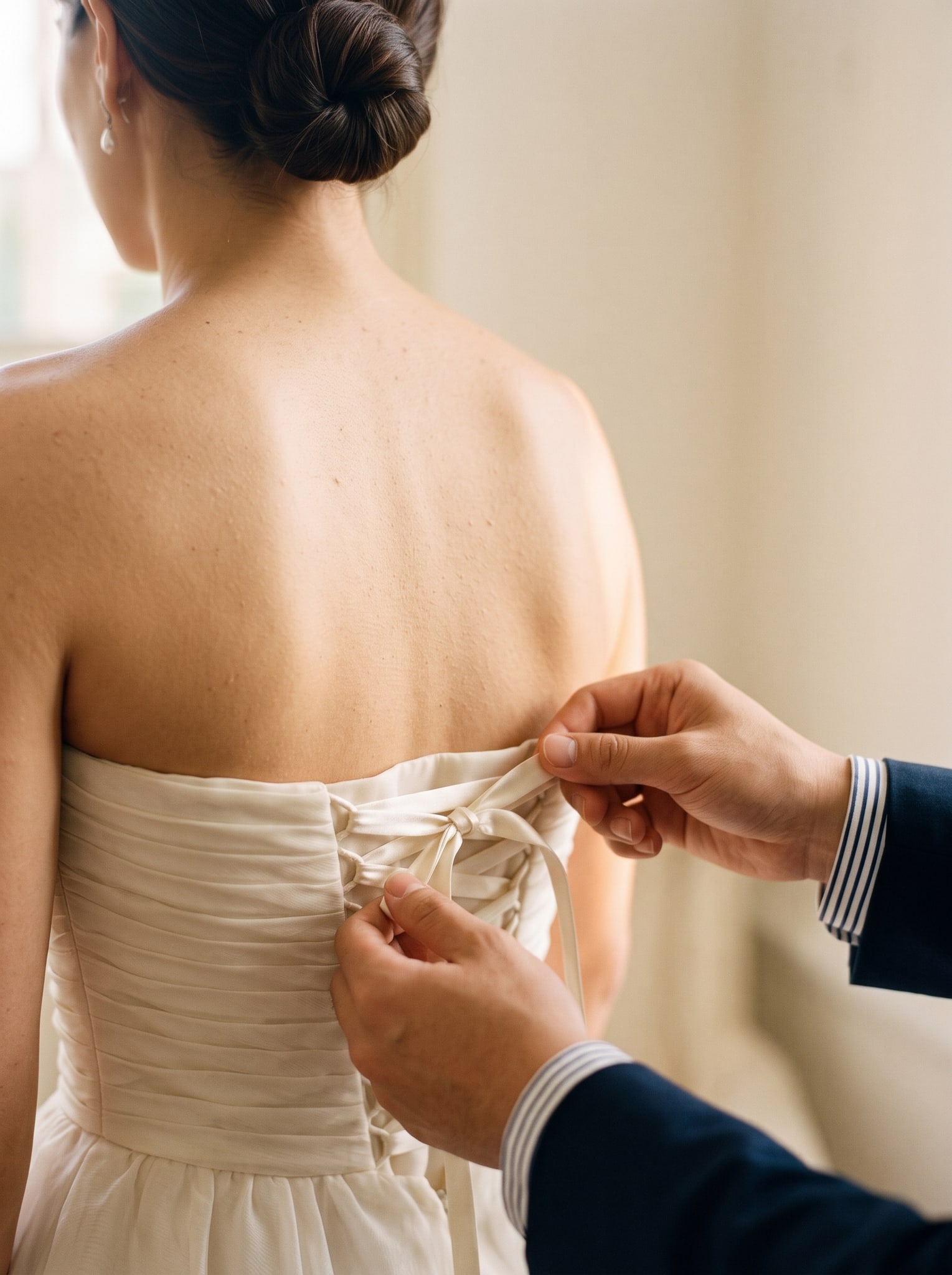
We arrive in Sapa town the night before, usually by 6 p.m. after the long drive from Hanoi. First thing: we check the sky, ask our local guide about overnight rain, and confirm the couple's outfit choices haven't been packed damp. By 7 a.m. on shoot day, we're scouting the day's three or four locations—maybe a terraced field near Cat Cat village, a stone homestay, and a misty ridge. We're looking for light angle, ground safety (loose stones trap heels and phone tripods), and whether the paths are muddy enough to need shoe backup. We usually find one primary spot and two alternates, then text the couple: "Wear the heavier dress at location one, the lighter one at the ridge." This saves time we'd waste changing behind a wall. By 8:30 a.m., hair and makeup is done, and we shoot the couple's first outfit in soft morning light. That hour matters: we're not fighting mist or heat, the couple isn't tired yet, and Sapa's fewer tourists haven't woken up. If clouds move in by 9:30 a.m., we've already got strong frames.
How do we handle the altitude and long walk?
Sapa is 1,600 metres up. Couples from sea-level cities (Hanoi, Saigon) often feel it—shortness of breath, headaches, slower movement. We don't pretend it away. On our WhatsApp prep chat, we tell them: "Wear trainers to the first location, bring water, and know we'll walk about two kilometres over the day, mostly downhill." We also build rest stops into the schedule. At 10:30 a.m., we're at location two. We spend 15–20 minutes shooting, then sit for ten minutes while we check frames and the couple catches breath. By noon, we break for lunch in a homestay—it's real food, not a rushed sandwich—and we all rest in shade. The couple often asks if this is "worth it" at that point. We show them the frames from the morning on the camera screen. Usually, they relax. The hardest part isn't the walk; it's the psychological shift from a studio pace (setup, shoot 30 minutes, move) to field pace (walk, anticipate light, shoot, wait, shoot again). We manage that with a printed shot list they see the night before: it's not random. They know what we're after. Many couples say the tiredness becomes part of the memory.
What's the weather decision tree we use on shoot day?
Rain before 8 a.m.: we often proceed. Sapa paths dry quickly in morning sun, and we've learned which homestay courtyards have overhangs. We move the first outfit change indoors. Rain after 3 p.m.: we usually try to finish by 2 p.m., so this timing becomes our hard stop. If rain is heavy and steady at 9 a.m., we text the couple: "We're moving all shoots to 4–7 p.m. and doing hair/makeup at the homestay. Mist will be thick, but light will be gold and rain might clear." Most couples agree. We've never cancelled a Sapa elopement due to weather; we've always shifted timing. The real problem is if rain comes with wind that cools the couple or makes them shiver—we carry a backup cardigan and do quick warmth breaks. Mist in early morning (before 8 a.m.) is normal; we use it. Mist all day past noon is rare but has happened; when it does, we focus on intimate detail shots (hands, rings, the couple's faces close together) rather than landscape framing. We also check the 10-day forecast before confirming a shoot date. If the forecast shows rain three days in a row, we suggest shifting the date by a week rather than gamble.
| Scenario | What we adjust | Why | Who this is best for |
|---|---|---|---|
| Morning mist, clears by 10 a.m. | Shoot early in haze; main framing in clear light | Mist softens, light is strong later | Couples who want dramatic scale and intimacy |
| Rain on shoot day, clears by 2 p.m. | Indoor outfit change; all shots 3–6 p.m. when light returns | Terraces may be slippery; we use homestay as shelter | Couples flexible on timing; love moody aesthetic |
| Full-day mist | Tight framing; detail shots; couple-focused rather than landscape | Scale doesn't read in fog; intimate story works better | Couples who prioritize emotion over grand vistas |
| Clear morning, clouds afternoon | All location moves done by 1 p.m.; last outfit shot at ridge in golden hour | Ridge sits above cloud layer; light is reliable later | Couples who want both landscape and golden-hour intimacy |
What does our pre-wedding package actually include for a Sapa elopement?
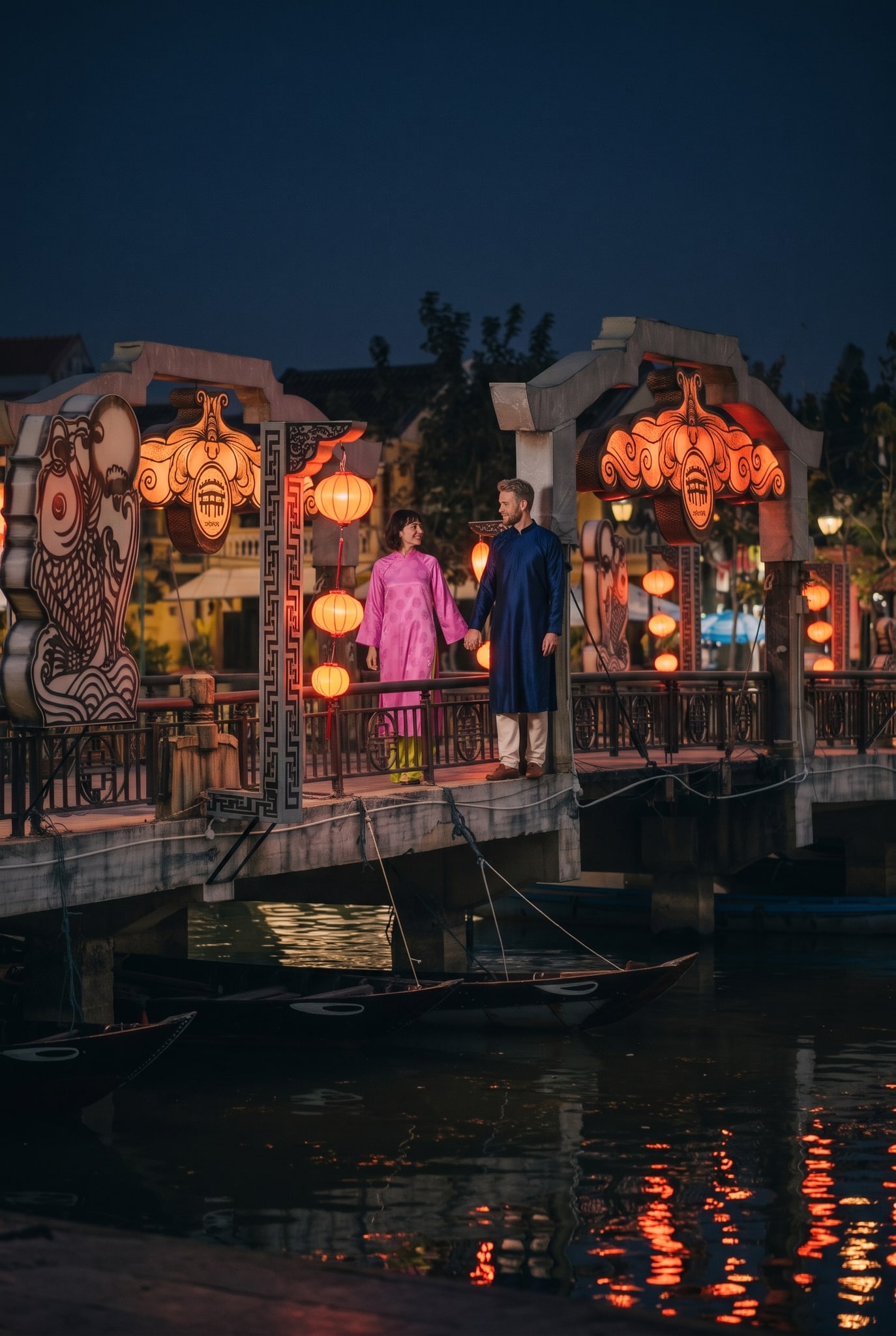
Most couples book either a half-day (four hours, two outfits) or full-day (eight hours, two to three outfits) shoot. Half-day starts at hair and makeup, includes one or two locations, and wraps by 2 p.m. We usually recommend it if the couple wants a specific shoot—say, in ao dai at a particular terrace they've seen online. Full-day gives us time to roam, wait for light, and adapt to weather. Both packages include a local Sapa guide (they speak English and Hmong; they know every path and homestay owner), a driver who handles the couple's backup outfits and shoes, and us—typically one photographer and one person managing light reflectors or handling logistics. We also do hair and makeup at the homestay, which saves the couple a hotel visit and costs us almost nothing extra since we're there overnight anyway. What doesn't usually fit: a second photographer. Sapa roads aren't paved; a second person is extra cost and extra fatigue. We're transparent about this in the quote. If a couple insists on two cameras, we price it honestly, but most say, "No, one photographer is better—more intimate."
Outfit choices matter in Sapa more than a studio. An ao dai (traditional dress) reads beautifully in landscape but is hard to move in on muddy paths—we suggest it for the first location where the couple isn't walking far. A wedding dress with a jacket or shawl works for the second shoot. We've learned to steer couples away from heavy fabrics in summer (heat exhaustion is real) and light fabrics in shoulder seasons (wind on the ridge makes you cold fast). We also ask couples to send outfit photos two weeks before; if we spot something risky (a long train, very high heels), we suggest alternatives and explain why.
How far ahead should we plan, and what does your team need from us?
Book us at least six weeks out. Sapa fills up in summer, and our guide in town (who finds the best light and knows which homestays allow shoots) needs to know our dates early. Three weeks before, send us: your outfit photos, any specific locations you've seen online, and your arrival date in Sapa. Two weeks before, we send you a printed shot list and a detailed timeline (7:30 a.m. wake-up, 8:45 a.m. hair done, 9:15 a.m. first location, etc.). A week before, we confirm the weather forecast and text you a small gear list: "Wear trainers with grip, bring a light jacket even if it's warm in Hanoi, and don't wear makeup until we meet at 8 a.m." This last step prevents smudged makeup on the drive. We also check in the night before: "See you at the homestay entrance at 8:15 a.m. Drive safely—the road is curvy." These texts sound small, but they're where couples stop panicking. By the morning, they know what to expect.
See packages and prices on vietnamphotoshoot.com
We work with couples from everywhere—Japan, Australia, the UK, the US—via WhatsApp and a shared Google Drive for mood boards. Distance doesn't slow us down; we've learned to ask the right questions over chat so we don't discover outfit issues on the day. We also offer hotel makeup and hair if you're doing your own shoot and just want us to handle styling. For couples who want to combine Sapa with a broader trip, we run vacation and solo photoshoots in Hanoi, and we have a Hoi An presence too—some couples do an elopement shoot in Sapa, then a couple session in Saigon a few days later.
Pages from our team you may need
FAQ
Is a Sapa elopement practical if we only have one day?
Yes. A half-day shoot (four hours) is realistic. We recommend arriving the evening before to avoid a same-day six-hour drive, hair, makeup, and a shoot compressed into eight hours. One night in Sapa lets you rest and explore town, which most couples value.
What if we're afraid of heights or don't want to hike?
We choose locations near homestays or lower terraces that don't require steep walking. Sapa's beauty isn't only at the ridge; villages and stone houses are stunning and accessible. Tell us your limits in the first chat, and we'll plan accordingly.
Can we do the shoot in winter, and is snow possible?
Yes, December–February is possible, though it's colder (5–10°C) and cloudier. Snow is rare but has happened. Winter Sapa light is softer and moodier. Bring thick outfits and expect the couple to be chilled—we work faster to keep them warm and take frequent breaks indoors.
What happens if the forecast shows heavy rain that week?
We shift the shoot date by a few days if you can, or we adapt: indoor outfit changes, shorter walks, and golden-hour shoots when rain usually clears. We've never had to cancel; mist and rain are part of Sapa's story.
Do we need a Sapa guide, or can you do the shoot without one?
Our guide is included and is essential. They know safe paths, local homestay owners (who let us use their courtyards), and light conditions that change hourly up the mountain. Without them, you'd waste time navigating and asking for permission. The guide also helps manage outfit changes and gives the couple moments to breathe.
How many outfit changes fit in a full-day shoot?
Three, sometimes four. First outfit (ao dai or dress) at location one; second outfit at location two; third (often the couple's casual choice) at the ridge or a homestay in golden hour. Changing takes 10–15 minutes. We pause between changes to let the couple rest, eat, and cool down.
Pre-Wedding & Elopement
Inclusions, prices and booking are on our booking site.
FAQ
Is a Sapa elopement practical if we only have one day?
Yes. A half-day shoot (four hours) is realistic. We recommend arriving the evening before to avoid a same-day six-hour drive, hair, makeup, and a shoot compressed into eight hours. One night in Sapa lets you rest and explore town, which most couples value.
What if we're afraid of heights or don't want to hike?
We choose locations near homestays or lower terraces that don't require steep walking. Sapa's beauty isn't only at the ridge; villages and stone houses are stunning and accessible. Tell us your limits in the first chat, and we'll plan accordingly.
Can we do the shoot in winter, and is snow possible?
Yes, December–February is possible, though it's colder (5–10°C) and cloudier. Snow is rare but has happened. Winter Sapa light is softer and moodier. Bring thick outfits and expect the couple to be chilled—we work faster to keep them warm and take frequent breaks indoors.
What happens if the forecast shows heavy rain that week?
We shift the shoot date by a few days if you can, or we adapt: indoor outfit changes, shorter walks, and golden-hour shoots when rain usually clears. We've never had to cancel; mist and rain are part of Sapa's story.
Do we need a Sapa guide, or can you do the shoot without one?
Our guide is included and is essential. They know safe paths, local homestay owners (who let us use their courtyards), and light conditions that change hourly up the mountain. Without them, you'd waste time navigating and asking for permission. The guide also helps manage outfit changes and gives the couple moments to breathe.
How many outfit changes fit in a full-day shoot?
Three, sometimes four. First outfit (ao dai or dress) at location one; second outfit at location two; third (often the couple's casual choice) at the ridge or a homestay in golden hour. Changing takes 10–15 minutes. We pause between changes to let the couple rest, eat, and cool down.
More from the team
Boho pre-wedding photoshoot in Vietnam: Hanoi, Saigon, Hoi An
Boho pre-wedding shoots mix romantic, free-spirited aesthetics with Vietnam's landscapes and heritage sites. We run full-day sessions in three cities, handling styling, makeup, location scouts and edits.
Avoid crowds at Hoang Su Phi rice terraces: timing for wedding shoots
Hoang Su Phi's terraced landscape draws couples and tour buses in equal measure. We show how to shoot there alone, when to arrive, and what to arrange with us before you go.
Photography rules at Con Dao beaches: permits, drones and what to check
Con Dao's beaches demand prep before you shoot—permits, drone zones and tide timing all affect your day. We share what the Cáo Studio team verifies on every booking.