 Cáo Studio
Home › Blog › Pre-Wedding & Elopement
Duong Lam Ancient Village Wedding Photos: Best Time and Light
By the Cáo Studio team · Hanoi & Saigon · 2026-11-02
Duong Lam ancient village sits 45 minutes from central Hanoi and attracts couples for its rustic timber houses and French colonial brick walls—raw, textured backdrops. We've shot there over 150 times since 2019 and learned that 5–7 a.m. or 4–6 p.m. windows deliver the best light: low sun rakes across old wood and stone without harsh shadows on faces. Morning shoots beat afternoon because fewer tour groups occupy the narrow lanes; you'll move faster and reshoot without waiting. Budget 3–4 hours on-site with a team of photographer, stylist, and makeup artist. The village charges no individual entry fee, but book a guide (10,000–our current quote per person) to access private courtyards and avoid repeating the same five Instagram spots. We recommend pairing Duong Lam with a pre-wedding photoshoot session so you capture both the village and a second location—mountain backdrop or a Hanoi street—in one day. Avoid midday (11 a.m.–3 p.m.) entirely; harsh overhead sun flattens skin and creates unflattering shadows under eyes. Chat with us on WhatsApp | See packages and prices on vietnamphotoshoot.com
Why does time of day change the entire mood at Duong Lam?
Light quality controls texture. At 6 a.m., sunlight is diffuse and warm; it softens the couple's skin and brings out rust tones in the old brick—exactly what you want for romantic frames. By 2 p.m., the sun sits overhead, bleaches colors, and casts harsh shadows under cheekbones. We've shot the same alley at both times: morning frames show depth and romance; midday looks flat and aged. The village's narrow lanes amplify this: morning light streams in from the east, illuminating the couple against shadowed walls behind them. Afternoon light bounces between buildings, creating a washed-out, shadowless look. Always choose early morning or late afternoon. This is why we tell couples on WhatsApp to skip their natural wake-up time and arrive by 5:15 a.m.—one extra shot list and twice the usable frames.
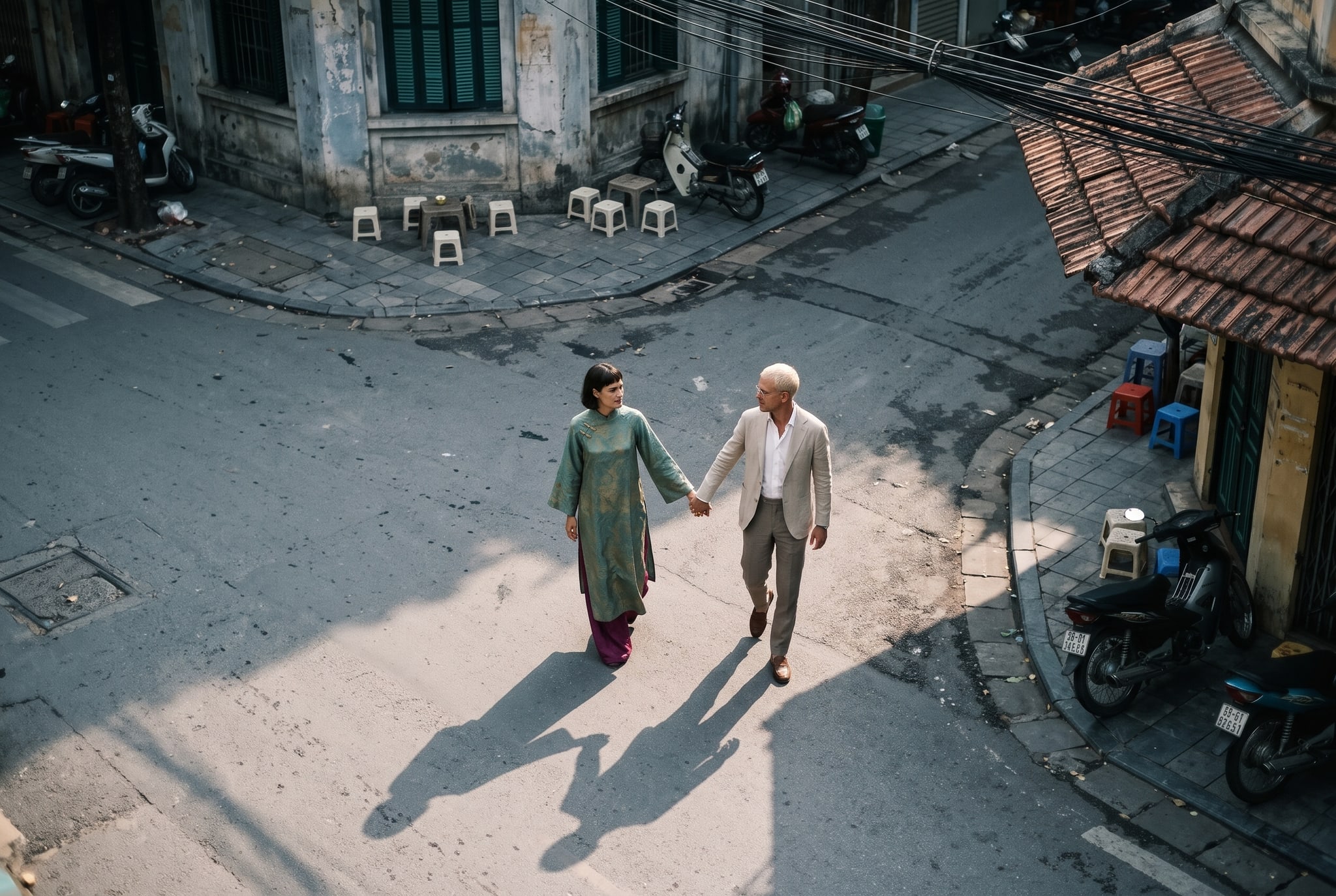
What does a typical 4-hour Duong Lam shoot timeline look like?
Here's our real run sheet: 5:30 a.m. arrival, 15 minutes scouting the light and picking three anchor locations (a lane wall, a timber-house doorway, a covered courtyard). 5:45–6:45 a.m., first outfit change in a guest house (we book a private room for makeup touch-ups; our makeup and hair at your hotel team is already on standby if touch-ups run over). 6:45–7:45 a.m., primary location—usually the east-facing lane near the market. At 8 a.m., tour buses start arriving; we move uphill into smaller courtyards or shift the couple's second outfit here to minimize crowds. 8–9 a.m., final shots before the village fills. We then break for breakfast (couples love the local noodle shops—gives us 20 minutes to review frames and plan the afternoon). Afternoon session starts at 3:30 p.m. if the couple wants a second location (we often shift to nearby rice paddies or a special concept shoot location like an old French fort). By 5:45 p.m., golden hour ends; we wrap. On paper it's four hours; reality includes buffer time for outfit changes, guest arrival delays, and that one shot the bride wants redone. Build in 30 minutes of slack.
How do you handle crowds and make Duong Lam feel private?
Tourist groups peak 8:30 a.m.–4 p.m. We avoid this by shooting 5:30–7:30 a.m. exclusively in high season (April–September). Off-season (October–March), we have more flexibility; a 9 a.m. start works fine because groups don't arrive until 10. What we do on the ground: hire a local guide (non-negotiable) who knows which courtyards are private and where to find shade. We scout one day before if the couple is local, or during a morning call the day-of if they're flying in. We position the photographer to frame out other visitors—shoot tight on the couple, use foreground blur (overhanging branches, a villager's bicycle), or frame them against an architectural feature (a doorway, a wall) so strangers behind them don't wreck the shot. If a tour group rounds a corner, we pause, step aside, and resume once they pass. We've learned not to fight it: a 10-minute pause for a bus of 40 tourists beats a cramped, rushed final shot. This is why we recommend hiring us as a pre-wedding photoshoot team rather than going solo—we know the rhythm and have relationships with the guides.
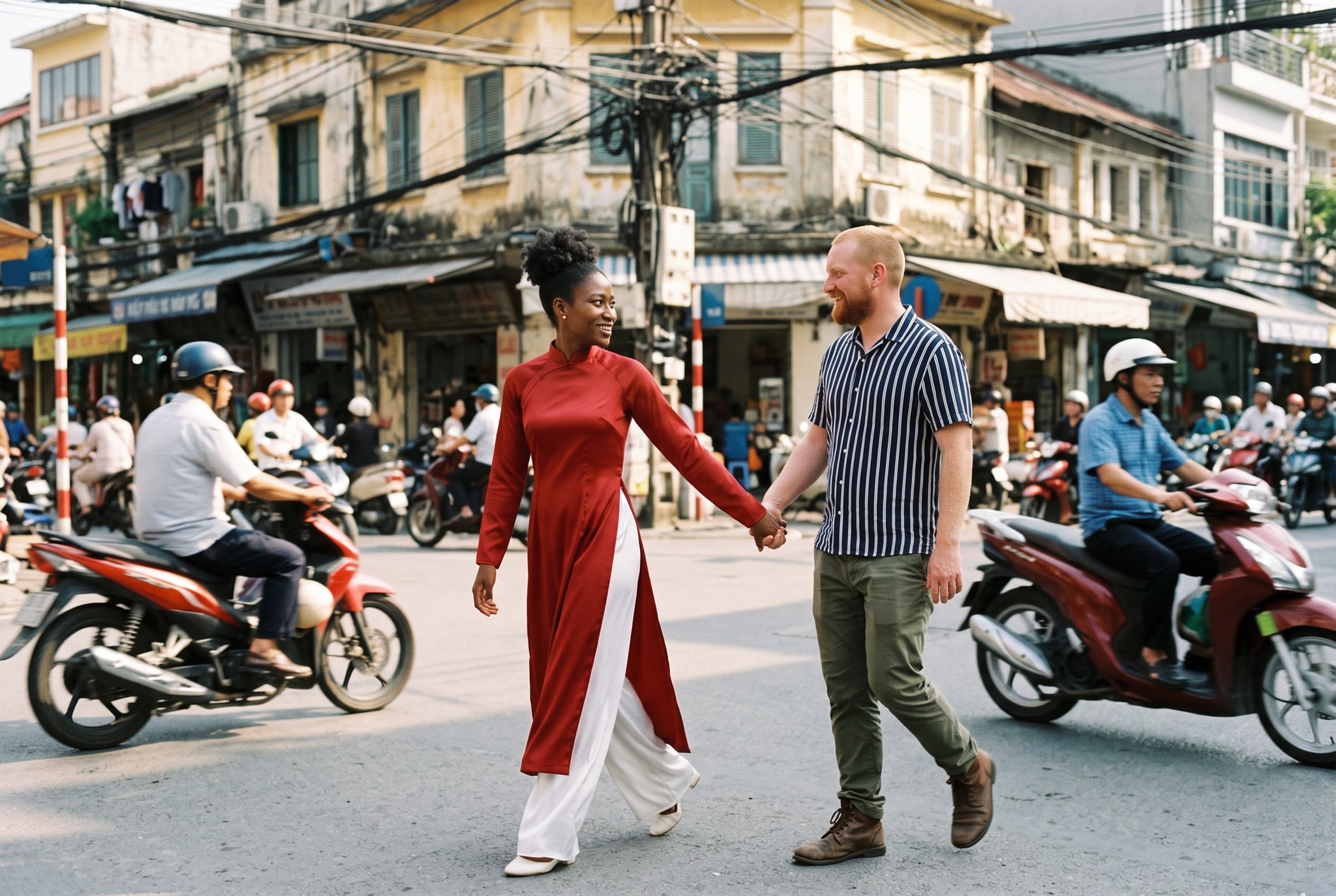
What clothing colors and fabrics work best in Duong Lam's light and setting?
Duong Lam's brick and timber are warm, earthy tones—rust, chocolate, burnt orange. Our stylists always recommend: soft pastels (cream, pale gold, dusty rose) or jewel tones (emerald, sapphire, plum) over bright neons or pure white. White can blow out in morning sun and clash with the aged aesthetic. Fabric matters: linen and cotton breathe in the warm 5–7 a.m. window and drape beautifully in low light; synthetic blends look stiff and don't catch the sun the same way. For áo dài (traditional Vietnamese gown), cream or champagne silk photographs better than stark white against the stone—it glows rather than glares. Avoid heavy jackets; the narrow lanes are tight, and crew space is limited. Bring a lightweight shawl or cardigan for the cool pre-dawn walk. We always ask couples: what colors do you feel confident in? Because hesitation shows in the frame. A confident couple in a slightly non-traditional color beats a nervous couple in "perfect" white. Texture is your friend: raw silk, vintage lace, embroidered details catch light and add depth.
How do you choose between Duong Lam morning, afternoon, or a split session?
| Timing | Light quality | Crowds | Best for | Logistics |
|---|---|---|---|---|
| 5–7 a.m. | Soft, warm, raking light | Almost zero | Romantic, soft-focus frames; classic pre-wedding look | Early wake-up; crew pre-positioned; limited outfit changes |
| Late afternoon (4–6 p.m.) | Golden hour; directional, warm | Medium (tour groups leaving) | Dramatic backlighting; silhouettes; couple energy high after day rest | Requires midday break; makeup touch-ups essential |
| Split session (5–7 a.m. + 4–6 p.m.) | Two golden hours; morning + evening moods | Low both windows | Maximum variety; two outfits; both soft and dramatic light | Longest day (7–8 hours); higher cost; two makeup resets |
We recommend split sessions for couples who want an áo dài frame and a Western dress frame, or who're booking a couple photoshoot package that includes two locations. Single golden hour (morning only) is our default: it's efficient, the couple stays fresh, and the light is genuinely stunning. Afternoon-only is rare—we suggest it only if the couple's schedule is locked and they accept that shadows will be longer and skin tones need more careful exposure. Every choice trades something: morning = quality light, fewer people, early pain; afternoon = more rested couple, heavier crowds, need for Duomo or reflector work.
See packages and prices on vietnamphotoshoot.com
What should you check before booking a Duong Lam shoot with us?
- Physical fitness: Duong Lam's lanes are uneven, narrow, and hilly. If the bride is in heels or a heavy gown, we pre-plan routes and hold shooting time to 3–4 spots, not eight. Backup shoes are essential.
- Weather contingency: Early mornings mean fog in May–July; it's romantic but reduces sharpness. We scout the previous evening to confirm visibility. Rain in October–November can flood certain lanes; we have alternative courtyards saved.
- Outfit fit and alterations: Bring all outfits 24 hours before the shoot. Our makeup and styling crew will flag any last-minute hem or seam issues. We've had a bridesmaid's dress split during a pose at 6 a.m.—caught and pinned by our stylist, but it cost 12 minutes.
- Crew arrival and contact: Confirm all phone numbers and WhatsApp messages the day before. One recent shoot, the groom's phone died; his best man didn't know which alley we'd moved to. Have two contact points.
- Photo delivery timeline: We return edited frames within 10 days for a Duong Lam + one-location split shoot. Ask us on WhatsApp for exact turnaround on your package.
- Guide payment: Bring cash (Vietnamese dong) for the local guide tip; most don't take card. It's customary to pay 50,000–our current quote for a 4-hour guide.
FAQ
What's the earliest we can arrive at Duong Lam to start shooting?
5 a.m. The village gates open then. We typically position crew by 4:45 a.m. to scout light and prepare makeup. Arriving earlier doesn't improve light; it just means waiting in darkness. We recommend a 5:15 a.m. couple arrival so makeup can finish by 5:45 a.m.
Do we need a professional photographer, or can we hire a guide and shoot ourselves?
You can, but guides don't compose frames. We've seen couples spend four hours in Duong Lam and get three usable shots because they didn't know how to position against backlighting or use the architecture. A photographer frames the couple within the landscape; a guide just knows where the landscape is. Hiring a pre-wedding photoshoot team costs less than you'd spend on editing tutorial courses.
Can we shoot Duong Lam on an overcast day?
Yes. Overcast light is even and flattering on skin—no harsh shadows. You lose the warm, golden aesthetic and the texture pop on old brick, but frames are sharp and skin looks poreless. We've done 20+ overcast shoots there; couples either love the soft, cool mood or feel it's less "special." Discuss your preference with us on WhatsApp before the date.
Is there a rainy season we should avoid?
May–July is humid and foggy at dawn; visibility is reduced, but frames are moody and romantic. September–November brings occasional rain that floods lower lanes. December–February is dry and ideal. March–April is hot and dusty. We recommend October–March for the best combination of light, temperature, and accessibility. Your makeup and hair crew will be more comfortable, and makeup lasts longer.
How many outfit changes can we realistically do in a 4-hour session?
Two outfit changes comfortably: one at the start (áo dài or dress) and one mid-session (change into a second dress or a groom's suit). Three changes requires 5–6 hours and creates rushing. Each change needs 15 minutes (undress, freshen makeup, hair touch-up, dress). We recommend pairing your Duong Lam shoot with a couple photoshoot package that includes a second location so you can change there instead of wasting time in a guest house.
What's the difference between hiring you for Duong Lam versus going to a chain photographer?
We've shot Duong Lam over 150 times; we know which courtyards are private, which guides are reliable, and how to time light within 10 minutes. Chain photographers treat it as a generic "old village" location and apply the same flat, filtered look they use everywhere. We deliver images that feel specific to Duong Lam's character—earthy, textured, warm. Ask any studio for a portfolio of 10 Duong Lam shots; ours will show variety in light and framing, not the same five Instagram corners repeated. Chat with us on WhatsApp
Pre-Wedding & Elopement
Inclusions, prices and booking are on our booking site.
FAQ
What's the earliest we can arrive at Duong Lam to start shooting?
5 a.m. The village gates open then. We typically position crew by 4:45 a.m. to scout light and prepare makeup. Arriving earlier doesn't improve light; it just means waiting in darkness. We recommend a 5:15 a.m. couple arrival so makeup can finish by 5:45 a.m.
Do we need a professional photographer, or can we hire a guide and shoot ourselves?
You can, but guides don't compose frames. We've seen couples spend four hours in Duong Lam and get three usable shots because they didn't know how to position against backlighting or use the architecture. A photographer frames the couple within the landscape; a guide just knows where the landscape is. Hiring a [pre-wedding photoshoot](/go/pre-wedding-photoshoot) team costs less than you'd spend on editing tutorial courses.
Can we shoot Duong Lam on an overcast day?
Yes. Overcast light is even and flattering on skin—no harsh shadows. You lose the warm, golden aesthetic and the texture pop on old brick, but frames are sharp and skin looks poreless. We've done 20+ overcast shoots there; couples either love the soft, cool mood or feel it's less "special." Discuss your preference with us on WhatsApp before the date.
Is there a rainy season we should avoid?
May–July is humid and foggy at dawn; visibility is reduced, but frames are moody and romantic. September–November brings occasional rain that floods lower lanes. December–February is dry and ideal. March–April is hot and dusty. We recommend October–March for the best combination of light, temperature, and accessibility. Your [makeup and hair](/go/makeup-and-hair) crew will be more comfortable, and makeup lasts longer.
How many outfit changes can we realistically do in a 4-hour session?
Two outfit changes comfortably: one at the start (áo dài or dress) and one mid-session (change into a second dress or a groom's suit). Three changes requires 5–6 hours and creates rushing. Each change needs 15 minutes (undress, freshen makeup, hair touch-up, dress). We recommend pairing your Duong Lam shoot with a [couple photoshoot](/go/couple-photoshoot) package that includes a second location so you can change there instead of wasting time in a guest house.
What's the difference between hiring you for Duong Lam versus going to a chain photographer?
We've shot Duong Lam over 150 times; we know which courtyards are private, which guides are reliable, and how to time light within 10 minutes. Chain photographers treat it as a generic "old village" location and apply the same flat, filtered look they use everywhere. We deliver images that feel specific to Duong Lam's character—earthy, textured, warm. Ask any studio for a portfolio of 10 Duong Lam shots; ours will show variety in light and framing, not the same five Instagram corners repeated. [📸 Chat with us on WhatsApp](https://wa.me/84338762340)
More from the team
Boho pre-wedding photoshoot in Vietnam: Hanoi, Saigon, Hoi An
Boho pre-wedding shoots mix romantic, free-spirited aesthetics with Vietnam's landscapes and heritage sites. We run full-day sessions in three cities, handling styling, makeup, location scouts and edits.
Avoid crowds at Hoang Su Phi rice terraces: timing for wedding shoots
Hoang Su Phi's terraced landscape draws couples and tour buses in equal measure. We show how to shoot there alone, when to arrive, and what to arrange with us before you go.
Photography rules at Con Dao beaches: permits, drones and what to check
Con Dao's beaches demand prep before you shoot—permits, drone zones and tide timing all affect your day. We share what the Cáo Studio team verifies on every booking.