 Cáo Studio
Home › Blog › Pre-Wedding & Elopement
Elopement in Vietnam: Legal vs Symbolic—Which Route Fits Your Day
By the Cáo Studio team · Hanoi & Saigon · 2026-11-02
A legal elopement in Vietnam requires marriage certificates from your home country and Vietnamese civil registration (typically 3–7 days); a symbolic ceremony skips legality and focuses on vows, location, and photos. Cáo Studio runs both: legal ceremonies include documentation shots and celebrant coordination; symbolic sessions run 4–6 hours with outfit changes, location scouting, and full editorial coverage. Legal elopements cost more due to paperwork and officiant fees (handled outside our studio); symbolic shoots are more flexible on dates and budgets. Choose legal if you need a recognized marriage certificate; choose symbolic if you want creative freedom, fewer administrative steps, and pure storytelling. Most international couples in Vietnam pick symbolic to avoid home-country registration delays.
What paperwork does a legal elopement in Vietnam actually require?
A legal marriage in Vietnam requires your passport, birth certificate (notarized copy), and a single-status affidavit from your embassy or consulate—each couple's paperwork differs by home country. The Vietnamese People's Committee in the district where you marry processes applications; English documents usually need certified Vietnamese translation. We've seen couples spend 5–7 days in paperwork alone before the ceremony itself happens. If you marry legally in Vietnam, that certificate is recognized by most countries, but your home country may require additional steps to register it (ask your embassy first). A symbolic ceremony skips all of this: you show up, make your vows, and we photograph it—no legal filing, no embassy involvement. Many couples choose symbolic specifically to avoid this bureaucratic loop.
How does Cáo Studio's approach differ between legal and symbolic shoots?
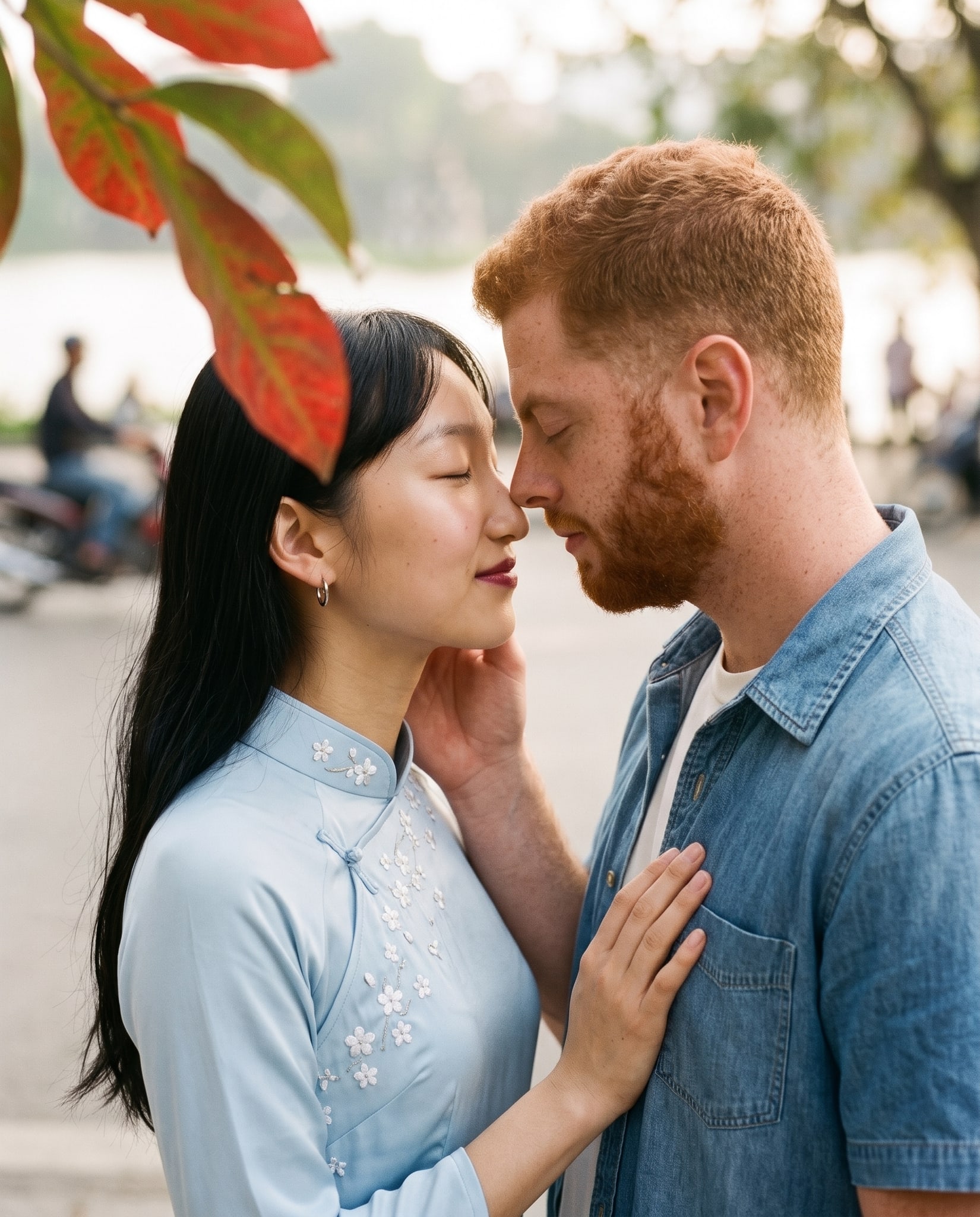
On a legal elopement, our team arrives earlier to document you signing documents with officials, the ceremony space setup, and the actual vow moment with clear witness visibility. We coordinate closely with your chosen officiant (civil officer, religious figure, or hired celebrant) to position ourselves without disrupting the ritual. We've learned not to block the couple's eye line or the official's desk—that means one or two angles during the ceremony itself, then we stage post-signing shots afterward. A symbolic shoot gives us far more creative control: we scout locations the day before (or morning-of), style multiple outfit changes, and run a full editorial story across 4–6 hours. We might shoot you arriving at a temple in Hoi An, exchanging vows in a private garden in Ninh Binh, changing into a second áo dài, and ending at sunset by a river. Legal ceremonies are compact and official; symbolic sessions are narrative-driven and flexible.
Chat with us on WhatsApp | See packages and prices on vietnamphotoshoot.com
Which locations in Vietnam work best for each type?
Legal elopements must happen at a district People's Committee office or registered venue (often a hotel or approved event space in Hanoi, Saigon, Hoi An, or Ninh Binh). Once the legal ceremony is done, you can move to a scenic location for celebratory photos—a garden, pagoda grounds, or riverside. Symbolic ceremonies can start anywhere atmospheric: Hoan Kiem Lake at dawn in Hanoi, the French Quarter in Saigon, Hoi An's Ancient Town streets, or rice terraces near Ninh Binh. We've shot symbolic elopements in hotel courtyards, private gardens, temples (with permission), and botanical spaces because there's no officiant schedule to protect. The trade-off: legal elopements feel grounded and official; symbolic sessions feel more romantic and unrestricted. If you want photos inside a pagoda or at a specific private villa, symbolic gives you that freedom.
What's the realistic timeline for planning each option?
| Ceremony Type | Visa & Paperwork | Officiant Booking | Location Prep | Photo Session | Total Weeks |
|---|---|---|---|---|---|
| Legal (via embassy) | 2–4 weeks | 1–2 weeks | 1 week | 1 day | 6–8 |
| Legal (expedited) | 1 week | 1 week | 1 week | 1 day | 4–5 |
| Symbolic (no paperwork) | Visa only | None | 1–2 days | 1 day | 2–3 |
We recommend booking us 4–6 weeks out for either type so we can hold dates and scout locations. Legal couples often spend weeks coordinating with embassies and the Vietnamese civil authority; we handle only the photography and location planning. Symbolic couples move faster because there's no bureaucratic layer—you decide on outfits, a date, and a location, and we build the shoot around those choices. One real detail: if you're marrying in Saigon but want photos in Ninh Binh (a 2-hour drive), we budget travel time and usually split the session across two days. If you're doing symbolic-only and want multiple locations, we charge per-day rates rather than per-hour. Check our pre-wedding and elopement options to see what timeline works for your visa and celebration plan.
Is a symbolic elopement officially recognized anywhere?
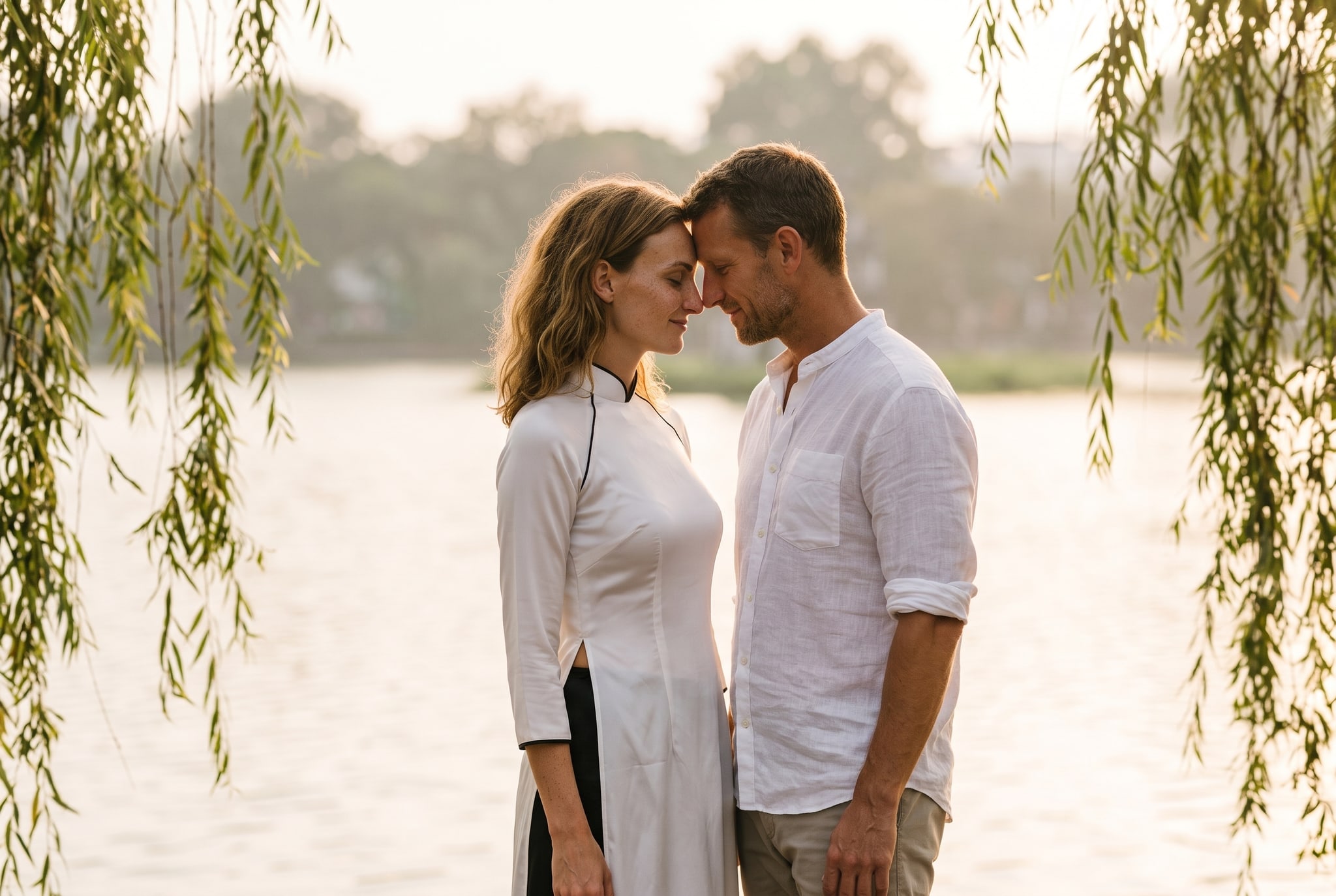
No—a symbolic ceremony has no legal standing in any country. It's a photographic celebration of your commitment, not a binding marriage. If you need a legal marriage certificate for visas, property ownership, or inheritance, you must go through a civil or religious ceremony in at least one country. However, many couples do both: marry legally in their home country months before or after, then do a symbolic elopement in Vietnam purely for photography and personal meaning. We've shot couples who had a courthouse wedding three months prior and came to Vietnam for a symbolic "renewal"—it gave them the romantic imagery and location they wanted without legal duplication. Others do symbolic first in Vietnam, then file paperwork at home later. The key question: who needs to recognize your marriage for your life to work? If only you two matter, symbolic is perfect. If banks, employers, or immigration need proof, legal is non-negotiable.
What should you check before booking a legal vs. symbolic elopement package with us?
Clarify legal status immediately. Tell us whether you need a certificate filed in Vietnam, your home country, or neither. We don't handle paperwork, but we'll tell you what we can photograph and when officials typically want the ceremony to happen (usually mornings at government offices). Confirm your home country's requirements. Email your embassy or consulate and ask: (1) Is a Vietnamese marriage certificate recognized? (2) What documents do you need to register it at home? (3) Can you marry outside Vietnam and celebrate symbolically without legal friction? Most embassies reply within 3–5 days. Lock your outfit plan early. Legal ceremonies often require formal dress; symbolic shoots let you change into áo dài, Western gowns, or custom pieces. Let us know what you want to wear so we can scout locations that match. Agree on location limits. Legal ceremonies are geographically fixed (the government office + one scenic spot). Symbolic sessions can roam, but that adds time and travel. Discuss your ideal locations with us before you book so we're aligned on what's logistically possible in your session hours.
Our couple photoshoot packages and pre-wedding sessions both accommodate legal and symbolic structures—pick whichever fits your vision, then tell us which path you've chosen so we can plan accordingly.
Chat with us on WhatsApp | See packages and prices on vietnamphotoshoot.com
What role does your home country play in the decision?
Your home country's marriage laws determine whether a Vietnamese legal ceremony matters for your life. If you're a US citizen marrying another US citizen in Vietnam, the US State Department will recognize a Vietnamese marriage certificate if you register it with the US federal government (an extra step, not automatic). If you're a German citizen marrying in Vietnam, Germany typically recognizes Vietnamese legal marriages without re-registration. If you're marrying someone with a different nationality, the rules get more complex—both countries' laws apply. We've had couples spend weeks researching because one partner's country has residency or tax rules tied to marital status. Our advice: contact your country's embassy or consulate in Hanoi or Saigon before deciding. If the paperwork burden is heavy and you're not planning to live in either country, symbolic is often the smarter choice. If you're moving to Vietnam or need a certificate for visa sponsorship, legal is mandatory. This isn't a creative decision—it's a legal one, and we can't advise on it, only shoot what you decide.
For couples based in North Vietnam, our Hanoi studio can coordinate with local government offices and handle the legal-ceremony photo logistics efficiently. For couples in the South, our Saigon team has relationships with district People's Committees and knows the fastest paperwork routes. If you're not sure whether you need legal or symbolic, book a WhatsApp call with us—we've walked through this decision with dozens of couples and can help you ask the right questions.
Chat with us on WhatsApp | See packages and prices on vietnamphotoshoot.com
FAQ
Can we have a legal ceremony and a symbolic photoshoot on different days?
Yes. Some couples file paperwork and have a civil ceremony one day (we photograph it), then do a full symbolic elopement session with outfit changes and scenic locations a day or two later. It costs more in session fees but lets you separate the legal obligation from the romantic storytelling. Contact us to plan multi-day bookings.
Do we need a translated marriage license if we marry legally in Vietnam?
Your embassy can tell you. Most countries recognize a Vietnamese marriage certificate in English, but some require an official Vietnamese-certified translation before you can register it at home. Ask your consulate 3–4 weeks before your ceremony so you have time to arrange translation if needed.
What if our home country doesn't recognize marriages done abroad?
A few countries (Saudi Arabia, Iran, others) heavily restrict foreign marriages or require specific religious or government procedures. If that's your situation, a symbolic elopement in Vietnam is purely personal and celebratory—it has no legal weight anywhere. Marry legally in your home country first if a certificate is required.
How much extra does legal elopement photography cost compared to symbolic?
We don't charge differently for legal vs. symbolic sessions. The difference is in your costs: legal ceremonies require officiant fees, translation, and government paperwork (usually paid to the Vietnamese government or a local guide, not us). Symbolic ceremonies are just our photography package with no additional legal fees. Check vietnamphotoshoot.com for current session rates.
Can we do a symbolic elopement in a temple or religious space without legal registration?
Yes, with permission from the temple or venue. We scout religious spaces in Hoi An, Hanoi, and Ninh Binh regularly. A symbolic ceremony there is purely personal—it won't be legally binding anywhere unless you also register with a government office. Many couples combine a temple blessing (symbolic) with legal paperwork filed separately (civil).
What happens if our visa expires before we finish the legal paperwork?
You'll need to renew your visa or exit and re-enter Vietnam. If paperwork takes longer than expected, you may need to rebook. This is a real risk: always add 1–2 weeks of buffer time to your Vietnam stay when pursuing a legal elopement. A symbolic ceremony avoids this because it has no administrative deadline.
Pre-Wedding & Elopement
Inclusions, prices and booking are on our booking site.
FAQ
Can we have a legal ceremony and a symbolic photoshoot on different days?
Yes. Some couples file paperwork and have a civil ceremony one day (we photograph it), then do a full symbolic elopement session with outfit changes and scenic locations a day or two later. It costs more in session fees but lets you separate the legal obligation from the romantic storytelling. Contact us to plan multi-day bookings.
Do we need a translated marriage license if we marry legally in Vietnam?
Your embassy can tell you. Most countries recognize a Vietnamese marriage certificate in English, but some require an official Vietnamese-certified translation before you can register it at home. Ask your consulate 3–4 weeks before your ceremony so you have time to arrange translation if needed.
What if our home country doesn't recognize marriages done abroad?
A few countries (Saudi Arabia, Iran, others) heavily restrict foreign marriages or require specific religious or government procedures. If that's your situation, a symbolic elopement in Vietnam is purely personal and celebratory—it has no legal weight anywhere. Marry legally in your home country first if a certificate is required.
How much extra does legal elopement photography cost compared to symbolic?
We don't charge differently for legal vs. symbolic sessions. The difference is in your costs: legal ceremonies require officiant fees, translation, and government paperwork (usually paid to the Vietnamese government or a local guide, not us). Symbolic ceremonies are just our photography package with no additional legal fees. Check vietnamphotoshoot.com for current session rates.
Can we do a symbolic elopement in a temple or religious space without legal registration?
Yes, with permission from the temple or venue. We scout religious spaces in Hoi An, Hanoi, and Ninh Binh regularly. A symbolic ceremony there is purely personal—it won't be legally binding anywhere unless you also register with a government office. Many couples combine a temple blessing (symbolic) with legal paperwork filed separately (civil).
What happens if our visa expires before we finish the legal paperwork?
You'll need to renew your visa or exit and re-enter Vietnam. If paperwork takes longer than expected, you may need to rebook. This is a real risk: always add 1–2 weeks of buffer time to your Vietnam stay when pursuing a legal elopement. A symbolic ceremony avoids this because it has no administrative deadline.
More from the team
Boho pre-wedding photoshoot in Vietnam: Hanoi, Saigon, Hoi An
Boho pre-wedding shoots mix romantic, free-spirited aesthetics with Vietnam's landscapes and heritage sites. We run full-day sessions in three cities, handling styling, makeup, location scouts and edits.
Avoid crowds at Hoang Su Phi rice terraces: timing for wedding shoots
Hoang Su Phi's terraced landscape draws couples and tour buses in equal measure. We show how to shoot there alone, when to arrive, and what to arrange with us before you go.
Photography rules at Con Dao beaches: permits, drones and what to check
Con Dao's beaches demand prep before you shoot—permits, drone zones and tide timing all affect your day. We share what the Cáo Studio team verifies on every booking.