 Cáo Studio
Home › Blog › Pre-Wedding & Elopement
Elopement in Vietnam: Planning Guide for Foreign Couples
By the Cáo Studio team · Hanoi & Saigon · 2026-11-02
An elopement in Vietnam for foreign couples typically spans 3–7 days: arrive with valid visa, book a photographer 4–8 weeks ahead, choose one location (Hanoi, Saigon, Hoi An, or Ninh Binh based on weather and style), and schedule the shoot 1–2 days into your stay once you've rested. The package usually includes 4–8 hours with a photographer, stylist, and sometimes hair/makeup; costs range widely depending on team size and location complexity. Avoid booking during peak monsoon (May–September in the north; September–November in the central coast) and never assume last-minute bookings will land your first-choice date—Cáo Studio's calendar fills 6 weeks out in peak season. The real win is choosing a team that shoots in-country daily: they know light windows, traffic patterns, and which vendors stay open on the day you show up. Chat with us on WhatsApp | See packages and prices on vietnamphotoshoot.com
Where Do Most Foreign Couples Actually Shoot, and Why Does Location Timing Matter?
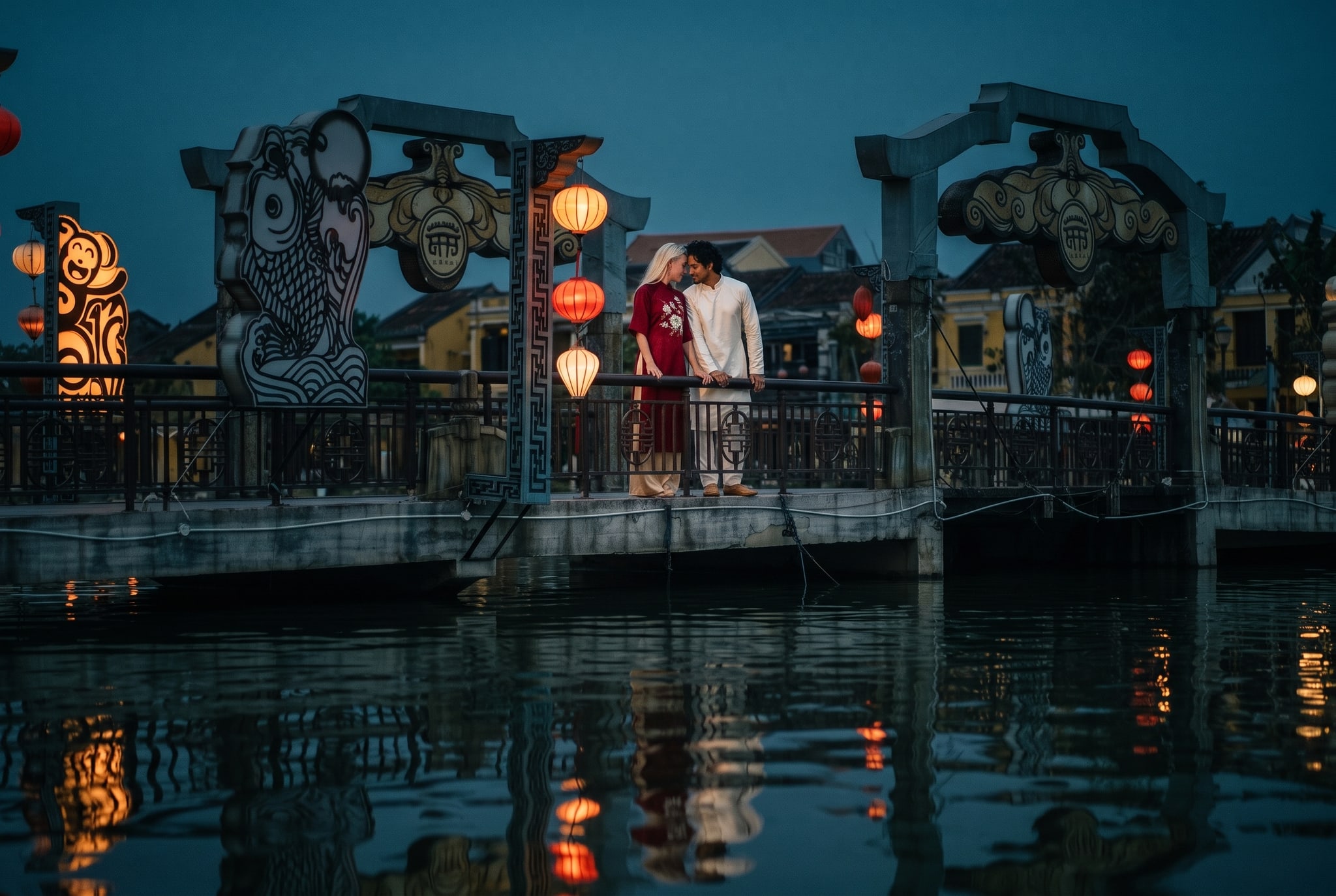
We've photographed elopements across Vietnam, and the location choice almost always comes down to visa length and what a couple means by "romantic." Hanoi attracts couples who want urban drama—French colonial backdrops, Old Quarter lantern light at dusk, temples where light streams through incense smoke. Saigon draws couples planning longer stays; the city sprawls, so location scouts take longer, but the payoff is the Saigon River at sunset and hidden cafés in Districts 1 and 4. Hoi An works for couples who've booked a wider Vietnam trip; it's a 3-hour drive from Da Nang, and the ancient town's yellow-washed buildings photograph the same way year-round—which means no weather surprises. Ninh Binh appeals to adventure-focused couples: limestone karsts, boat rides, rice paddies that shift color with the season. The timing trap: many foreign couples book a location first, then realize they're shooting in monsoon. Hanoi's summer (June–August) means 35°C heat and humidity that exhausts you before noon. The central coast (Hoi An, Da Nang) sees heavy rain September–November. We tell couples: pick your dates around dry season (October–April for the north; May–August for the center), then choose location. That reversal—dates first—avoids rescheduling frustration.
What's the Honest Day-of Timeline, Hour by Hour?
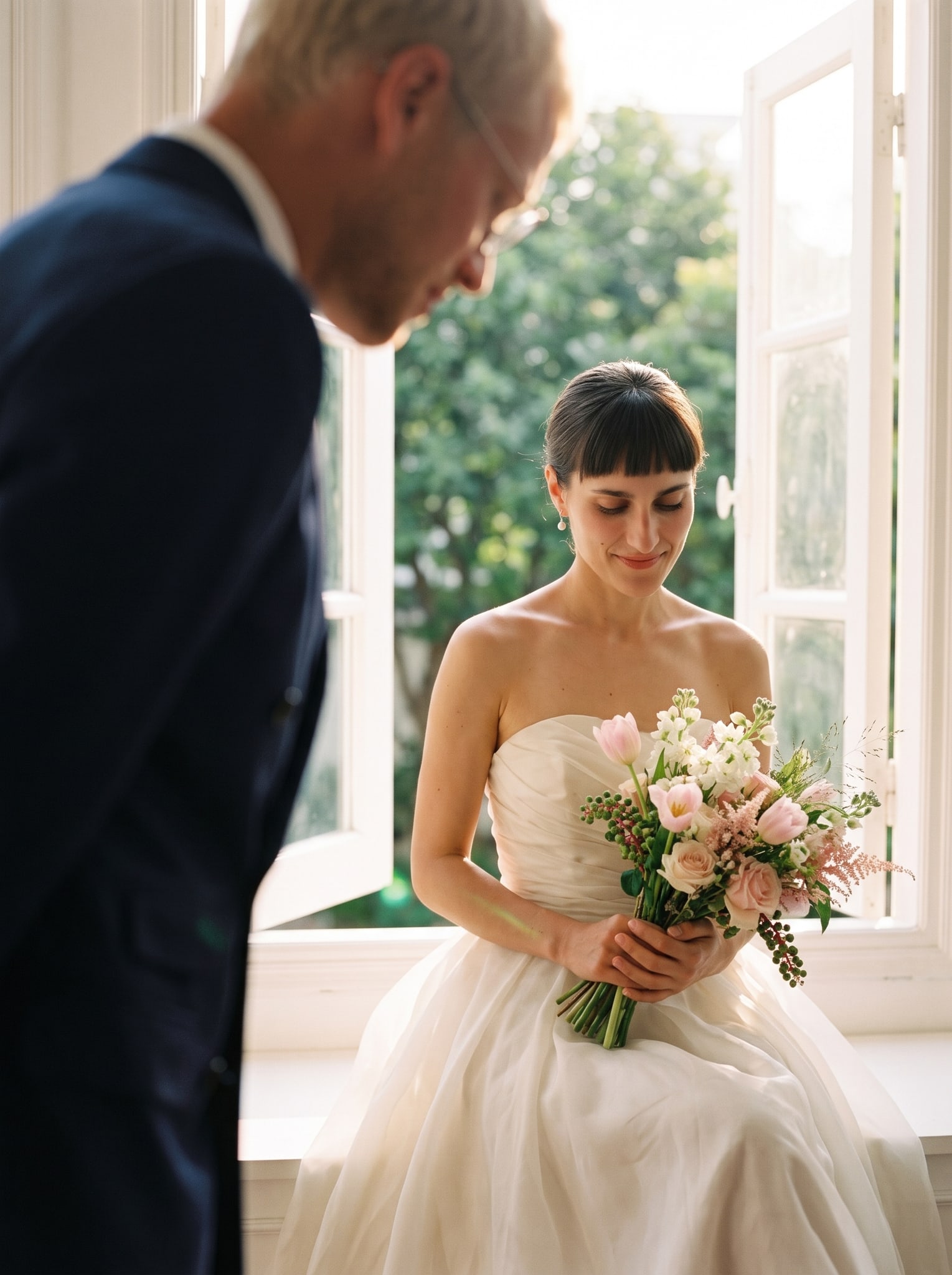
Couples often ask us what actually fills 6 or 8 hours on a shoot day. Here's how a typical elopement unfolds when we book a pre-wedding and elopement package:
Hour 1–2: You meet us at your hotel or a café. We review outfit choices, confirm location access, and scout light. If you've hired makeup and hair at your hotel, they arrive now while we prep bags. Most couples are nervous here—we slow down, take photos of details (rings, shoes, breakfast), and shoot during the calm before formal poses.
Hour 3–4: First location. We drive (or walk, depending on distance), and we're watching light angle, foot traffic, and your energy. This is when things go wrong: a street vendor won't move, a café owner didn't give us permission, or you're exhausted from heat. We pivot. We know backup spots in every district.
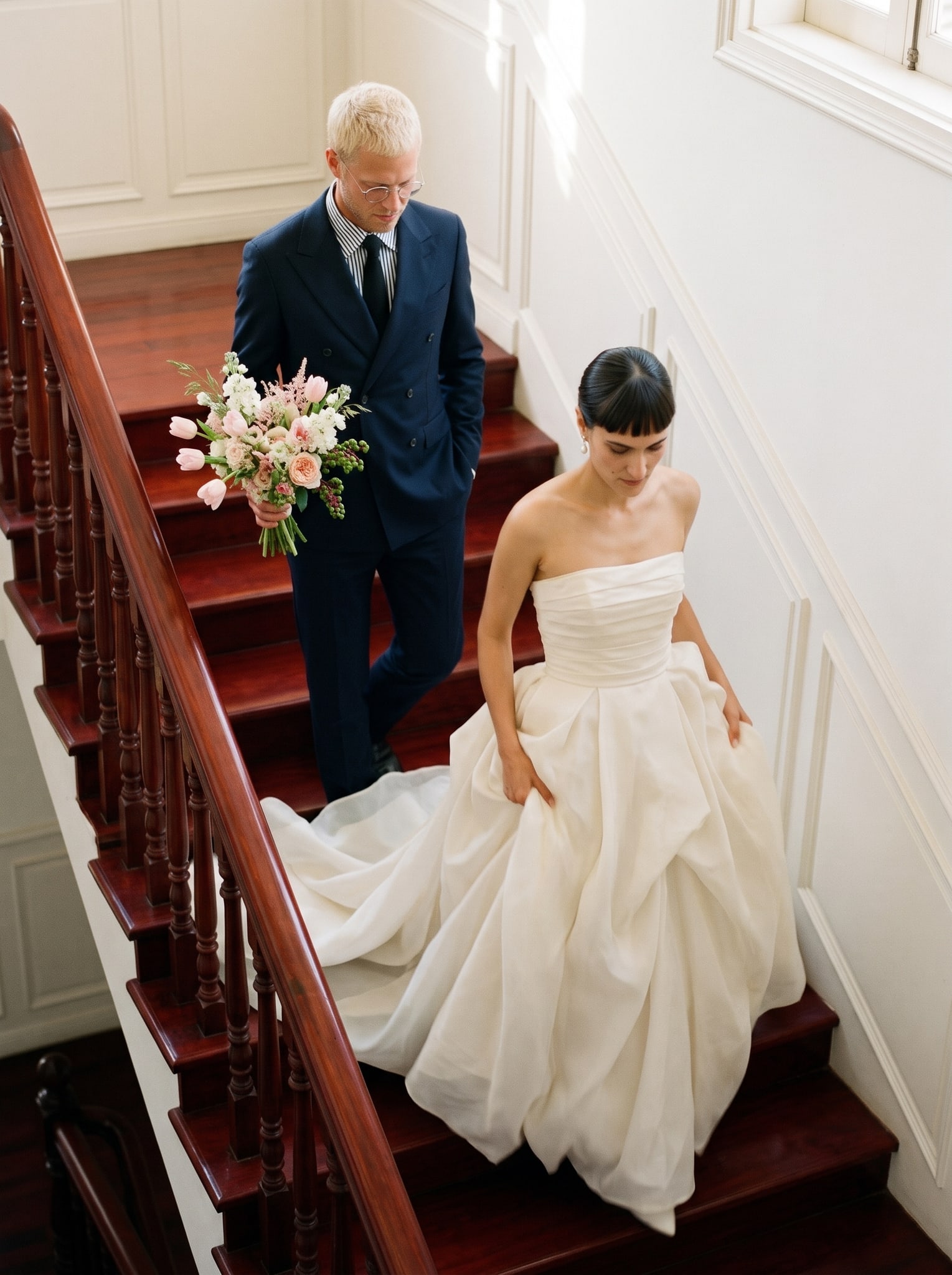
Hour 5–6: Second location or outfit change. If you're wearing áo dài, this is the transition. We've learned to keep a steamer and touch-up kit in the car; humidity kills fabric drape, and we fix it on the spot.
Hour 7–8: Sunset location if timing allows, or a quiet moment—walking, laughing, dancing—where the camera fades into the background.
Downtime is real: 15 minutes in traffic, 20 minutes scouting an alley, 10 minutes waiting for golden hour. We don't charge for that. What we avoid: back-to-back locations with no breathing room. Couples who've done multiple shoots elsewhere often expect machine-gun pace; we tell them upfront that's not how we work.
Why Do Visa Dates and Weather Windows Overlap, and How Do You Plan Around Both?
This is where a lot of foreign couples get stuck. A 30-day tourist visa to Vietnam (standard for most nationalities) doesn't mean book a 30-day trip; it means you have a 30-day window to exit. Elopement shoots work best when you're rested, not scrambling to catch a flight. Most couples we see plan 5–7 days in-country: 1 day travel and settle, 1–2 days for the shoot and locations, 2–3 days to explore or relax, then fly out.
The weather overlap is trickier. Hanoi's dry season is October–April (cool, clear, perfect light). The moment you hit May, the humidity makes makeup run and clothes stick to skin. Saigon has less seasonal swing; year-round it's hot and humid, but May–August is wetter and hotter. Hoi An's best window is October–March; April heats up fast. Ninh Binh follows Hanoi's pattern.
Here's what we tell couples: if your visa is issued for June departure, don't force a Hanoi shoot in June. Either reschedule your travel 2–3 months, or choose Saigon or Hoi An where humidity is consistent. We've had couples insist on shooting in peak heat, and the photos are salvageable but the couple is visibly uncomfortable. Not worth it. A simple rule: check Vietnam's monsoon calendar (not a generic weather app—the actual regional pattern) before you book anything.
| Location | Best Dry Season | Worst Months | Typical Group Size | Why Couples Choose It |
|---|---|---|---|---|
| Hanoi | Oct–Apr | May–Sep | 2–4 | Urban temples, colonial light, short notice |
| Saigon | All year (humid) | Sep–Oct peak wet | 2–5 | River views, modern backdrops, longer stays |
| Hoi An | Oct–Mar | Apr–Sep | 2–3 | Ancient town, no weather surprises, day trips |
| Ninh Binh | Oct–Apr | May–Sep | 2–4 | Nature, adventure, fewer tourists off-season |
What Do We Actually See Go Wrong, and How Do You Avoid It?
We're honest about what breaks elopement plans. First: permits and access. Vietnam's street-vendor system and business licensing is byzantine. A beautiful alley you've pinned might be controlled by a local shop owner who charges "access fees" last-minute, or a temple might close for ceremony at 3 p.m. We know these spots—that's why booking a local team matters. We handle permissions or steer you elsewhere in the first 30 minutes.
Second: outfit disaster. We once had a couple arrive with a wedding dress they'd bought online 10 days before travel. It didn't fit (their tailor in their home country was unavailable). We have a network of seamstresses in Hanoi and Saigon who do emergency alterations in 24 hours, but that burns a day. Lesson: bring fitted outfits, or budget time and money for tailoring before you land.
Third: energy and heat collapse. A couple decides to "maximize" their 8-hour session by adding a third location or changing outfits twice. By hour 6, the heat and adrenaline crash together. We now proactively suggest shorter sessions (4–5 hours) for first-time shoots, or a flexible booking where couples can pause and resume the next morning.
Fourth: communication gaps. Couples book us through an agency in their home country, that agency books a local team, and instructions get lost. We now insist on direct WhatsApp contact with each couple 2 weeks before the shoot. It's not rude; it's how we avoid surprises.
Fifth: underestimating logistics. Couples assume a 20-minute taxi ride is 20 minutes; it's 45 in traffic. They assume their hotel is "on the way" between locations; it's not. We always scout routes the night before and build in buffer time.
How Do You Actually Communicate with Your Photographer from Abroad, and When Should You Book?
Most foreign couples contact us via WhatsApp 8–12 weeks before their trip. That timeline works because we can hold a date tentatively, confirm visa approvals, and plan around your exact arrival. Booking closer than 6 weeks almost always means your first-choice date is gone, especially in October–November and December–January when Vietnam travel peaks.
Here's our typical communication flow: first message confirms package interest and rough dates. We send a questionnaire (outfit colors, location vibes, must-have shots, any mobility concerns). Within 48 hours we propose dates and locations. Once confirmed, we ask for a deposit, and your date locks. Two weeks before arrival, we reconnect and ask: what's your hotel address, what time you'll be ready, any outfit changes or special requests. One week before, we scout the locations in daylight and send you reference photos from a similar shoot. The day before, we confirm pickup time and weather contingencies. The morning of, we're in touch via WhatsApp 30 minutes before pickup.
We use Visa, Mastercard, bank transfer, or online payment links—all accepted from abroad. Never cash upfront. This reduces anxiety for couples who've never paid a service provider they can't meet face-to-face. A few couples have asked if they can delay payment until after they see previews; we're flexible on payment timing, but confirmation requires a deposit. It's not about mistrust; it's about locking your date so we don't double-book.
What's the Real Difference Between an Elopement Package and a Standard Couple Shoot, and Which Fits Your Trip?
This question comes up a lot, and the answer isn't marketing—it's logistics. A couple photoshoot is usually 3–4 hours, one outfit, one or two locations, designed for travelers who want nice photos but aren't planning a wedding narrative. A pre-wedding and elopement package runs 6–8 hours, often includes an outfit change (sometimes áo dài), spans multiple locations, and is built around a story—the elopement itself, or the commitment ritual that matters to you.
The elopement package also assumes you might want specific shots we don't do for casual couples: an exchange-of-vows moment, a "first kiss as a couple" setup (even if you've been married years), a detail shot of your rings on a local landmark. We also give more time to stillness and quiet—not every moment is posed.
If you're eloping (meaning this is your legal or spiritual marriage moment, even if it's a small ceremony), choose the elopement package. If you're a couple on a honeymoon wanting beautiful photos, the couple shoot works. Both are real. One isn't "better"—it's just different pacing and intent.
For couples interested in wearing áo dài—Vietnam's traditional long dress—we've built that into our áo dài photoshoot package as well. Some elopers combine both: áo dài for one location, Western dress for another. That's a custom request, and we build the timeline around it.
What to Check Before You Book
- Visa validity: Confirm your exit date is at least 5 days after your planned shoot; this gives you buffer time and a full shoot day without flight stress.
- Outfit fit: Try on everything at home. If anything needs tailoring, order 8 weeks ahead. Last-minute Vietnam tailoring exists but eats into trip time.
- Hotel and location proximity: Share your hotel address with us early. We'll tell you honestly if your three "dream" locations create a logistical nightmare (e.g., three hours driving across Saigon in one session).
- Weather data: Don't rely on weather apps. Check Vietnam's regional monsoon patterns for your specific dates and locations.
- Communication setup: Before you arrive, exchange WhatsApp numbers with your photographer directly, not through an intermediary.
- Payment method: Confirm which cards or transfers work for the deposit. Do this one week before arrival so there are no surprises.
FAQ
How far in advance should I book an elopement shoot in Vietnam?
Aim for 8–12 weeks. This allows visa processing, date confirmation, and scouting time. Bookings within 6 weeks often collide with peak-season demand, especially October–April. Direct contact via WhatsApp speeds confirmation.
What happens if weather is bad on my shoot day?
We scout locations the day before and monitor forecasts. If rain is predicted, we either reschedule 24 hours (if possible), move to an indoor or covered location (temple, colonial building, covered market), or adjust timing to avoid the worst window. Cancellation and rescheduling are always an option—we won't push you into unsafe conditions.
Can I wear an áo dài and a Western dress in one session?
Yes. That's a custom request we handle by extending the session to 6–8 hours and adding an outfit-change location. We'll coordinate with a seamstress if your áo dài needs a rush fit. Discuss this at booking so we plan the timeline right.
What do I do if I'm traveling with family who want to join the shoot?
We accommodate family involvement. Small group shoots (2–4 people) are standard; larger groups require a separate family photoshoot package or a custom arrangement. Let us know upfront so we schedule accordingly.
Does the package include hair and makeup?
Our pre-wedding and elopement package doesn't include hair/makeup, but we partner with stylists and can arrange makeup and hair at your hotel separately. This is booked as an add-on or standalone service, usually 1–2 hours before your shoot.
Can I book a shoot at two different cities (Hanoi and Hoi An) in one trip?
Yes, but plan carefully. Hanoi to Hoi An is 5+ hours by car or flight. We typically recommend a two-day structure: shoot in Hanoi, travel, rest, then shoot in Hoi An. This avoids exhaustion and allows us to source local teams in each city for the best results. --- See packages and prices on vietnamphotoshoot.com
Pre-Wedding & Elopement
Inclusions, prices and booking are on our booking site.
FAQ
How far in advance should I book an elopement shoot in Vietnam?
Aim for 8–12 weeks. This allows visa processing, date confirmation, and scouting time. Bookings within 6 weeks often collide with peak-season demand, especially October–April. Direct contact via WhatsApp speeds confirmation.
What happens if weather is bad on my shoot day?
We scout locations the day before and monitor forecasts. If rain is predicted, we either reschedule 24 hours (if possible), move to an indoor or covered location (temple, colonial building, covered market), or adjust timing to avoid the worst window. Cancellation and rescheduling are always an option—we won't push you into unsafe conditions.
Can I wear an áo dài and a Western dress in one session?
Yes. That's a custom request we handle by extending the session to 6–8 hours and adding an outfit-change location. We'll coordinate with a seamstress if your áo dài needs a rush fit. Discuss this at booking so we plan the timeline right.
What do I do if I'm traveling with family who want to join the shoot?
We accommodate family involvement. Small group shoots (2–4 people) are standard; larger groups require a separate [family photoshoot package](/go/family-photoshoot) or a custom arrangement. Let us know upfront so we schedule accordingly.
Does the package include hair and makeup?
Our [pre-wedding and elopement package](/go/pre-wedding-photoshoot) doesn't include hair/makeup, but we partner with stylists and can arrange [makeup and hair at your hotel](/go/makeup-and-hair) separately. This is booked as an add-on or standalone service, usually 1–2 hours before your shoot.
Can I book a shoot at two different cities (Hanoi and Hoi An) in one trip?
Yes, but plan carefully. Hanoi to Hoi An is 5+ hours by car or flight. We typically recommend a two-day structure: shoot in Hanoi, travel, rest, then shoot in Hoi An. This avoids exhaustion and allows us to source local teams in each city for the best results. --- [✨ See packages and prices on vietnamphotoshoot.com](/go/pre-wedding-photoshoot)
More from the team
Boho pre-wedding photoshoot in Vietnam: Hanoi, Saigon, Hoi An
Boho pre-wedding shoots mix romantic, free-spirited aesthetics with Vietnam's landscapes and heritage sites. We run full-day sessions in three cities, handling styling, makeup, location scouts and edits.
Avoid crowds at Hoang Su Phi rice terraces: timing for wedding shoots
Hoang Su Phi's terraced landscape draws couples and tour buses in equal measure. We show how to shoot there alone, when to arrive, and what to arrange with us before you go.
Photography rules at Con Dao beaches: permits, drones and what to check
Con Dao's beaches demand prep before you shoot—permits, drone zones and tide timing all affect your day. We share what the Cáo Studio team verifies on every booking.