 Cáo Studio
Home › Blog › Pre-Wedding & Elopement
Elopement photos at Hai Van Pass: what to book
By the Cáo Studio team · Hanoi & Saigon · 2026-11-02
Elopement photos at Hai Van Pass are a 4–6 hour session where we drive your couple to the pass (90 minutes north of Saigon or 3 hours south of Hanoi, depending on where you start), shoot through golden hour and into sunset, and often include a styled outfit change—traditionally ao dai, or casual wear if you prefer. Cáo Studio books these as part of our pre-wedding and elopement package, which includes a photographer, videographer option, and a stylist if you want. Cost and availability depend on your travel dates, location, and team size; you'll see live pricing and calendar slots on vietnamphotoshoot.com. What trips up most couples: thinking the pass is a quick stop (it's not—light moves fast, wind can be fierce, and packing is crucial), or booking during monsoon season when the road gets wet and visibility drops. --- Chat with us on WhatsApp | See packages and prices on vietnamphotoshoot.com
Why Hai Van Pass works for elopement light
Hai Van rises 500 metres above sea level with a 7 km pass carved into the mountain spine. We see it as three distinct zones: the switchback curves (best for movement and leading lines), the summit plateau (wide sky, low clouds, moody midday), and the seaward slope (backlighting at sunset, silhouette opportunities). The pass gets direct sun from 5:30 a.m. until it drops behind the western ridge around 5:45 p.m.—a 12-hour window, but only 90 minutes of that window gives us usable golden light. Most couples want to arrive by 3 p.m. to catch that final climb. We avoid 12–3 p.m. because the sun sits high, shadows are harsh, and heat exhaustion becomes real (the climb is steep and exposed).
The pass is technically open to foot traffic all day, but weather changes fast. In our experience, November through February is most reliable: clear mornings, predictable clouds by mid-afternoon, calm wind. June–September brings afternoon rain and slippery roads. April–May can be hazy with wildfire smoke drifting from Cambodia. We always check wind speed and visibility on the morning of a shoot; if gusts exceed 40 km/h or cloud cover drops below 30%, we'll suggest rescheduling a few hours earlier or moving to a nearby alternative (Tuy Phong viewpoint or the Lang Co beach plain below the pass).
One thing rarely mentioned: the pass is also a truck route. Semi-trailers climb it hourly. We scout for traffic gaps and usually shoot in the left lanes, but expect engine noise in raw audio and the occasional vehicle in background frames. This is why we always shoot video separately from the main couple portraits—we can edit video to remove rumble, and still-photos get cleaner sound design later.
How we schedule and pace a Hai Van elopement session
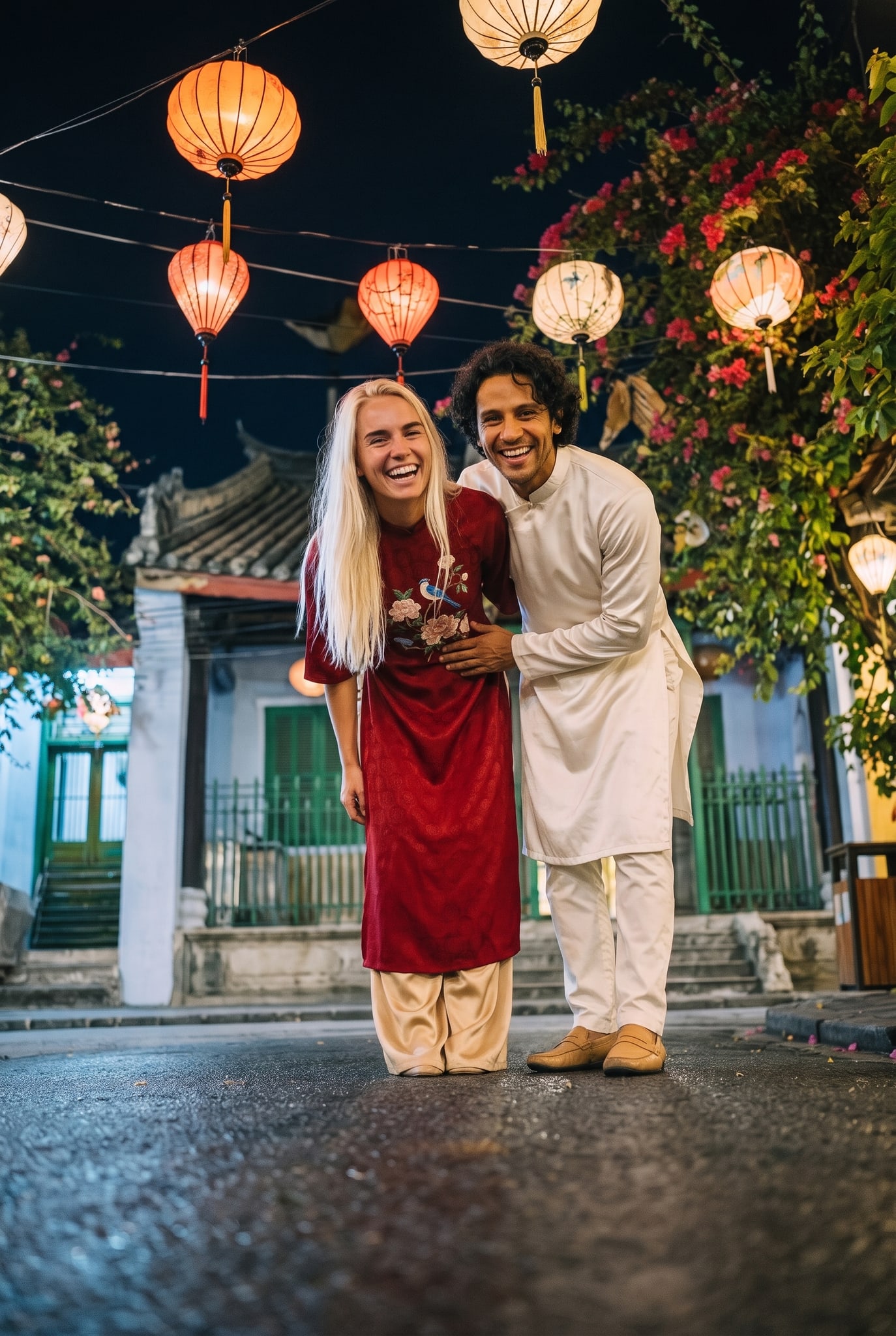
We book these shoots as 5–6 hour packages rather than by-the-hour, because stopping and starting breaks the flow. A typical day: meet at your hotel or the base of the pass at 1 p.m., drive to the summit with your stylist (who's prepping your ao dai or outfit in the van), scout locations for 20 minutes while you change, shoot setup and portraits for 90 minutes, move to the switchback curves for movement and couple's walk-through shots (45 minutes), pause for a water break and light snack around 3:15 p.m., then reposition for the final golden stretch starting 4:30 p.m. Sunset light on the pass is brief—about 40 minutes from when the sun touches the ridgeline to when it dips below the horizon. We shoot aggressively then because the next window is 24 hours away.
Weather and wind force trade-offs. If gusts pick up, we move to the lee side of the ridge (northeast-facing) where wind drops by half but light becomes softer and more diffuse. If cloud cover thickens, we shift from backlighting (which needs clear sky to create halos and rim-light) to side-light or flat-facing-the-camera poses, which read better in overcast conditions. We've learned that couples who prepare mentally for these pivots stay relaxed; couples surprised by them tend to tense up in photos. So we text ahead of the shoot: "Wind is forecast 25 km/h Thursday. We'll shoot on the northeast slope for the first 90 minutes, then move to the ridge if it calms down. Pack a light jacket."
A decision point we make on-site: if the couple has two outfit changes (one ao dai, one casual), we shoot the ao dai in the midday window (better for detail, wrinkles, and folds visible in even light) and save the casual outfit for golden hour (light is more forgiving, movement is easier). If they're wearing only one outfit, we use it during peak light (3–5 p.m.) and save the setup/walking shots for after. This order maximizes the visual impact of each outfit against the light available.
Single vs. double outfit sessions: what we recommend
| Outfit setup | Best for | Light window | Notes |
|---|---|---|---|
| One outfit only (ao dai or casual) | Budget-conscious couples, intimate elopement vibe, shorter timeline | 3–5 p.m. (golden) | Focus is deeper; fewer outfit breaks; lower fatigue |
| Two outfit changes (ao dai + casual) | Couples who want contrast and cultural tradition | Midday for ao dai, 4:30+ for casual | Doubles shooting time; requires two dressing spots; better story arc in final edit |
| Three+ changes (ao dai, suit, casual dress) | Extended sessions (8+ hours) or formal wedding + elopement | Noon, golden, blue hour (dusk) | Rare; very tiring; works only if you have a full team (photographer, videographer, stylist, assistant) |
We steer most couples toward one outfit because the pass itself is the hero, not the wardrobe. An ao dai in monsoon wind is already challenging to manage—adding a casual shoot later can lead to rushed shots and exhausted couple energy. That said, if you're planning a formal reception elsewhere and want a casual elopement feel at Hai Van, two outfits create a strong visual divide in your final album (we typically deliver 150–300 edited images from a 5-hour session, split roughly 60% ao dai and 40% casual if both are shot).
One practical detail: we bring a rolling rack and a privacy pop-up tent for outfit changes. The tent goes behind our van on the lee side of the pass. Dressing takes 15 minutes if the ao dai is pre-fitted; 25 minutes if alterations are needed. Wind can tangle ao dai sleeves, so our stylist stays fully present during outfit prep—she's not just a dresser, she's a problem-solver managing fabric, pins, and the couple's comfort in a 500-metre-high environment.
Preparation checklist: what couples need to know before booking
Footwear & mobility: The pass roads are paved, but our best photography spots require a 50–150 metre walk off-road to reach viewpoints or switchback angles. Bring flat shoes (ao dai goes barefoot or with flat sandals; this is traditional and photographs beautifully). Heeled shoes slip on gravel and tire your feet before we reach peak light.
Layers & weather: Daytime temperature at the summit is 5–8°C cooler than the base. Morning shoots are colder; evening shoots are windy. Pack a lightweight jacket, even in summer. If it rains (June–September risk), we pivot to the underpass or shoot in rain (some couples love dramatic, moody frames). Waterproof bags for phones and lenses are non-negotiable.
Hydration & snacks: We bring water and electrolyte packets, but couples often underestimate exertion. The altitude and wind increase dehydration. Eat a light lunch before pickup; skip heavy carbs that cause energy crashes.
Timing flexibility: Sunrise shoots (starting 5 a.m.) catch the pass before crowds and temperature swings, but require early pickup and risk cloud cover (June–September especially). Sunset shoots (3 p.m. start) are more forgiving and visually dramatic, but must be exact—we can't delay sunset. If you're late to pickup, the session shifts and you lose time in peak light.
Travel logistics: If you're staying in Saigon, we drive; if you're staying in Hue or Hanoi, coordinate with us whether we meet at the pass base or arrange transportation. Petrol, driver, and parking are included in our pre-wedding and elopement package. Some couples prefer to hire their own van and meet us there (usually saves money if there's a large family following).
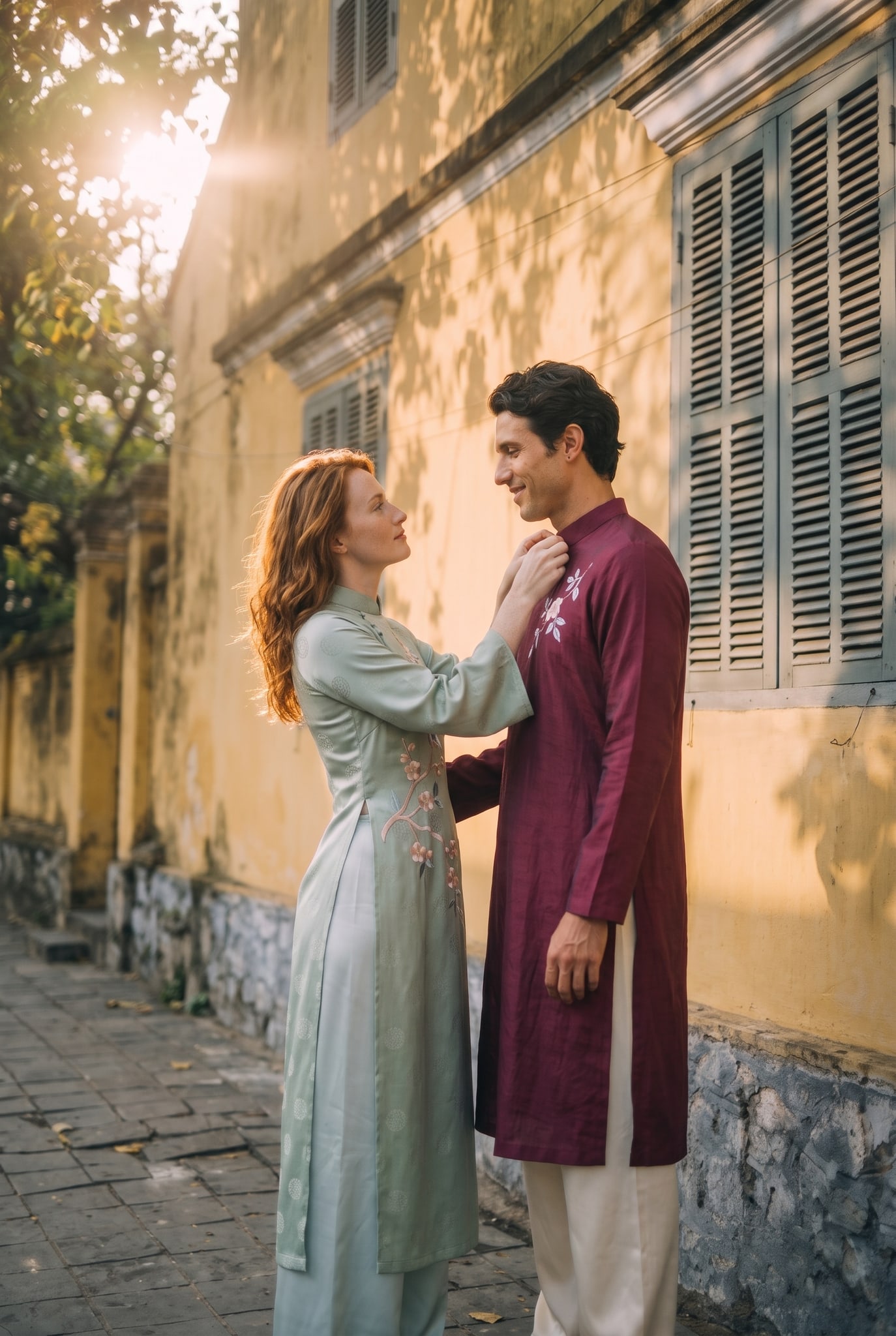
Outfit fit & styling: Ao dai must be fitted 2–3 weeks before the shoot. Last-minute alterations always miss nuances (hem length, sleeve tension, neckline fit). If you're renting, confirm the rental agency will deliver to your hotel. If you're buying, budget time to break it in (ao dai stiffens when new and softens over 3–5 wears). We can recommend tailors in both cities (check our Saigon location for south studio referrals or Hanoi team for north studio tailors).
Real challenges we've solved on Hai Van shoots
We once had a couple arrive with a hired ao dai that was slightly too loose in the chest—the fabric pooled when she sat, which reads as careless in close-up photos. We called our stylist in Saigon (we were shooting at 2 p.m.), and she coached us through a quick hem-tape + fashion tape fix using supplies we always carry. Took 5 minutes; saved the session. Lesson: always bring backup fashion tape, safety pins, and a small sewing kit.
Another shoot hit unexpected cloud cover at 4:15 p.m. The couple panicked because their "golden hour" was grey. We reframed it: we shot faster (grey light is sharp and shadows are soft, which is ideal for detail work and expressions), pivoted to backlighting (the clouds became a diffuser, and rim-light created halos), and finished with 40 minutes of clear sky at 5:20 p.m. that was actually more dramatic than forecast. The final images had more mood than a "perfect" golden hour would have.
Wind knocked over our reflector once (we use them to bounce light into shadows). The reflector flew down a steep slope; we didn't send anyone after it (safety first), and instead repositioned the couple to use the natural brightness bouncing off the white van. The couple didn't lose a minute of light, and we got excellent side-lit portraits that we'd never have captured if the wind hadn't forced us to adapt.
Truck traffic caught us once during a video walkthrough shot. The audio was ruined. We re-shot the same sequence 8 minutes later during a quieter window. This is why we build 20+ minute buffer time into pacing—if you hit a 5-minute disruption, you have cushion.
The biggest challenge nobody warns about: post-shoot energy crash. Couples are exhausted after 5 hours of being photographed, wind, altitude, and emotional intensity. We always have a snack (fruit, pastries) in the van for the drive down, and we message that evening: "You did amazing. Rest tomorrow; editing starts next week." This small touch prevents couples from second-guessing how they looked during the session (they usually felt awkward; the images tell a different story).
Comparing Hai Van to other elopement sites in central Vietnam
We also shoot elopements at Lang Co Beach (30 km south, sea-level, calmer wind, less drama) and at the old French Fort near Tuy Phong (similar altitude, smaller crowds, different angle). Hai Van is the most visually striking but also the most weather-dependent and physically demanding. Lang Co is steadier but less iconic. The Fort is quieter and unusual but has fewer vantage points.
If you're undecided, we ask:
- Do you want a famous, recognizable backdrop? → Hai Van.
- Do you want ease, calm, and reliability? → Lang Co.
- Do you want something nobody else will shoot? → The Fort or nearby viewpoints.
For your pre-wedding and elopement package, we can scout any of these in advance or combine locations in a longer session (e.g., start at the Fort at noon, drive to Hai Van by 3:30 p.m., finish at sunset). This multi-site approach is more expensive and tiring but creates visual variety in the final album.
See packages and prices on vietnamphotoshoot.com
What to check before you book an elopement session
Location confirmation: Ask exactly where we'll shoot (specific coordinates or named viewpoints). Don't assume "Hai Van" means a single location—the pass is 7 km long. We typically choose 2–3 spots based on light direction and wind shelter, and send you a reference photo the week before.
Team composition: Confirm whether your package includes a stylist for ao dai and makeup, or if styling is separate. If you want video, verify whether the videographer is included or add-on. A photographer alone can miss key candid moments when you're changing outfits; a videographer covers those transitions naturally.
Backup date policy: Ask about rescheduling if weather is unsafe (wind, flooding, zero visibility). A reputable studio will offer one free reschedule within 60 days; anything less is risky.
Delivery format: We deliver full-resolution JPEGs and a few RAW files (for couples who want to edit further). We also shoot video in 4K. Verify what formats, how many images, whether you get prints or only digital files, and whether there's a time limit for download (ours is 90 days post-delivery; after that, files live on a cloud link you manage).
Communication during the session: We send WhatsApp updates during the day ("Light is perfect, heading to location 2"; "Wind calming down, sunset looks amazing"). Confirm this is your preferred contact method.
FAQ
Is Hai Van Pass safe for a photoshoot?
Yes. The road is well-maintained, truck traffic is predictable, and we scout for safety before shooting. We don't shoot in active traffic lanes and always position with an exit route. Weather is the real variable—wind and rain are why we reschedule, not the pass itself.
What if I can't fit into an ao dai or don't want to wear one?
We offer elopement shoots in any outfit you choose: a suit, a casual dress, or even a sundress. Hai Van light works beautifully with any aesthetic. Ao dai is traditional and photographs distinctly, but not required.
How many images will we get from a 5-hour session?
Typically 150–300 fully edited images (cropped, color-graded, retouched). This depends on how many outfit changes, how much movement/video coverage, and our shooting pace on the day. We deliver within 4 weeks of the shoot.
Can we bring family or friends to watch the elopement?
Yes. Family members can travel in a second vehicle or ride with us if space allows. They can't be in the private couple shots, but we do a group photo at the end. This is best discussed when booking so we can plan the timeline and parking.
What happens if it rains on the day of the shoot?
We evaluate the rain type: light drizzle, we shoot (it creates moody, romantic frames); heavy rain with zero visibility, we reschedule. Moderate rain is a judgment call made on the morning of the shoot. We have waterproof gear and can shoot in rain if the couple wants that aesthetic.
Do you offer same-day editing or a first look?
We deliver a final album 3–4 weeks post-shoot, fully edited. We don't do same-day proofs because the light and mood are best served by intentional editing. Some couples request a preview slideshow a few days after the shoot (we can arrange this separately).
How do we pay, and what if we're booking from overseas?
We accept Visa, Mastercard, online payment links, and bank transfer. Most couples book and pay via vietnamphotoshoot.com, which accepts international cards. If you're in a region with payment restrictions, contact us on WhatsApp and we'll find a solution.
Pre-Wedding & Elopement
Inclusions, prices and booking are on our booking site.
FAQ
Is Hai Van Pass safe for a photoshoot?
Yes. The road is well-maintained, truck traffic is predictable, and we scout for safety before shooting. We don't shoot in active traffic lanes and always position with an exit route. Weather is the real variable—wind and rain are why we reschedule, not the pass itself.
What if I can't fit into an ao dai or don't want to wear one?
We offer elopement shoots in any outfit you choose: a suit, a casual dress, or even a sundress. Hai Van light works beautifully with any aesthetic. Ao dai is traditional and photographs distinctly, but not required.
How many images will we get from a 5-hour session?
Typically 150–300 fully edited images (cropped, color-graded, retouched). This depends on how many outfit changes, how much movement/video coverage, and our shooting pace on the day. We deliver within 4 weeks of the shoot.
Can we bring family or friends to watch the elopement?
Yes. Family members can travel in a second vehicle or ride with us if space allows. They can't be in the private couple shots, but we do a group photo at the end. This is best discussed when booking so we can plan the timeline and parking.
What happens if it rains on the day of the shoot?
We evaluate the rain type: light drizzle, we shoot (it creates moody, romantic frames); heavy rain with zero visibility, we reschedule. Moderate rain is a judgment call made on the morning of the shoot. We have waterproof gear and can shoot in rain if the couple wants that aesthetic.
Do you offer same-day editing or a first look?
We deliver a final album 3–4 weeks post-shoot, fully edited. We don't do same-day proofs because the light and mood are best served by intentional editing. Some couples request a preview slideshow a few days after the shoot (we can arrange this separately).
How do we pay, and what if we're booking from overseas?
We accept Visa, Mastercard, online payment links, and bank transfer. Most couples book and pay via vietnamphotoshoot.com, which accepts international cards. If you're in a region with payment restrictions, contact us on WhatsApp and we'll find a solution.
More from the team
Boho pre-wedding photoshoot in Vietnam: Hanoi, Saigon, Hoi An
Boho pre-wedding shoots mix romantic, free-spirited aesthetics with Vietnam's landscapes and heritage sites. We run full-day sessions in three cities, handling styling, makeup, location scouts and edits.
Avoid crowds at Hoang Su Phi rice terraces: timing for wedding shoots
Hoang Su Phi's terraced landscape draws couples and tour buses in equal measure. We show how to shoot there alone, when to arrive, and what to arrange with us before you go.
Photography rules at Con Dao beaches: permits, drones and what to check
Con Dao's beaches demand prep before you shoot—permits, drone zones and tide timing all affect your day. We share what the Cáo Studio team verifies on every booking.