 Cáo Studio
Home › Blog › Pre-Wedding & Elopement
Elopement photos at Hang Mua: what we do on the day
By the Cáo Studio team · Hanoi & Saigon · 2026-11-02
Hang Mua elopement photography means climbing Vietnam's most iconic Ninh Binh limestone peak with your photographer, makeup artist and stylist to capture intimate couple moments at sunrise or sunset. Cáo Studio handles the full day: hair and makeup (usually at your hotel in Tam Coc at 5:00 a.m. if you're shooting sunrise), then a two-hour climb with styling changes, outfit swaps, and 300–500 final images delivered in three weeks. The viewpoint sits 522 metres above karst valleys, so fitness matters—couples and photographers alike spend 30 minutes climbing stairs, many uneven and steep. No permits needed, but crowds peak 7–9 a.m. and 4–6 p.m., so we book early slots to avoid other hikers. Budget three to five hours on-site (setup, wardrobe changes, multiple locations on the peak). The climb itself is non-negotiable; there's no alternative access. Elopement here works best for fit couples willing to bring a second outfit and accept the physical challenge as part of the romance. Chat with us on WhatsApp | See packages and prices on vietnamphotoshoot.com
Why Hang Mua works for elopers—and when it doesn't
Hang Mua draws couples because the view is unmatched: a 360-degree panorama of rice paddies, limestone towers and the Ngo Dong River snaking below. From the peak, you see Vietnam the way postcards promise. But here's what we tell clients in the WhatsApp chat before they book: the climb is harder than photos suggest. Stairs are narrow, wet stone is slippery, and there's zero shade halfway up. We've had couples arrive thinking "romantic stroll"; they discover it's an actual hike. The advantage? Once you're up there, especially at 6:45 a.m. or after 5:30 p.m., you're almost alone. Our makeup artist carries a small touch-up kit in a backpack, and we schedule twenty-minute breaks for water and breathing room. Fit couples with one year of gym habit handle it fine. If either partner has knee or ankle issues, we recommend couple photoshoot options in Saigon gardens or Hoi An old town instead—stunning, no climbing. The trade-off is real: Hang Mua's drama costs physical effort.
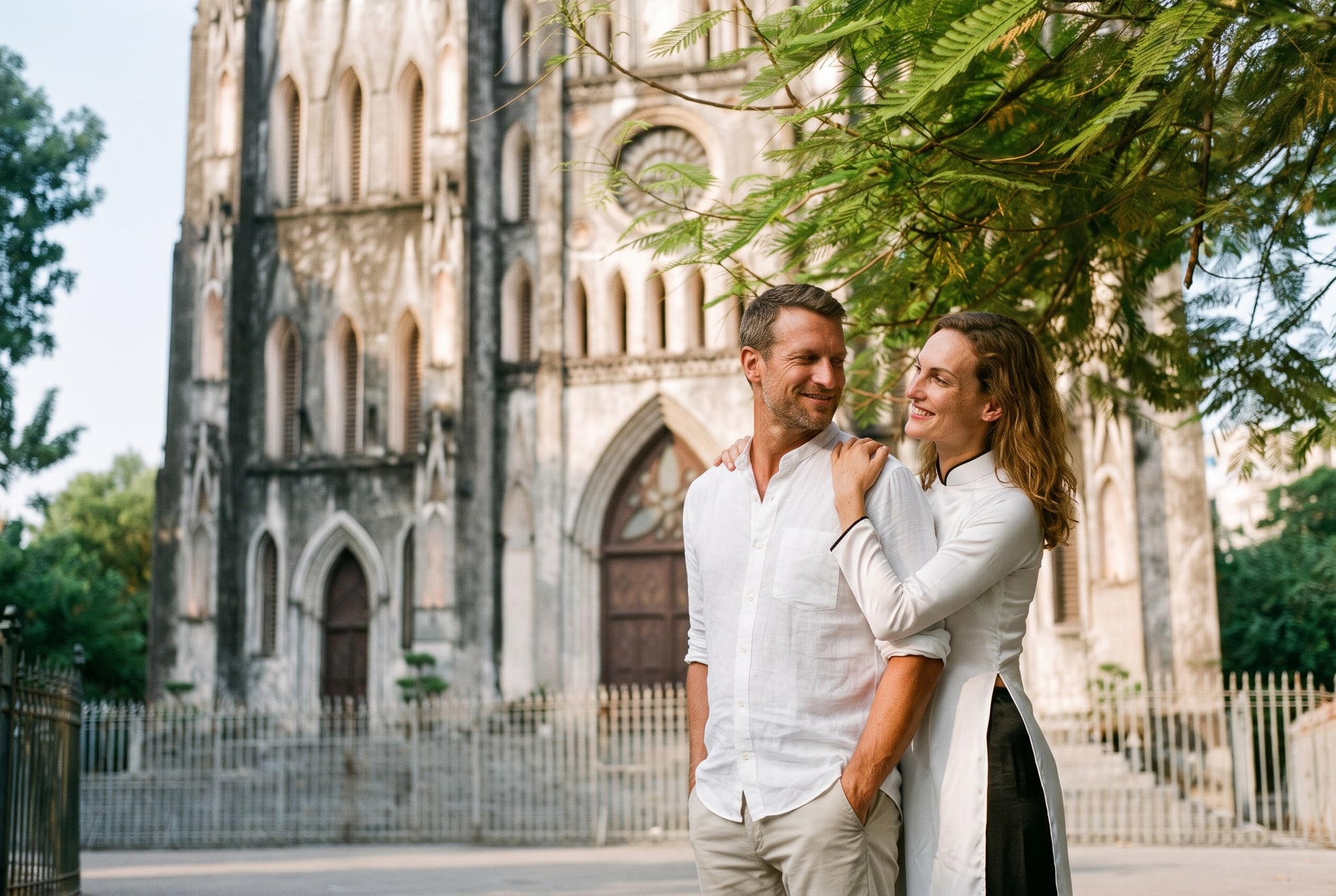
How we build the timeline so nothing gets rushed
On a Hang Mua elopement, timing is everything because you can't improvise once you're on the peak. Here's our actual sequence: Couples meet our team at their hotel in Tam Coc by 5:15 a.m. for sunrise shoots, or 2:30 p.m. for sunset. Our makeup artist arrives with a compact kit (foundation, blush, eyeshadow, brushes, setting spray, lip products), sets up in the room, and finishes in forty minutes. We ask couples to shower the night before and bring their ao dai, dress or suit already pressed to the room. Hair takes fifteen minutes if loose waves; updos get thirty. By 6:00 a.m., you're dressed, photographed in soft hotel light (these are often our favorites), and heading by motorbike to Hang Mua's entrance with your photographer. The climb begins at 6:15. We pause halfway up for outfit swap—couples often bring a second ao dai or suit, which takes five minutes. We shoot at the south viewpoint first (best morning light), then move to the east platform as the sun climbs. By 8:00 a.m., we're done; the peak is filling with tour groups. For sunset, we reverse it: 5:30 p.m. makeup at the hotel, 6:30 p.m. climb, last light at 7:15 p.m., descent by 7:50 p.m. We never linger after dark; the stairs are treacherous and we send you back early so you have dinner plans. The schedule is tight but it avoids the rushed feeling and protects light quality.
See packages and prices on vietnamphotoshoot.com
Outfit choices that actually photograph on a limestone peak
This is where our stylists earn their fee. Hang Mua presents a dilemma: traditional ao dai photographs beautifully, but the heavy silk gets sweat-stained during a thirty-minute climb, and heels are a safety hazard on wet stone. We've learned to steer couples toward one of three approaches.
| Outfit choice | Who it's for | Why it works | What to know |
|---|---|---|---|
| Ao dai + flat shoes (first shoot) | Couples wanting traditional Vietnam | Red, gold or white ao dai looks stunning in morning light; flat shoes grip stairs safely | Bring a second outfit or lighter robe for climb-down photo |
| White/cream wedding dress + suit (main event) | Western-style elopers | Photos read clearly at high altitude; lighter fabrics dry fast if you sweat | Heels stay at hotel; wear clean sneakers for climb; change at top |
| Casual linen or hemp (both outfits) | Couples prioritizing comfort | Breathable, dries quickly, looks effortless in golden hour | Less formal, but pairs well with landscape at sunset |
We recommend bringing two outfits: one for the climb (lightweight, flat-soled) and one for the peak (the "hero" outfit). The ascent photos work best as a documentary series—you're climbing, laughing, holding hands. The peak photos are the formal portraits. This split approach means no single outfit bears the whole emotional weight and you get variety in the delivery folder. Our stylists also pack a small steamer to de-wrinkle the second outfit's hem if it's been in a backpack.
What we pack for a Hang Mua shoot (and what we've learned not to)
Our team carries: a camera bag with two bodies and four lenses (total 8 kg), a drone (if conditions allow—wind on the peak is unpredictable), a compact makeup kit (2 kg), a small iron and steamer (1.5 kg), water (6 litres shared), and a med kit with blister tape and pain relief. We've learned not to pack: large reflectors (wind ruins them), heavy props (bouquets get crushed in the climb), or more than one backup outfit (couples already carry theirs). One surprise: humidity at the peak varies wildly from ground level. At 6:45 a.m., it's often drier and cooler than the villages below because the altitude and breeze shift conditions. Our makeup artist watches the bride or groom's forehead during the climb and resets foundation if needed—usually one wipe and reset spray, two minutes. We also bring a small portable fan (battery-powered, 300 grams) because the peak can feel suffocatingly still in a heat dome; moving air steadies breath and skin tone for portraits. The fan stays out of frame but changes how relaxed couples look.
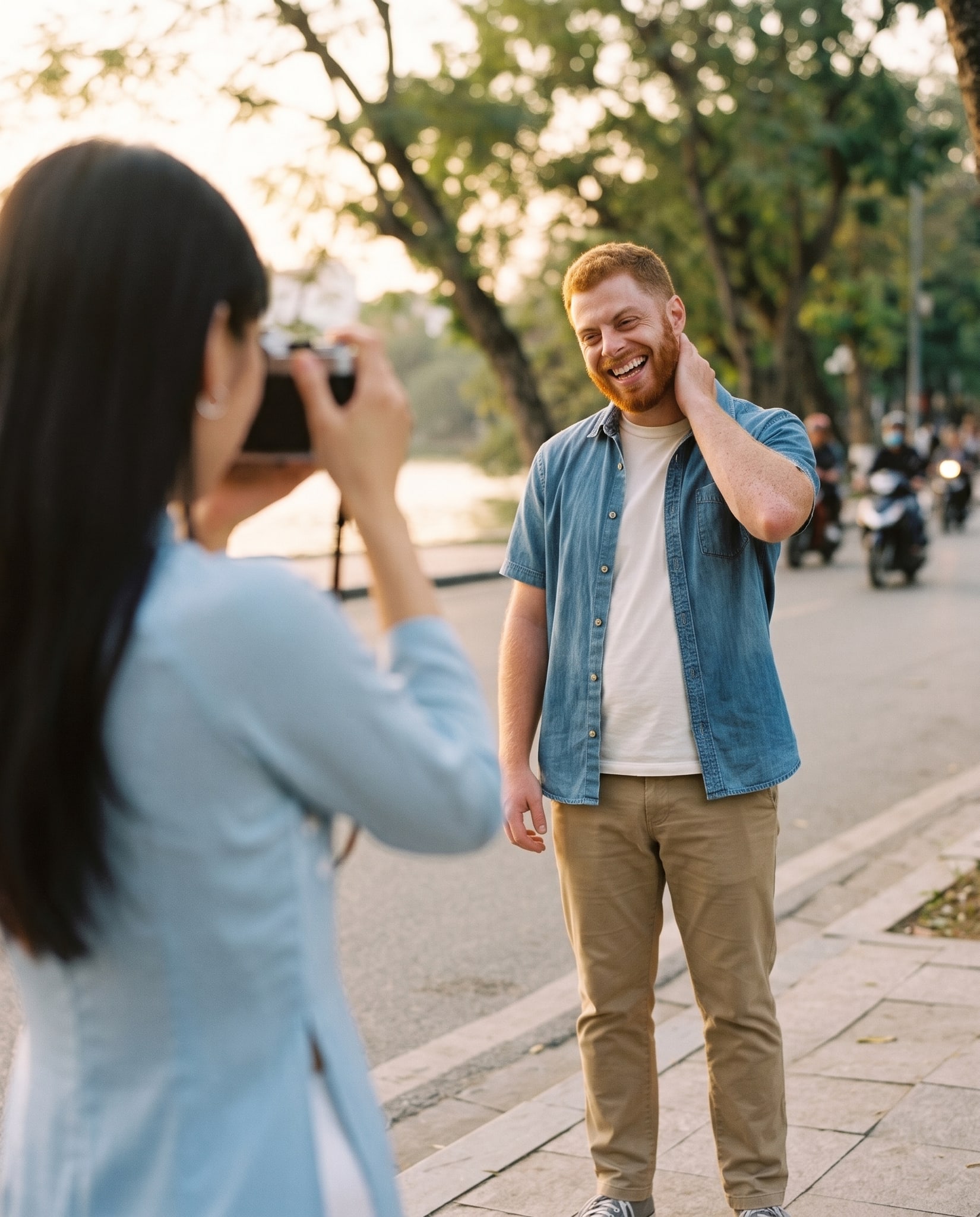
Comparing Hang Mua elopement to other pre-wedding options
Hang Mua is one choice among several. Our studio also shoots couple sessions in Saigon (gardens, coffee roastery backdrops, War Remnants Museum), Hoi An ancient town (lantern-lit evening shoots, riverside), and Ninh Binh beyond Hang Mua (Tam Coc boat rides, Bai Dinh Temple, rice paddies at golden hour). The difference: Hang Mua demands physical fitness and early mornings, but delivers a singular landscape. Saigon gardens offer easier access and cooler hours if you're not an early person. Hoi An brings culture and mood without climbing. Ninh Binh rice paddies spread your energy across gentler locations. Before booking Hang Mua, ask yourself: do you want the challenge as part of the story, or do you want relaxed luxury? Both are valid. If you're comfortable with exertion and want a vista no guest will forget, Hang Mua wins. If you'd rather spend the day moving slowly and changing clothes multiple times, Hoi An couple shoots might suit you better. Neither is "better"—they're different narratives.
What to check before you book a Hang Mua elopement with us
Fitness level: Both of you should be able to walk briskly for thirty minutes without chest pain or severe breathlessness. If either partner has a knee, ankle, or heart condition, call us on WhatsApp before booking so we can discuss proposal and anniversary options in gentler settings.
Weather: Hang Mua is miserable in heavy rain (slippery stairs, low clouds covering the view). Typhoon season is June–September; we monitor forecasts and can reschedule without penalty up to seventy-two hours before. Dry season is October–April. Book within that window if possible.
Timing: Sunrise (5:15 a.m. hotel meet) or sunset (2:30 p.m. hotel meet) only. Midday light is harsh, the peak is crowded, and heat is brutal. No flexibility on start time.
Outfit weight: Your main outfit should weigh under 2 kg including accessories. Heavy brocade ao dai, thick satin gowns or multi-layer traditional dress become dangerous on stairs. We steer couples toward silk ao dai (breathable) or cotton/linen blends for Western wear.
Camera style: We shoot documentary + posed. If you want purely candid (no direction), tell us; if you want only posed couples kissing against the view, tell us. We adapt, but the planning changes. Documentary takes longer but feels more intimate. Posed is quicker and more formal.
Image delivery: We send edited photos in three weeks via a private online gallery. You can download, reorder, or request small adjustments. Printing and albums are separate; link us if you want recommendations for Vietnam labs.
How we handle the unexpected (and we always do)
A couple's second outfit got stuck at immigration; we pivoted to two-outfit swaps with the same set. One groom had unexpected shin splints; we did a modified route (15 minutes up to the first platform, stunning shots, full embrace of the limitation). A photographer's camera fogged when descending into air-conditioned hotel; we had a backup body in the car. Makeup ran during descent but we'd already captured the hero shots at the peak, so the delivery folder was untouched. We're not surprised by much anymore. The honest truth: sometimes things go wrong. What matters is we stay calm, think two steps ahead, and don't blame the couple. That's the team we hire.
See packages and prices on vietnamphotoshoot.com | Chat with us on WhatsApp
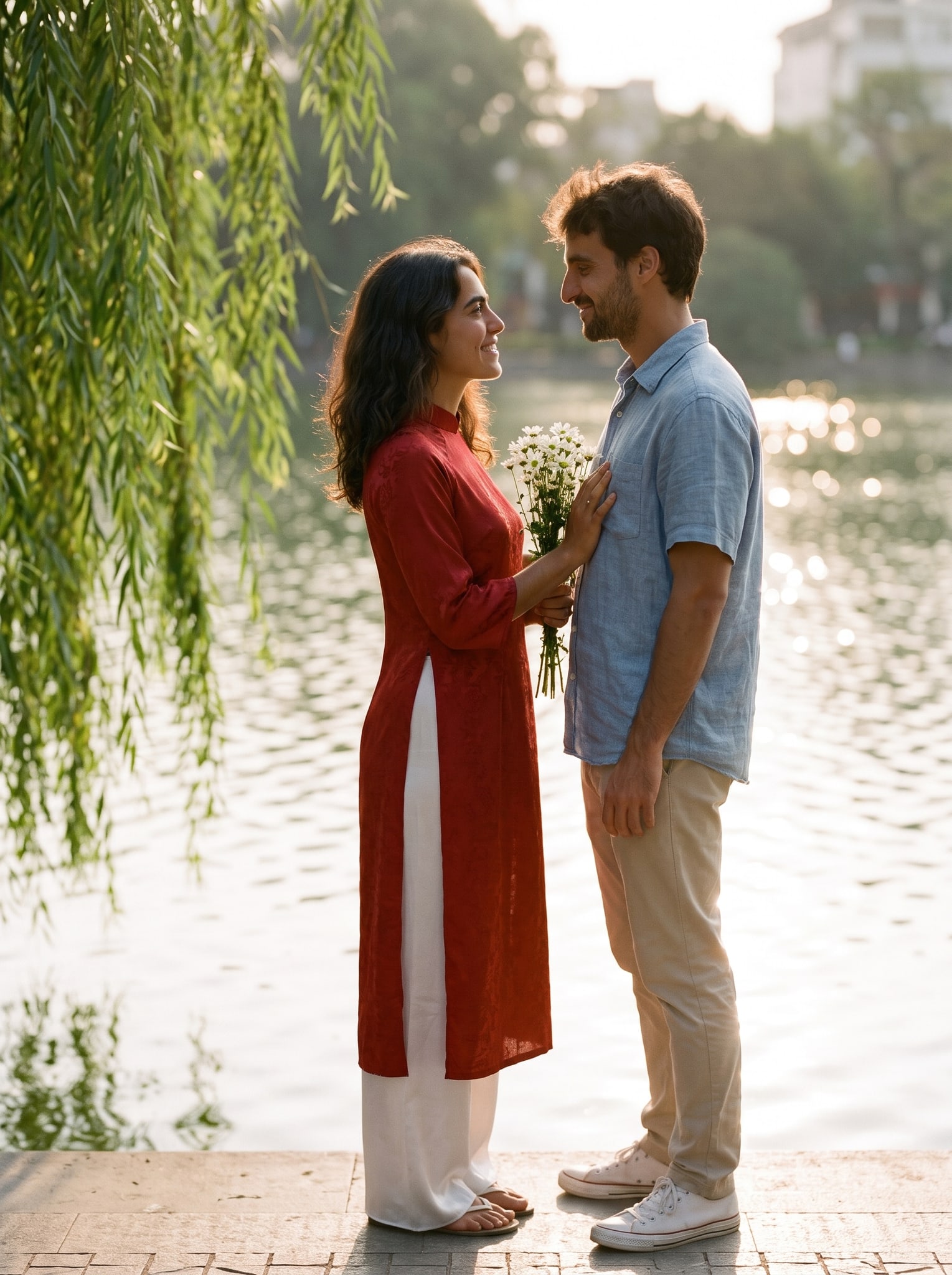
FAQ
How much fitness do I really need to climb Hang Mua?
You should be able to walk uphill for twenty to thirty minutes without stopping. Stairs are steep but short. If you go to the gym once a week or can hike for an hour, you're fine. If you're recovering from injury or have severe knee pain, skip it.
What happens if the weather is bad on shoot day?
We monitor forecasts for seventy-two hours before. Heavy rain or typhoon warnings trigger a free reschedule. Light drizzle is usually okay—we bring rain covers and shoot anyway; morning mist can look romantic. You decide on the day whether to proceed.
Can we do Hang Mua if only one of us is fit?
Yes, but the shoot changes. The less-fit partner climbs at their own pace; we rest together, photograph both of you separately if needed, and focus on couple moments on the peak rather than climbing shots. It works, but it's less romantic than both of you moving together.
Do we need permits or guides to access Hang Mua?
No permits. It's a public site with an entrance fee (currently about a quoted price per person based on local rates). We include this in conversations but you pay on arrival. You don't need a separate guide; our photographer knows the peak intimately.
What if we hate the first set of photos but love the second outfit?
You get all the images. If the first set doesn't feel like "you," we can do an extra session on a later trip at cost—or we edit more heavily from the second outfit folder. Once delivered, reshoot decisions are discussed one-on-one.
Can we bring a friend or family member to watch?
Technically yes, but we discourage it. A third person changes the dynamic; you become aware of an audience. For your family photoshoot, we welcome it. For an elopement, we recommend keeping it just us and you. If a parent insists, they wait at the base; no climbing with our team.
Pre-Wedding & Elopement
Inclusions, prices and booking are on our booking site.
FAQ
How much fitness do I really need to climb Hang Mua?
You should be able to walk uphill for twenty to thirty minutes without stopping. Stairs are steep but short. If you go to the gym once a week or can hike for an hour, you're fine. If you're recovering from injury or have severe knee pain, skip it.
What happens if the weather is bad on shoot day?
We monitor forecasts for seventy-two hours before. Heavy rain or typhoon warnings trigger a free reschedule. Light drizzle is usually okay—we bring rain covers and shoot anyway; morning mist can look romantic. You decide on the day whether to proceed.
Can we do Hang Mua if only one of us is fit?
Yes, but the shoot changes. The less-fit partner climbs at their own pace; we rest together, photograph both of you separately if needed, and focus on couple moments on the peak rather than climbing shots. It works, but it's less romantic than both of you moving together.
Do we need permits or guides to access Hang Mua?
No permits. It's a public site with an entrance fee (currently about 250,000 VND per person based on local rates). We include this in conversations but you pay on arrival. You don't need a separate guide; our photographer knows the peak intimately.
What if we hate the first set of photos but love the second outfit?
You get all the images. If the first set doesn't feel like "you," we can do an extra session on a later trip at cost—or we edit more heavily from the second outfit folder. Once delivered, reshoot decisions are discussed one-on-one.
Can we bring a friend or family member to watch?
Technically yes, but we discourage it. A third person changes the dynamic; you become aware of an audience. For your [family photoshoot](/go/family-photoshoot), we welcome it. For an elopement, we recommend keeping it just us and you. If a parent insists, they wait at the base; no climbing with our team.
More from the team
Boho pre-wedding photoshoot in Vietnam: Hanoi, Saigon, Hoi An
Boho pre-wedding shoots mix romantic, free-spirited aesthetics with Vietnam's landscapes and heritage sites. We run full-day sessions in three cities, handling styling, makeup, location scouts and edits.
Avoid crowds at Hoang Su Phi rice terraces: timing for wedding shoots
Hoang Su Phi's terraced landscape draws couples and tour buses in equal measure. We show how to shoot there alone, when to arrive, and what to arrange with us before you go.
Photography rules at Con Dao beaches: permits, drones and what to check
Con Dao's beaches demand prep before you shoot—permits, drone zones and tide timing all affect your day. We share what the Cáo Studio team verifies on every booking.