 Cáo Studio
Home › Blog › Pre-Wedding & Elopement
Elopement Photos at Hoi An Rice Paddies: What Our Studio Does
By the Cáo Studio team · Hanoi & Saigon · 2026-11-02
Elopement photos at Hoi An rice paddies typically run 4–6 hours with Cáo Studio, covering setup, multiple outfit changes, and backup poses if wind shifts the light. The paddies sit 20 minutes south of town; we arrive before sunrise or late afternoon to avoid harsh midday glare and tour groups. Cost depends on team size (photographer + stylist + makeup artist) and whether you add video or pre-shoot scouting—ask us for a quote on WhatsApp. Most couples choose either early season (July–August, greener fields, higher humidity) or late autumn (October–November, drier, golden hour longer). What catches people off guard: muddy access roads after rain, mosquitoes at dusk, and how quickly light changes in the paddies—we always have a contingency pose spot in town. Chat with us on WhatsApp
Why do rice paddies feel different in photos than in person?
A paddy is a mirror. Water reflects sky, clouds, and your outfit—that's what makes the color so saturated. In person, you see muddy banks and irrigation tubes; in the frame, none of that matters. We compose tight to the water line and angle you so the reflections do the work. Hoi An paddies between June and September hold water longest, which means richer color but also more mosquitoes and higher humidity affecting makeup. Late October through November, fields drain or are freshly planted—less reflection, but sharper shadows and longer usable light. The real difference comes down to which version of the landscape matches your elopement story.
What time of day actually works for elopement shoots in rice fields?
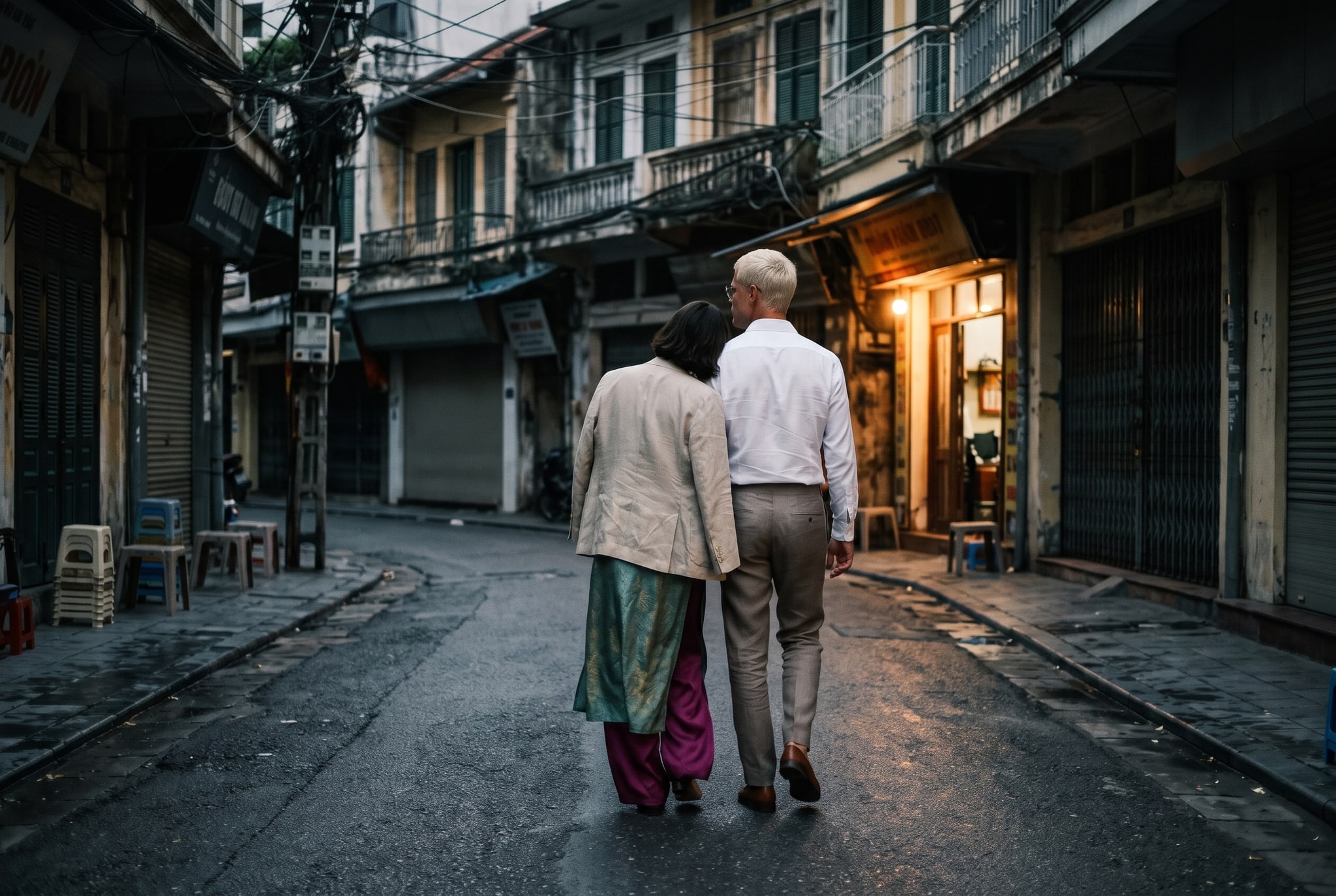
We shoot paddies at sunrise (5:30–7:30 a.m.) or golden hour (4:30–6:30 p.m.), never midday. Sunrise gives soft, diffused light and empty fields; you're alone. We handle setup and outfit changes in dim light—faster than it sounds, and the payoff is that first pose in pink-gold without another person in frame. Golden hour is longer, gives warmer tones, and lets you have a coffee before we start. Trade-off: by 6:45 p.m. in November, light dies fast; in summer, it lingers past 7:30 p.m. We always scout the exact paddies 24–48 hours before your shoot to check water level, access, and whether farmers are harvesting. If they are, we pivot to a nearby location—Hoi An has dozens of paddies, and a good backup is non-negotiable.
How do you handle wardrobe and makeup in a rice-paddy setting?
This is where Hoi An elopement shoots differ from studio work. We dress you in a makeup tent (a simple gazebo or borrowed shelter) near the paddy entrance, not in town. Makeup goes on dry; you walk to the paddies; we touch up after every outfit change and every 40 minutes of shooting. Ao dai works beautifully here—the silk catches light and moves with wind—but the hem gets wet. We bring high-heeled shoes, walk you in barefoot through muddy access roads, then change you at the paddy edge. If you're wearing a Western dress, we discuss hem length beforehand; knee-height dries faster if you step in water by accident. One surprise: humidity makes makeup set differently in a paddy than in a hotel. We use setting spray rated for tropical sweat and always have blotting papers on hand. Your stylist stays on-site the whole shoot, not just for the first hour.
See packages and prices on vietnamphotoshoot.com
What's the real cost structure for a Hoi An rice-paddy elopement shoot?
The pre-wedding and elopement package includes photographer, stylist, makeup artist, and digital files—ask us for a quote on WhatsApp based on your team size and location (Hoi An paddies require a 90-minute drive from Hanoi, less from Saigon). A solo photographer + makeup artist runs leaner; adding a videographer or scouting trip costs more. Most couples in 2026 add 30–60 minutes of video alongside photos because paddies are cinematic. We charge by the day, not the location—a rice-paddy shoot takes the same time and team as a temple or hotel shoot. What varies is travel cost (if you're booking from our Hanoi studio). Sunrise shoots are the same price as golden-hour; we don't charge premiums for "aesthetic" times of day. Bring cash or use online payment beforehand—we accept Visa, Mastercard, and bank transfer from abroad. No hidden fees; ask us exactly what's included in your quote.
What actually goes wrong in rice paddies and how do we fix it?
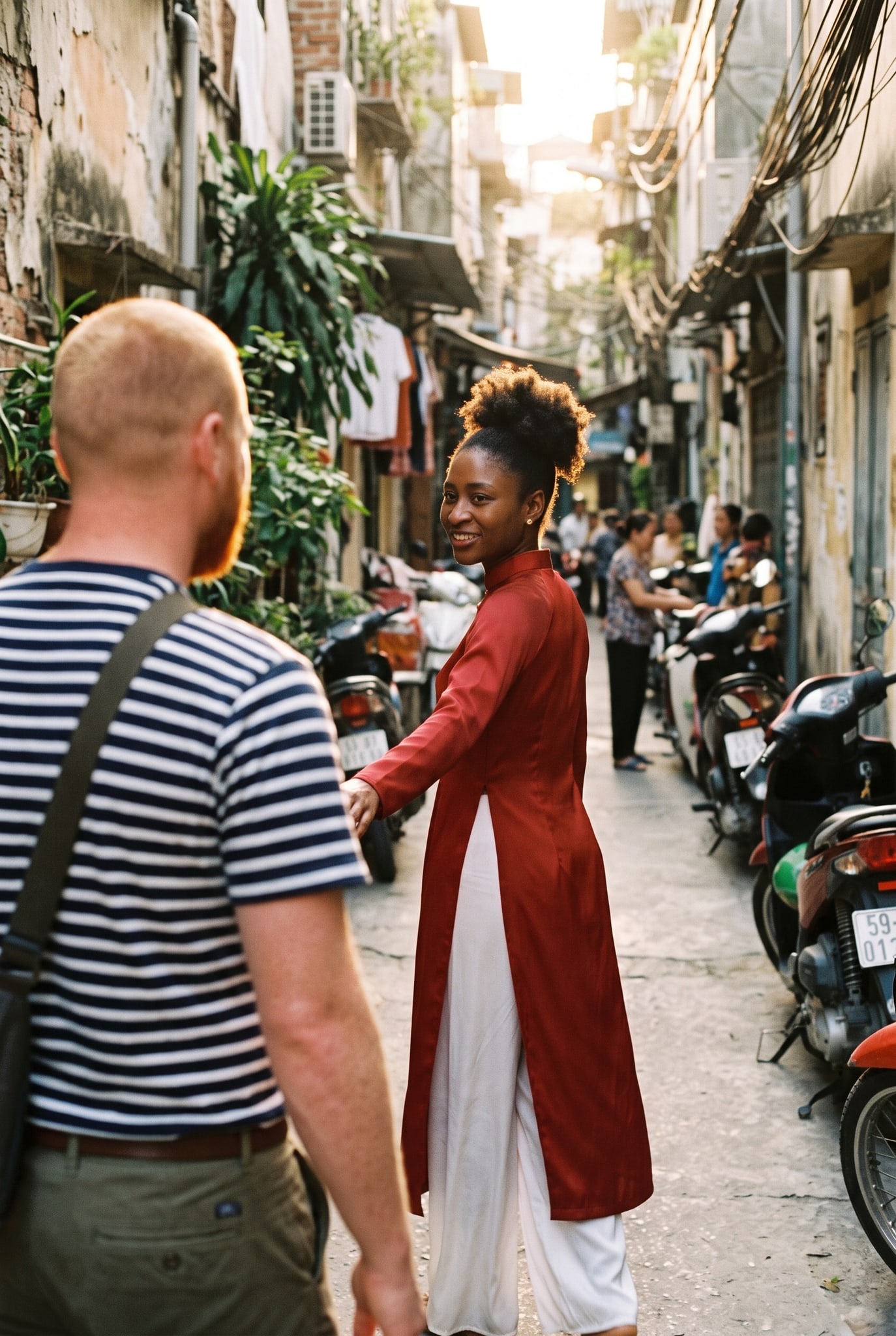
Wind is the main issue. Ao dai and long dresses catch it; hair gets tangled; you can't hear us call poses. We shoot wider to dodge wind-blown hair in the frame, and your stylist has pins and a small mirror for quick fixes. Second issue: mud. If you slip getting in, we have a change of footwear and a towel. One couple stepped into deeper water than expected; we pivoted to a shallower paddy 30 meters away and shot from a different angle, finishing on time. Third: farmers. Hoi An paddies are working land. If a farmer arrives to check irrigation or harvest, we pause, move 50 meters, and resume—never disruptive, and they usually wave. Fourth: mosquitoes at dusk. We bring repellent spray (insect-safe for makeup), keep sessions 30 minutes shorter than usual, and schedule earlier in the evening. Fifth: photos looking flat in overcast light. We shift poses closer to the water line so reflections do more work, or we move to a narrower paddy where banks frame you tighter. None of these are deal-breakers; they're just part of paddies. Honest clients expect real conditions, not pristine studio fantasy.
| Scenario | Sunrise (5:30–7:30 a.m.) | Golden Hour (4:30–6:30 p.m.) | Midday (11 a.m.–2 p.m.) |
|---|---|---|---|
| Light quality | Soft, diffuse, pink-toned | Warm, long shadows, golden | Harsh, high contrast, blown-out sky |
| Crowds | None | Few locals, some tourists | Tour buses, full |
| Makeup durability | Best—cool, low sweat | Good—warm, monitor sweat | Worst—humidity spikes makeup |
| Usable shoot time | 90 minutes max | 120–150 minutes | 60 minutes real work |
| When to book | July–November; Dec–Feb sunrise is 6:45+ a.m. | Year-round | Never—we don't shoot here at midday |
Before you book: five things to check with us
- Water level and field state. Ask whether paddies are flooded, planted, or drained 48 hours before your shoot. We'll tell you honestly if reflection will be poor—it changes the vibe. Don't assume all paddies look the same in photos.
- Your outfit list and footwear. Tell us exactly what you're wearing. Heels? We carry backups. Ao dai with heavy train? We plan time to dry the hem. Western dress with a 3-meter tail? We discuss whether to shorten or carry it.
- Weather backup. Hoi An rain in September–October can be sudden. Ask our team whether we'll reschedule, move to a covered temple, or shoot in light rain. Have that in writing before you pay.
- Farmer schedules and access. We scout, but paddies are active. Know there's a small chance a farmer is in your frame—it's part of the landscape, not a failure.
- Sunrise timing and stamina. If you've never shot at 5:45 a.m., start getting ready at 4:30 a.m. You won't be fully awake; that's okay. Coffee and adrenaline kick in. Ask how much walking is involved; we typically do 800 meters total.
For your couple photoshoot in Hoi An or a full pre-wedding and elopement package, book early—October and November fill up. If you're combining paddies with a temple or town shoot, we layer it into one day; many couples do Mỹ Sơn temple in the morning, paddies at golden hour. Talk through your vision on WhatsApp; we'll be honest about what the paddies can deliver.
Pages from our team you may need
FAQ
Can we shoot in rain at rice paddies?
Yes, if it's light rain—reflections get softer, colors deepen, and the mood feels romantic. Heavy downpour is unsafe (muddy slips) and makeup runs. We monitor forecasts and pivot to a covered temple or a paddy with a tree-line shelter if storms arrive. Always ask our backup plan before your shoot date.
How much mud do we actually get on clothes?
Depends on your footwear choice and where you step. Barefoot in shallow water: ankles wet, easy to rinse. Heels on muddy access roads: expect splashes on the hem. Ao dai worn traditionally: we tuck the back; front hem usually stays dry. Bring a change of shoes or accept "muddy elopement" as your aesthetic—some couples love that reality.
Do we need a permit to shoot in Hoi An rice paddies?
No official permit for tourists with a guide. We're treated as a local photo business, so access is smooth. Don't shoot alone or at night without a local—paddies are private farmland. We handle all logistics; you just show up.
What if the paddies look brown or drained when we arrive?
We knew this possibility and either proposed a water-filled paddy (we know which ones hold water by season) or a backup location in advance. We don't show up surprised. Tell us 2 weeks before your shoot what look you want—lush green, golden wheat, or water reflection—and we guarantee the right paddies or reschedule.
How long does a rice-paddy elopement shoot really take?
4–6 hours from pickup to final outfit change, including setup, poses, outfit changes, and travel time. Actual shooting is 2.5–3.5 hours. Rest is getting there, makeup touch-ups, and walking between spots. Sunrise shoots take longer because we arrive early; golden-hour shoots can be faster if light is perfect.
Can we bring our families or a videographer to rice paddies?
Yes to both. Family watching keeps poses more relaxed (and honest). Videographers need their own gear and footwear. Paddies are narrow—more than 3 extra people gets crowded. We'll advise on the best family viewing spots that don't block light. Ask about video pricing on WhatsApp.
Pre-Wedding & Elopement
Inclusions, prices and booking are on our booking site.
FAQ
Can we shoot in rain at rice paddies?
Yes, if it's light rain—reflections get softer, colors deepen, and the mood feels romantic. Heavy downpour is unsafe (muddy slips) and makeup runs. We monitor forecasts and pivot to a covered temple or a paddy with a tree-line shelter if storms arrive. Always ask our backup plan before your shoot date.
How much mud do we actually get on clothes?
Depends on your footwear choice and where you step. Barefoot in shallow water: ankles wet, easy to rinse. Heels on muddy access roads: expect splashes on the hem. Ao dai worn traditionally: we tuck the back; front hem usually stays dry. Bring a change of shoes or accept "muddy elopement" as your aesthetic—some couples love that reality.
Do we need a permit to shoot in Hoi An rice paddies?
No official permit for tourists with a guide. We're treated as a local photo business, so access is smooth. Don't shoot alone or at night without a local—paddies are private farmland. We handle all logistics; you just show up.
What if the paddies look brown or drained when we arrive?
We knew this possibility and either proposed a water-filled paddy (we know which ones hold water by season) or a backup location in advance. We don't show up surprised. Tell us 2 weeks before your shoot what look you want—lush green, golden wheat, or water reflection—and we guarantee the right paddies or reschedule.
How long does a rice-paddy elopement shoot really take?
4–6 hours from pickup to final outfit change, including setup, poses, outfit changes, and travel time. Actual shooting is 2.5–3.5 hours. Rest is getting there, makeup touch-ups, and walking between spots. Sunrise shoots take longer because we arrive early; golden-hour shoots can be faster if light is perfect.
Can we bring our families or a videographer to rice paddies?
Yes to both. Family watching keeps poses more relaxed (and honest). Videographers need their own gear and footwear. Paddies are narrow—more than 3 extra people gets crowded. We'll advise on the best family viewing spots that don't block light. Ask about video pricing on WhatsApp.
More from the team
Boho pre-wedding photoshoot in Vietnam: Hanoi, Saigon, Hoi An
Boho pre-wedding shoots mix romantic, free-spirited aesthetics with Vietnam's landscapes and heritage sites. We run full-day sessions in three cities, handling styling, makeup, location scouts and edits.
Avoid crowds at Hoang Su Phi rice terraces: timing for wedding shoots
Hoang Su Phi's terraced landscape draws couples and tour buses in equal measure. We show how to shoot there alone, when to arrive, and what to arrange with us before you go.
Photography rules at Con Dao beaches: permits, drones and what to check
Con Dao's beaches demand prep before you shoot—permits, drone zones and tide timing all affect your day. We share what the Cáo Studio team verifies on every booking.