 Cáo Studio
Home › Blog › Pre-Wedding & Elopement
Elopement photos at Japanese Covered Bridge Hoi An
By the Cáo Studio team · Hanoi & Saigon · 2026-11-02
The Japanese Covered Bridge is a 16th-century landmark in Hoi An's Old Town, about 20 minutes on foot from the town center. An elopement shoot there typically runs 2–3 hours and includes 60–120 final edited images. Cáo Studio scouts the bridge early morning (before 7am) to beat tour groups, works with a dedicated photographer and stylist, and brings a backup outfit so you have both candid and posed options. This is a pre-wedding and elopement package site—costs depend on your chosen session length and edit style. What catches most couples off guard: the bridge has restricted access during certain hours, the lantern glow fades by 8:30am in winter, and tourists walk through almost every frame unless you book early or hire a PA to manage the space. We plan around these by coordinating arrival time, securing a quiet corner, and sometimes moving to nearby Japanese Garden for a backup shot list if the bridge feels too congested. Chat with us on WhatsApp | See packages and prices on vietnamphotoshoot.com
Why couples choose the Japanese Covered Bridge for elopement photos
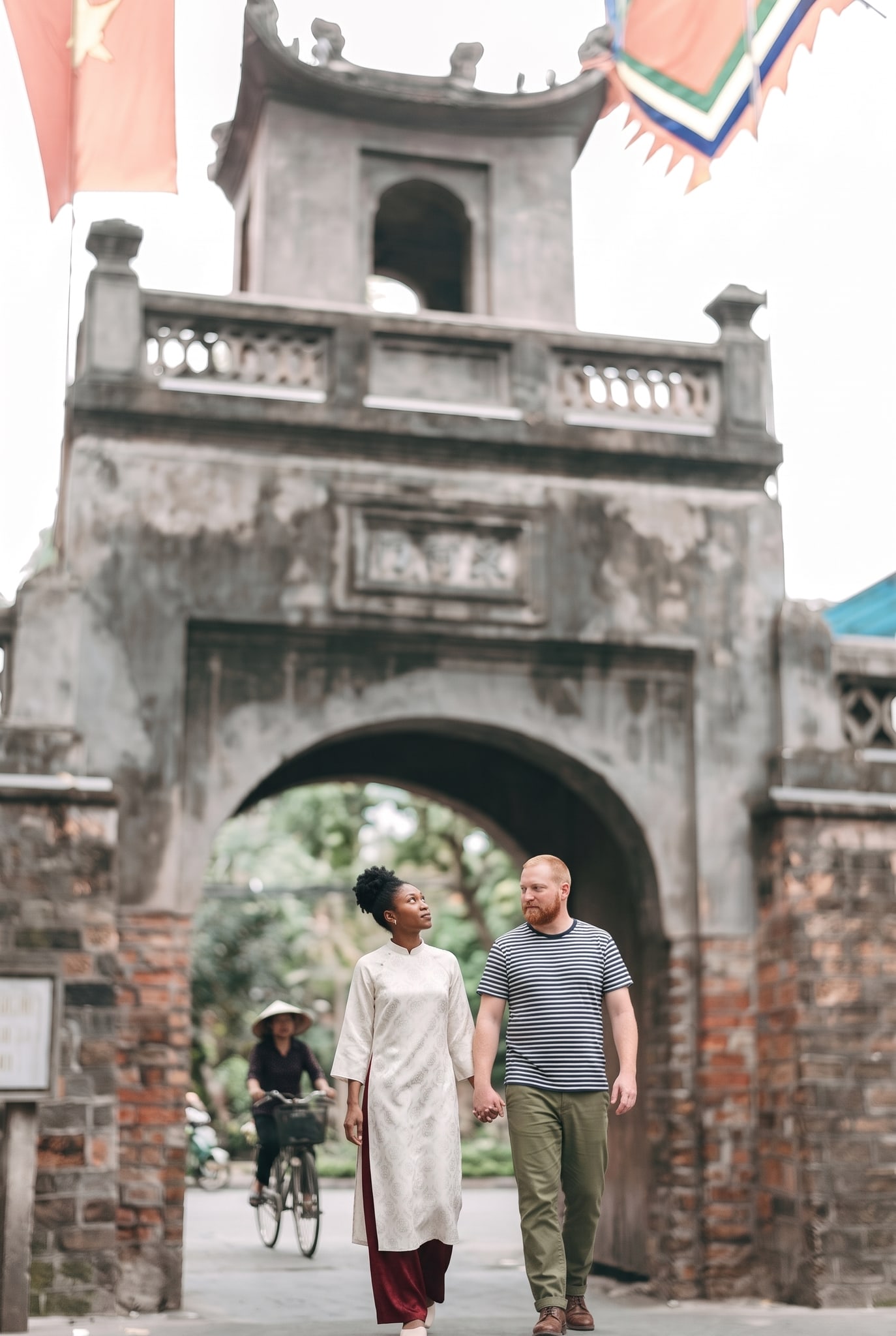
The bridge itself is unmissable—red-painted wood frame, arched roof, lanterns, and the Thu Bon River below create instant intimacy. We notice couples pick it because it feels private despite being public; the architecture frames you tightly, so even with people walking past in the background, the focus stays on you both. The narrow walkway means your photographer can shoot from multiple angles without straying far, and the red against Hoi An's terracotta and green creates natural color contrast. After 40+ bridge shoots, we've learned that 6–7am light is softest and crowds are manageable; by 8am, groups of 15+ tourists arrive every few minutes. The water reflection doubles your silhouette, which looks stunning in black-and-white work. One angle most couples don't expect: standing on the bridge looking back toward the Old Town creates a layered depth—foreground bridge, middle town, background sky—that reads well in both print and digital albums.
How we schedule and prep for a bridge elopement shoot
We ask you to arrive in Hoi An 1–2 days before the shoot so we can do a location scout together—walk the bridge at your planned time, identify the exact spot you want, and check if any renovation work is happening (it happens, and we need to know). On the morning of the shoot, our photographer and stylist meet you at your hotel by 5:45am. We do hair and makeup in your room, then head to the bridge by 6:20am, giving us 90 minutes before the first major tour groups. The shoot runs in three phases: candid walking shots as you arrive, posed portraits on the bridge itself, and final frames with the town waking up behind you. If the bridge is unexpectedly busy, we pivot—our fallback is Japanese Garden (200 meters away, similar mood, quieter) or the lantern-lit Covered Bridge at dusk for a second session. We've had guests ask to add a cyclo ride through the Old Town before or after, which we can arrange. The whole timeline—hotel to bridge to breakfast to images—fits into one morning, so you have the rest of your day free.
What to compare: bridge-only vs. multi-location elopement packages
| Shoot Type | Best For | What's Included | Length | Why Choose It |
|---|---|---|---|---|
| Bridge Only | Couples who want one iconic location, tight edit, fast turnaround | 2 hours, 60–90 images, one outfit | 2–2.5 hours | Simple, focused, you own the bridge story |
| Bridge + Hoi An Old Town | Those who want variety, lifestyle moments, multiple backdrops | 4 hours, 120–180 images, 2 outfits, walking portraits | 4 hours | You get the bridge signature shot and the town's narrow streets, lantern light, local feel |
| Bridge + Concept Shoot | Couples seeking a narrative or theme (e.g., vintage ao dai, surprise proposal reveal) | Bridge session plus themed location shoot, 2 outfits minimum, storyboard prep | 5–6 hours split over 1–2 days | The bridge becomes part of a bigger visual story; you end with a thematic album, not just portraits |
Our team sees most Hoi An elopers choose the middle option—bridge plus Old Town walk—because it balances the iconic landmark with the texture of actually being in Vietnam. The bridge-only shoot works if you're short on time or want a tight, gallery-ready series. We offer the special concept shoot route if you're bringing a wedding dress that deserves a narrative treatment across multiple locations.
Common issues we solve on the day of the shoot
Crowd management. We don't "close" the bridge—it's public—but we've learned to position you so the photographer shoots tight on you both, with the arch and water in frame, and soft-focus tourists outside the composition. If someone walks directly between you and the camera, we pause, reset, and reshoot; we build extra time into the session for this. One couple had a tour group stop to watch their shoot, which turned out fine, but we now ask: Do you mind if people watch, or would you prefer we politely ask them to step aside? Most say no problem.
Light fade. Winter (Nov–Feb), the sun clears the bridge's shadow by 7am; summer (June–Aug), shade lingers until 8am. We time your shoot to catch the moment the red wood glows golden, which lasts about 45 minutes. If you're a late riser, we do a second "magic hour" session at 5–6pm when lanterns light up, but crowds are heavier then.
Outfit logistics. The bridge is narrow and has uneven wooden planks. We recommend flat shoes or low heels for the first outfit (you're walking and standing), and save any train or heavy fabric for the second outfit while you're more stationary. We've had guests in full ball gowns navigate the bridge fine—just move slowly.
Water reflection. When it rains or the river is high, the reflection becomes darker and less clear. We check the forecast 3 days out and have a rain plan (move to Japanese Garden or reschedule). We also bring a drone for a few aerial frames if weather permits, which gives you a top-down perspective of the bridge no ground camera can capture.
Post-processing expectations. Hoi An's Old Town has warm yellow light everywhere; the bridge mixes red wood, green water, and that yellow. We edit to preserve the warmth but avoid orange-tinted skin. Some couples love that moody, film-like tone; others want bright, clean skin tones. We ask your preference in the pre-shoot call and show reference edits.
See packages and prices on vietnamphotoshoot.com
Building your elopement album: prints, albums, and keepsakes
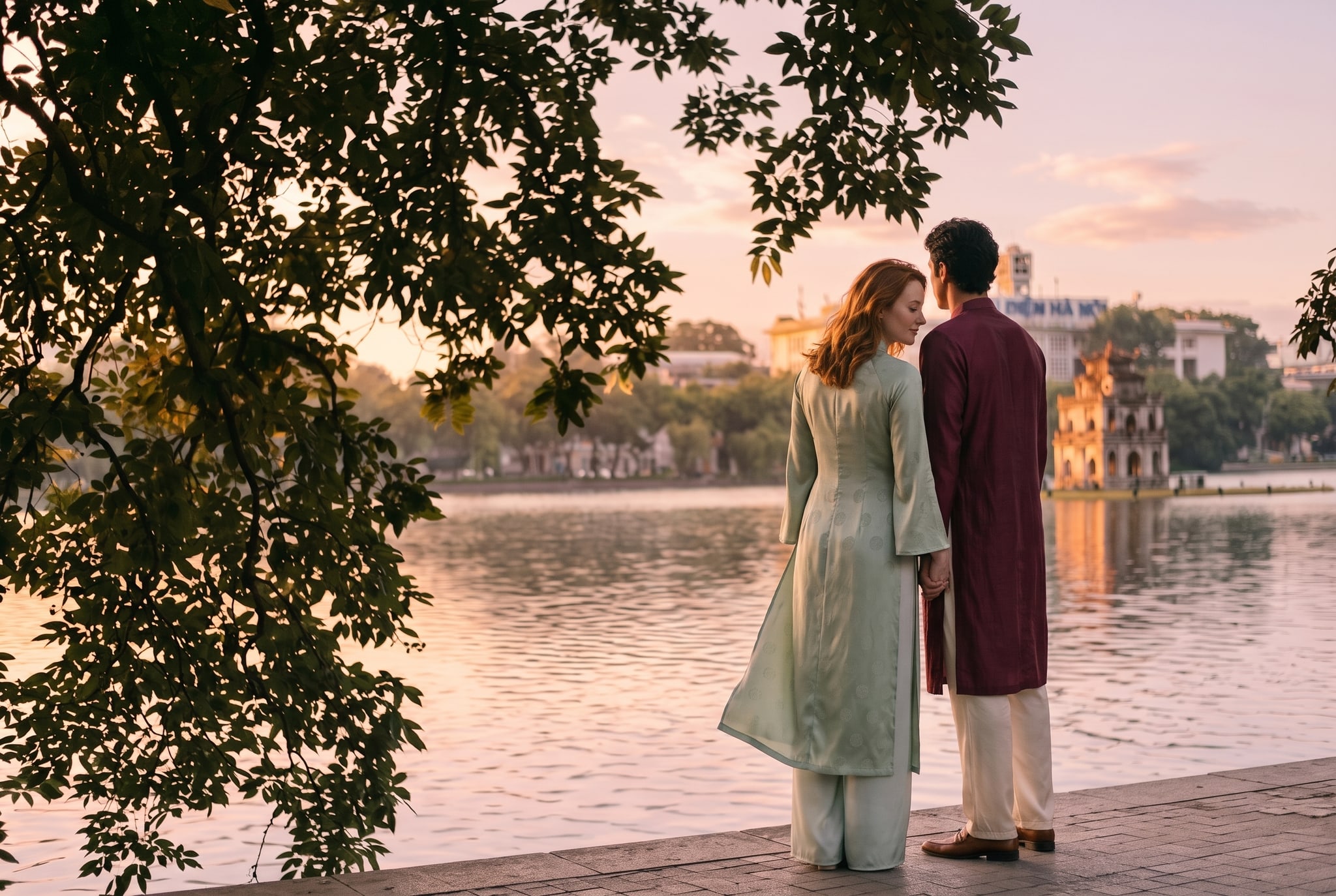
After the shoot, most couples ask what to do with 90+ final images. We offer digital files (high-resolution, ready for print), and we can also arrange a couple photoshoot package with an album or canvas wrap if you want the images professionally printed and bound. A hardcover wedding album with 40–60 selected images is a common next step—it's tangible, it's permanent, and it's what you show family later. Some pairs order a few framed prints for their home and digital copies for social sharing. The bridge image almost always becomes the hero shot: it's recognizable, it's yours, and it's a landmark people in Vietnam know.
We typically send you a password-protected gallery within 10 days of the shoot, and you review and flag favorites before final edit selections. The editing process itself takes another 7–10 days, and then you have your files. If you're ordering a printed album, add 2–3 weeks for production and shipping (we ship internationally).
What to check before you book a bridge elopement shoot
- Access and timing: Confirm you can arrive in Hoi An at least one day early so we can scout and coordinate.
- Outfit plan: Decide on 1–2 outfits, including whether you want a traditional áo dài (we can arrange a stylist via our makeup and hair at your hotel service). The bridge's red wood and the lanterns set the color tone—whites, golds, and jewel tones read well; pale pinks can wash out.
- Shot list: Tell us your must-haves. Bride and groom on the bridge? Walking toward the camera? Kissing under the arch? Silhouette? We plan the session around this, but the more specific you are, the calmer the morning feels.
- Backup location: Agree on a Plan B before the day. We usually suggest Japanese Garden or a nearby lantern light session. Bad weather is rare in Hoi An, but a sudden crowd surge or unexpected maintenance can happen.
- Edit style preference: Show us references of edits you like—bright, moody, black-and-white, cinematic. This helps our retouching team match your vision.
- File and print plans: Do you want only digital files, or are you printing? If printing, let us know early so we size and color-match for your chosen medium (canvas, album, framed print).
- Guest involvement: Some couples want family or a small group in the background of some shots. If so, brief them: they stand back, stay quiet, and let us direct the shoot. It works, but it changes the timeline and feel.
Elopement shoots at the Japanese Covered Bridge work best when both you and we are aligned on timing, backup options, and what success looks like. We've shot there in rain, with unexpected crowds, with heels sinking into wood planks, and with lantern light failing—every session is different, and we're ready for it.
Real elopement couple story: what actually happened on the bridge
Last winter, a couple from Melbourne arrived in Hoi An with no prior scouting. They'd booked a 2-hour bridge shoot, imagined a quiet morning alone, and didn't want to wear ao dài because they felt more authentic in a simple white dress and suit. We met them at 5:50am in the dark, drove to the bridge, and found a small group of locals already setting up lanterns for a tour company event. Our photographer texted the couple a Plan B: We can start at Japanese Garden now, move to the bridge at 6:45am when the event finishes, or reschedule to tomorrow evening. They chose to move—which meant we captured 20 minutes at the garden (moody, intimate, zero people), then the bridge at peak golden hour (red wood glowing, water still) with only two other couples on it. The night before, we'd asked about their edit style, and they'd said "film, a bit cool, no heavy color." Those references meant we could color-grade their images toward a cinema-like tone rather than the warm Hoi An default. They got a bridge-focused album, a 16x20 canvas print for their living room, and digital files. The ability to pivot—to have a backup location, read the couple's vibe, and adjust on the day—is what elopement work demands.
This is the pre-wedding and elopement package you're hiring for: not just someone with a camera, but a team that knows the bridge, knows when light works, and knows how to keep you calm when reality surprises you.
FAQ
What time should we arrive at the Japanese Covered Bridge for elopement photos?
We shoot between 6:20–8am to catch golden light and avoid crowds. Arrive in Hoi An the day before so we can scout at your preferred time and confirm logistics.
Can we do both the bridge and ao dài photos in one elopement session?
Yes. Our team brings styling expertise. We can do one outfit on the bridge and change into ao dài for a second location nearby (Japanese Garden or Old Town streets), totaling 4–5 hours.
What happens if it rains on the morning of the shoot?
We move to a covered location like Japanese Garden or the lantern-lit bridge area at dusk. Rain is rare in Hoi An; we plan a backup in advance and message you 24 hours before if weather looks uncertain.
Do we need a permit to photograph on the Japanese Covered Bridge?
No formal permit is needed for personal/elopement photography. The bridge is a public monument, and we coordinate arrival time with local tourism to minimize disruptions and crowds.
How many final edited images will we receive from a 2-hour bridge elopement shoot?
Typically 60–90 final edited images, depending on light, crowd pauses, and how many outfit changes you do. We deliver them in a password-protected gallery 10 days after the shoot.
Can we add our families to the elopement shoot without making it feel crowded?
Yes. Brief them to stay behind the photographer, keep quiet, and let us direct. We can frame shots so they appear in the background or step out of frame for couple-only moments. It lengthens the session and changes the vibe, but it works.
Pre-Wedding & Elopement
Inclusions, prices and booking are on our booking site.
FAQ
What time should we arrive at the Japanese Covered Bridge for elopement photos?
We shoot between 6:20–8am to catch golden light and avoid crowds. Arrive in Hoi An the day before so we can scout at your preferred time and confirm logistics.
Can we do both the bridge and ao dài photos in one elopement session?
Yes. Our team brings styling expertise. We can do one outfit on the bridge and change into ao dài for a second location nearby (Japanese Garden or Old Town streets), totaling 4–5 hours.
What happens if it rains on the morning of the shoot?
We move to a covered location like Japanese Garden or the lantern-lit bridge area at dusk. Rain is rare in Hoi An; we plan a backup in advance and message you 24 hours before if weather looks uncertain.
Do we need a permit to photograph on the Japanese Covered Bridge?
No formal permit is needed for personal/elopement photography. The bridge is a public monument, and we coordinate arrival time with local tourism to minimize disruptions and crowds.
How many final edited images will we receive from a 2-hour bridge elopement shoot?
Typically 60–90 final edited images, depending on light, crowd pauses, and how many outfit changes you do. We deliver them in a password-protected gallery 10 days after the shoot.
Can we add our families to the elopement shoot without making it feel crowded?
Yes. Brief them to stay behind the photographer, keep quiet, and let us direct. We can frame shots so they appear in the background or step out of frame for couple-only moments. It lengthens the session and changes the vibe, but it works.
More from the team
Boho pre-wedding photoshoot in Vietnam: Hanoi, Saigon, Hoi An
Boho pre-wedding shoots mix romantic, free-spirited aesthetics with Vietnam's landscapes and heritage sites. We run full-day sessions in three cities, handling styling, makeup, location scouts and edits.
Avoid crowds at Hoang Su Phi rice terraces: timing for wedding shoots
Hoang Su Phi's terraced landscape draws couples and tour buses in equal measure. We show how to shoot there alone, when to arrive, and what to arrange with us before you go.
Photography rules at Con Dao beaches: permits, drones and what to check
Con Dao's beaches demand prep before you shoot—permits, drone zones and tide timing all affect your day. We share what the Cáo Studio team verifies on every booking.