 Cáo Studio
Home › Blog › Pre-Wedding & Elopement
Elopement Photos at Mui Ne White Sand Dunes: Studio Guide
By the Cáo Studio team · Hanoi & Saigon · 2026-11-02
Mui Ne white sand dunes sit 200 km east of Ho Chi Minh City and take 4–5 hours by road. An elopement session there—typically 3–4 hours—captures wind-carved ridges, golden-hour shadow play, and isolation few Vietnamese locations offer. Cáo Studio builds these into our pre-wedding and elopement package, which includes a photographer, stylist, and hour-by-hour coordination. The dunes are public, open year-round, but morning (5:30–8 am) or late afternoon (4–6 pm) is non-negotiable: midday heat and tourist crowds destroy light and comfort. You'll walk 1–2 km into soft sand, so flat sandals or bare feet work; heavy heels sink and slow us down. Cost varies by season and team size—check our booking site for current rates. What kills most shoots: underestimating sand texture on clothes (it sticks), forgetting sunscreen (dunes reflect hard), and arriving without a backup location if wind gusts or clouds roll in fast. Chat with us on WhatsApp
What time of day do we actually shoot at Mui Ne dunes?
We never shoot midday. Golden hour—first light at 6–7 am or late sun at 4:30–6 pm—sculpts the sand ripples and gives skin warmth without harshness. On a recent couple session, we arrived at 5:45 am and had two clear hours before tour buses arrived at 8 am. By 9 am, 40+ tourists crowded our frame. Early morning sand is cool underfoot, wind is gentler, and the sky holds color longer. Late afternoon means you finish near sunset and drive back in daylight, which beats a dark highway. We tell clients: choose one, stick to it, and build your schedule backward from that hour.
How does sand damage gear and clothing on the day?
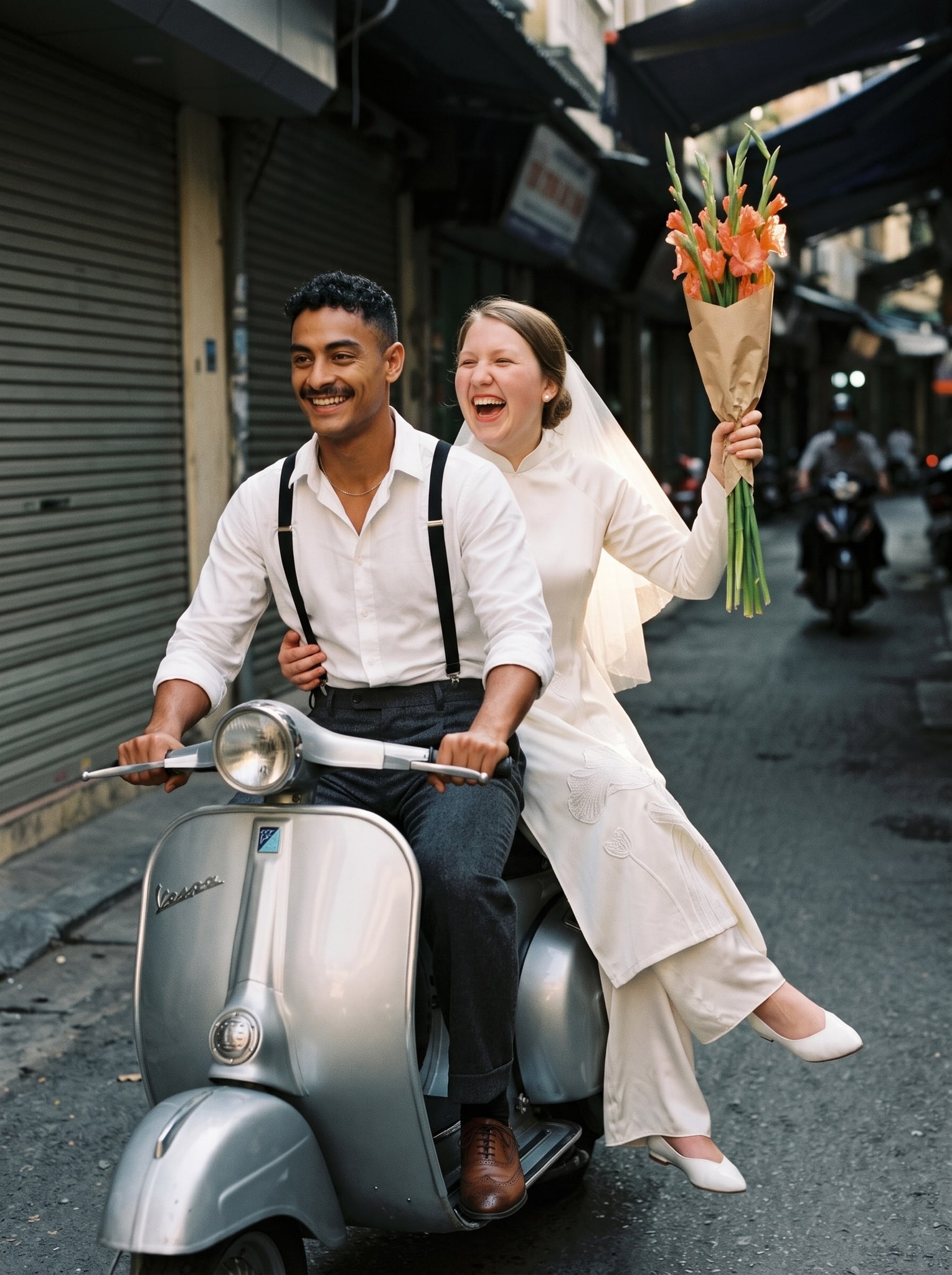
Sand gets everywhere—camera sensors, lens threads, fabric folds, undergarments. On one elopement, the bride's silk áo dài collected sand in the hem, sleeves, and collar despite careful movement. Our stylist spent 20 minutes between shots with a soft brush and lint roller. For you: wear loose linen or cotton that sheds sand easily; avoid fitted dresses with small seams where sand traps. We bring an air blower for camera gear, but you can't fully escape it. Wet wipes and a small handheld vacuum (if your hotel has one) help at the end of the day. Shoes? Ditch them. Bare feet or slip-on sandals only. One groom wore boat shoes, got sand in the stitching, and spent the drive back shaking them out—he laughed about it later, but it was preventable.
See packages and prices on vietnamphotoshoot.com
What's the difference between white and red dunes for elopement shots?
| Dune type | Light quality | Crowd level | Best for | Walking ease |
|---|---|---|---|---|
| White | Cool, reflective, diffused | High (tour groups) | Minimalist, bright skin tone | Harder (loose, unstable) |
| Red | Warm, contrasting, saturated | Lower | Color, dramatic shadow | Easier (firmer base) |
White dunes near Phan Thiết town are famous but packed 8 am–4 pm. Red dunes (20 km south, near Bau Xéo) see fewer visitors and hold richer gold-hour color. We've shot both: white dunes work for airy, editorial couples who want that stark, almost lunar look; red dunes suit storytelling elopements where the landscape itself becomes a character. Red sand stains less, holds footprints longer (great for compositional depth), and the warmer tone flatters deeper skin tones without extra editing. If you want solitude, red wins. If you want that iconic Mui Ne postcard, white is the goal—just book us for 6 am or later than 5 pm.
What goes wrong in post-production after a dune shoot?
Harsh backlit sand creates flare, blown highlights, and color casts we spend hours correcting. On one couple's session, the white dunes' reflection overexposed the bride's face despite exposure compensation. We recovered it, but the process took our retoucher 3x longer than a regular shoot. Sand-spattered lenses introduce soft haze that looks like a filter but isn't—it's damage. We clean aggressively between shots to prevent it. Skin retouching takes longer too: sand particles stick to sweat and sunscreen, creating texture that needs careful healing-brush work. One client asked for "film-like" processing; the sand texture made that impossible—we had to explain the difference between artistic grain and actual debris. Plan for an extra 5–7 days in editing timelines for dune shoots. Our vacation and solo photoshoot pages mention this; elopements are similar complexity.
How do we manage wind, heat, and unexpected weather at Mui Ne?
Wind is constant at Mui Ne. It reshapes sand, tangles hair, and moves clouds fast. We scout 15 minutes before the client arrives, identify wind-sheltered ridges or low valleys, and plan compositions around it. On one session, a gust knocked over our reflector; we pivoted to natural light and actually got better shots—less artificial, more texture. Heat in the afternoon can spike to 38°C. Clients sweat, makeup runs, and stamina drops after an hour. We schedule breaks in shade (small pavilions exist near entry points), bring electrolyte drinks, and watch for signs of exhaustion. One bride felt faint at 5 pm; we stopped, moved to shade, and rescheduled the last shots for the next morning at her hotel. Rain is rare but possible May–September. We always have a backup indoor location—either client's hotel room or a nearby café—but we're honest: Mui Ne photos shift completely indoors. Most couples accept this. Some reschedule. It's a real conversation to have before you book.
What should your ao dai or wedding dress actually be for sand dunes?
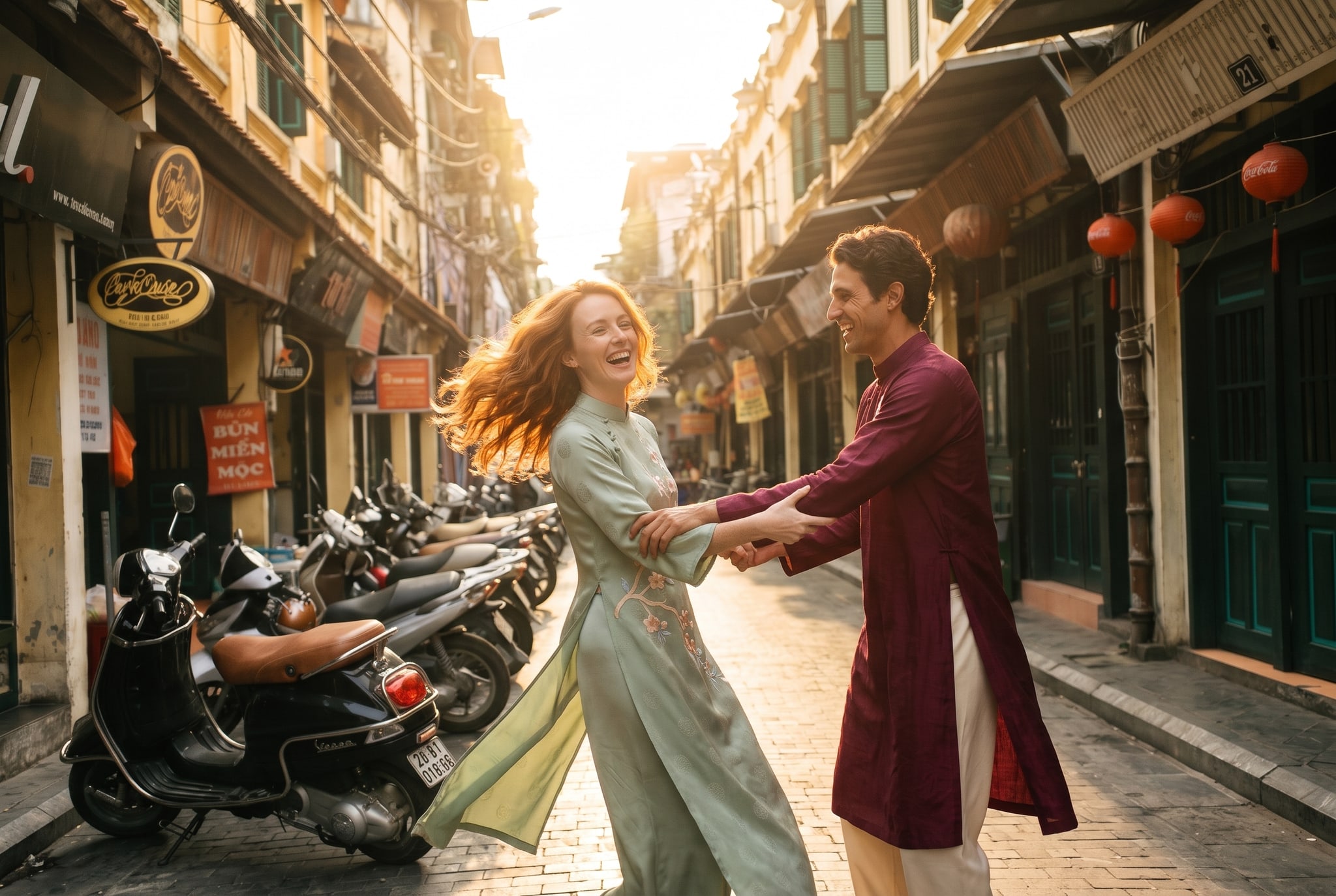
Light, breathable, and sandproof. Áo dài work beautifully if fitted loosely enough that sand doesn't trap in the folds. We've shot 8 elopements in áo dài at Mui Ne; the best ones wore traditional silk (catches light naturally) in ivory or blush, with the áo dài hemmed just above ankle to avoid dragging sand and shortening the fabric lifespan. Western dresses need similar care: knee-length or shorter avoids sand accumulation; skirts with layers (A-line, circle skirt) flare beautifully in wind and shed sand better than fitted styles. One bride wore a vintage lace trumpet dress and spent the entire shoot worried about the train. We shot what we could, but her tension read in photos. A simpler dress = more presence in the frame. If your heart is set on a detailed gown, consider shooting it at your hotel or a scenic Saigon garden, then changing into something dune-friendly for Mui Ne. That's what our ao dai photoshoot package clients do sometimes. It sounds like extra work, but you get two distinct looks without compromise.
Which makeup and hair style survives a full dune session?
Waterproof everything. Sweat and sand-blown humidity will break standard makeup by hour two. We work with our makeup and hair team to apply long-wear base, cream blush (powder moves), and setting spray between every hour. One bride used regular mascara; by 4 pm it was smudged. Hair should be loose or braided low, not pinned tight (pins loosen in wind and sand gets caught). One client insisted on a high bun; we tried, but wind kept pulling it loose, and sand worked in. By hour three she asked us to rebraid it low. That cost us 15 minutes. Loose waves, low braid, or half-up work. Clips should be strong—bobby pins fail. Bring backup bobby pins and a comb. Sunscreen is non-negotiable (dunes reflect UV intensely), but it makes skin slick for makeup. We use a matte sunscreen 30 minutes before makeup and reapply it mid-shoot on exposed areas, which means powder touch-ups every 90 minutes. It's not glamorous, but it's the reality.
What does "elopement photos" actually cost and what's included?
Our pre-wedding and elopement package includes photographer, stylist, and hour-by-hour coordination. Transportation to Mui Ne, makeup/hair, clothing, and meals are separate. Most couples budget for a driver or rental car (round-trip from Saigon or Hanoi, 8–10 hours). Check our booking site for current package rates—they vary by season, team size, and editing turnaround. All packages cover full-resolution digital files, typically 300–400 edited images, and a private online gallery. Print products (albums, framed prints) are optional add-ons. One couple asked if we negotiated lower rates for off-season (September–November, monsoon risk); we worked with them on dates and confirmed availability before pricing. Payment options include Visa, Mastercard, bank transfer, and online payment links for international clients. Most people from abroad pay via card or transfer 50% upfront, 50% upon delivery.
See packages and prices on vietnamphotoshoot.com
What to check before you book an elopement at Mui Ne
- Timing: Pick 6–7 am or 4:30–6 pm and stick to it. Midday is unusable.
- Backup date: Mui Ne's weather can shift fast. Confirm rescheduling terms before paying.
- Transport: Saigon to Mui Ne takes 4–5 hours by car. Budget time for traffic and early starts.
- Clothing: Confirm your dress or áo dài with the stylist. Bring a change if you want multiple looks.
- Physical prep: Elopements mean walking 1–2 km in sand. Wear conditioning sandals or go barefoot; skip heels.
- Turnaround: Dune shoots take longer to edit. Ask if the timeline suits your needs (most are 7–10 days).
- Sun protection: Bring sunscreen (reapply every 90 minutes), a hat for breaks, and water.
FAQ
How far is Mui Ne from Hanoi or Saigon, and how long does a shoot day take?
Mui Ne is 200 km from Ho Chi Minh City (4–5 hours by road) and 1,500+ km from Hanoi. A Saigon-based elopement is feasible as a full-day trip: 5:30 am pickup, 6–7 am arrival, 3–4 hour shoot, 5 pm departure home by 10 pm. Hanoi couples typically stay overnight.
Can we shoot Mui Ne dunes in the rainy season?
May–September brings afternoon showers. Morning shoots are safer; afternoon risk clouds and rain. If it rains, we move indoors or reschedule. Confirm your package's rescheduling policy before booking.
Do you provide transportation or a driver to Mui Ne from Saigon?
No. Transport is separate from our package. Most clients hire a private driver or rental car. We coordinate timing with your driver and meet you at the dunes. Saigon to Mui Ne costs roughly the same as a hotel night; plan accordingly.
What if we want both white and red dunes in one session?
It's possible but tight. Both sites are 20 km apart. You'd need 5+ hours and a driver. We can schedule it—one location 6–7 am, second location 10 am–noon—but quality drops at the second location due to light. Better to choose one and shoot it well.
Can we include my engagement ring, wedding band, or heirloom jewelry in Mui Ne photos?
Yes. We frame details shots (rings on sand, hands together) before or after the main shoot. Sand can scratch delicate metals, so remove jewelry before walking and put it on for photos only. One couple lost a ring in sand once; we didn't recover it. Be cautious.
How many edited, high-resolution photos do we get from a Mui Ne elopement?
Our pre-wedding package typically delivers 300–400 edited images across 7–10 days. Exact count depends on shoot length and your selections during editing review. All are full-resolution, ready for printing or social sharing.
Pre-Wedding & Elopement
Inclusions, prices and booking are on our booking site.
FAQ
How far is Mui Ne from Hanoi or Saigon, and how long does a shoot day take?
Mui Ne is 200 km from Ho Chi Minh City (4–5 hours by road) and 1,500+ km from Hanoi. A Saigon-based elopement is feasible as a full-day trip: 5:30 am pickup, 6–7 am arrival, 3–4 hour shoot, 5 pm departure home by 10 pm. Hanoi couples typically stay overnight.
Can we shoot Mui Ne dunes in the rainy season?
May–September brings afternoon showers. Morning shoots are safer; afternoon risk clouds and rain. If it rains, we move indoors or reschedule. Confirm your package's rescheduling policy before booking.
Do you provide transportation or a driver to Mui Ne from Saigon?
No. Transport is separate from our package. Most clients hire a private driver or rental car. We coordinate timing with your driver and meet you at the dunes. Saigon to Mui Ne costs roughly the same as a hotel night; plan accordingly.
What if we want both white and red dunes in one session?
It's possible but tight. Both sites are 20 km apart. You'd need 5+ hours and a driver. We can schedule it—one location 6–7 am, second location 10 am–noon—but quality drops at the second location due to light. Better to choose one and shoot it well.
Can we include my engagement ring, wedding band, or heirloom jewelry in Mui Ne photos?
Yes. We frame details shots (rings on sand, hands together) before or after the main shoot. Sand can scratch delicate metals, so remove jewelry before walking and put it on for photos only. One couple lost a ring in sand once; we didn't recover it. Be cautious.
How many edited, high-resolution photos do we get from a Mui Ne elopement?
Our [pre-wedding package](/go/pre-wedding-photoshoot) typically delivers 300–400 edited images across 7–10 days. Exact count depends on shoot length and your selections during editing review. All are full-resolution, ready for printing or social sharing.
More from the team
Boho pre-wedding photoshoot in Vietnam: Hanoi, Saigon, Hoi An
Boho pre-wedding shoots mix romantic, free-spirited aesthetics with Vietnam's landscapes and heritage sites. We run full-day sessions in three cities, handling styling, makeup, location scouts and edits.
Avoid crowds at Hoang Su Phi rice terraces: timing for wedding shoots
Hoang Su Phi's terraced landscape draws couples and tour buses in equal measure. We show how to shoot there alone, when to arrive, and what to arrange with us before you go.
Photography rules at Con Dao beaches: permits, drones and what to check
Con Dao's beaches demand prep before you shoot—permits, drone zones and tide timing all affect your day. We share what the Cáo Studio team verifies on every booking.