 Cáo Studio
Home › Blog › Pre-Wedding & Elopement
Elopement Photos at My Son Sanctuary: What We See on Location
By the Cáo Studio team · Hanoi & Saigon · 2026-11-02
My Son Sanctuary, 40 km southwest of Hoi An, is a sprawling complex of 10th–14th century Champa temples set in tropical forest. Elopement shoots there typically run 4–6 hours, combining temple backdrops with natural landscape. Cáo Studio brings a photographer and stylist from our Hoi An–adjacent base; we start before 9 a.m. to avoid midday glare and crowds, scout temple clearings the night before, and build in 90 minutes for costume or ao dai changes. Most couples invest in a pre-wedding or elopement package that includes the location fee, transportation, and 200+ edited images. Avoid arriving without a guide—the sanctuary is vast, paths are uneven, and lighting windows shift fast. We handle permits and logistics; you bring comfortable shoes and a second outfit if you want variety across the 50+ temples on-site. Chat with us on WhatsApp
Why does My Son work better at dawn than noon?
Sunlight at My Son bounces harshly off stone between 11 a.m. and 3 p.m., flattening faces and washing out the rust-red brick texture. We always brief couples on WhatsApp before the shoot: "Meet at 7:30 a.m. at the gate. We'll have soft light on the front tower by 8:15, and the canopy shadows work for intimate portraits until 10 a.m." In practice, we scout the night before—we walk the entire south temple row, note where tree cover has shifted since last month, and identify two backup clearings if weather clouds the primary spots. By shooting before 9 a.m., we capture the sanctuary nearly empty and nail the glow-on-stone look that makes My Son elope photos stand apart from standard Hoi An city sessions.
How do we move you safely between 50+ scattered temples?
My Son is not a linear path. We structure the shoot in three zones: the central tower complex (30 minutes), the south group where light is softest (90 minutes), and either the north plateau or a hidden garden clearing we've scouted (60 minutes). We assign one stylist to manage costume transitions and one photographer to move ahead and lock in angles. Before 8 a.m., we walk the route on foot to check for maintenance work or water damage—in 2024, a heavy rainy season left two bridges temporarily unsafe, and we'd have missed that without checking. We also brief you: "Wear slip-on shoes. We'll pause at seven temple stops. We'll spend 12–15 minutes per location." Couples who've hiked before settle in faster; we've learned to ask on the intake call whether you prefer exploring versus concentrating on 3–4 hero temples for depth.
What outfit changes work in a sacred heritage space?
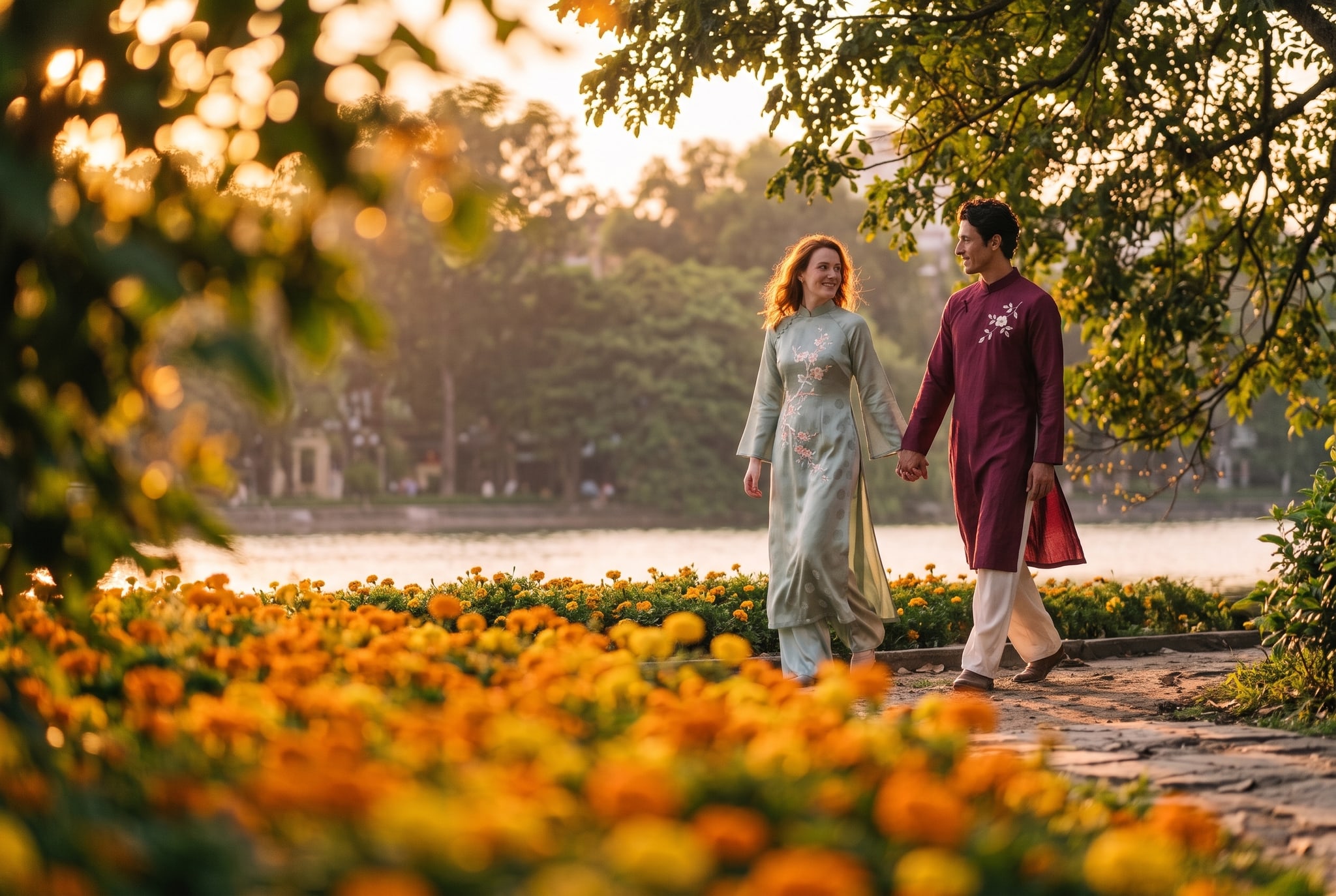
Ao dai is our first recommendation. The flowing silk reads beautifully against weathered Champa stone—the color contrast and fabric movement work in every light. We typically suggest a jewel tone (emerald, sapphire, burgundy) over white or cream because sandstone and brick already dominate the frame. If you want a Western dress, bring a second option in a complementary shade so we can shoot a series in one temple, change, and return for a different mood. We pack a privacy curtain and carry outfits in a small rolling case—the walk between temples is only 5–10 minutes, so we change on-site in a shaded alcove. Many couples also bring a casual second outfit (linen trousers, simple top) for the final hour when light shifts and the vibe becomes more relaxed. On the day, we ask: "Where do you want to feel most 'you'?" because the right outfit depends on whether you're playing up elegance or intimacy.
How do we handle the heat, crowds, and unpredictable paths?
Temperature at My Son reaches 32°C by 10 a.m., so we carry electrolyte water, a portable fan, and sun spray. We also build in 15-minute rest stops—this isn't about rushing; it's about keeping you fresh so your expressions stay genuine. We've learned that couples who sit for 10 minutes under a temple overhang, drink water, and reset energy give us better frames in the next location. Regarding crowds: even early, tour groups can arrive by 8:30 a.m., especially on weekends. We've adapted by shooting tight portraits and detail frames (your hands, the ring against stone, fabric close-ups) when groups pass, then widening back out once they move ahead. We also confirm the day before whether the sanctuary is running any special preservation or restoration work that might close a section. One couple's session last year coincided with temple maintenance; we pivoted to the north plateau and actually captured more intimate frames than planned because fewer tourists ventured that far.
What weather and season decisions shape a My Son elopement?
Dry season (November–April) is ideal: clear light, low humidity, stable paths. Rainy season (May–October) brings 70% humidity and unpredictable downpours at 2–3 p.m.—we schedule rain-season shoots to finish by 1 p.m. and always have a second date option in the contract. We also check the lunar calendar with clients; some couples have cultural or spiritual reasons to avoid certain dates. In February and March, haze from regional burning occasionally dulls light—we monitor the air quality index on the day and adjust our angle selection to backlit and silhouette frames if necessary. We've noticed that couples who book for September–October often want dramatic, moody imagery, and we lean into shadow and texture over bright, open sky. It's a choice: clearer season means technically flawless images; shoulder seasons mean moodier, more unique character if you're prepared for tighter timing.
Who should book a My Son elopement, and what package fits?
Couple type | Why My Son works | What to expect ---|---|--- Heritage-focused couples | Authentic temples + meaningful location | 4–5 hours, 250+ edited images, elopement package Intimate destination elopers | Small group (under 5 people) | Flexible timing, private temple access, same-day preview Adventure-oriented pairs | Hiking between temples, wild light | Early start, longer shoot, packed lunch Couples wanting ao dai | Silk against stone, cultural depth | 2 outfit changes, 90 min per location, heritage framing
For most couples, our pre-wedding and elopement package covers the sanctuary—ask us for a quote on WhatsApp. If you're adding a second day (Hoi An old town, beach at Cua Dai), we bundle it at a package rate. Solo travelers or small family celebrations also work; see our vacation and solo photoshoot for alternative timing and locations.
See packages and prices on vietnamphotoshoot.com
What to check before you book a My Son elopement shoot
- Confirm the entry permit: My Son has daily entry quotas. We handle this, but we need your passport details 3 weeks prior. If you're flying in from abroad, verify your Vietnam visa allows culture/heritage zones—tourist visas cover it, but we always confirm.
- Choose your outfit now: Ao dai rental takes 2 weeks in Hoi An. If you're bringing a dress from home, pack it in a carry-on so it arrives wrinkle-free. We can steam it, but shipping delays happen.
- Lock in the date and back-up: Rainy season means weather variability. We always offer a second shoot date in the contract at no extra cost if weather cancels. Confirm this policy in writing.
- Communicate your must-have temples: The sanctuary has 50+. We can't shoot all of them. Tell us your top 3–5 "hero" temples so we prioritize light and composition for those instead of spreading ourselves thin.
- Plan transport: We arrange pickup from Hoi An town (15 minutes) or Da Nang airport (45 minutes). Confirm your arrival flight with us so our driver knows when to collect you.
- Discuss cultural sensitivity: My Son is a worship site and heritage zone. We brief you on footwear, public affection norms, and photo ethics—you don't need to be reserved, but we're thoughtful about how we frame images near active altar areas.
If you're also considering other heritage locations, we shoot Hoi An old town sessions, couple photoshoots in lantern-lit streets, and proposal shoots at sunset viewpoints. Each location has its own light rhythm and logistical feel. We're based in both Hanoi and Ho Chi Minh City, with a strong workflow from our Hoi An–adjacent studio for Central Vietnam projects. Read more of our shoot stories on the blog to see how we adapt to location-specific challenges.
FAQ
How long does a My Son elopement shoot take, and what's included?
Typical shoots run 4–6 hours, including travel to the sanctuary, location scouting, outfit changes, and 200+ edited images. Transportation from Hoi An is included in the elopement package. Ask us for a quote on WhatsApp.
Do we need a guide, and are permits handled by the studio?
Yes, you need a heritage guide to legally enter and shoot. We arrange permits and the guide fee; it's included in the package. We handle all logistics so you arrive, get styled, and create.
What happens if weather cancels the shoot?
We offer a rescheduled date at no extra cost. We brief you on this in the contract before booking. Rainy season shoots are best scheduled for the morning to finish before afternoon storms.
Can we bring family or a small wedding party?
Yes. Groups under 5 people fit our studio model. We charge per person if you add guests beyond the core couple; ask us on WhatsApp. Larger groups need a separate family photoshoot quote.
Do you offer ao dai rental and styling, or do we bring our own?
We partner with Hoi An tailors for ao dai rental (2-week lead time). Or bring your own. We style and steam whatever you choose. Confirm your outfit choice 3 weeks before the shoot.
What's the best season to elope at My Son?
Dry season (November–April) offers clear light and stable weather. Rainy season (May–October) works if you're prepared for moody light and an early finish time. We schedule based on your preference and confirm backup dates.
Pre-Wedding & Elopement
Inclusions, prices and booking are on our booking site.
FAQ
How long does a My Son elopement shoot take, and what's included?
Typical shoots run 4–6 hours, including travel to the sanctuary, location scouting, outfit changes, and 200+ edited images. Transportation from Hoi An is included in the [elopement package](/go/pre-wedding-photoshoot). Ask us for a quote on WhatsApp.
Do we need a guide, and are permits handled by the studio?
Yes, you need a heritage guide to legally enter and shoot. We arrange permits and the guide fee; it's included in the package. We handle all logistics so you arrive, get styled, and create.
What happens if weather cancels the shoot?
We offer a rescheduled date at no extra cost. We brief you on this in the contract before booking. Rainy season shoots are best scheduled for the morning to finish before afternoon storms.
Can we bring family or a small wedding party?
Yes. Groups under 5 people fit our studio model. We charge per person if you add guests beyond the core couple; ask us on WhatsApp. Larger groups need a separate [family photoshoot](/go/family-photoshoot) quote.
Do you offer ao dai rental and styling, or do we bring our own?
We partner with Hoi An tailors for ao dai rental (2-week lead time). Or bring your own. We style and steam whatever you choose. Confirm your outfit choice 3 weeks before the shoot.
What's the best season to elope at My Son?
Dry season (November–April) offers clear light and stable weather. Rainy season (May–October) works if you're prepared for moody light and an early finish time. We schedule based on your preference and confirm backup dates.
More from the team
Boho pre-wedding photoshoot in Vietnam: Hanoi, Saigon, Hoi An
Boho pre-wedding shoots mix romantic, free-spirited aesthetics with Vietnam's landscapes and heritage sites. We run full-day sessions in three cities, handling styling, makeup, location scouts and edits.
Avoid crowds at Hoang Su Phi rice terraces: timing for wedding shoots
Hoang Su Phi's terraced landscape draws couples and tour buses in equal measure. We show how to shoot there alone, when to arrive, and what to arrange with us before you go.
Photography rules at Con Dao beaches: permits, drones and what to check
Con Dao's beaches demand prep before you shoot—permits, drone zones and tide timing all affect your day. We share what the Cáo Studio team verifies on every booking.